 Rouen, Normandy, France
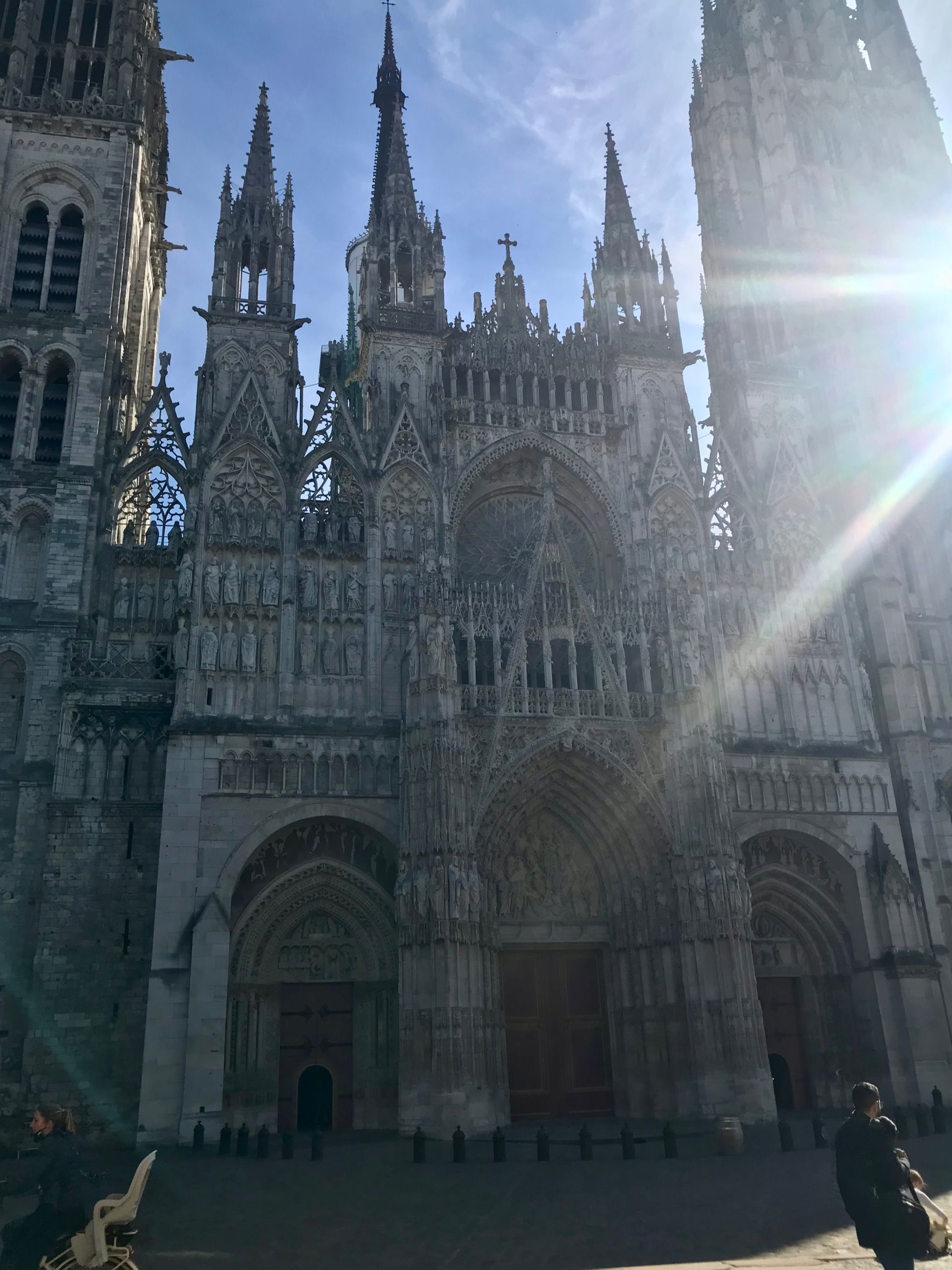
Yes, it's real: the embalmed heart of Richard the Lionheart is still entombed inside Rouen Cathedral, in a stone effigy tucked among the tombs of Norman dukes, and you can walk up to it for free during normal opening hours. It's the detail that turns Rouen Cathedral from "another Gothic church in Normandy" into something people specifically travel to see, and it's also easy to walk right past if you don't know which chapel to look in.
Rouen has a second reason to plan a visit right now. The Abbey of Saint-Ouen, a few minutes' walk from the cathedral, spent four years wrapped in scaffolding and soot-blackened while its facade was restored. That work wrapped up in 2025, and the abbey has reopened to the public. That's a change from what a TravelFeed visitor found when the restoration had barely started.
Where exactly is Richard the Lionheart's heart in Rouen Cathedral
Richard I of England died in 1199 after a crossbow bolt to the shoulder turned septic during a siege in south-central France. Medieval royalty were routinely split up after death, and Richard was no exception: his entrails were buried at Châlus, where he died, his body went to Fontevraud Abbey in Anjou to lie next to his father, and his heart traveled north to Rouen, capital of the Normandy he'd ruled as duke since 1189. The choice wasn't sentimental so much as political: Richard spent more of his adult life in France than in England, and Rouen was the seat of the duchy he cared most about defending, including against the King of France based nearby in Paris.
The heart was interred inside the cathedral in a stone effigy, with a Latin inscription that translates as "Buried here is the heart of Richard King of the English, who was called Lionheart. Died in 1199." As @braveboat found while tracing the row of ducal tombs along the nave, it reads as a plain historical fact rather than a metaphor, which is easy to miss until you've read the Latin twice.
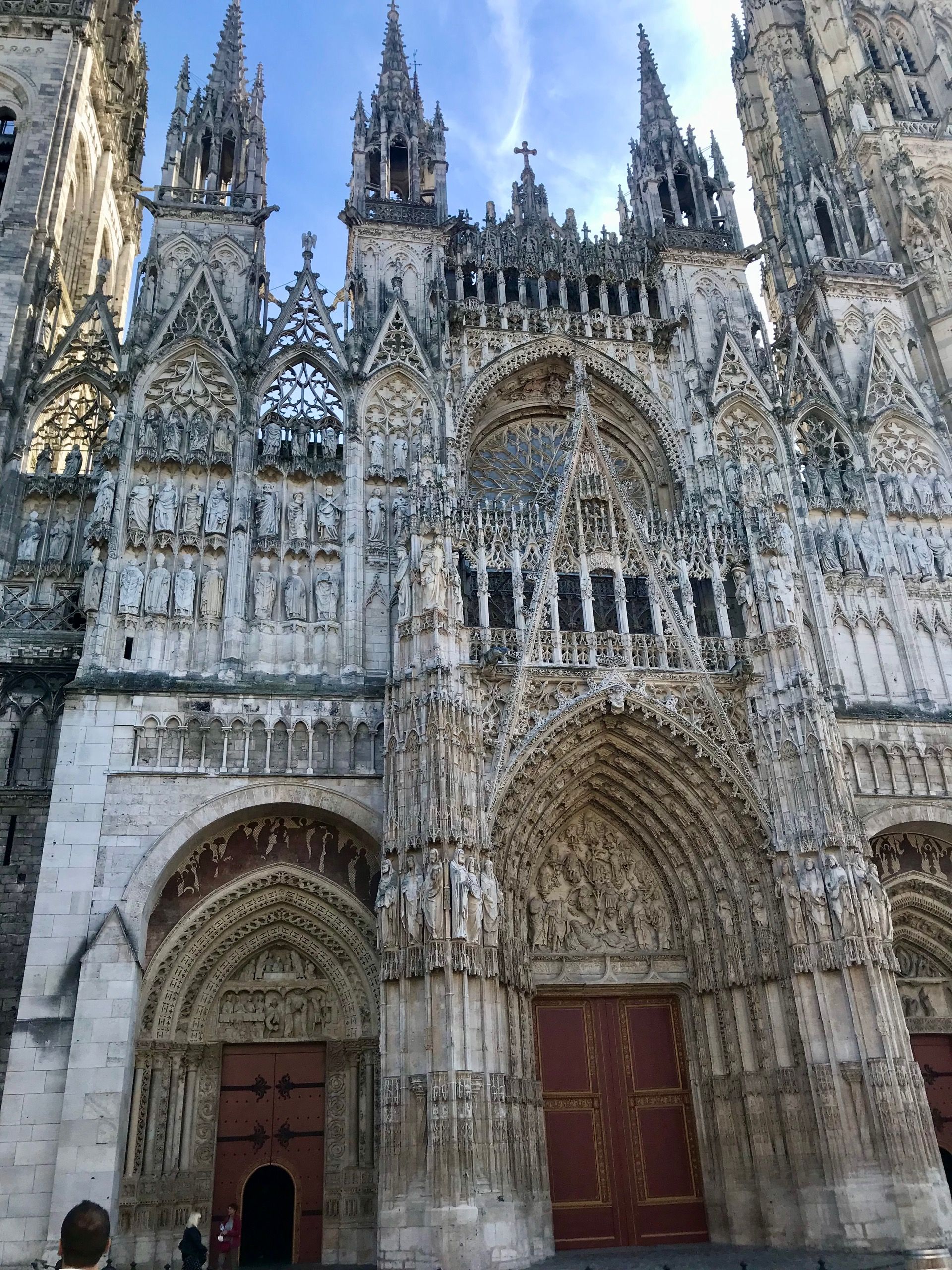
Getting to the tomb doesn't require a ticket. According to the cathedral's own visitor information, entry is free and unreserved, and individual visitors can walk the naves, transepts, ambulatory, and side chapels, where the ducal tombs are, during normal opening hours: Tuesday to Friday 9:00–19:00, Monday 14:00–19:00, and Sunday and holidays 8:00–18:00. Guided tours in French run Saturday and Sunday at 14:30 for €3 and add access to the crypt and baptistery, neither of which is needed to see Richard's heart tomb.
What one visitor found looking for it
What comes up in the one TravelFeed account of finding the tomb is how easy it is to walk past. Entering "unaware of the history," @braveboat describes a cathedral that was "quiet and practically deserted," with a series of small chapels along the outer walls that read, at first glance, as generic memorials to long-dead clergy. It's only on circling past the choir that the row of ducal tombs, carved in the shape of their occupants, becomes obvious. Only on reading the Latin does the heart claim turn out to be literal rather than poetic. Practically, that means the tomb sits among a cluster of similar-looking Norman ducal tombs, not off on its own with a marker, so it's worth reading the inscriptions rather than glancing at the row and moving on.
The cathedral Monet couldn't stop painting
Richard's tomb isn't the only reason history-minded visitors seek this building out. Between 1892 and 1894, Claude Monet painted the cathedral's west facade around thirty times from a rented room across the square, chasing how the same stonework read in different light and weather. As @braveboat documented after touring the cathedral and then walking to the Musée des Beaux-Arts de Rouen, the museum holds one of the series, Rouen Cathedral, Facade and the Tour d'Albane. Grey Weather (1894), and admission is free. Seeing the building first and the painting afterward, in either order, is a small, specific pairing that a lot of Rouen itineraries skip in favor of just photographing the outside.
Next door, the abbey that spent years looking half-finished
A short walk from the cathedral, past the Hôtel de Ville, is the Abbey of Saint-Ouen, a Benedictine abbey church begun in 1126 with a Gothic silhouette that rivals the cathedral's. One of its early abbots reportedly supplied ships and soldiers for William the Conqueror's 1066 invasion of England, and the monastery held religious sway over the region for centuries before it was confiscated during the French Revolution. When @braveboat visited in 2021, restoration had just started, and the exterior was "darkened by thick, expansive black patches of soot and modern grime," with scaffolding wrapped around one of its spires and the building closed for the day. The account is worth reading precisely because it's a record of the abbey at its least presentable: over 80 stained-glass windows and a Gothic lantern tower, all but hidden under grime.
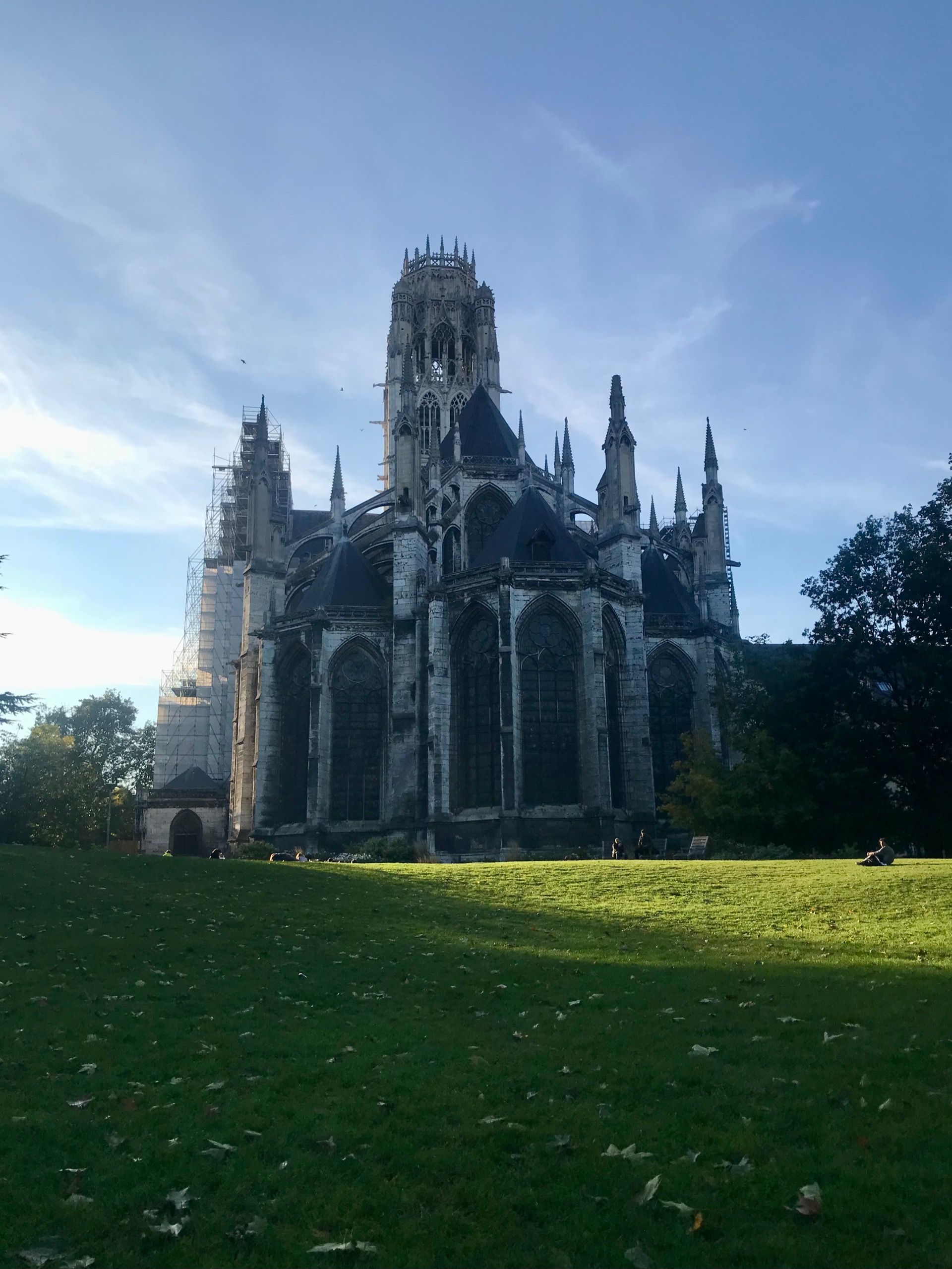
That restoration is now finished. The facade work, which ran from 2021 to 2025 at a cost of €26 million, wrapped up with a public reopening in September 2025, according to French regional broadcaster France Bleu. The City of Rouen's own listing confirms the abbey is now open with regular hours: Tuesday to Thursday and Saturday to Sunday, 10:00–12:00 and 14:00–18:00 in summer (April–September) and 14:00–17:00 in winter, closed Mondays and Fridays. Admission is free. For anyone who read that 2021 account and wrote the abbey off as a construction site, here's the update: the scaffolding is down, and the interior is open to walk into, stone floors under vaulted ceilings and centuries-old stained glass that @braveboat could previously only describe from research.
Two more stops from the same corner of Rouen
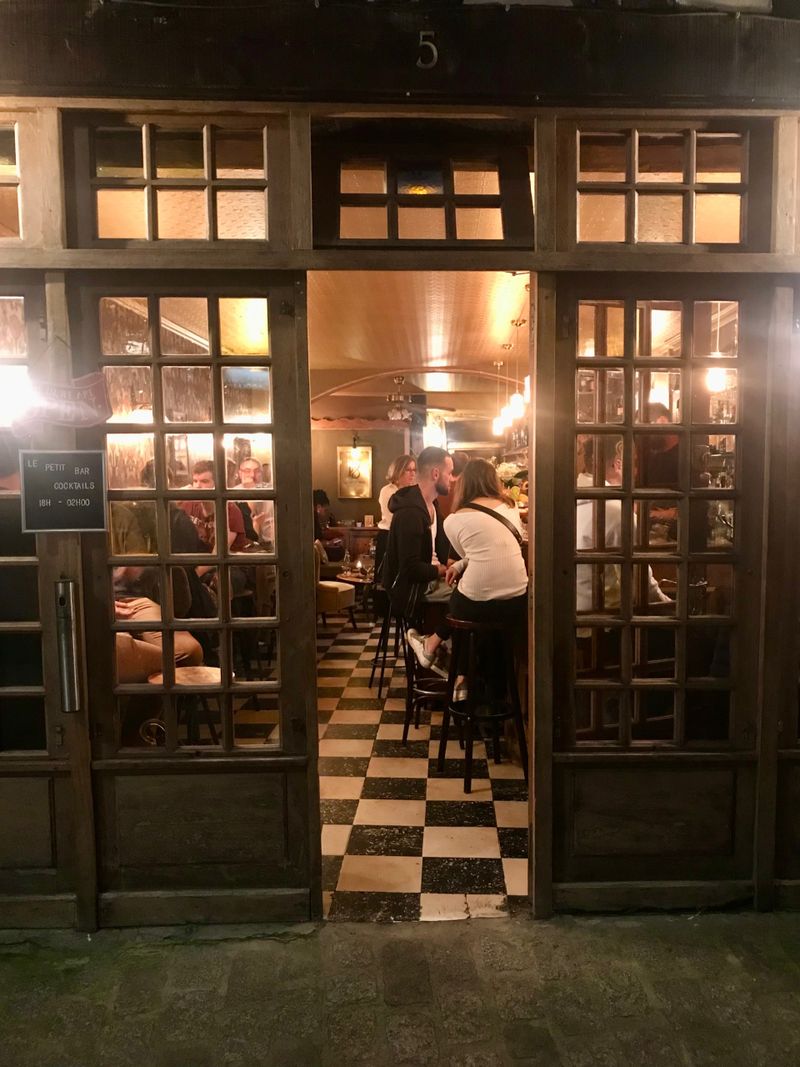
Two other TravelFeed accounts cover ground within a few minutes of the cathedral. On Rue Saint-Lô, a 2020 Lego installation by German artist Jan Vormann fills bomb-scarred pockmarks in the facade of the Palais de Justice, damage left deliberately unrepaired since Allied bombing raids in April 1944 as a memorial. And on Rue Damiette, near the Church of Saint-Maclou, Le Petit Bar turns up in an account of an itinerary rerouted to Rouen after a COVID cancellation, with a charcuterie board and a cocktail list that includes a flaming tequila-and-rosemary drink called the Mayahuel. Neither needs its own trip; both fit into an afternoon that starts at the cathedral.
Why central Rouen still looks half-rebuilt
The cathedral and the Palais de Justice share more than a neighborhood. On the night of 18–19 April 1944, seven bombs hit Rouen Cathedral in the same Allied raid that scarred the Palais de Justice's facade, according to Wikipedia's account of the building's history. The blasts destroyed sections of the nave and weakened the central spire badly enough that engineers had to reinforce it before real restoration could start; the exterior reconstruction wasn't finished until 1956, and repairs specific to the wartime damage dragged on into the 1980s.
The spire has kept needing attention since. In July 2024, a fire broke out inside the cast-iron spire during ongoing restoration work there, per Catholic wire service reporting at the time; around 70 firefighters had it contained within two hours, and the cathedral reopened to visitors the next day. None of that touches the ground-floor naves, ambulatory, and side chapels where Richard's heart tomb sits, so scaffolding overhead, if there's still any by the time you visit, isn't a reason to skip the ground floor.
Getting to Rouen, and when to go
Rouen sits northwest of Paris in Normandy, and the fastest way in is by train: direct SNCF services from Paris Saint-Lazare take roughly 1 hour 13 minutes on the quickest departures, averaging closer to 1 hour 28 minutes, with around 30 trains a day and no transfer needed, per SNCF Connect's route listing. That makes it realistic as a day trip from Paris, though both the cathedral's heart tomb and the abbey are free and unticketed, so there's no reason to time a visit around opening rushes. The one date-sensitive detail is the abbey's Monday and Friday closures, which will sink a same-day plan built only around Saint-Ouen; the cathedral has no such gap and is open every day of the week.
For more on the region, see TravelFeed's France destination page.
FAQ
Is Richard the Lionheart's heart tomb still inside Rouen Cathedral?
Yes. It's an effigy tomb in the nave, viewable for free during the cathedral's normal opening hours, with no separate ticket or guided tour required to see it.
Is the Abbey of Saint-Ouen in Rouen open in 2026?
Yes. A four-year facade restoration finished in 2025, and the abbey reopened to the public with free admission on its usual Tuesday–Thursday and Saturday–Sunday schedule, closed Mondays and Fridays.
How do you get from Paris to Rouen?
By direct SNCF train from Paris Saint-Lazare, with journeys of roughly 1 hour 13 minutes to 1 hour 28 minutes and around 30 departures a day.
Is there an admission fee for Rouen Cathedral?
No. General entry, including the ambulatory and side chapels where Richard the Lionheart's heart tomb sits, is free. Only the French-language guided tour to the crypt and baptistery carries a small fee.
