
 China
China
My first trip to China had all the technology I expected. The surprise was how comfortable they had made it.
Shanghai had already given me a very different kind of speed: 300 kilometres per hour while floating above the track on magnetic levitation, an experience that still feels unlike almost anything else in the railway world.
By the time I was packing at the Shanghai Marriott Marquis City Centre for the next stage of the journey, China no longer had much to prove to me technologically. The Maglev, Pudong, mobile payments and a beggar wearing a QR code had already dismantled whatever simple idea of “modern China” I might have brought with me. I wrote about that first encounter separately in Shanghai, Where Even a Beggar Wore a QR Code.

Hangzhou was about to teach me something different.
I took a taxi across Shanghai to Shanghai Hongqiao Railway Station. Shanghai has several major railway terminals, so checking the name before departure is not a minor detail. Mine was Hongqiao, the enormous high-speed hub on the western side of the city, integrated with the airport complex of the same name.
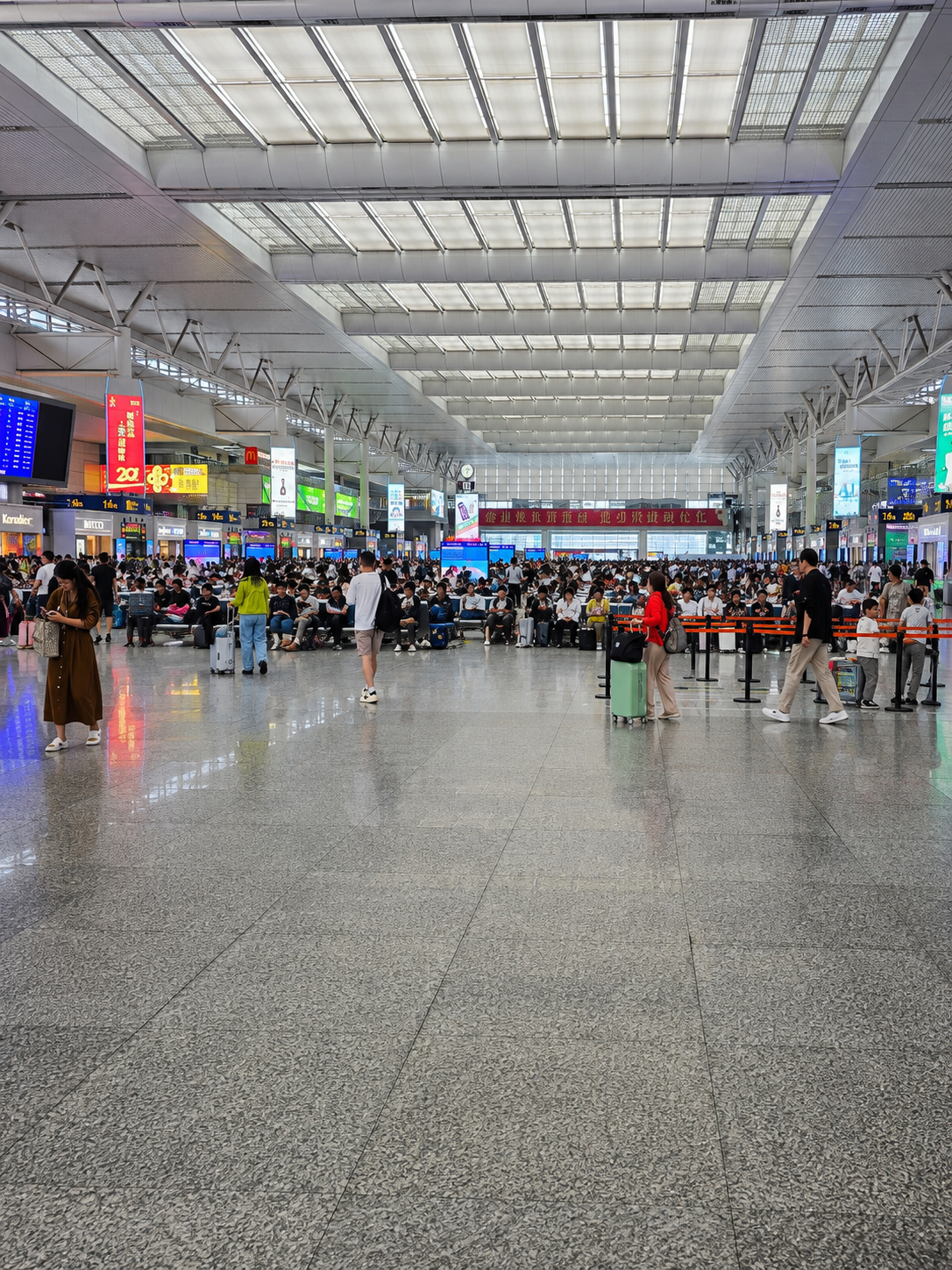
Calling it a railway station felt slightly inadequate. The scale was closer to an airport terminal: immense halls, controlled access, security checks and enough passengers to make many European central stations look almost provincial. I had booked Business Class on a G-train to Hangzhou East, and that decision started paying off before I even saw the train.
A railway station behaving like an airport
Chinese high-speed trains somewhat confusingly offer both First Class and Business Class. Business sits above First and is the highest regular category on the fastest G-trains. At Hongqiao, it also came with privileges before I even reached the train.
Business Class passengers have dedicated or priority channels for the security and ticket checks, avoiding much of the congestion of the enormous main departure hall, as well as access to a separate Business Class lounge.
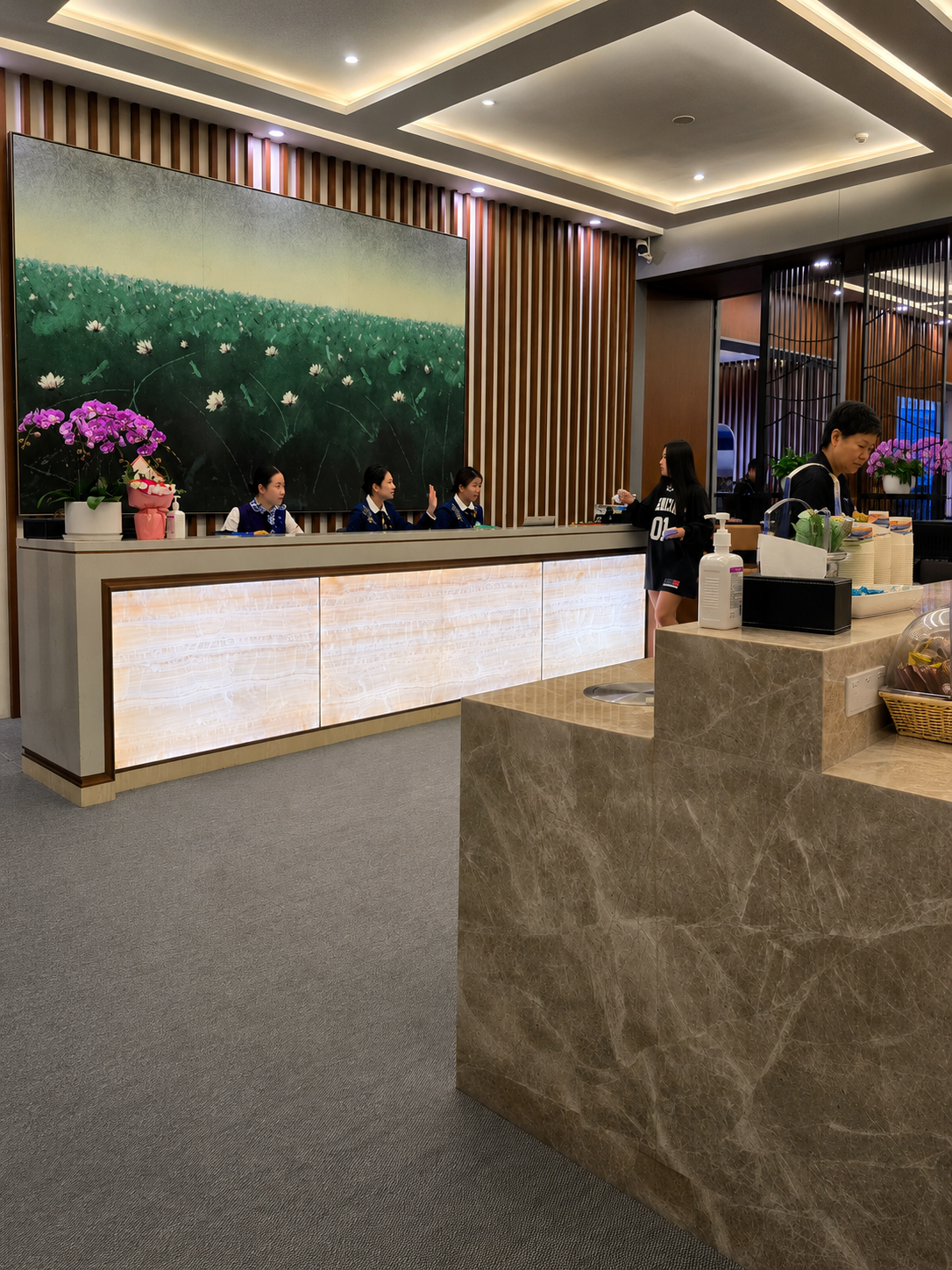
The lounge itself was fairly simple. There were comfortable seats, drinks and a small selection of snacks — useful rather than luxurious, and certainly not somewhere I would arrive early for the catering. Its real value was escaping the sheer scale and crowds of Hongqiao while waiting for the train. China Railway officially lists complimentary drinks and food among the lounge services, although the exact offering varies by station and service period.
When boarding time approached, I expected an announcement and instructions to head towards the platform. Instead, a member of the lounge staff came to collect me. She did not merely point towards the gate, abandon me at the platform or stop at the carriage door. She walked with me through Hongqiao, onto the train and all the way to my assigned seat.
That was the first moment when Chinese high-speed rail stopped feeling merely technologically impressive and started feeling exceptionally well organised as a passenger experience.
Buying the ticket had already required learning one peculiarity of Chinese rail from Croatia. I used China Highlights, through which I could submit the reservation well before the train itself became bookable. Chinese railway tickets are generally released only around fifteen days before departure, so the agency accepts the request earlier and attempts to secure the selected train and class once the inventory opens.
For someone organising an unfamiliar journey from the other side of the world, that removed most of the stress. Once the reservation was confirmed, the Chinese system became simpler rather than more complicated: there was no physical ticket to lose, because the booking was linked to my passport, which effectively became the ticket at the station.
The procedure sounded more exotic while sitting in Croatia than it felt once standing in Shanghai.

Then came the slippers
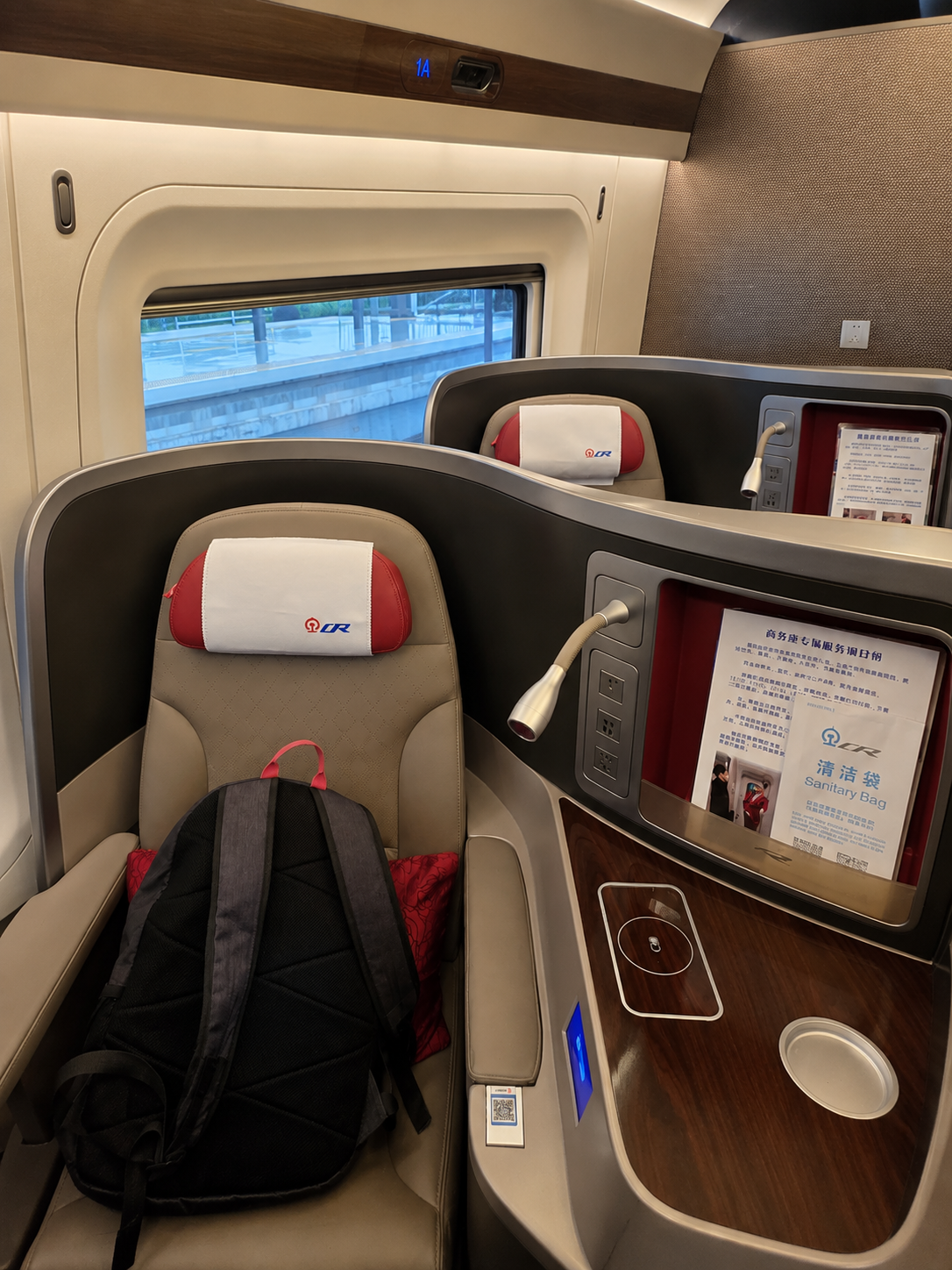
The Business Class seat explained the terminology. It was enormous, electrically adjustable, highly private and capable of reclining almost completely flat. With only a few seats across the width of the carriage, it felt considerably closer to airline Business Class than to what I normally associate with railway travel.
A hostess appeared almost immediately with a small welcome gift of sweets. Then came another object I had never considered an essential component of railway travel: slippers.


Until that afternoon, I had never considered complimentary footwear a missing element of railway travel. China managed to create a deficiency in European rail that I had not previously known existed.
The absurd part was the price. The Business Class fare worked out at roughly €35 per person for the approximately one-hour journey from Shanghai to Hangzhou. That included the separate procedure at the station, lounge access, a proper meal and drinks, personal escort all the way to the seat, the highest class on the train, welcome sweets, slippers and a chair capable of turning into something suspiciously close to a bed.
There are European railways capable of charging more while offering considerably less and making you feel demanding for expecting the toilet to contain water.
A Courtyard that had forgotten it was a Courtyard
The train delivered me to Hangzhou East, and the next surprise was waiting at the hotel.
I had booked four nights at the Courtyard by Marriott Hangzhou Wulin. I know the Courtyard formula reasonably well: comfortable, dependable, generally competent and rarely the sort of hotel around which an entire travel anecdote develops.
Hangzhou had other ideas.

The Courtyard shared a complex with the JW Marriott Hangzhou, and the distinction between the two properties became rather porous. Restaurants and facilities within the complex were available, including the pool, while the Courtyard itself already offered resources I would comfortably associate with many five-star hotels in Europe.
More unusually, it had an executive lounge for elite members. A lounge itself would not have surprised me in a full-service Marriott; finding one in a Courtyard did. As a Titanium Elite member I had access, and during happy hour there was enough proper hot food to make dinner elsewhere entirely optional.

Breakfast was even better. Rather than offering a predominantly Chinese buffet with toast and scrambled eggs tucked into a corner for nervous foreigners, the restaurant had essentially divided the offer into East and West. Both sides were substantial, and both looked as though someone had actually cared.


What made the whole thing slightly offensive from a European perspective was the rate: roughly €72 per room per night. For that I had a Courtyard with an elite lounge, an exceptional breakfast, access to facilities shared with a JW Marriott and a standard of service I would normally expect at a substantially more expensive hotel.
Some European properties would be better off not reading this section.
A cocktail next door
Sharing the complex with a JW Marriott also made it easy to move between the two hotels without treating the JW as a separate expedition. One evening that meant a cocktail next door.

The cocktail was good, but the staff were what stayed with me. Almost every interaction produced the same impression. It was not simply formal politeness or luxury-hotel theatre; people seemed genuinely determined to solve whatever problem or request was in front of them.
The language barrier could make an exchange awkward, but it rarely reduced the effort. That mattered more than another marble lobby, and it was becoming clear that the most unexpected part of Hangzhou was not going to be another piece of technology.

The technology required one day of training
I had already encountered China’s QR-code economy in Shanghai, so there was little point pretending mobile payment itself was a new discovery. Using it continuously as a foreign visitor was another matter.
I settled on Alipay. WeChat Pay never worked reliably enough for me to pursue it seriously, while Alipay took roughly one day to become intuitive — one day of unfamiliar screens and occasional uncertainty over which QR code was supposed to scan which.
Then it disappeared into the background, exactly where payment technology belongs.
The more persistent problem was the digital border around China. Familiar Western services required a reliable VPN, while English could not be assumed in everyday interactions. Translation applications helped, but they were considerably less magical when two actual people were standing opposite each other trying to solve something unexpected.
The result was often a combination of translated phrases, gestures, numbers and facial expressions. What consistently compensated for the limited shared vocabulary was patience. I cannot remember a genuinely rude interaction during those days.
The Hangzhou beyond West Lake
West Lake offered the China that fits much more easily into the European imagination: pagodas, gardens, temples, water and meticulously composed landscapes. It deserves a story of its own.

The Hangzhou relevant here appeared when I returned towards Wulin.
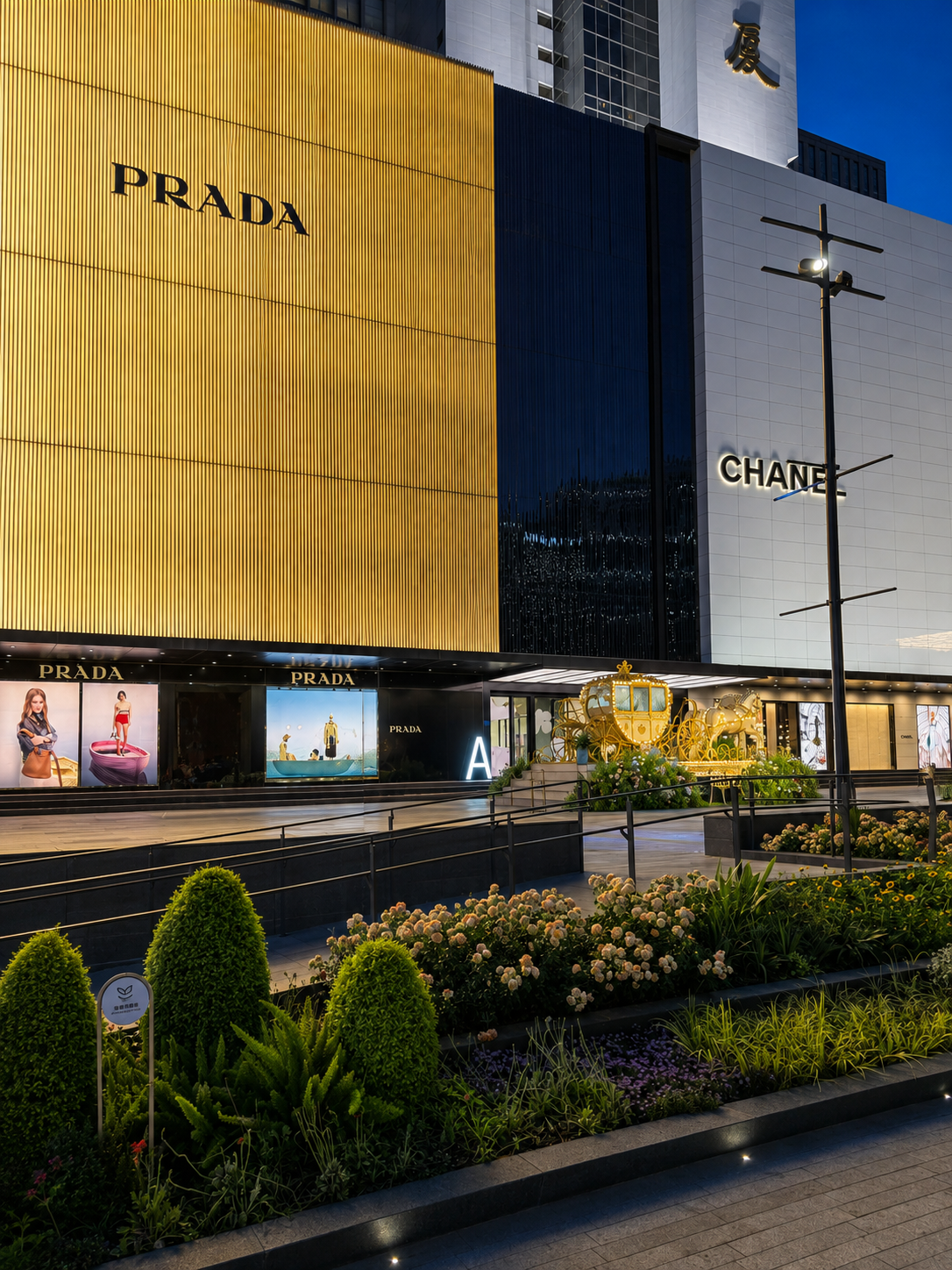
International luxury brands occupied enormous polished façades, the commercial district remained intensely active after dark and above everything rose a skyline with no particular interest in maintaining anyone’s picturesque idea of traditional China.
One blue-lit tower in particular kept demanding photographs.
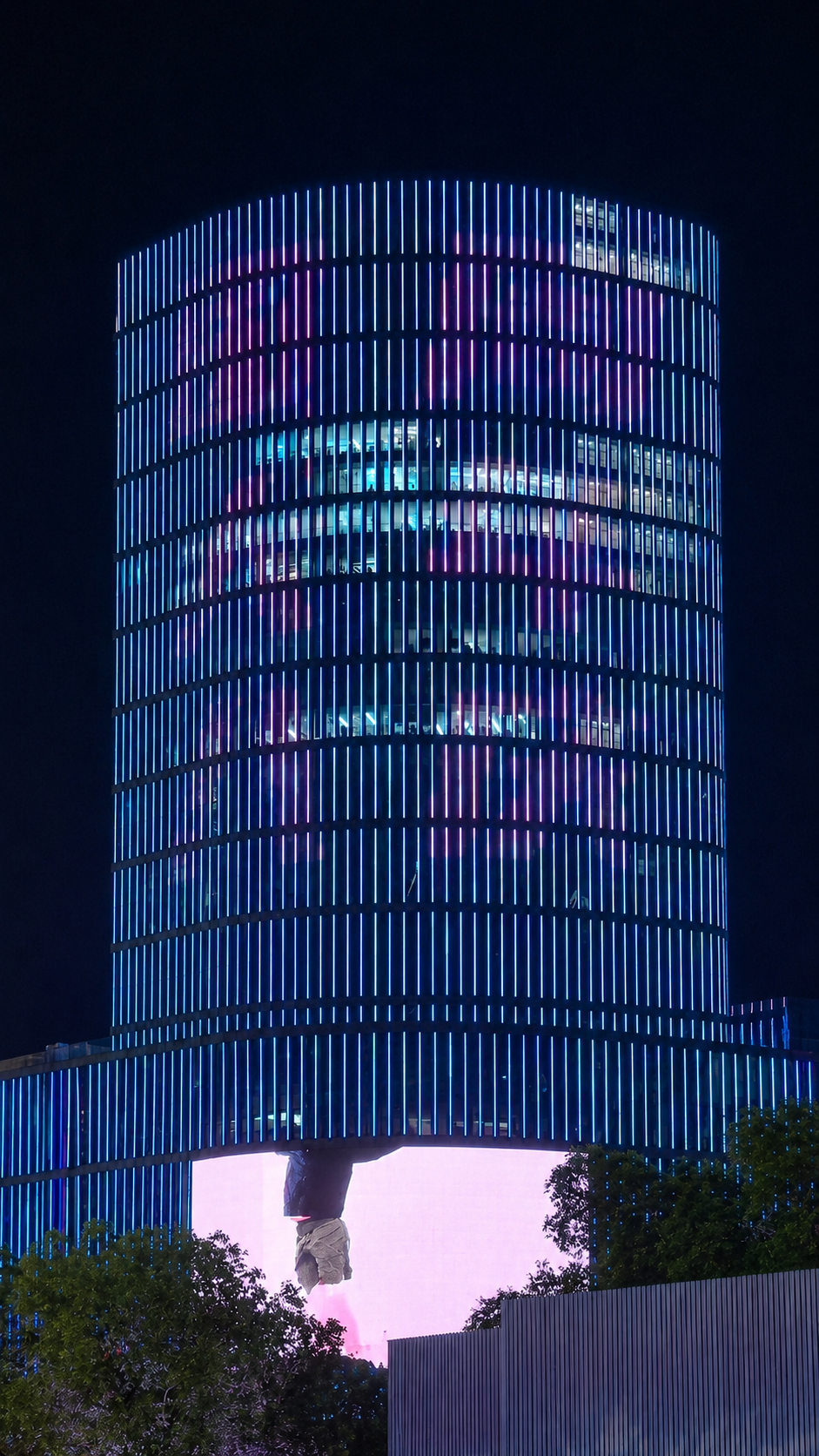
The shopping centres were equally impressive, not merely because of their size but because of the finish: lighting, landscaping, retail spaces and public areas executed at a level that made many European malls look unexpectedly tired.
Even late in the evening, I felt completely comfortable moving through the crowds.
Taxis added another useful contrast to all this technological sophistication because they were absurdly inexpensive and required almost no technological competence from me. Hotels would simply call one when needed, and on the street it was still possible to raise an arm and get a ride.
Sometimes the future works perfectly well with a gesture invented long before the smartphone.
The professional reason for being in Hangzhou
There was, after all, a very real professional reason for my presence in Hangzhou. The 5th International Conference on Symmetry — Symmetry 2025 ran from 16 to 19 May, and I was there to give an oral presentation at the Hangzhou Zonhow Hotel.
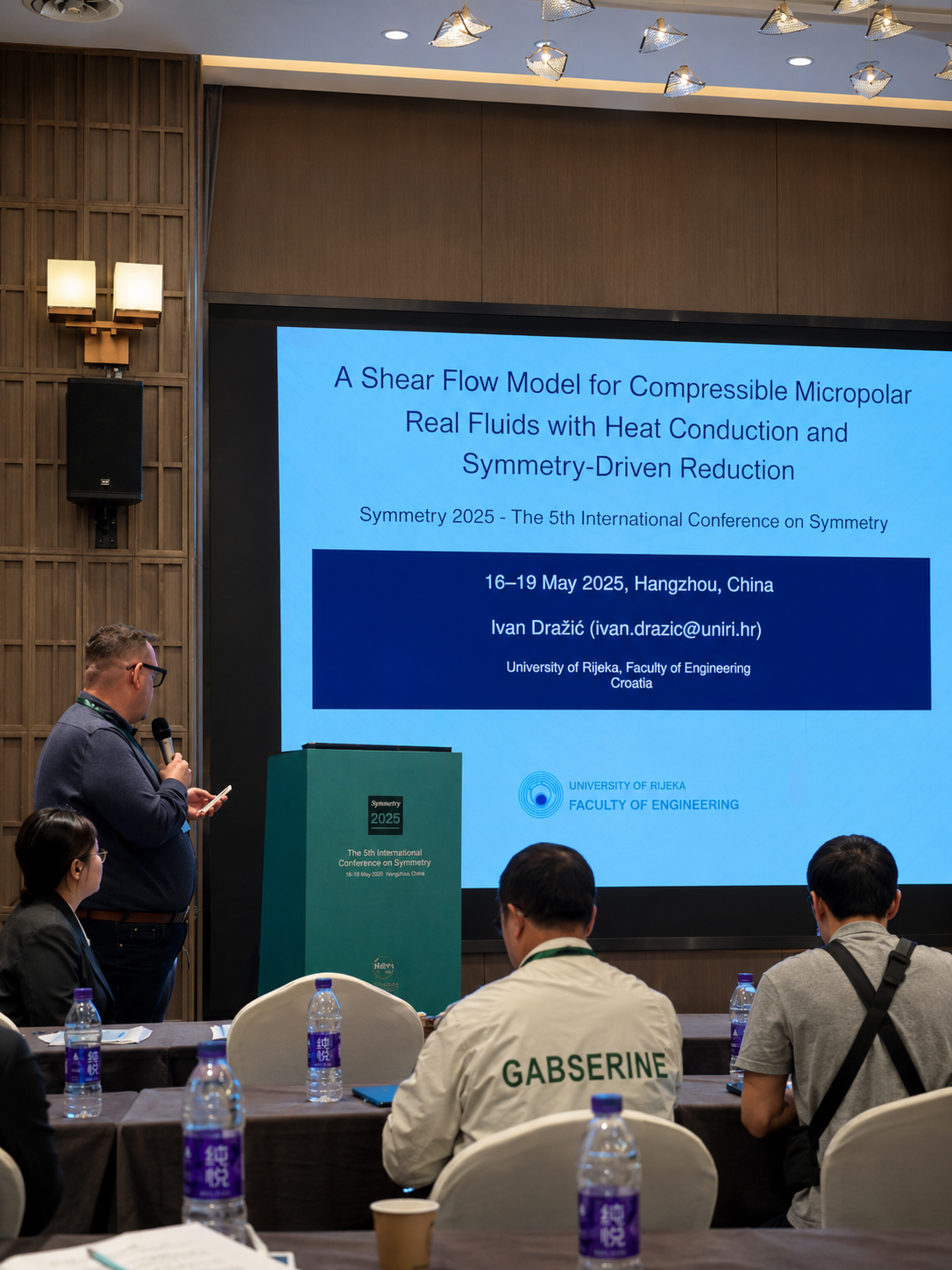
International conferences are very efficient at destroying optimistic first impressions. Eventually a microphone stops working, lunch develops a forty-minute delay or registration discovers a rule nobody had previously mentioned.
Here, nothing particularly dramatic happened. The meeting was simply extremely well organised.
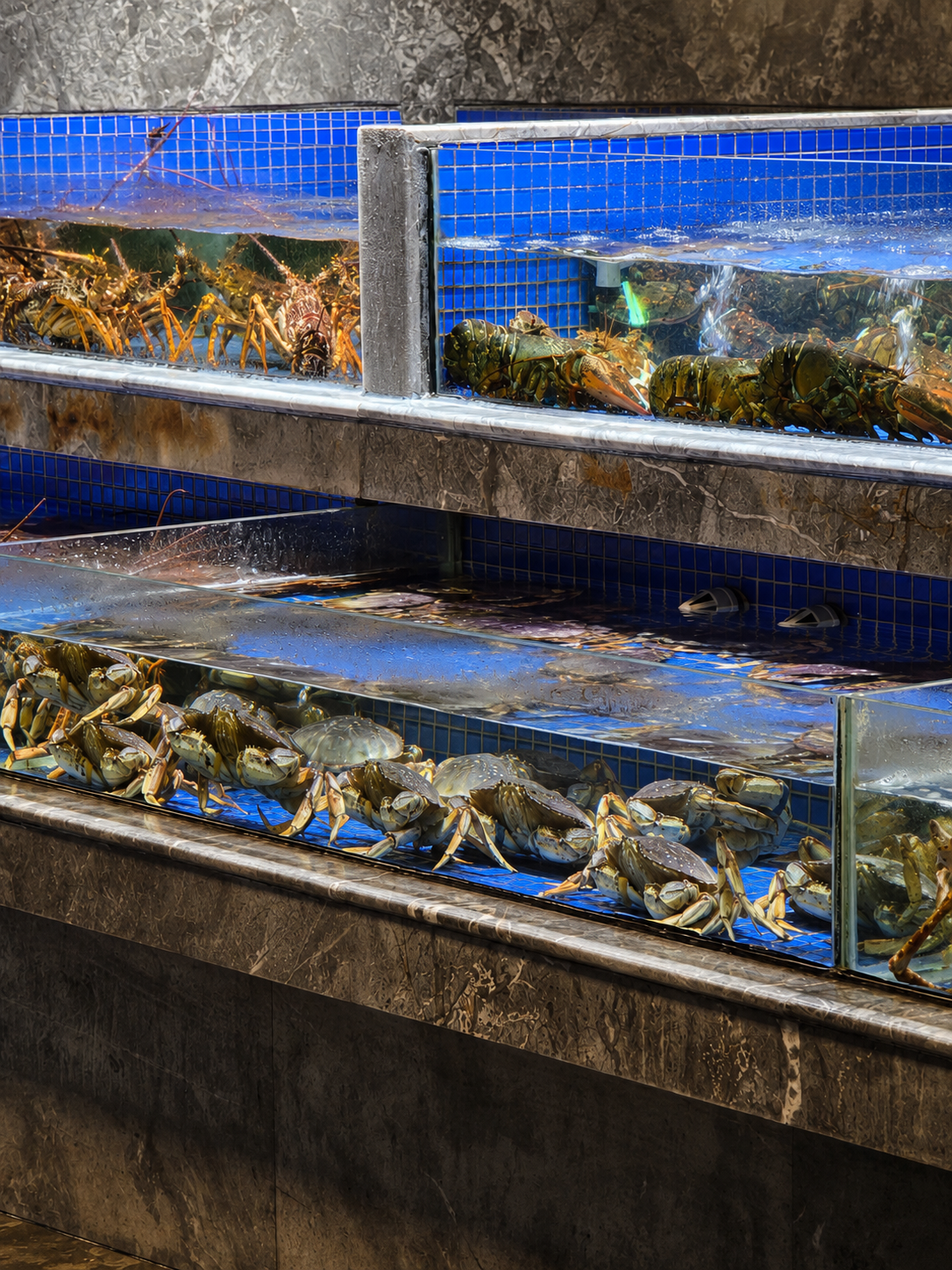
Because I was serving as guest editor of a special issue, my registration fee was reduced to about €200, remarkably reasonable for an international scientific conference. The banquet, held in the same hotel, reinforced the same impression: beautifully presented, generous and genuinely excellent. Some of the seafood had been so fresh that it was still alive, an impressive guarantee of quality, even if I have never particularly enjoyed the feeling of being introduced to my next meal.
By then the pattern was difficult to ignore. The train, the hotel and now the conference all offered noticeably more than their prices had prepared me to expect.
What actually impressed me
By the end of the stay, the technology itself had largely stopped surprising me. Shanghai had already taken care of that.
What Hangzhou added was the human layer.
A train capable of travelling at more than 300 kilometres per hour is impressive engineering; a member of staff walking through Shanghai Hongqiao with a foreign passenger and taking him all the way to his seat is hospitality. A polished hotel complex is capital investment; a staff member who notices what you need and deals with it before the language barrier turns the interaction into a problem is service.
When I caught myself thinking this is better than what I am used to in Europe, it was rarely while looking at a screen or a skyscraper.
It was usually while dealing with a person.
Four days later, the extraordinary had become normal
On 19 May I returned to Hangzhou East Railway Station for the journey back to Shanghai Hongqiao.
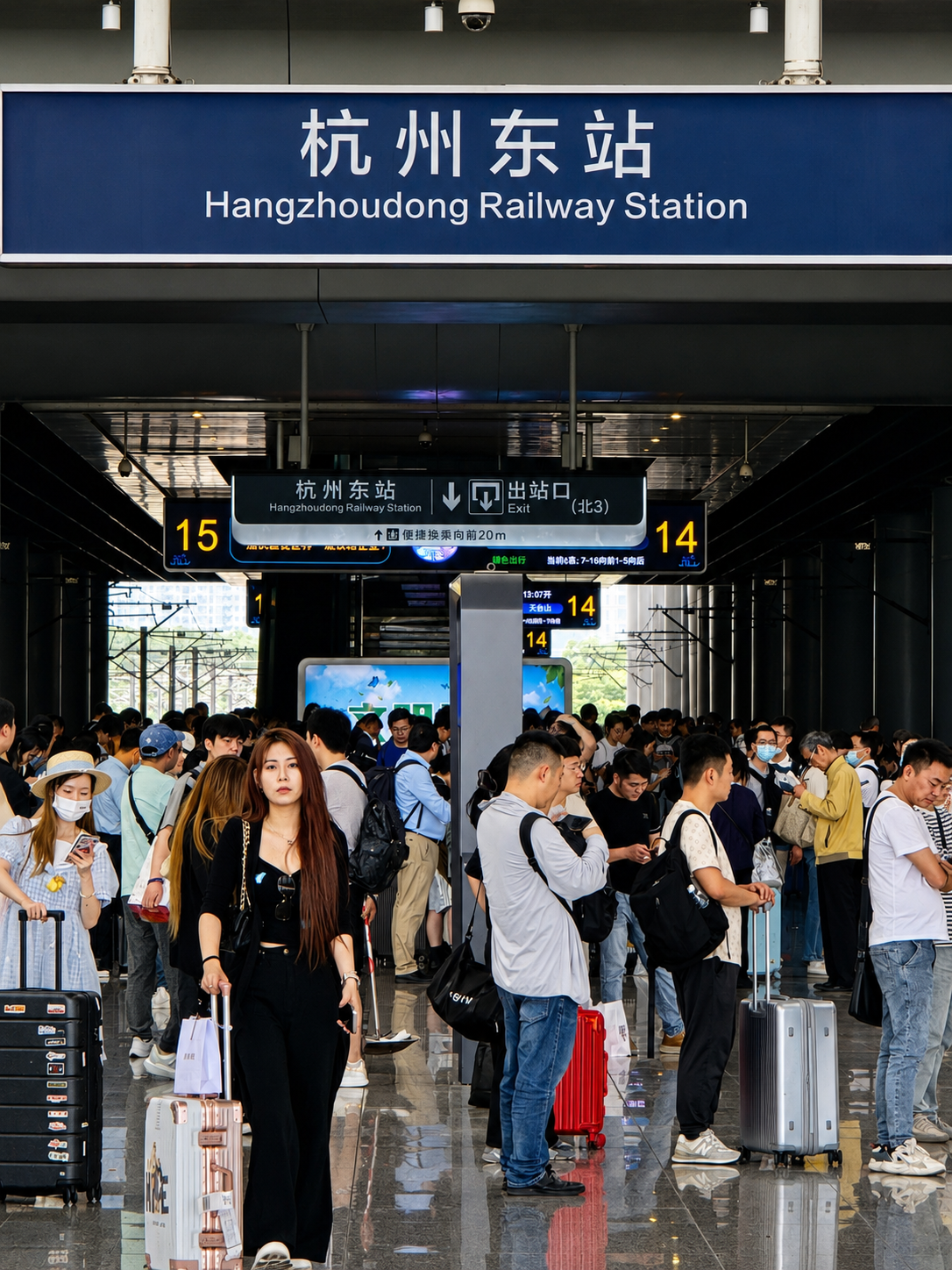
The journey back was essentially a repeat of the first one: premium access, lounge, staff assistance, Business Class and the same comically comfortable railway experience. That repetition mattered more than another surprise would have.
On the first journey I had photographed everything — the seat, the screens, the welcome sweets, the slippers, the amount of space. Four days later, I already knew what was coming and, more revealingly, had begun to expect it.
That may have been the clearest measure of how quickly China recalibrated my standards. It had taken less than a week for being personally escorted from a railway lounge to a fully reclining Business Class seat to stop feeling extravagant and start feeling like procedure.
The inconveniences had not disappeared. English remained limited, translation apps remained imperfect, Western services required a VPN and Alipay demanded its day of training.
But Shanghai had already shown me how technologically complicated modern China could be. Hangzhou showed me something I had expected much less: how comfortable that complexity could become once the system started working for you.
I arrived at Shanghai Hongqiao expecting China to be ahead. What I had not expected was how quickly its version of the future would start to feel normal.
