 Shanghai, China

A levitating train, a room above the city, ancient temples beneath skyscrapers—and the moment China stopped looking simple.
Shanghai lay beneath me, and I recognised absolutely nothing.
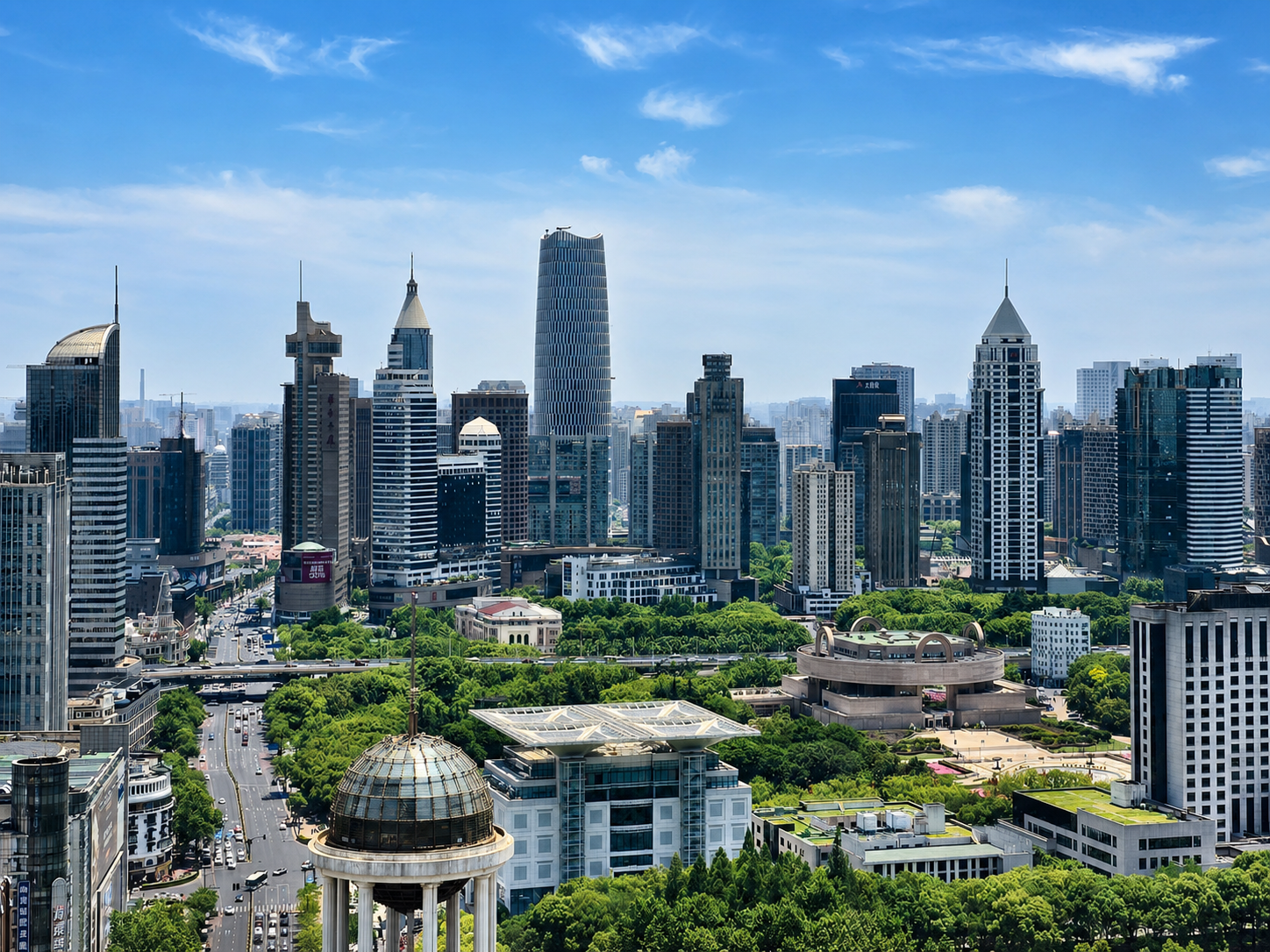
From the upper floors of the Shanghai Marriott Marquis City Centre, the city stretched beneath me in every direction: towers, parks, roads and blocks of buildings fading into the haze. I could not name a single landmark. I did not know which direction the Bund was, where Pudong began or what exactly I was looking at.
None of that mattered.
The thought arrived with almost childish force:
Bloody hell, I was in Shanghai.
After nearly 36 hours of travelling, the hotel felt less like accommodation and more like a controlled re-entry into normal life. My Marriott status was recognised immediately, and the benefits appeared without discussion: early access to the room, breakfast, lounge privileges and a late check-out.
The room itself was comfortable, but the view was what stopped me. Shanghai did not reveal itself through one famous monument. It appeared as scale—an urban mass too large to understand at first glance.
Later, in the executive lounge, the service continued with the same quiet precision. The evening offering was closer to a full meal than the symbolic snacks usually hidden behind the expression happy hour: noodles assembled to order, dumplings, warm dishes, fruit and elaborate desserts.
It was polished, generous and efficient.
It was also my first indication that Shanghai liked to operate slightly ahead of expectations.
The train that floats
That impression had begun before I even reached the hotel.
All the usual transfer options were available at Pudong Airport: metro, taxi, private car and DiDi, the Chinese equivalent of Uber. A reasonable person arriving after an intercontinental flight would probably have chosen the simplest one.
I chose the train that floats.
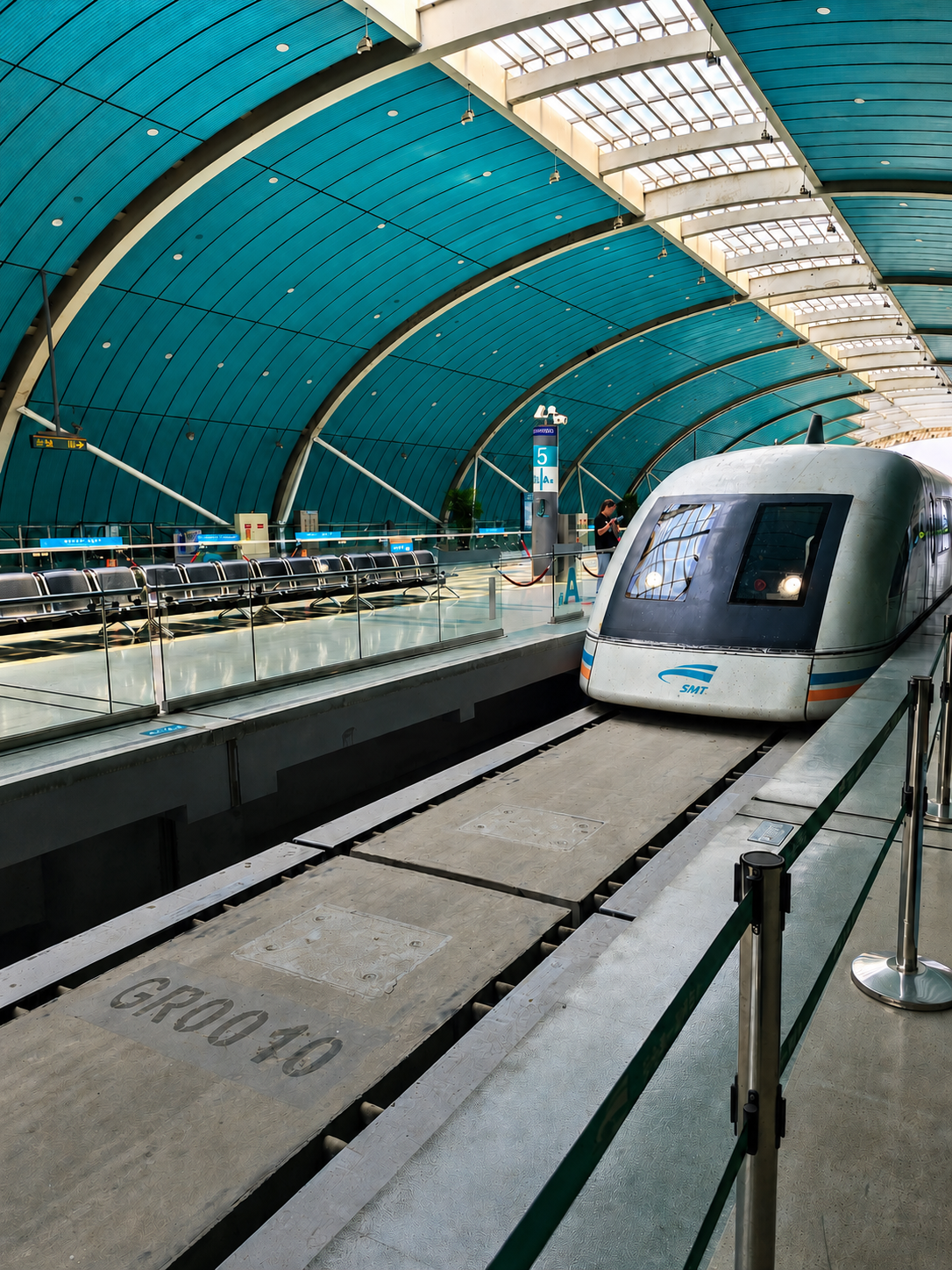
The Shanghai Maglev connects Pudong Airport with Longyang Road using magnetic levitation. Instead of rolling conventionally along rails, the train is held and propelled by magnetic forces, allowing it to travel with almost no mechanical friction.
The display eventually reached 431 kilometres per hour.
I expected at least some physical confirmation of that speed—a vibration, a pull, perhaps a moment of discomfort.
There was nothing.
We were moving faster than I had ever travelled on land, and my body seemed completely unaware of it. The interior was functional rather than futuristic, and the journey was over in only a few minutes.
That contrast was strangely appropriate. Shanghai did not need to dramatise its technology. It simply used it.
At Longyang Road, I transferred to the metro. The system was clean, fast and easy to navigate, although the walk through People’s Square station with luggage seemed almost endless.
By the time I finally reached the hotel, I had already encountered several versions of the same city: the enormous airport, the levitating train, the underground transport machine and, finally, the skyline from above.
The Shanghai I had imagined was clearly real.
I was less prepared for everything else.
A skyline built to announce the future
My first proper walk took me toward the Huangpu River.
On the western bank lies the Bund, the famous waterfront lined with grand buildings from Shanghai’s period as an international trading centre. Across the water stands Pudong, where the city’s financial district rises in glass and steel.
The contrast is almost too perfect: colonial facades on one side, a science-fiction skyline on the other.
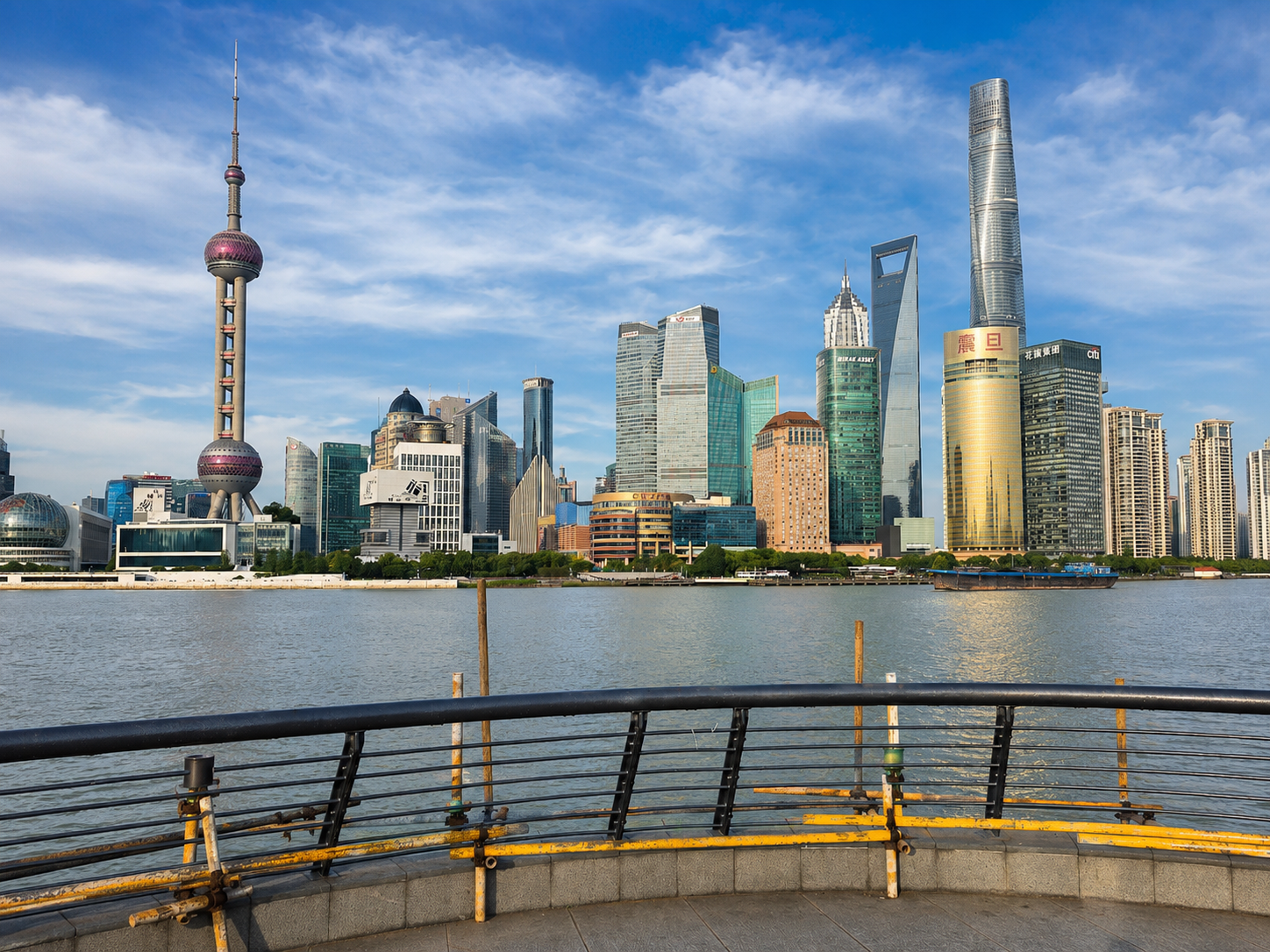
The Oriental Pearl Tower looks as though someone designed it during an unusually optimistic vision of the future. Behind it, the Shanghai World Financial Center opens like an enormous bottle opener, while Shanghai Tower twists upward above everything around it.
This is the Shanghai that appears in films, airline advertisements and global business reports.
Standing on the Bund, it is difficult not to admire the sheer confidence of it. Pudong was not built to blend discreetly into the landscape. It was built to declare that China had arrived.
And yet the river prevents the view from becoming sterile. Boats pass in front of the towers, working infrastructure interrupts the clean skyline, and the movement of the Huangpu reminds you that Shanghai became powerful as a port long before it became a vertical financial centre.
The city is futuristic, but it is not detached from its past.
It simply builds over it.
When the lights come on
After dark, Nanjing Road changes the rhythm completely.
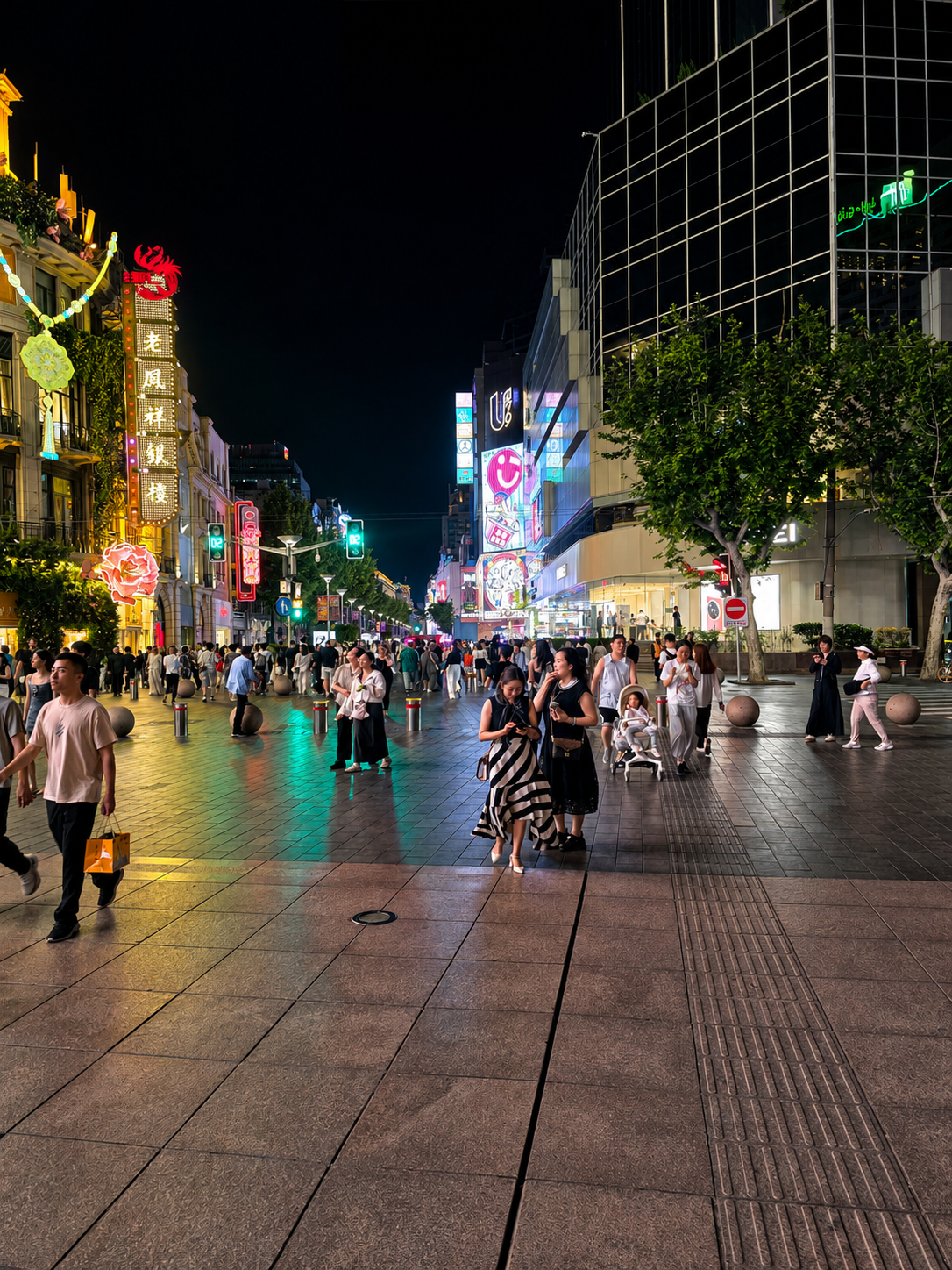
During the day, the street is a commercial axis lined with department stores, historic facades and modern shopping centres. At night, it becomes an urban theatre of neon, screens, movement and noise.
There are people everywhere.
Families push prams through the crowd. Young couples pose beneath illuminated signs. Groups stop suddenly in the middle of the flow to take photographs. Shop assistants call customers inside. Food stalls release unfamiliar smells into the air.
The scale is intense, but the atmosphere never felt threatening.
Police officers watched the pedestrian zone from elevated chairs resembling those used by tennis umpires. The arrangement looked slightly absurd, but it allowed them to observe the crowd without filling the street with visible security barriers.
Street sellers occasionally approached with offers of watches, bags and other suspiciously affordable luxury goods, but they were rarely persistent.
The city remained busy, bright and remarkably controlled.
Shanghai at night does not invite quiet contemplation. It demands attention.
The China I thought I knew
The following morning, I went in search of a more traditional version of the city.
Yu Garden appeared to offer exactly that.
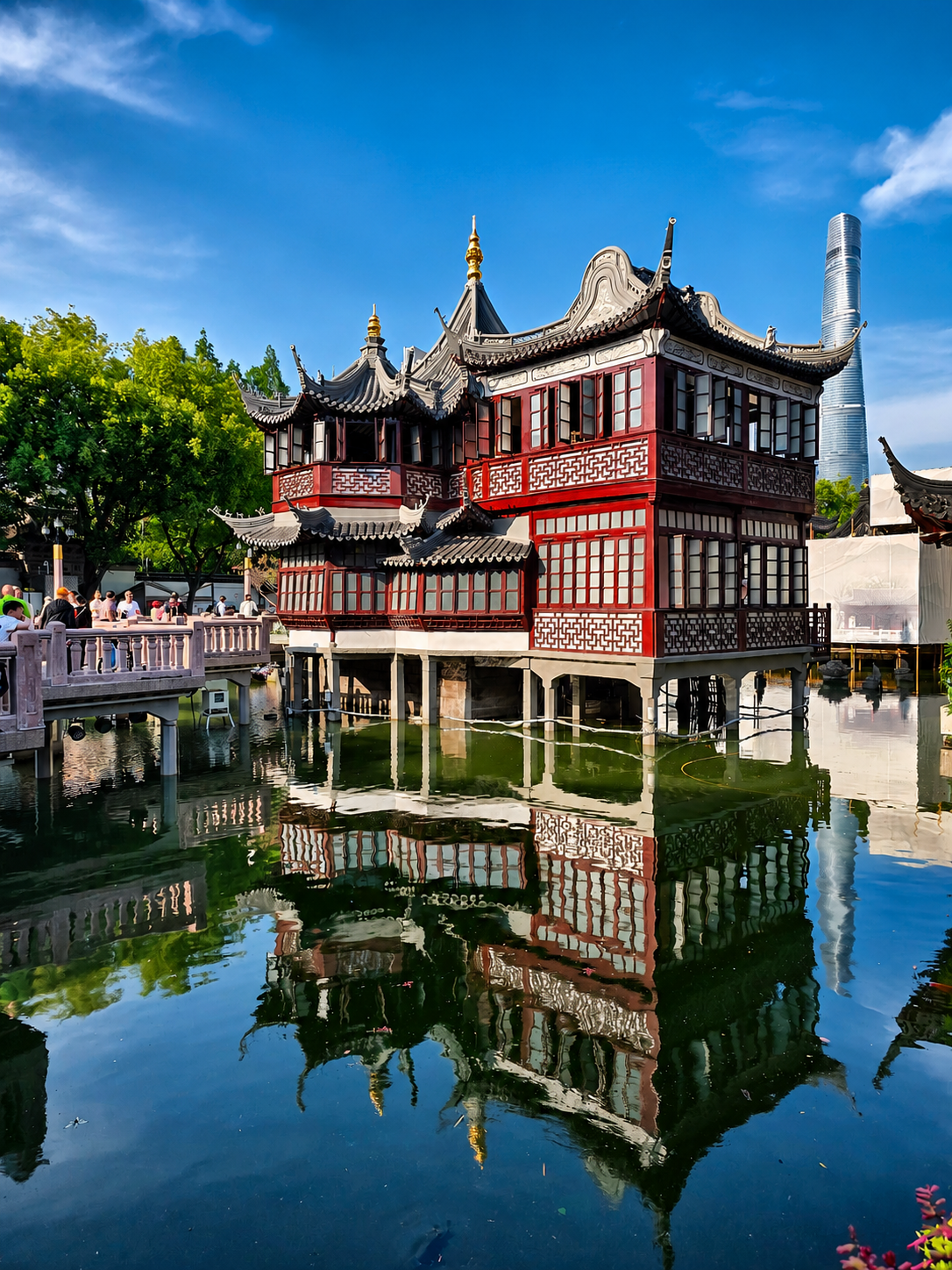
The garden was created during the Ming dynasty as a private refuge for an official’s ageing father. Its name is associated with peace, comfort and contentment.
Visually, it is almost perfect.
There are curved roofs, ornamental windows, rocks shaped into miniature mountains, narrow passages, ponds, bridges and pavilions positioned with deliberate asymmetry. Every view seems designed to become a painting.
It was the idealised China I had carried in my head for years.
I received almost everything I expected—except peace.
The paths were crowded. Tour guides squeezed groups through narrow openings. Visitors competed for photographs on bridges and in front of pavilions. Safety signs and restored surfaces repeatedly broke the illusion of timelessness.
The beauty was real.
The serenity was largely theoretical.
Still, one detail captured Shanghai better than any isolated temple or skyscraper could have: behind the traditional pavilion, Shanghai Tower rose into the sky.
The past was not preserved in a separate museum district. It existed directly beneath the future.
When Shanghai stopped performing
The place that finally gave me the quiet I had been expecting was the Jade Buddha Temple.
It stands in an otherwise ordinary urban area, surrounded by residential buildings, shops and modern construction. From outside, it is surprisingly easy to miss.
Inside, the atmosphere shifts.
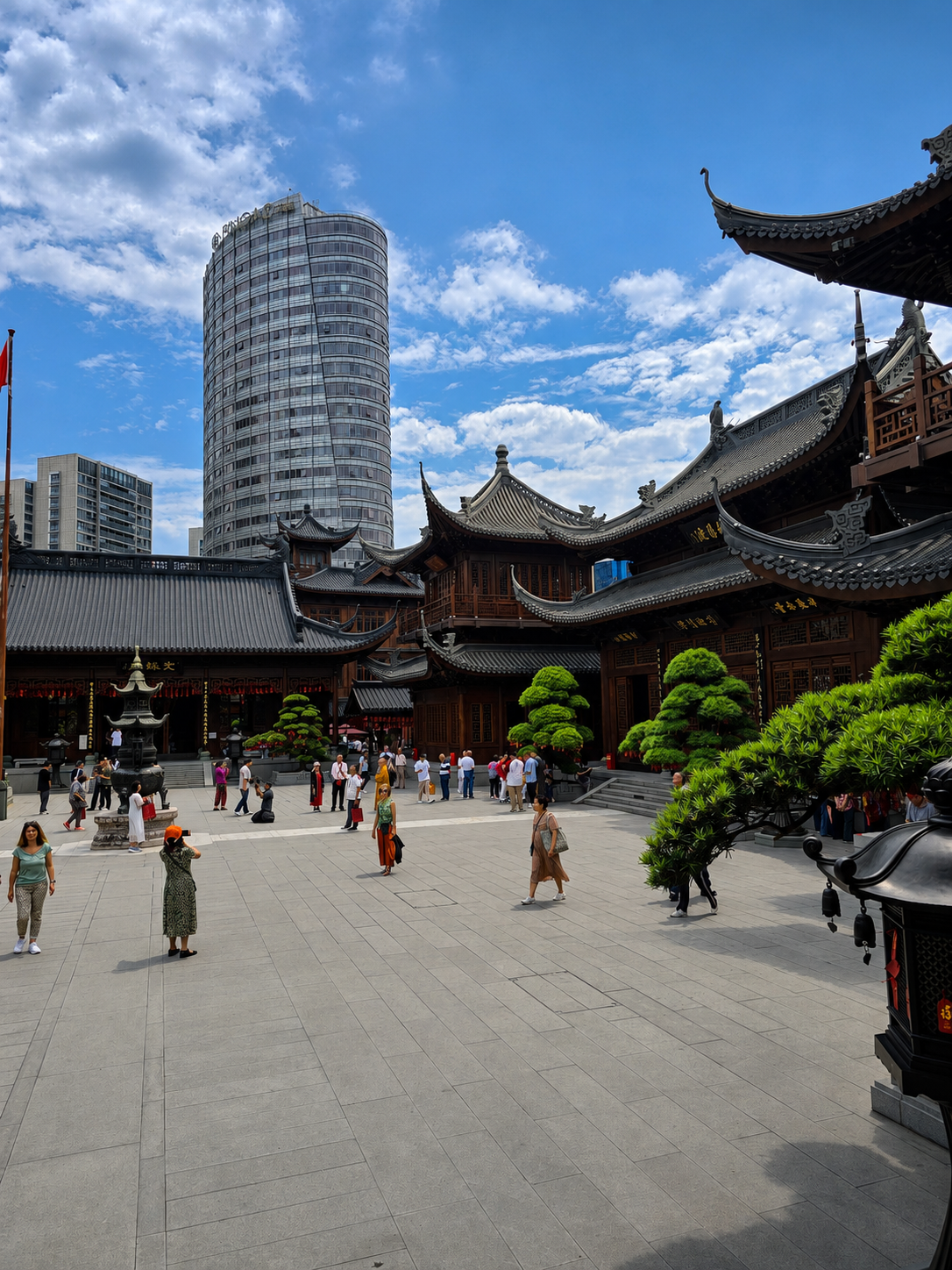
I cannot explain exactly what created the feeling.
It was not silence—the temple was not silent. Visitors moved through the courtyards, bells sounded occasionally, and voices travelled between the wooden buildings.
It was not one particular statue, smell or ritual either.
It was the combination: incense, bowed heads, handwritten prayers, offerings of fruit, red lanterns and the restrained presence of monks.
The calm felt almost physical.
Slightly unreal.
For a brief moment, Shanghai stopped trying to impress me.
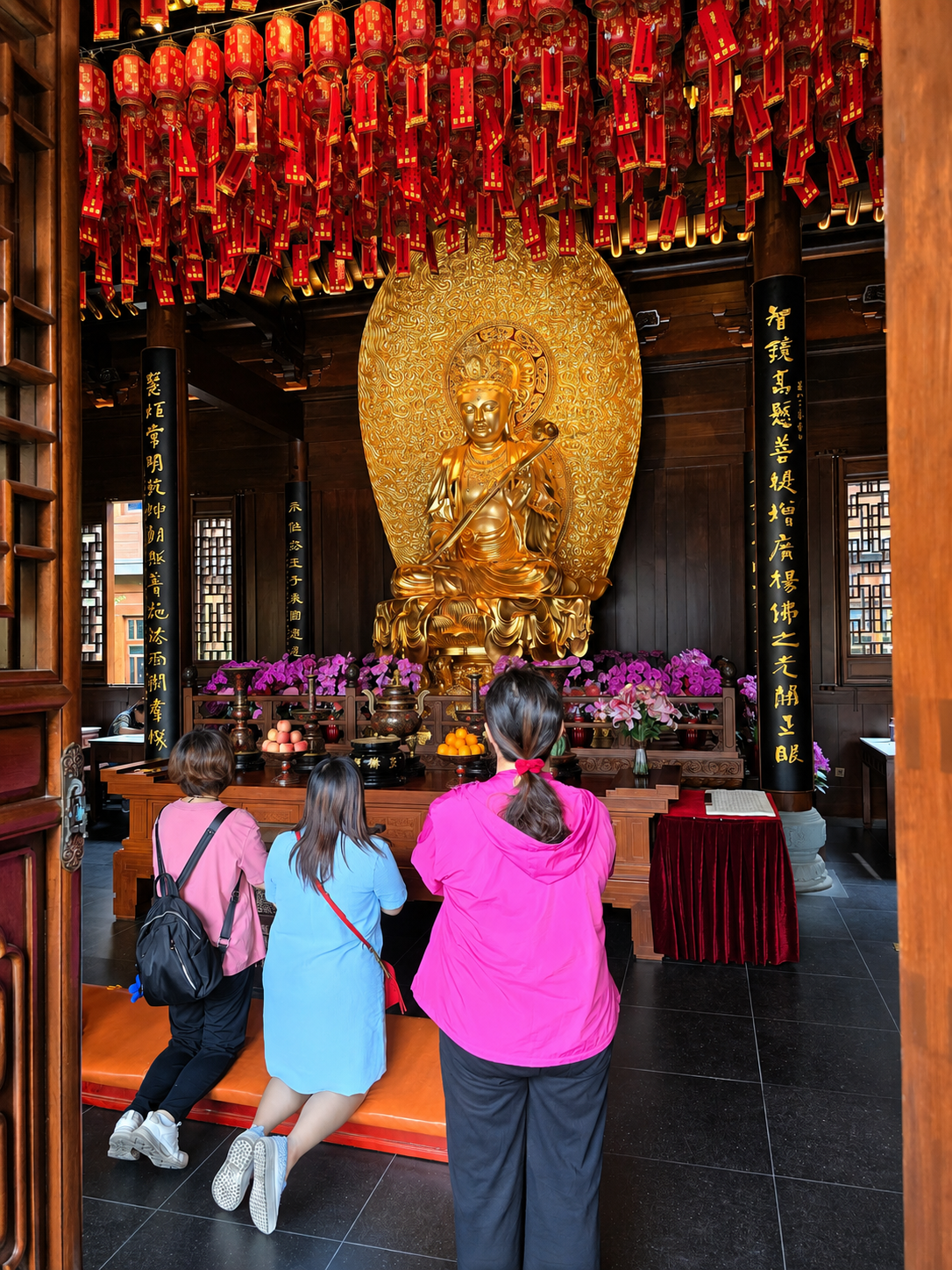
People approached the statues without theatrical ceremony. Some stood with incense between their hands. Others bowed deeply or knelt on the cushions in front of the altars.
Nothing seemed arranged for tourists.
The temple was not a historic shell animated for visitors. It remained a living religious space in which ordinary people came to ask for protection, health, prosperity or peace.
I had visited grander temples before, but few had produced such a strong sense of energy.
That word is vague, and perhaps slightly irrational. Still, it is the most honest one I have.
Something in that place felt different.
Behind the skyline
I could have taken a taxi back to the hotel.
Instead, I decided to walk.
The route lasted roughly an hour and carried me away from the monumental Shanghai of brochures and observation decks. The towers remained visible in the distance, but the streets became narrower and less polished.
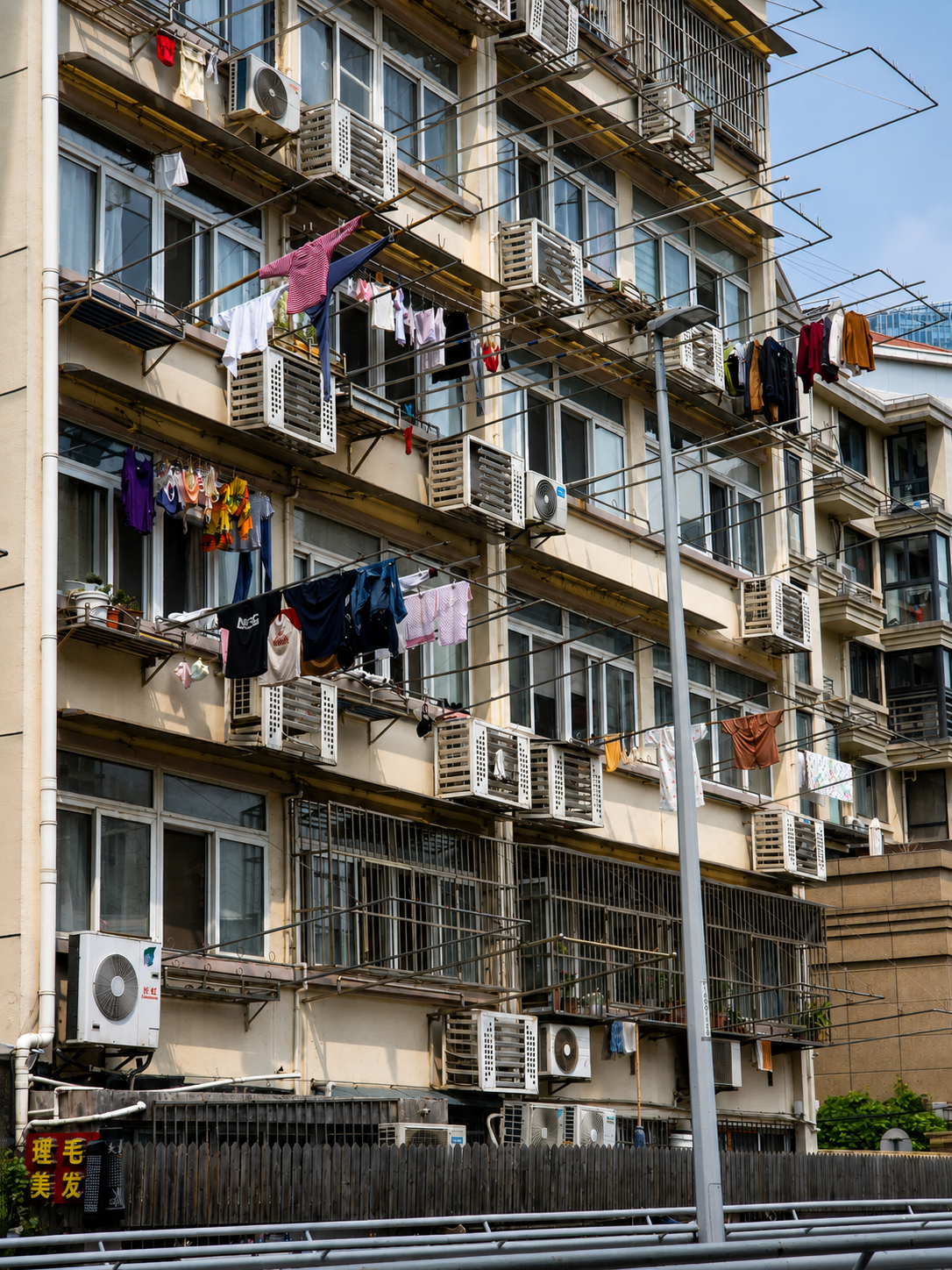
Apartment facades were covered with air-conditioning units, improvised metal frames and laundry drying above the street. Shops became smaller. Pavements were less immaculate. The carefully maintained surfaces of the tourist centre disappeared.
The moment that truly broke the polished image of Shanghai was surprisingly ordinary.
Factory workers were sitting on the pavement, eating lunch from metal containers.
There was no misery being staged for dramatic effect. No one was asking to be observed. They were simply eating before returning to work.
That was precisely why the scene stayed with me.
After the spotless trains, illuminated towers and faultless hotel service, the thought was blunt:
After the spotless trains, illuminated towers and faultless hotel service, Shanghai had finally stopped presenting itself. This was not the city performing for visitors. It was simply the city at work.
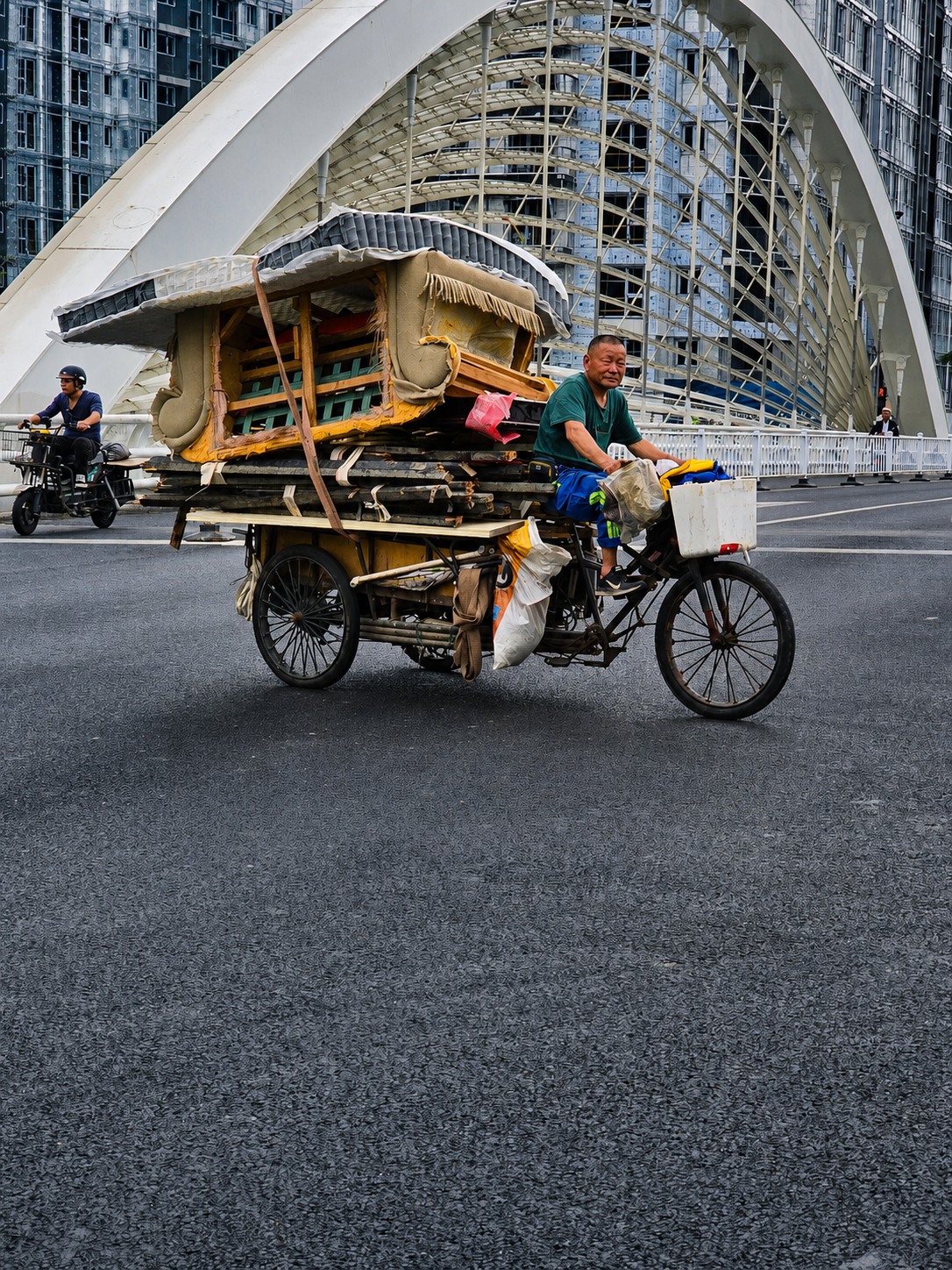
Small motorcycles and cargo tricycles passed with loads that seemed structurally absurd: cardboard, timber, discarded furniture and bags stacked far above the rider’s head.
Somehow, everything kept moving.
What surprised me just as much as the visual contrast was the feeling of safety. Even in streets that looked worn, cluttered or poor, I never felt uncomfortable. I was clearly a foreigner walking alone through areas with no obvious tourist function, yet nobody bothered me.
Shanghai became less polished, but never threatening.
Then I saw the man with the QR code.
The most Shanghai thing I saw
He was sitting on the ground beside an ordinary street.
There was no dramatic background and no carefully arranged scene. Around his neck hung a lanyard with a printed QR code, ready to receive digital donations through a mobile payment app.
I did not photograph him.
I did not scan the code either. I was too surprised to react quickly enough.
I simply stared, caught somewhere between the absurdity of the scene and a strange admiration for a society in which even begging had become technologically advanced.
In China, almost everything is paid through Alipay or WeChat Pay: restaurants, taxis, metro tickets, street stalls, convenience stores and vending machines.
Apparently, poverty had also gone cashless.
It would be easy to turn the man into a neat symbol—a lesson about inequality, progress or the failures of modern capitalism.
But that would be dishonest.
At that moment, I did not formulate a theory. I was simply shocked by the collision of two things I had not expected to see together: extreme technological adaptation and the oldest form of human vulnerability.
That single image stayed with me more stubbornly than many of Shanghai’s famous landmarks.
A city that refused to become simple
I had arrived expecting futuristic trains, enormous towers and a city operating several steps ahead of Europe.
Shanghai gave me all of that.
It also gave me an overcrowded garden built for serenity, a temple that produced a calm I still cannot properly explain, workers eating lunch on the pavement, overloaded tricycles and a man begging with a QR code around his neck.
From the upper floors of the hotel, the city had looked almost comprehensible: roads, parks and towers arranged into a vast urban composition.
At street level, it resisted every simple conclusion.
By the time I returned to the hotel, The China I had imagined no longer seemed better or worse.
It simply seemed far more complicated.
And far more interesting.
