
 Istanbul, Marmara Region, Turkey
Four Istanbul hotels: a spectacular suite, an efficient stopover, exceptional hospitality and a cocktail that became a minor engineering project.
Choosing between Istanbul hotels can easily become part of the journey itself. Stay in Etiler and the city feels modern, vertical and distant from the postcard version most visitors come to see. Move to the historic peninsula and suddenly mosques, bazaars and centuries of accumulated Istanbul are outside the door. Stay closer to Maçka and the city changes again. I discovered this almost by accident. Over roughly a decade, several visits and twelve different hotels, I kept changing not only rooms but versions of Istanbul.
For years, Istanbul also dominated my personal map of Turkey; only much later did I start correcting that imbalance, including with a road trip through İzmir and Pamukkale.

This is therefore not a list of the twelve best hotels in the city, nor should an experience from ten years ago be mistaken for a recommendation made today. Hotels are strangely alive. Staff change, management changes, buildings age, restaurants disappear, brands arrive and leave. A hotel that once seemed effortlessly brilliant can slowly lose whatever made it special; another can survive multiple returns and still deliver the same thrill. Two of the hotels in this series no longer even exist under the identities in which I knew them. Others are still there, although the guest checking in today may meet a rather different hotel from the one I remember.
What interests me more is what survived in memory. In this first part, that means the first suite that genuinely made me stop at the door and stare, a perfectly efficient hotel that left almost nothing behind once I checked out, a tiny former bank where almost every member of staff seemed personally invested in my stay, and a bartender whose attempt to make one cocktail eventually required equipment normally associated with baking.
The Suite That Made Me Forget to Breathe
From my earliest days with SPG — the Starwood loyalty programme that would later become part of Marriott — Le Méridien Istanbul Etiler seemed to pop up everywhere. It appeared constantly in hotel advertising and, above all, on the SPG promotional channel playing on guest-room televisions. There were plenty of other glamorous hotels in those montages. This was the one that stuck.
Something about its architecture, contemporary design and almost residential-looking suites kept pulling my attention back to Istanbul. Eventually, about twelve years ago, I decided to spend the New Year holidays there. I also decided to spoil myself and booked a Junior Suite with a Bosphorus view. No upgrade, no status trick. I paid for exactly what I wanted.
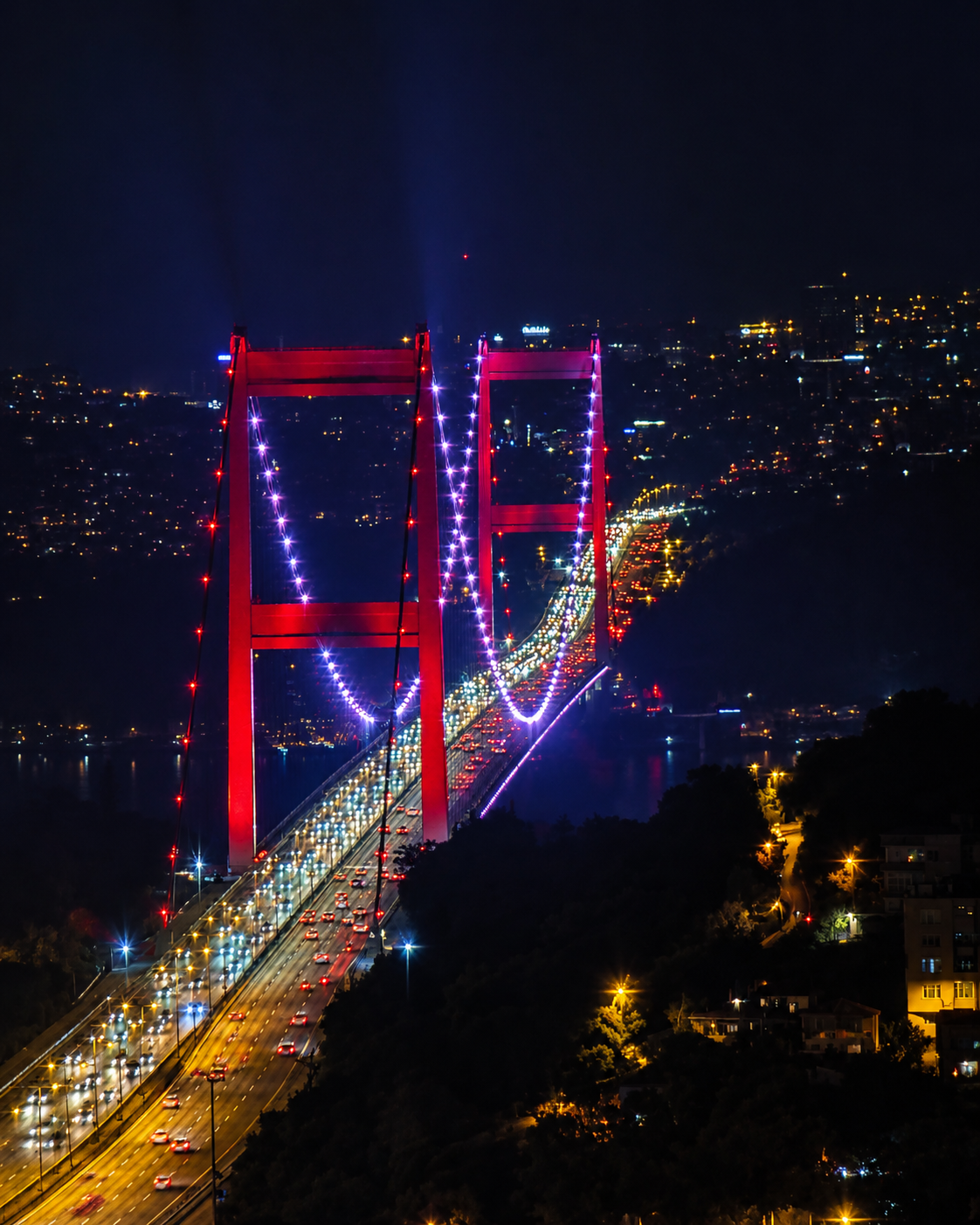
I arrived after dark. Everyone was exceptionally welcoming, but nothing could have prepared me for the moment I entered the suite and looked towards the balcony. I simply stopped, mouth open. The illuminated Bosphorus bridge seemed to float in the darkness in front of me.
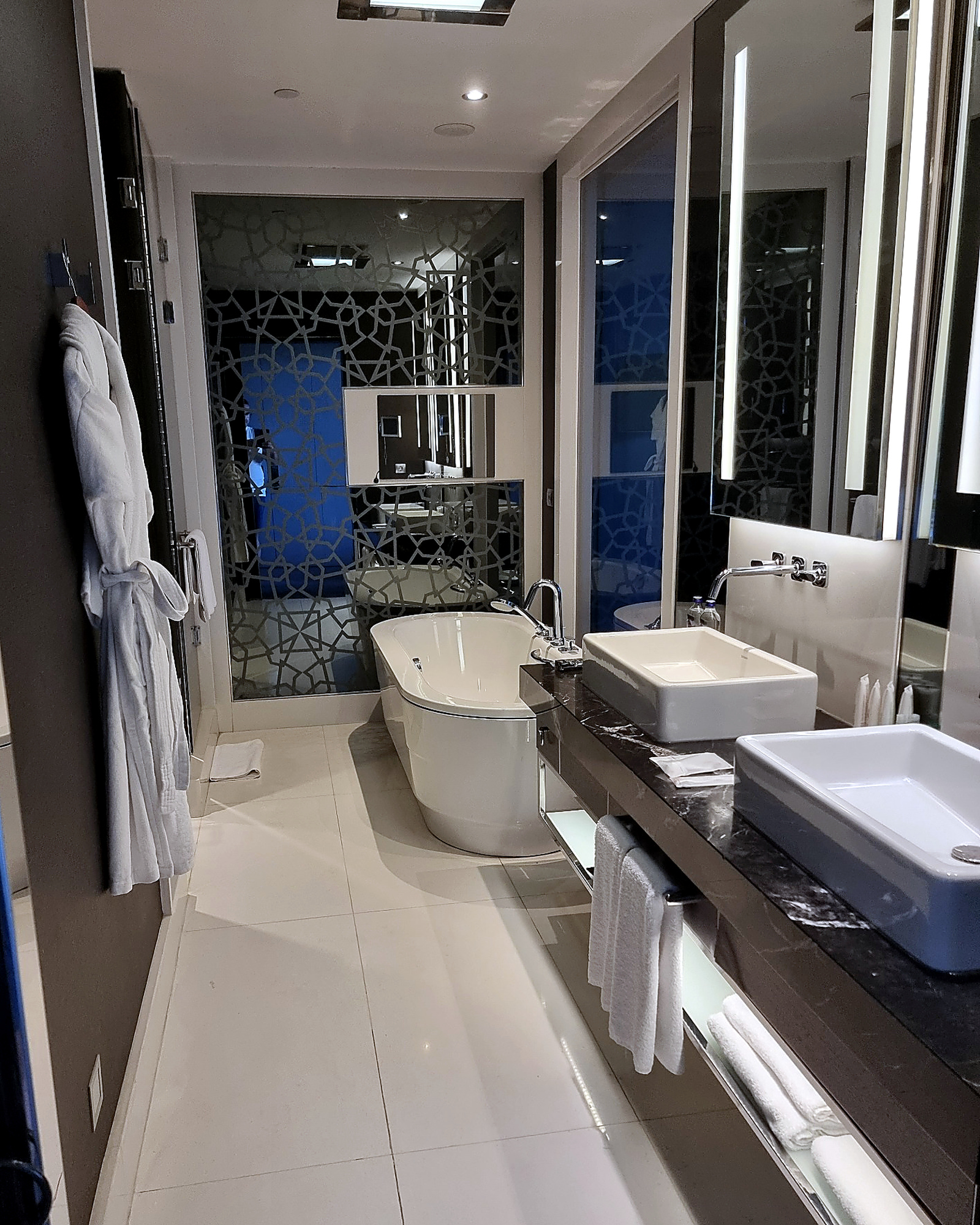
The suite itself was spectacular: spacious, technologically advanced and aggressively modern. There was even a television built into the bathroom wall, something that twelve years ago felt almost absurdly futuristic. Add the generous welcome amenities and the striking interior design, and there was plenty to be impressed by. But for those first few seconds, none of it mattered. That view alone was worth every lira I had paid.


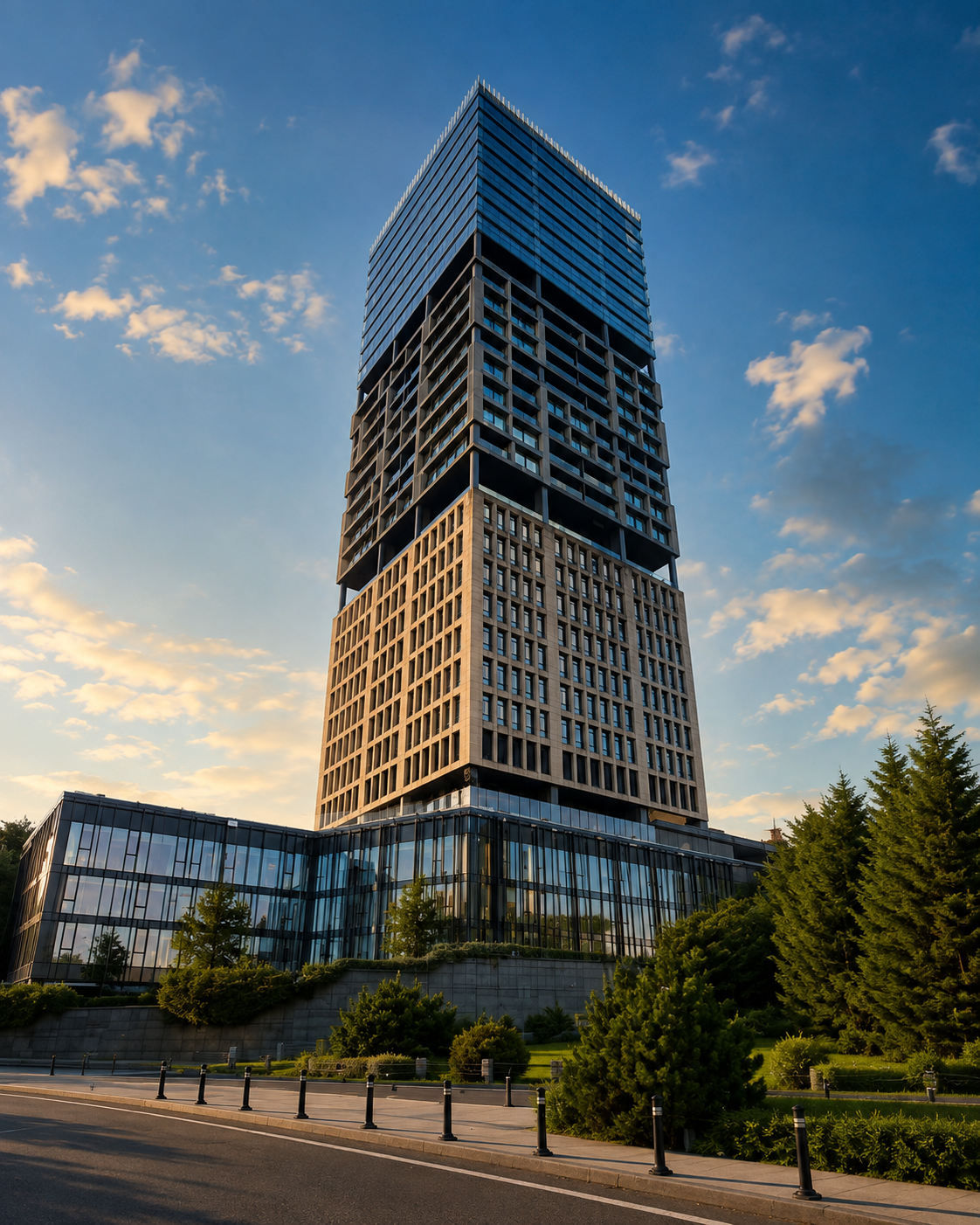
Only later did I learn that the architecture which had first caught my attention in all those SPG commercials was the work of Emre Arolat. Opened in 2012, the hotel rises 34 storeys above Etiler, with stacked volumes and terraces that explain why it had looked so different to me long before I ever stepped inside. The first stay confirmed that my fascination had not been misplaced. I returned during both of my next visits to Istanbul, and neither stay gave me a reason to change my mind. I would happily return again.
Le Méridien is emphatically not a hotel for somebody who wants to step outside and immediately walk to Istanbul’s major sights. Public transport and the hotel sometimes seem to operate on separate railway lines. But that is almost beside the point. This is the kind of hotel you enter and very quickly stop seeing any urgent reason to leave.
Birkenstocks Are Apparently Where Luxury Draws the Line
As a statistician, I understand that the probability of staying three times in an excellent hotel without eventually finding something to complain about must be dangerously close to zero. And, frankly, those small failures make a hotel more interesting. Mine arrived in August 2022, during my third stay. Istanbul was hot, linen from head to toe seemed to have become the unofficial male summer uniform, and the fashion magazines had spent the season convincing men that open sandals — Birkenstocks very much included — were no longer something to apologise for but an entirely legitimate part of a contemporary summer outfit. Judging by the streets, plenty of men had accepted the invitation rather enthusiastically.
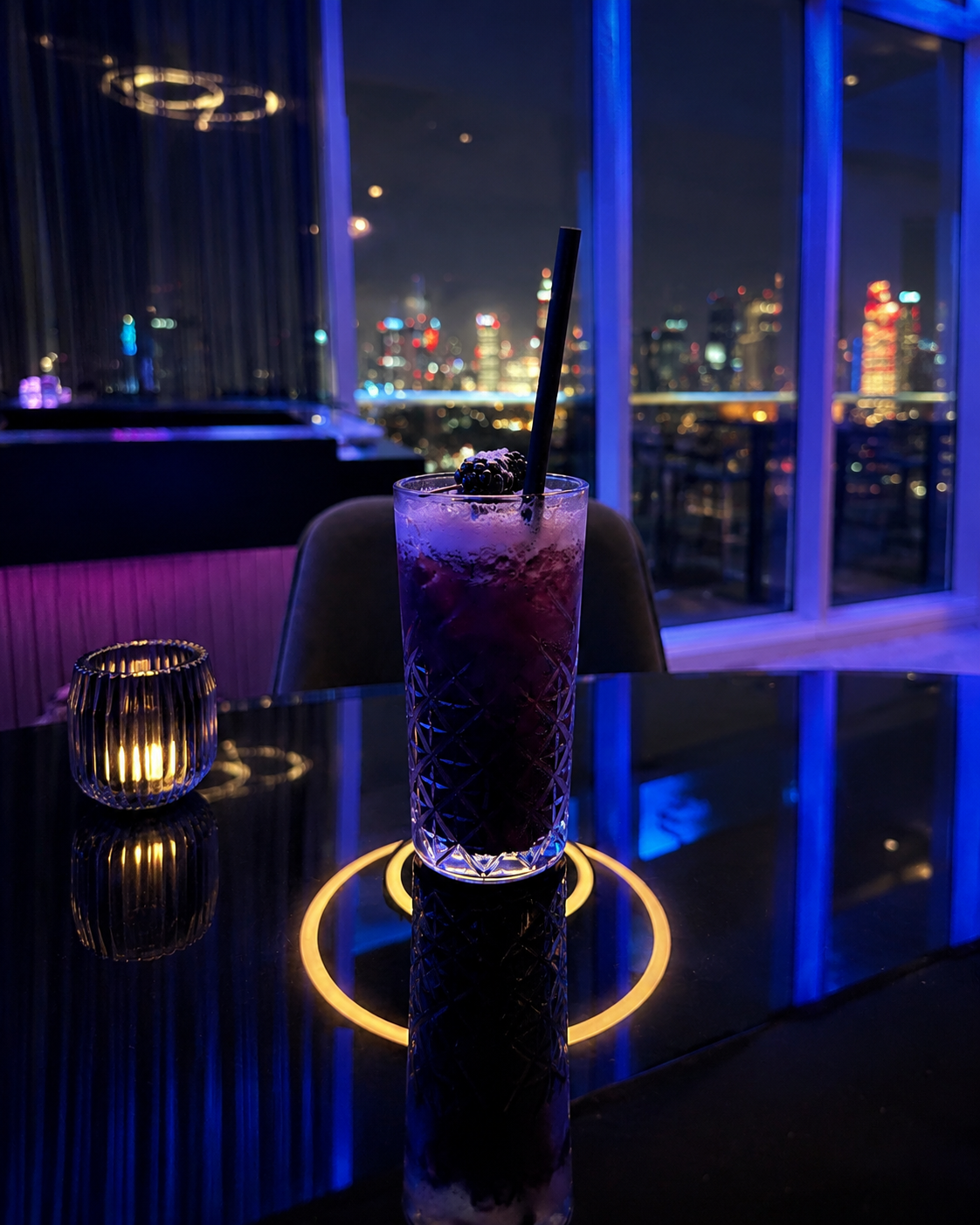
The male host at L’Eclipse, Le Méridien’s rooftop bar, apparently disagreed. Linen was fine; bare toes were not. I was told I could enter only after going back to my room and putting on “proper shoes”. Fair enough. I can live with a dress code. So I went back down to the room and returned in summer suede loafers — worn barefoot, because I was not prepared to surrender completely. Entry granted.
Then I looked around.
At one of the tables sat a family dressed considerably closer to sportswear and beachwear than anything I had been wearing. Mother and one teenage son had plastic beach slides on bare feet; father and the other teenager were in running shoes. Suddenly my very contemporary summer outfit had apparently become the only threat to the dignity of the rooftop. At that point my pedagogical instincts kicked in and I asked the host to explain the logic. His English became noticeably less ambitious, empathy entered the conversation, and eventually we reached the wonderfully flexible territory of “hotel policy” and a little understanding — precisely the understanding that had somehow not been available to me ten minutes earlier.
That was a mistake. You do not invoke an unwritten rule in front of a professor and expect him not to examine it.
I drank my cocktail, took some spectacular photographs from the rooftop and then went down to reception. I asked for the manager on duty and posed a very simple question: what exactly was the hotel’s dress code? There wasn’t one. So either the host had invented his own policy or Birkenstocks had personally offended him.
Financially, my stubbornness worked out rather well. The manager was genuinely appalled, immediately removed the cocktail from my bill and, a few days after check-out, sent me another apology together with a substantial number of Marriott Bonvoy points — roughly a quarter of what I needed for another stay at the hotel at the time.
And that is actually another reason I would return. Hospitality is not about pretending mistakes never happen. Hotels are run by people; eventually somebody will make a stupid decision. What matters is how quickly the hotel fixes it. Le Méridien irritated me over what was, that summer, an entirely normal part of a contemporary outfit and then repaired the damage at remarkable speed. I left with a free cocktail, a useful pile of points and another story about a hotel I still liked. I can only hope the host’s corrective training involved being forced to wear Birkenstocks for at least a week.
The Best Shave of My Life
But I do not want to leave Le Méridien on a pair of Birkenstocks. After all, the best shave of my life happened there. The reason was considerably less glamorous than the result: pure laziness. I needed a shave, the hotel had its own hair salon, and I could not see why I should bother doing it myself.
What followed was a proper Turkish wet shave: hot towels, lather, razor, patience — the whole ritual. Except the barber somehow managed to be both meticulous and remarkably efficient. I barely felt the blade. It seemed to glide across my face as though it were moving through butter rather than tackling my exceptionally stubborn beard, which develops distinctly sadistic tendencies the moment a razor loses even a fraction of its sharpness. I went in because I could not be bothered to shave myself. I came out wondering why I ever did.
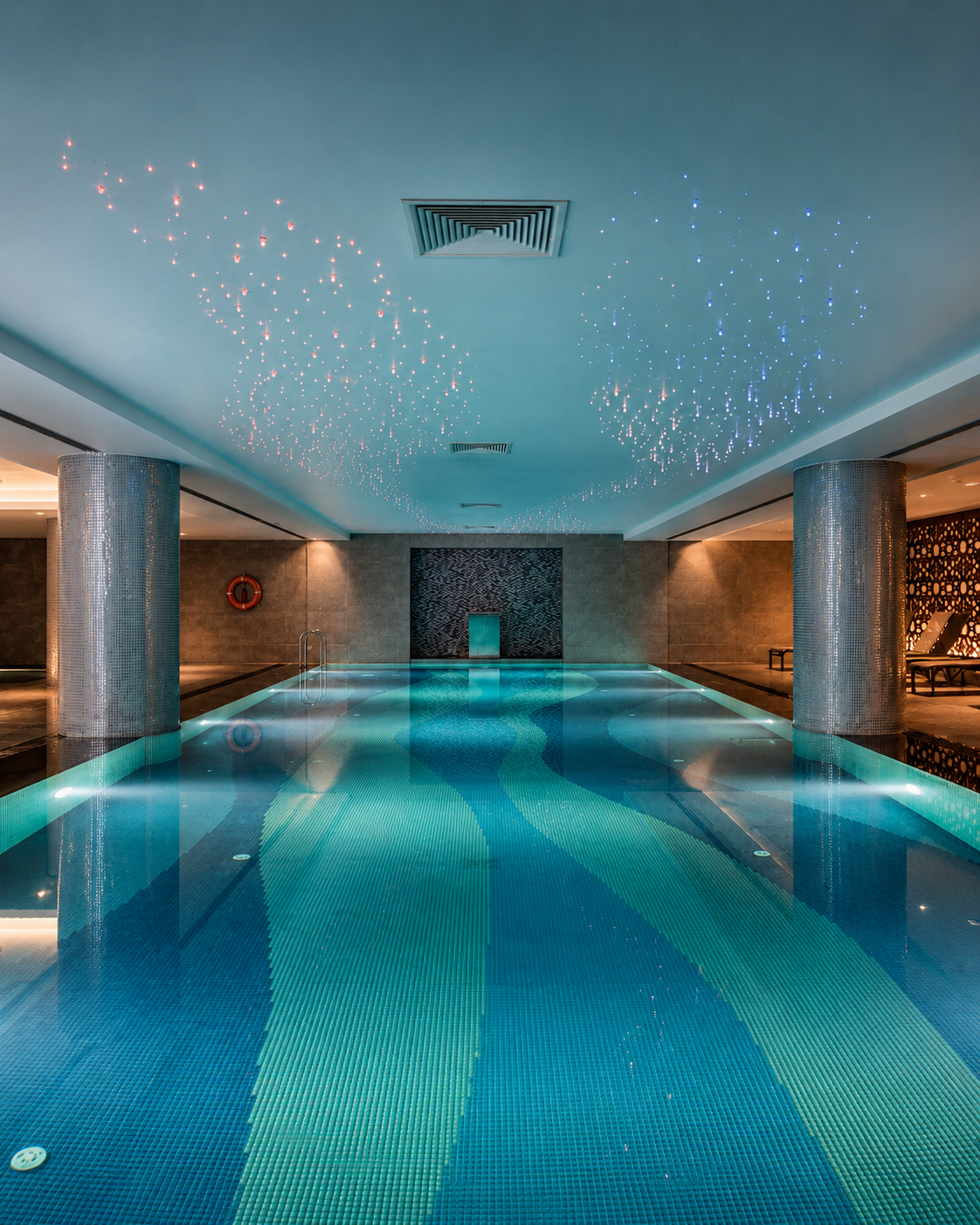
The hair salon is part of Le Méridien’s much larger spa and wellness complex, another reason the hotel works so well for me. Staying inside never feels like wasting Istanbul. Over three visits, the spa and pool gradually stopped being facilities I went to inspect and became places I simply used. By the third stay, going downstairs for a swim felt almost routine.
And there was one particularly luxurious detail that the hotel could hardly take credit for: the other guests apparently had more interest in Istanbul than I did. On several occasions I had the pool almost entirely to myself. A huge hotel, a serious spa, a beautiful indoor pool — and nobody in it.
A Bosphorus view that once left me speechless, a hotel I returned to twice, a dress-code argument that ended with compensation, one absurdly good shave and a swimming pool that frequently felt private. I am not sure what more I could reasonably ask from a hotel. Perhaps that is the simplest explanation for why Le Méridien Istanbul Etiler remains one of the few hotels I already know I will check into again.
Perfectly Fine — and That Was the Problem
My first day in Istanbul had not been particularly successful from a sightseeing perspective. Le Méridien had simply trapped me. Had I chosen another statement hotel immediately afterwards, I might have been in serious trouble. There was a real possibility that I would spend several days in Istanbul and somehow fail to see even Hagia Sophia.
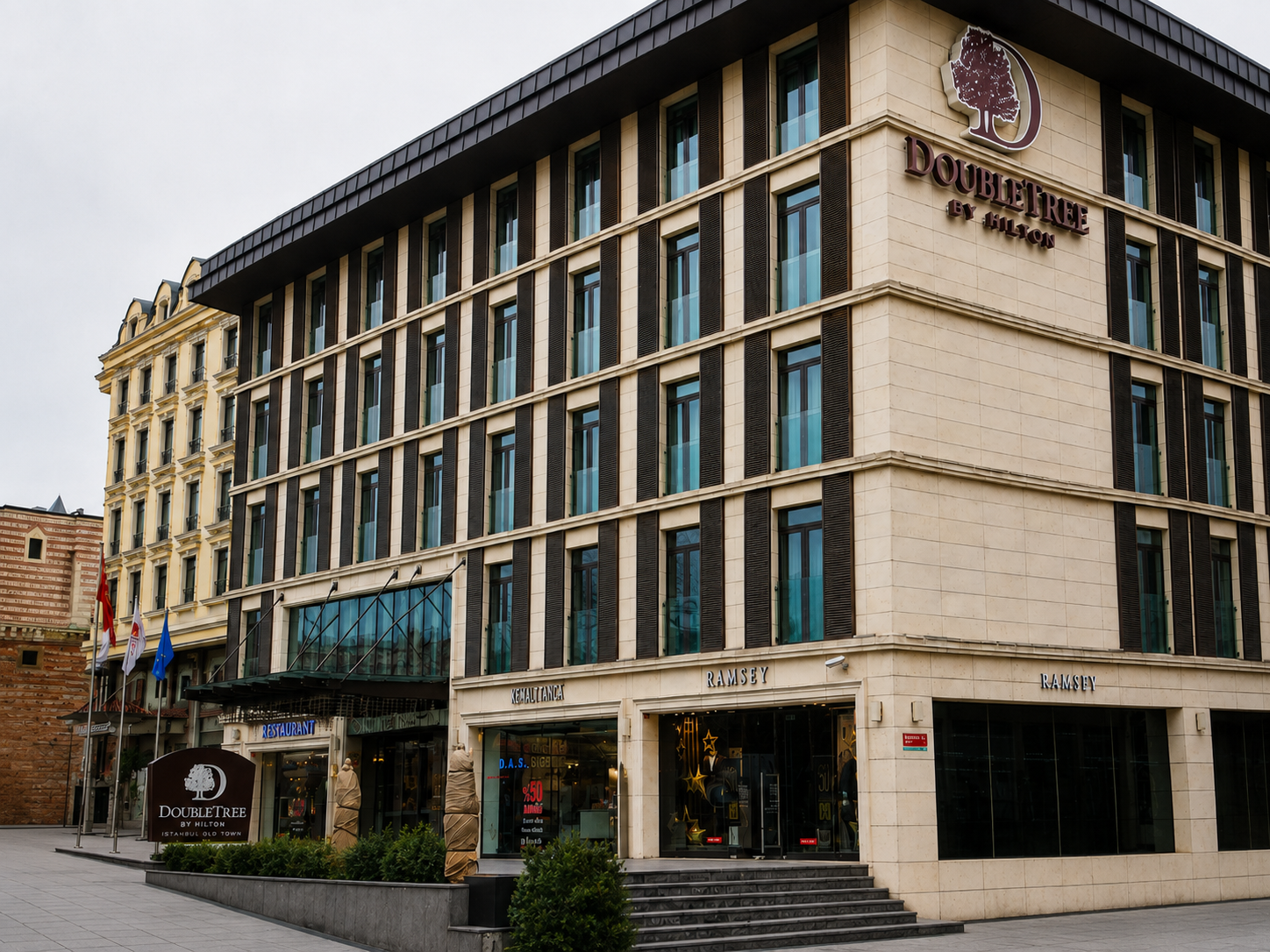
Fortunately, my second hotel had been chosen for exactly the opposite reason: tourism. I wanted a location that would practically force me out into the city. A hostel was obviously out of the question — my nature requires at least four stars — but I managed to combine principle with practicality. My solution was DoubleTree by Hilton Istanbul Old Town.
And for sightseeing, it worked extremely well. The Grand Bazaar was practically on the doorstep — Hilton puts it only about 200 metres away — while the tram ran almost directly in front of the hotel. A few stops took me to Sultanahmet, with Hagia Sophia and the Blue Mosque, and for somebody still discovering Istanbul for the first time, the arrangement could hardly have been easier.
The hotel gave me a clean, comfortable room and competent service. The room was pleasant enough, breakfast was good enough and dinner was good enough too. There is a dangerous amount of enough in that sentence, and that is more or less the problem. Nothing went wrong in any memorable way. Nothing went spectacularly right either.
Still, every hotel seems to produce at least a couple of stories. At one point the internet disappeared for a few hours and the staff reacted as though the hotel had accidentally disconnected Istanbul from civilisation. I received so many apologies that eventually I felt I should reassure them that humanity would probably survive until the connection returned. It did.
What I later learned was that this kind of concern was not particularly unusual in Istanbul’s better hotels. In the overwhelming majority of my stays, the staff genuinely seemed to care whether the guest was happy. That may sound like the minimum one should expect from an upscale hotel, but experience further west has taught me that the number of stars and the helpfulness of the staff are not always as strongly correlated as one might hope.
Then there was the food rule.
The hotel did not allow guests to bring outside food into their rooms. This affected me almost entirely in principle. I had eaten dinner in the hotel, I like hotel restaurants and I use room service. I am probably among the last guests likely to arrive at reception carrying a kebab and three supermarket bags. But once I have paid for a hotel room, I develop a surprisingly strong objection to being told that I cannot carry an apple into it. There may have been perfectly sensible reasons for the rule. I remained unconvinced.
And that is more or less what DoubleTree Istanbul Old Town left behind in my memory. It gave me exactly what I had booked, put the Grand Bazaar almost outside the door, made sightseeing wonderfully easy and did practically everything properly. I could recommend it without hesitation to somebody looking for exactly that combination. I simply never felt any urge to return. It was perfectly fine — and that was the problem.
This Is What Hospitality Looks Like
If DoubleTree Old Town was the hotel that did almost everything properly without leaving much behind, Orientbank Hotel managed almost the opposite. I stayed there for only one night in 2022, yet I still remember the people, the food, the rooftop and several tiny details more clearly than rooms in hotels where I have spent three or four days.
The experience started before I even reached the building. The hotel had arranged my airport transfer and stayed in touch through WhatsApp while I was on the way. When I had trouble locating the driver at the airport, somebody from the hotel remained involved until we found each other. By the time I finally reached the historic peninsula, I already had the unusual feeling that the hotel was actively waiting for me rather than merely expecting another reservation to appear at reception.
That feeling continued immediately on arrival. My welcome drink was freshly squeezed pomegranate juice, perfectly chilled and exactly what I wanted after the journey. It is a tiny detail, but Orientbank would turn out to be exceptionally good at tiny details.
The location deserves more explanation than simply saying Sirkeci. Orientbank stands in Istanbul’s old commercial heart, practically at the entrance to the Spice Bazaar. The Galata Bridge is almost outside the door; Sultanahmet, Hagia Sophia, the Blue Mosque and Topkapı are comfortably walkable in one direction, while crossing the bridge takes you towards Galata and Pera in the other. For somebody who likes exploring cities on foot, it was almost ridiculous how much of Istanbul suddenly seemed to be within reach.
There is, admittedly, one serious disadvantage to sleeping practically beside the Spice Bazaar. Your suitcase can gain weight at a speed that would concern a physician. Spices, tea, sweets and things that seemed completely unnecessary five minutes earlier have a remarkable ability to follow you back to the hotel.
But Sirkeci also carries another association, and that association fitted Orientbank almost suspiciously well. A few minutes away is the historic Sirkeci railway station, once Istanbul’s European gateway and the eastern terminus of the Orient Express. Today the network is infinitely more rational: the Istanbul–Sofia Express departs from Halkalı, while most high-speed services from Ankara terminate at Söğütlüçeşme. Both stations are linked directly to the city centre by Marmaray, Istanbul’s now-famous cross-Bosphorus railway, which passes beneath the Bosphorus and connects the European and Asian sides of the city. From an engineering and transport perspective, it is difficult to argue against any of this. From a romantic perspective, however, Istanbul lost something.
That probably explains why Orientbank triggered a faint Orient Express fantasy in me. The obvious Istanbul hotel for such associations is, of course, Pera Palace: it was created specifically to provide appropriate accommodation for the affluent passengers arriving on the Orient Express, and its history is closely associated with Agatha Christie. Orientbank is not Pera Palace, nor would I pretend that it is. My imagination gave it a different role. It felt more like the bank where Hercule Poirot might have stopped to exchange a few pounds for lira.
And there is a wonderful factual detail that makes this little fantasy less ridiculous than it sounds. The former Deutsche Orientbank building and Sirkeci station were both designed by the Prussian architect August Jasmund. The original Deutsche Orientbank A.G. identity still survives in the building, which retains elements of its historic bank architecture beneath the contemporary hotel conversion. So the faint Orient Express atmosphere I was inventing in my head was not entirely without architectural justification.
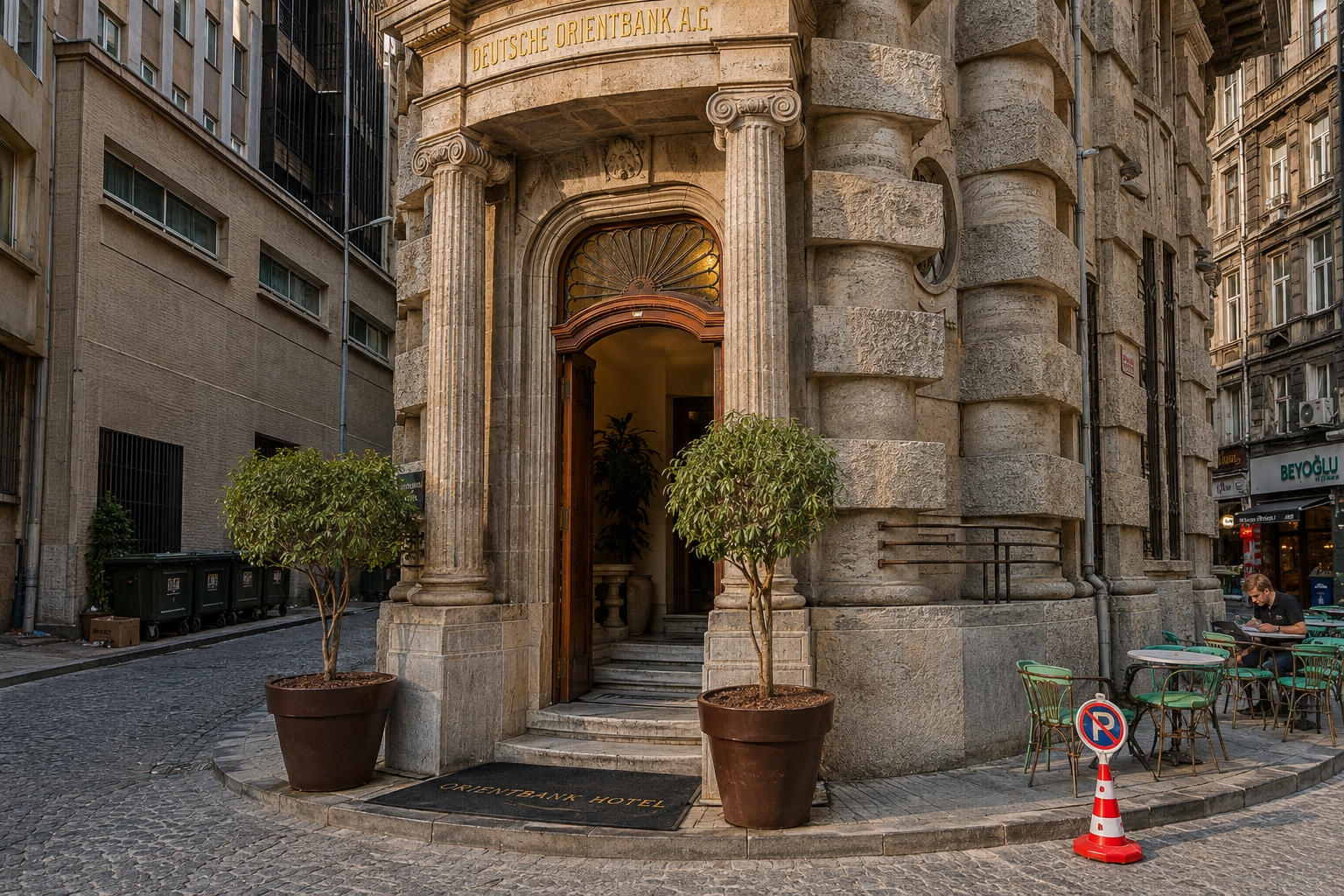
Inside, Orientbank is unusually intimate for a luxury hotel in Istanbul: only 36 rooms occupy the former bank building. Historic architecture inevitably imposes some compromises, the most obvious being a lift so small that guest, suitcase and personal space occasionally have to negotiate terms. But this was a bank, not a purpose-built hotel. I considered the existence of a lift at all sufficient grounds for gratitude.
The welcome at reception continued exactly where the airport communication and pomegranate juice had left off. Everyone seemed genuinely pleased that I had arrived. I received an upgrade, followed almost immediately by an apology that they could not give me a suite because none was available. Considering how few suites this little hotel actually has, I found the apology almost more impressive than the missing upgrade. Late check-out was arranged without drama, requests were answered immediately, and virtually every interaction had the same combination of efficiency and genuine warmth.
Most importantly, there was no single employee I could identify as the star. The whole team seemed to have decided that my stay was somehow their collective responsibility. Even the room felt prepared for me rather than simply for a guest: a personalised welcome letter was waiting, together with a recommendation from the executive chef and other small touches that made the attention feel individual rather than procedural. That, to me, is what hospitality looks like.
The room itself was not enormous, but it was beautifully done: parquet, marble, sculptural lighting and enough personality to avoid looking like an internationally standardised five-star room that could have been transported intact from Singapore to Frankfurt. I liked it very much. But the room was not the reason Orientbank moved so quickly up my private hotel rankings. The physical highlight of the hotel was several floors above it.
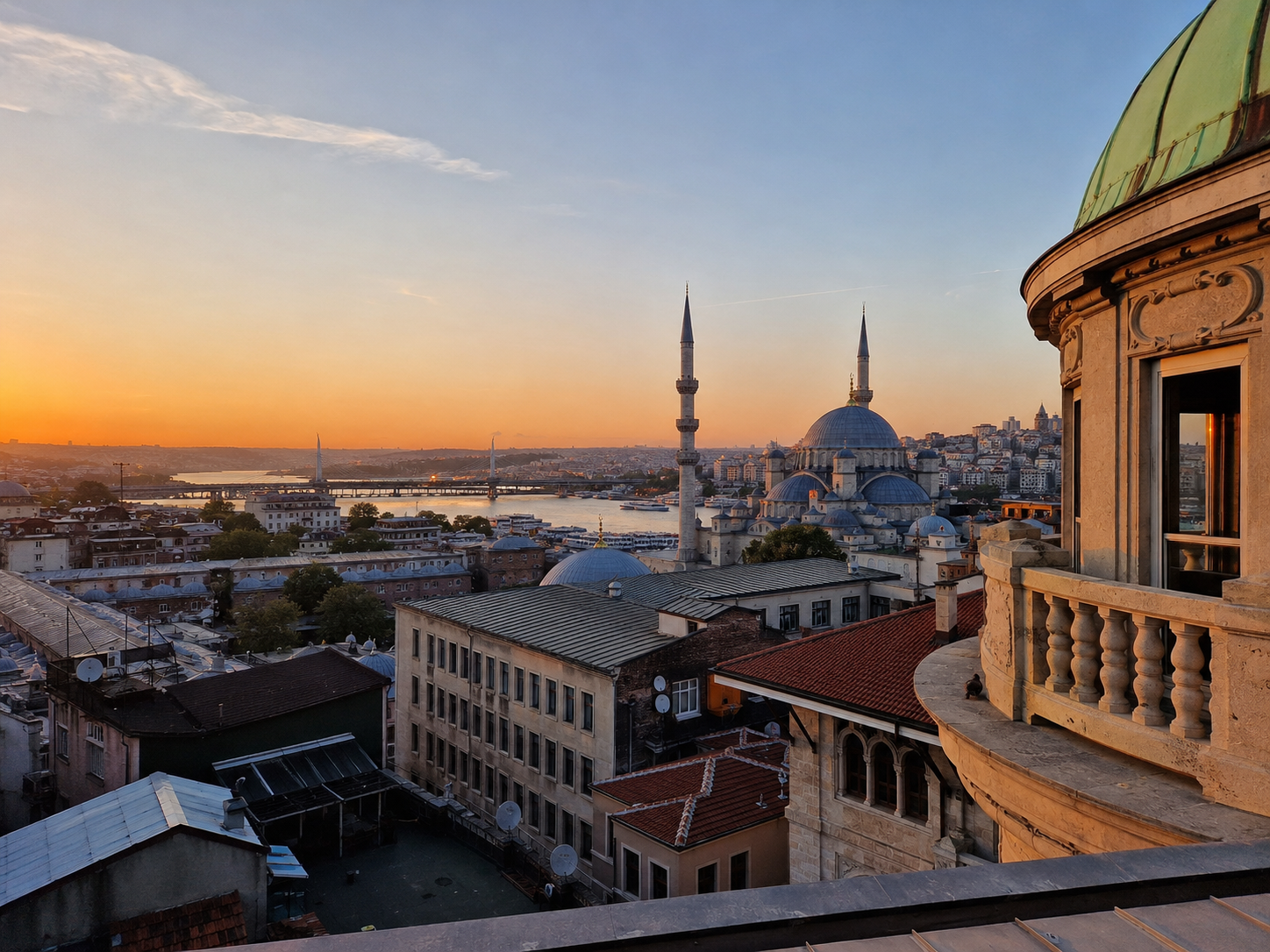
Kuppel, the rooftop terrace around the building’s copper dome, is exceptional. The hotel sits so deep inside the old city that Istanbul opens around you rather than merely appearing in the distance: minarets, domes, ferries, the Golden Horn, Galata, layers of roofs and water competing for attention. Orientbank itself describes the top of the building as a viewing terrace with a clear panorama of Istanbul, but that rather clinical description does not quite prepare you for it. At street level, the location had made Istanbul wonderfully walkable. From Kuppel, the same Istanbul suddenly seemed to fit into the palm of my hand.
I did not have to leave the hotel for dinner either. Dinner stayed firmly in Turkey at first: Ayran Aşı Çorbası, a cold yoghurt soup with chickpeas and garlic, followed by Pideli Köfte, meatballs served over pieces of pide with tomato sauce, yoghurt and butter. Both were excellent and refreshingly free of unnecessary five-star theatricality. Dessert then made an unexpected geographical departure. A full Pavlova arrived covered with cream and fruit, showing remarkably little interest in maintaining the evening’s Turkish narrative.
Later I went from the rooftop to the basement, where Gregor Jazz Club provided a completely different evening. Jazz bars belong more naturally to the American part of my imagination than to the streets around the Spice Bazaar; put a singer beside a microphone in a dark basement and some part of my brain immediately expects New York outside. Still, I had no objection whatsoever. The live music was excellent company, and an Oriental Martini seemed almost suspiciously well named for a jazz club in the basement of Orientbank. The atmosphere was intimate enough that the cultural dislocation became part of the charm.

Breakfast the following morning was the point at which moderation finally collapsed. There was no need to attack a conventional buffet repeatedly. I sat down and watched the table gradually disappear beneath small plates: cheeses, olives, vegetables, spreads, breads, pastries, eggs, potatoes, fruit and several things I had not requested but was apparently expected to consume anyway. Within minutes, almost every usable centimetre of the table had vanished.
It was essentially a private Turkish breakfast buffet delivered directly to me, and I approached this abundance with all the discipline and restraint one might expect from a university professor. In other words, I ate like a pig.
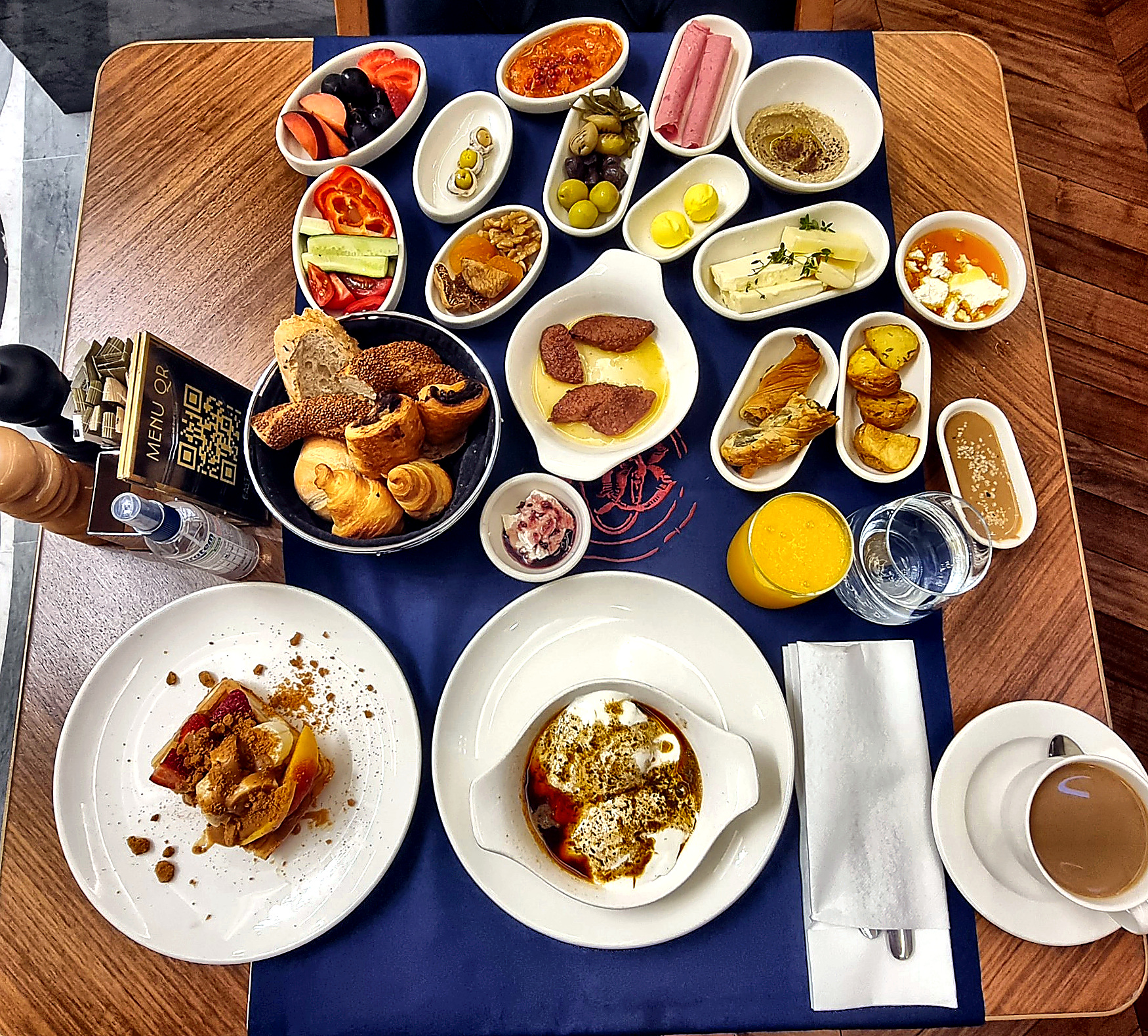
The one obvious thing Orientbank lacked was a proper spa, something that would normally count quite heavily against a hotel for me. Here I barely noticed. The location was too good, the historic building too interesting, Kuppel too spectacular, the food too enjoyable and, above all, the staff far too good at making the whole experience feel effortless.
During that 2022 trip I stayed in six different Istanbul hotels, several considerably more luxurious on paper. Yet after a single night, Orientbank had moved to the top of my private list. It did not have the largest suite, a spectacular swimming pool or the most extravagant facilities. It simply understood something that much grander hotels occasionally forget: luxury can be purchased, but hospitality has to be delivered.
A Cocktail That Required Kitchen Equipment
After Orientbank, almost any hotel was going to feel less distinctive. AC Hotel Istanbul Maçka did not even try particularly hard to compete. It was recognisably an AC from the moment I walked in: modern, restrained, comfortable and polished, but with the kind of international design language that could quite easily have been transplanted to another city.
That was perfectly acceptable because I had booked it for what I remember being an almost ridiculous redemption rate of around 10,000 Marriott Bonvoy points. My status was treated exactly as it should have been, all the expected benefits were honoured and, most importantly, I received a very substantial upgrade. Instead of an ordinary room, I found myself in a genuinely large suite with separate sleeping and living areas, enough space to spread out properly and considerably more hotel than those few thousand points had any right to buy.
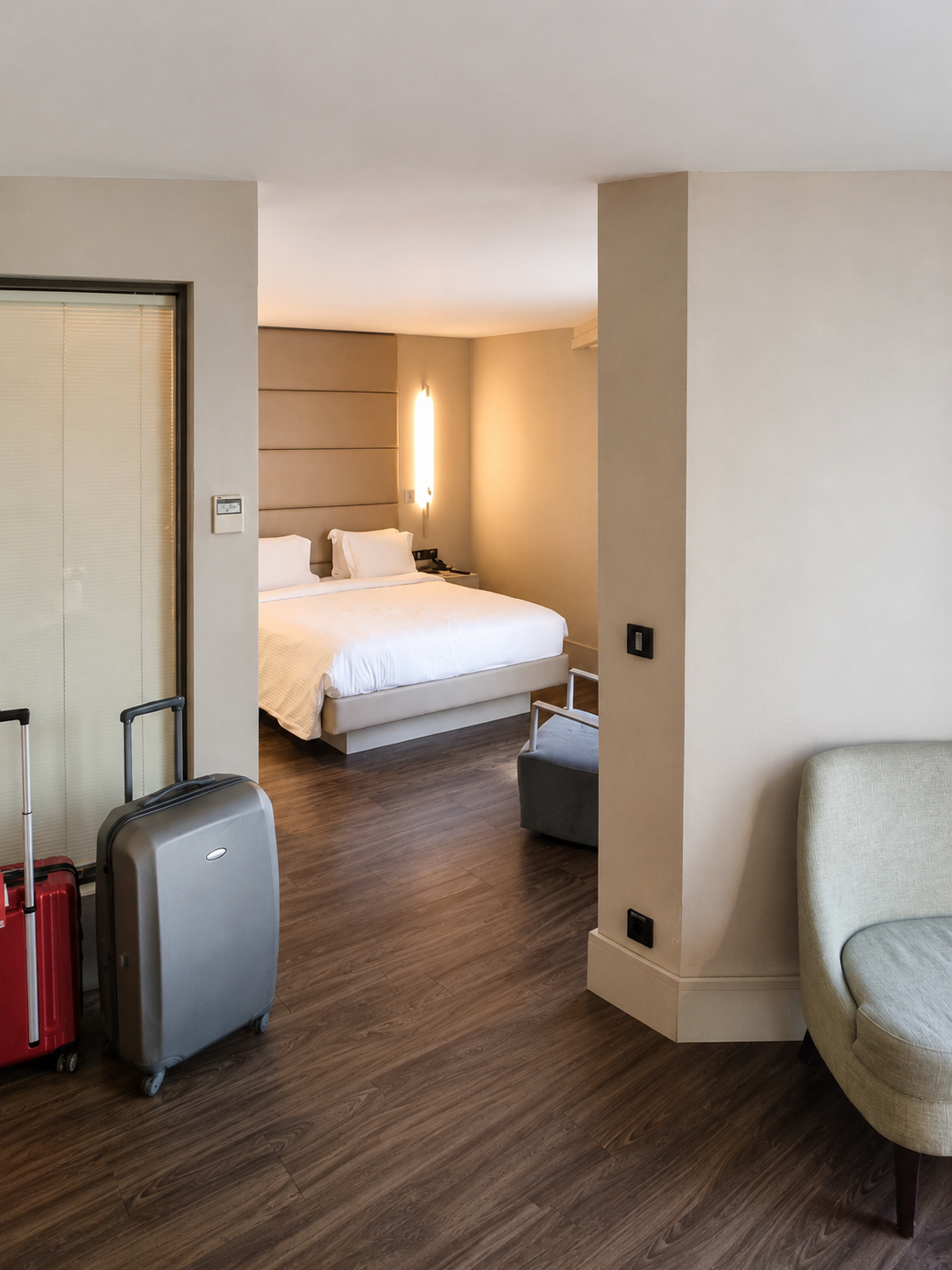
The location was more interesting than the hotel itself because it placed me between two quite different versions of modern Istanbul. Uphill was Nişantaşı, the polished one: elegant apartment buildings, fashionable cafés and Abdi İpekçi Caddesi, where Turkish designers share one of Istanbul’s principal luxury-shopping streets with the major international fashion houses. Downhill was Beşiktaş, louder, younger and much more immediately local, built around markets, cafés, ferries, football and the Bosphorus, with Dolmabahçe Palace sitting nearby as a rather grand reminder that this was not always simply a neighbourhood of students, commuters and football supporters.
The words uphill and downhill deserve emphasis. On a map, both neighbourhoods look comfortably walkable from the hotel; on the ground, the gradients are brutal. Reaching Beşiktaş is easy enough while gravity is working in your favour, but returning to the hotel means paying back every metre of that descent. Nişantaşı demands effort in the opposite direction almost from the beginning. For anyone with limited mobility — or simply no enthusiasm for serious climbing in Istanbul heat — those apparently short distances on Google Maps can be deeply misleading.
There is at least one entertaining way of avoiding a small part of Istanbul’s obsession with vertical movement. A short walk from the hotel is the Maçka–Taşkışla cable car, a tiny aerial line opened in 1993 to carry passengers across the valley between Maçka and Taşkışla on the Taksim side. At only a little over 300 metres long, the ride lasts a few minutes and hardly qualifies as an essential piece of Istanbul sightseeing. Yet once you have walked those slopes, the decision to suspend passengers above them rather than ask them to climb starts to look less like a novelty and more like excellent urban planning.
None of those things, however, is why I remember AC Maçka. That honour belongs almost entirely to a Blue Sky cocktail I ordered in the hotel bar one evening. With nothing more urgent to do, I watched the bartender prepare it, and at first everything seemed perfectly routine: measuring, pouring, shaking. Then came the egg white.
She started working on it with a fork in a small container, but the result was clearly not what she wanted. Next came one of those little battery-powered frothers normally associated with cappuccino, which proved equally incapable of persuading the egg white to become respectable cocktail foam. She persisted for a while longer while I continued waiting, until eventually she disappeared altogether.
Some time passed before she returned, now carrying a full-sized kitchen hand mixer in one hand with such determination that it looked less like pastry equipment and more like something she had just collected from the armoury. Then came that instantly recognisable electric whirr familiar to anyone who has ever stood near whipped cream or cake batter. Somewhere during the process, my cocktail had apparently crossed departmental boundaries and entered the pastry section.
For the record, this is not normally how a bartender needs to make egg-white foam. Cocktails using egg white are generally given a vigorous dry shake, meaning the ingredients are first shaken without ice so the protein can emulsify and trap air, followed by another shake with ice. Some bartenders reverse the sequence, while small electric frothers can also be useful when a particularly dense head of foam is wanted.
A full-sized kitchen mixer is therefore not chemically nonsensical; it is simply rather more equipment than one expects to see deployed for a single cocktail. By the time the process had progressed from fork to cappuccino frother and finally to something more commonly associated with baking a cake, I was no longer merely waiting for a drink. I was watching a problem being solved with escalating levels of technology.
A few minutes later the Blue Sky finally arrived in an enormous glass, aggressively blue and topped with a properly extravagant layer of egg-white foam. After a fork, a cappuccino frother, a temporary disappearance and the deployment of actual kitchen equipment, anything less would have felt anticlimactic. Fortunately, the result justified the operation: the cocktail was excellent.
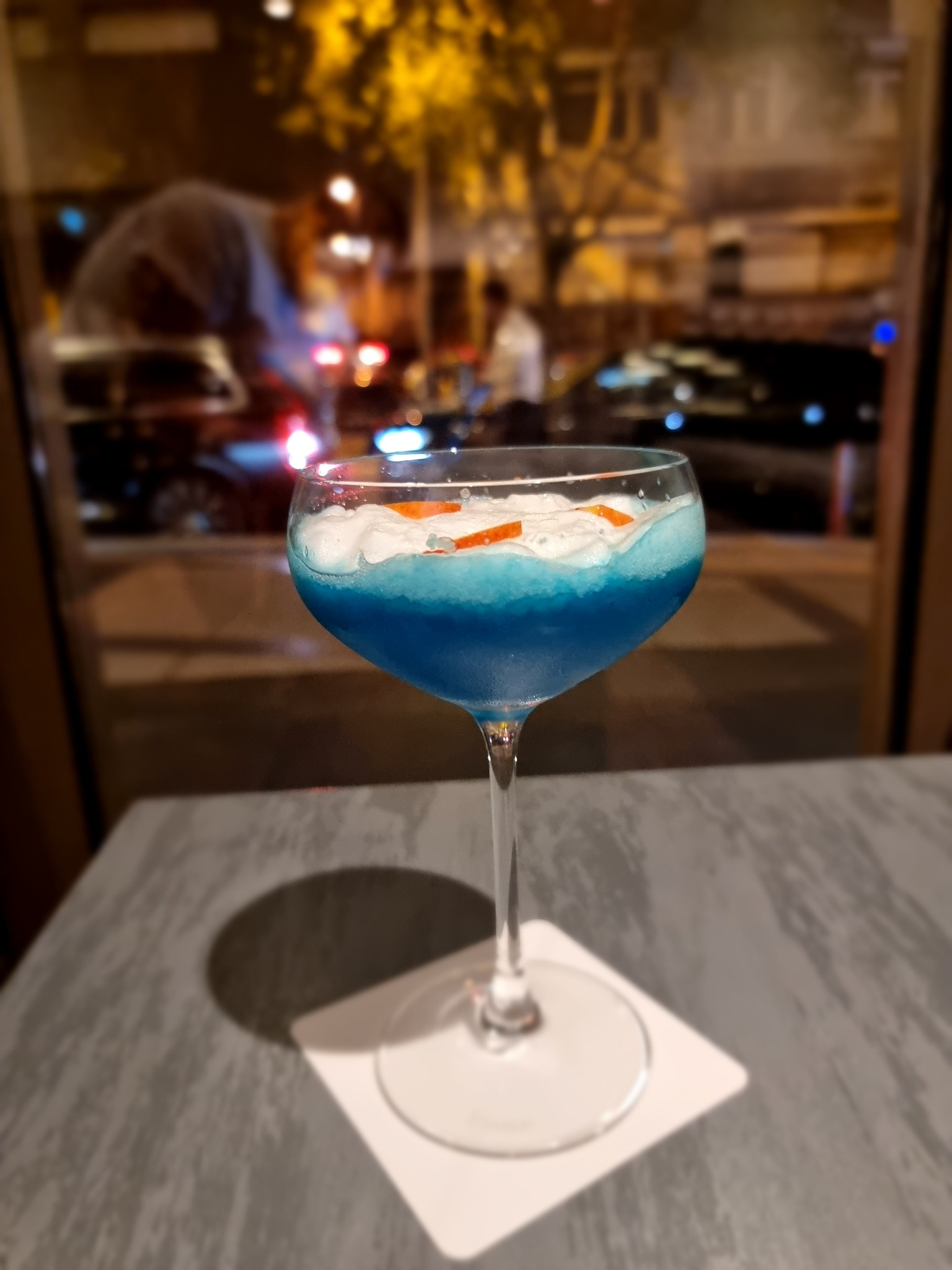
That single drink gave AC Hotel Istanbul Maçka more personality in ten minutes than its architecture and interiors had managed during the rest of my stay. The hotel itself did everything it needed to do: a huge upgrade, proper Bonvoy recognition, an excellent points redemption and a location that put two very different Istanbul neighbourhoods within walking distance, provided I was willing to negotiate some genuinely unpleasant hills.
Those are perfectly good reasons to recommend a hotel, but they are not necessarily the things that survive in memory. What I actually remember is a bartender disappearing into the kitchen and returning with a mixer held almost like a rifle because she had decided that my cocktail was damn well going to have proper foam. AC supplied the room; the bartender supplied the character.
What Survives After Check-Out
Four hotels in, there was already no obvious formula for what would remain in memory. The most spectacular room was nowhere near the Istanbul I had initially come to see. The most practical hotel did almost everything correctly and was also the easiest to forget. The smallest property delivered the most memorable hospitality, while an otherwise straightforward stay at AC Maçka earned its place in this story because one cocktail somehow escalated into a minor engineering project.
Perhaps that is the first useful conclusion from all these check-ins: what survives after check-out is rarely what the booking page considers important. Square metres, stars, facilities and loyalty benefits certainly matter, but memory is far less disciplined. It keeps the moment a Bosphorus view stops you at the door, an absurd argument over Birkenstocks, a perfectly chilled glass of pomegranate juice, a breakfast that takes possession of an entire table, or a bartender disappearing towards the kitchen in search of more serious equipment.
These first four hotels also showed me four different ways of using Istanbul. Le Méridien tempted me to stay inside. DoubleTree Old Town practically pushed me out towards the sights. Orientbank placed historic Istanbul at my feet while somehow making me feel personally looked after inside. AC Maçka did its job without demanding the leading role — until the bartender took over. None of them needs to be declared the winner. They simply gave me four very different reasons to remember checking in.
Which Istanbul Hotels Would I Book Again?
These are conclusions based on my stays and what each hotel represented to me at the time, not a claim that every detail remains unchanged today.
Le Méridien Istanbul Etiler — Yes, without hesitation.
This is the choice for someone who wants the hotel itself to become part of the trip. The architecture, Bosphorus views, suites, spa and pool make staying inside feel entirely legitimate. I would happily return for a fourth stay. I would be less enthusiastic about recommending it to a first-time visitor whose main priority is stepping outside and immediately walking to Hagia Sophia.
DoubleTree by Hilton Istanbul Old Town — Yes for the right traveller; probably not again for me.
For a first visit centred on the Grand Bazaar, Sultanahmet and easy tram connections, it makes excellent practical sense. It was comfortable, efficient and professionally run. I can recommend it more easily than I can explain why I would personally return — which is probably the most accurate summary of the hotel.
Orientbank Hotel Istanbul — Absolutely.
Of these four, this is the one I would choose for someone who values location, character and genuinely personal hospitality above large-scale luxury facilities. Practically everything important in historic Istanbul is walkable, the rooftop is exceptional and the service during my stay was among the best I have experienced anywhere. No proper spa remains its obvious weakness. I would still book it again immediately.
AC Hotel Istanbul Maçka — Possibly, and without any objection.
It works as a comfortable upscale base when Maçka or Nişantaşı is where you want to be and the price makes sense. There was nothing fundamentally wrong with the hotel; it simply never competed with Le Méridien or Orientbank for my affection. The fact that my strongest memory involves a bartender, an egg white and eventually kitchen equipment probably tells you exactly where it sits in this first group.
