
 Pamukkale, Aegean Region, Turkey
I came to Turkey for a business meeting in Ankara. A few days of annual leave turned the journey into a solo detour through İzmir and Pamukkale, one reluctantly abandoned plan for Ephesus, an exceptionally good hotel redemption and, eventually, a bowl of perfectly chilled fruit beside the Aegean.
Ankara, eventually
The official reason for the journey was perfectly respectable: I had a business meeting in Ankara. The timing, however, coincided with my annual leave, and going directly there seemed like a wasted opportunity.
I love Istanbul and have returned often enough for it to feel familiar, but I did not want my personal map of Turkey to consist mainly of Istanbul and business trips to Ankara. There was one place in western Turkey I had wanted to see for years: Pamukkale. A few free days before the meeting were enough to turn that idea into a detour.

I flew from Zagreb to Istanbul and connected there to İzmir. I had considered taking a train from Istanbul — I have a weakness for railways even when the sensible answer is obviously an aircraft — but the connections would have turned an ambitious itinerary into an unnecessary logistical project.
Istanbul Airport provided enough transport experience on its own. After landing, I remember the aircraft taxiing for what felt like almost half an hour. From leaving the aircraft to reaching the gate for İzmir then took roughly another hour, much of it spent walking at the speed of somebody with no intention of missing the next flight. In a terminal covering around 1.4 million square metres under one roof, that memory no longer seems particularly absurd.
Fortunately, there was a lounge somewhere in the middle. I have used more luxurious ones, but the food in Istanbul was genuinely excellent.
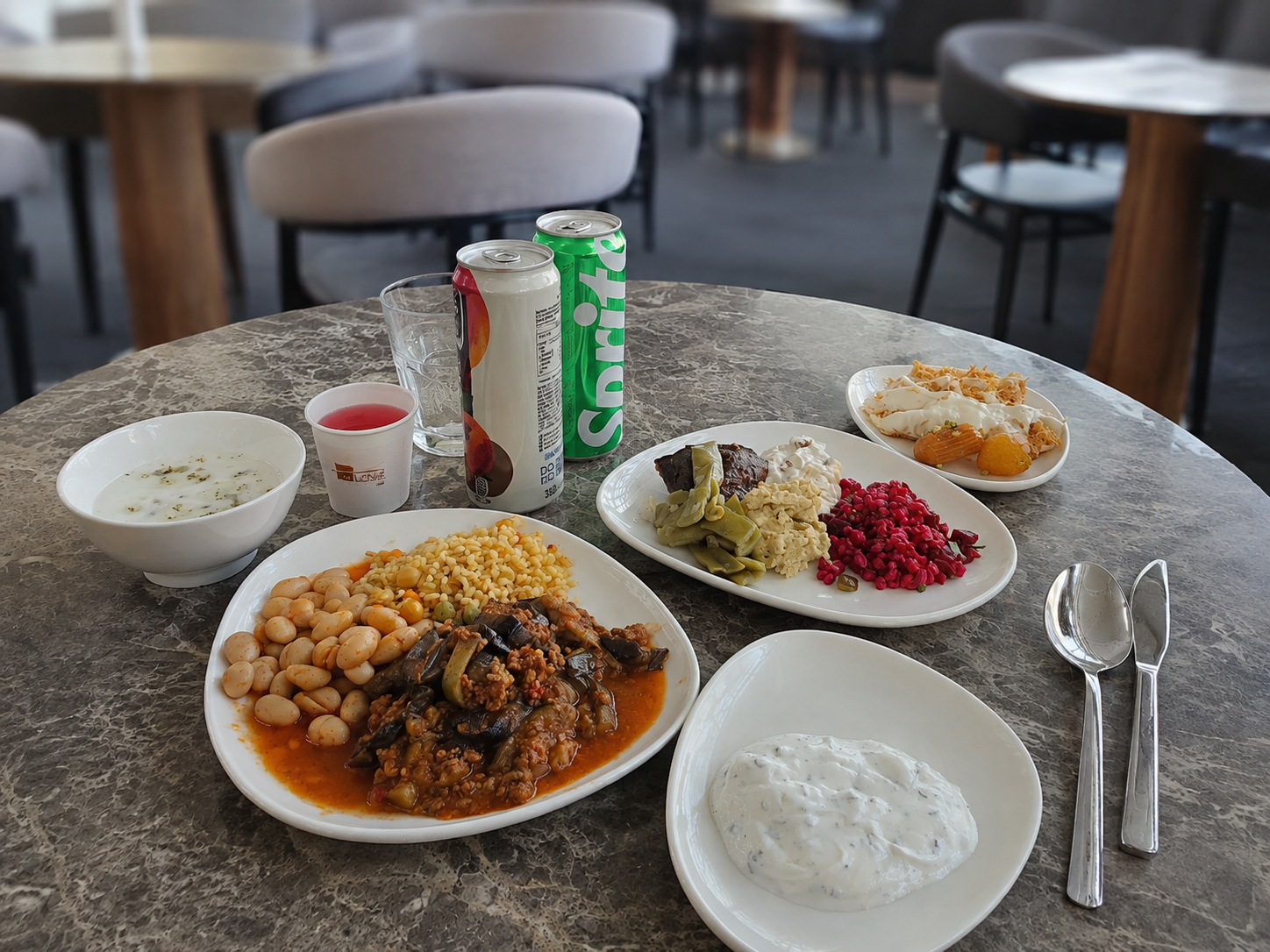
Compared with the minimalist catering I had become used to on many European flights, my domestic Turkish Airlines sectors still came with a perfectly respectable hot snack.
By the time I landed in İzmir, the holiday portion of the business trip had properly begun.
A Turkish Fiat and an excellent base
Hertz upgraded me to a white Fiat Egea Sedan, the Turkish-market sedan related to the Tipo sold elsewhere and a particularly appropriate rental for a road trip through Turkey.
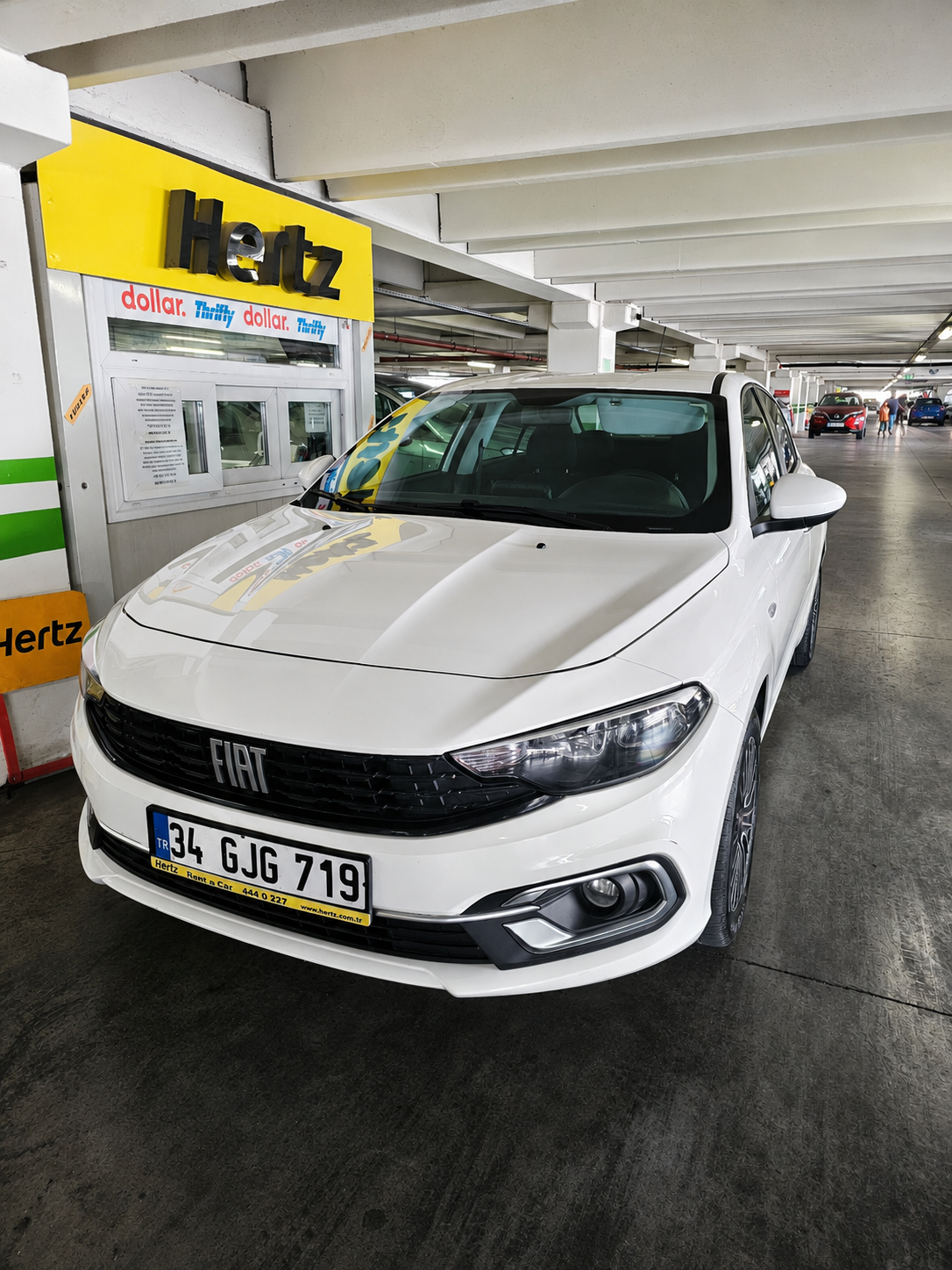
There was one technical detail I somehow failed to establish: it was a diesel.
I had never driven a diesel car before and apparently corrected that omission without realising it. Only when I stopped for fuel before returning the car did the attendant make sure I knew what I was supposed to put into it. That intervention probably prevented my first diesel-driving experience from becoming considerably more memorable.
My base was the İzmir Marriott Hotel, directly on the waterfront. I received an upgrade to a sea-view room, had access to the elite lounge and quickly discovered that the rooftop infinity pool and cocktail bar were unusually effective at competing with the August sightseeing programme.

More than once, a cold cocktail above the Gulf of İzmir won.
I did not ignore the city completely. İzmir is the modern city that grew across the historical landscape of ancient Smyrna, one of the great historic settlements of the Aegean coast. The earlier city developed around today's Bayraklı before a later Smyrna emerged further south, closer to the centre of modern İzmir. History therefore sits beneath a contemporary city that feels much less museum-like than its age might suggest.
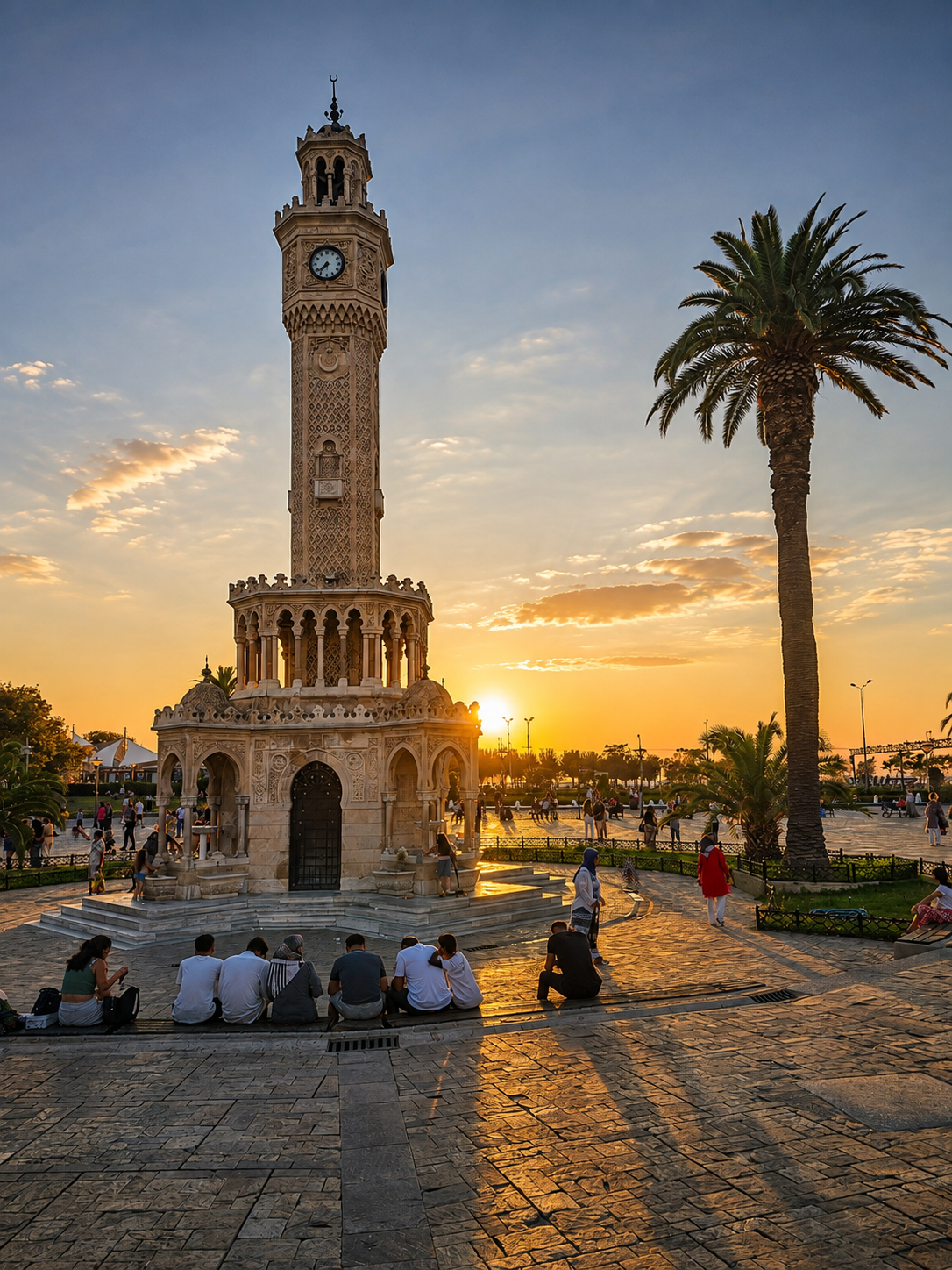
From the Marriott, central İzmir was easy to explore on foot. I walked along the Kordon, the long seafront promenade that functions almost like the city's outdoor living room, towards Konak Square and its Clock Tower. Built in 1901, the tower has become one of İzmir's best-known symbols.
I also wandered through Kemeraltı, the old commercial district behind the waterfront. It felt more local and more embedded in everyday city life than Istanbul's Grand Bazaar, but I would be lying if I claimed it impressed me greatly. Once you have walked through the Grand Bazaar, almost every other bazaar enters the competition with a serious handicap. Kemeraltı felt authentic; Grand Bazaar felt like another universe.
İzmir itself probably suffered from similarly unfair conditions. Pamukkale had been the reason I came west in the first place, the city was secondary, and the August heat pushed it even further down my list of ambitions. That does not make İzmir merely a base, and I do not think I gave it a completely fair audition. I would return, ideally in more humane weather.
There would, however, be one condition: I would happily stay at the same Marriott.
The hotel that noticed I was there
My strongest memory of the İzmir Marriott is not the room or even the rooftop. It is the staff.
When they learned that I planned to leave for Pamukkale at three in the morning, they offered to prepare a breakfast package for the drive. When I appeared in the lobby in the middle of the night, the receptionist also made me two proper takeaway coffees without being asked.
During the stay, somebody from the hotel regularly called simply to check whether everything was all right and whether I needed anything. It is a minor distinction on paper but a major one in practice: there is a difference between staying in a good hotel and feeling that the hotel has actually registered your existence.
The spa then managed to test that goodwill.
I had asked very specifically whether they offered a traditional Turkish hamam treatment. In a conventional hamam, a male attendant serving male guests is traditionally called a tellak, while the female equivalent is a natır. The vigorous exfoliation is performed with a rough kese mitt before the washing and foam ritual.
The spa assured me that this was what I had booked. Then a female Asian therapist appeared, and the whole setup suddenly looked much closer to the generic Asian resort-spa world I associated with Thai-style treatments than to the traditional hamam I had explicitly requested. I refused the treatment.
The woman at reception, who had previously managed English reasonably well, then appeared to lose much of her vocabulary. Whether this was misunderstanding, language trouble or simply an attempt to sell whichever therapist was available, I never established.
What mattered was the response. The manager on duty apologised several times by telephone and chat, and something edible appeared in my room by way of apology. The way they handled a stupid mistake ultimately reinforced rather than destroyed my impression of the service.
That evening I returned to the rooftop, had another cocktail and looked across the Gulf.

Then I went to bed absurdly early, because my alarm was set for a time that should not really exist on holiday.
3:00 a.m.
Pamukkale can, of course, be reached without renting a car. That was not really the problem.
My problem was that I did not merely want to arrive there. I wanted to be at the entrance when it opened.
The photographs I had seen suggested something almost ethereal: brilliant white terraces, blue water and remarkably few people. I knew perfectly well that Pamukkale would not remain empty for long, and public transport was not particularly useful for engineering the kind of arrival I wanted from a base in İzmir.
At three in the morning, therefore, I left the Marriott alone with a packed breakfast, two coffees and my white Fiat.
Some friends later told me they would not even have rented a car in Turkey. The idea of then setting off alone across western Anatolia at three in the morning seemed to them like something only I would consider a sensible holiday plan.
They may have had a point.
The drive was mostly uneventful but contained just enough oddity to keep me alert. Somewhere around 4:30 or 5:00, I encountered a tractor and a horse-drawn cart. Other stretches had poorer road markings than I expected from a major intercity route.
There was a good explanation for at least part of that impression. In August 2024 the complete Aydın–Denizli motorway was not yet open; the final section only entered service later that year, so parts of the journey still used the older state-road network.
The horse cart therefore did not appear in the fast lane of a completed Turkish motorway.
That would admittedly have improved the story.
Balloons where I had not ordered them
As dawn began replacing the darkness, shapes appeared above the landscape.
Hot-air balloons.
I had genuinely not expected them. In my mental geography of Turkey, mass balloon flights belonged to Cappadocia. Pamukkale had apparently ignored that classification and developed a balloon scene of its own, with sunrise flights above the travertines and Hierapolis now part of the local tourist experience.
Seeing them first from the car made the discovery better because I had not planned for it.
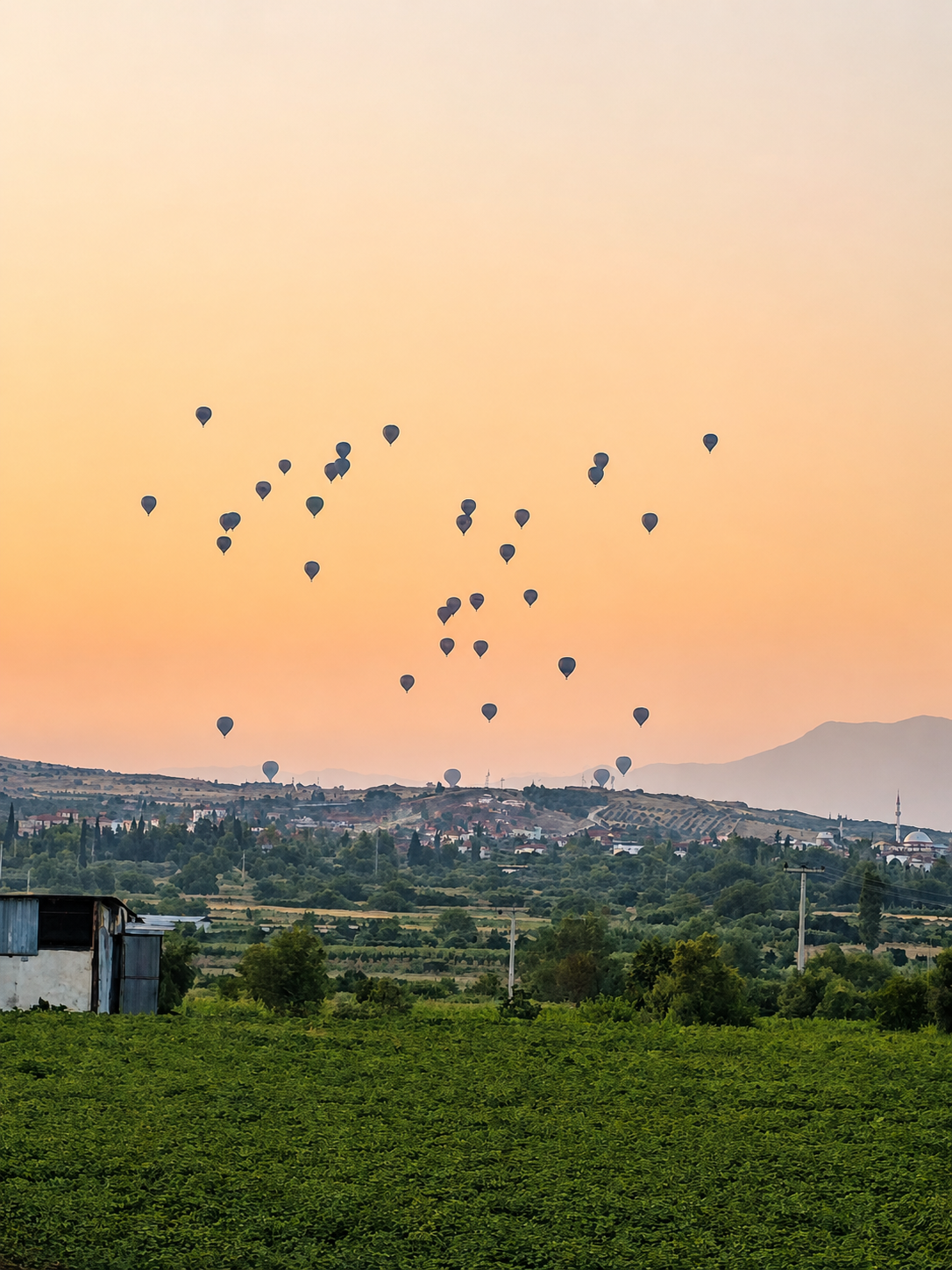
By around 6:40, my photographs show balloons scattered across the morning sky.
At the entrance, there was one Turkish family ahead of me. Whatever else happened that morning, the ridiculous departure time had already achieved exactly what I wanted.
Then I walked towards the reason I had done all of it.
So where are the real pools?
Pamukkale is one of those destinations whose image tends to arrive before you do.
White terraces descend across a hillside, turquoise water gathers in shallow pools and everything appears strangely soft, almost artificial. The Turkish name combines pamuk, cotton, and kale, castle. The brilliant white mineral-covered hillside gave the place its name: Cotton Castle, a description that makes immediate visual sense when the terraces are seen from the plain below.
The surface is neither snow nor cotton. Thermal water rich in calcium carbonate emerges above the plain; as it flows downhill and loses carbon dioxide, calcium carbonate precipitates and gradually creates travertine terraces, petrified cascades and shallow basins. Together with the ancient thermal city of Hierapolis above it, Pamukkale has been on UNESCO's World Heritage List since 1988.
My first reaction was nevertheless not awe.
It was confusion. I looked at the pools in front of me and assumed they must be some preliminary section. The famous terraces, I thought, had to be somewhere further on. I kept walking and waiting for the Pamukkale I knew from photographs to appear, until the uncomfortable conclusion became obvious: I was already looking at it.
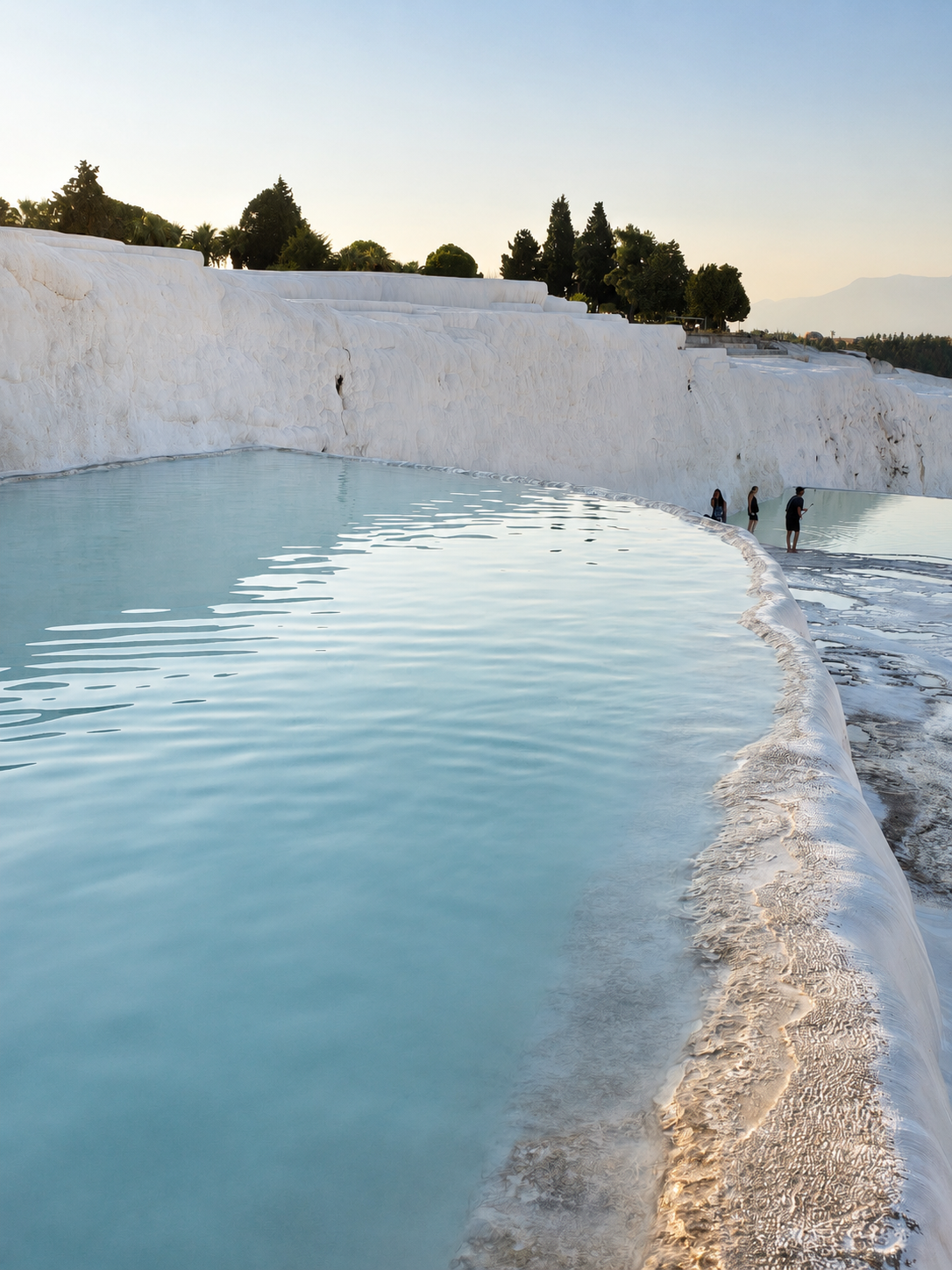
Photography had done an outstanding job.
That sounds harsher than I now think Pamukkale deserves. The strange thing is that my own photographs have subsequently performed exactly the same trick. When I look at them today, the place appears considerably more spectacular than I remember it feeling that morning. Good framing removes distractions, early light helps, a little blue water dominates the foreground and suddenly the white terraces become the surreal landscape I had expected before arriving.
Perhaps the truth lies somewhere between the two versions. Geologically, Pamukkale is extraordinary. Visually, it is highly dependent on where you stand, how the water is flowing and what you choose to exclude from the frame.
Travel occasionally exposes the difference between a place and its photograph. Pamukkale managed the unusual trick of doing it twice: first by disappointing me in person, and then by becoming magnificent again in my own pictures.
Cotton is considerably softer
There was something else the photographs had failed to communicate particularly well: you walk across the accessible travertines barefoot.
That is partly a conservation measure, because shoes can dirty and damage the fragile white deposits. It also makes the physical experience considerably less graceful than promotional photographs suggest. Some sections were smooth, others unexpectedly sharp. Wet surfaces could be slippery and there was often nothing useful to hold onto.
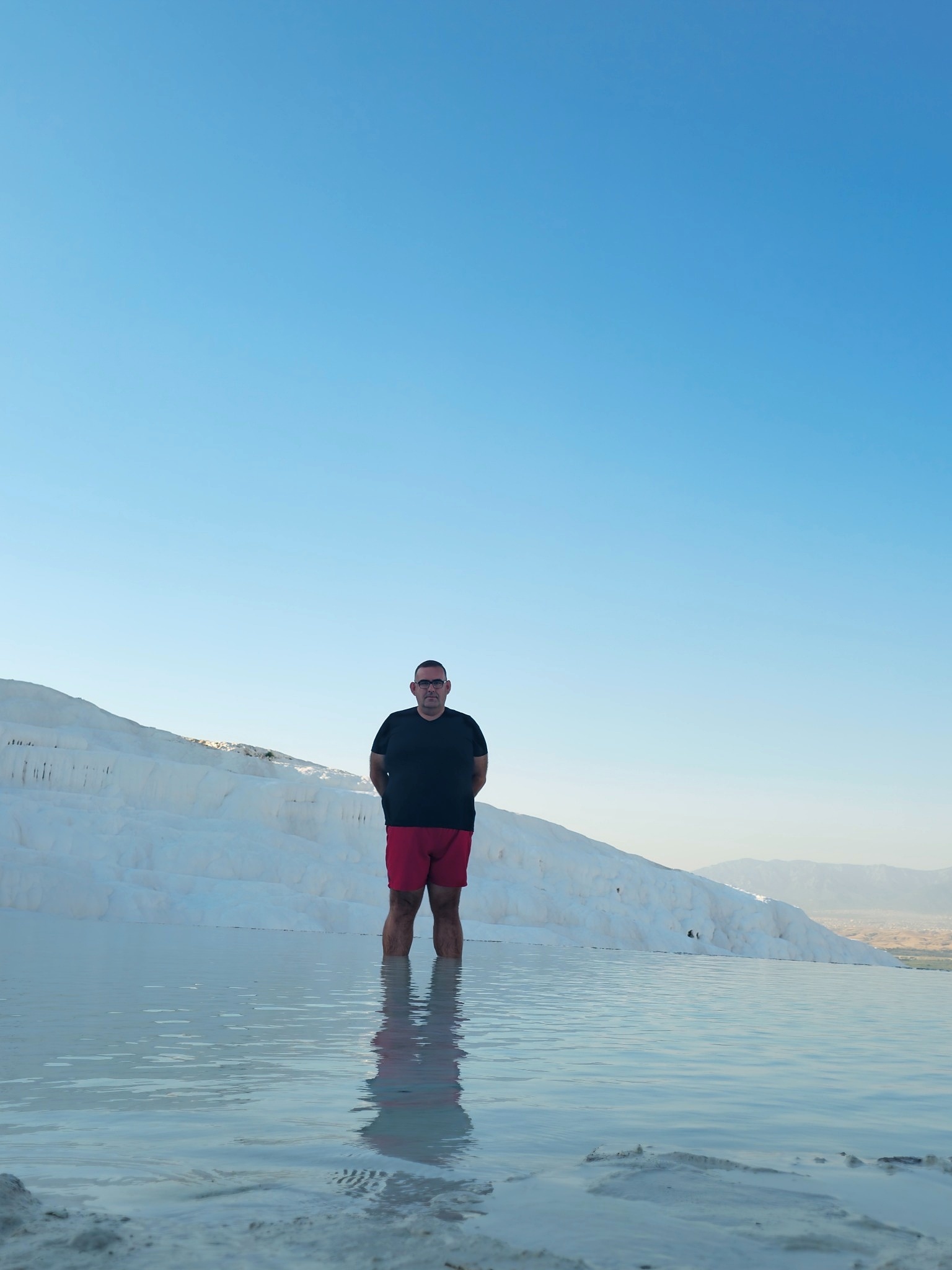
I moved through the shallow pools trying simultaneously not to cut my foot, fall over or create photographic evidence of either.
Cold water was not the problem. Heat was.
Temperatures in the region were around the 40°C mark, in the middle of a renewed heat wave for which warnings had been issued. After sunrise, the exposed white landscape quickly became brutal, especially once the early-morning advantage began disappearing.
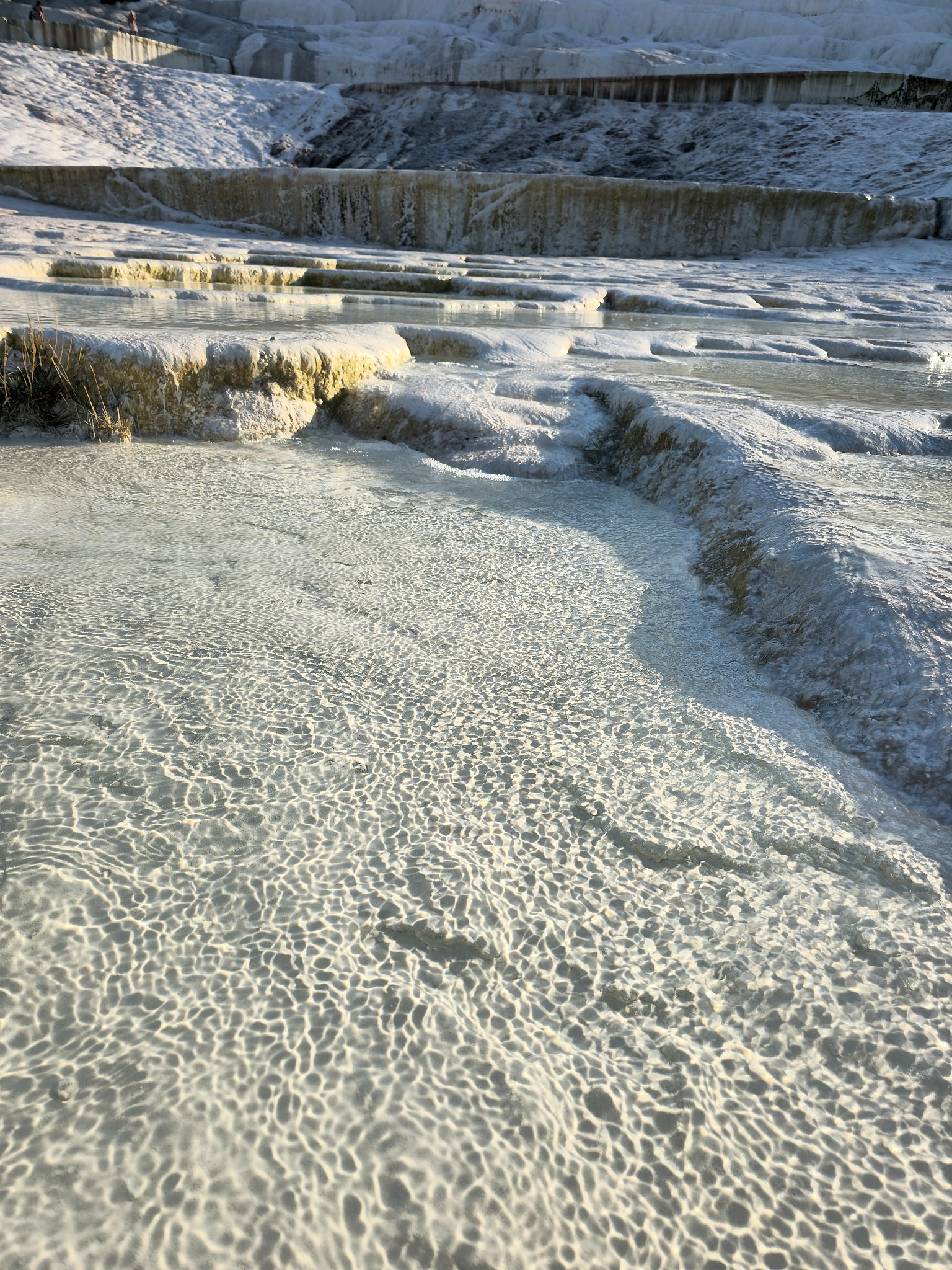
For perhaps half an hour, maybe an hour, Pamukkale remained remarkably quiet. Then the people arrived.
The transition was surprisingly abrupt. One moment there had been almost nobody around me; not much later, groups were spreading across the accessible terraces and the atmosphere had changed completely.
That was the real justification for leaving İzmir at three in the morning. Had I arrived at a civilised hour, my first impression would have combined disappointment, heat and crowds. At least this way I bought myself a short window in which Pamukkale belonged largely to me.
For anyone trying to repeat the experience, that is the practical lesson I would keep: check the current opening time for the entrance you intend to use and be there before it. The advantage may last much less than expected.
Hierapolis came with the ticket
After the travertines, I turned properly towards Hierapolis.
Historically, that order is slightly insulting to the ancient city. Hierapolis grew around these thermal springs and developed into an important Greco-Roman spa centre. Its surviving remains include baths, temples, a large theatre and an extraordinary necropolis, while the relationship between city and thermal water is precisely why UNESCO treats Hierapolis and Pamukkale as one cultural and natural landscape.
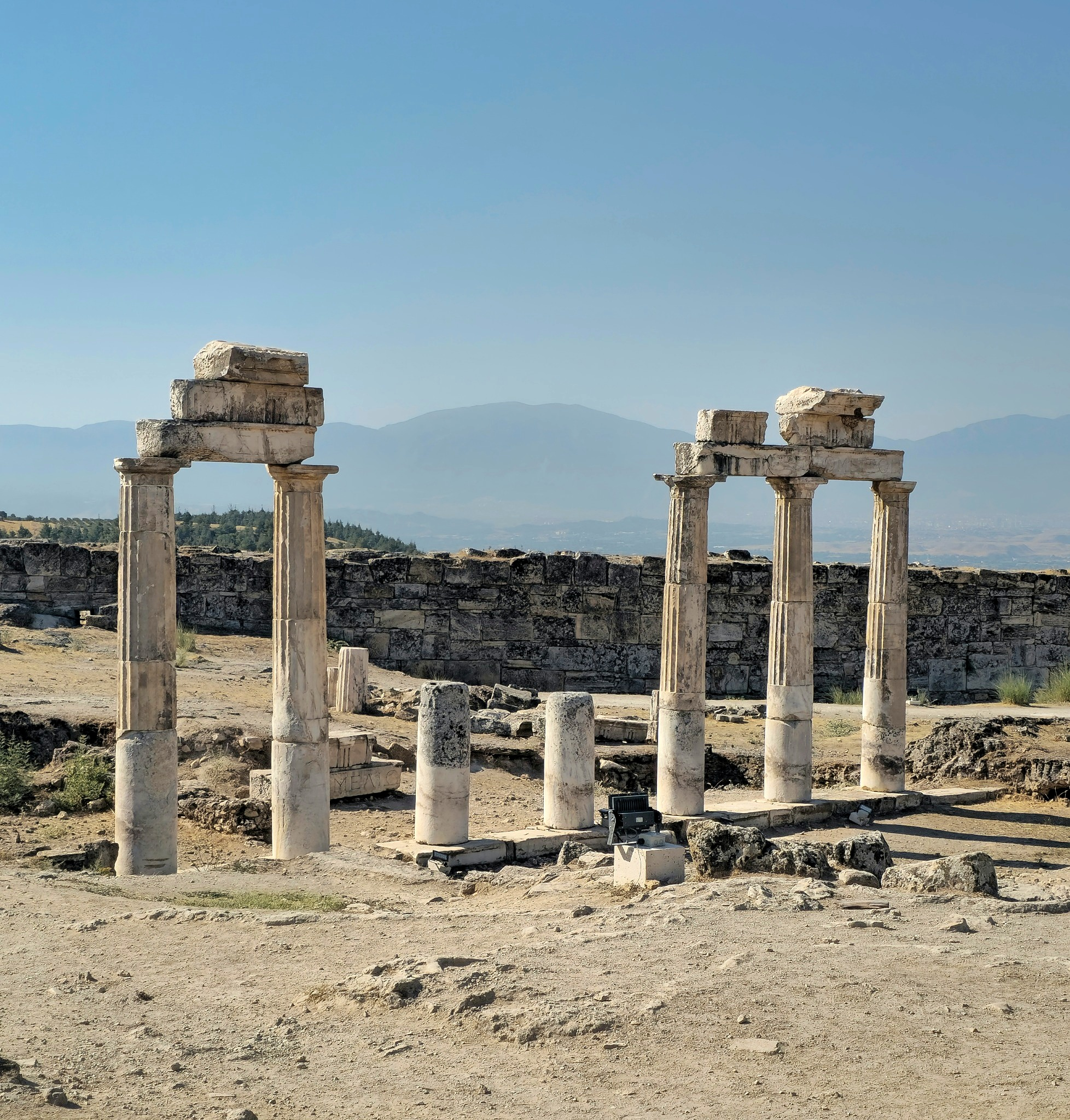
For me, however, Hierapolis was the bonus. I had driven from İzmir for the white terraces; the ancient city was something valuable attached to them.
The same applied to the Antique Pool, commonly marketed as Cleopatra's Pool. Under calmer conditions I would probably have gone in, but by then the crowds were enormous and I did not feel particularly comfortable leaving my belongings while swimming.
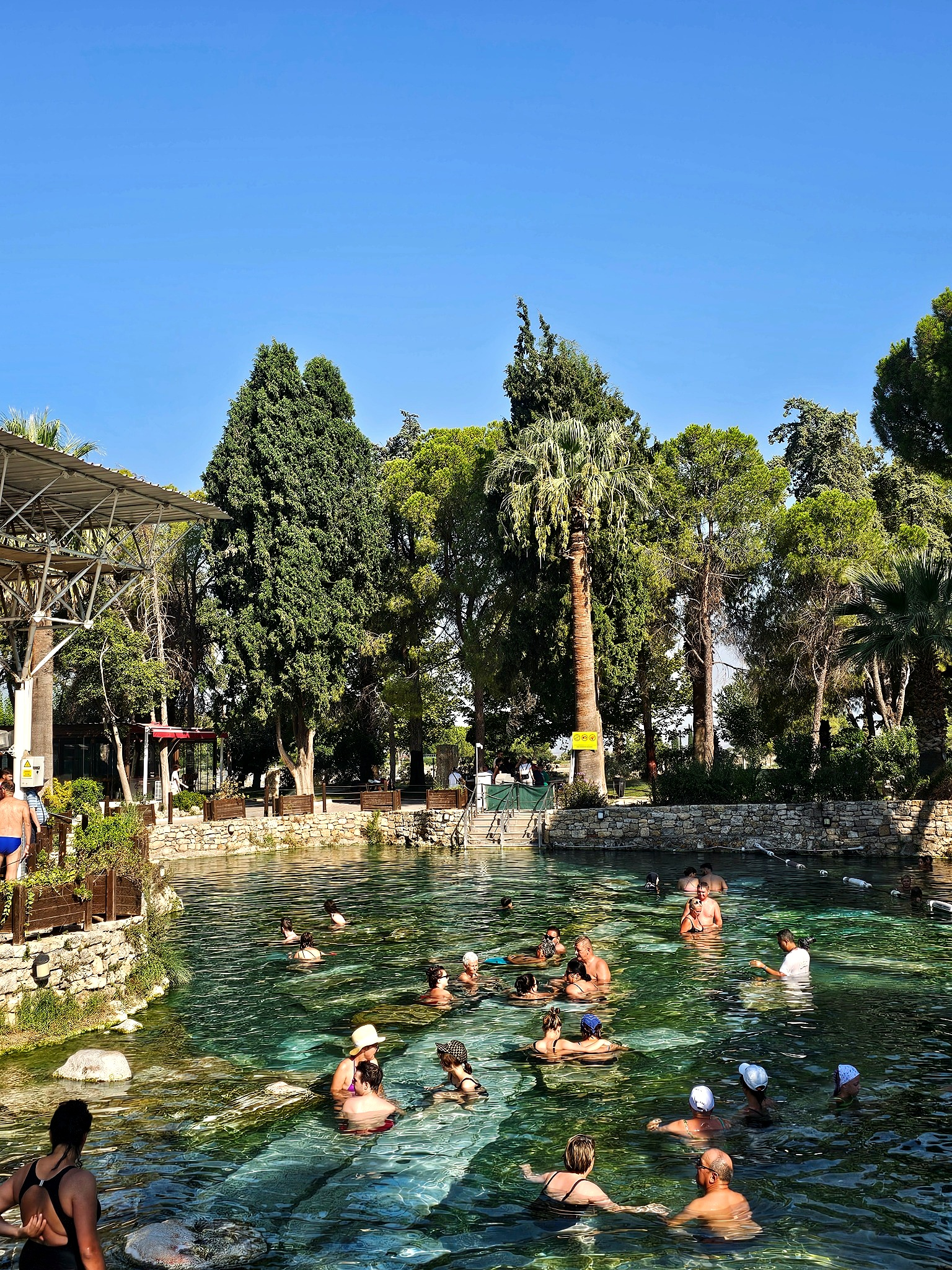
More importantly, the fantasy of bathing among ancient fragments had contained at least a trace of exclusivity. By then there was none, so I kept moving.
Ephesus lost to the thermometer
The original plan did not end at Pamukkale. I intended to continue to Ephesus, and I actually started driving in that direction.
This was not a disposable extra. Ephesus is one of the great archaeological sites of the Mediterranean, a major ancient port whose surviving monuments include the Library of Celsus and the Great Theatre. Nearby once stood the Temple of Artemis, counted among the Seven Wonders of the ancient world.
There was another place nearby that interested me: the House of the Virgin Mary, in the hills above Selçuk. Christian tradition associates the location with Mary's final years, and the site became an important pilgrimage destination visited by several popes. Whatever one believes about that tradition, its cultural weight is obvious in a European history so deeply shaped by Christianity.
I wanted to see both.
But temperatures were around the 40°C mark, warnings had been issued for the heat, I had already spent hours exposed to the sun at Pamukkale and Ephesus is precisely the sort of archaeological site I would want to explore properly rather than sprint through between patches of shade.
It genuinely bothered me to give it up. I had already started towards it and knew perfectly well what I was sacrificing, but at some point wanting to complete an itinerary turns into refusing to accept reality. Several more hours walking around an exposed archaeological site no longer seemed merely uncomfortable; it seemed like a stupid health risk.
Solo travel helped. There was nobody beside me insisting that we had come all this way and therefore had to continue. I could change the plan without negotiation.
There is a difference between persistence and idiocy.
Back to İzmir — and back to the roof
Returning to İzmir in that heat eliminated whatever residual sense of duty I might have felt towards sightseeing. The rooftop pool won, and so did the cocktail bar.
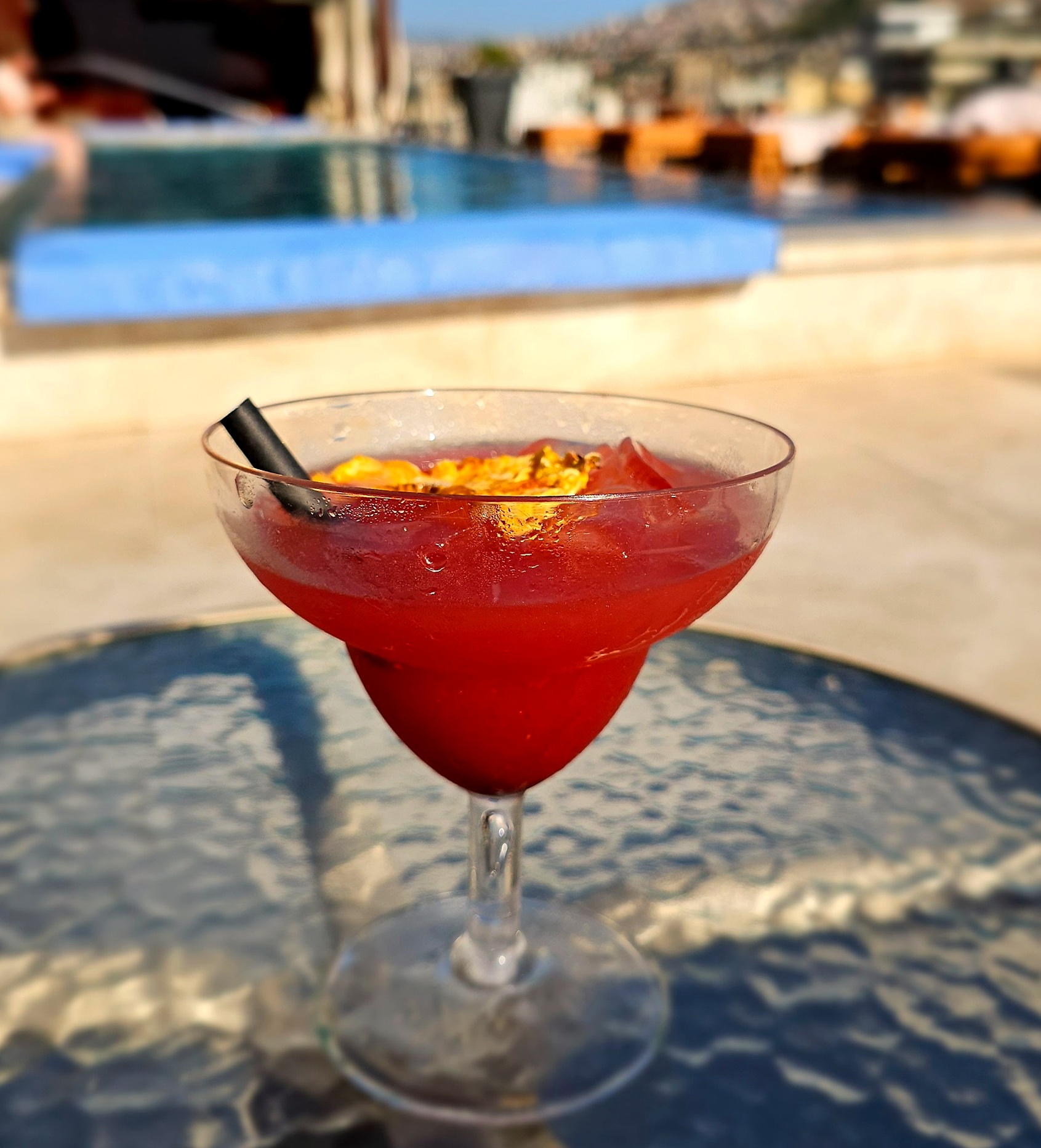
I spent part of the afternoon cooling down above the city, drink in hand, looking across the Gulf and feeling no particular guilt about it.
By then my relationship with İzmir was fairly clear. I had seen Konak Square and its Clock Tower, walked the Kordon, explored Kemeraltı and experienced the central waterfront, but I had never arrived intending to give the city two concentrated days of sightseeing. Pamukkale had been the motive from the beginning, and the heat reduced my remaining ambitions further.
I therefore would not call İzmir “just a base”. For this particular journey, I used it as one — and it was an excellent one.
I would happily return and give the city a more serious chance, preferably at a less homicidal temperature. I would also very happily return to the same rooftop.
The hotel I had been quietly lusting after
The following day I drove west to Çeşme.
The resort town sits at the end of a peninsula facing the Aegean and has long been one of the principal summer escapes from İzmir, known for clear water, beaches and thermal springs. Nearby Alaçatı adds old stone houses, restaurants, nightlife and famously good windsurfing conditions.
I saw none of that.
I drove directly to the hotel and had no intention of leaving it.
Reges, a Luxury Collection Resort & Spa had been a quiet object of desire for some time. I had looked at it repeatedly, liked what I saw and repeatedly encountered cash prices that made admiration considerably easier than booking.
Then the numbers aligned. For my night, I remember the normal rate being around €500, while the award night cost roughly 40,000 Marriott Bonvoy points. Broad independent valuations would normally place 40,000 Bonvoy points well below €500 in room value, so this was plainly an unusually strong redemption. My elite status then added an upgrade and late checkout.
That was enough points mathematics. The more important fact was that I had finally booked the hotel I had been watching for some time at a price in points that made the experience feel almost indecently good.
Çeşme without seeing Çeşme
Reges had exactly the atmosphere I wanted after Pamukkale: contemporary Aegean resort architecture, generous sea-facing spaces, pools and a beach directly in front of the resort, with the rooms looking towards the water.
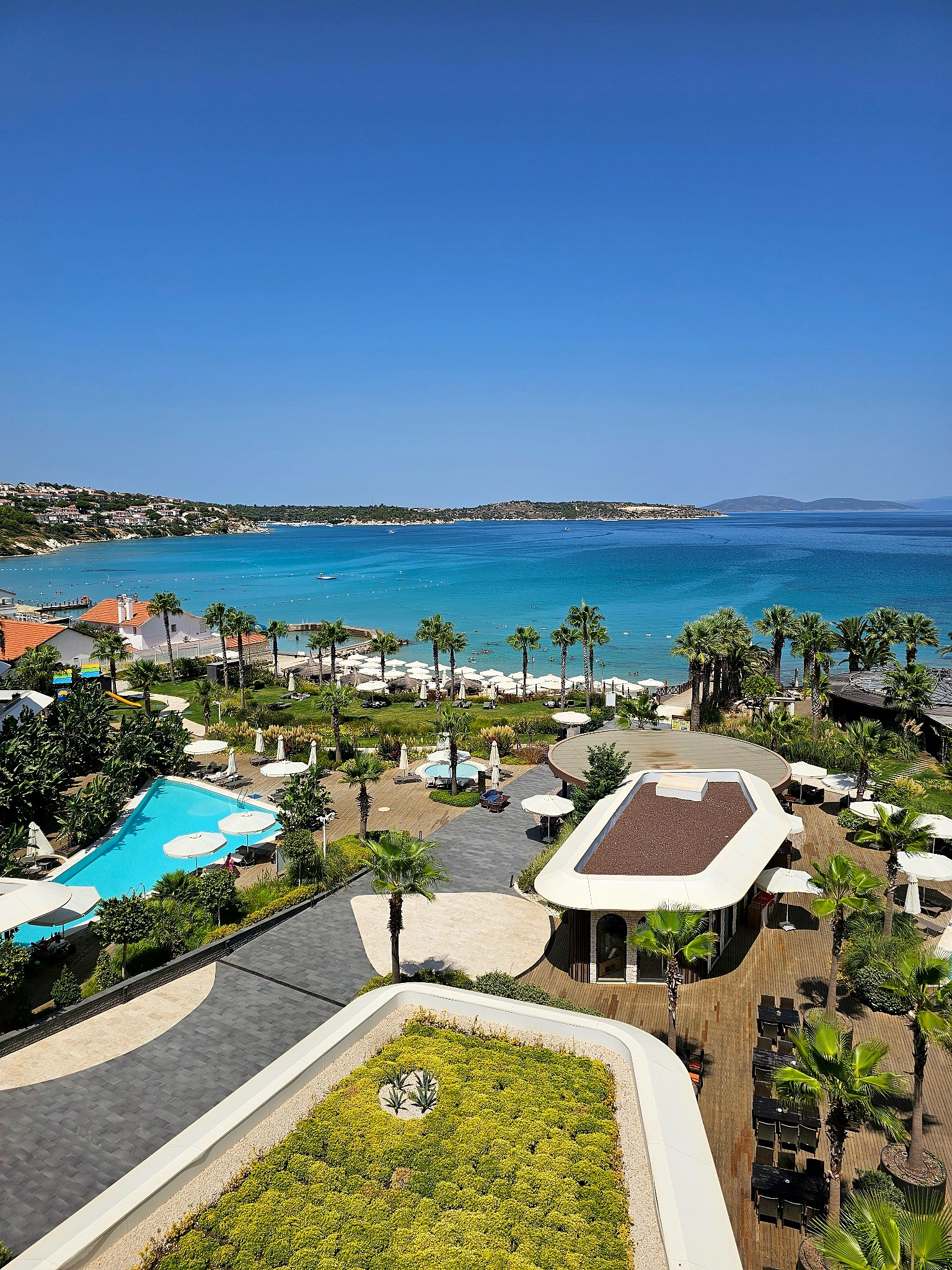
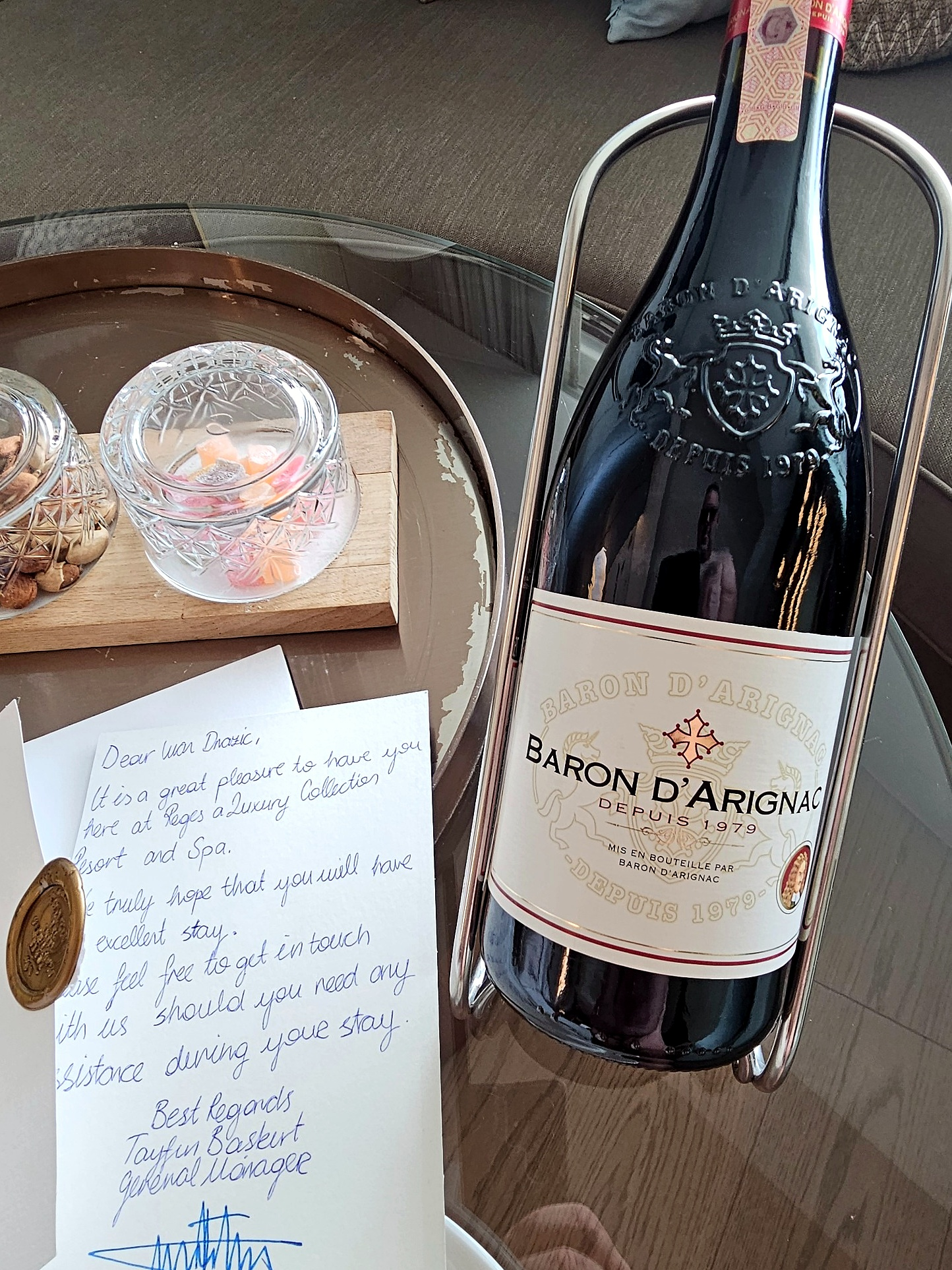
My room came with the view I had hoped for and a generous welcome presentation of fruit, sweets and a bottle of wine. The bottle was not some legendary French vintage secretly justifying the room rate; the value was in the gesture and the way the whole arrival was staged.
Dinner had the Aegean character I remembered more vaguely as “Greek” afterwards: vegetables, yoghurt, herbs, olive oil and small dishes whose flavours naturally overlap across the two sides of the same sea.
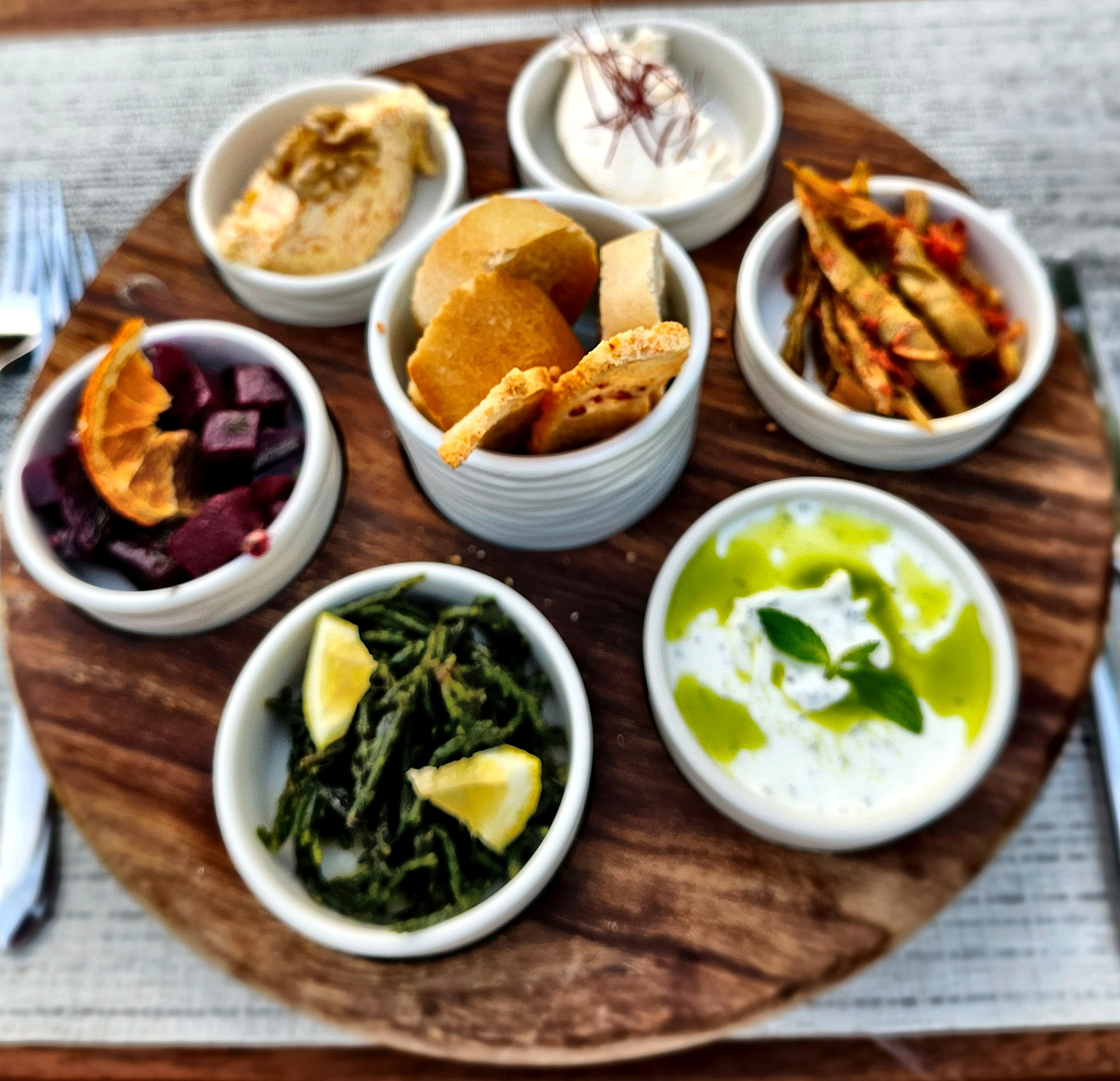
It was very good, but neither the room nor dinner produced my strongest memory of Reges.
That belonged to the beach.
The best thing on the trip was fruit
More precisely, it belonged to the fruit served on the beach.
The sea was beautiful, the service intensely attentive and there seemed to be sufficient staff around that I could stop managing anything whatsoever. After several days of arranging flights, a rental car, a three-in-the-morning departure, Pamukkale and a changing itinerary, that was exactly what I wanted.
Then the fruit arrived, perfectly chilled.
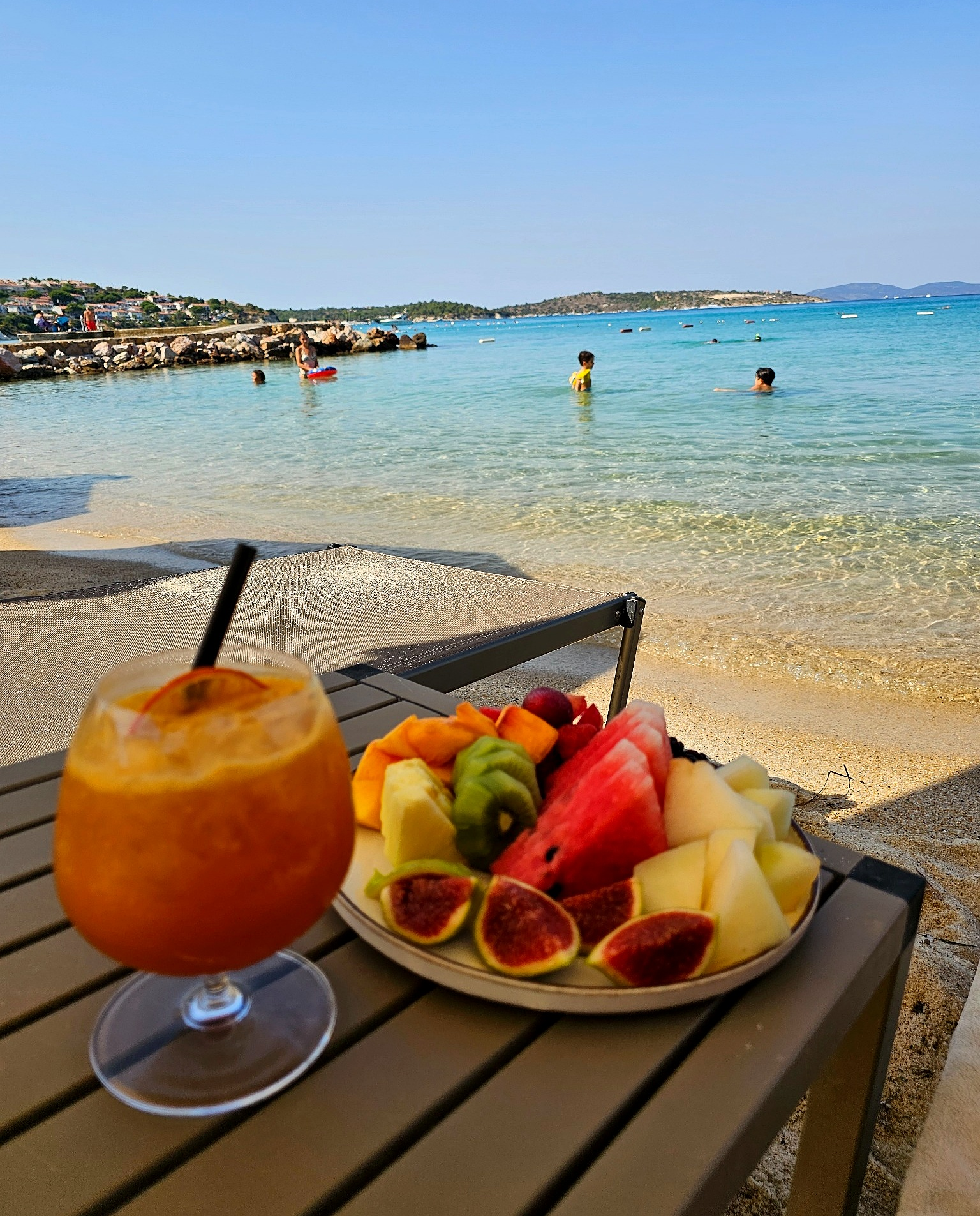
This sounds idiotic as the climax of a journey built around a UNESCO World Heritage Site, but memory has no obligation to respect cultural rankings. The temperature of that fruit was somehow exactly right: properly cold and refreshing without having been refrigerated into flavourlessness. I remember it more vividly than several monuments.
There were waiters, lifeguards and a service bell nearby, and the general level of attention was such that I had the impression somebody was monitoring the frequency at which a single hair on my big toe oscillated.
After getting myself to Pamukkale at opening, I considered that level of supervision entirely deserved.
The fact that I had done the route alone mattered. I had chosen the car when friends said they would not have done it, left İzmir at an hour when respectable people were asleep, reached Pamukkale almost first, accepted that the reality did not entirely match the photographs and then made the sensible decision to sacrifice Ephesus when the conditions became unreasonable.
Now I was lying beside the Aegean while somebody else worried about whether my fruit was cold enough.
That seemed like a fair division of labour.
One last unnecessary decision
From Reges I drove directly to İzmir airport, returned the Fiat and finally confirmed beyond doubt that I had spent several days driving my first diesel without knowing it.
Turkish Airlines took me back to Istanbul, where I still had one free day before flying onward to Ankara and becoming respectable again. Most of that day deserves its own story.
Dinner can stay here.
I went to Nusr-Et at the Grand Bazaar.
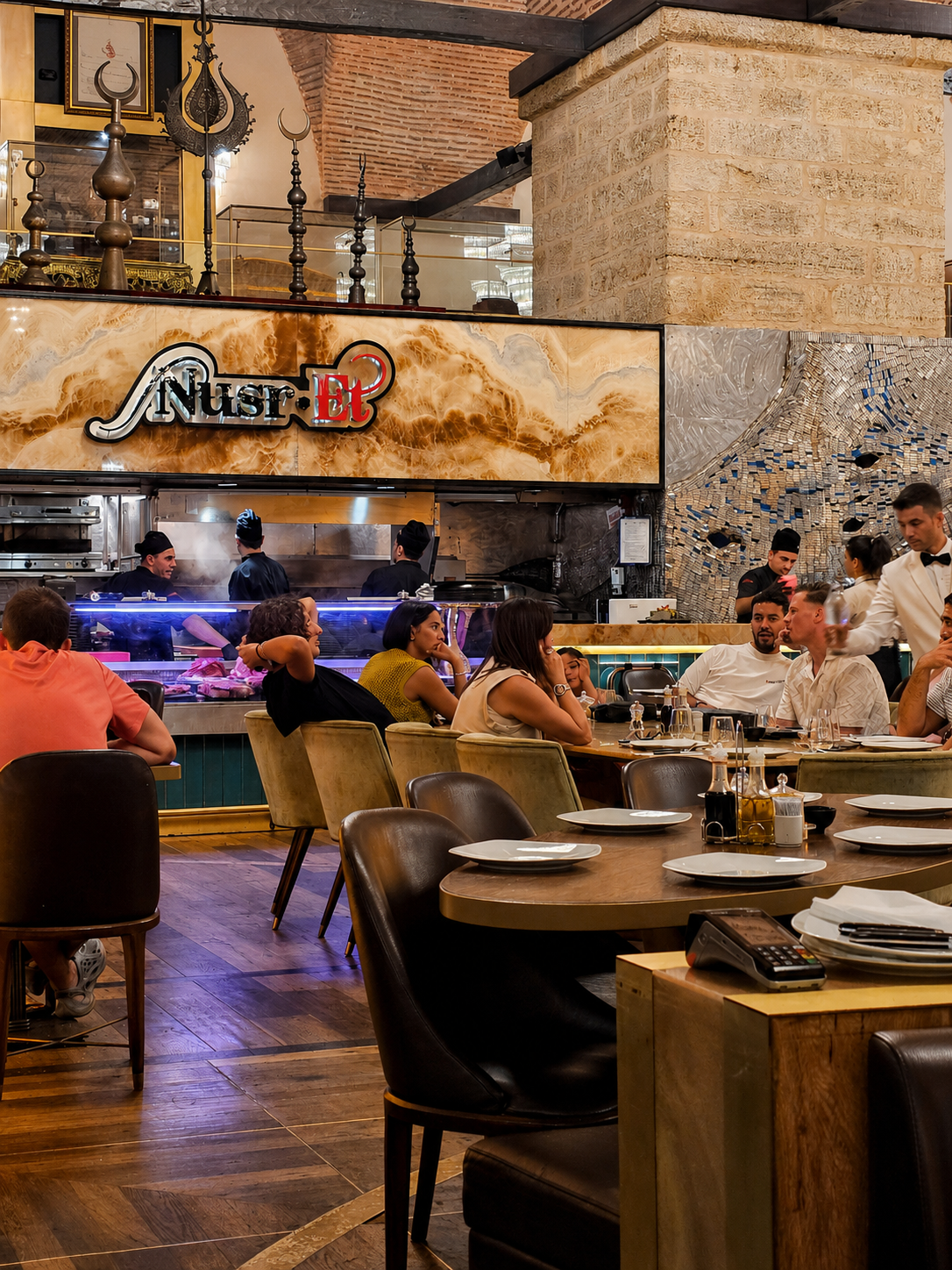
Salt Bae himself was not there, but the performance around the meal was excellent. The restaurant understands perfectly well that people are buying theatre along with steak, and that evening delivered exactly that. I still have the video.
It was excessive, unnecessary and a completely appropriate full stop to the detour.
The following day I flew to Ankara and attended the business meeting that had technically caused all of this.
Pamukkale had been the reason for leaving a few days early, and I am glad I went. Curiously, I appreciate it more in retrospect than I did while standing there: my own photographs have restored some of the magic that expectations, heat and rapidly growing crowds removed in person.
Yet when I think about western Turkey, the first image that returns is not white travertine.
It is perfectly chilled fruit beside the Aegean.
I am entirely comfortable with that.
