 Ito, Japan

Ito's two best-known swimming beaches suit different days out. Ito Orange Beach sits right in front of the hot-spring town, about five minutes on foot from JR Ito Station, with lunch and public baths a short walk behind it. Usami Beach is one stop up the line toward Atami. It has more room, proper waves and a calm guarded swimming area, but it takes more walking and planning.
The short version: arriving by train for a few hours, or wanting a bath and a seafood lunch without moving the car, points to Orange Beach. Usami suits people who want room to spread out, children who like shallow tide pools, or anyone carrying a bodyboard. Both have lifeguards only from mid-July to late August, and Usami's season closes a week earlier.
Most of what follows comes from @justinchicken, a TravelFeed writer then living in Mishima, who spent the summer of 2021 working through the Izu beaches with a beach tent and a bodyboard. Practical details are checked against the Ito Tourism Association, the city's 2025 lifeguard dates and the 2026 season listings.

Ito Orange Beach: the one you can walk to from the station
The Ito Tourism Association lists Ito Orange Beach as about a five-minute walk from JR Ito Station, running along the front of the onsen district from Yukawa to Matsubara. A palm-lined promenade follows the shore. In summer, beach houses (umi no ie) open with food and showers, and some hotels let guests walk straight from the bath to the sand in their swimsuits.
The first thing to know is the road. As @justinchicken found on his first visit in July 2021, the main road runs between the beach and the town, and there is a car park at one end. He put the beach at roughly half a kilometre long and walked to the far end, which was quieter. That stretch was not crowded on a Saturday, at least until a group of high school students turned up in the afternoon to smash watermelons.
He was frank that it is "not the best beach". It sits right beside the main road, there was rubbish at the tide line, and the shallows were full of small lumps of jelly that he suspected were young jellyfish. The water was clear enough to watch fish, though, and the view runs across Sagami Bay, with islands dotted along the way toward Yokohama and Tokyo. The beach faces east, so by the afternoon the sun is behind you.

What makes Orange Beach worth it is everything around it. He left the tent in the middle of the day to walk into town for lunch. When the beach day was over he walked back in for a soak at one of the many cheap public baths. Ito is a real town with a station, shrines and restaurants, and the beach is part of it rather than a separate trip.
Orange Beach rules and parking
The tourism association's beach rules ban barbecues and open flames, camping, large tents, surfing and jet skis in the swimming area. Fireworks are banned after 21:00. Dogs are allowed on a lead but not in the sea. The tent rule targets large tents, so check the size of yours before packing it.
The nearest listed car park is Nagisa Kanko Parking, with 103 spaces and open 24 hours. It charges 200 yen for the first hour, then 100 yen per 30 minutes, with a cap of 1,500 yen for 24 hours. It is closed to the public during events, and motorbikes cannot use it.
Usami Beach: longer, sandier, and changed in 2025
Usami Station is the stop before Ito on the JR Ito Line, 3.9 km up the coast. Anyone reading older posts about Usami should know one thing first: the guarded swimming area moved. From 2025 the official Usami swimming beach has been inside Usami Tomeda Beach Park. The 2026 summer listings describe it as calm, shallow and good for rock-pooling, about a 15-minute walk from JR Usami Station. The rest of the shore, the old Usami beach, is now where the surfers and bodyboarders go.
That split matches what @justinchicken described in August 2021, before the move. He saw the beach as two halves. Near the car parks was a very narrow strip of sand that "virtually disappears at high tide". In the middle a river comes in and has dropped a wide spread of rocks into the sea. Beyond that is the main beach, a longer walk from the parking, where the sand runs out under the water and does not vanish at high tide.

On his first visit the family set up near the car parks, where the only waves broke near the river. After a few bruises from the rocks they gave up on the waves and swam in the flat sandy water instead. On the second visit they pitched along the main road side and found sand, decent waves and no rocks. "Body boarding without the rocks," as one of his captions puts it. He also saw surfers, and fish in the water.

The 2026 listing for the swimming beach gives lifeguard hours of 9:00 to 16:00, about 210 paid parking spaces, and a ban on surfing inside the swimming area. So the two halves now have two jobs: swim in the guarded zone at Tomeda, and take the boards to the open stretch of coast. Those parking numbers and the walking time come from summer listings, not from the city itself, so check them before driving down.

Lunch and a bath near Usami: Ito Marine Town
Usami's answer to Orange Beach's town-on-the-doorstep is Michi-no-Eki Ito Marine Town, a roadside station on Ito's harbour that @justinchicken describes as "just down the road" from Usami. He came to Usami twice that summer partly because of it. The car parks were reasonably priced, and Marine Town was a short drive away with plenty of restaurants. There was a free footbath looking over the harbour and a large hot spring, which the family used at lunch and again on the way home.
The Marine Town site lists 296 free parking spaces and a day-use hot spring called Asahi no Yu. On the day this guide was checked, the footbath was open from 10:00 to 16:00. Hours change with the season, so look at the site's daily schedule before going.
When the beaches are open, and when they aren't
What sets the calendar is the official swimming season, when lifeguards, first-aid posts and the summer beach houses are running. In 2025, the city's announced lifeguard dates were 19 July to 31 August at Orange Beach and 19 July to 24 August at Usami, 9:00 to 16:00 at both. The 2026 listings followed the same pattern: 18 July to 30 August at Orange Beach and 18 July to 23 August at Usami. In practice, the season starts on the Saturday around the third week of July and ends in late August. Usami closes a week before Orange Beach.
That timing matters in Japan for a reason @justinchicken mentions in his Orange Beach post: stinging jellyfish usually arrive around the middle of August. The small jellies he saw in July may have been the start of that. A late-August swim is possible, but it is the riskier end of the season.
Outside those weeks, nobody is on duty, the beach houses are shut, and Orange Beach becomes a seafront promenade more than a place to swim. The off-season is when Ito's other side, the onsen town, makes more sense than the sand.
Getting there from Tokyo without a car
@justinchicken puts Ito about an hour from Tokyo by shinkansen, changing at Atami for the local train. From Atami, the JR Ito Line calls at Kinomiya, Izu-Taga, Ajiro and Usami before Ito, and most trains continue south onto the Izu Kyuko line toward Shimoda. Usami is 13 km from Atami and Ito is 16.9 km, so the two beaches are a single stop apart.
For a car-free day, Orange Beach is the easy option: get off at Ito, walk five minutes, and the bath, lunch and train home are all within walking distance. Usami needs the 15-minute walk from its station to the swimming area. He drove between Usami and Marine Town, and that pairing is much simpler with a car than on foot from either station.
Anyone planning to go further into central Izu by public transport can use our guide to reaching Izu sights by bus from Shuzenji.
Ito town after the beach
Ito is more than the station for its beaches. During Golden Week in 2021, @justinchicken spent two days in town. He used one of the town's footbaths, went to Ito Park for the view, and visited a couple of the temples dedicated to the area's Seven Lucky Gods. Then he ate seafood at a restaurant near the beach. The town is full of hot springs. The Tokaikan, which he calls the famous old hot spring in town, was closed for the pandemic when he went, so he used a smaller hotel bath next door. His verdict was that most people pass straight through Ito, and they shouldn't.
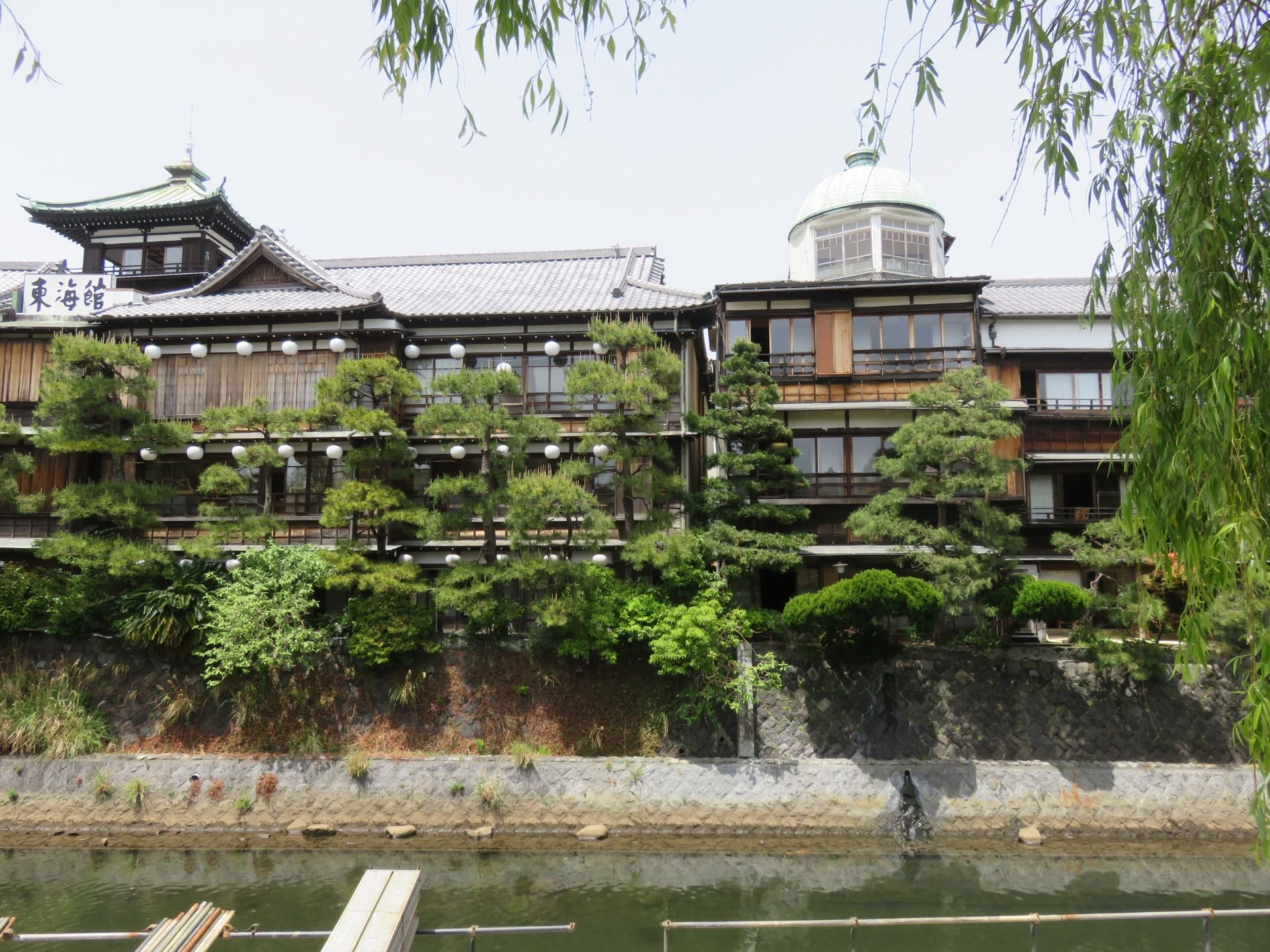
A rainy-day swap: Lake Ippeki
If the sea is rough or the season is over, the two lakes inland make a good swap. On a June walk around Matsukawa and Ippeki lakes, @justinchicken found the Matsukawa loop just under 5 km and full of joggers. Lake Ippeki, a volcanic crater lake, was nicer to look across, with a café and rental boats by the car park, and a shrine with torii gates. He also warned that it smells in places because so little fresh water flows in. The path goes up and down more than expected, and the mosquitoes are hungry. A bus stop near Ippeki means it can be reached without a car, though he thought driving was easier.

So which one?
Choose Orange Beach for a train day: little walking, the town behind you, and a public bath to finish. Expect a road at your back and some litter at the tide line. Choose Usami if you have a car, small children who want calm shallows, or a bodyboard. It is a bigger beach, and Marine Town's bath and restaurants make a good last stop on the drive home. In either case, go between mid-July and mid-August if you want lifeguards and fewer jellyfish. More Japan trip reports are on our Japan destination page.
FAQ
How far is Ito Orange Beach from Ito Station?
About five minutes on foot, according to the Ito Tourism Association. The beach runs along the front of the onsen district, across the main coast road from the town.
Can you surf at Ito Orange Beach?
No. The beach rules ban surfing, along with jet skis in the swimming area, barbecues, camping and large tents. For waves, go one stop north to Usami, where surfers and bodyboarders use the open coast outside the guarded swimming zone.
When is the swimming season at Usami Beach?
Roughly mid-July to late August, with lifeguards from 9:00 to 16:00. In 2026 it ran from 18 July to 23 August, a week shorter than Orange Beach. Since 2025 the guarded area has been inside Usami Tomeda Beach Park, about a 15-minute walk from JR Usami Station.
Is Ito worth visiting outside beach season?
@justinchicken, who spent two days there in May 2021, thought so. The hot springs, footbaths, temples and seafood keep going all year, and Lake Ippeki and Lake Matsukawa are a short drive inland.
