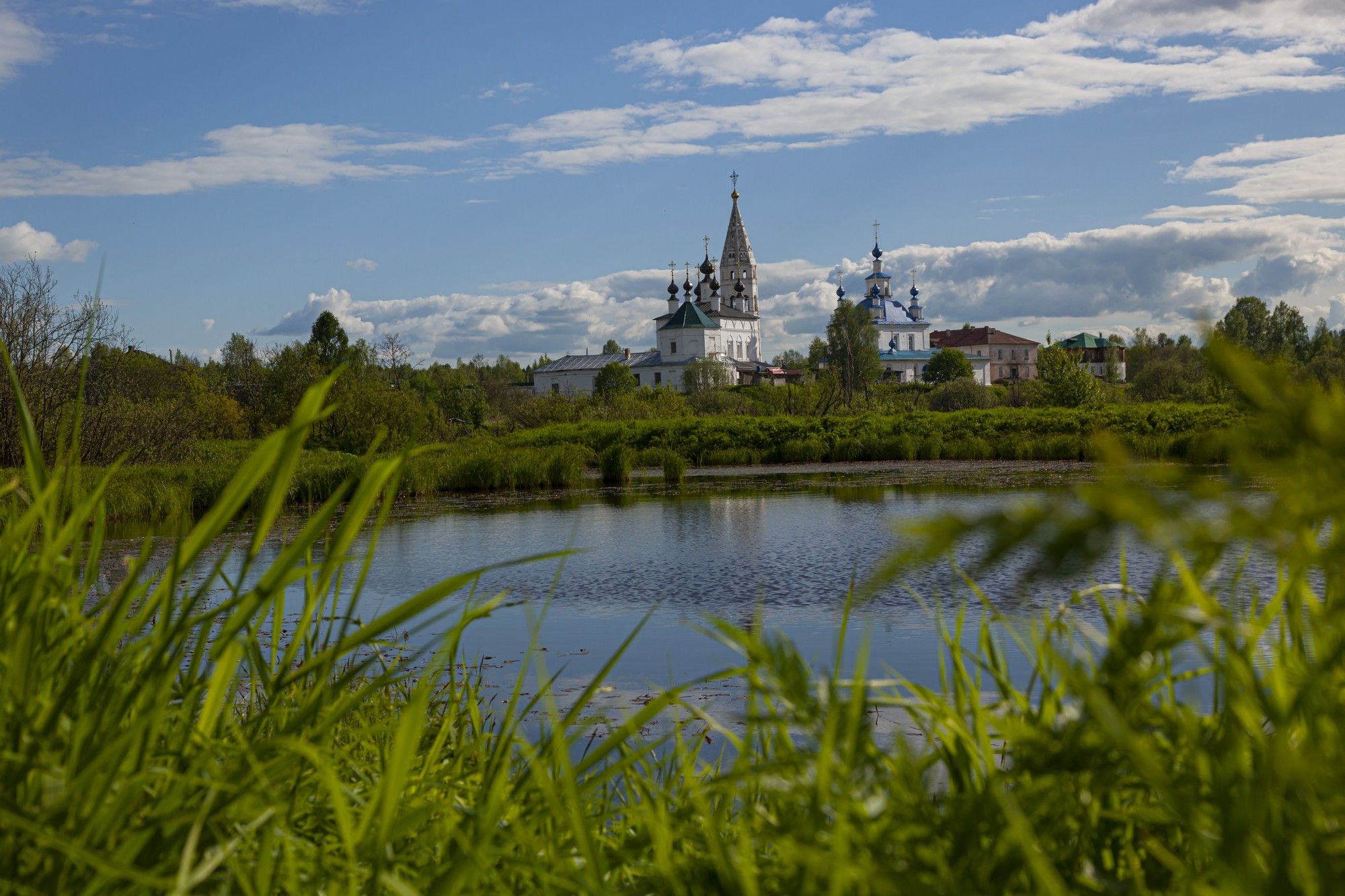
 Центральное сельское поселение, Kostroma Oblast, Russia

Immersion in the history of the native land
In continuation of the story of the Zheleznoborovsky Monastery. In the town of Borok in the Kostroma region, where the monastery from my previous story is located, there is another church.
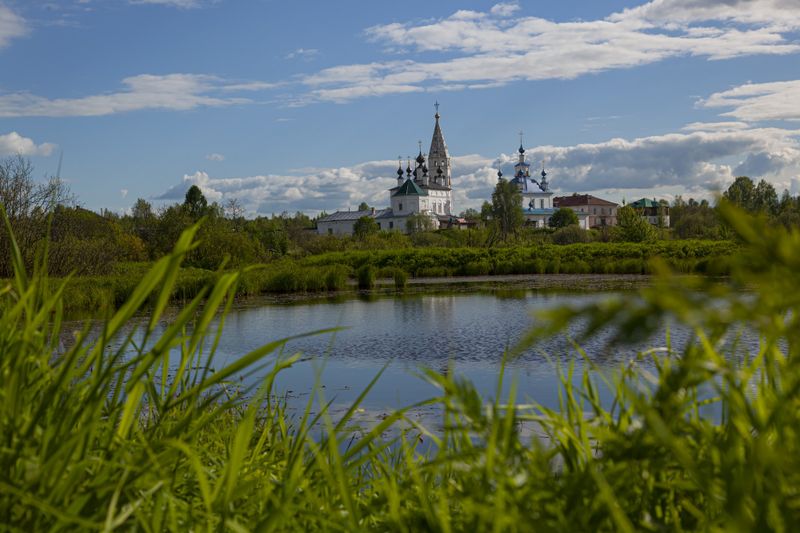
At the entrance to the village, we first saw the spire of this particular church. This is the Church of the Nativity.
This is a stone building with a bell tower. We approached her in a tight. The construction is quite old. Date of construction 1824. This means that in a few years there will be 200 years from the date of construction. The church is surrounded by a beautiful stone fence. By the way, money for the construction was collected from parishioners from the local village. Apparently, these were very wealthy peasants. Or maybe iron mining was so profitable here.
All this was told to us by the temple attendant. When we approached the gate a woman came out of them. She was friendly and invited to enter the territory. Along the way, she told us about today's problems of the temple.


In the church, roof repairs were made not so long ago. Today's parishioners are not so rich and can not afford to build a new temple. Even fixing the roof is a big problem for them.
As a result, the roof leaks were fixed, but nothing could be done with the windows. I had to close the windows with just a film, in anticipation of better times.

Previously, when there was no glass, no film on the windows, birds flew into the temple and every morning they had to wipe and clean up the remains of bird life.
And the minister said that the church almost never stopped working and that a lot of decoration from the earliest times remained inside. And also, that the architectural design of this church is very similar to many others built at about the same times as this one.
I stood on a village street, looked at the temple and listened to the twittering of birds and the sounds of the village. There were various natural smells of flowering trees and mowed grass around. This is an amazing feeling.
By the way, in villages often something is preserved that we have long lost in cities. For example, platbands. In this village I met one familiar type of platband that I like.
In Kostroma, on one of the streets there is a house in which the platbands are made in the same way.
I searched the Internet and realized that this type of platband is characteristic of the Susaninsky district of the Kostroma region. Since the house where I saw these platbands is located just between Susanino and the city of Bui, everything converges.
Well, interestingly, we’ll write this in the treasury of our knowledge about the traditional Russian culture of our country.


