

Hello, my dearest friends! Our country has always been famous for outstanding travelers and strong personalities, and Peter Kuzmich Kozlov just such people. He was able to explore Tibet and Mongolia, explore the arid deserts and impassable mountain areas of Central Asia.
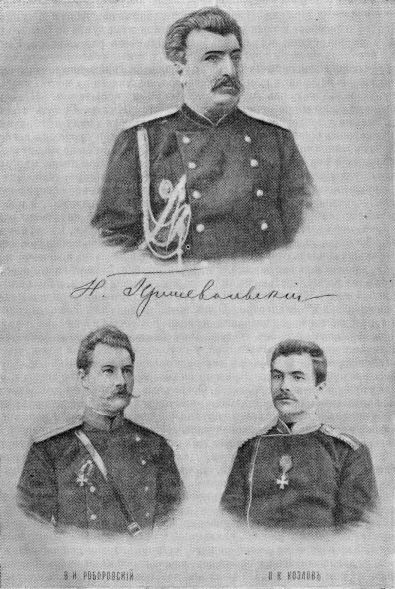
Kozlov was a favorite pupil and follower of Nikolai Mikhailovich Przhevalsky, he devoted his life to serving the Fatherland and the development of remote areas.
He was convinced that the ability to observe the smallest details and characteristics, natural phenomena of the surrounding area – the main task of any knowledgeable researcher. After all, we discover new places, acquire useful knowledge and experience in our travels.
Peter was born in 1863 in a small town of Smolensk province. From early childhood, the boy was curious, and from 7 years performed heavy work on the farm. After opening in the city of higher primary school he was sent to study.

Peter immediately fell in love with geography and became interested in natural science. Sensitive and knowledgeable teachers immediately saw the boy's interest in travel and history, many brought him literature from their libraries. Kozlov was reading the works of Przewalski, and after graduation, in secret from his parents began to prepare for admission to the Institute.
Uninteresting and boring work in the office did not attract him. He kept running into the forest, hunting, not to live hungry. Those dense forests, in which he often lost, belonged, like the vast estate of Nikolai Przewalski. And fate was such that Peter met and Nicholas Mikhailovich himself, and after some time became his disciple.
In 1883 goats entered in the Sofia infantry regiment, although the military can not even be dreamed of, but Przewalski never took in the expedition of civilians. So the dream to go on a long journey with his master had been forced to undergo this new test.
Kozlov's first expedition was a trip to Northern Tibet. The Przewalski's squad consisted of only 21 people, which included officers, and Cossacks.
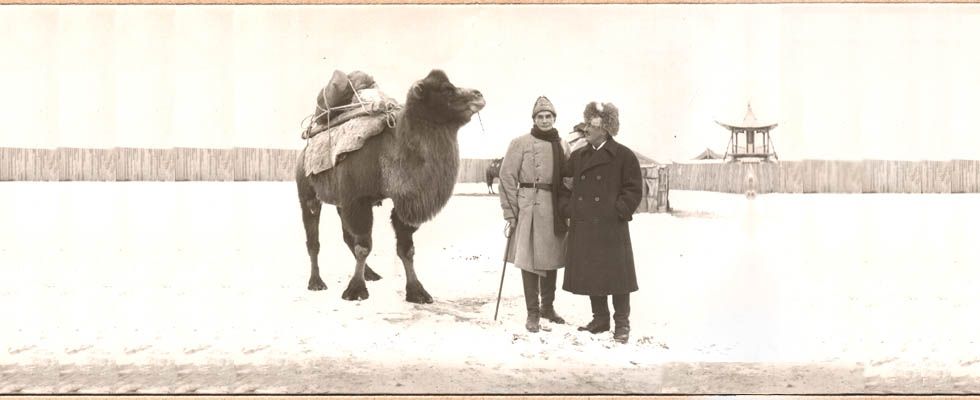
The expedition performed in the autumn of 1883 from the Buryat city of Kyakhta. By early November, travelers reached the waterless Gobi desert. Kozlov in his diaries wrote about the bad weather, the subzero temperature, and the frequent attacks of warlike tribes.
In those battles, Peter showed unwavering courage, for which he was awarded the St. George cross. In the first expedition they only on horses and camels passed more than 8 thousand kilometers, collecting necessary and important materials about flora and fauna of those places, minerals and climatic features of the region.
Kozlov was instructed to make and Zoological collection of animals and birds encountered on their way. Petr Kuzmich learned to conduct eye-measuring survey, to specify the coordinates and heights, to observe animals over long distances, to study their habits, and all the data recorded in the journals and journals of the expedition.
In the last expedition of Przhevalsky, Kozlov was the first who wanted to invite Nikolai Mikhailovich. However, this campaign was tragic for him: having got sick with typhus he died on the shore of lake Issyk-Kul. And inconsolable Peter Kozlov vowed to continue the work of his teacher.
They were opened and previously unknown types of wild camels and yaks, Tibetan bear-pisuhand, Chinese mountain deer, more than 5 thousand exotic birds, reptiles, fish, mollusks, and rare insects.
Kozlov's merits are highly appreciated by The Russian geographical society,he was awarded the first medal of his teacher - Przhevalsky.

In April 1892, The Russian geographical society approved a new project for an expedition to the Eastern outskirts of mountainous Asia. Then Peter Kuzmich played the role of senior assistant expedition Roborovskogo. Later Kozlov visited Lucchini, went in the quicksand, Cottage in the oasis of Sa-Jaw.

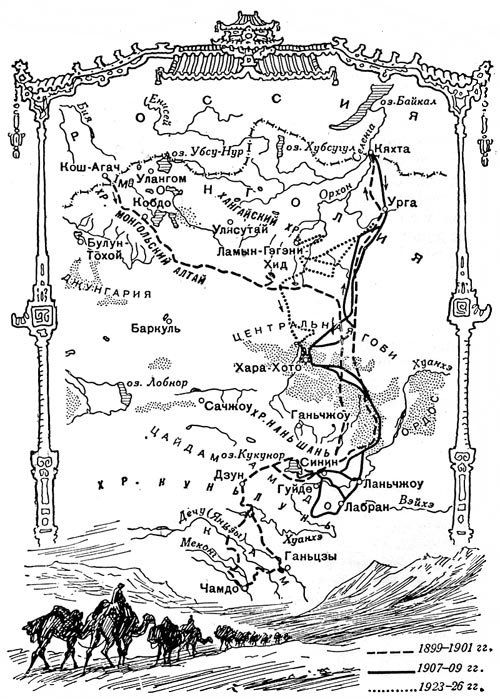
In his next trip in 1899, Kozlov himself led a large expedition. He spent three years preparing it. At this time, he had a new patron and mentor, the famous geographer and traveler Peter Petrovich Semenov-Tian-Shan.

During the last expeditions Kozlov explored the ruins of the lost dead city of Hara-Khoto, which in 1226 was captured by Genghis Khan.
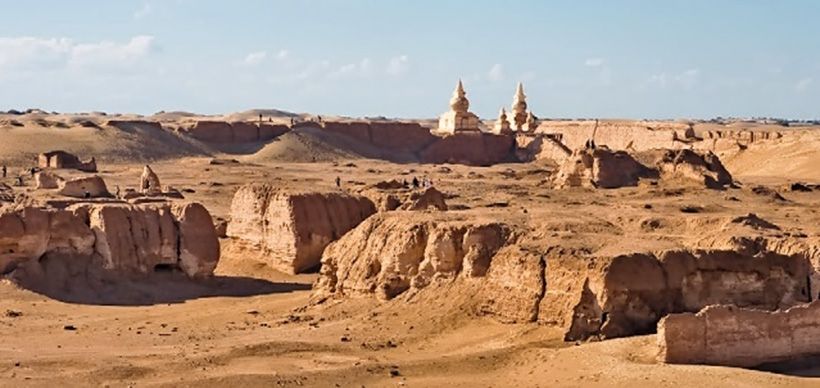
After the expedition, thousands of unique books and scrolls in the Tangut language were transported to St. Petersburg. A significant part of them is still kept in the funds of the Hermitage. But the most important discovery of those years was the Tangut-Chinese dictionary, which allowed scientists to decipher the ancient writing.
In the life of Peter Kuzmich was a meeting with the spiritual ruler of Tibet, the Dalai Lama XII. Kozlov described his impressions and adventures in two books: "Tibet and the Dalai Lama" and "Mongolia and Amdo and the dead city of Hara-Khoto".
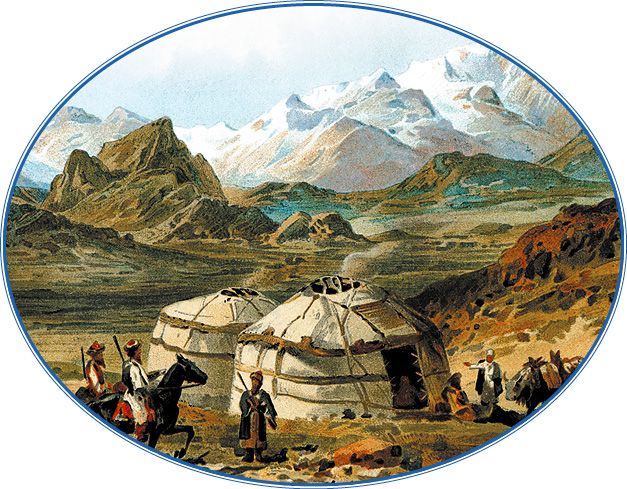
For decades of travel, Peter Kuzmich left us a lot of new discoveries, but the discovery of the dead city of Hara-Khoto, which legends have been since the time of Marco Polo, glorified the Russian traveler to the whole world.
Until the last days of his life, this man was not sitting idle. He continued to lead an active life, often gave lectures, wrote scientific articles, and participated in the work of various communities. Under the flag of The Russian geographical society, the brave traveler made 6 major expeditions, discovered unique species of animals and plants, told the world about the different peoples inhabiting the mysterious Asian lands.
Thank you for Your attention and Your visit. I appreciate Your feedback and comments.
I wish you luck and have a nice day!

