 Moulay Idriss Zerhoun, Fez-Meknes, Morocco

My driver gave me twenty minutes for Moulay Idriss. Just enough time to enter the medina, trust a boy I had never seen before, climb almost above the town - and somehow see far more than twenty minutes should have allowed.
My driver dropped me off near the entrance to the medina of Moulay Idriss and gave me twenty minutes to look around.
Twenty minutes.
It sounds absurdly short, but in fairness to him, Moulay Idriss had never been part of the plan. We were travelling back from Meknes to Fes, where I already had a guided tour waiting for me that afternoon, and I had asked for this detour myself.


Parking near the entrance to the medina was another complication, so those twenty minutes were not an arbitrary restriction. They were probably the most he could realistically give me.
I had wanted to stop here for a less rational reason. Before coming to Morocco, I had somehow convinced myself that Moulay Idriss might offer a glimpse of the country I was hoping to find beyond the obvious sights — something more authentic, perhaps even slightly mysterious. I could not have explained exactly what I expected to find there.
Twenty minutes was barely enough time to get out of the car, take a few photographs and start checking my watch. It was even less reassuring when the place in front of me was a medina, where getting lost seemed considerably easier than finding anything within a schedule.
So Moulay Idriss was never meant to be a proper visit. It was a favour, squeezed into the road between Meknes and Fes.

The Morocco I Had Not Imagined
The landscape had already started dismantling my idea of Morocco before we reached Moulay Idriss. At the time, I had mentally filed Morocco rather lazily under Africa, and Africa meant desert, sand and camels. Green rolling hills, fields and olive groves had not entered the picture at all. Yet that was exactly what surrounded the road from Meknes, with the white houses of Moulay Idriss gradually appearing across the slopes of Mount Zerhoun.
Perhaps that was also why I had insisted on the detour. I had read about Moulay Idriss in my guidebook, and something in the description had caught my attention. The town seemed to promise a Morocco beyond the standard tourist circuit — older, more spiritual and somehow more mysterious. I had no precise idea what that would mean once I got there, but I wanted to find out.
That sense of spirituality was not something I had simply projected onto the town. It was rooted very directly in its history.
In the late eighth century, much of the Islamic world was ruled by the Abbasid caliphs from Baghdad. Idris ibn Abdallah, better known as Idris I, was a descendant of the Prophet Muhammad and belonged to a family line that represented a potential challenge to Abbasid authority. After an unsuccessful uprising against them, he fled west, eventually reaching what is now Morocco, at the distant western edge of the Islamic world.
Idris settled at Walīla, the settlement occupying the site of ancient Roman Volubilis, only a few kilometres from present-day Moulay Idriss. There he was welcomed by the local Amazigh population — the people historically known in Europe as Berbers — and recognised as a ruler. From this alliance emerged the Idrisid dynasty, which would play a fundamental role in the early political and religious history of Morocco.
According to tradition, Idris I was poisoned in 791 at the instigation of his Abbasid enemies. His tomb became a major place of pilgrimage, and the town that developed around it grew into one of Morocco’s most important spiritual centres. Even its name reflects that status: Moulay is not part of Idris’s personal name and does not mean “prince”, as I once assumed, but is an honorific roughly meaning “my lord”.
Twenty minutes
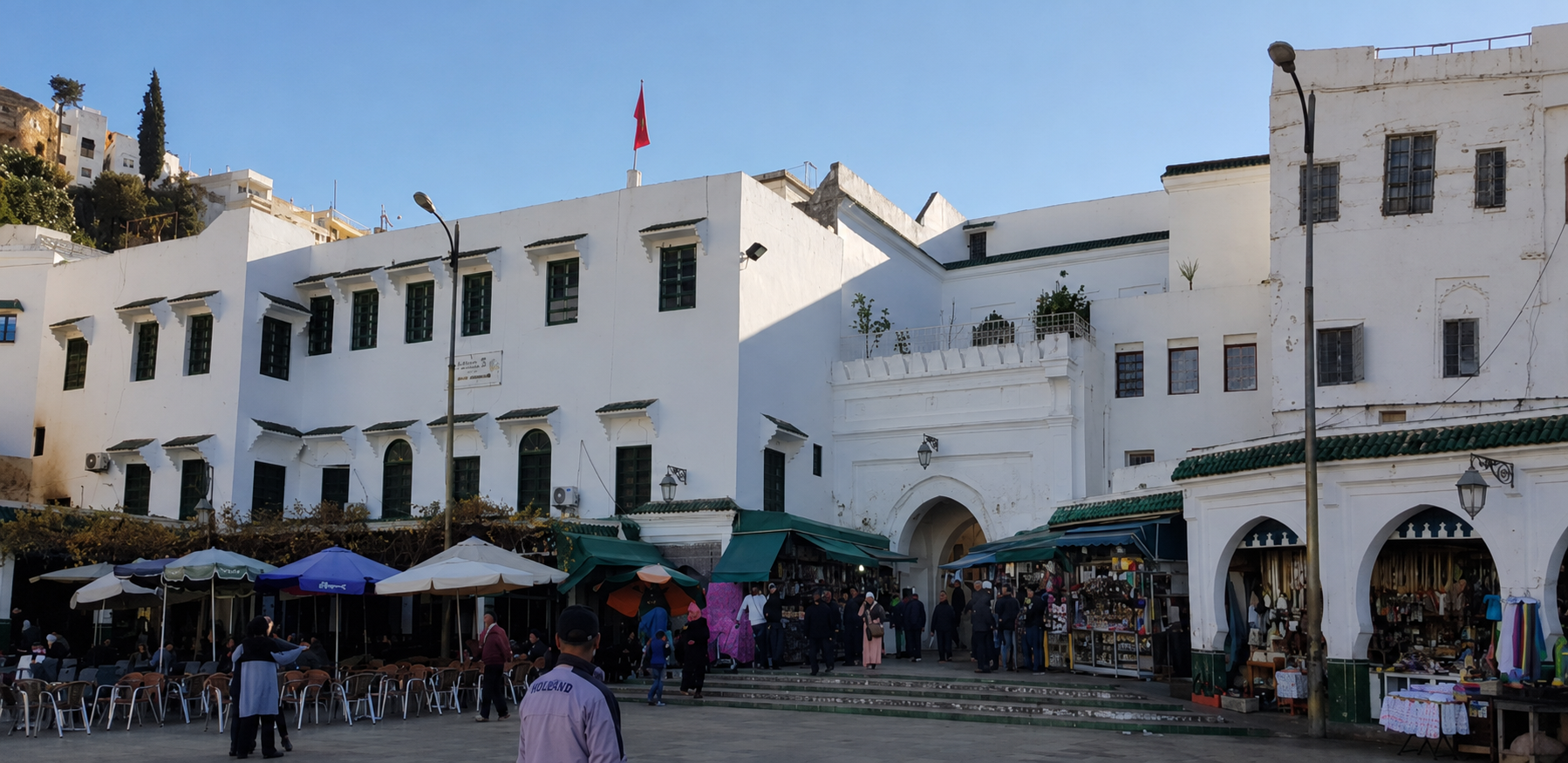
The square and the entrance to the medina were busy enough to make my twenty-minute deadline feel increasingly ridiculous. Food stalls were everywhere — olives, spices and things that looked considerably more tempting than my guidebook had advised me to consider safe.
At that stage of the trip, I was taking those warnings very seriously. The advice I had read about street and market food in Morocco had been emphatic enough that I photographed far more than I tasted. A few days later, on a train from Marrakech to Casablanca, I would watch an alarming number of tourists become violently ill, with some of them not even making it to the toilet. The sight — and especially the smell — made me feel considerably better about my caution. I did eventually try some local food that afternoon in Fes, but only after my guide there had explicitly told me what was safe to eat.
From the square, the medina began almost immediately. One route led towards the religious complex containing the mausoleum of Idris I; another disappeared into the steep streets above the town. Non-Muslims can visit Moulay Idriss, but the mausoleum itself and the innermost part of the sanctuary are reserved for Muslim worshippers, a reminder that this is still a pilgrimage town rather than simply another picturesque medina.
By the time I stepped inside, my twenty minutes had probably become seventeen. Waiting near the entrance was a small group of boys presenting themselves as guides, and they were not particularly subtle about offering their services. They were persistent, bordering on aggressive, and my first instinct was to keep walking.
I reconsidered almost immediately. I had seventeen minutes, no idea where I was going and a medina climbing steeply above me. If I wanted to see anything beyond the first few streets, one of these boys was probably my only realistic chance.
So I chose one.
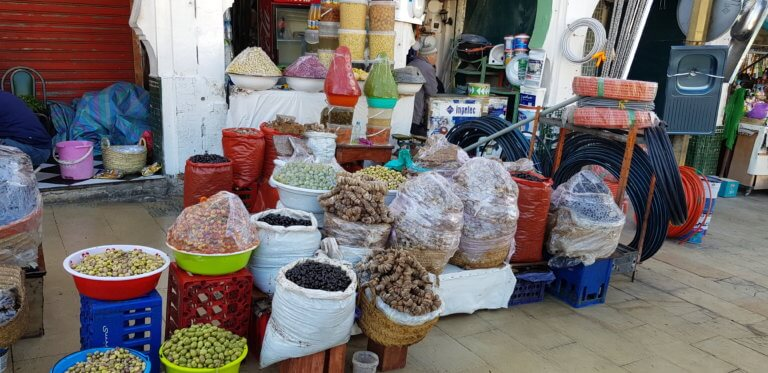
My guide had a better plan for seeing Moulay Idriss than I did
My chosen guide wasted no time. He immediately disappeared into the narrow streets at a pace suggesting that my driver had personally briefed him about the twenty-minute deadline, and I followed.
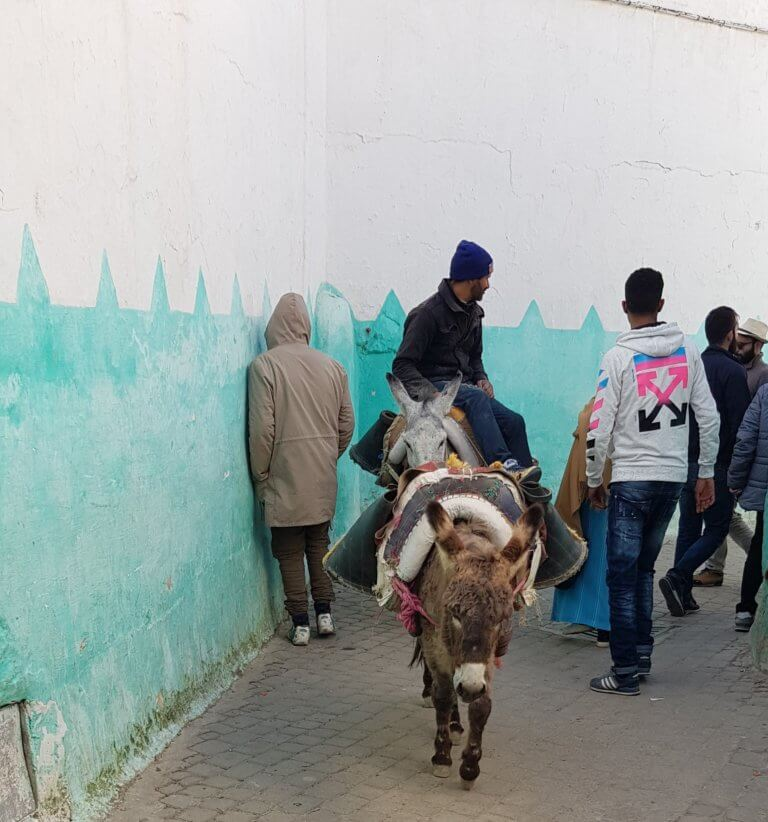
I had no idea where he was taking me. What I also had not realised was that Moulay Idriss would very quickly start going uphill. The climb itself was perfectly manageable, although I would happily have negotiated a slightly slower pace. The boy, however, clearly had no intention of wasting any of my remaining minutes. We moved between white houses, through narrow passages and past donkeys that seemed considerably more confident about where they were going than I was.
Somewhere along the way, another thought started bothering me. I had just met this boy at the entrance to the medina and was now following him farther and farther into a town I did not know. I had no map, no sense of direction and no real way of knowing whether he was actually taking me somewhere worth seeing.
For a moment, I wondered whether trusting him had been a clever use of my limited time or simply a very efficient way of getting lost.
Fortunately, he knew exactly what he was doing. He was not taking me on a generic tour of the medina at all. He was taking me uphill towards the places from which Moulay Idriss could actually be photographed properly.
The minaret I wasn’t expecting
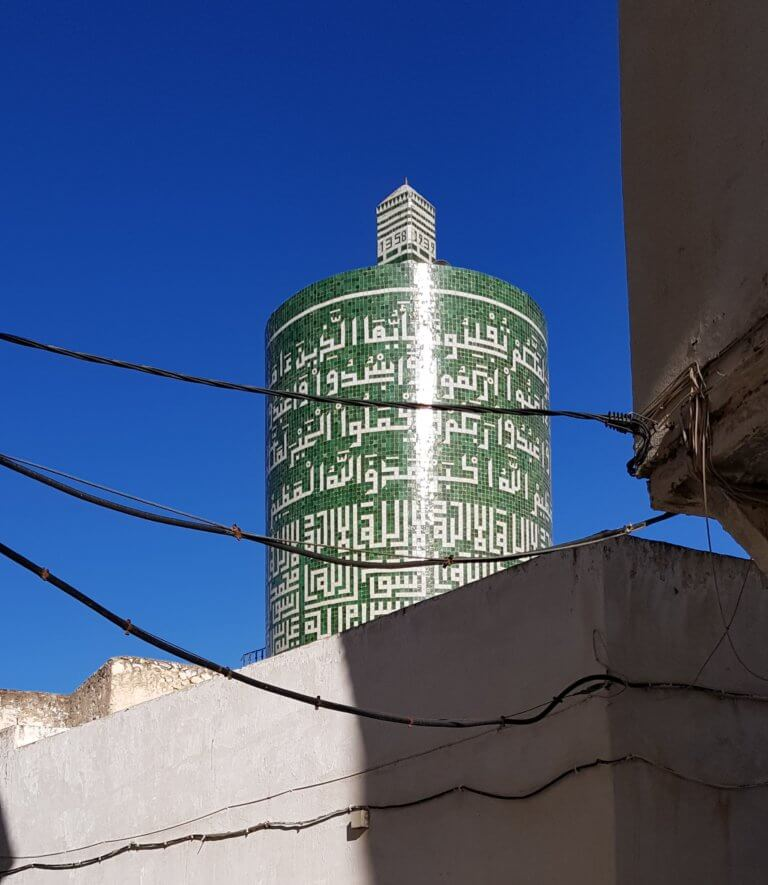
Somewhere during the climb, the boy pointed out something between the houses that I would almost certainly have missed on my own. Rising above the rooftops was a bright green cylindrical minaret covered in white Arabic calligraphy. It belonged to the Sentissi Mosque, a small twentieth-century mosque higher in the medina, today also associated with a Qur’anic school.
The Sentissi Mosque is not the principal religious site of Moulay Idriss — that role belongs to the sanctuary and mausoleum of Idris I — but its minaret is one of the most distinctive structures in the town. Built in 1939, reportedly by a local man after returning from the hajj to Mecca, it looks far older than it actually is.
What makes it particularly unusual is its shape. Moroccan minarets are traditionally square, while this one is cylindrical and wrapped in green zellij - traditional Moroccan glazed tilework - with white Kufic script running around its surface. It is generally described as the only cylindrical minaret in Morocco. Squeezed tightly between the surrounding houses, it is also surprisingly difficult to see properly until somebody points you towards the right spot.
That was another indication that my improvised guide knew exactly what he was doing. With only a few minutes available and no idea where to look, I could easily have walked through the medina without ever realising that the minaret was there.
But the minaret was not the destination. The boy kept leading me farther uphill until the houses finally began to open up and I understood what he had actually been taking me towards.
Below us was Moulay Idriss.
The view that made it worth it
From the viewpoint, the logic of Moulay Idriss suddenly became clear. Below me, the white houses spread across the slopes, but one complex immediately drew the eye: the green-roofed sanctuary and mausoleum of Idris I, the religious centre around which the town had developed.
From the streets below, I had only glimpsed the entrance to a sacred space I could not enter. From up here, much more of the complex was suddenly visible.
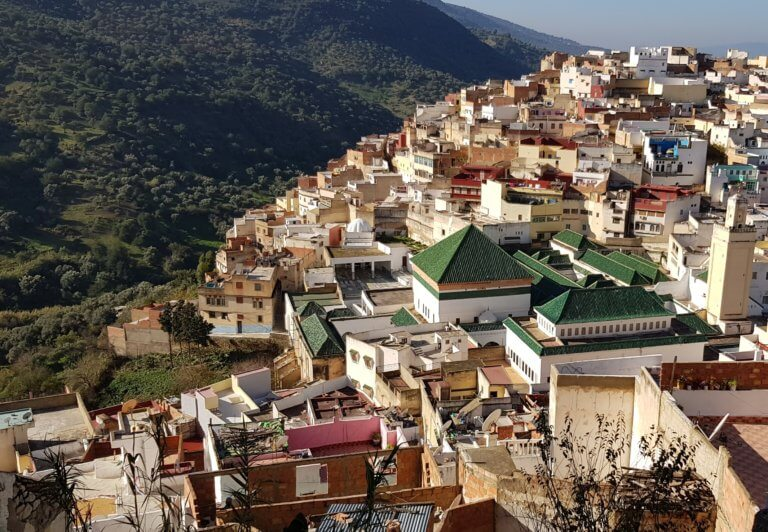
By then, the boy had more than justified my decision to follow him. Had I tried to explore alone, I would probably have spent my twenty minutes on the square and in the first few streets of the medina, taken fifteen photographs of shops and returned to the driver convinced that I had “seen Moulay Idriss”.
Instead, I had reached the best viewpoint over the town, seen its sanctuary from above and found a minaret I would almost certainly have missed on my own. Somehow, those twenty minutes had produced far more than they had any right to.
The boy then led me back down through the medina towards the entrance where we had started. Only there did we settle the practical part of the arrangement. We had agreed on 200 dirhams before setting off, and that was what I intended to pay.
He made a brief attempt to suggest that the tour had perhaps been worth a little more. I reminded him, equally briefly, that we already had a deal.
That ended the negotiation.
The 200 dirhams changed hands and the transformation was immediate. Until that moment, I had been his responsibility; a few seconds later, his eyes were already searching for the next tourist with too little time and too many dirhams.
Fair enough.
A town that got twenty minutes and deserved more
Before returning to the car, I passed the entrance to the sanctuary once more. As a non-Muslim, I could look towards the inner complex but not continue into the part reserved for Muslim worshippers. After seeing the sanctuary from above, that restriction somehow felt different: this was not simply another monument on a tourist route, but the religious centre around which the town had grown.
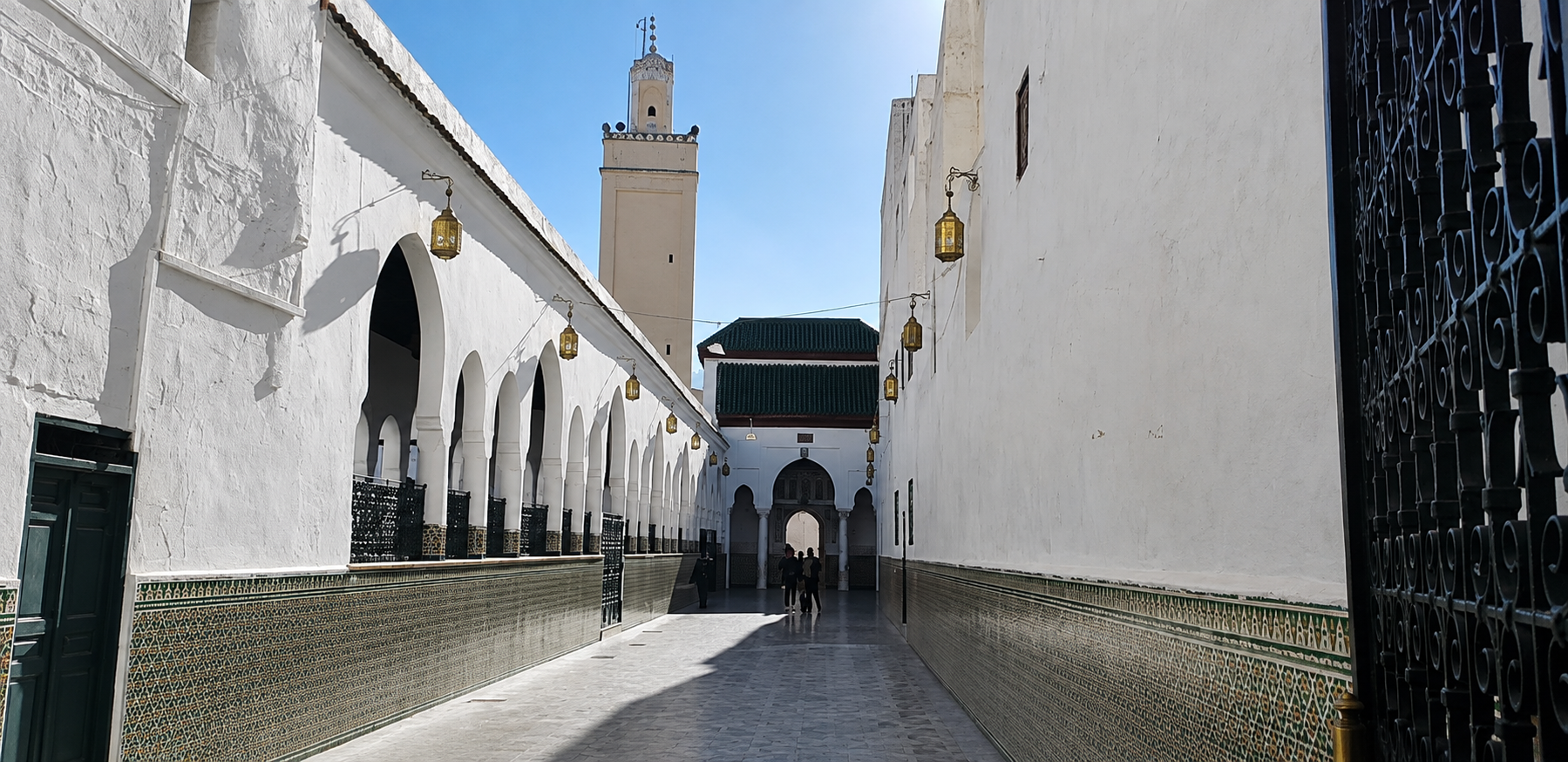
Back at the entrance to the medina, the car was waiting and my improvised excursion was effectively over. There was, however, one obvious place nearby that I knew I was leaving behind: Volubilis. The Roman ruins lie only a few kilometres from Moulay Idriss, at the same ancient Walīla where Idris I had established his base centuries earlier. Visiting the two together would have made perfect historical sense; fitting both into my schedule that afternoon would not. Fes was waiting, my guided tour was already booked, and Moulay Idriss itself had only happened because my driver had agreed to the detour.
What mattered was that those twenty minutes had given me exactly the glimpse I had hoped for when Moulay Idriss first caught my attention in the guidebook. I had come looking for something beyond the most obvious version of Morocco — something spiritual, slightly mysterious and still connected to the life of the place rather than arranged primarily for visitors. I certainly had not understood Moulay Idriss in twenty minutes, but I had seen enough to know that my intuition about it had been right.
On the road towards Fes, the unexpectedly green hills of northern Morocco followed us for a while longer, with one final stop for a photograph before we continued towards the city.
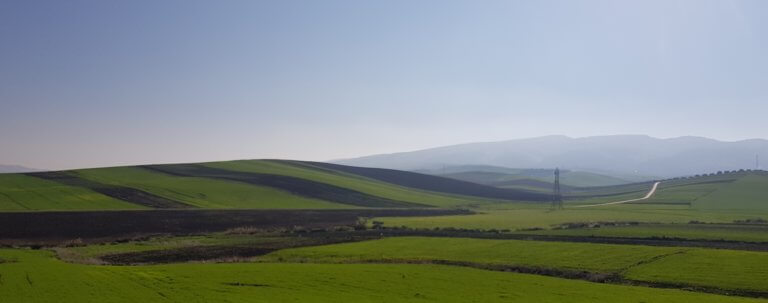
Moulay Idriss had been squeezed into the itinerary as an unplanned detour between Meknes and Fes. Twenty minutes after entering the medina, I was back in the car.
It did not feel brief anymore.
Note: I visited Moulay Idriss in December 2018. Access rules, prices and local arrangements may have changed since then, so travellers should check current conditions before visiting.
