
 Stockholm, Stockholm County, Sweden
What Stockholm in two days taught me about Swedish precision, open-fire dining and the danger of overplanning a city.
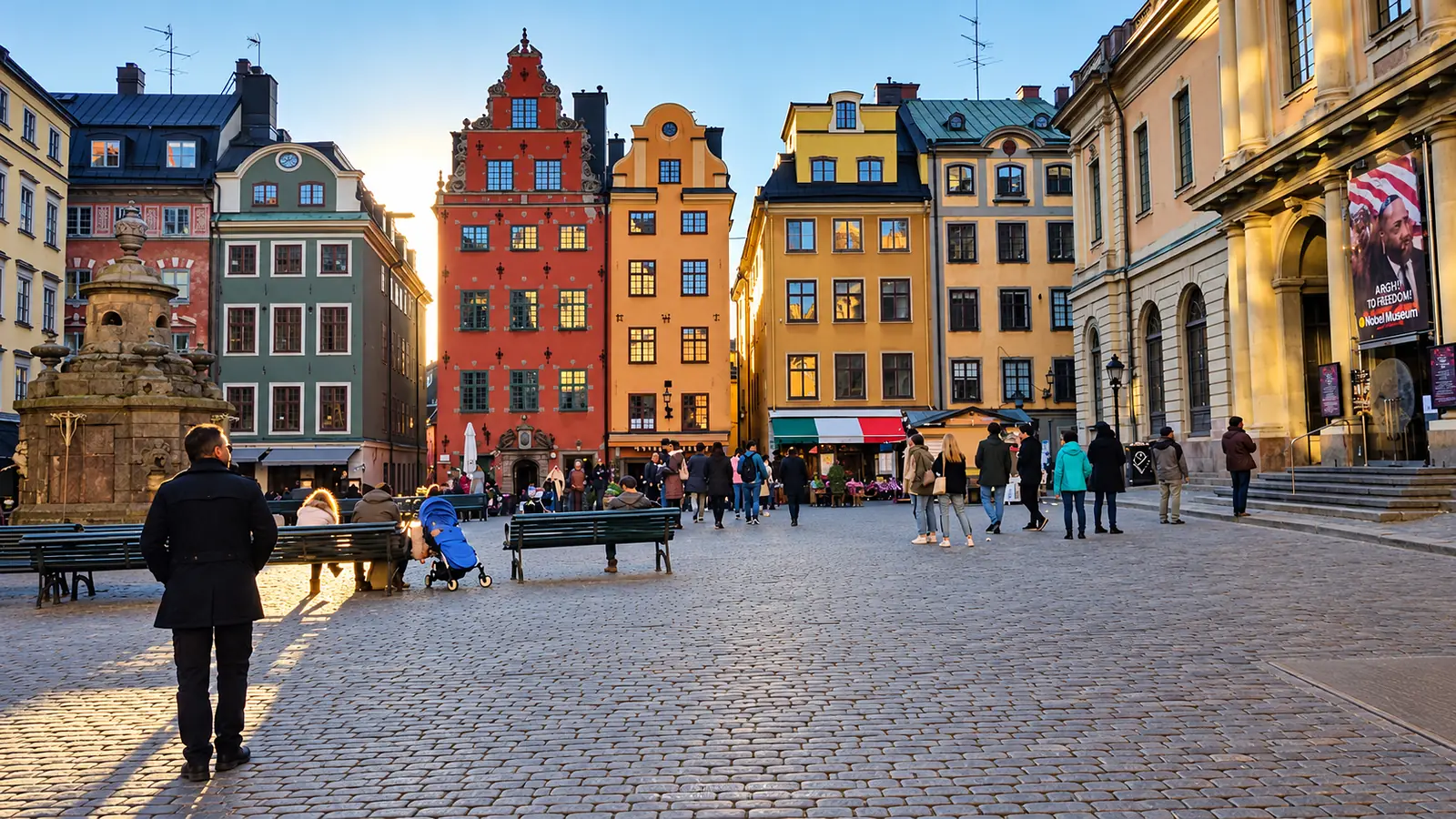
The bus from Stockholm Skavsta Airport refused to leave. The engine was running, everyone was on board, and a fairly long drive to Stockholm lay ahead. Yet the driver wouldn’t pull away until the last passenger had fastened their seat belt. Until everyone complied, Sweden was going nowhere.
At the same time, the Wi-Fi on the bus worked flawlessly.
Today, that detail would probably pass me by completely. We have 5G, and getting online on the move is no longer anything special. But in 2018, after landing at a low-cost airport in the middle of nowhere and facing a long bus ride into the city, fast and stable Wi-Fi was almost a luxury. As it turned out, it was a fitting introduction to the weekend: the rules would be followed, but in return everything would work.
I flew to Stockholm from Rijeka on Friday evening — alone. My return flight wasn’t until Monday, which gave me two full days in the city. I had even been given the same window seat, 5F, in both directions, as if someone had decided to tidy up that small detail too. Less tidy was the fact that an airport called Stockholm Skavsta isn’t especially close to Stockholm. By the time I finally reached the city, it felt as if the flight had been followed by another, less glamorous leg of the journey.
Minimalism and a Credit Card
I stayed at Miss Clara by Nobis in central Stockholm. I liked the hotel immediately: an old building, a very clean contemporary interior, plenty of wood, leather and metal, and exactly the kind of Scandinavian design that is easy to photograph and slightly harder to live in.
The room was beautiful. The only problem was that I could barely fit in it. Whenever I opened my suitcase, I had to decide whether I wanted luggage or floor space. Having both at once was optimistic. Everything had a function, everything had been thought through, and nothing took up a centimetre more than was absolutely necessary. Perhaps that was where I first realised how different my relationship with space was from the Scandinavian one. I find extra space comforting; here, it looked like an underused resource.
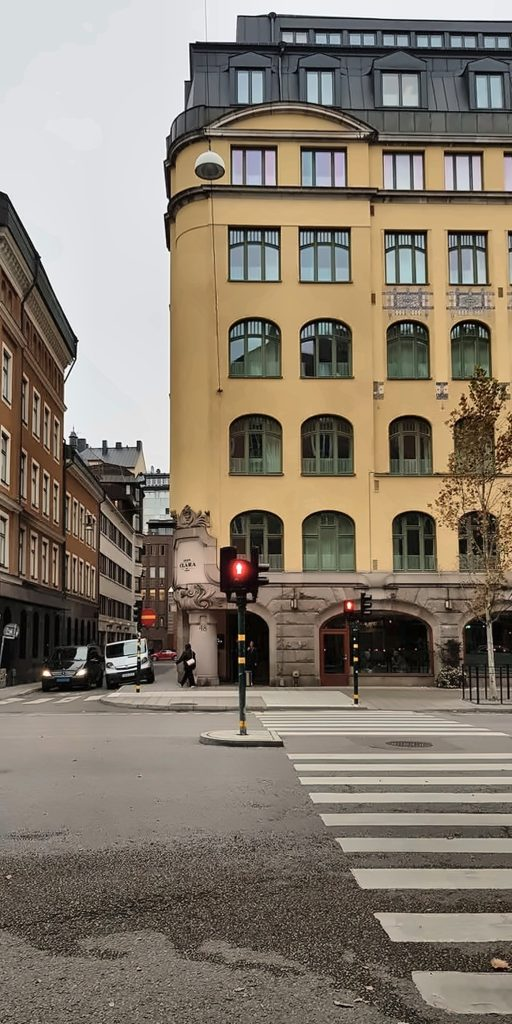
The reception staff were very friendly, but one thing began to seriously irritate me: for absolutely everything I wanted them to arrange, they asked for another credit-card pre-authorisation. Want a restaurant reservation? Pre-authorisation. Want a private tour? Pre-authorisation. I no longer remember every individual request, but I remember the feeling perfectly: we’ll be happy to help you, but first we need to protect ourselves financially from you. It wasn’t about the money; it was the lack of trust that bothered me.
The hotel, incidentally, is named after Clara Strömberg, the much-loved headmistress of the girls’ school for which the building was later constructed. The reception desk, evidently, had inherited only her name.
Breakfast, fortunately, was excellent. I particularly remember the kanelbullar, cinnamon buns that made Scandinavian minimalism give way, at least briefly, to butter, sugar, cinnamon and cardamom. Here, at last, we spoke the same language.
The Guide Who Needed Only Three T-Shirts
As I had only one weekend, I had booked a private tour for Saturday morning. The idea seemed logical: instead of spending half my first day trying to work out the city on my own, I would get some basic orientation, historical context and a few recommendations for the rest of the weekend in just two hours.
My guide arrived an hour early. At first, I found this almost impressive — until I realised she had no intention of starting any earlier. She was there. I was there. The tour was ready. But it had been booked for a specific time, and that was when it would begin.
The tour was supposed to last two hours, and I had asked if we could spend part of it in German and part in English. I wanted to keep both my German and my English sharp. She agreed.
Then she took out a stopwatch.
German got its allotted block of time; English got its own. It didn’t matter whether a topic happened to reach a natural conclusion at that moment.
Time’s up. Switching languages.
As the tour went on, the conversation became less about Stockholm and more about ways of life. At one point, she told me she couldn’t see why anyone would need more than three T-shirts.
Three.
Not three white T-shirts. Not three T-shirts for work. Three T-shirts in total. It’s entirely possible that I had packed more than that for the weekend alone.
She also explained that those of us from the Balkans were too relaxed. This came from a woman who had arrived sixty minutes early only to wait for the official start of the tour, so I didn’t have a particularly strong counterargument. But she wasn’t joking, nor was she trying to be rude. To her, this was simply a rational way to live: few possessions, clearly defined schedules, little improvisation. To me, it’s perfectly normal for an interesting conversation to run long and for coffee to last as long as it lasts — and a fourth shirt is not a sign of a life spiralling out of control.
At some point, I also asked her about Swedish meatballs. She was almost offended. According to her, köttbullar were something you cooked for children, while the rest of the world had turned them into a Swedish national symbol, largely thanks to IKEA. She was clearly exaggerating a little. Meatballs have a very real place in Swedish home cooking, but her reaction was more interesting than the fact itself. She disliked the idea of Sweden being reduced to something so ordinary.
What interested her about Croatia, meanwhile, were things I would never have expected. One question in particular baffled her: how could the same species of fish taste different in a hotel restaurant and in a konoba, a small traditional tavern by the sea?
To me, the answer was obvious: freshness, storage, the grill, olive oil, the cook, the simplicity of the preparation. Perhaps even the fact that one is eaten beside the sea while the other arrives under hotel lighting. To her, it wasn’t. The same fish should, fundamentally, be the same fish. That was when I realised our differences went beyond the number of T-shirts we owned.
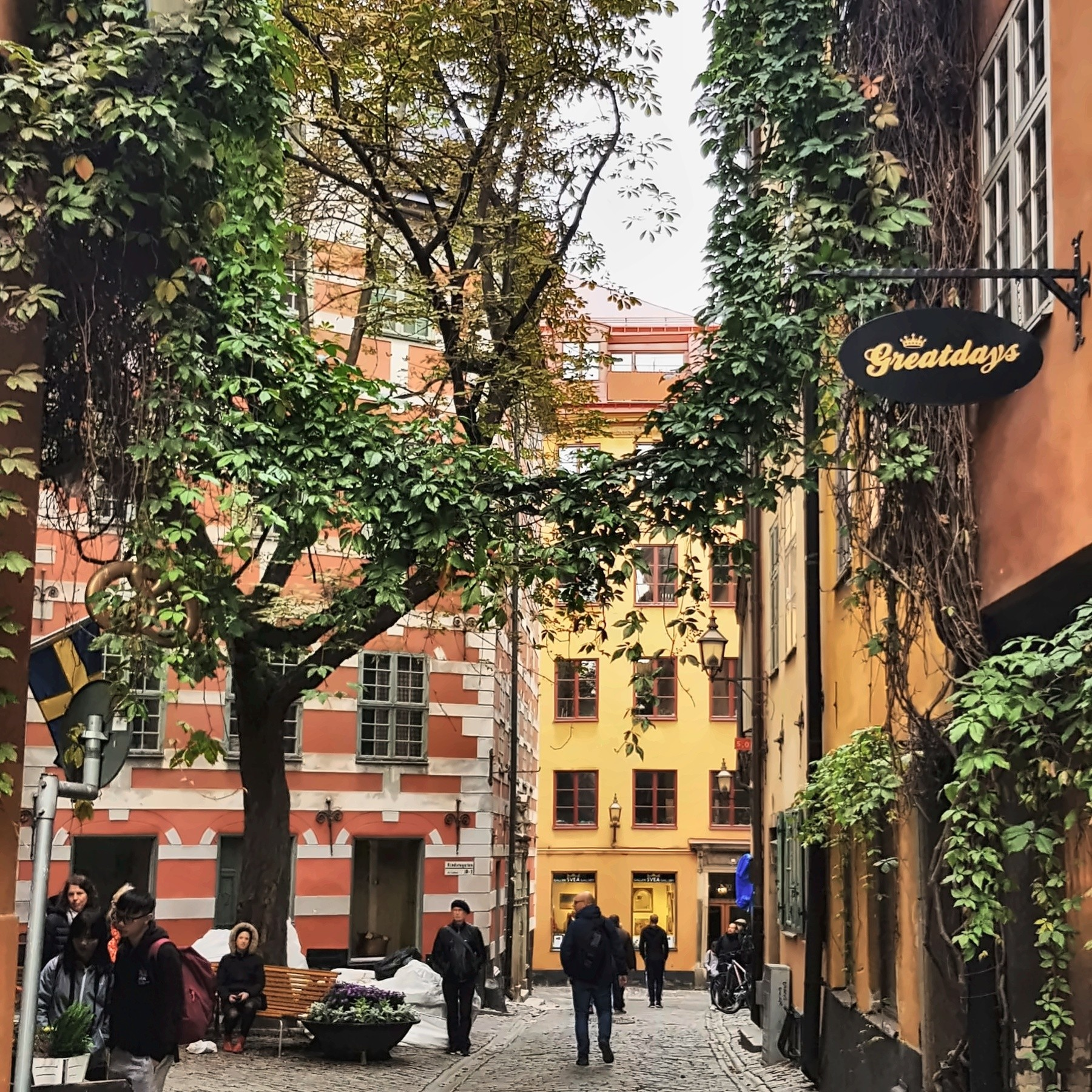
Fifteen Minutes on the House
When the two hours were up, she announced that she would give me another fifteen minutes. That was exactly how it felt: bonus time. We went for coffee. We each paid for our own. On her recommendation, I also ordered a slice of prinsesstårta, the famous Swedish marzipan-covered cake. Mine was pink.
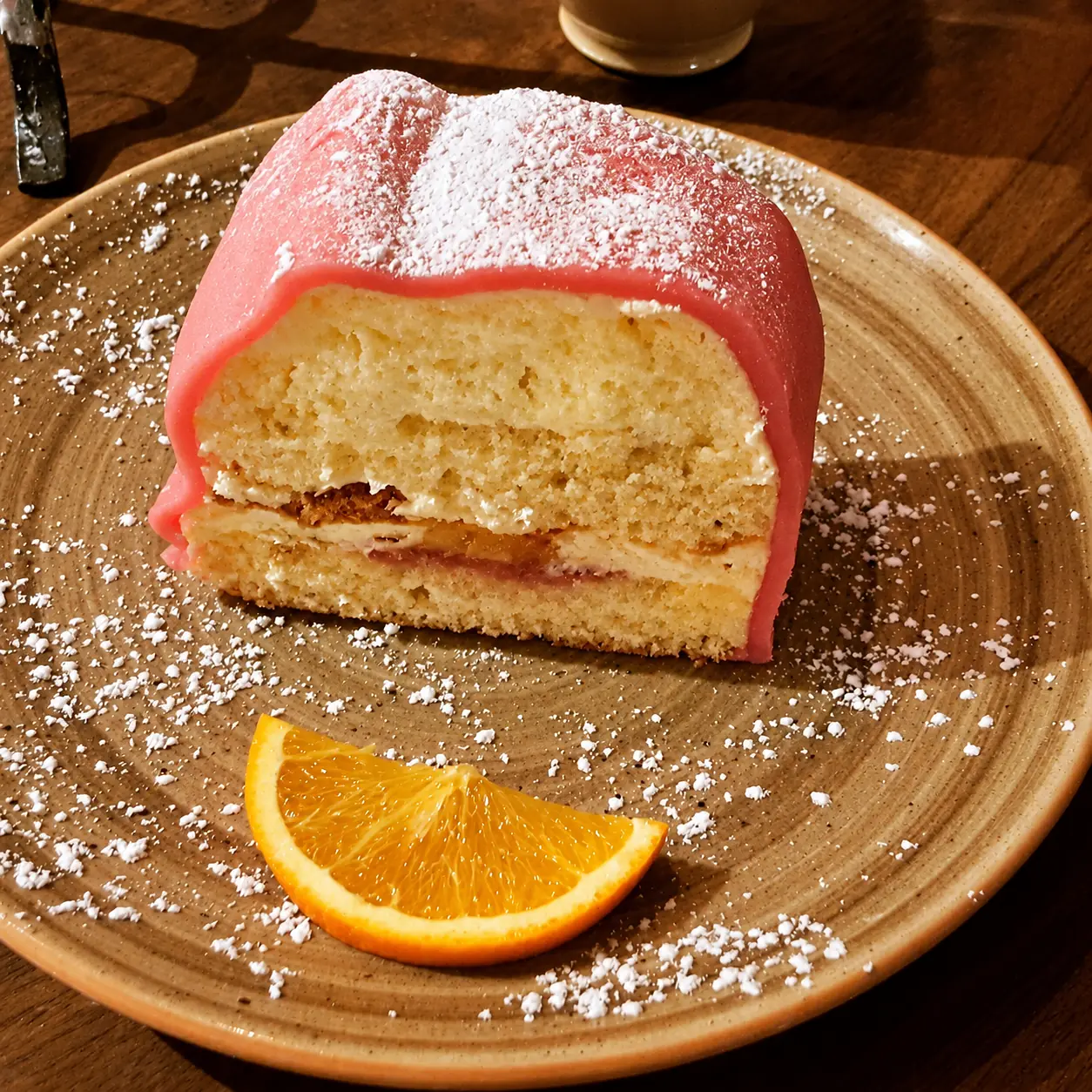
Only later did I learn that the classic prinsesstårta is usually green. Depending on its exact composition, a pink version may be closer to its relative, the operatårta. But my guide had called it prinsesstårta, and I had no intention of reopening a classification debate with someone who timed languages with a stopwatch.
Whatever it was officially called, it was neat, pretty and brutally sweet. And I do have a sweet tooth — but this was too sweet even for me.
As I tried to finish the cake, she kept asking questions about Croatia. The mystery of the hotel fish and the konoba fish was still bothering her. Those extra fifteen minutes may ultimately have told me more about Sweden than much of the official tour.
Stockholm from the Water
Later, I went on a boat tour. I had expected a little more from it. It wasn’t bad. Stockholm is certainly interesting from the water, the recorded commentary did its job, and the procession of palaces, residential districts, parks, ferries and islands gave me a whole new picture of the city.
What stayed with me most, though, was a technical detail. At one point, the boat passes between Lake Mälaren and the Baltic Sea through a lock. The boat enters, the massive gates close behind it, the water level changes, then the gates on the other side open and the boat continues. The whole thing is over surprisingly quickly.
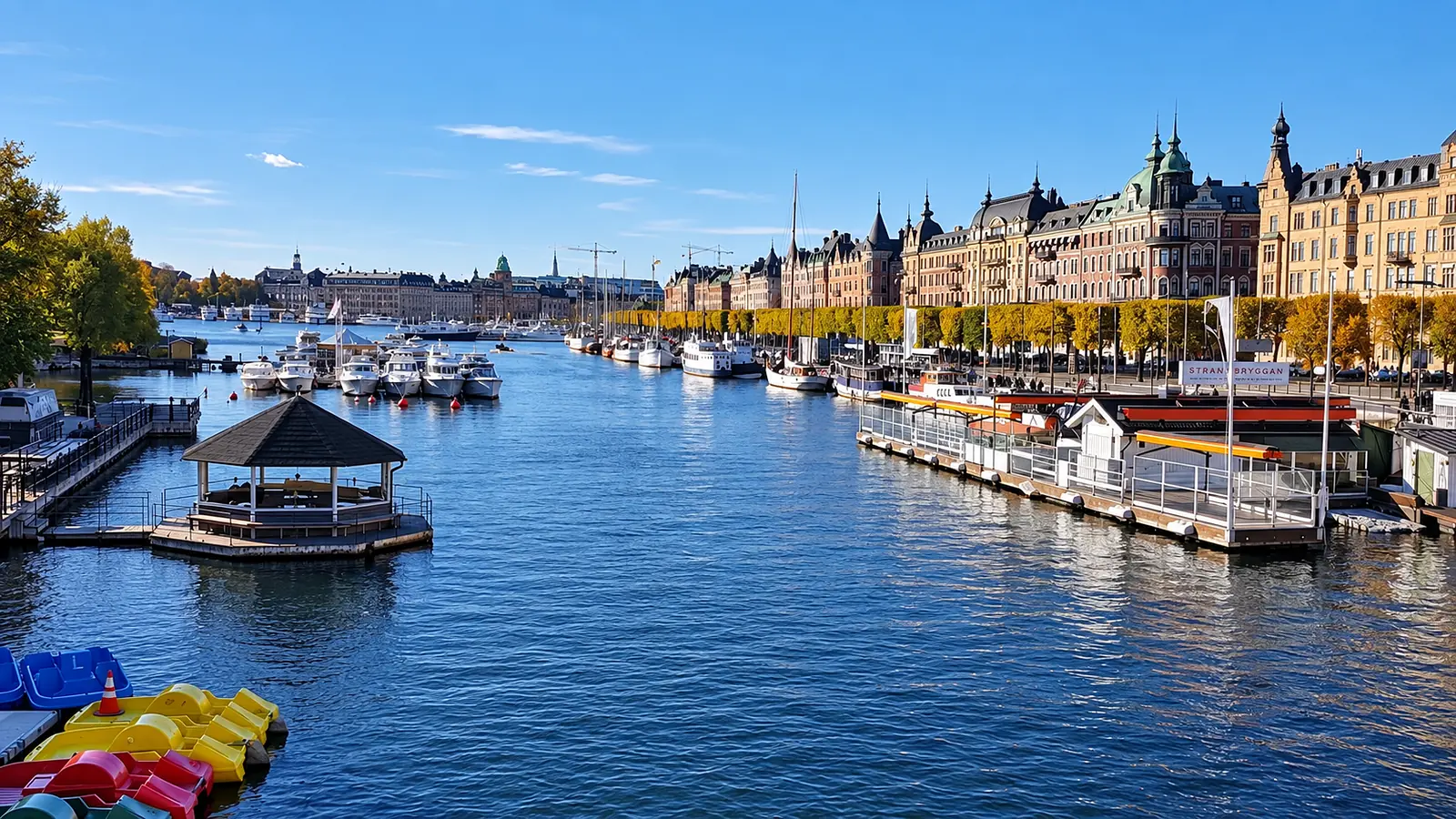
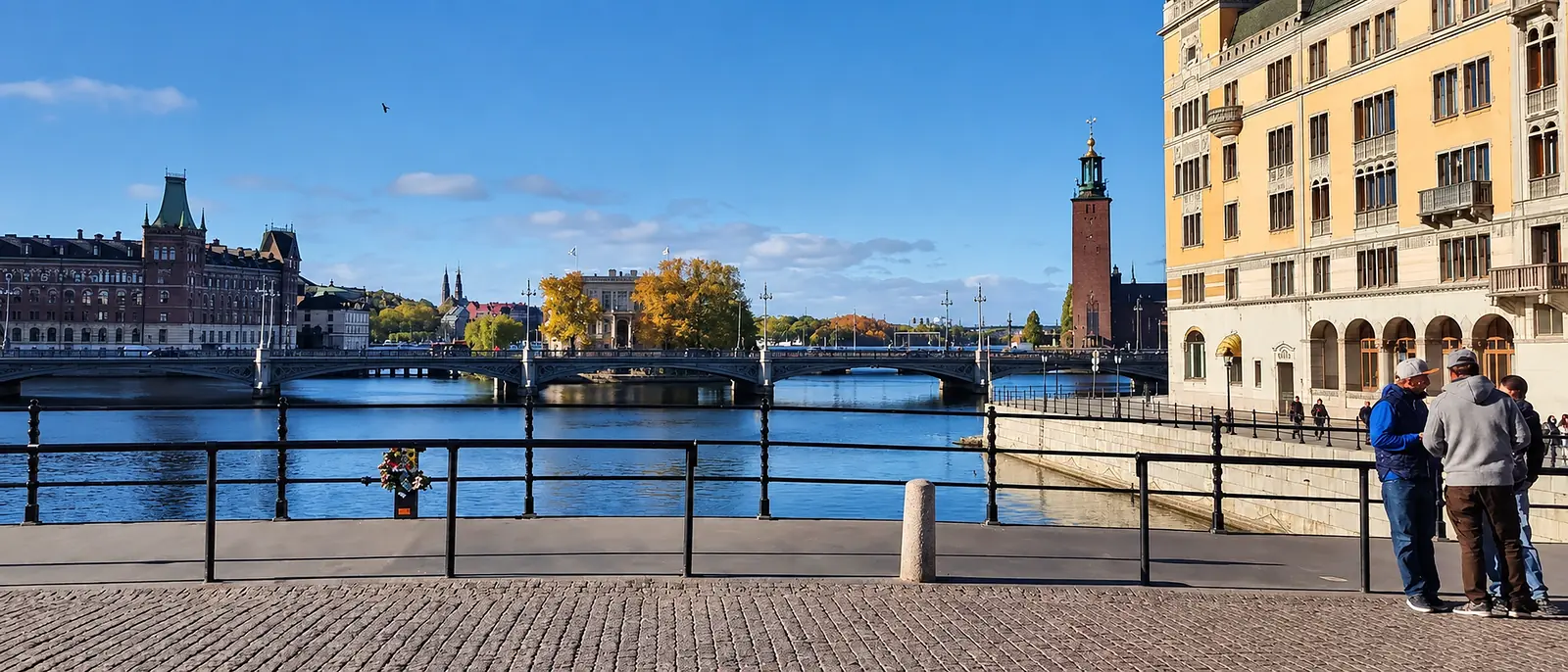
The tour was worth it simply because it gave me a different perspective on Stockholm. From street level, the city could feel fragmented; from the water, it became clear how much the water holds it together.
Dinner Without Electricity
For Saturday evening, I had booked a table at Ekstedt. Since I had only one proper evening out in Stockholm, I wanted somewhere that wouldn’t be just another good fine-dining restaurant of the kind you could find in London, Paris or Copenhagen.
Ekstedt was different. Niklas Ekstedt opened it in 2011 with the idea of returning to cooking techniques from the days before electric kitchens. Open fire, birchwood, embers, smoke, a wood-fired oven and red-hot cast iron weren’t there for show. They were the kitchen. The restaurant had already held a Michelin star for several years, and the concept seemed Swedish enough, strange enough and different enough that I didn’t hesitate for long.
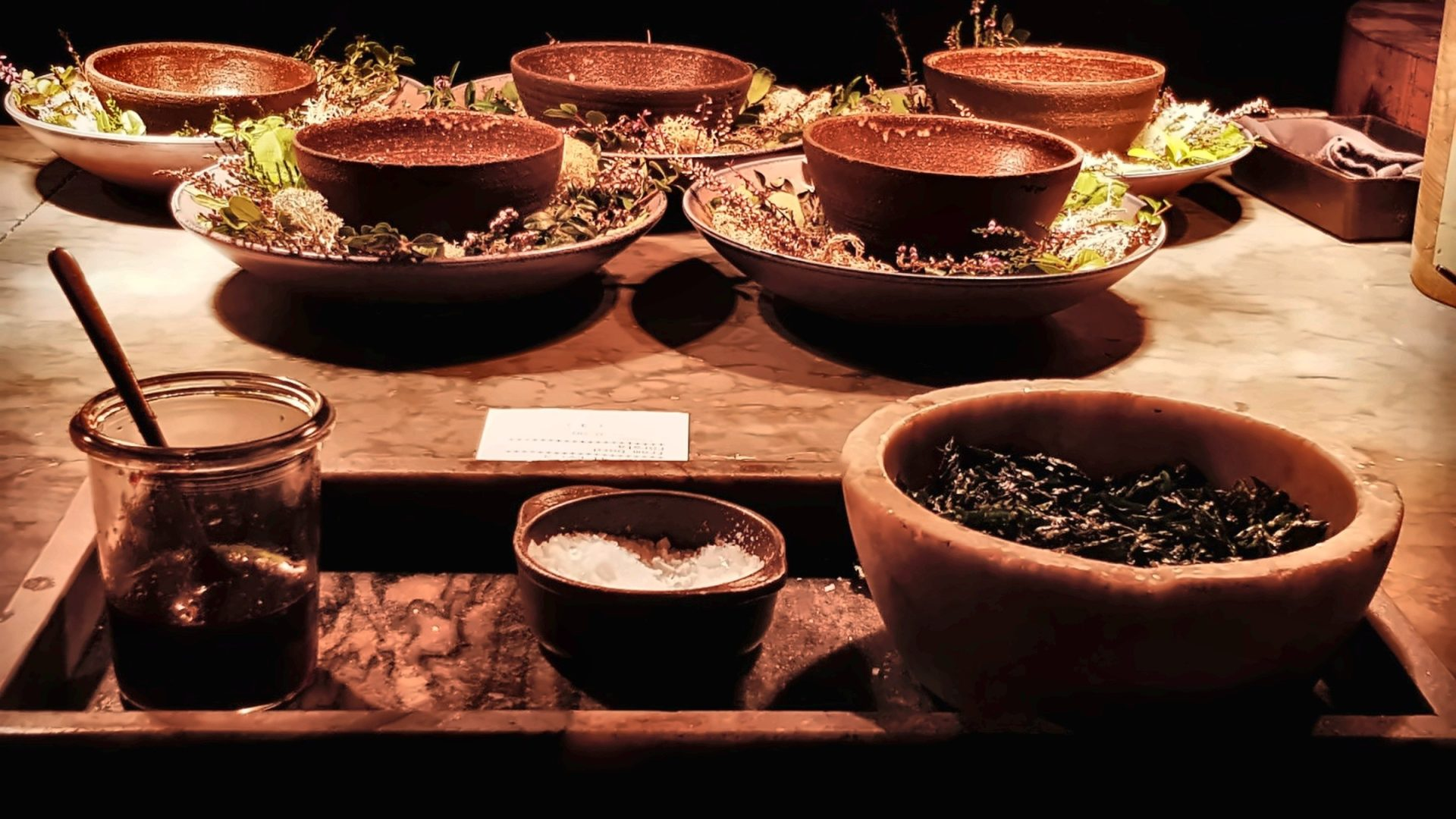
I sat right next to the chefs’ station. It was almost like having a private chef, except that this chef would occasionally set fire, right under your nose, to something that looked like part of an industrial plant.
There were many courses. I could choose the classic wine pairing or an alternative made up of various herbal, vegetable and other non-alcoholic drinks. I chose the latter because it sounded more interesting.
The results were very uneven. Some drinks were fantastic; with others, I wondered why no one had stopped the process before the vegetables ended up in the glass. The food was much the same. Some flavours were almost orgasmic: the kind of bite that makes you pause for a moment because you can’t quite work out how anyone got something like that out of a familiar ingredient. Others were more interesting than delicious.
Then came a seafood course. Here the restaurant never really stood a chance, because I don’t like fish or seafood and generally avoid both unless I really have to. Yes, this is the same man who, only a few hours earlier, confidently explained to my guide why fish from a konoba tastes better than hotel fish.
With a tasting menu, however, you hand the chef control over what lands in front of you. This one was something slimy and briny.
I tried. It wouldn’t go down.
I discreetly slipped off to the toilets and dealt with the problem. Blame my palate, not the kitchen.
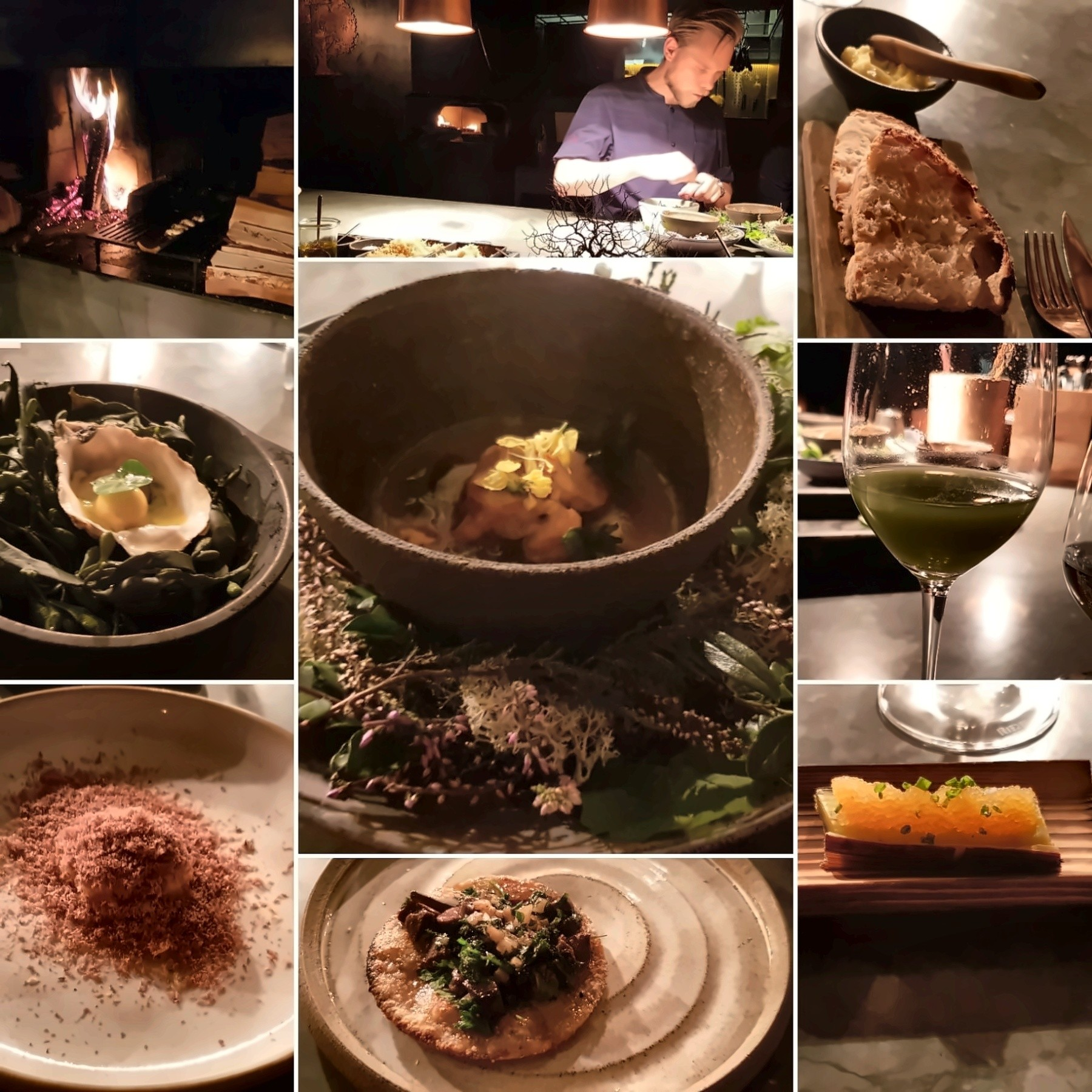
For years, there was one detail I couldn’t quite remember. I was almost certain I had watched them cook an oyster by dipping it into some kind of liquid metal. It sounded absurd enough that, over time, I began to doubt my own memory.
It turned out I hadn’t been far off. One of Ekstedt’s signature dishes involved an oyster cooked with a flambadou: a cast-iron cone was heated until red-hot and filled with beef fat, which caught fire and dripped onto the oyster in flames. So no, it wasn’t liquid metal — just red-hot metal and burning beef fat above an oyster.
Almost normal.
The smoked ice cream, for me, was a disaster. I completely understood why it existed. It fitted the restaurant’s concept perfectly. I simply didn’t want to eat it.
I wasn’t the only solo diner. Nearby sat two others, both American: a university professor and a doctor. As course followed course, we started talking about food, travel, work and everything else that naturally comes up when three people dining alone end up side by side at a long dinner. It was genuinely pleasant.
Interestingly, the most relaxed conversation of the entire weekend was with two fellow foreigners. I couldn’t describe dinner at Ekstedt as either excellent or bad. It was far more interesting than that.
The King Who Doesn’t Live There
I began Sunday at the Royal Palace. After Miss Clara, it’s hard to imagine a greater design contrast: gilding, chandeliers, ceremonial halls, long corridors and rooms that feel no need to justify every square metre.


I also wondered whether the palace was still actually in use. It is. Sweden is a constitutional monarchy and the king has no political power, but the Royal Palace in Stockholm remains his official residence, his workplace and the venue for state and royal occasions.
I find that a rather elegant arrangement: retain the monarchy, the ceremony and the whole visual spectacle, while keeping politics firmly separate from the Crown. The royal couple, however, don’t actually live there. Since 1981, their home has been Drottningholm, outside Stockholm.
That split between a working royal palace and a more private residence reminded me of Denmark, where I later went inside Fredensborg Palace and found an institution that felt both ceremonial and unexpectedly lived-in.

I also visited the Nobel Prize Museum. I liked it, but after so many years, I’m not going to invent an object or exhibition that supposedly changed my life. I came away with a good overall impression, and that’s about all I genuinely remember.
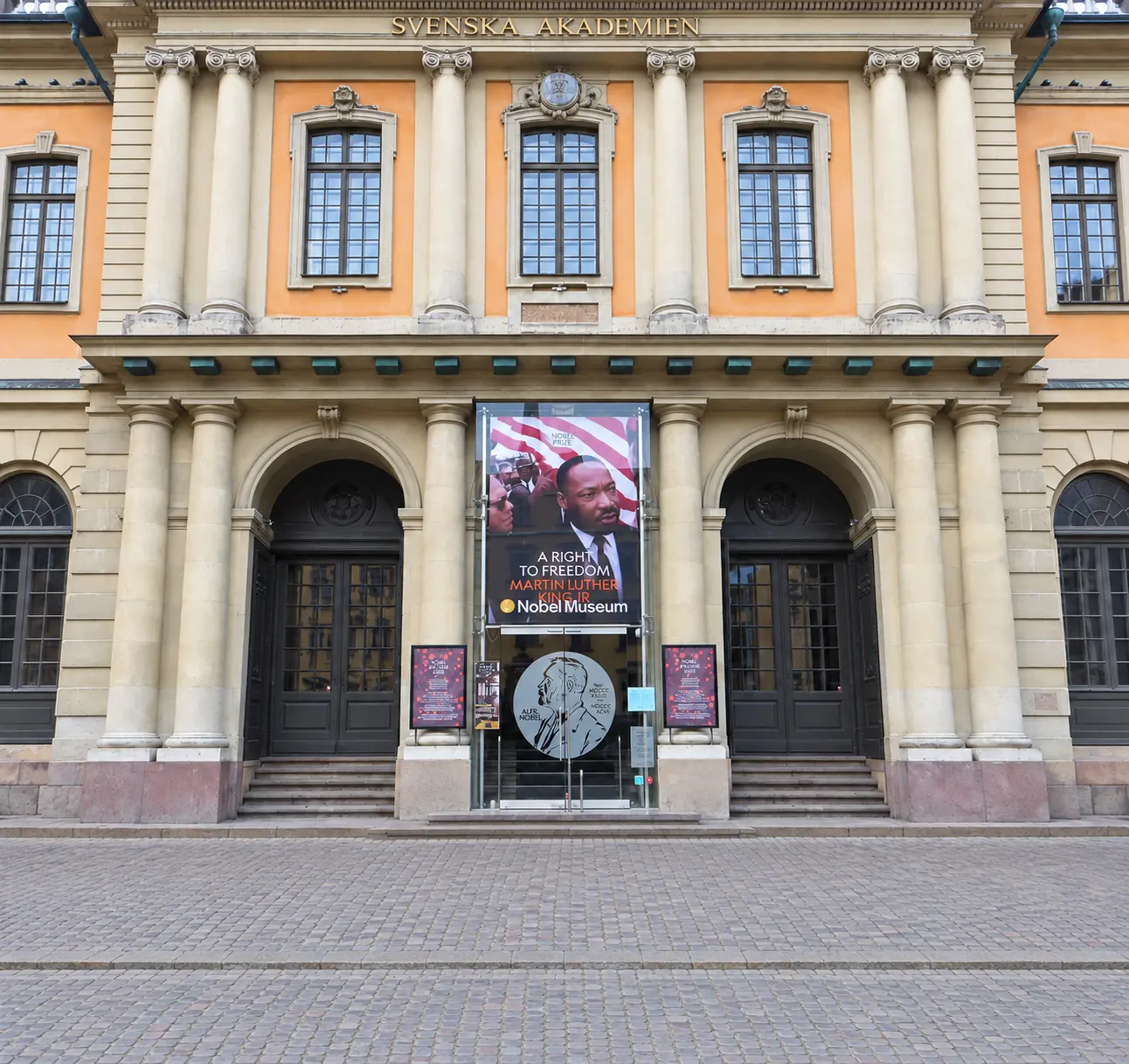
The Vasa Museum was another story.
The Ship That Became More Famous Because It Sank
Vasa was meant to demonstrate Swedish military power under King Gustavus Adolphus: a large warship, heavily armed, lavishly decorated and designed to impress before it had fired a single shot. The problem was that the ship wasn’t stable enough. It set off on its maiden voyage on 10 August 1628.
It didn’t get far.
A gust of wind heeled it over, water poured in through the open gunports, and Vasa sank after sailing roughly 1,300 metres. It lay on the seabed for 333 years before being raised in 1961.

All of that sounds like a good historical anecdote until you walk into the museum. Then you realise how enormous Vasa is. The ship fills the dimly lit hall like a vast wooden building. Only up close do you grasp how much carving, decoration, weaponry and political ambition went into something that ended up at the bottom of the harbour almost immediately.
Vasa is both a masterpiece and a spectacular failure. And that’s exactly what makes it so fascinating.
The Stockholm I Liked
After Vasa, I walked through Djurgården. It was early October, the trees were already in full autumn colour, and the broad avenue beneath their canopy was one of the most beautiful sights of the whole weekend.
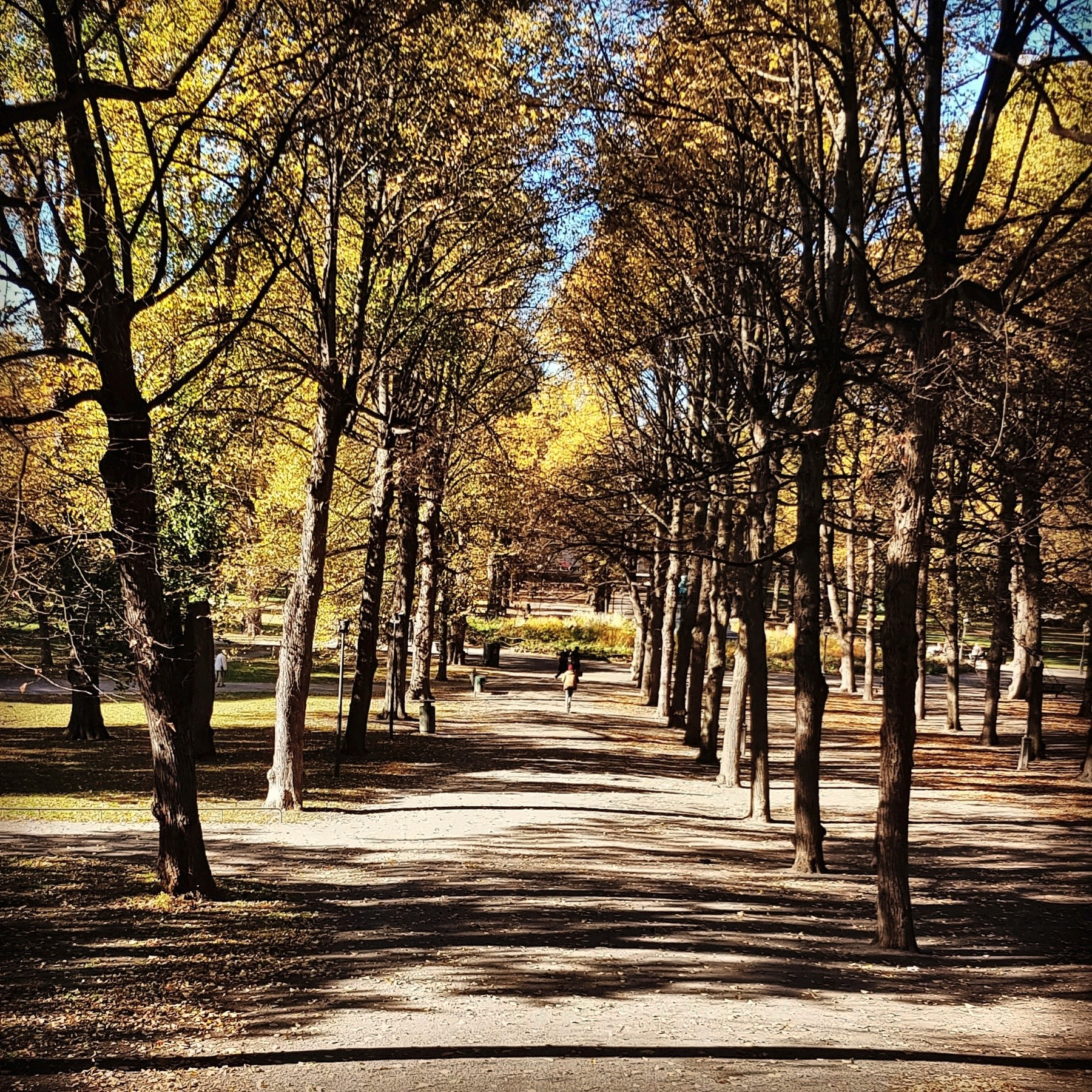
Something simple happened there: I stopped analysing Stockholm. There was no guide, no restaurant, no reception desk and no organised activity. Just the city, the water, the leaves and the walk.
And I really liked Stockholm.
Perhaps the city suited me best when I asked nothing of it.
Probably Sweden’s First Escalator and Absolutely Awful Scones
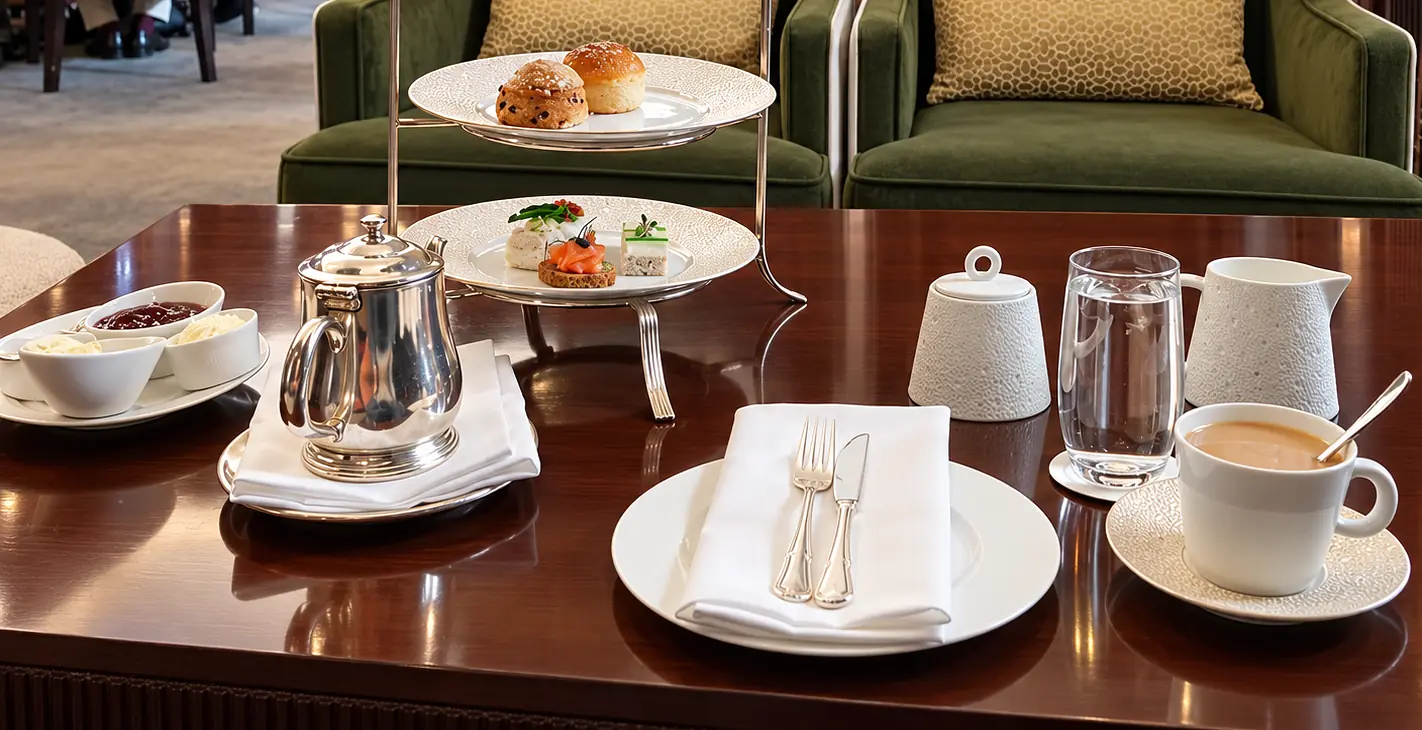
Later, I went to the Grand Hôtel for afternoon tea. The hotel is part of Stockholm’s history in its own right, and while I waited, I leafed through a small brochure about the hotel’s past that was part of the menu.
That was when I learned that the Grand Hôtel Royal annexe, opened in 1909, had what was probably Sweden’s first escalator. It led from the kitchen area to the great Winter Garden. I love details like that. The history of luxury isn’t only about chandeliers and famous guests. Sometimes it’s about finding a faster way to get food from the kitchen to the table.
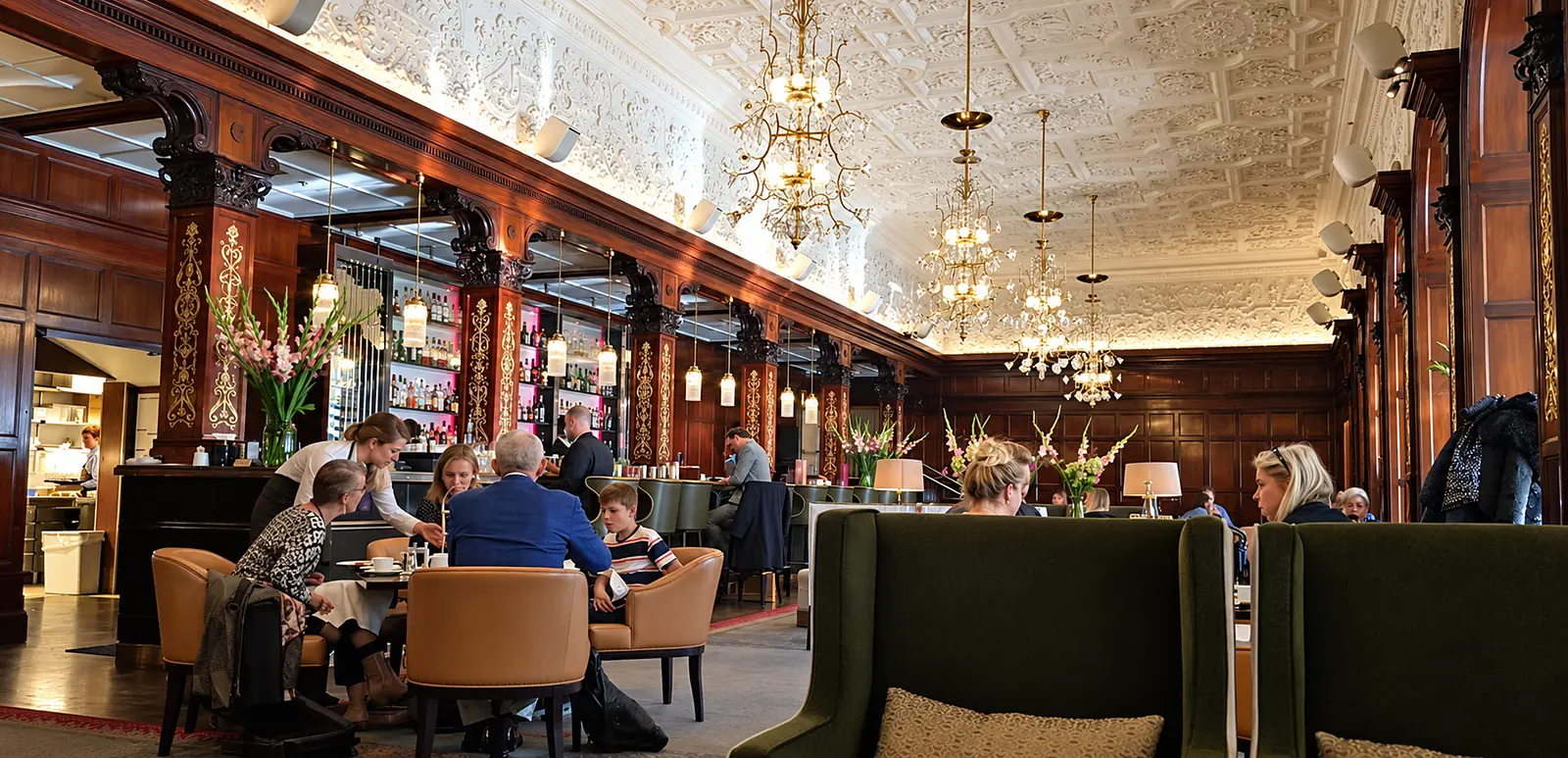
The afternoon tea looked excellent. The scones were not. They were dry, heavy and frankly rather bad. I told the waiter. He reacted roughly as if I’d told him what the weather had been like last February. He received the information. And that was that.
There was no discussion, no particular explanation and no visible desire to do anything about it. The scones had been served, I had said what I thought, and life went on.
Stockholm in Two Days — and Still Not Enough
On Monday, I headed to Skavsta for my return flight. Behind me were two very full days. Stockholm had been beautiful, often fascinating and occasionally excellent. Vasa had impressed me enormously. Djurgården in its autumn colours had been wonderful. Ekstedt had given me one of those dinners you remember precisely because not everything pulled in the same direction.
And yet the city hadn’t won me over.
Perhaps the problem was me. I had come for just two days, filled them with reservations and tried, in a very short time, to understand a city whose way of doing things was almost the opposite of mine.
Stockholm liked precision. So do I, but I don’t treat a plan as sacred: if a better option appears along the way, I have no problem changing it. I don’t call that improvisation; I call it optimisation.
A few years later, I took a day trip from Copenhagen to Malmö. That encounter with Sweden did little to change my first impression. The north had treated me rather differently on a detour through the Lapland I had imagined, where the landscape mattered more than any schedule.

But I wouldn’t write Stockholm off. I’d like to give it another chance, in another season, with fewer reservations and more time to wander without a plan.
Without a stopwatch.
That weekend was in October 2018. Stockholm is still waiting. That probably tells you enough.
