
 Rovaniemi, Lapland, Finland
A frozen Arctic morning, Santa’s Christmas economy, and Rudolph in a bun.
In January, I was travelling to Tampere for an Erasmus programme when one rather obvious thought occurred to me: it would be genuinely sad to spend several days in Finland without visiting Lapland.
The Erasmus grant did not dictate how we had to travel, so my colleague and I were free to construct our own route. Instead of flying directly from Croatia to southern Finland, we travelled from Rijeka through Trieste, London and Bristol before finally entering Finland through Rovaniemi.
On a map, this looked like the work of someone who had misunderstood the purpose of international travel.
Financially, however, it worked. Even with overnight stays in London and Bristol, the route remained cheaper than the more obvious alternatives. Sleeping along the way also transformed a sequence of low-cost connections into something considerably more civilised.
When we boarded the Ryanair flight from Bristol, Tampere was still the official purpose of the journey.
Lapland was the detour.

The Aurora Ryanair Included for Free
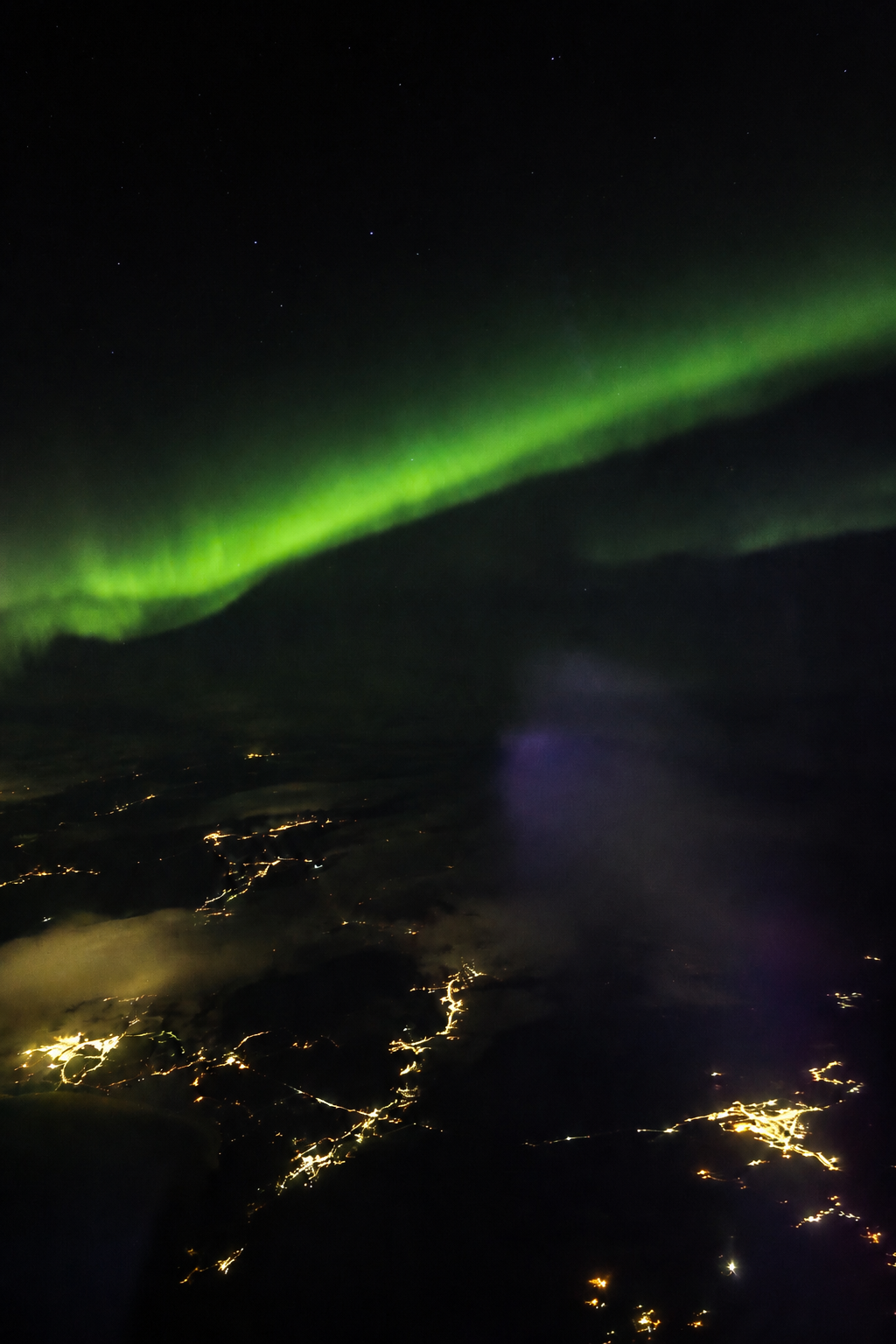
Somewhere above northern Finland, the captain announced that the Northern Lights were visible from the aircraft.
Half the cabin immediately leaned towards the windows. Phones appeared, passengers twisted across seats and everyone attempted to photograph one of the world’s great natural phenomena through scratched glass filled with reflections from Ryanair’s purple cabin lighting.
It was not the immaculate aurora used to advertise Lapland. The window was dirty, the cabin lights interfered and the ground below had been reduced to scattered points of light.
But the green bands outside were real.
They moved across the darkness for several minutes, turning an ordinary low-cost flight into something far more memorable.
They also turned out to be the only Northern Lights we saw during the entire visit. Once we landed, the sky refused to cooperate.
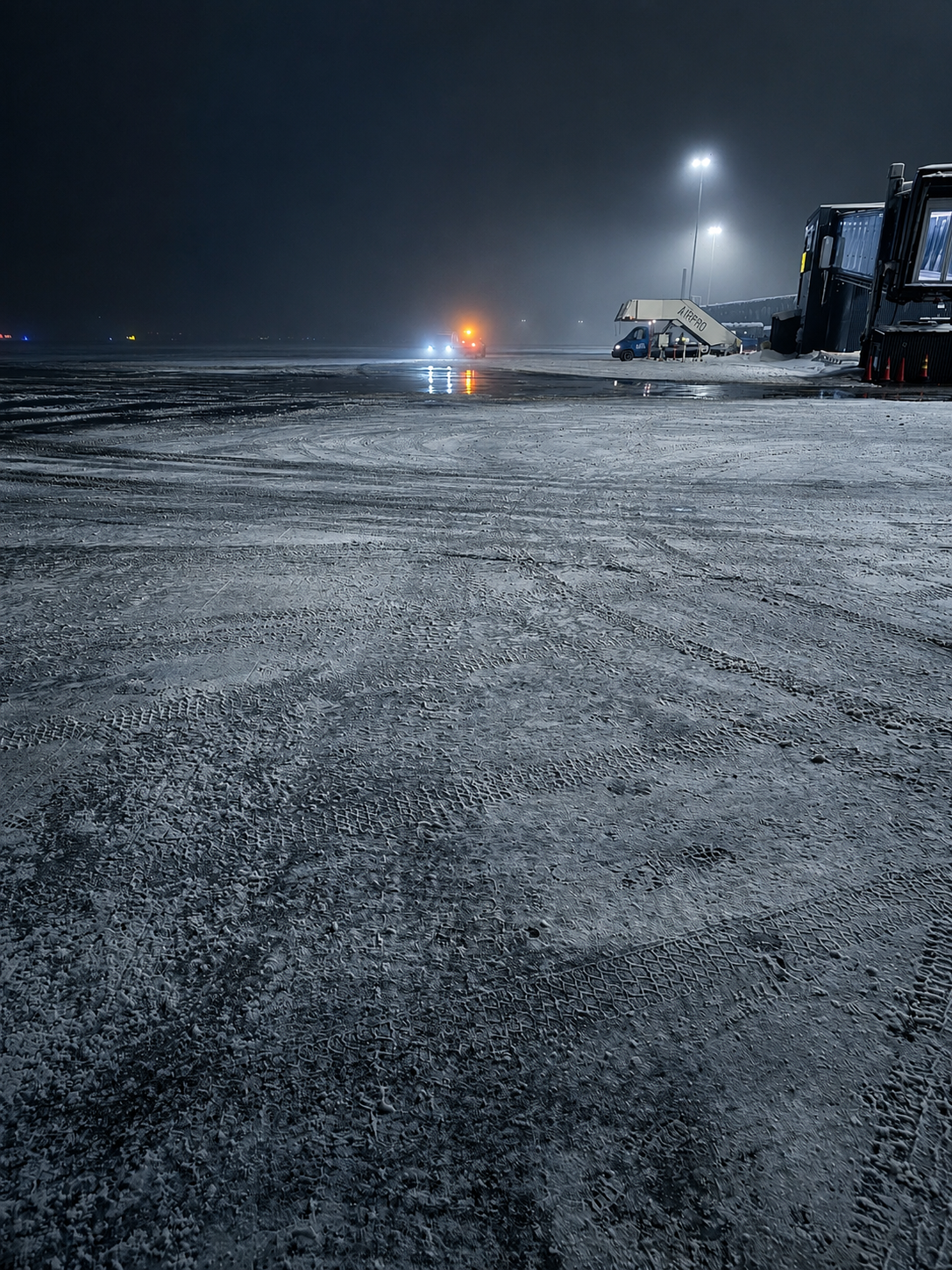
We landed in Rovaniemi surrounded by snow. The runway, airport apron and almost every visible surface were white.
After Bristol, it felt less like entering another country and more like entering another climate.
This was proper Finnish winter.
A Five-Star Fantasy and a WhatsApp Code
From the airport, we ordered an Uber to Shaman Village.
Despite the name, I had not booked an exorcism or any other form of Arctic magic. The property consisted of log-built glass igloos outside Rovaniemi, beside the frozen Ounasjoki River.
One night cost €336.60.
That was comparable with many hotels in Rovaniemi, while Shaman Village offered something a city hotel could not: immediate access to nature, reindeer on the property and a heated glass roof through which the aurora might appear above the bed.
My private version of the experience was even better. I imagined a luxurious cabin in the forest, the Northern Lights moving overhead, a blanket around my shoulders and perhaps a discreet butler supplying Finnish specialities.
What we found was darkness.
Our Uber disappeared, leaving us in front of a silent group of snow-covered buildings. There was no visible reception, no member of staff waiting for us and, as far as I could tell, no living soul anywhere.
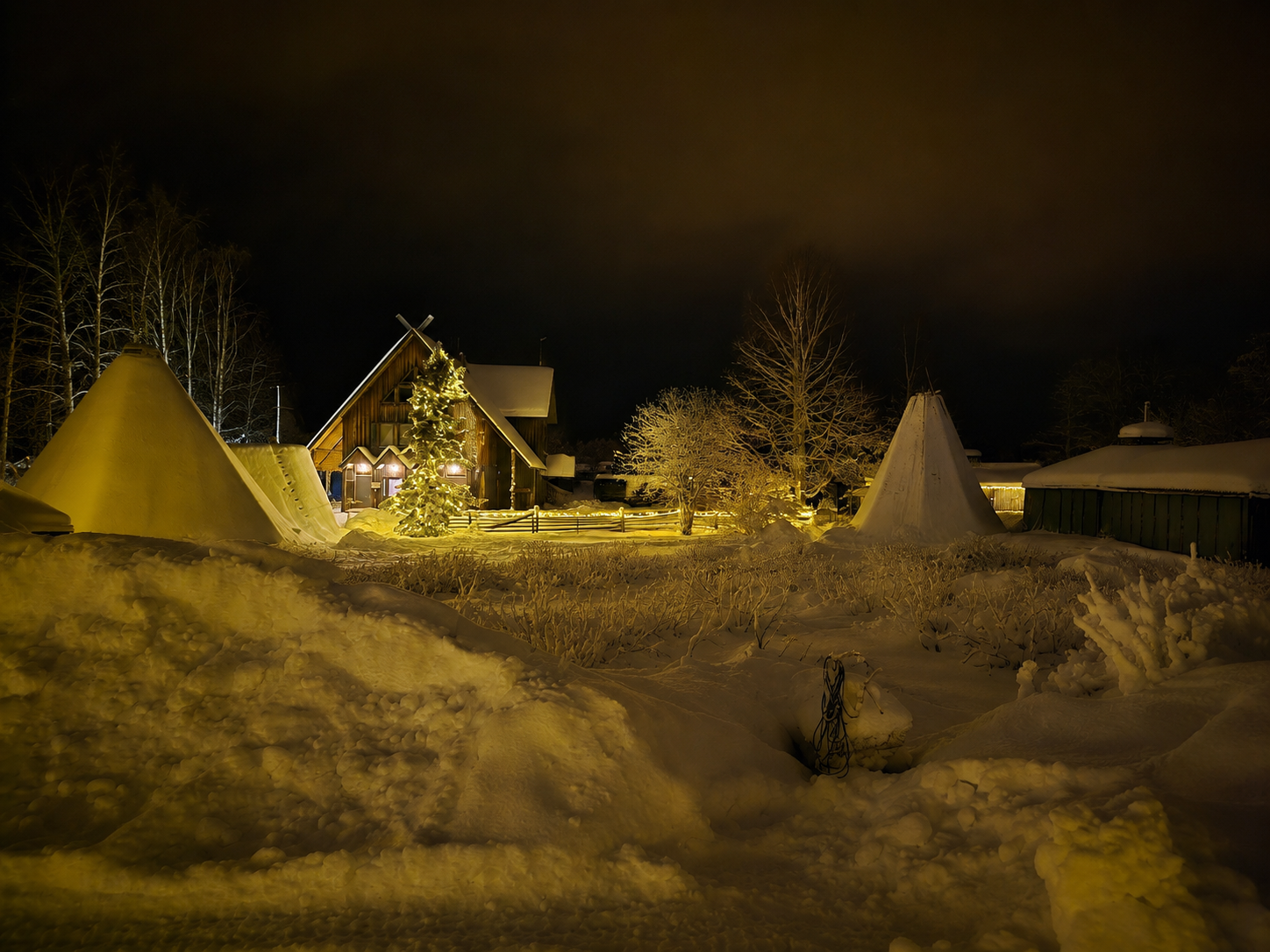
The code for our cabin had been sent by WhatsApp.
That was the entire check-in procedure.
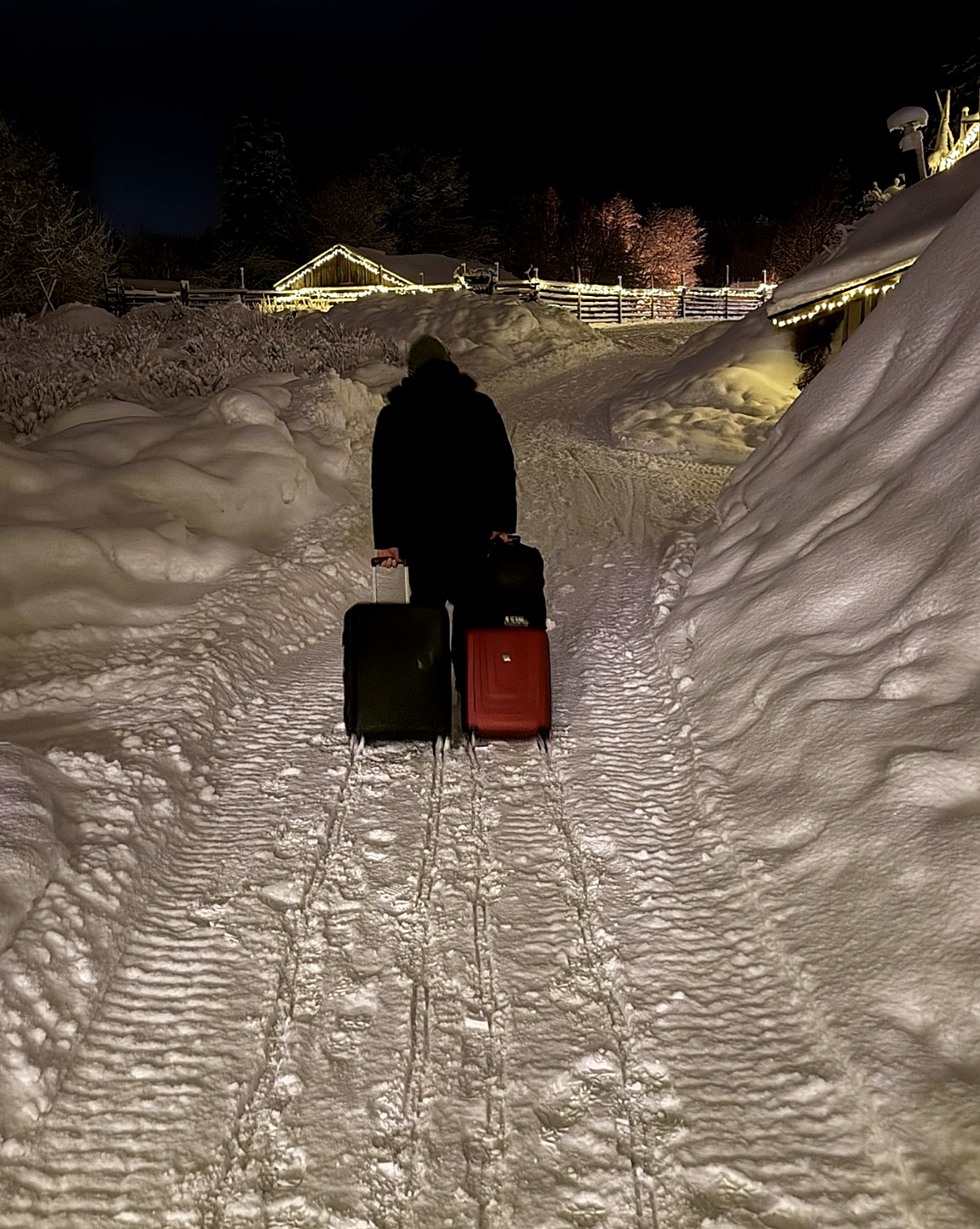
We had to identify the correct cabin and drag our suitcases through the snow. I had honestly expected someone to welcome us, show us where we were staying and perhaps help with the luggage. For more than three hundred euros a night, this did not strike me as an extravagant fantasy.
Instead, I received a code and an unsupervised winter expedition.
The welcome committee had apparently gone home.
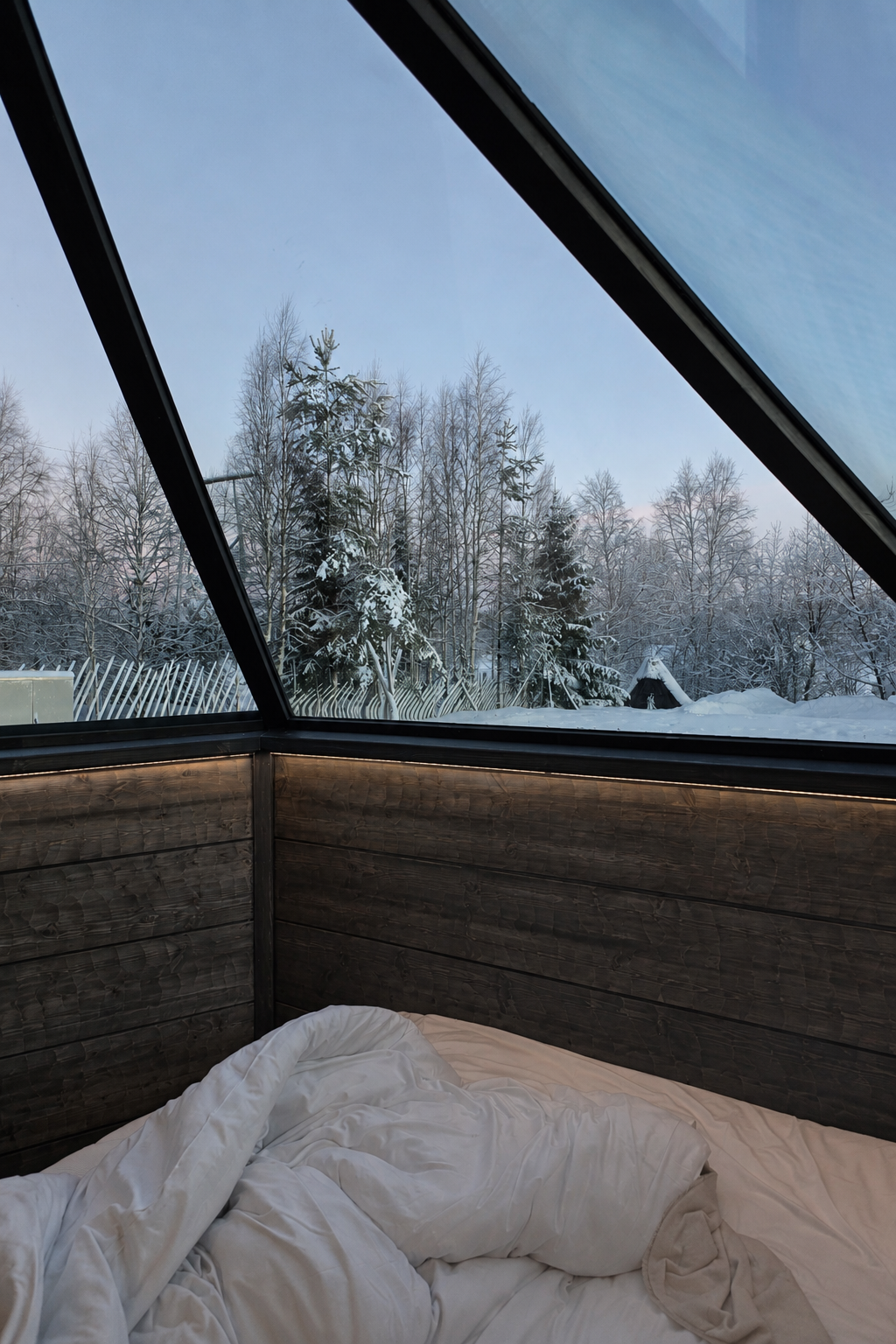
Once we found the correct cabin, matters improved. It was compact, clean, warm and comfortable. The wooden interior made it feel like a proper cabin rather than a transparent bubble created solely for social media.
Above the bed, the curved glass roof opened the room towards the sky and the snow-covered trees.
It would have been an excellent place from which to watch the Northern Lights.
Unfortunately, nature had already performed during the flight.
From the cabin, we saw darkness.
Finland Does Not Wait for You to Become Hungry
By then, we needed dinner.
The owners suggested Foodora, a delivery app I had never used—or even heard of—before arriving in Finland. They also recommended a nearby restaurant that supposedly delivered to the village.
Nobody, however, had checked when it closed.
It was already closed.
During the rest of the trip, I repeatedly discovered that late dinner in Finland required either planning or fasting. Kitchens closed early and efficiently, while my Croatian assumption that food would somehow remain available until I eventually decided I was hungry proved useless.
When we explained that we had arrived without anything to eat, the owners offered to sell us instant pasta and chocolate.
We still had to walk back through the snow to collect them.
My first dinner in Lapland was therefore Knorr Mac & Cheese prepared with boiling water, followed by chocolate.

This was not quite the evening I had imagined. The fantasy contained an aurora above the bed and Finnish delicacies served beneath the glass roof.
Reality contained a WhatsApp code, wet suitcase wheels and pasta activated by hot water.
There were, admittedly, several alternative sources of protein living elsewhere on the property. At that point, however, I did not know that reindeer were regularly eaten in Finland. Even if I had known, I had no idea how one was supposed to catch one.
Any attempt would probably have ended with my immediate expulsion from Shaman Village.
Instant pasta remained the more diplomatic choice.
Breakfast had already been placed in the cabin refrigerator. In principle, this was convenient. In practice, the quantity looked like the breakfast allocation of someone following a particularly serious weight-loss programme.

At least the owners were helping me save money on Mounjaro, the notoriously expensive weight-loss medication.
The cabin was pleasant. The location clearly had enormous potential. But the service consisted mainly of WhatsApp instructions, self-navigation and a food supply requiring careful conservation.
Then morning arrived and changed the entire story.
The Lapland I Had Imagined
During our brief visit to collect dinner, the owners had recommended walking onto the frozen Ounasjoki River the following morning. They assured us that the ice was safe.
The landscape emerged gradually in the pale Arctic light.
Buildings that had looked slightly sinister in darkness now appeared between snow-covered trees. Traditional conical shelters stood under warm lights while the sky shifted from deep blue towards violet and pink.
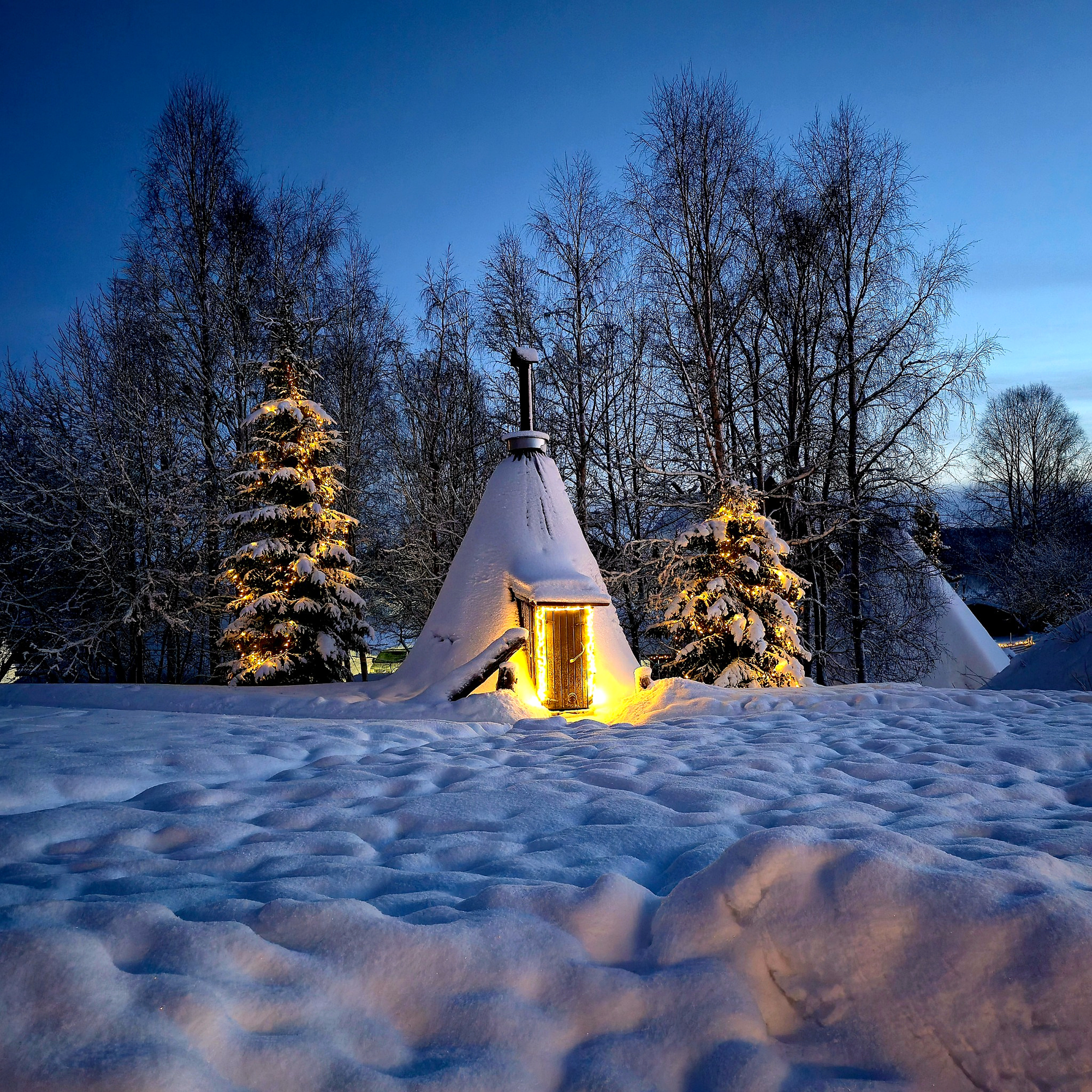
The frozen river was almost entirely white.
Tracks crossed the snow and disappeared towards the forest. Mist hovered just above the ice, while the horizon began to burn orange and yellow beneath the remaining blue.
Our footsteps sounded unnaturally loud in the surrounding silence.
For a while, it was difficult to determine where the river ended and the sky began.
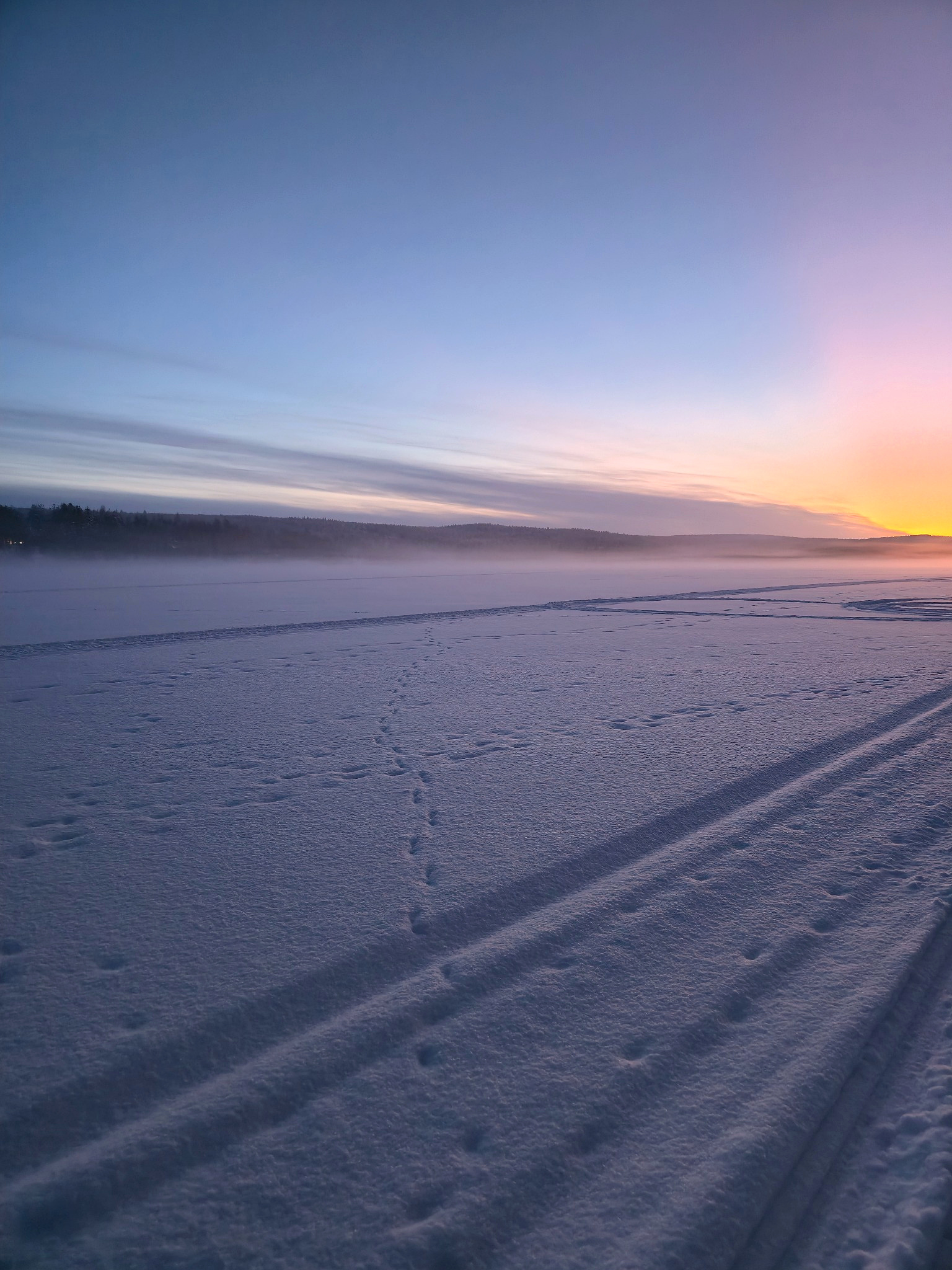
Not Santa Claus, souvenir shops or a carefully timed group excursion. It was a vast frozen space, almost completely silent, with only a few tracks proving that anyone had crossed it before us.
The previous evening’s missing reception, miniature breakfast and instant pasta temporarily became irrelevant.
Shaman Village was finally delivering what its price and location had promised: immediate access to a landscape that would have been impossible to experience from a conventional hotel in central Rovaniemi.
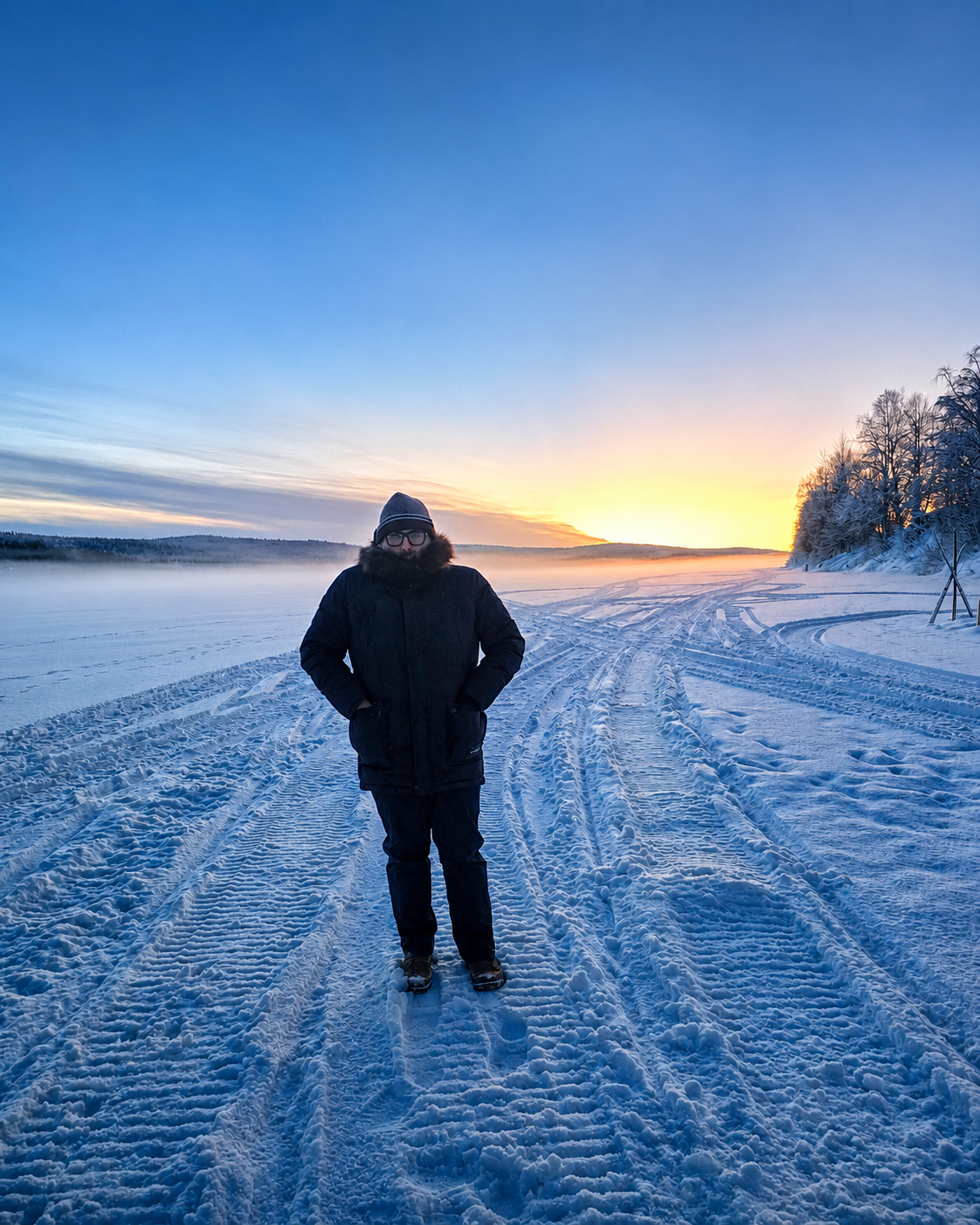
The photographs looked unreal.
More importantly, the scene felt unreal while I was standing inside it.
The morning did not erase the failures in service.
It did explain why I had come.
Five Euros for Breakfast with the Reindeer
Back at the village, we went to see the reindeer.
They lived behind a fence but were tame enough to approach and take food directly from our hands. Feeding them cost an additional five euros.
At €336.60 a night, I thought the reindeer’s breakfast might have been included, but another five euros was hardly the moment to develop financial discipline.
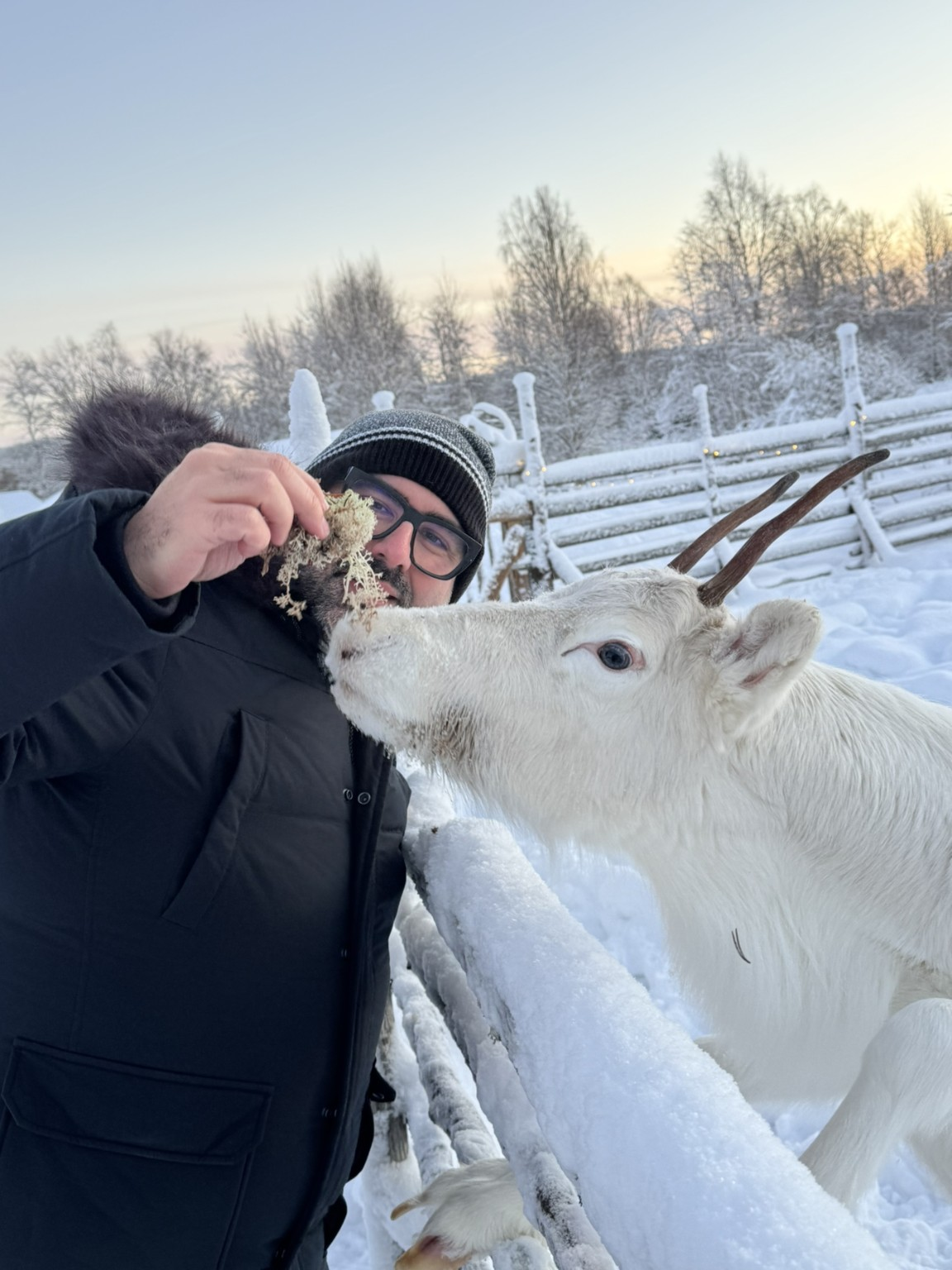
The animals understood only that food had appeared and that I was temporarily responsible for holding it.
They ate. I took photographs. Everyone involved received what they wanted.
I did not yet know that one of their relatives would materialise inside my lunch a few hours later.
The Sleigh That Did Not Stop
When it was time to leave, we again began pulling the suitcases through the snow.
At that moment, the owner passed nearby on a sleigh.
He saw us and waved.
He did not stop or ask whether we needed help, even though it was fairly obvious that transporting luggage through snow was not our favourite part of the experience.
That was the moment when my patience ended.
I decided that once I boarded the train to Tampere, I would write a carefully worded letter explaining why hospitality involved slightly more than sending a door code and leaving guests to conduct their own luggage expedition.
A negative public review was also under consideration.
The owner’s reply complicated matters. He was openly apologetic and described the difficulty of running the property. His response did not read like a corporate template designed to neutralise an unhappy guest. He seemed genuinely sorry.
By the end of the exchange, something rather strange had happened.
I was comforting him.
I never published the negative review.
I still believe Shaman Village has considerable work to do in terms of service, unless Finnish hospitality culture differs from Croatian hospitality to a degree I have not yet understood.
But it also gave me the most memorable morning of the journey.
Both things can be true.
Santa Claus, Inc.
Before continuing to Tampere, we wanted to visit Santa Claus Village.
First, we took an Uber to Rovaniemi railway station and attempted to leave our suitcases in the lockers. Every locker was occupied. We eventually found an agency in the centre willing to store them and then ordered another Uber to Santa Claus Village.
By this point, Uber had become the unofficial transport partner of our Lapland experience.
Santa Claus Village began selling Christmas almost as soon as we stepped out of the car.
Red kiosks stood between wooden buildings buried in snow. Pointed roofs rose behind heavily loaded fir trees. Red-lit pillars marked the Arctic Circle, while a giant snowman and a signpost pointing towards cities around the world provided the required photographic background.
Christmas had become a full-scale industry.
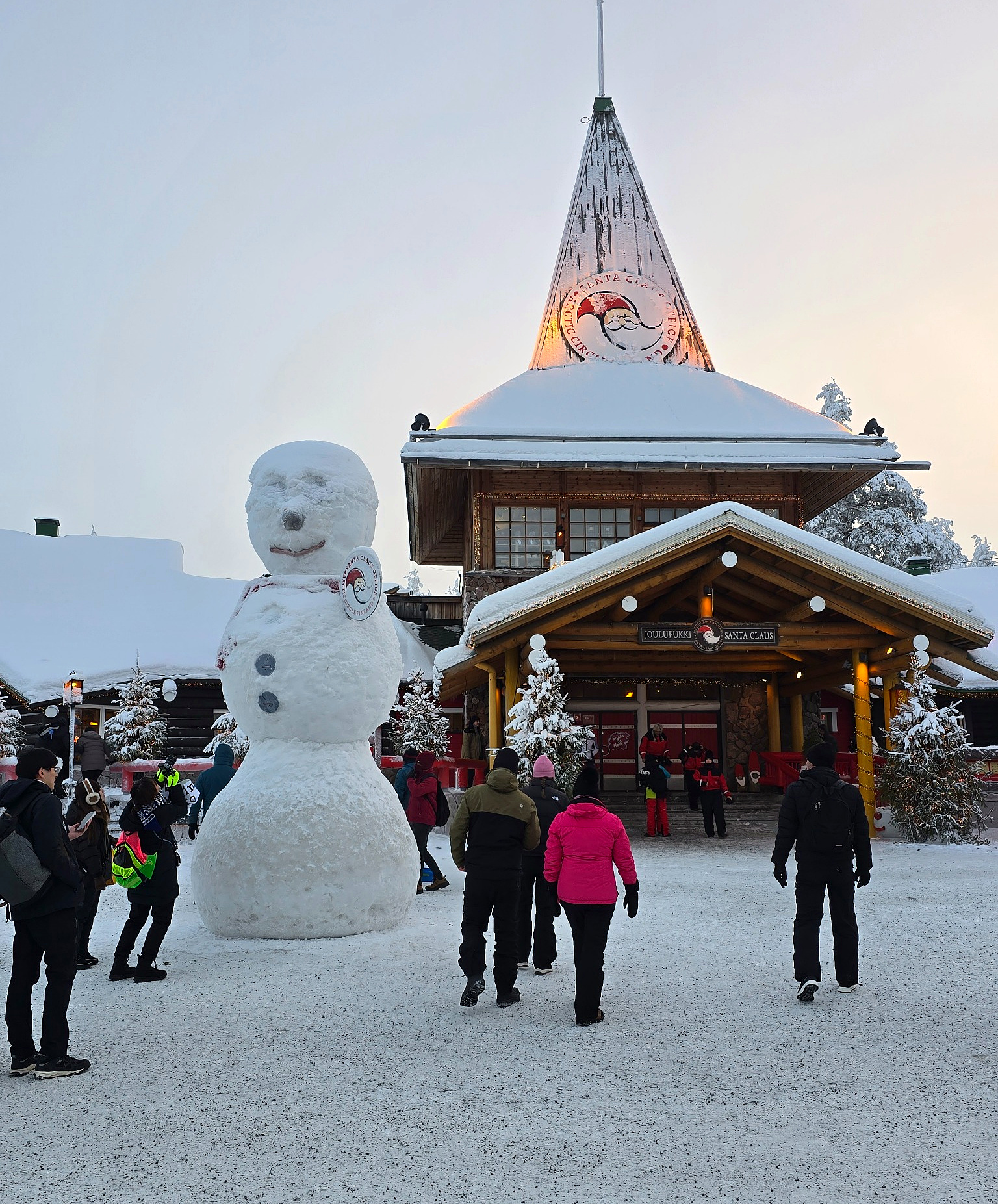
The place looked remarkably good. It was not a collection of cheap plastic decorations dropped beside a car park. The snow and forest were real, and the buildings fitted their surroundings well enough to make the commercial operation feel almost natural.
Almost.
Every few metres brought another shop, attraction or object capable of carrying Santa Claus’s face. He had diversified into clothing, toys, decorations, certificates, postcards, soft reindeer and virtually everything else that could survive contact with Christmas.
Judging by the prices and crowds, Santa Claus was not merely a mythical figure.
He appeared to be one of the principal pillars of the Lapland economy.
I wanted to meet him, or at least felt that I should. After travelling from Rijeka through Trieste, London, Bristol and Rovaniemi, refusing to walk the final few metres seemed absurd.
Unfortunately, several hundred other people had reached the same conclusion before me.
The queue was far longer than the time available before our train to Tampere. Santa had successfully persuaded me to cross Europe but could not find a few minutes in his schedule.
The personal audience was abandoned.
The Main Post Office was more manageable and, for me, more interesting. Inside were red counters, Christmas decorations, postcards, parcels and special mailboxes. It was a functioning post office wrapped inside an extremely efficient piece of Christmas theatre.
I sent several postcards from the Arctic Circle.
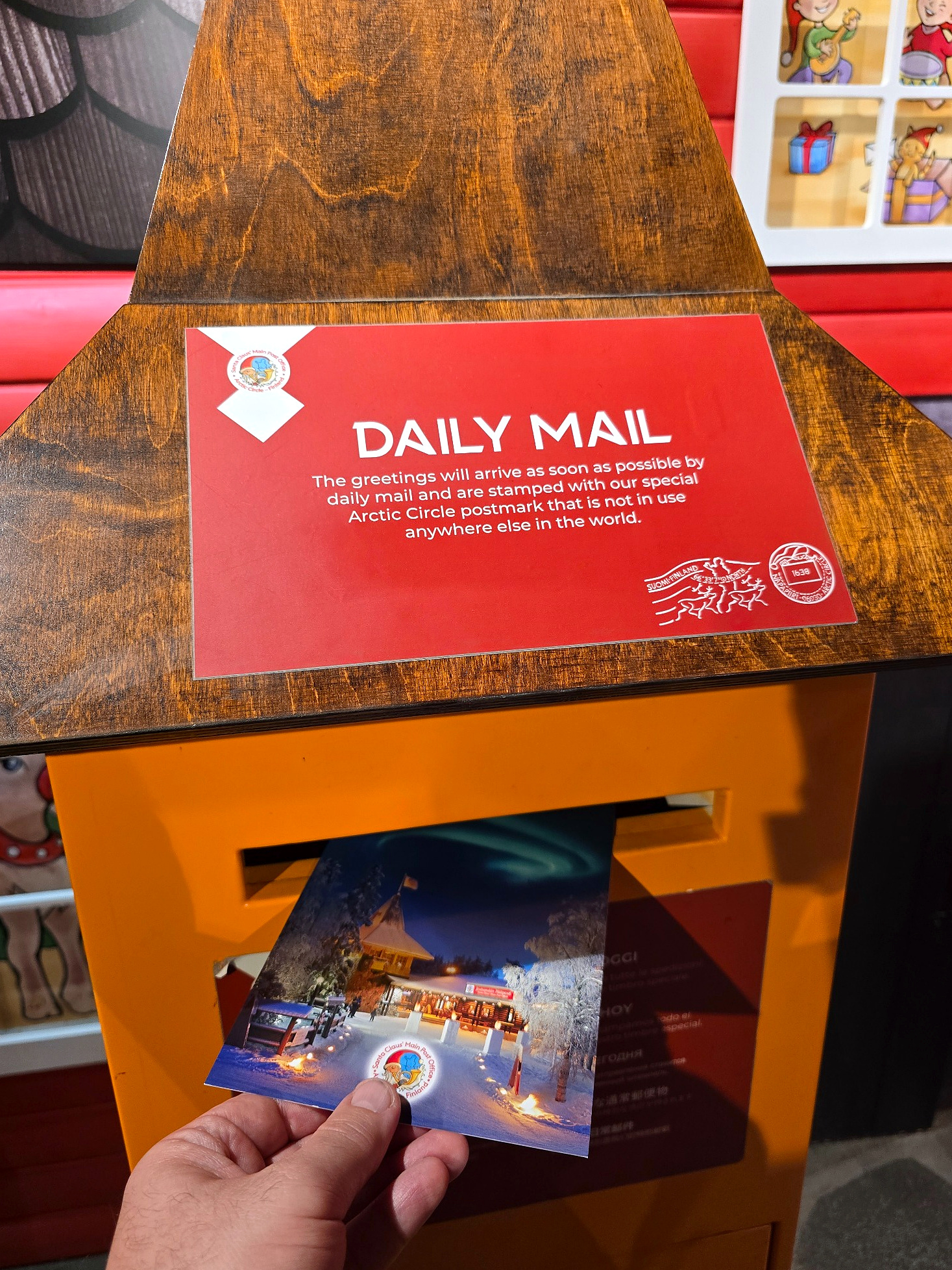
This was one of those tourist rituals that feels slightly ridiculous while you are doing it but would be even more ridiculous to skip.
More surprisingly, the postcards genuinely arrived.
We crossed the marked Arctic Circle, took the required photographs and walked through a place that was crowded, expensive and commercially ruthless.
I still enjoyed it.
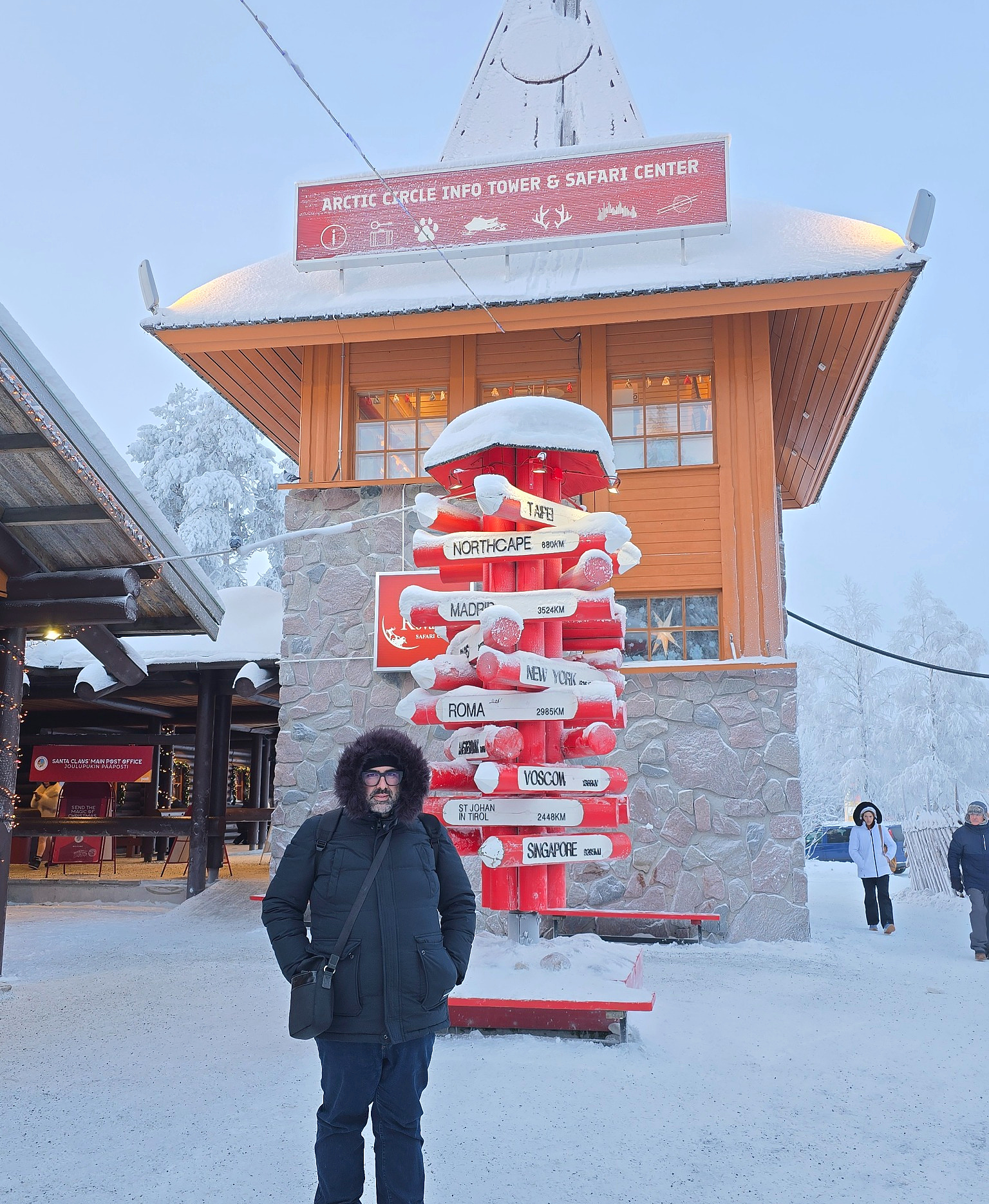
Standing there among the snow, red towers and visitors from all over the world, I had one perfectly uncomplicated thought:
I had actually made it to the Arctic Circle. Damn, that felt good.
Rudolph on the Menu
Back in central Rovaniemi, we stopped for lunch at Roka Street Bistro.
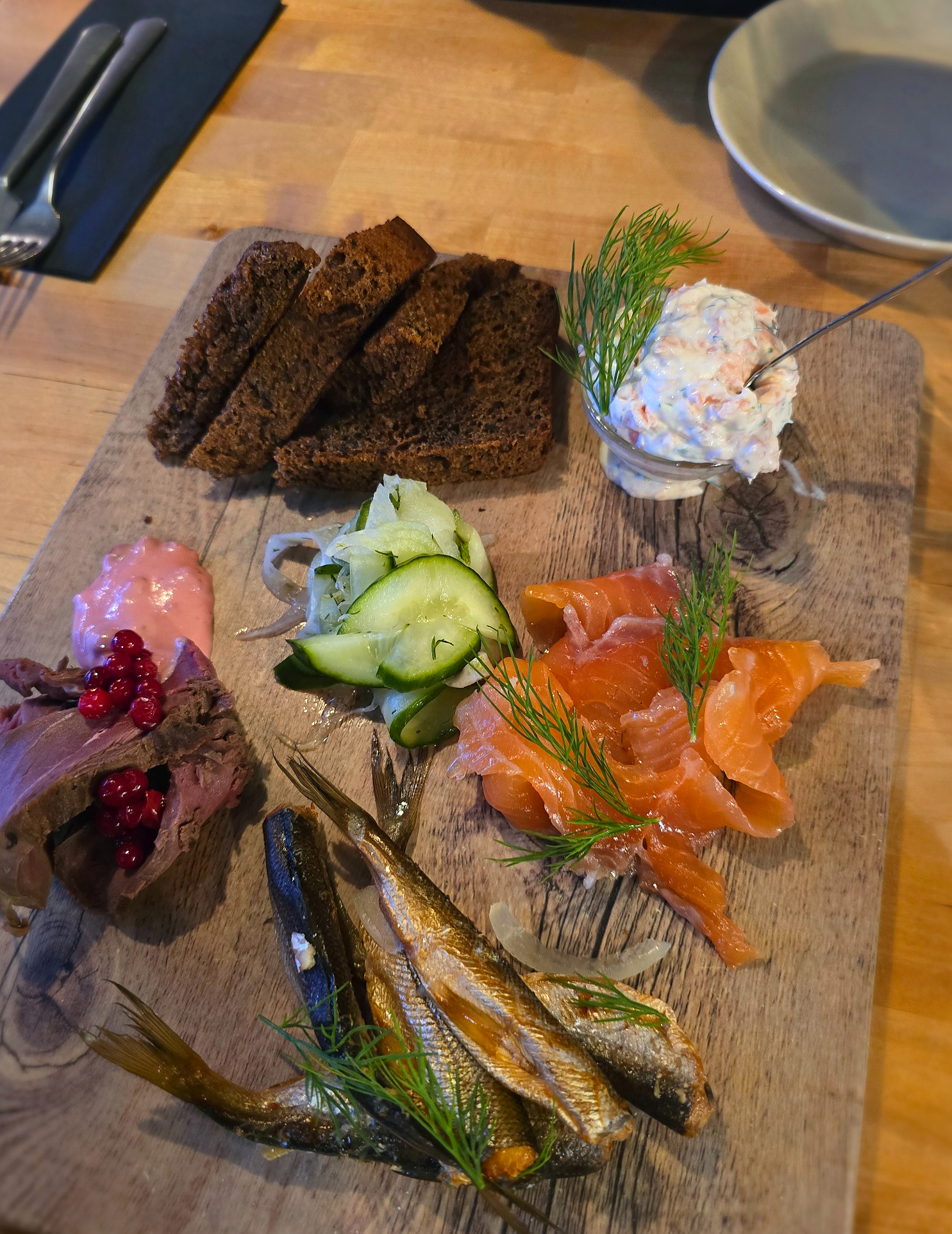
We shared the restaurant’s Flavours from the North platter, combining salmon, smoked vendace, reindeer, dark Archipelago bread, pickled vegetables and lingonberry-based sauces.
Since I do not eat fish, the division of labour was straightforward. My colleague inherited the salmon, mousse and small smoked fish. I concentrated on the bread, vegetables and, most importantly, the reindeer.
I then ordered the Reindeer ’Wich—Roka’s version of a sandwich, filled with sautéed reindeer, coleslaw, lettuce, pickles, lingonberries and Dijon mayonnaise, with fries beside it.
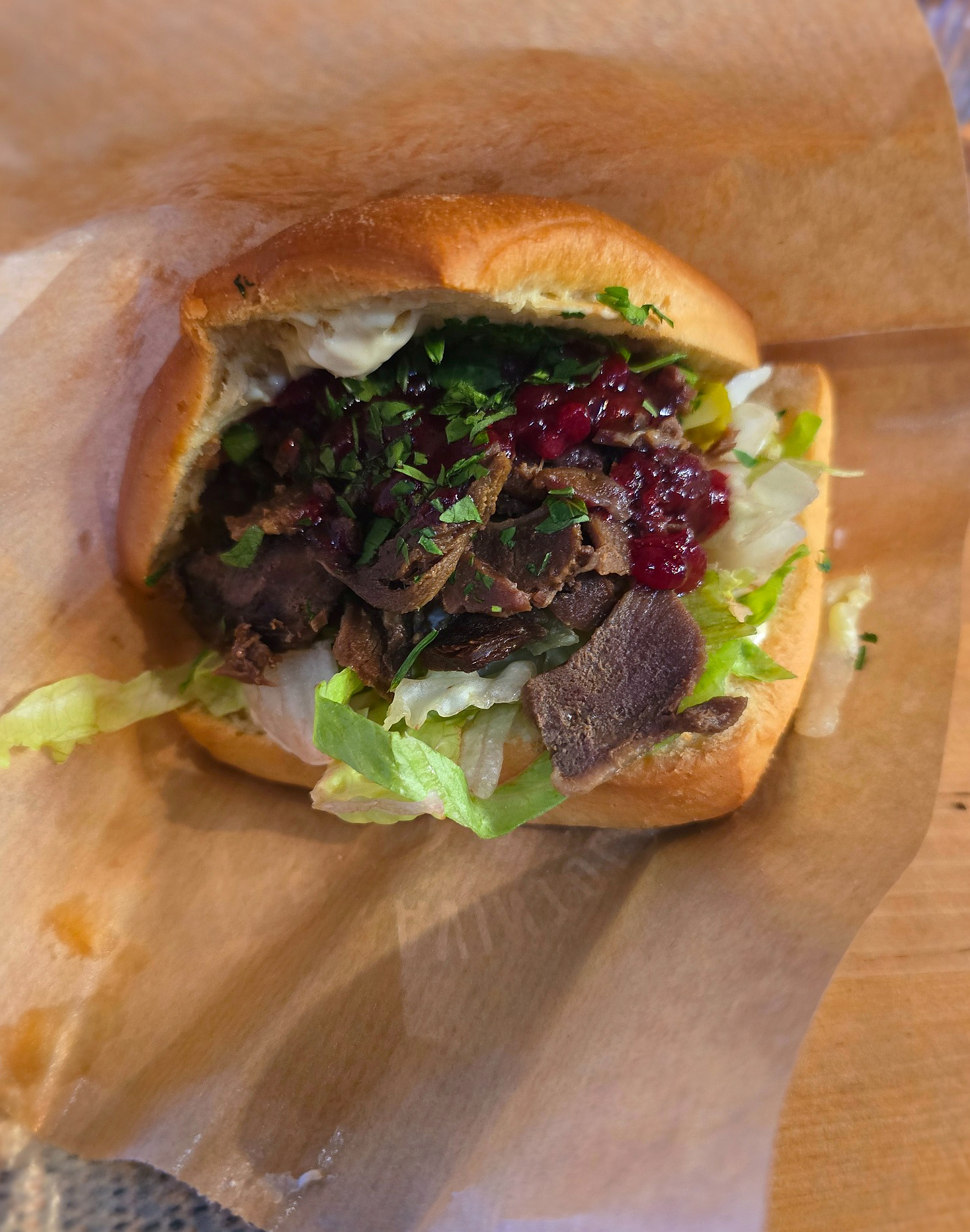
The reindeer was lean and slightly dry, while the sharp-sweet lingonberries, pickles and creamy sauce kept the sandwich from becoming too heavy.
Only a few hours earlier, I had paid five euros to feed reindeer.
Santa Claus had then proved too busy to see me, hidden behind a queue longer than I was willing to tolerate.
A completely disproportionate act of revenge therefore seemed justified.
Santa Claus was too busy to see me. So I ate Rudolph.
Southbound
After lunch, we collected our suitcases and took one final Uber to Rovaniemi railway station.
A green Finnish train waited beside the snow-covered platform.
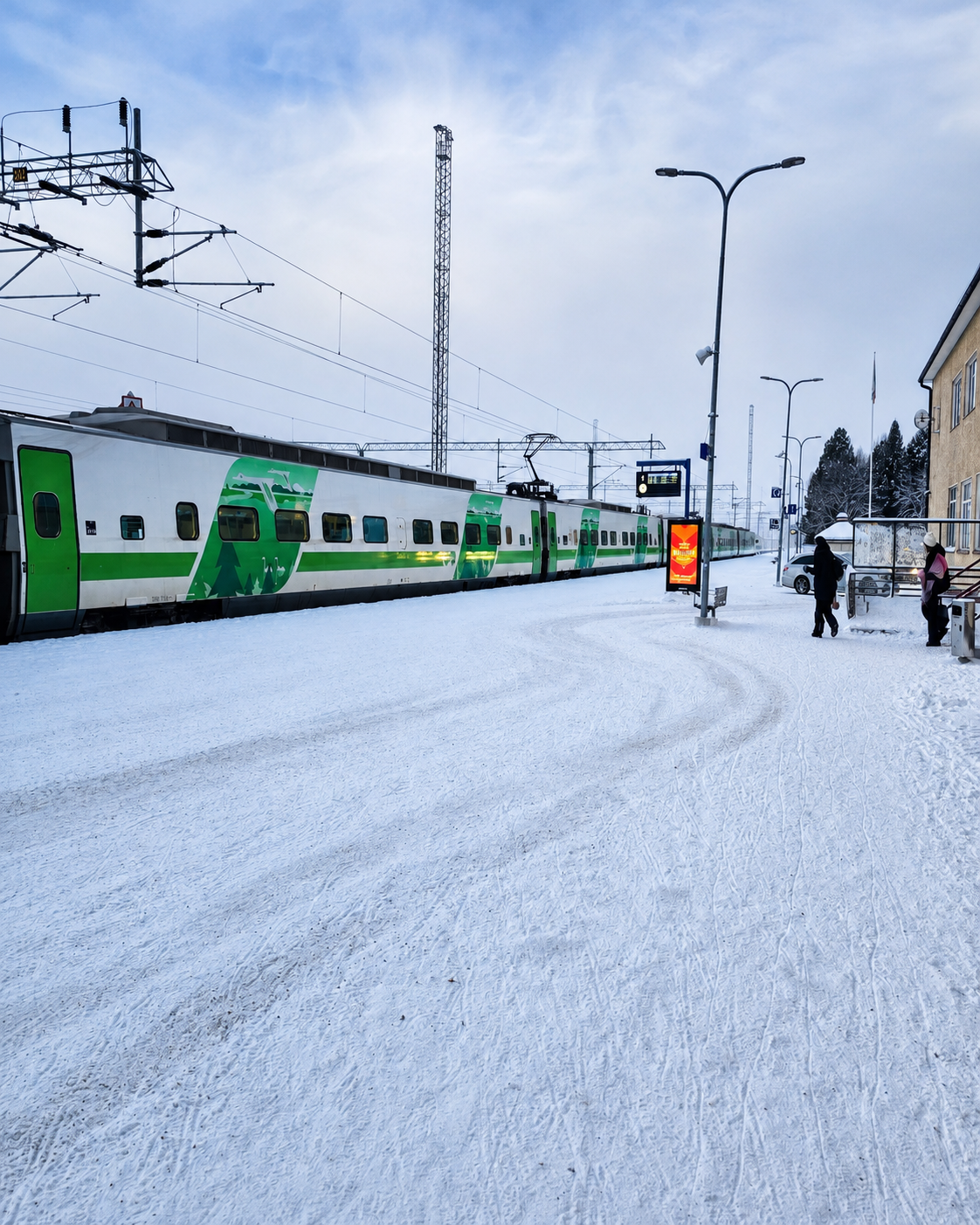
The official Erasmus journey was finally about to begin.
The direct journey to Tampere lasted a little over six hours. It was long but comfortable.
Since darkness had already settled over most of the route, there was no cinematic sequence of Finnish forests changing outside the window. There was mainly a warm carriage, black glass and the gradual awareness that the official purpose of the journey was finally approaching.
We reached Tampere shortly before ten that evening.
The Erasmus programme would begin the following morning.
I had imagined the accommodation rather differently: a luxurious glass cabin, an aurora above the bed and Finnish delicacies appearing without any effort on my part. Instead, I received a WhatsApp code, instant pasta and considerably more contact with my suitcase than expected.
But that was only the accommodation.
Out on the frozen Ounasjoki the following morning, surrounded by mist, snow and Arctic light, I found exactly the Lapland I had travelled north to see.
The service failed.
The landscape did not.
That was the Lapland I had imagined.
Practical Notes from My Detour North
The shortest route is not necessarily the most sensible one. Our journey from Rijeka through Trieste, London and Bristol looked ridiculous on a map, but it was cheaper than the obvious alternatives even after adding two overnight stays. When planning a trip to Lapland, compare complete journeys rather than direct flights alone. A detour can save money and divide an exhausting journey into several manageable stages.
January means genuine Arctic conditions, and warmth defeats fashion. Temperatures can vary from relatively mild winter weather to well below −20°C. Insulated footwear, proper gloves and several layers matter far more than assembling an elegant city outfit. Darkness is also part of the experience, with only a short period of daylight in midwinter.
Finns take indoor footwear seriously. People commonly remove heavy outdoor shoes after entering a home or other indoor space and change into slippers, indoor shoes or thick socks. It sometimes looked as though slippers had travelled inside a backpack specifically for the occasion. The principle was clear: outdoor footwear belongs outside, while comfort begins immediately after entering.
Rovaniemi is a Lapland hub rather than a classic city-break destination. The centre is compact, but I would not travel there expecting monumental squares, elegant boulevards and endless picturesque streets. Its real strength is access: the Arctic Circle, museums, forests, frozen rivers, winter activities and transport farther into Lapland.
Uber was quick, reliable and reasonably priced. We used it repeatedly between the airport, Shaman Village, the railway station, the city centre and Santa Claus Village. Cars generally arrived quickly, and the prices were low enough that using several rides during a short stay did not feel extravagant.
Luggage storage requires a backup plan. We went to Rovaniemi railway station expecting to use the lockers, only to find every suitable one occupied. During the winter season, do not assume that an empty locker will be waiting. Identify another storage option before building an entire day around your luggage.
Do not postpone dinner until you finally feel hungry. During the trip, I repeatedly discovered that eating late in Finland required planning. Check the restaurant’s actual kitchen hours, particularly when staying outside the centre, and carry something edible when arriving on an evening flight. A glass roof above the bed does not compensate for having no dinner beneath it.
Reindeer meat is a normal ingredient, not merely a tourist attraction. Feeding a reindeer in the morning and eating one at lunch made an excellent dark joke, but reindeer is an ordinary part of northern Finnish cuisine. It appears in sandwiches, stews, roasts and other everyday dishes rather than only as something served to adventurous tourists.
The train south is part of the experience. Rovaniemi has both daytime and overnight connections towards southern Finland. Our daytime train to Tampere was comfortable and spacious, while night trains offer sleeper cabins and allow travellers to save both time and a hotel night. Popular winter departures should be booked early.
An aurora guarantee does not control the sky. Depending on the operator, a guarantee may mean another attempt, rebooking, a refund or no payment if nothing is seen. It does not mean that the Northern Lights will appear on command.
Seeing the aurora usually requires leaving the city, finding a dark location and being prepared to wait outdoors. Serious aurora hunting may involve driving into the forest, changing locations according to cloud cover and remaining outside for several hours. A glass igloo guarantees only the glass igloo.
