 Scotland, United Kingdom
The late Queen Elizabeth II kept Balmoral fiercely private — King Charles III now admits just twelve visitors per tour, at £110–£175 a head.
Paying between £110 and £175 to enter Balmoral in a group of twelve is not exactly sneaking in. Still, the experience comes surprisingly close to being allowed into someone’s house while the owner is away.
I visited Balmoral on 25 July 2026, during its short summer opening, only weeks before the castle was due to return to private royal use.
Balmoral is not the only royal residence that remains in active use. Sandringham is still a private home, while Windsor Castle continues to function as a working royal castle even as visitors move through its State Apartments. Balmoral feels different because the access is narrower and more personal. Its domestic interiors remained firmly on the private side of the monarchy throughout Queen Elizabeth II’s life.
Now, for a short visitor season, small groups are allowed through selected parts of the ground floor. Then the tours stop and, according to our guides, the castle is prepared once again for King Charles III and the Royal Family.
That temporary opening was precisely what interested me.
I had already visited Windsor Castle, Buckingham Palace, Sandringham, Kensington Palace, Hampton Court and Osborne House. Somewhere along the way, without making a formal decision or admitting to a particularly royal obsession, I had begun collecting British palaces and royal homes.
Balmoral was the obvious next entry, but it carried a different weight. This was the Scottish refuge Queen Elizabeth II loved, kept intensely private and ultimately died in. The photograph of her receiving Liz Truss had made one of its rooms visible to the world. I wanted to see what remained of that public image once it became a real room around me.
First, however, I had to reach Balmoral without a car.
Getting There Without a Car
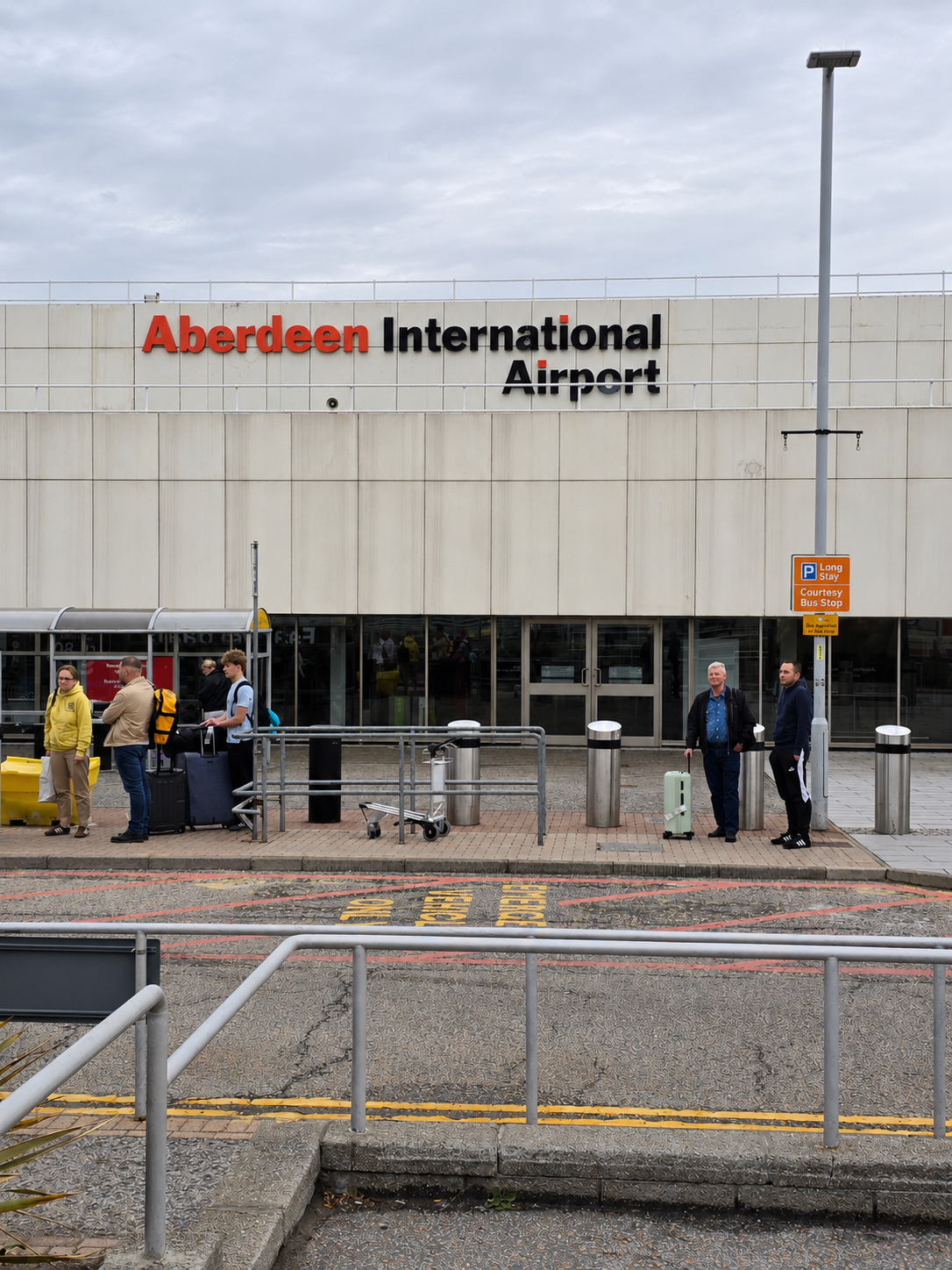
I flew from London to Aberdeen late in the evening and spent the night at Moxy Aberdeen Airport, a Marriott hotel a short walk from the terminal. The room, breakfast and location made it an efficient arrangement, even if “efficient airport hotel” is not usually a phrase that inspires poetry.
Renting a car would have been the obvious next step.
I already had experience driving on the left. Tintagel came first, with narrow Cornish roads that sometimes appear designed to test whether two vehicles can occupy the same piece of geography. Cyprus followed later, offering the same traffic direction with rather more sunshine.
The side of the road was therefore not the problem. After a late flight, a short night and an early start, I was more concerned about fatigue and unfamiliar junctions. I had also imagined congestion around one of Britain’s best-known royal residences.
In retrospect, the fear was unnecessary. A car would have been manageable and more flexible.
Instead, I took an Ember bus from Aberdeen Airport shortly after 7.30 in the morning. Public transport to Balmoral is possible, but the timetable requires commitment. There are few useful services, and missing the sensible return connection would complicate the day considerably.
The bus was comfortable, cost £8.45 each way and stopped directly at the Balmoral visitor car park. Having only one realistic bus back may also have forced me to give the estate more time than I would have allowed myself with a car waiting outside.
What initially looked like an inconvenience eventually became an advantage.
Before the Gates Opened
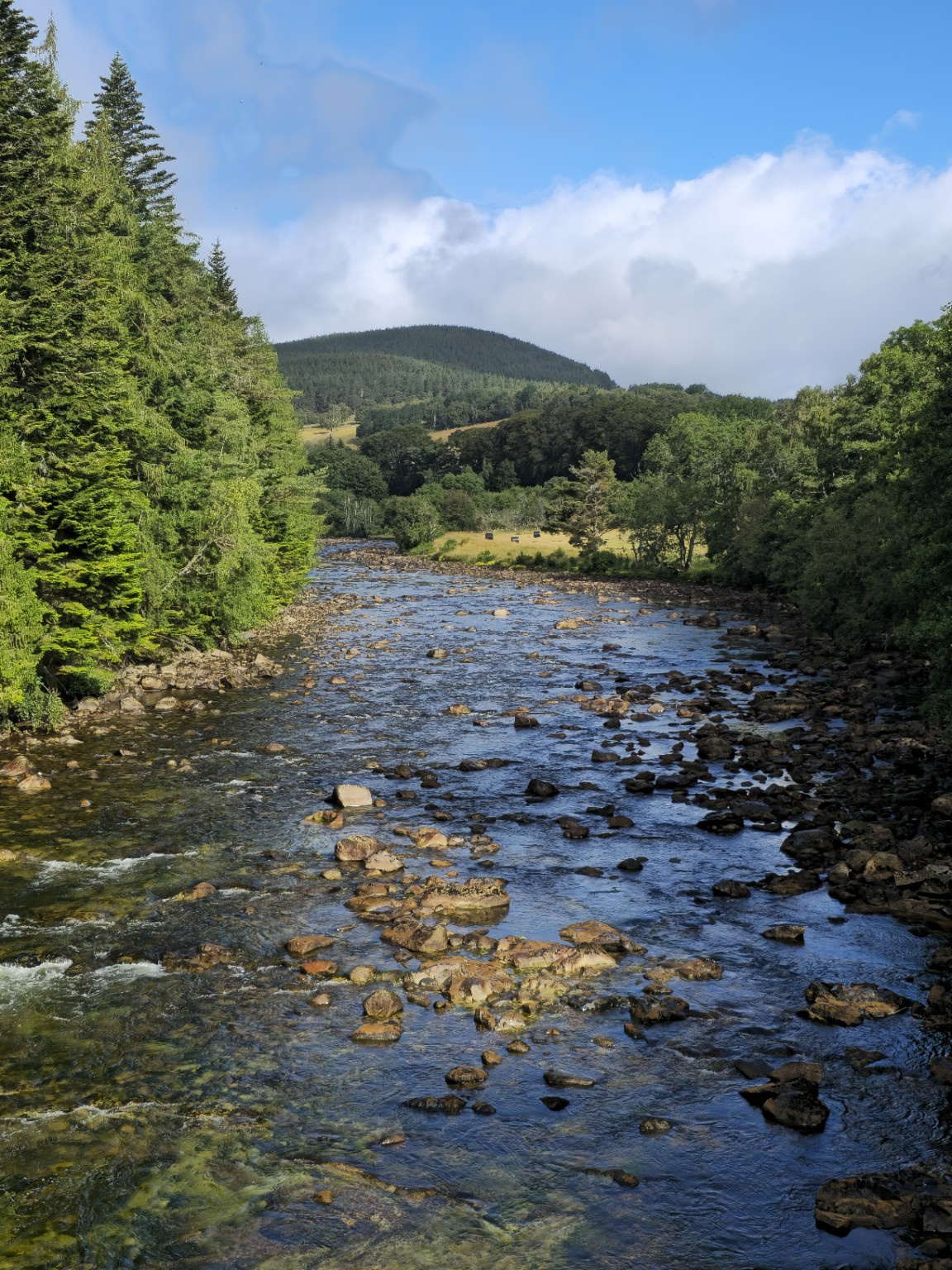
The early bus delivered me before the estate opened, so I walked towards Crathie Kirk.
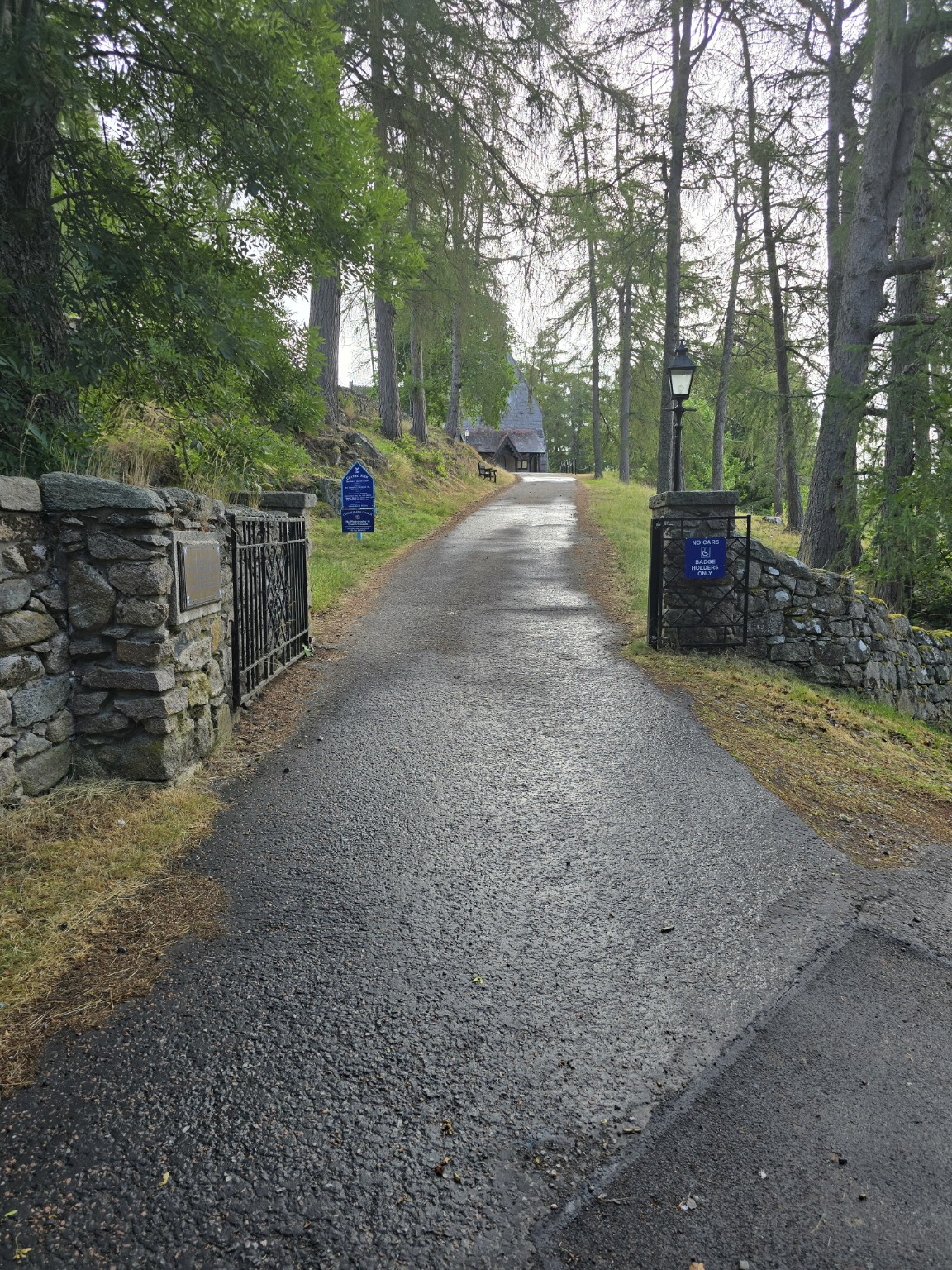
The small stone church is closely associated with the Royal Family during their stays at Balmoral. Grey stone, trees and an almost empty road created a much quieter world than the organised royal experience waiting nearby.
Under the church porch, however, one woman had unrolled an exercise mat and was calmly working through her routine.
It was not quite the solemn royal tableau I had imagined, but it made the place pleasantly ordinary. A church attended by monarchs was, at that moment, also shelter for someone stretching before breakfast.
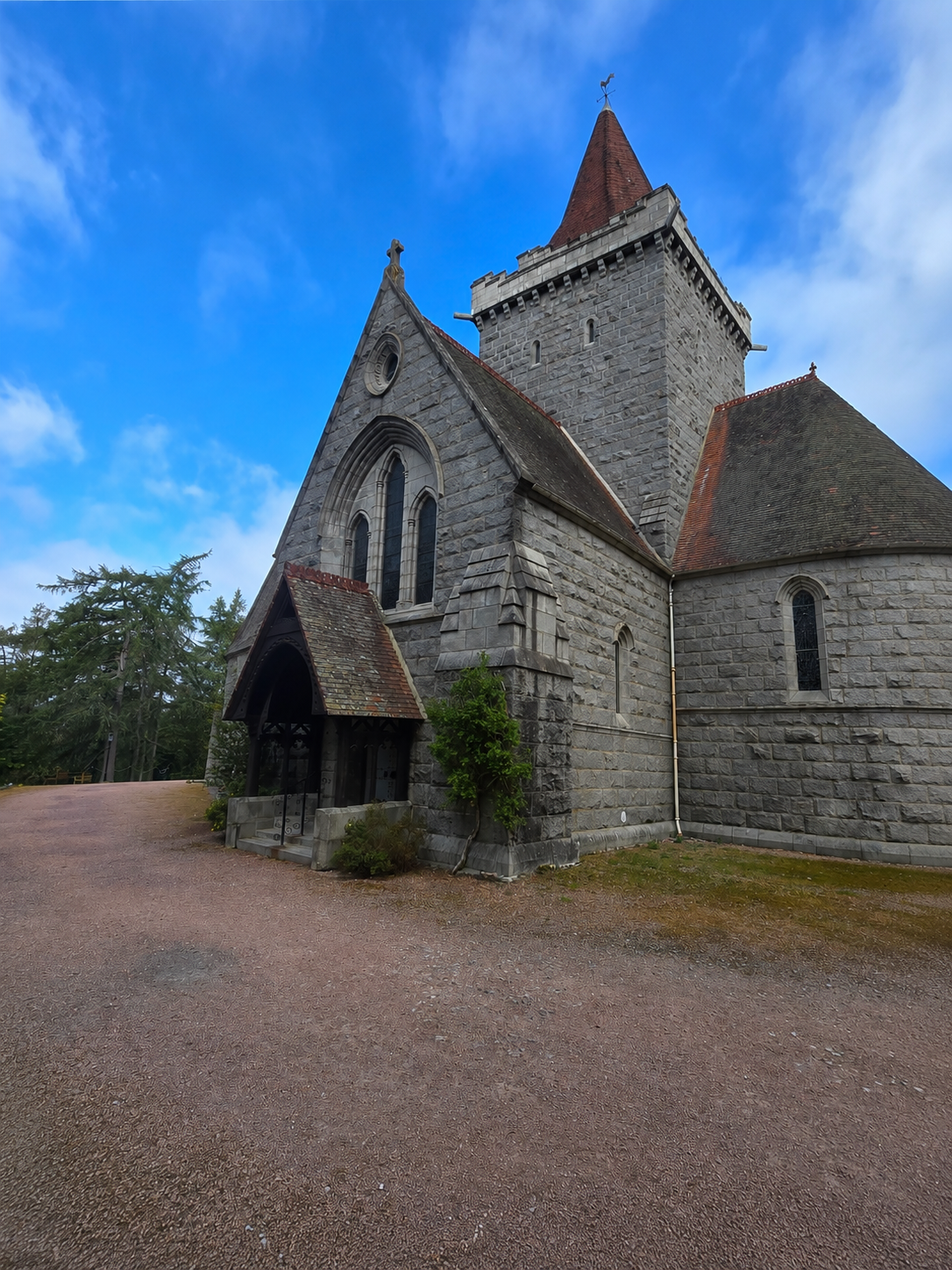
Before the timed tours, controlled groups and carefully managed royal narrative, there were a few minutes in which the landscape still belonged mainly to itself.
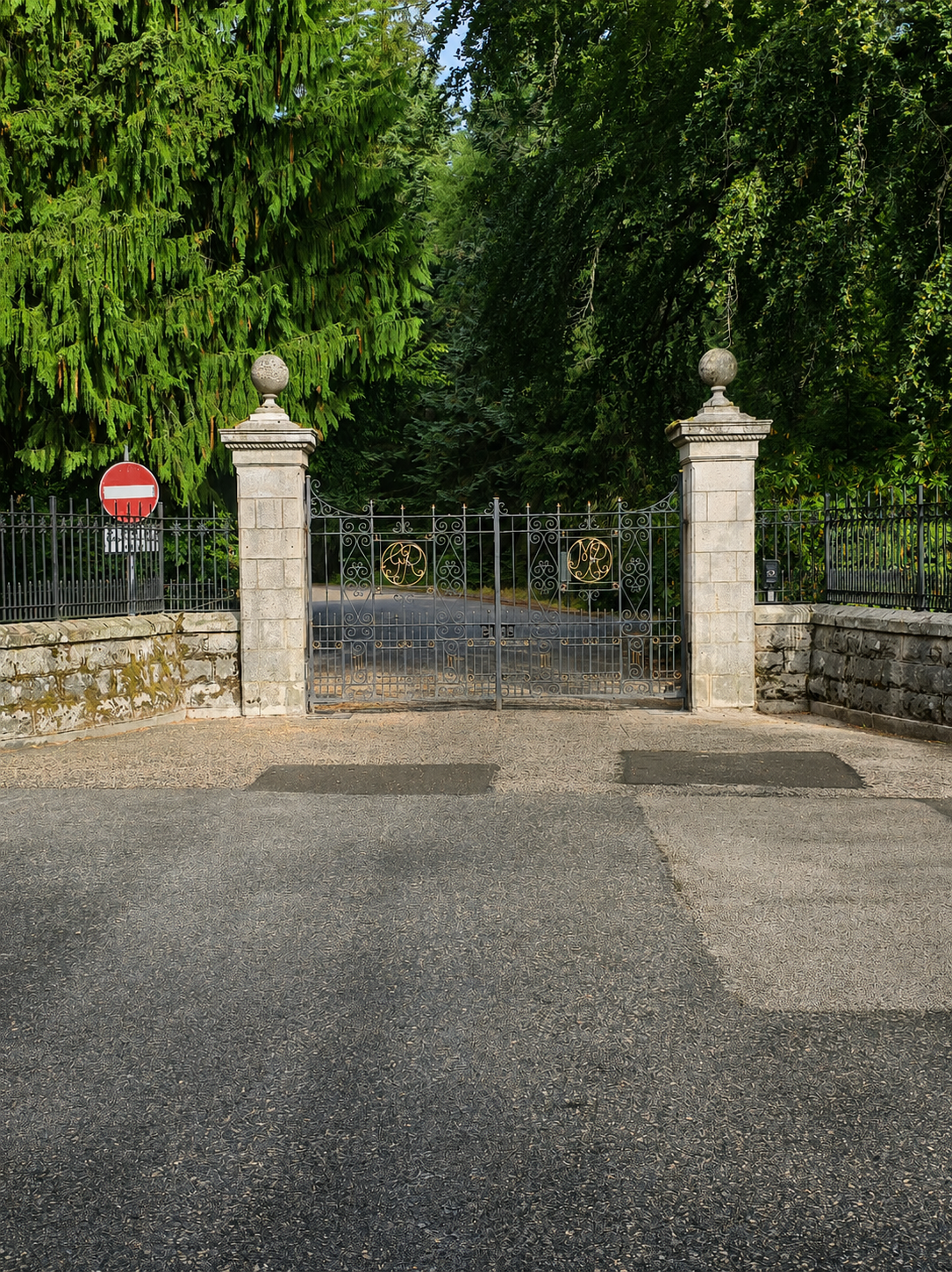
Then the gates opened.
The £175 Ticket I Had Not Intended to Buy
I had originally planned to book the interior tour without afternoon tea. Those tickets were already sold out when I checked approximately two months before my visit.
The remaining option cost £175 and included the same interior tour followed by afternoon tea. This could easily sound like an alarming amount to pay for small sandwiches and a scone.
The tea, however, was not the reason for the purchase. It was simply the only remaining route into the castle.
The real value was access.
The interior visit lasted about ninety minutes and was restricted to twelve guests. Every place had been taken. The international group was attentive and genuinely interested; nobody appeared to have wandered in merely because the weather had turned unpleasant elsewhere.
The standard interior tour costs £110, while the version followed by afternoon tea costs £175 and includes general admission.
Two women conducted our tour. They specialised in this particular visit and, according to them, King Charles III had been involved in shaping it. They had even been required to deliver the tour to him.
That detail explained the precision of the experience. The presentation was controlled, respectful and dignified. There was no gossip, no attempt to manufacture intimacy and no suggestion that entering a royal residence entitled us to every detail of the family living inside it.
The House the Late Queen Did Not Want to Share
The guides described a clear difference between Queen Elizabeth II and King Charles III.
The late Queen considered Balmoral her private home and had little enthusiasm for allowing visitors inside. Her son, they said, had been considerably more excited by the possibility of opening part of the castle to the public.
Visitors are now permitted to see a carefully selected circuit around the ground floor, while the genuinely private areas remain private. The rooms included in the tours are still used by the King, Queen and other members of the Royal Family.
Our route included the entrance hall, the foot of the main staircase, the formal dining room, the Page’s Room, the former billiard room now used as a private dining room, the library and the room in which the late Queen received Liz Truss for the formal kissing hands ceremony shortly before her death.
It was a surprisingly substantial tour.
I had perhaps expected something even more explicitly private, comparable to some of the domestic rooms visible at Osborne House. Once inside, the impossibility of that expectation became obvious. Osborne is a former royal home. Balmoral is still someone’s house.
The interiors looked intensely Victorian: dark timber, heavy furniture, portraits, patterned surfaces and personal objects arranged with sufficient care to appear domestic without ever becoming uncontrolled.
At moments, it felt as though Queen Victoria had merely stepped outside and might return before the end of the explanation.
Then there were the mounted deer heads.
Victorian charm is one thing. Being watched by several dead stags while someone explains modern royal domestic life is another. They gave parts of the interior a faintly haunted quality, as though Balmoral’s celebrated relationship with nature had been interpreted rather literally and then attached to the walls.
Photography was strictly forbidden. The rule was enforced seriously, not presented as a polite suggestion to anyone capable of concealing a phone quickly enough.
Normally, such restrictions are frustrating. Here they seemed consistent with the nature of the place. We had been admitted into part of a functioning private residence, not released into an unrestricted exhibition hall.
Where a Famous Photograph Became a Real Room
The most affecting moment came in the room where the late Queen met Liz Truss.
The guides pointed out the exact place where Queen Elizabeth II had stood. The photograph from that meeting circulated around the world and made the room newly recognisable: the fireplace, the chairs, the arrangement of the furniture and the visibly frail monarch performing one final constitutional duty.
Standing inside changed its scale.
The photograph ceased to be a flat historical record and became a physical arrangement of distance, furniture and space. This was where she had stood. This was the room she had crossed.
Two days later, Queen Elizabeth II died at Balmoral.
The guides did not force emotion into the moment. They did not need to.
The library was the other interior highlight. It carried none of the same historical finality but offered a clearer sense of Balmoral as a lived-in house: formal and unmistakably royal, yet more domestic than ceremonial.
The ballroom, accessible to general visitors, contained a photographic exhibition marking the centenary of the late Queen’s birth. The display largely took control of the room, so I experienced it less as a space awaiting music and movement than as a frame for public memory.
From there, the visit moved outside, where Balmoral finally began to reveal its scale.
Bigger Than the Photographs Suggest
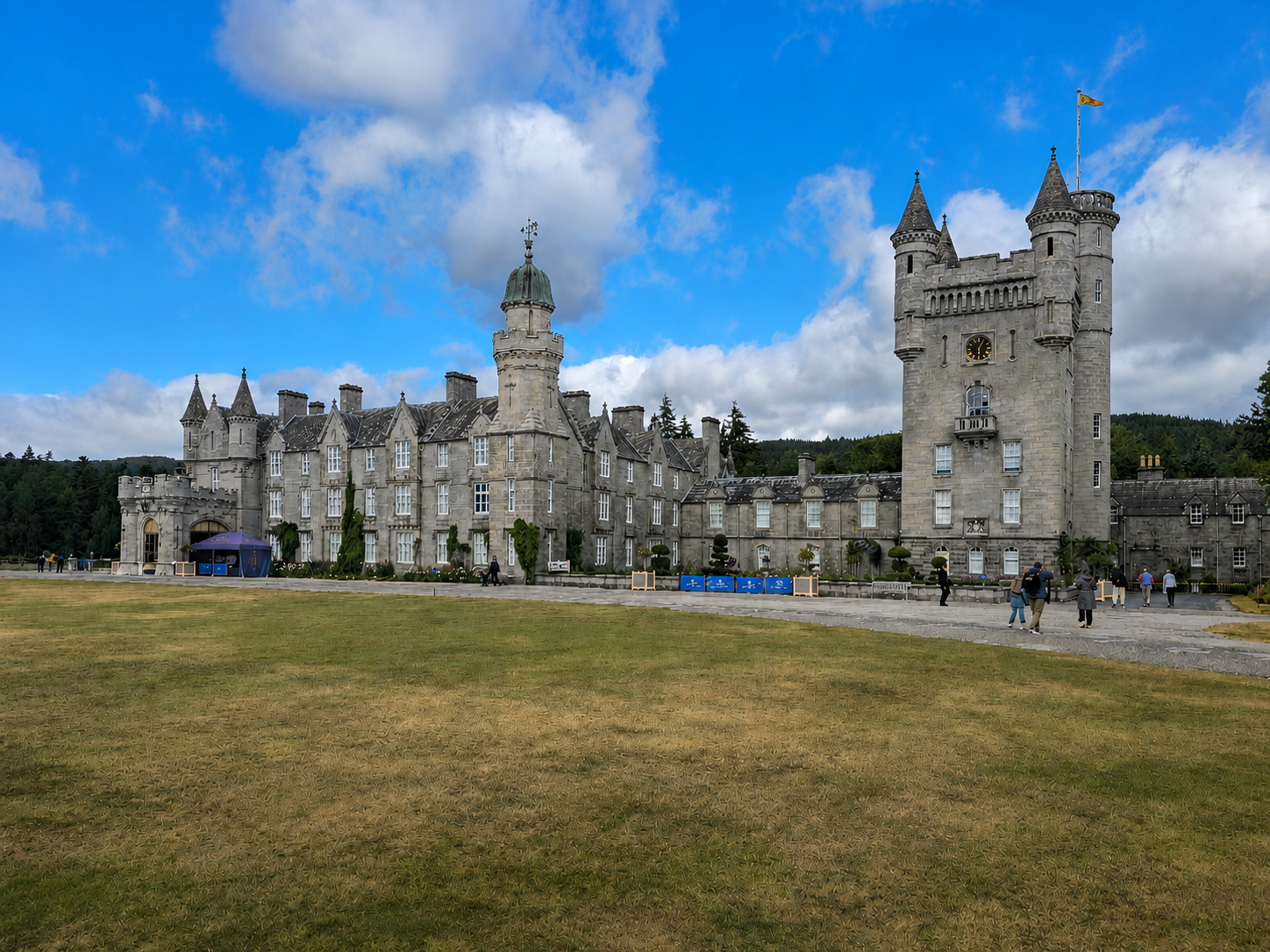
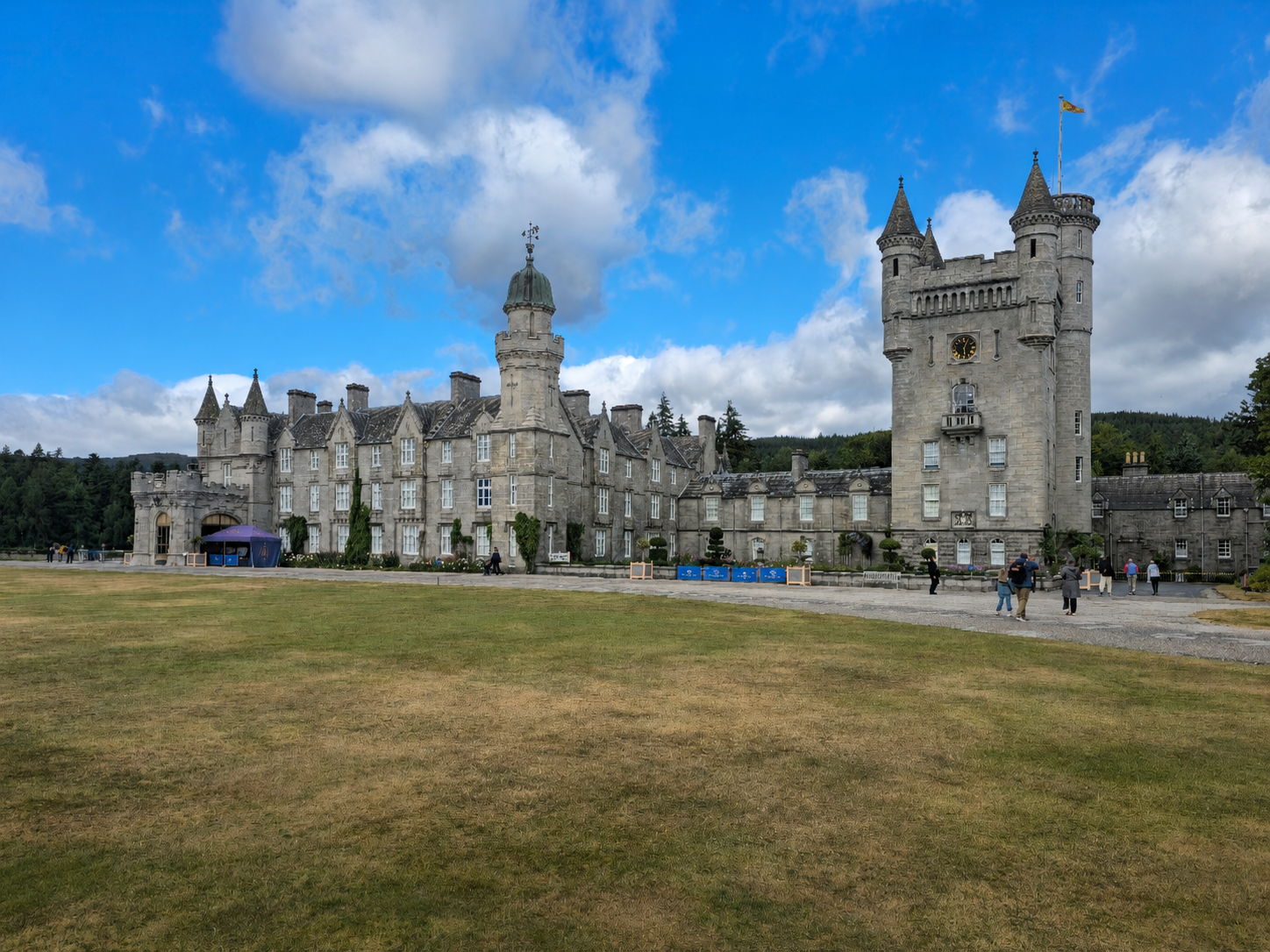
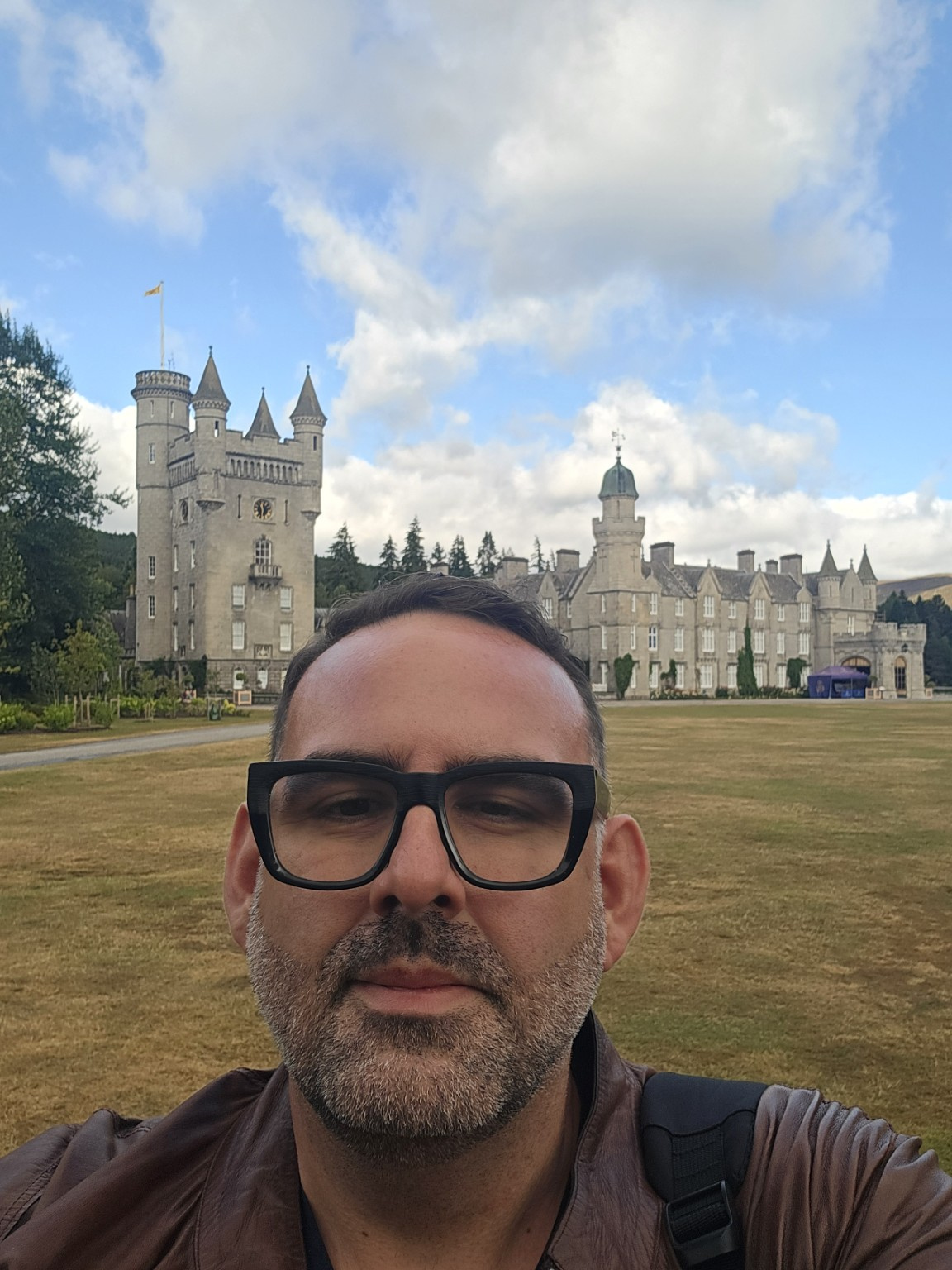
Balmoral Castle is larger than it looks in the familiar images.
Photographs tend to compress the relationship between the castle, gardens, working areas and surrounding landscape. In person, it becomes clear that this is not simply a picturesque building behind one immaculate lawn. It is the centre of a broad estate.
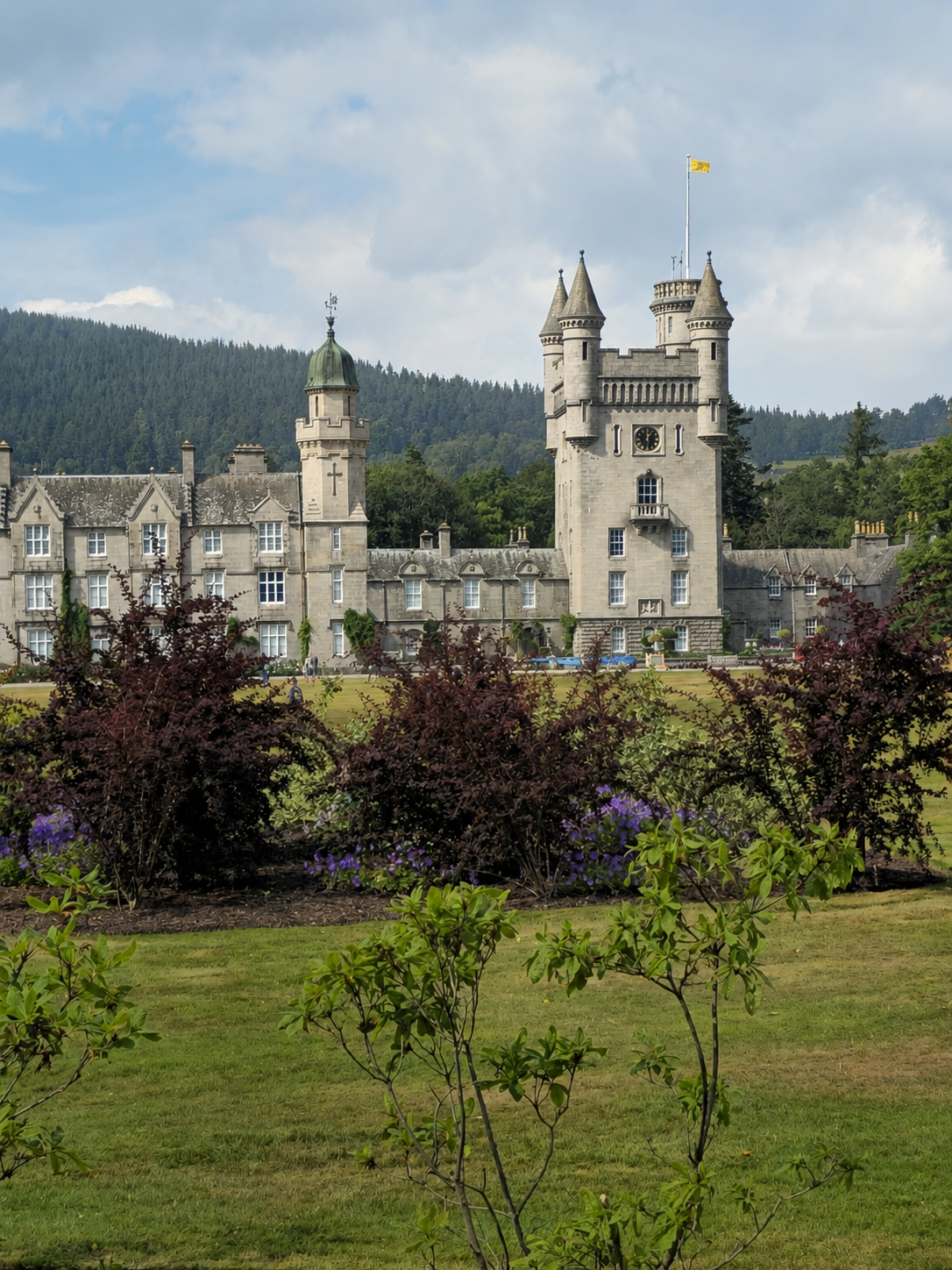
The grey granite, tower and sheer mass of the building give it a severity that suits the landscape. Balmoral does not float above its surroundings like a fantasy palace. It seems anchored to them.
I had worried that the long gap before my only practical return bus might leave me with far too much time. The opposite happened. Between the interior tour, ballroom, café, gift shop and gardens, the visit never developed that exhausted final hour in which one begins examining benches simply because there is nothing else left to do.
The Gardens Behind the Castle
The gardens provided the strongest visual part of the visit.
My favourites were the Sunken Garden and Tower Garden. They felt distinct enough to avoid becoming a sequence of interchangeable royal flower beds. One offered layered views and changes of level; the other worked directly with the architecture of the castle.
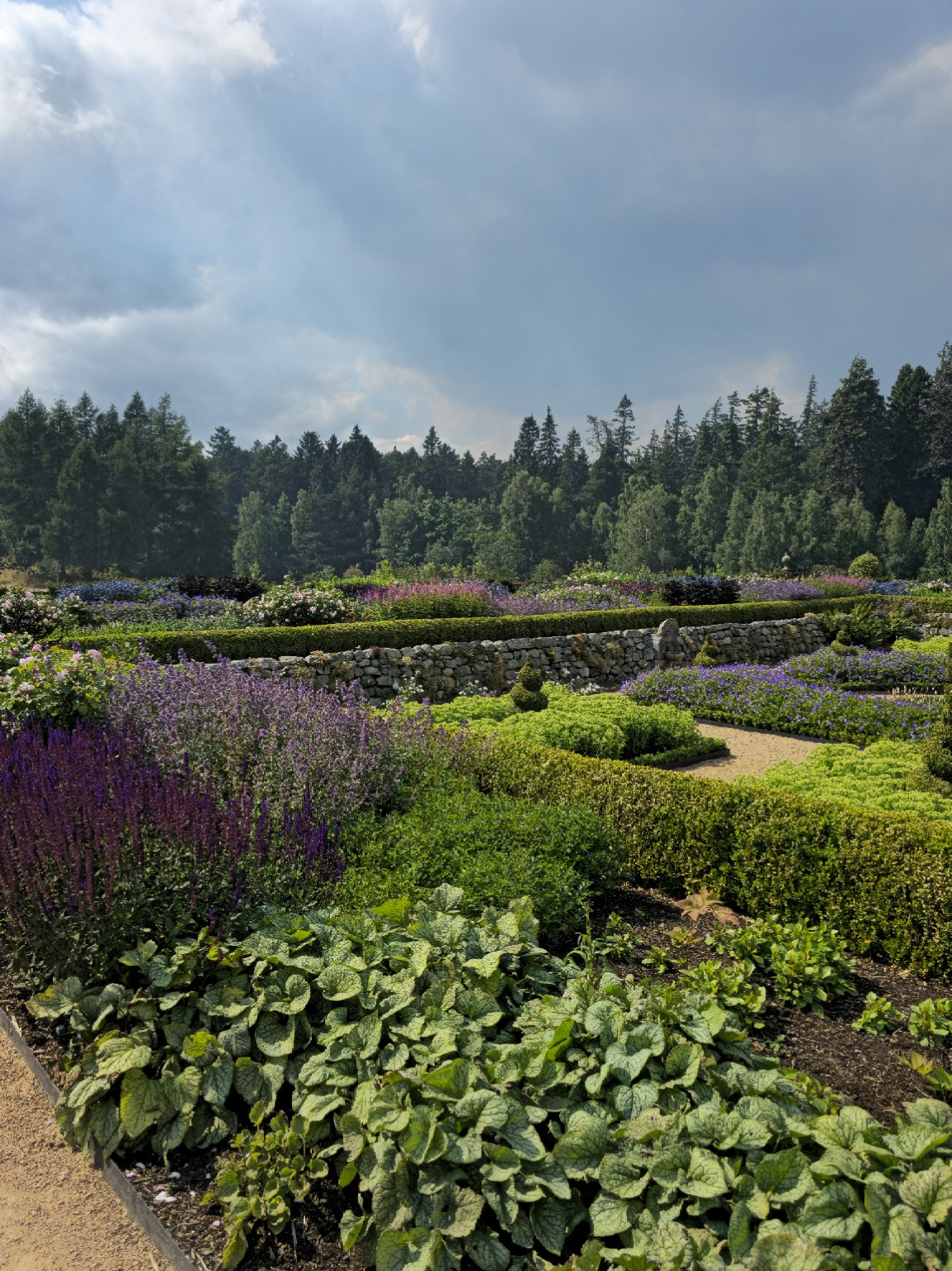
The landscaping was formal but not sterile. Paths, clipped forms and carefully structured planting were softened by fuller beds and the surrounding Scottish landscape.
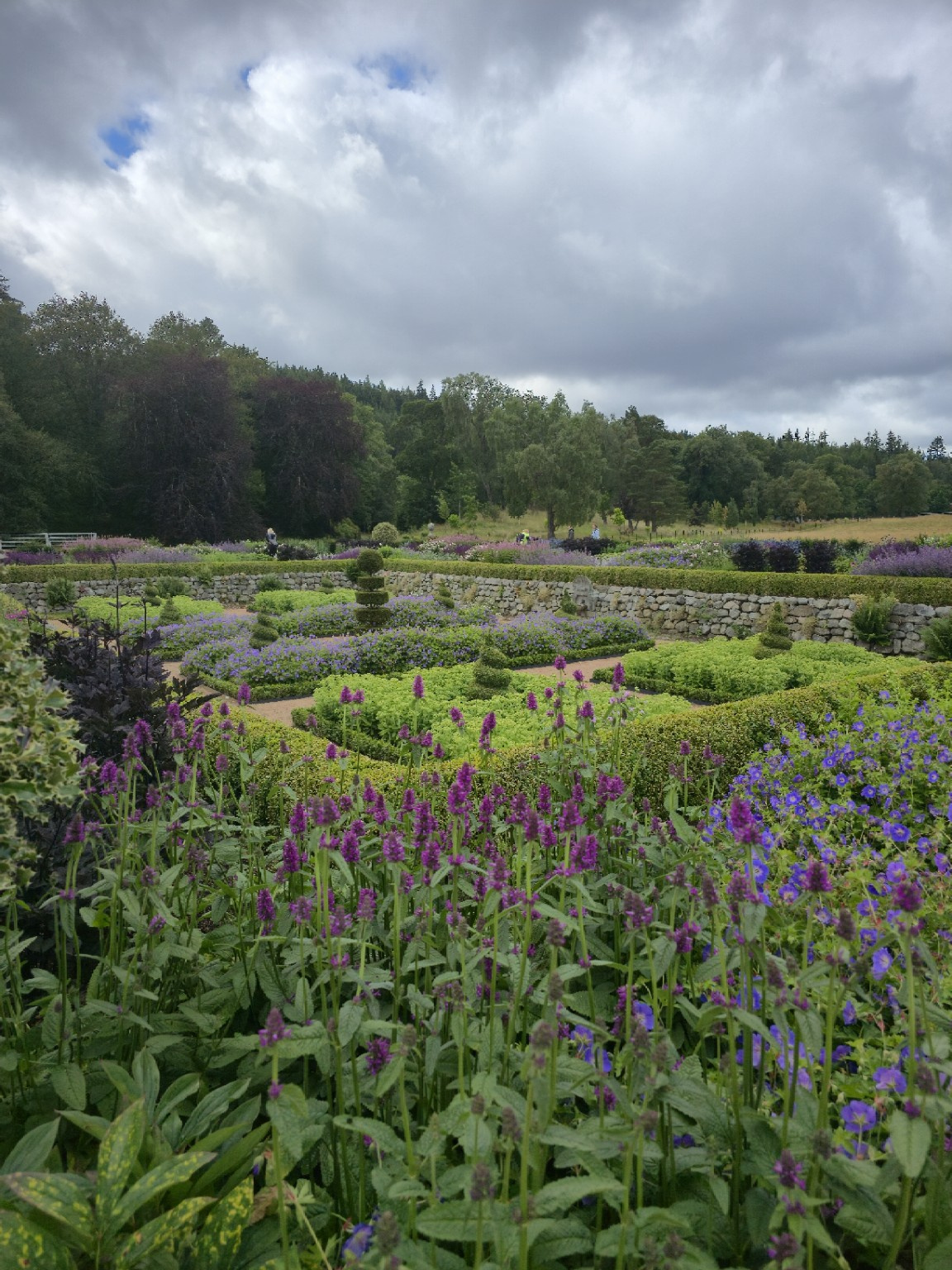
The strongest sections combined colour with stone. Against the castle and garden walls, the flowers appeared richer and less decorative than they might have in a conventional palace garden.
There was also a practical side to the estate.
The glasshouses and kitchen garden made it clear that these grounds were not designed solely to provide backgrounds for visitor photographs. Ornamental planting existed beside areas intended to produce and supply.
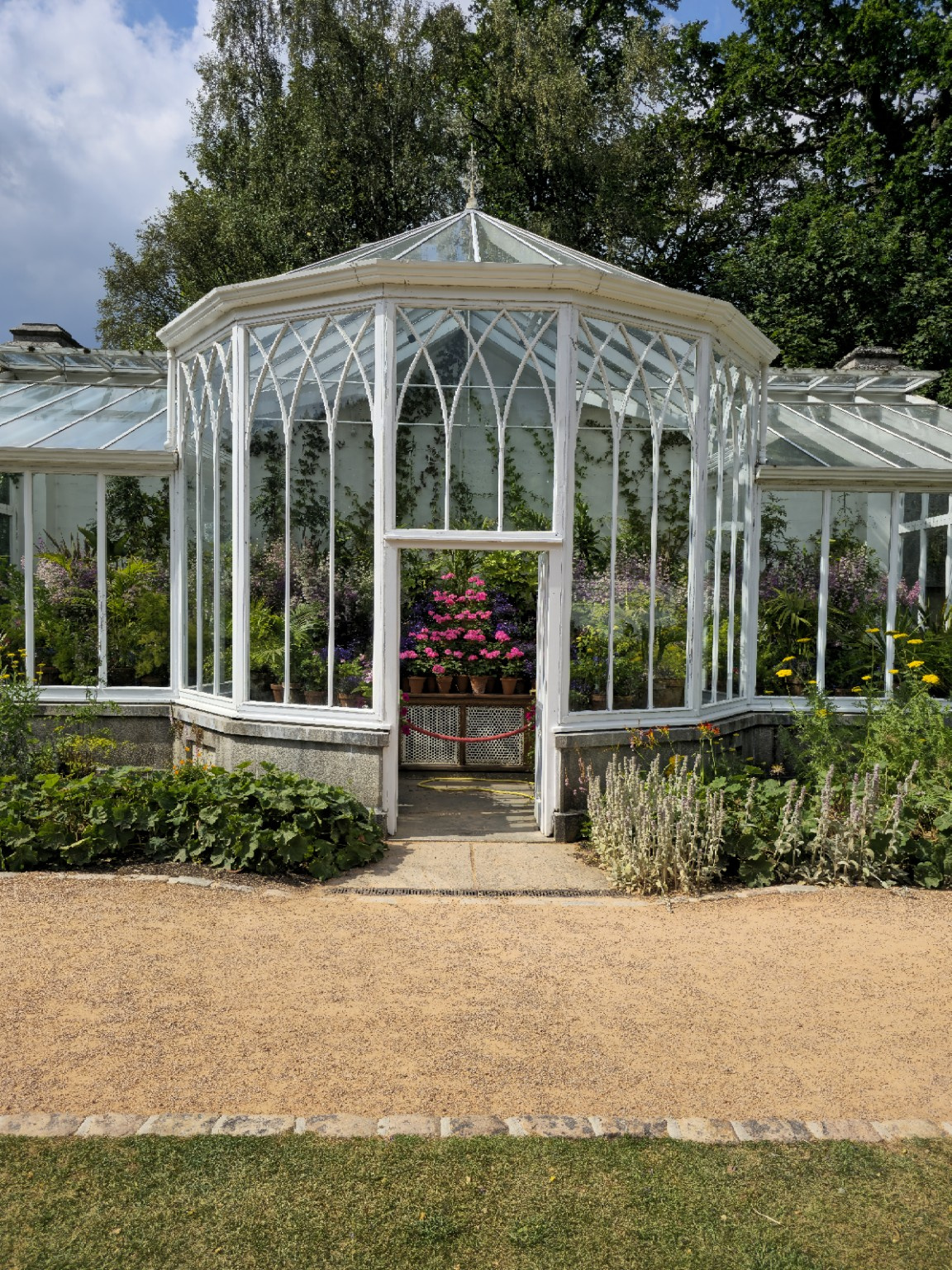
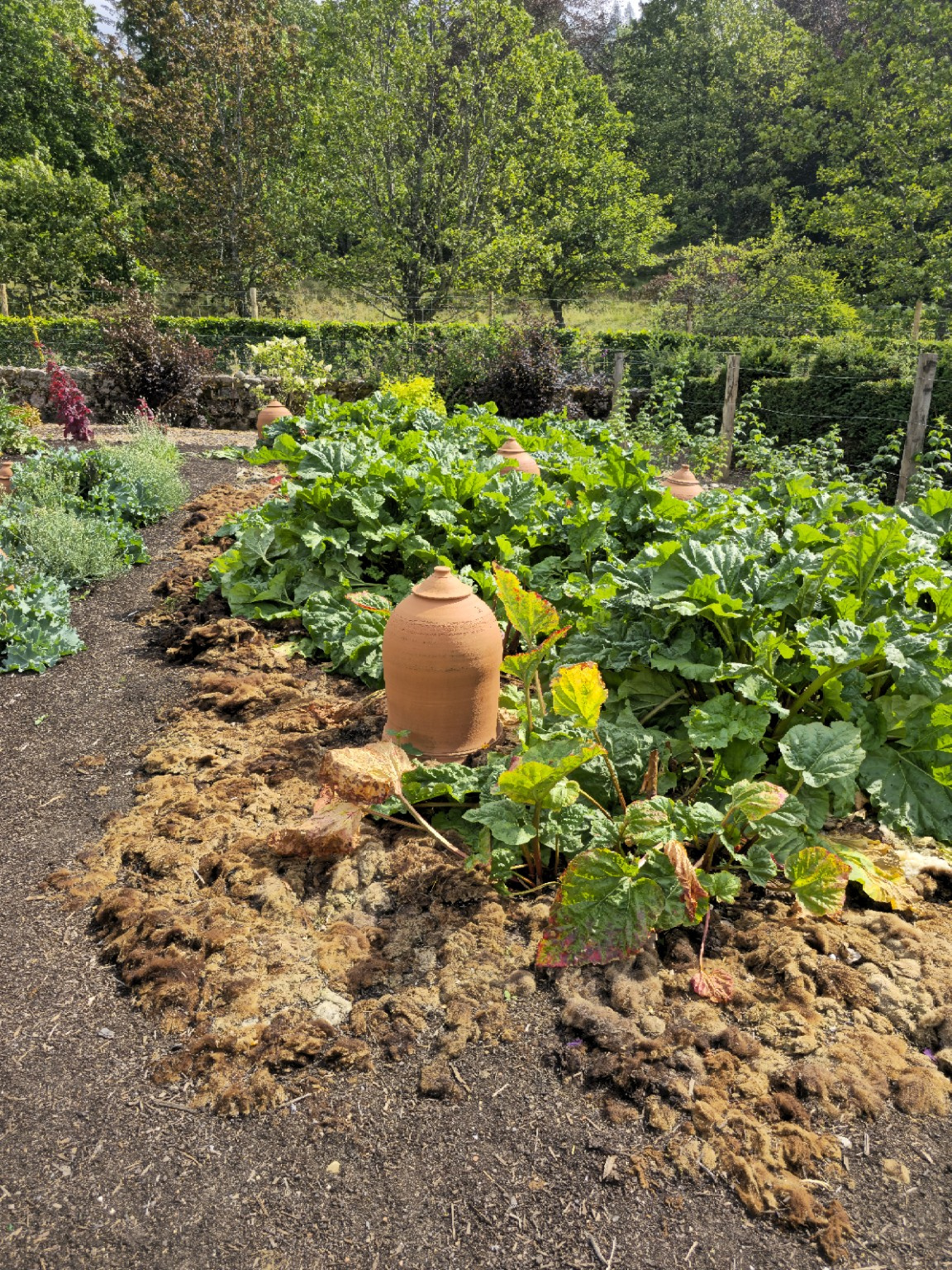
The grounds felt managed without becoming artificial. Visitors moved through the gardens while staff continued working and vehicles appeared where necessary.
This was not an empty historical shell temporarily animated for tourists. It was simply allowing tourism to occupy part of its life.
Afternoon Tea Was Not the Main Event
My afternoon tea was scheduled for 1 p.m., immediately after the interior tour.
It was served in a separate area of the café, and I had my own table. The organisation was polished, while the tartan-patterned bone china created a clear visual connection with Balmoral. It was presented as an exact replica of a setting used by the Royal Family inside the castle.
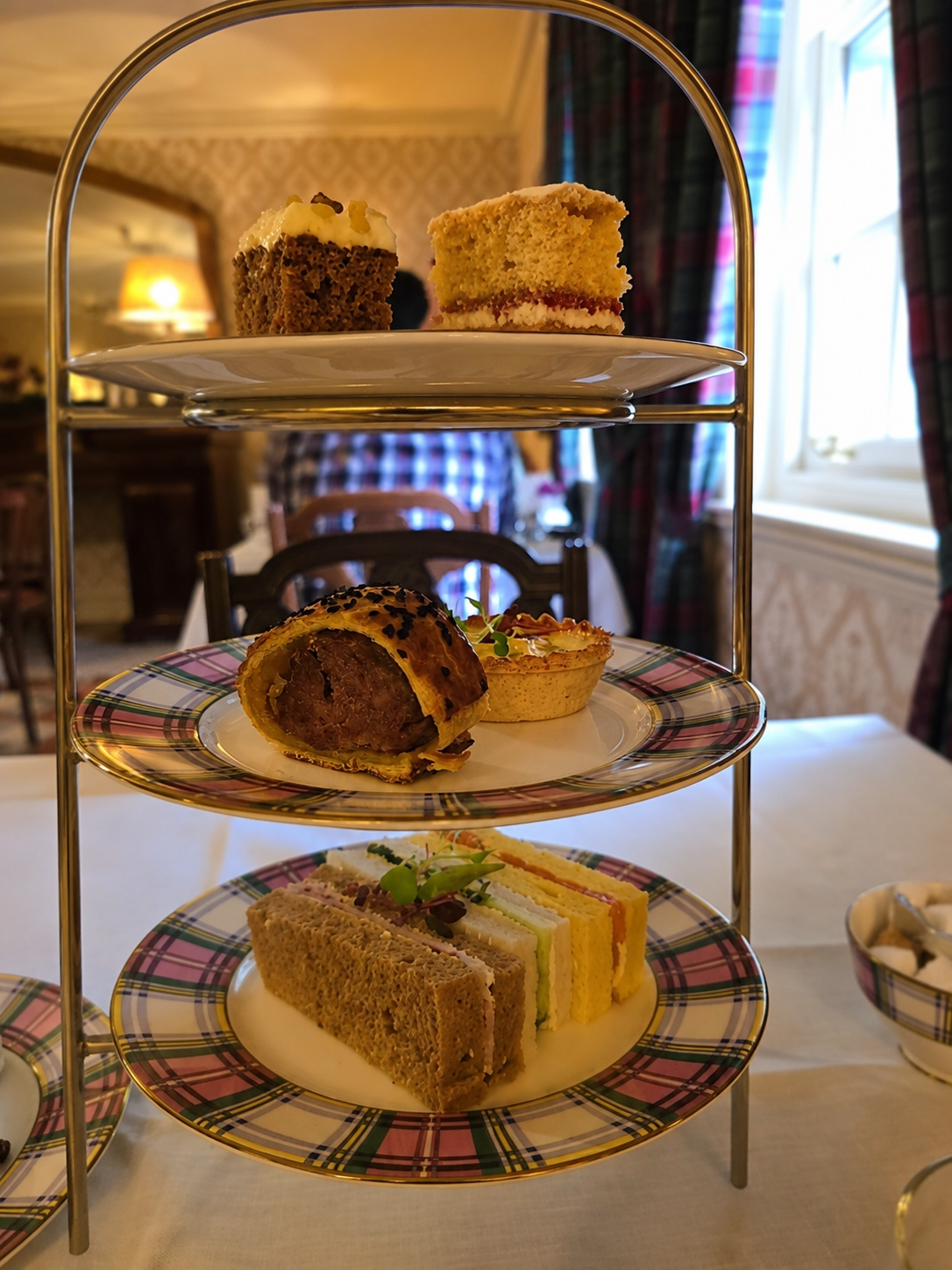
The food itself was less remarkable.
I had hoped for coronation chicken, perhaps an obvious expectation in a royal setting, but none appeared. The selection was acceptable rather than memorable. The scones seemed slightly manufactured, and I had eaten both better and considerably more generous afternoon teas elsewhere.
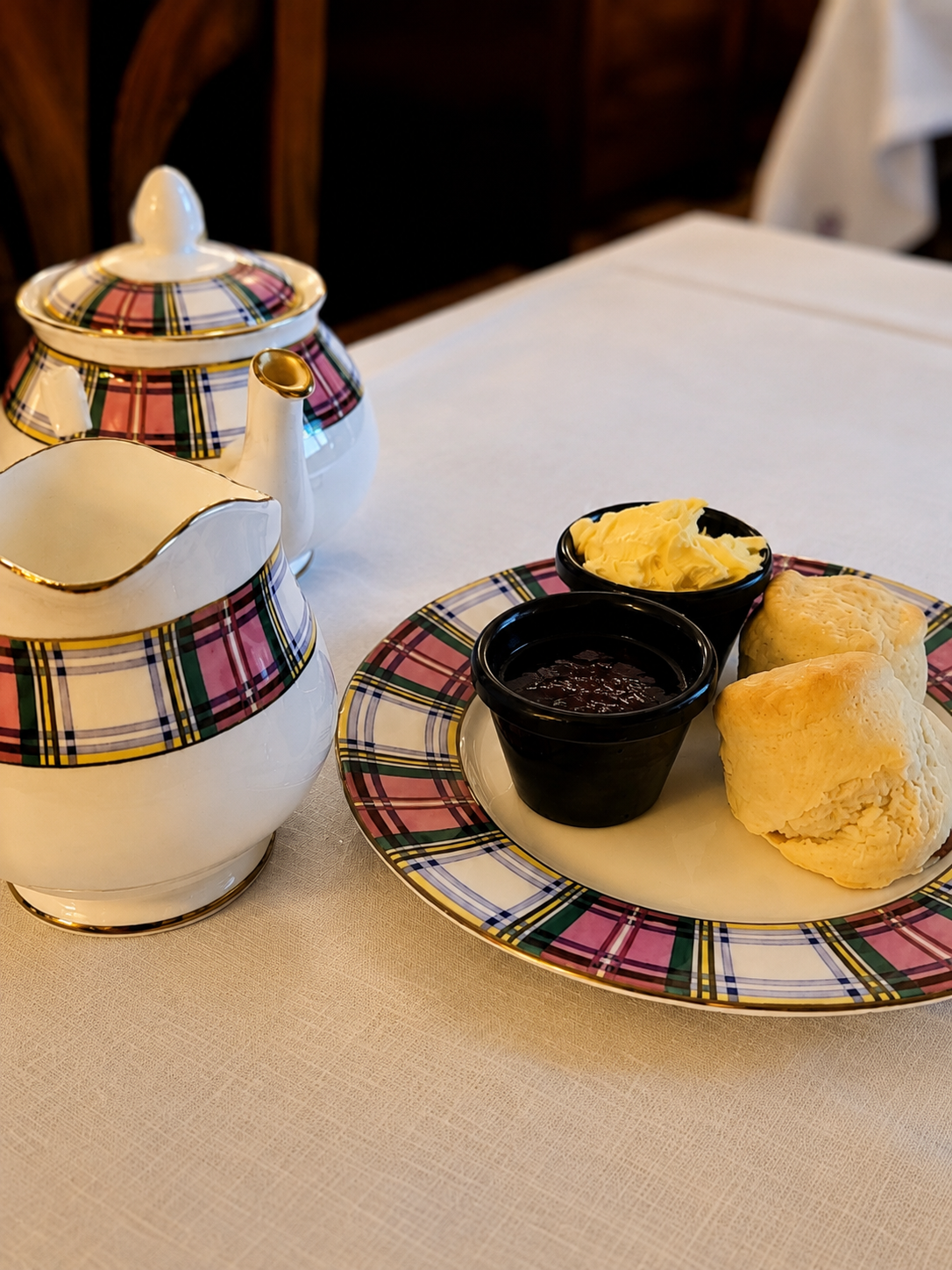
Nothing was actively poor. The tea was pleasant, the service was organised and the ritual functioned as intended. It simply did not reach the standard suggested by the price or location.
Had I paid for the tea alone, I would have been disappointed. But that was never really what I had purchased.
The tour justified the price. The tea merely made the tour available.
Two Scarves and a Bus Back to Aberdeen
The gift shop provided the predictable final opportunity to convert royal enthusiasm into luggage.
I bought two Balmoral lambswool scarves, each originally priced at £40 and reduced by 20 per cent. Their tartans were inspired by the colours of the landscape around Balmoral, which made them considerably more appealing than another souvenir carrying only a crown or castle silhouette.
They were carefully wrapped, and I had no intention of undoing the packaging purely to manufacture a photograph for the internet. The tartan pattern on the tea service will have to represent them until they are actually used.
My return bus was about ten minutes late, but the supposedly awkward public-transport plan worked without difficulty. I returned to Aberdeen Airport, collected my suitcase from the Moxy and continued towards the city centre.
The following day would involve Dunnottar Castle, followed by Dundee and eventually Edinburgh. Those belonged to the next stage of the journey. Balmoral had already filled this one.
I had expected the limited bus schedule to leave me trapped at the estate for too long. By the time I walked back towards the car park, the visit had felt almost too short.
The late Queen regarded Balmoral as the home she did not wish to share. King Charles III has chosen to open part of it without surrendering its privacy entirely.
For ninety minutes, Balmoral was open enough to reveal why it mattered to her — and closed enough to remain a home.
