 Paris, Ile-de-France, France

Two hotels, two stages and one unapologetically expensive escape
Technically, this story is about forty hours in Paris.
Spiritually, it began with a brioche in Strasbourg.
I had flown into Paris the previous day, only to leave it almost immediately by train. I had never visited Strasbourg, and late November seemed like a reasonable time to correct that omission. The city was beginning to dress for Christmas, although Advent had not yet gathered enough momentum to compensate for the cold.
Strasbourg was attractive. Colmar, which I visited the following morning, was photogenic, lightly dusted with snow and almost deserted.
I understood why people loved it.
I simply did not fall in love with it.
Perhaps the season had started too early. Perhaps the streets needed more people, more lights and more mulled wine. Perhaps I am less susceptible than average to decorative reindeer.
The strongest impression of Alsace came from my hotel.
Maison Rouge Strasbourg Hotel & Spa had the sort of old-world charm that made me slow down in the lobby. Rich fabrics, polished surfaces and carefully arranged details created an atmosphere of inherited luxury, even though the hotel had clearly been renovated with modern guests—and modern room rates—in mind.
The spa was small, but almost empty. After walking through cold Strasbourg, I had the jacuzzi practically to myself, which made its size irrelevant. Privacy improves most wellness facilities.
Then came breakfast.
The pastry selection was magnificent, especially the brioches: glossy, buttery and dangerous enough to make moderation look like a character flaw.


After a quiet morning in Colmar, I returned to the station and boarded the train back to Paris.
The city was still several hours away.
The expensive escape had already begun.
Paris has too many doors
Paris does not have one central railway station. It has a collection of grand termini, each pointing toward a different version of France and Europe.
Gare du Nord faces north. Gare de l’Est opens toward eastern France and Germany. Montparnasse serves the west. Saint-Lazare sends trains toward Normandy. Austerlitz still carries memories of overnight journeys. Gare de Lyon points toward Burgundy, the Alps and the Mediterranean.
During my short stay, three of them entered the story.
Gare de l’Est delivered me from Strasbourg.
Gare d’Austerlitz would revive the memory of a night train to Annecy.
Gare de Lyon would serve me lunch beneath chandeliers.
My arrival, however, contained none of that railway romance.
The queue for metro tickets at Gare de l’Est looked like evidence that civilisation had temporarily failed. I ordered an Uber instead. It immediately became trapped in traffic.
I had booked dinner, followed by the opera that was the main reason for the journey. As the estimated arrival time kept moving in the wrong direction, I finally abandoned the Uber somewhere near Rue Saint-Sabin—still roughly two kilometres from the Courtyard by Marriott Paris Gare de Lyon, where I was staying that night. Under normal circumstances, it would have been an unremarkable twenty-minute walk through Bastille. With luggage rattling behind me, a dinner reservation approaching and a €200 opera ticket waiting beyond it, I tried to turn it into a run. It was less an elegant sprint than a graceless combination of jogging, fast walking and dragging a suitcase over Parisian pavements.
By the time I reached the hotel, sweating and thoroughly undignified, my sophisticated weekend had acquired a rather more athletic opening than planned.
I expected check-in at the Courtyard Paris Gare de Lyon to be the easy part. Instead, the receptionist decided that the urgent matter was not my room, but my failure to carry a passport.
I had presented a Croatian identity card.
Croatia was in the European Union.
He remained unconvinced.
I disagreed.
He persisted.
I became increasingly educational.
A manager eventually intervened. The diplomatic crisis disappeared, and I later received a written apology accompanied by snacks. Nothing repairs European relations quite like packaged food.
The hotel itself was efficient, comfortable and almost completely without character. There was a bar, technically, although it closed early and had more in common with the functional counter of an American motel than with somewhere designed for lingering over a serious cocktail. The location near Gare de Lyon was excellent; otherwise, the Eiffel Tower framed in my window was the hotel’s only real flourish.
The view was not a minor perk. The hotel sells its panoramic Eiffel Tower rooms as a separate premium category, and the difference can easily run into three figures. I received one as a Marriott Titanium upgrade, which made the tower considerably more beautiful.
At roughly €205 for the night, the room was perfectly adequate. Without that upgrade, it would also have been perfectly forgettable.


A proper French dinner before Mozart
Despite the train, the traffic, the sprint and the impromptu lecture on European documentation, I reached Chez Paul Bastille at the reserved time.
The restaurant had enough tourists to remind me that I was in Paris, but enough authenticity to stop it feeling manufactured for them. The tables stood close together, the room buzzed with conversation and the menu offered the sort of traditional food that did not require a diagram.
I began with oeuf mayonnaise, continued with boeuf bourguignon and finished with tarte Tatin.
The beef was the highlight.
It did not reinvent French cuisine. It did not need to. It was dark, tender, slow-cooked and exactly what I wanted from a traditional Parisian bistro.
Sometimes authenticity does not mean discovering something unknown. Sometimes it means eating a familiar dish in the place where it suddenly makes complete sense.


From the restaurant, I walked to Opéra Bastille.
There was, naturally, a protest outside.
It was Paris, after all, and Bastille would have looked almost suspicious without one.
The demonstration was peaceful. It felt less like a disruption than part of the local scenery: revolution outside, Mozart inside.
A perfectly normal Saturday evening.
The tenor who justified the journey
I had come to Paris specifically to hear Pavol Breslik sing Tamino in Mozart’s The Magic Flute.
Travelling for one singer may sound excessive to people who do not love opera. Those same people cross countries for football matches, stadium concerts or restaurants with waiting lists measured in months.
At least opera provides comfortable seating.
Breslik is a Slovak lyrical tenor whose international career has taken him to major European houses. Mozart sits naturally in his repertoire, and Tamino suits the elegance, clarity and warmth of his voice.
Opéra Bastille surprised me. It is enormous, modern and far more austere than the gilded fantasy many people associate with opera in Paris. My seat cost around €200 and was in the stalls, but far enough from the stage to make me wonder whether spending a little more would have been the smartest extravagance of the weekend.
The audience also dressed more casually than expected. I wore an ordinary suit and still appeared to have made more effort than many people around me.
Then the lights dimmed.
The Magic Flute begins like a fairy tale. Tamino sees Pamina’s portrait and falls in love before meeting her. He sets out believing that he must rescue her from the supposedly evil Sarastro.
The story gradually becomes more complicated.
The Queen of the Night is not the simple victim she first appears to be. Sarastro is not merely a villain. Tamino and Pamina must pass trials of silence, fire and water before love and wisdom can triumph.
Mozart mixes comedy, romance, philosophy and spectacle without asking permission from genre boundaries.
Breslik justified the journey early in the evening. In Tamino’s portrait aria, Dies Bildnis ist bezaubernd schön, he gave the character youthful wonder without weakness and lyrical refinement without disappearing inside that vast theatre.
He was excellent.
The production itself was minimalist. Forests, darkness, pale costumes and symbolic elements replaced conventional fairy-tale decoration. At times, the restraint felt almost too restrained for such a large stage.
Yet the elemental trials worked beautifully. Fire and water appeared not as decorative effects, but as part of the visual language of initiation.
Then came the Queen of the Night.
Even people who claim not to know opera often recognise Der Hölle Rache. In it, the Queen orders Pamina to kill Sarastro, and Mozart transforms maternal rage into one of the most technically extreme arias in the repertoire.
The coloratura does not merely decorate the anger.
It weaponises it.
For a few minutes, the entire enormous theatre seemed built around a single voice trying to cut through everything in its path.
The Queen of the Night was sung by Polish coloratura soprano Aleksandra Olczyk, an established interpreter of the role who has performed it at the Metropolitan Opera, Covent Garden and Madrid’s Teatro Real.
Still, the evening belonged to Breslik for me. He was the reason I had crossed from Strasbourg to Paris, and he justified the decision.


After the applause, I walked back to the hotel.
Paris had completed its first act.
Sugar, stained glass and unfinished business
The next morning began at Blé Sucré.
This was not a luxury hotel breakfast room or a monument to Belle Époque dining. It was a polished neighbourhood bakery with excellent pastry.
That made it one of the most satisfying stops of the weekend.
I ordered a croissant, a pain au chocolat and a brioche because choosing only one seemed unnecessarily punitive.
All three were excellent.
The croissant produced the brittle sound good laminated pastry makes before covering the plate, table and part of your clothing with flakes. The pain au chocolat delivered the correct ratio of butter to chocolate. The sugar-topped brioche was soft, rich and entirely justified after Strasbourg had already weakened my resistance.
For a few euros, the bakery delivered as much pleasure as some of the weekend’s far more expensive reservations.
Hedonism does not require every experience to cost a fortune.
It requires knowing which pleasures should.


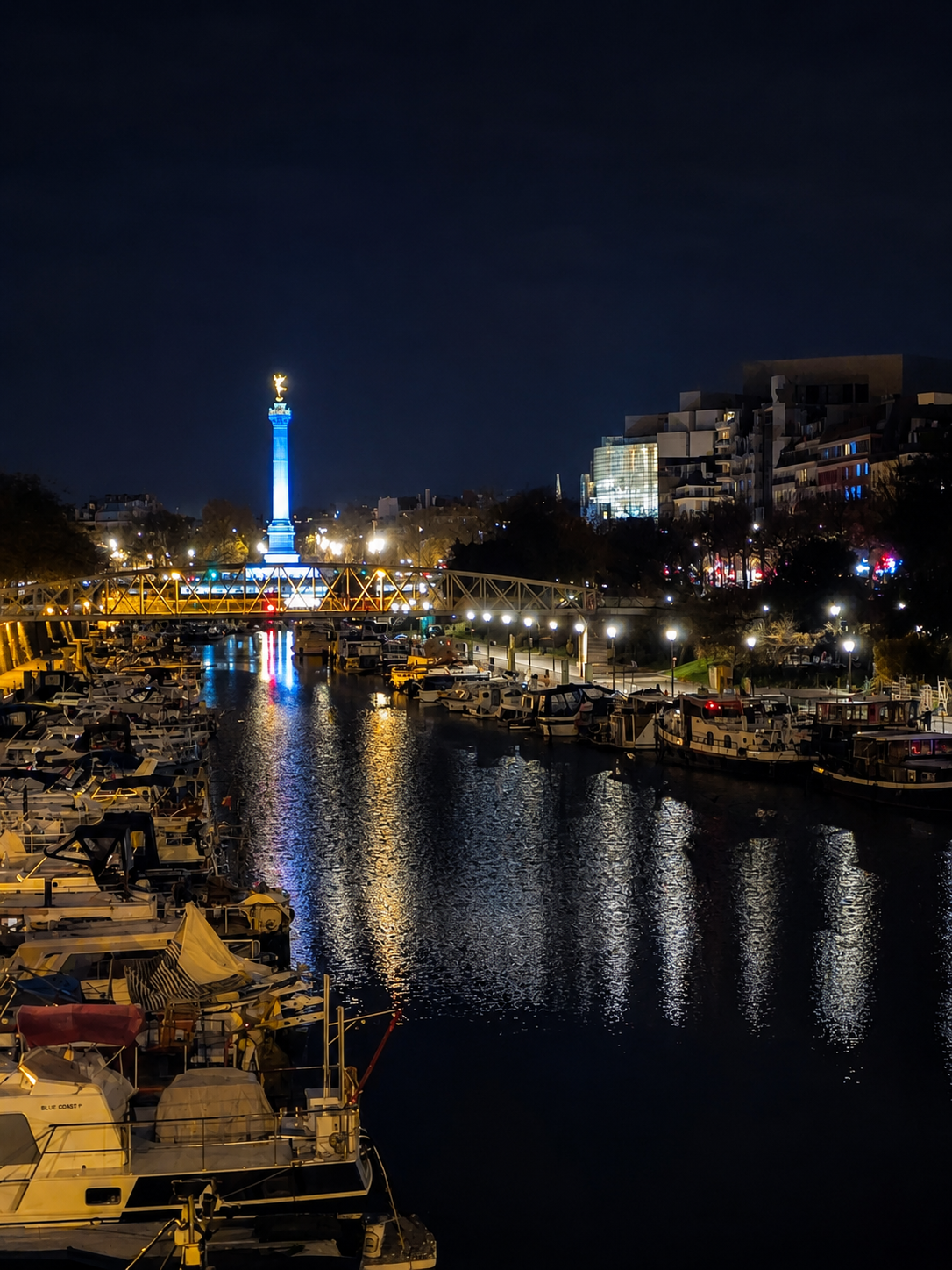
After breakfast, I crossed the quiet arcades of Place des Vosges and continued toward the Seine. Paris had changed overnight: the theatrical intensity of the opera had given way to pale morning light, nearly empty streets and the slower rhythm of the river. Sainte-Chapelle waited across the city, still hidden behind its deliberately unremarkable entrance.


The entrance felt strangely understated. Security checks, institutional buildings and the lower chapel did not prepare me for what waited upstairs.
For a moment, I wondered whether the famous photographs had exaggerated the place.
Then I entered the upper chapel.
The walls seemed to disappear.
Sainte-Chapelle was built in the thirteenth century as a monumental reliquary for King Louis IX. Its upper level is wrapped in stained glass filled with biblical scenes, but numbers and dates are almost irrelevant once the light hits the windows.
Red, blue, violet and gold rose around me in narrow Gothic panels until the architecture became secondary.
The effect was spectacular.
After the controlled darkness of the previous night’s opera, Sainte-Chapelle felt almost indecently colourful.


Finally climbing the tower I had always avoided
I had visited Paris several times without going up the Eiffel Tower.
The reasons were embarrassingly ordinary: queues, poor planning and a lack of enthusiasm for climbing hundreds of stairs after the elevator tickets had sold out. There had also been visits when my physical condition made such an ascent sound less like sightseeing than an unnecessarily public medical experiment.
This time, I booked ahead.
The tower fitted the logic of the weekend. If I was going to construct an unapologetically indulgent Paris escape around an opera ticket, a panoramic hotel room and excessive quantities of butter, continuing to avoid the city’s most recognisable monument would have looked less sophisticated than stubborn.
I reached it by public transport on an unusually kind late-November morning. The sky was bright, the air dry and the temperature mild enough to make Paris seem briefly cooperative.
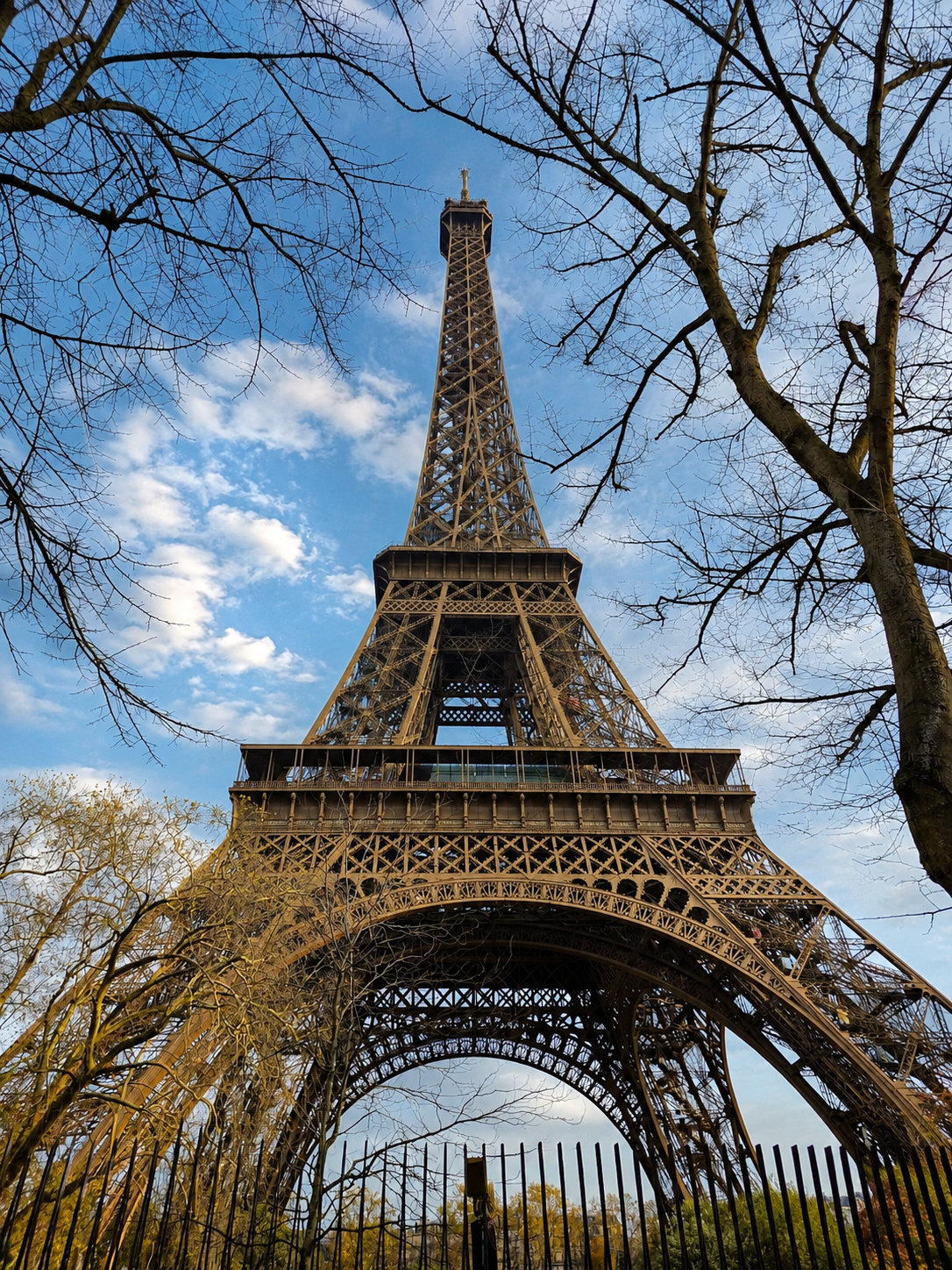
The wind was less accommodating.
It gathered strength around the exposed structure, rushing through the iron lattice and turning every open section into a reminder that this was not merely a viewing platform but an enormous nineteenth-century machine suspended above the city. The summit had been closed because of it.
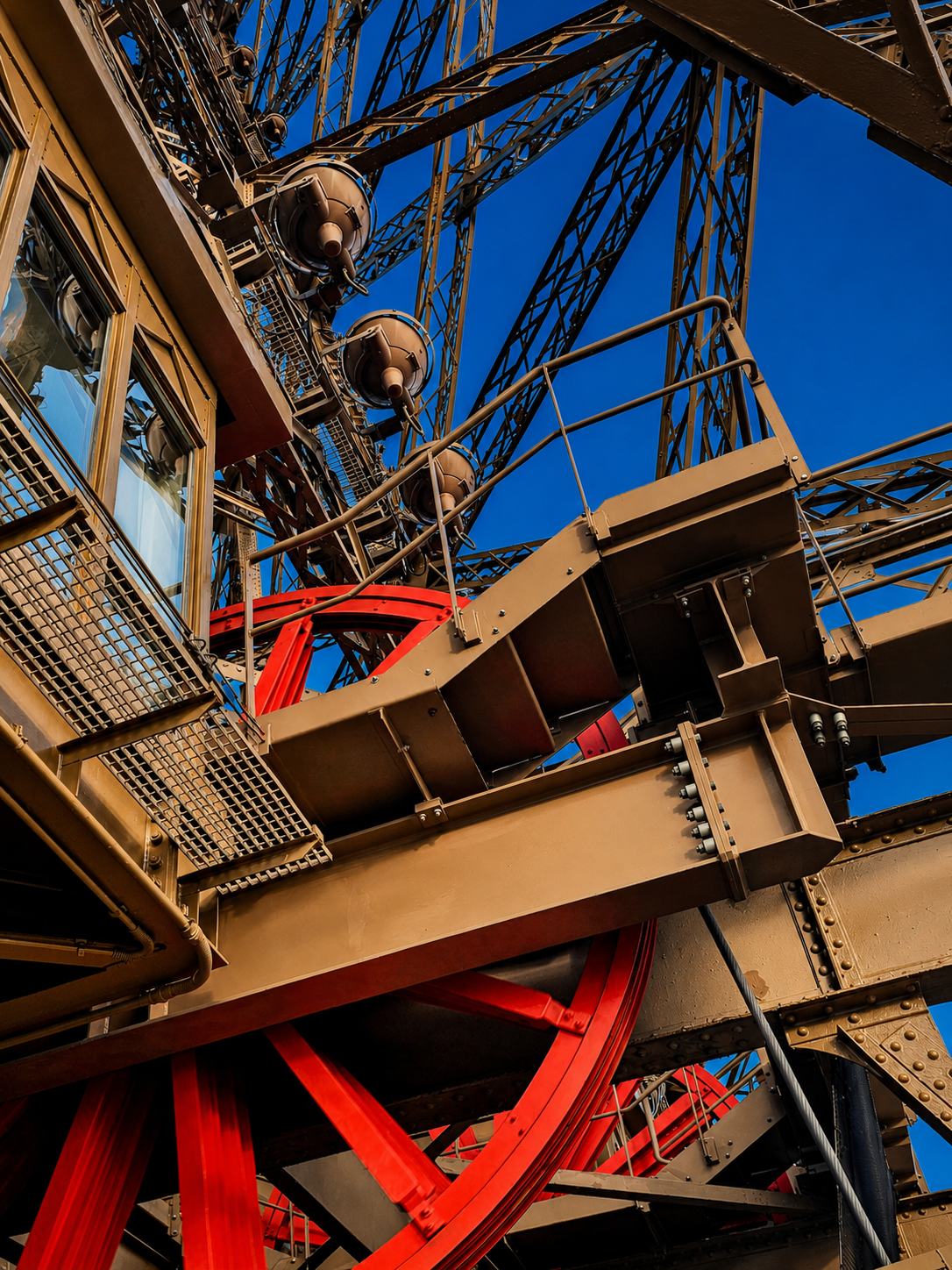
I reached the second floor instead.
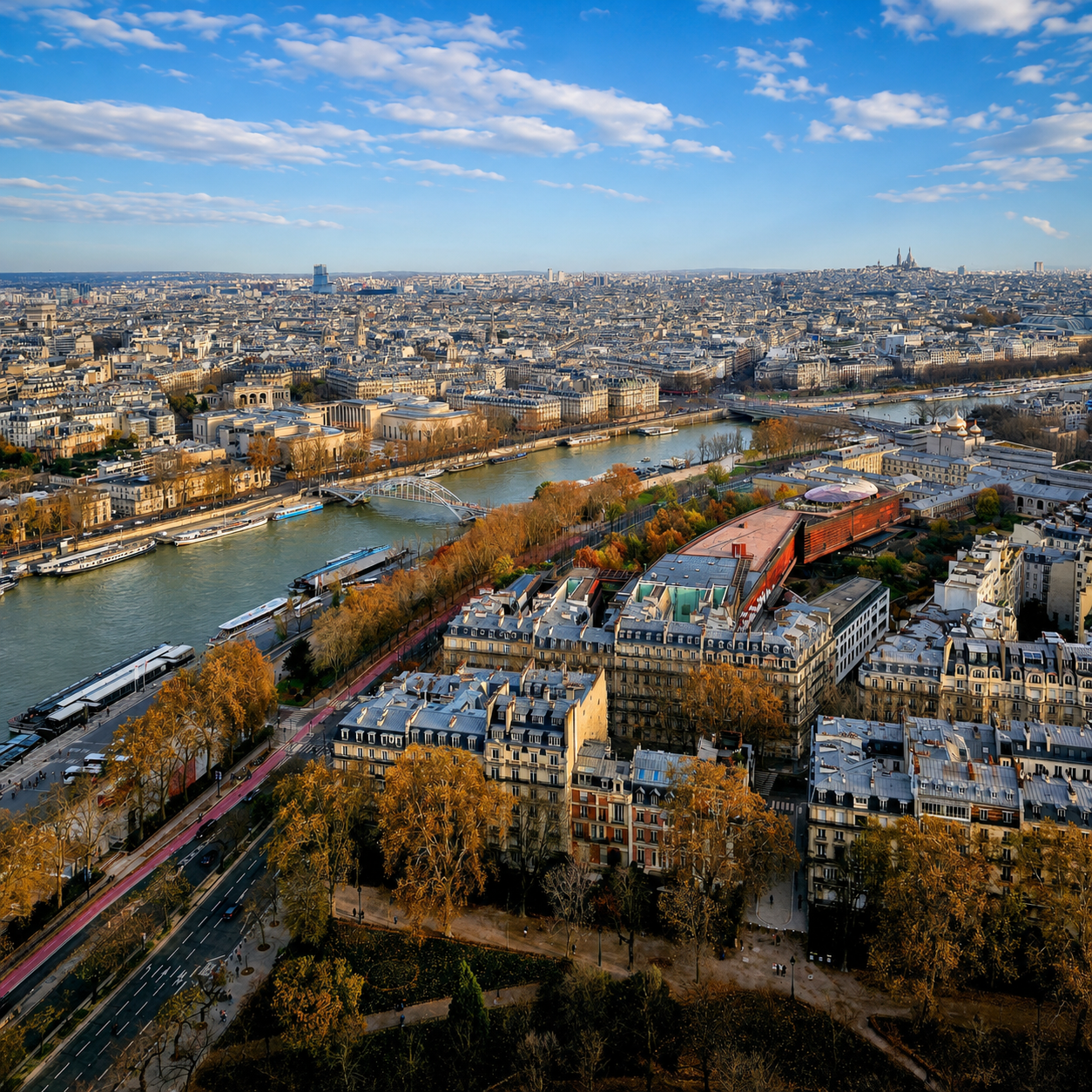
“Only the second floor” sounds absurd once Paris spreads beneath you from roughly 115 metres above the ground. The tower had been built for the 1889 Exposition Universelle, yet standing inside its iron framework felt less like visiting a historical monument than entering the skeleton of something still alive.
The view was magnificent.
The Seine curved between pale stone façades. Avenues cut through neighbourhoods so dense that individual streets gradually dissolved into geometry. Across the river, the Trocadéro aligned itself with almost theatrical precision, while the golden dome of Les Invalides and the white mass of Sacré-Cœur emerged from the city in opposite directions.
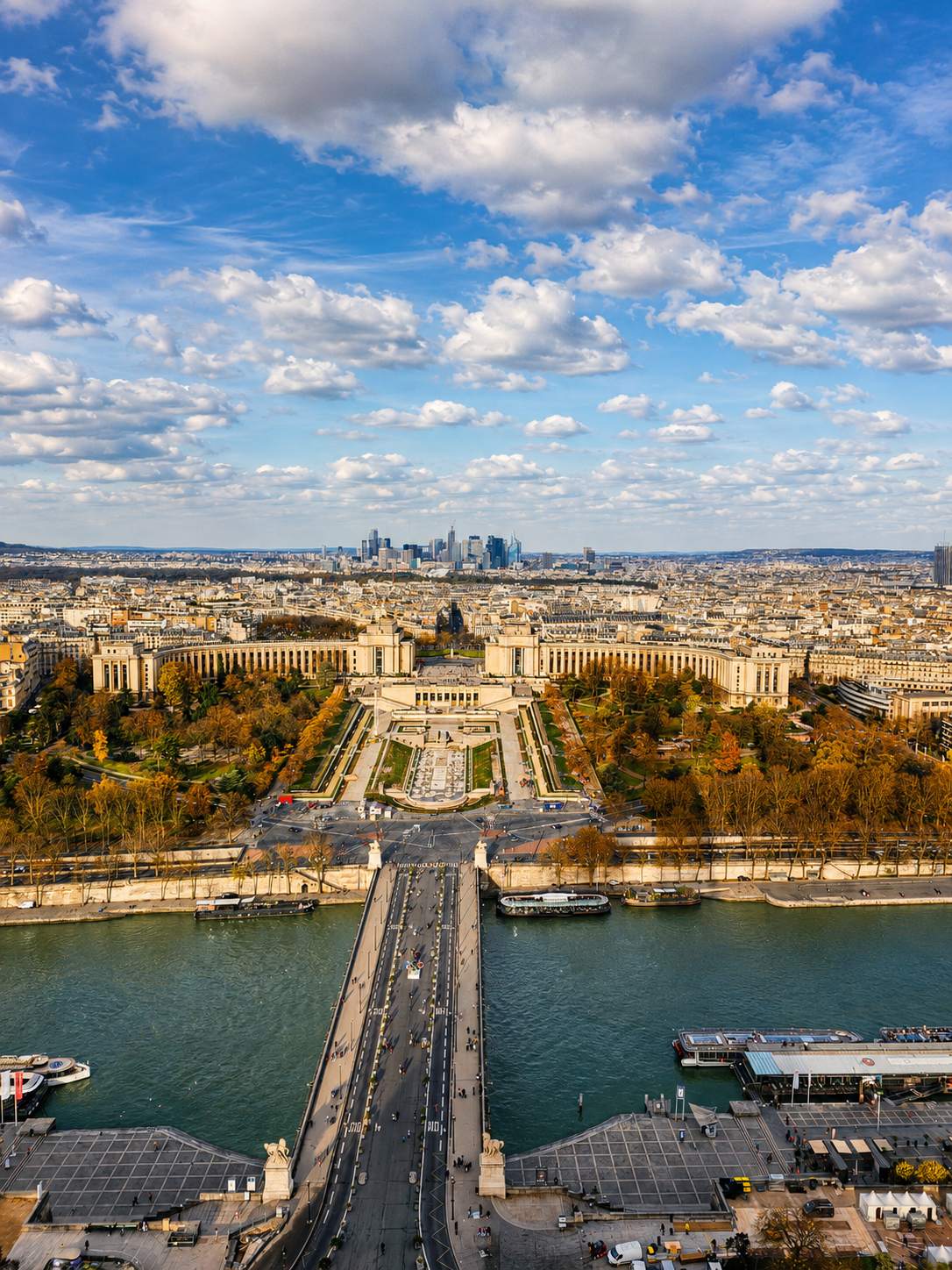
From street level, Paris often reveals itself reluctantly—one façade, one square and one unexpected perspective at a time. From the tower, it surrendered the entire plan.
The wind pressed against the windows and swept across the open sections of the platform. People leaned into it, tightened scarves and continued photographing themselves as though balance were merely another problem for image stabilisation to solve.
I immediately regretted not coming earlier.
Before the trip, I had also considered dinner at Le Jules Verne. The restaurant occupies the tower’s second floor, reached by its own private lift, and offers different views toward the Trocadéro, the Champ de Mars and the Seine. Its kitchen is led by Frédéric Anton, and in 2024—the year of my visit—it received its second Michelin star.
There was no availability.
After examining what the experience would have cost, I concluded that Paris had shown rare concern for my financial well-being. The city had allowed me the view while preventing me from converting it into several beautifully arranged courses and a serious conversation with my credit card.
The summit remained inaccessible, but that no longer felt like failure. The second floor had already changed the scale of the weekend and corrected one of my longest-standing Parisian omissions.
Some tourist clichés survive because millions of people lack imagination.
Others survive because they are completely right.
The Eiffel Tower belonged firmly to the second category.
Three stations and one palace
From the Eiffel Tower, I took the RER toward Gare d’Austerlitz.
The station brought back another journey: a previous departure on an overnight train to Annecy.
Railway stations store memories differently from airports. Airports flatten travel into security lines, gates and identical corridors. Stations retain platforms, old departures and the sense that the next city remains physically connected to the one behind you.
From Austerlitz, I walked toward Gare de Lyon.
By then, Paris’s railway terminals had become a minor theme of the trip. I had arrived through Gare de l’Est, paused at Austerlitz and was now about to eat lunch inside Gare de Lyon.
That final sentence requires clarification.
I was not buying a sandwich beside a departure board.
I was going to Le Train Bleu.
The most theatrical lunch of the weekend
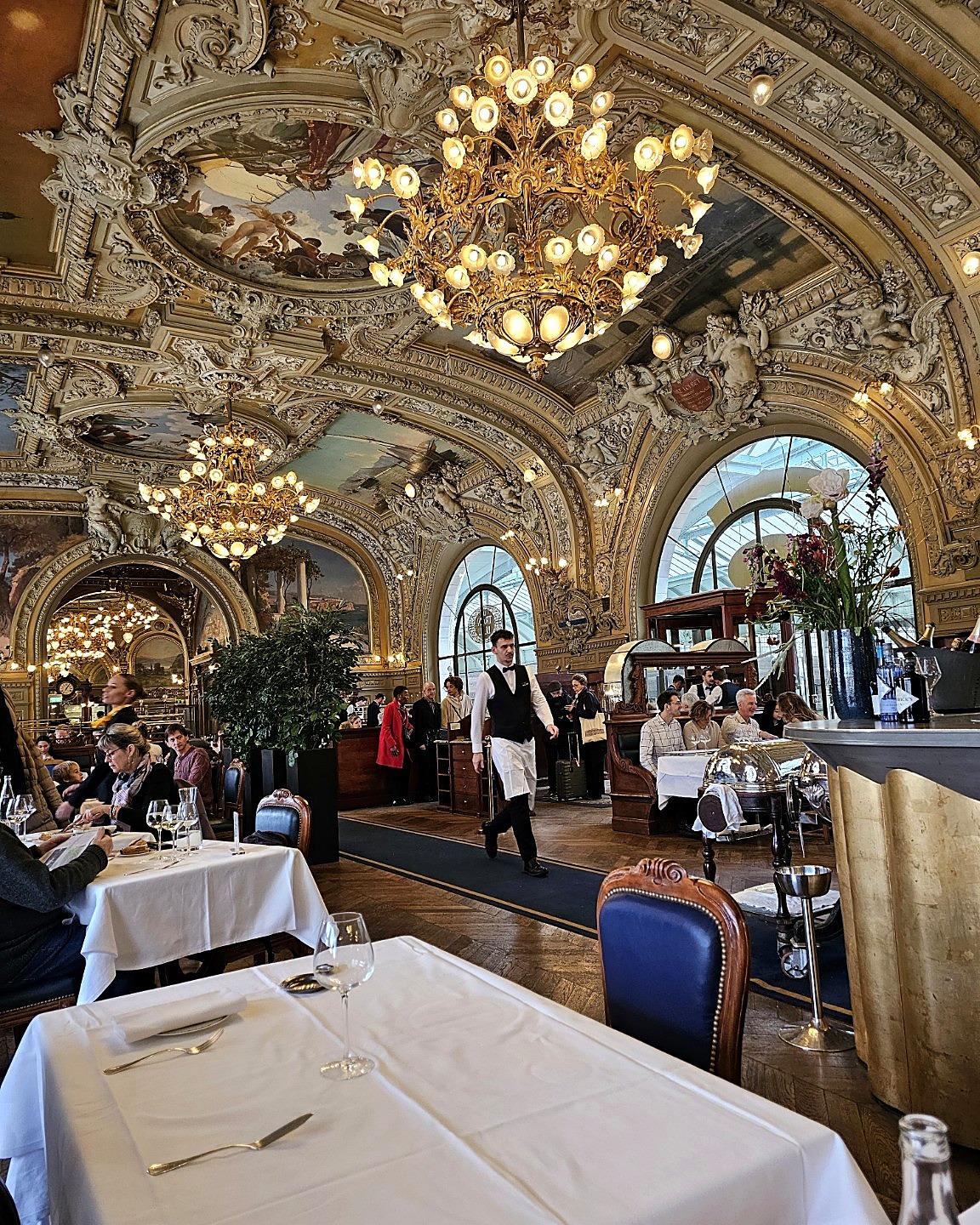
Le Train Bleu is one of those places where photographs appear exaggerated until you enter and discover that they failed to exaggerate enough.
The restaurant began as the grand buffet of Gare de Lyon at the start of the twentieth century. It was designed for an era when railway travel was not expected merely to function.


It was expected to possess grandeur.
The result still survives above the working station.
Painted ceilings, gilded ornament, chandeliers, carved wood and murals celebrating destinations along the old railway routes create a room that appears to have swallowed an opera house.
It is luxury that was once deliberately built there but now seems to survive almost by accident.
Outside, travellers checked departure boards and dragged suitcases toward platforms.
Inside, waiters prepared lunch beneath frescoes.
A reservation was essential. Many guests were clearly tourists, and there was no reason to pretend otherwise. They had come for the same reason I had: not only to eat, but to witness the room.
I sat down and felt rich again.
Not necessarily because I was rich, but because Le Train Bleu is designed to produce exactly that sensation.
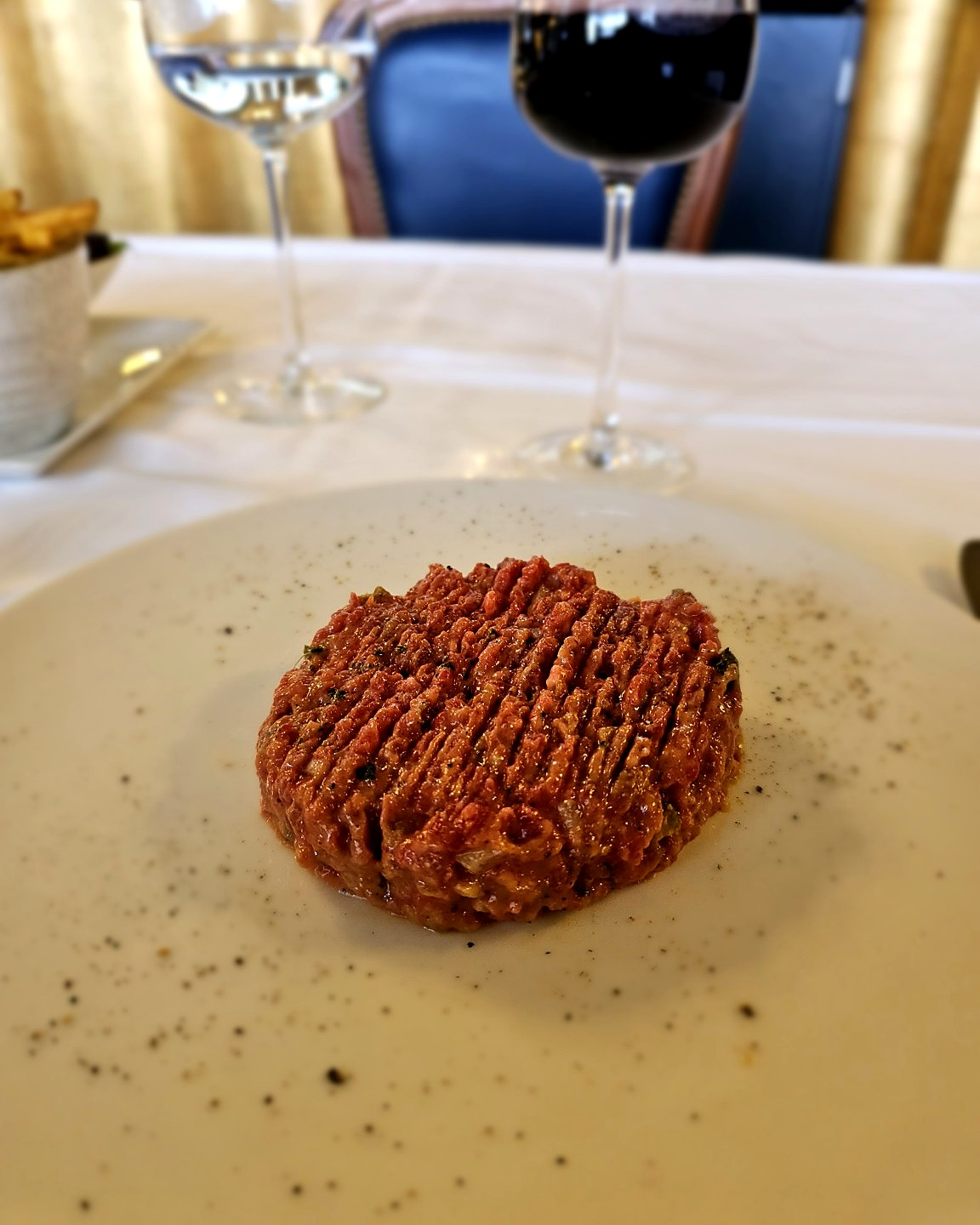
I ordered beef tartare, prepared beside the table.
The waiter arrived with the raw beef and an array of ingredients. He asked how strongly I wanted it seasoned, then adjusted the mustard, capers, shallots, herbs, acidity and spice while explaining the process.
Nothing felt rushed.
The preparation became part of the meal.
The crucial point is that the tartare did not merely look impressive while being made.
It was perfect.
Rich, sharp and beautifully balanced, it improved with each mouthful. The setting may have attracted me, but the food justified staying.
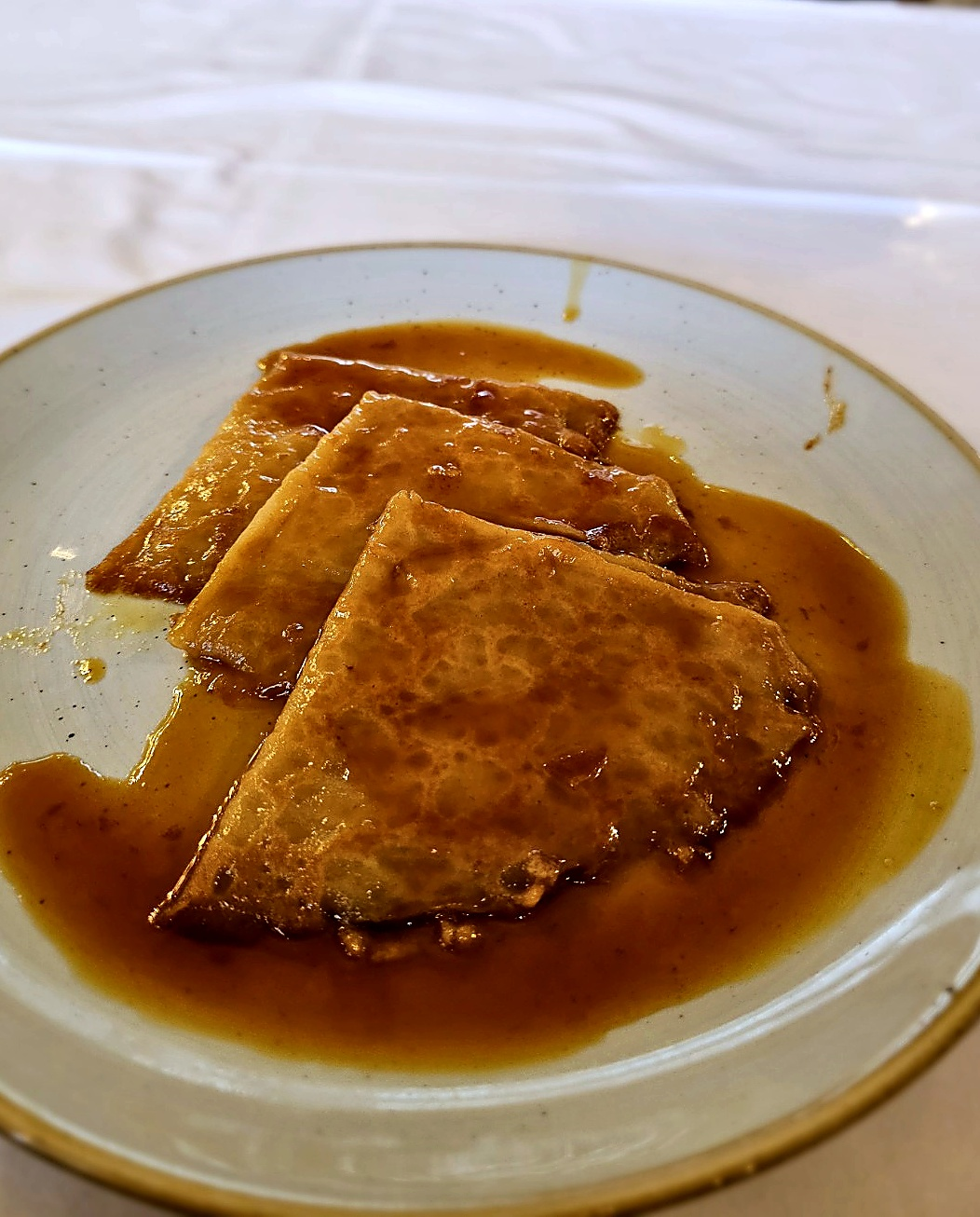
For dessert, I ordered crêpes Suzette.
A second trolley appeared.
The sauce was prepared beside the table, the crêpes folded, alcohol added and the pan ignited. Blue-orange flames rose beneath the chandeliers while nearby guests turned to watch.
The flavour was good rather than revolutionary.
The performance justified the order.
My lunch—tartare, crêpes Suzette and a glass of wine—cost roughly €75.
It was not cheap, but it felt far more rational than many expensive meals I had eaten in rooms with far less memory.
I had paid for food, architecture, service and theatre.
For once, all four worked together.
Le Train Bleu became one of the emotional peaks of the trip.
Not because it was the most expensive part.
Because it understood exactly what it wanted to be.
Late checkout is a form of civilisation
After lunch, I returned to the Courtyard.
One of the most useful benefits of hotel status is late checkout. My luggage had remained in the room while I crossed Paris, climbed the Eiffel Tower and ate beneath chandeliers.
I even had time to lie down briefly.
Some travellers treat every minute in Paris as a moral obligation to remain outside. I disagree. A short rest during an intense itinerary is not wasted time.
It is maintenance.
I eventually checked out and used public transport to move north to my second Paris hotel: Le Pigalle.
The reason was practical.
My Moulin Rouge performance would finish around one in the morning, when public transport would be less convenient. I had a flight the following day and wanted the route from theatre to bed to require as little strategic planning as possible.
Le Pigalle stands practically opposite the Moulin Rouge.
It was the correct hotel for the night.
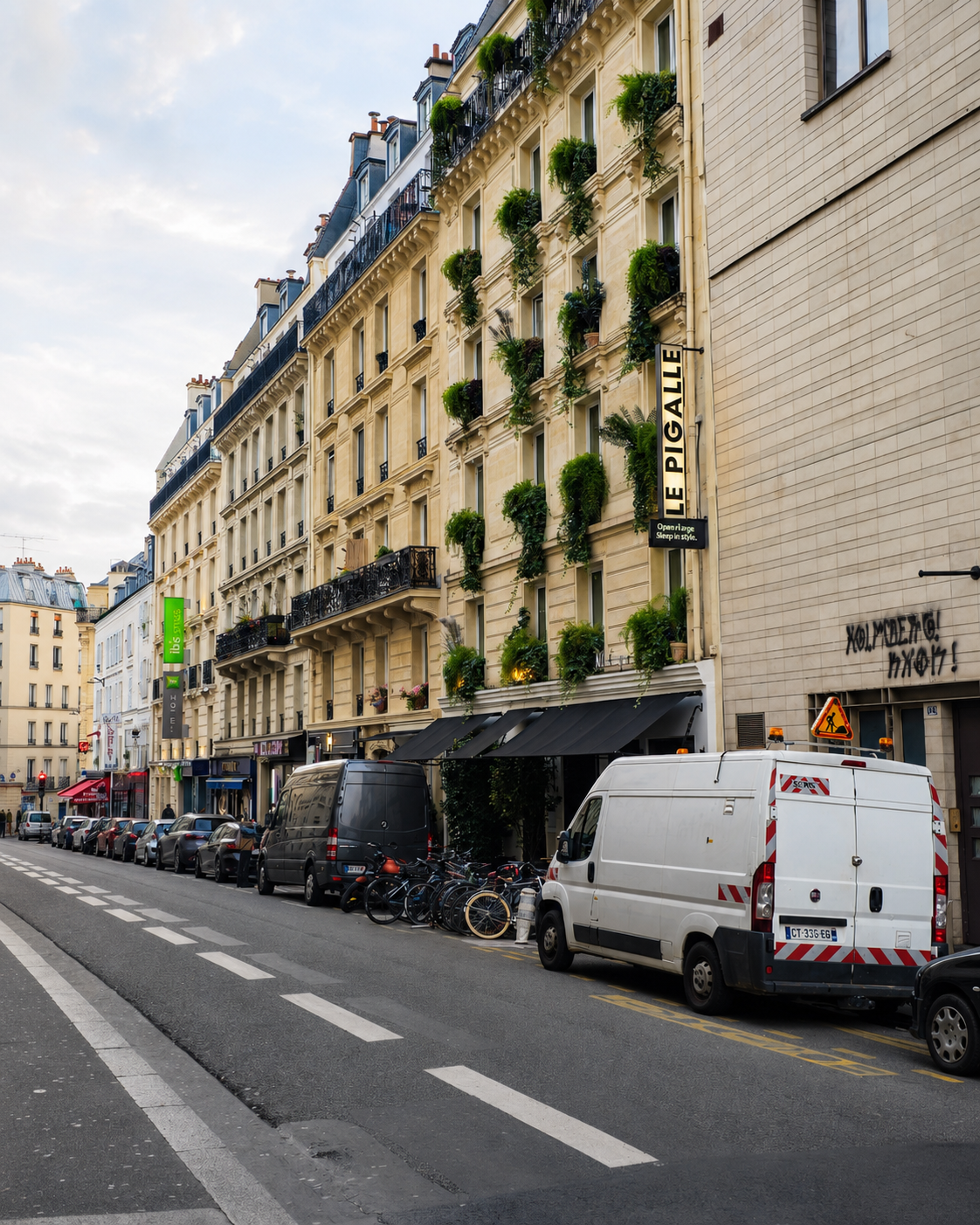
Whether it was the correct hotel for approximately €270 was a different question.
The room was tiny.
Not intimate.
Not efficiently designed.
Tiny.
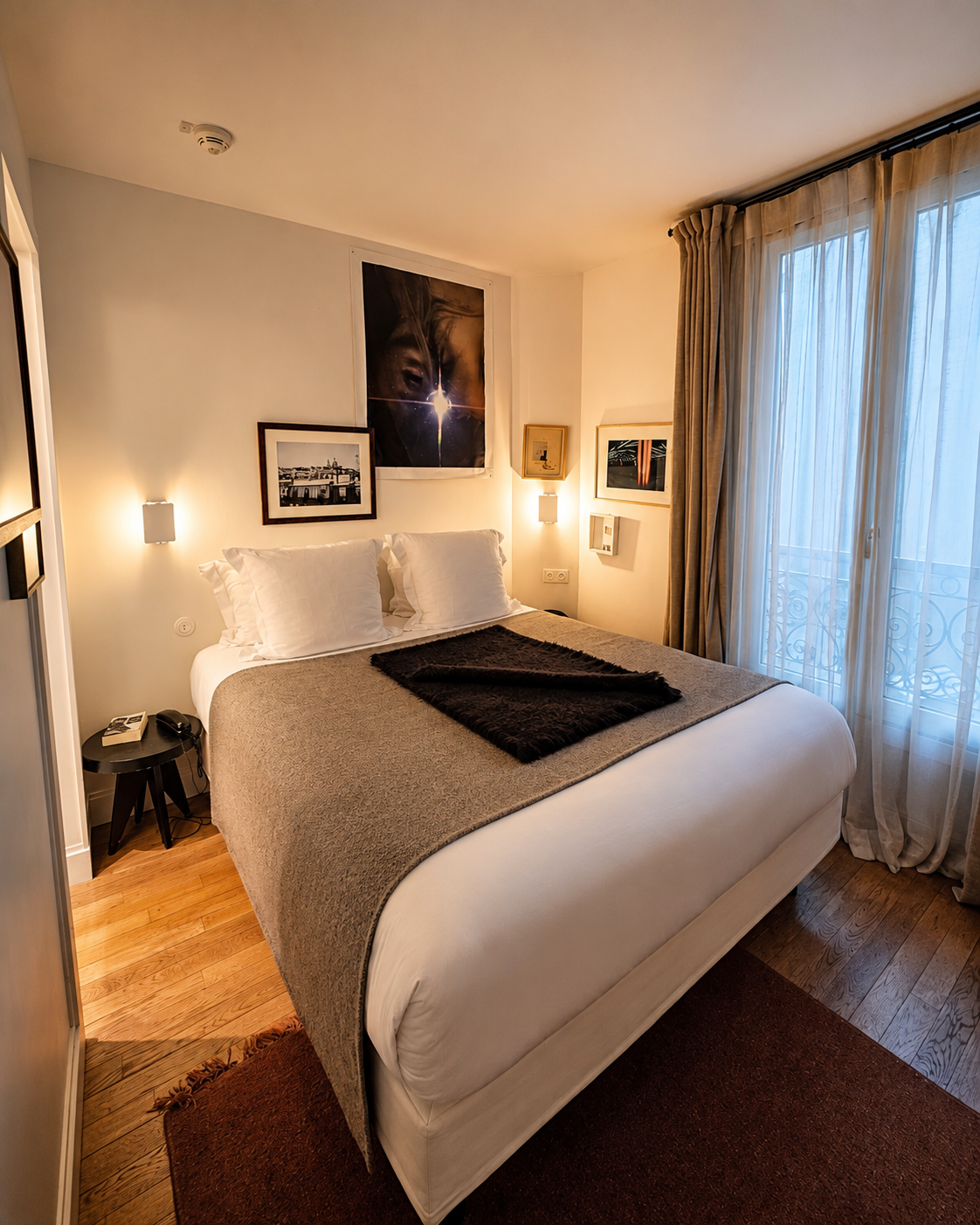
Even after an upgrade, I could survey most of it without moving my head. The hotel marketed itself as rooted in the authentic spirit of the neighbourhood, and perhaps spatial deprivation is part of authentic Parisian life.
The design was deliberately individual: warm colours, artwork, vintage details and the self-conscious personality expected from a Design Hotels property.
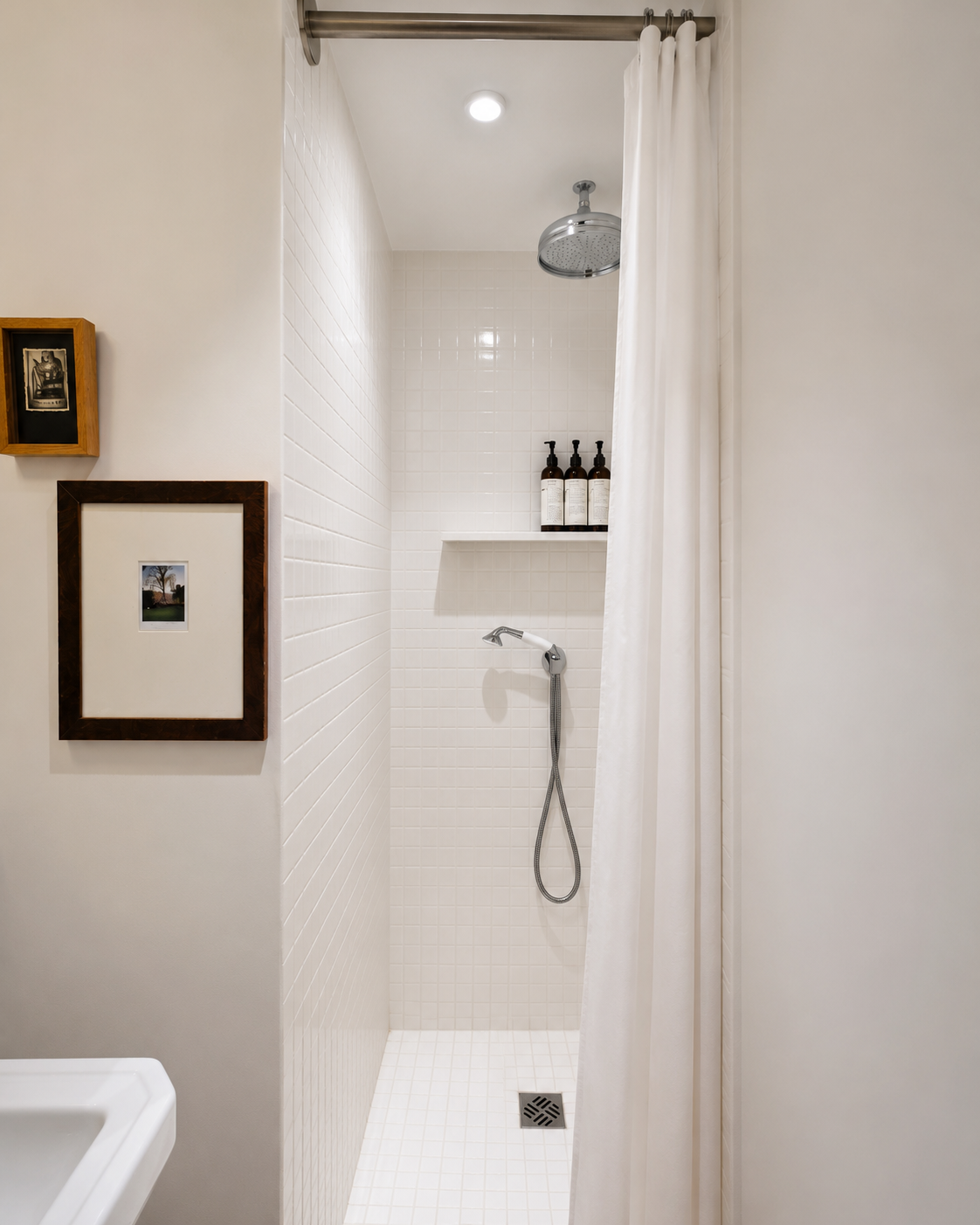
For one night, it was interesting.
For several nights, I might have begun negotiating with the walls.
At roughly €60 more than the Courtyard, I was not paying for space. I was paying for location, atmosphere and the ability to leave the Moulin Rouge and reach my room within minutes.
On that basis, it succeeded.
Paris as an intermission
Before the evening performance, I still had several hours to fill.
Rather than constructing another ambitious itinerary, I simply began walking through central Paris. After the Eiffel Tower and an elaborate lunch, the city no longer needed to prove anything. I was content to let the afternoon develop without reservations, timed entrances or another famous monument waiting at the end of a queue.
The route offered no tidy narrative.
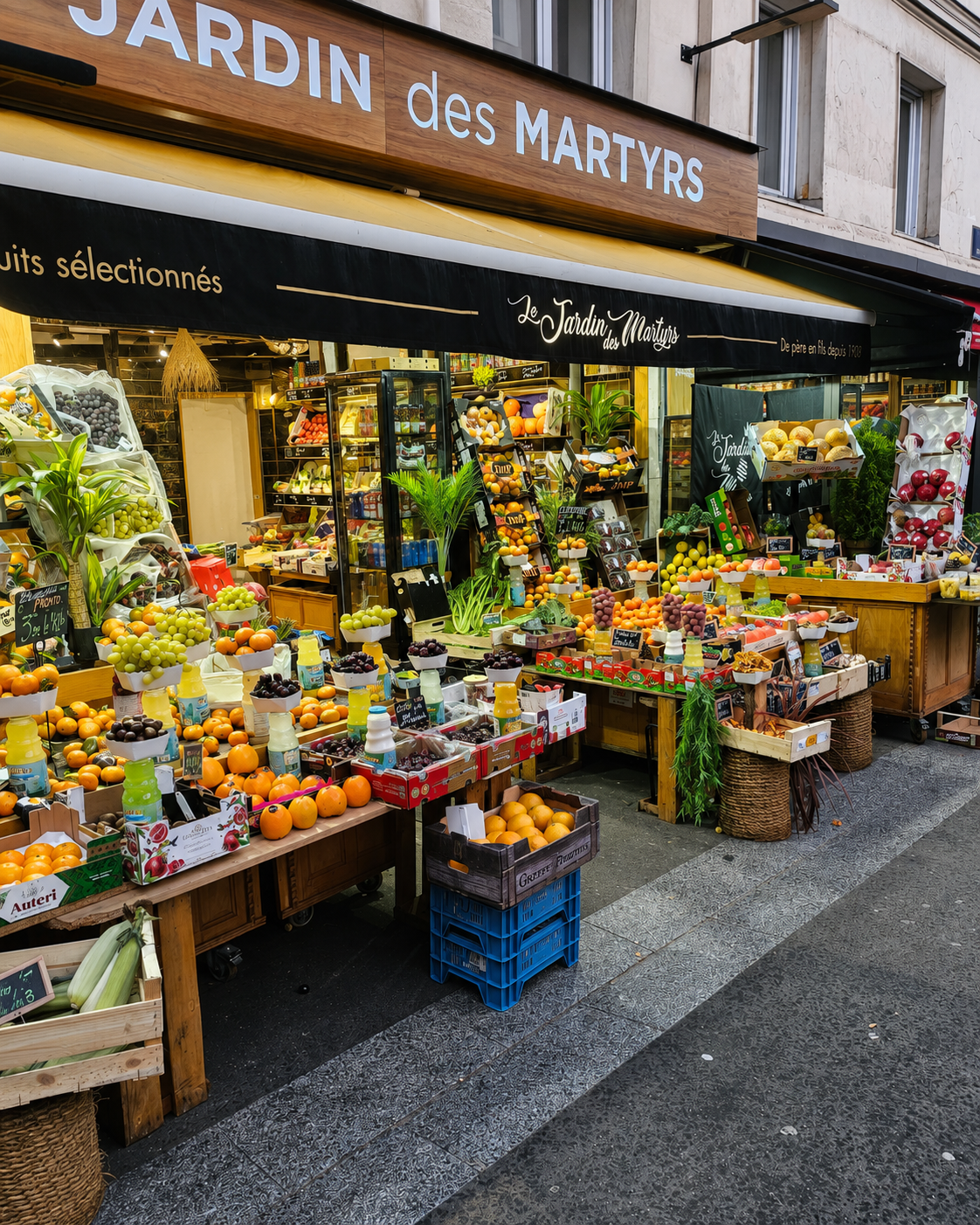
There was a neighbourhood fruit shop overflowing onto the pavement, its displays arranged with the kind of abundance that made an ordinary Parisian corner look almost theatrical.
From there, I continued toward the Centre Pompidou.
Its exposed pipes, external escalators and industrial framework still look deliberately confrontational beside the surrounding stone façades. Paris normally hides its machinery behind symmetry and ornament. The Pompidou places everything outside and turns the building itself into an argument.
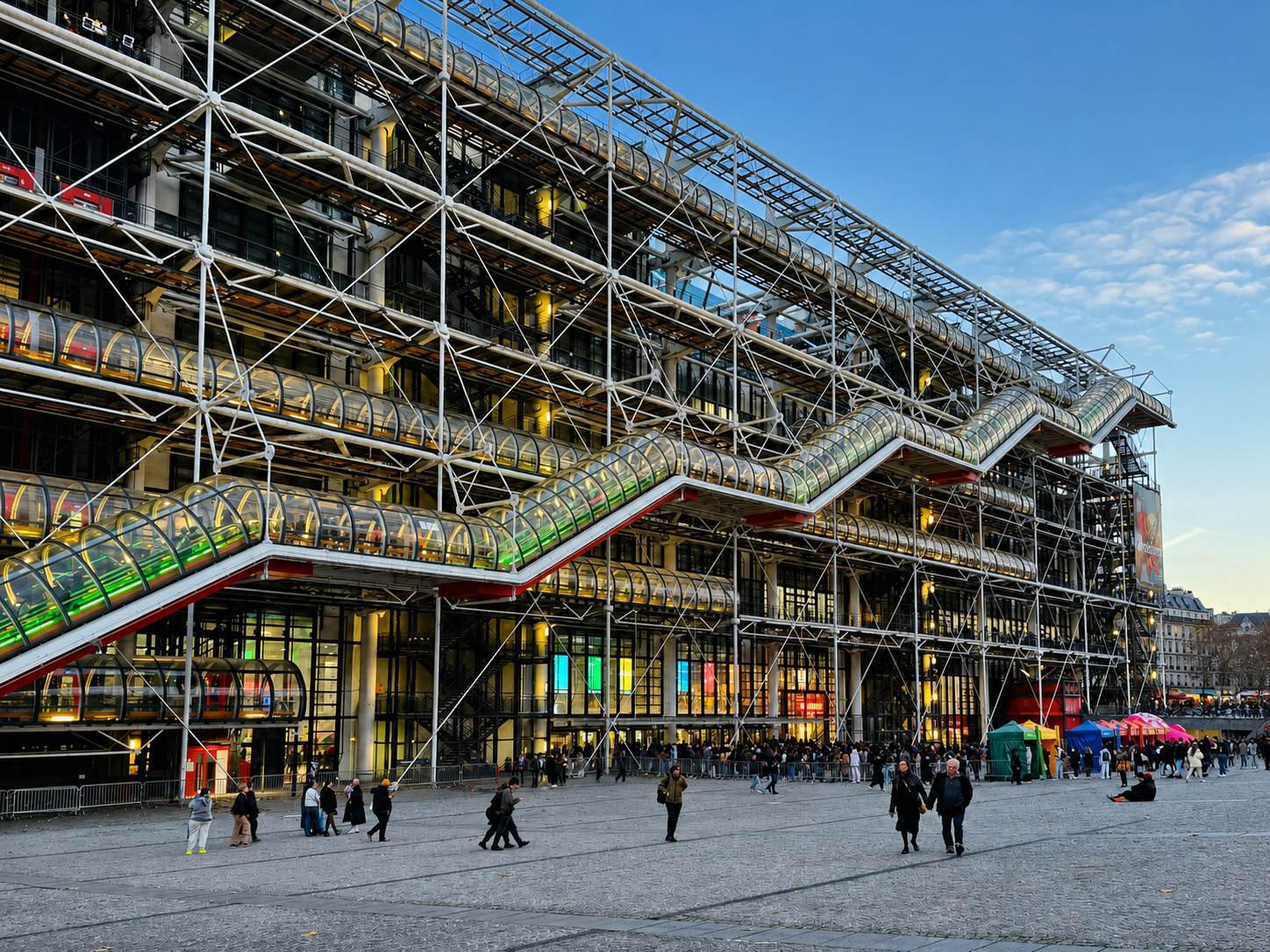
I did not go inside.
That would have transformed the walk into another museum visit, and the weekend already had enough organised culture. Instead, I kept moving through the centre as daylight faded and the city gradually replaced architectural detail with reflections, illuminated windows and traffic.
By the time I reached the Louvre, night had made the familiar composition more convincing. The glass pyramid glowed against the darker palace façades, while the wet paving caught enough light to make the courtyard appear almost staged.
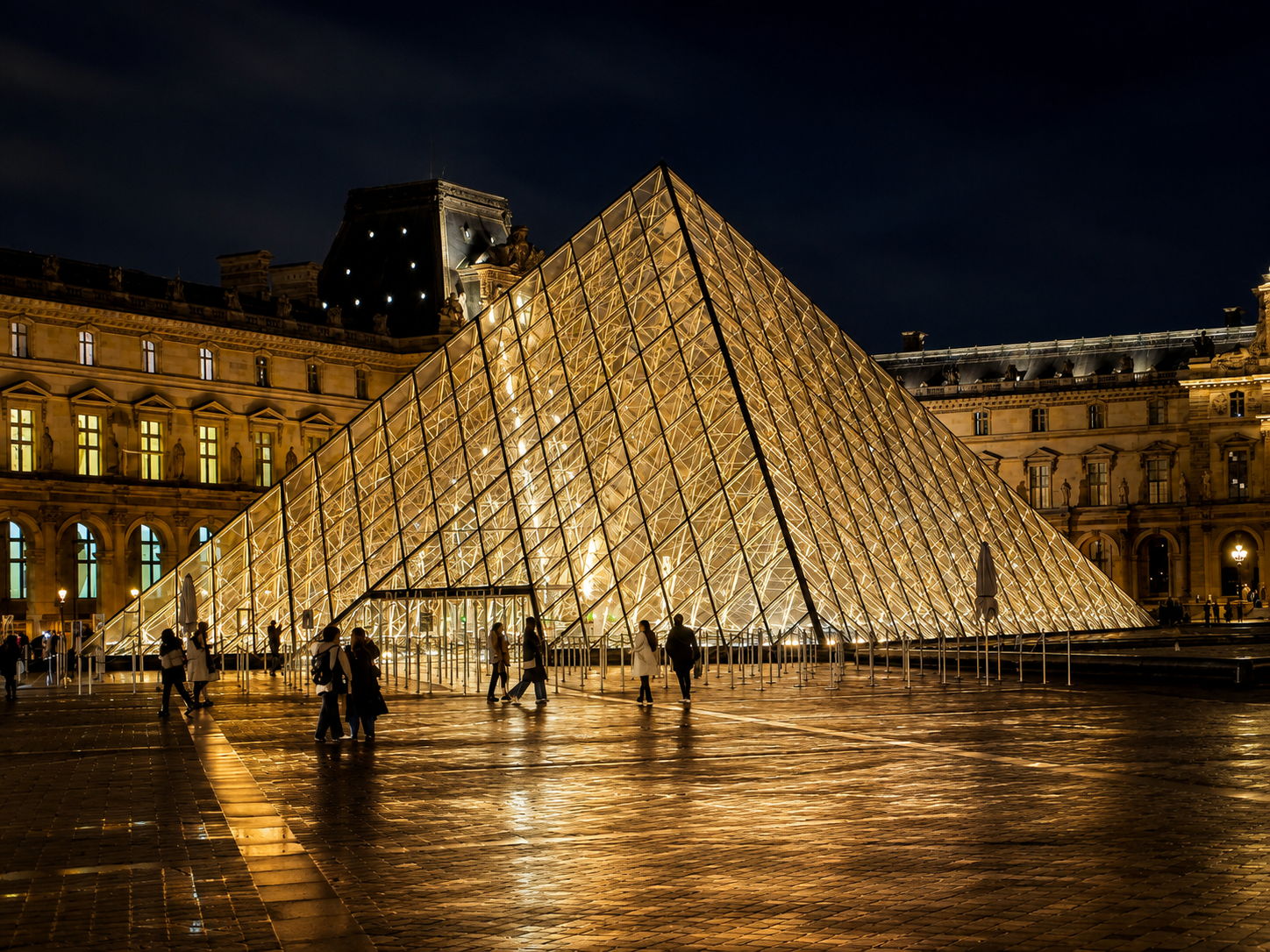
Nearby, the seasonal Ferris wheel rose behind the Arc de Triomphe du Carrousel. Buses, scooters and pedestrians continued through the foreground, indifferent to the fact that the scene looked carefully arranged for a postcard.
This was not the Paris of grand revelations.
It was the more useful version: a few hours without a checklist, moving between markets, modern architecture and monuments I had already seen but still stopped to photograph.
Eventually, I returned toward Pigalle.
The streets became louder, wetter and less ceremonious. Neon replaced museum lighting, and the city prepared for the part of the evening that had actually been planned.
The walk had not produced a discovery, a transformation or any of the other nonsense travel writing occasionally demands from an afternoon.
It had simply allowed Paris to occupy the space between lunch and the Moulin Rouge.
That was enough.
Back at Le Pigalle, I had time for one cocktail before the evening performance. It was a brief and appropriately civilised pause before several hours of feathers, sequins and organised excess.
The second stage
The Moulin Rouge was the second stage of my Paris escape.
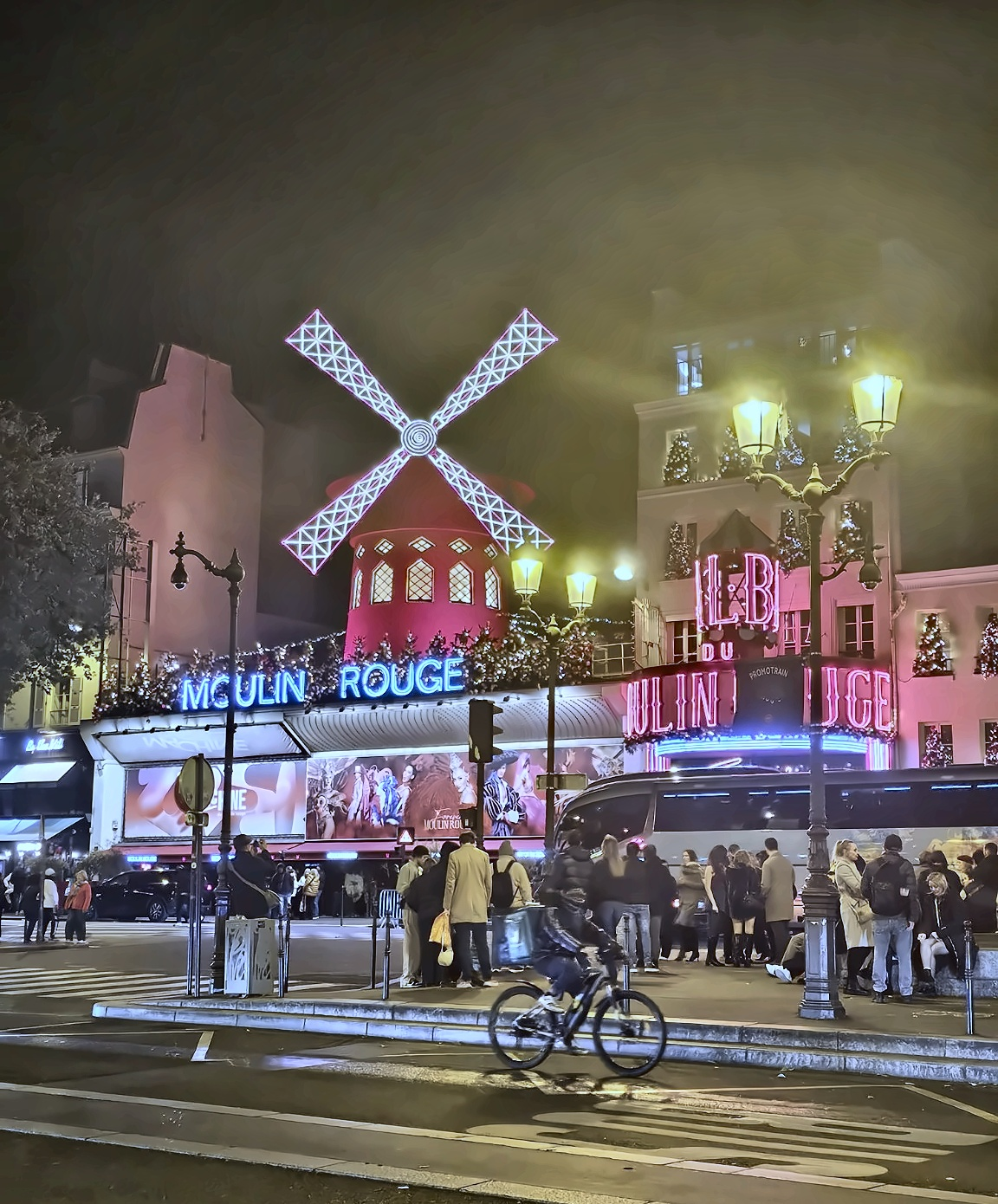
It could hardly have been further from Mozart.
At Opéra Bastille, Robert Carsen had reduced The Magic Flute to darkness, nature and ritual.
At the Moulin Rouge, restraint had been refused entry.
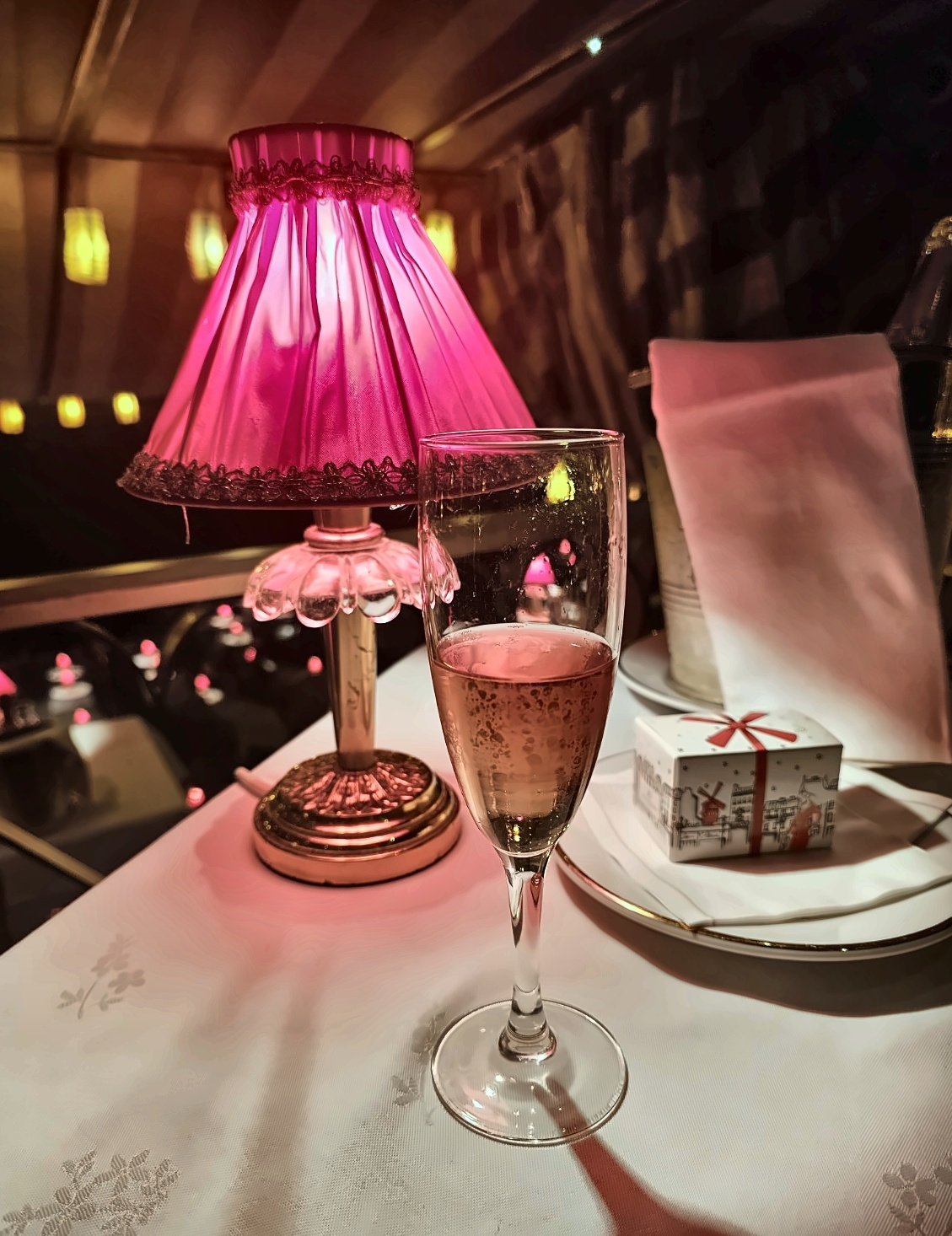
The late Féerie show began at 11:30 p.m. My Prestige package included a separate entrance, priority access, Champagne, macarons and a seat on a small private balcony with a direct view of the stage.
The ticket cost approximately €265.
That price may seem absurd until you see the ordinary seating arrangement below. From the balcony, I had an unobstructed view. There was no queue, no crush and no need to spend the performance examining the back of someone else’s head.
The upgrade did not buy a vague idea of prestige.
It bought the show.
The Moulin Rouge contains topless dancers, naturally, but the production is far less interested in sex than in scale.
Feathers, sequins and elaborate costumes move through sets that change with astonishing speed. The French Cancan appears because there would probably be legal consequences if it did not.
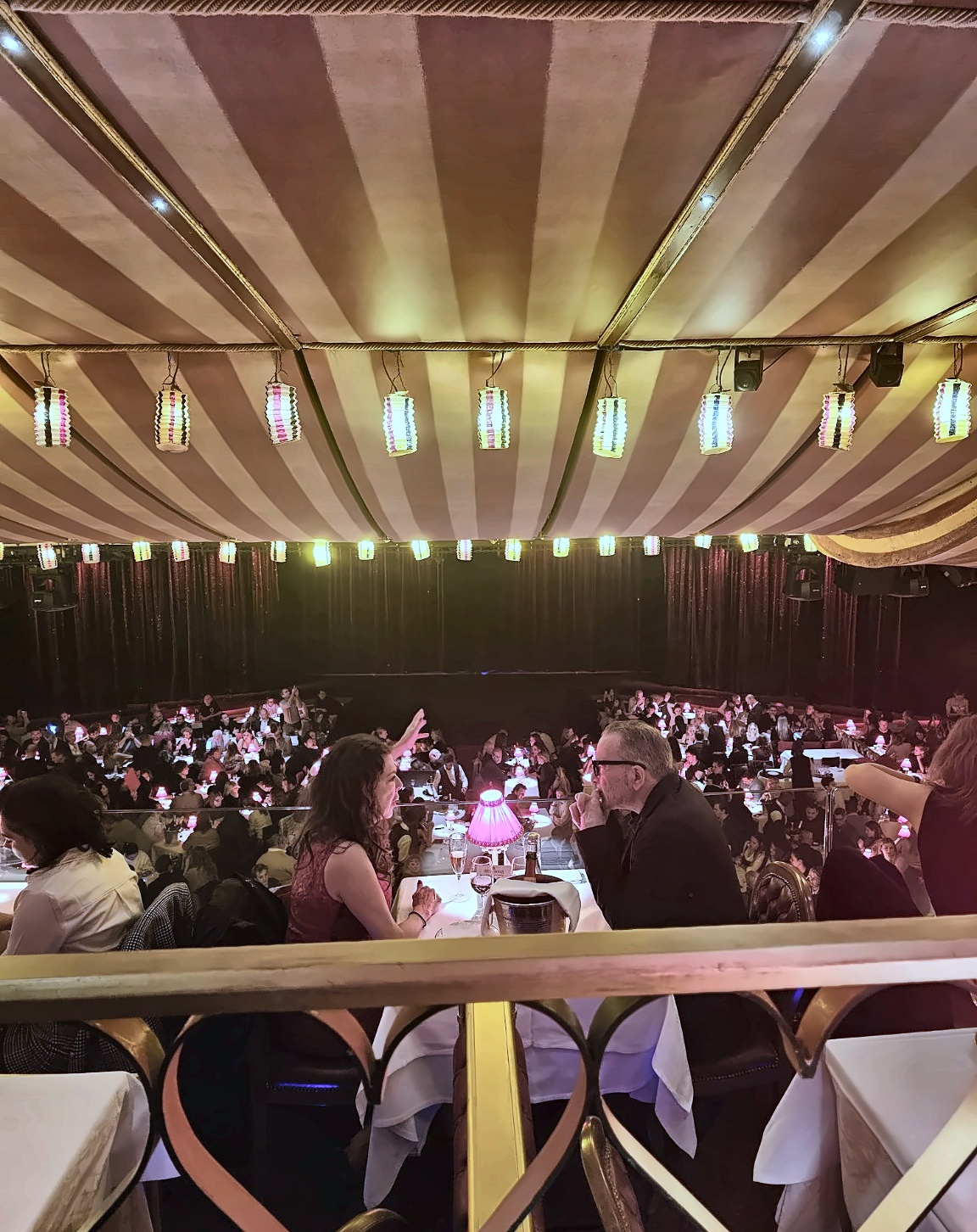
Yet the most memorable moments came when the revue transformed into something physically improbable.
At one point, a pool appeared on the stage.
Not an image of water.
A pool.
The theatre seemed to rearrange itself beneath the performers, producing a scene that belonged neither in a traditional cabaret nor in any reasonable understanding of how much equipment can be hidden under a floor.
Then came two extremely muscular male acrobats.
Their routine depended on strength, balance and absolute trust. One body became the support for another. Impossible positions were held as though gravity had been downgraded from a law to a suggestion.
It was the kind of act that made a mathematics professor consider mechanics, fail to calculate anything useful and simply stare.
Nothing about the production was subtle.
It did not need to be.
The entire show was outrageous, polished and executed with total confidence.
The contrast with the previous evening was complete.
Mozart created wonder through a flute, a portrait, a terrifying mother and trials of fire and water.
The Moulin Rouge used Champagne, bare breasts, hydraulic engineering and two men who appeared to have renegotiated the limits of the human shoulder joint.
Both were theatrical institutions.
Both depended on extraordinary discipline hidden beneath apparent ease.
Both understood that Paris expects a night out to become larger than ordinary life.
And both justified their tickets.
Life is beautiful
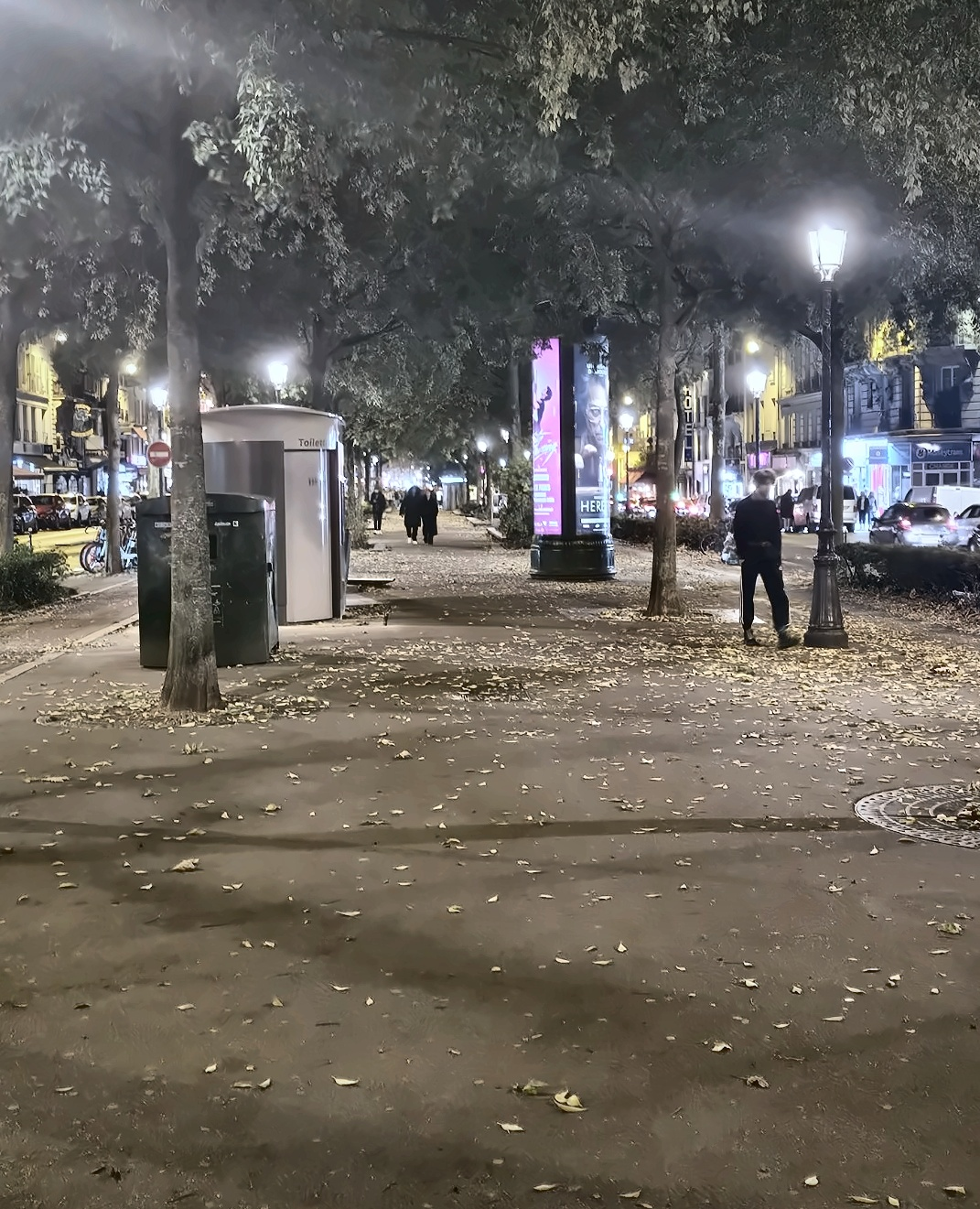
When the performance ended at around one in the morning, I stepped back into Pigalle.
The red windmill shone above the boulevard. Taxis, lights and people spilled into the street. My hotel stood only a few minutes away.
I was tired, slightly softened by Champagne and completely satisfied.
The thought that entered my mind was not sophisticated.
It was simply:
Life is beautiful.
The following morning, I ate an à la carte breakfast at Le Pigalle. It was fine, but neither especially French nor especially memorable.
After Maison Rouge and Blé Sucré, it never stood much of a chance.
At around nine, I left the hotel and took the metro and RER toward Charles de Gaulle for my flight to Zagreb.
My forty hours were over.
I had slept in two expensive Paris hotels, occupied two very different theatres, eaten one perfect tartare, watched crêpes burn beneath chandeliers, finally climbed the Eiffel Tower and walked through enough of Paris to feel that the reservations had never replaced the city itself.
I enjoy travelling with other people.
Travelling alone is simply a different form of travel.
I move faster. I observe more. I never have to negotiate whether an opera singer, a bakery or a private cabaret balcony is worth the money.
Every decision is mine.
So is every bill.
I had studied, completed a doctorate, worked and earned the money. Occasionally, I like the result to become visible—not through an object or a logo, but through the freedom to construct forty hours exactly as I want them.
A local croissant in the morning.
A long walk through the city.
Lunch in a railway palace.
Mozart one night, Moulin Rouge the next.
Paris had performed for forty hours.
I had paid for excellent seats and regretted absolutely nothing.
Life was, indeed, beautiful.
