 Elsinore, Capital Region of Denmark, Denmark

Hamlet’s castle, a brilliant royal tax, two queens and the grave of a man who never existed - “Gentlemen, you are welcome to Elsinore!”
London, Rome and Paris sell themselves. Helsingør needs a story.
Fortunately, it has one of the most famous stories ever written.
Shakespeare placed Hamlet in Elsinore, the English name for the Danish town of Helsingør. I am not particularly prone to literary pilgrimages, but the possibility of asking myself “To be, or not to be?” in Hamlet’s own kingdom was more than enough to bring me there.
The journey from Copenhagen took less than an hour. Helsingør station stands almost directly beside the harbour, where ferries still cross the narrow stretch of water separating Denmark from Sweden. As soon as I stepped outside, Kronborg Castle appeared at the end of the waterfront.
There was little chance of getting lost. I only had to walk towards it.
The king who taxed the sea
Before Kronborg became Hamlet’s castle, it was the centre of an extraordinarily profitable business.
Helsingør stands at one of the narrowest points of the Øresund, the strait connecting the Baltic Sea with the North Sea. In 1429, King Eric of Pomerania ordered foreign ships passing through it to stop and pay the Sound Dues to the Danish Crown.
Eric himself was not originally Danish. He was born Bogusław in Pomerania, in territory that today lies partly within Poland. His great-aunt, Queen Margaret I, brought him to Denmark, renamed him Erik and prepared him to inherit the three crowns of the Kalmar Union: Denmark, Norway and Sweden.
His ability to keep that enormous political structure together proved limited. His ability to recognise an excellent source of income did not.
A fortress called Krogen was built to control the passage, and ships that refused to stop could be persuaded by cannon fire. The toll transformed Helsingør from a small town into an important centre of trade.
How the Sound Dues worked
During the sixteenth century, the original charge developed into a tax based on the declared value of a ship’s cargo. That created an obvious problem: what was to prevent a captain from claiming that his valuable cargo was worth almost nothing?
The Danish Crown found an elegant answer. It reserved the right to purchase the entire cargo at the value declared by the captain.
Declare too high a value and the tax became unnecessarily expensive. Declare it absurdly low and the king might accept the bargain.
The mechanism did not necessarily make every captain perfectly honest, but it made serious undervaluation decidedly risky. It is the sort of incentive system a mathematician cannot help admiring.
The Sound Dues remained in force until 1857. For more than four centuries, Denmark had succeeded in monetising geography itself.
Walking towards Kronborg
The walk from the station to Kronborg was one of the most memorable parts of the visit.
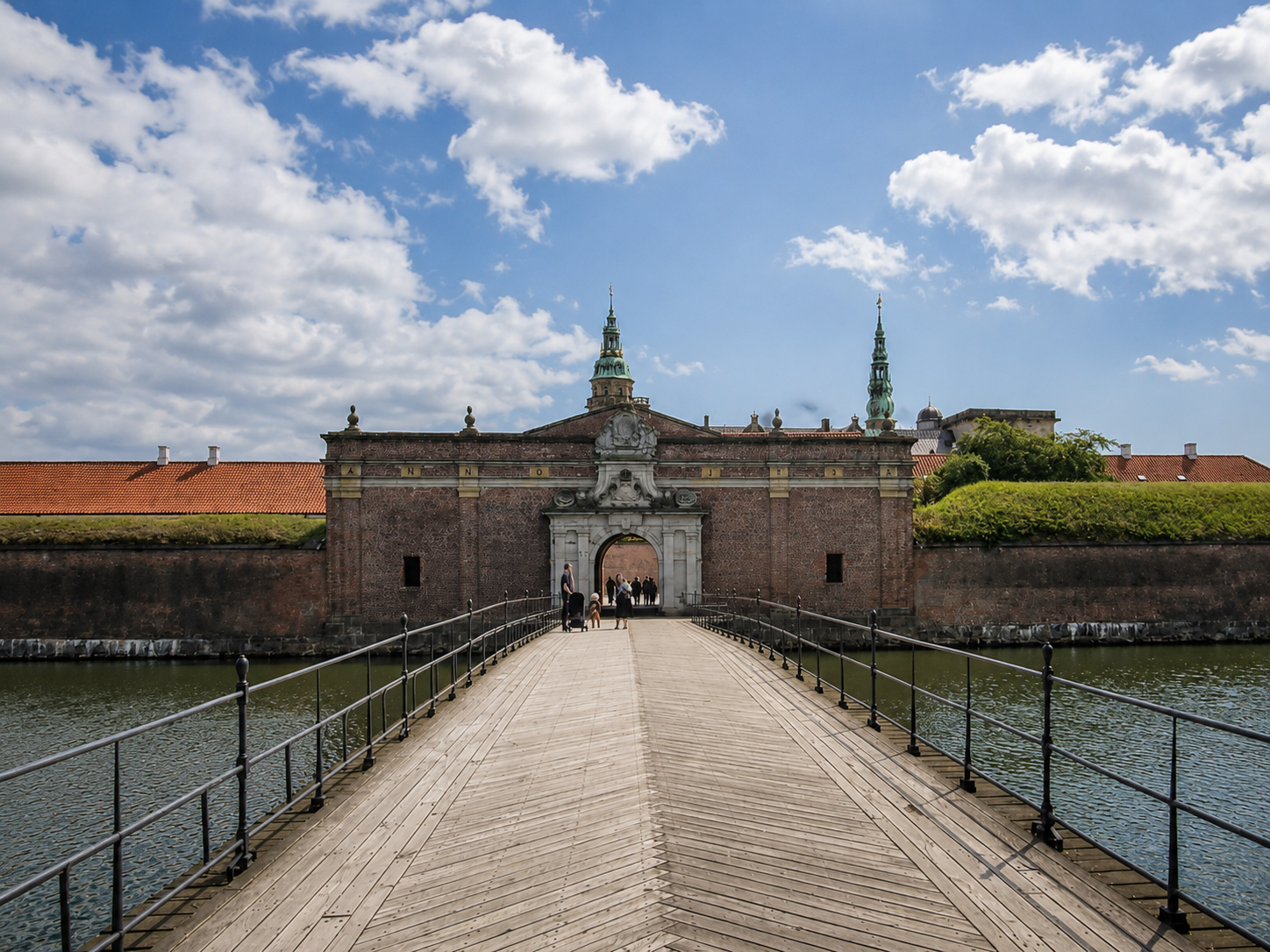
At first, the castle appeared as a distant arrangement of towers and copper roofs. As I followed the waterfront, the harbour gradually fell behind me and the defensive walls became more imposing.
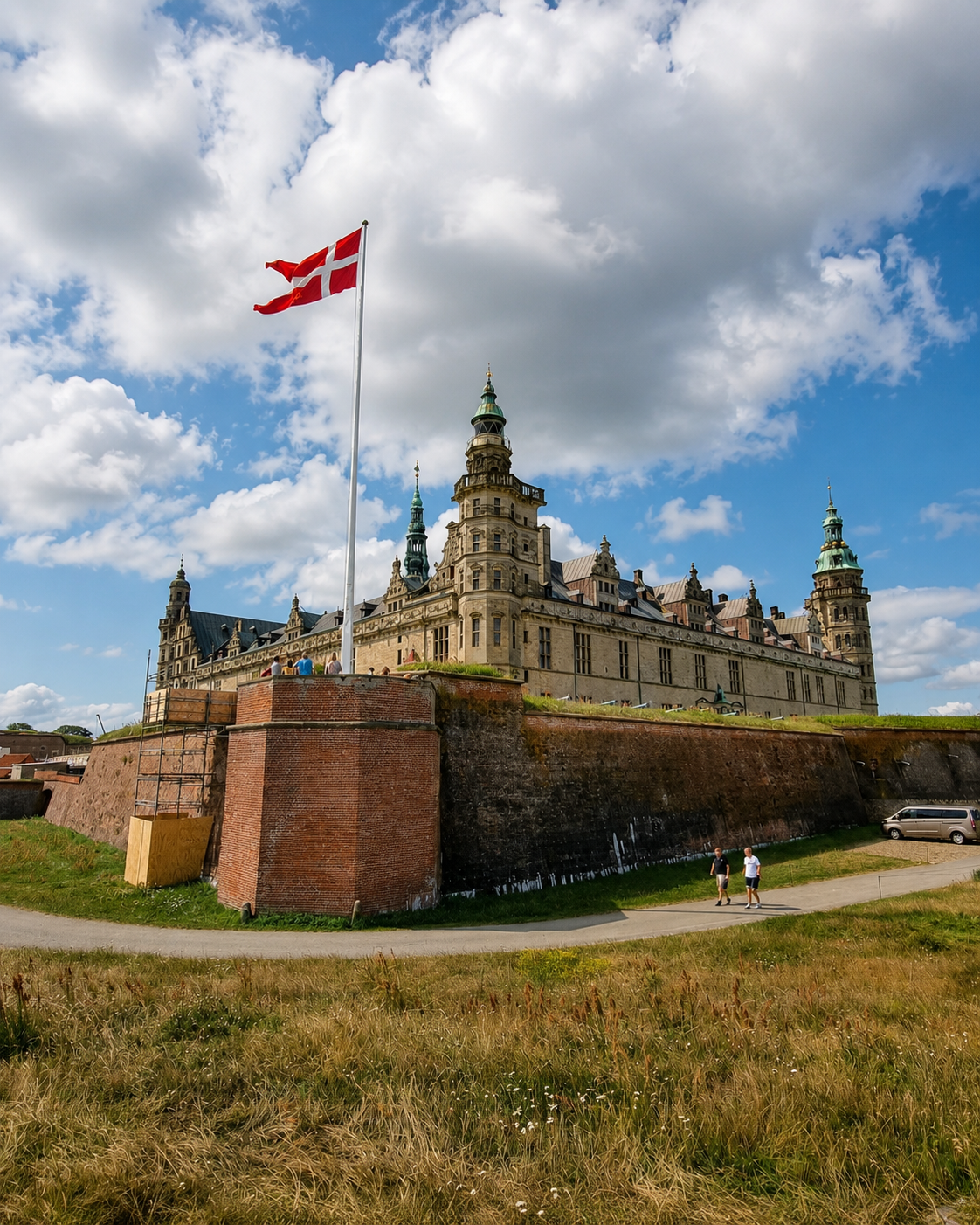
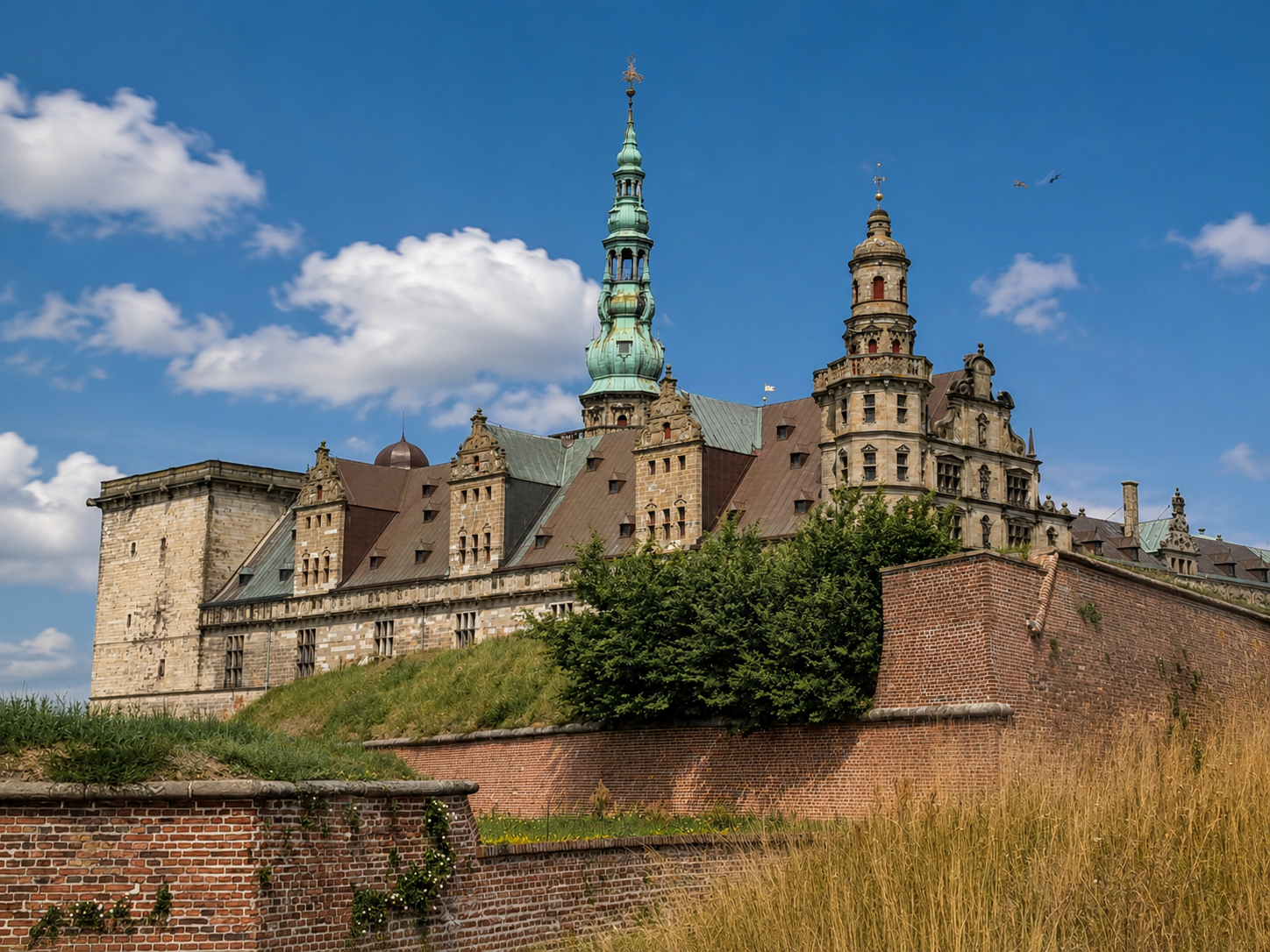
Krogen began as a practical fortress, but in the late sixteenth century King Frederick II transformed it into a magnificent Renaissance castle and renamed it Kronborg—the Castle of the Crown.
The king was fond of celebrations, theatre and spectacle. Kronborg acquired royal apartments and an enormous ballroom approximately 62 metres long, among the largest in northern Europe at the time.
The castle was no longer simply a checkpoint armed with cannons. It had become a stage on which the Danish monarchy could display its wealth and power.
Its later history was less glamorous. Fire destroyed much of the complex. Christian IV rebuilt it, Swedish forces captured and plundered it, and it eventually served as a military barracks and prison. The army finally left in the twentieth century, after which Kronborg was restored and opened to the public.
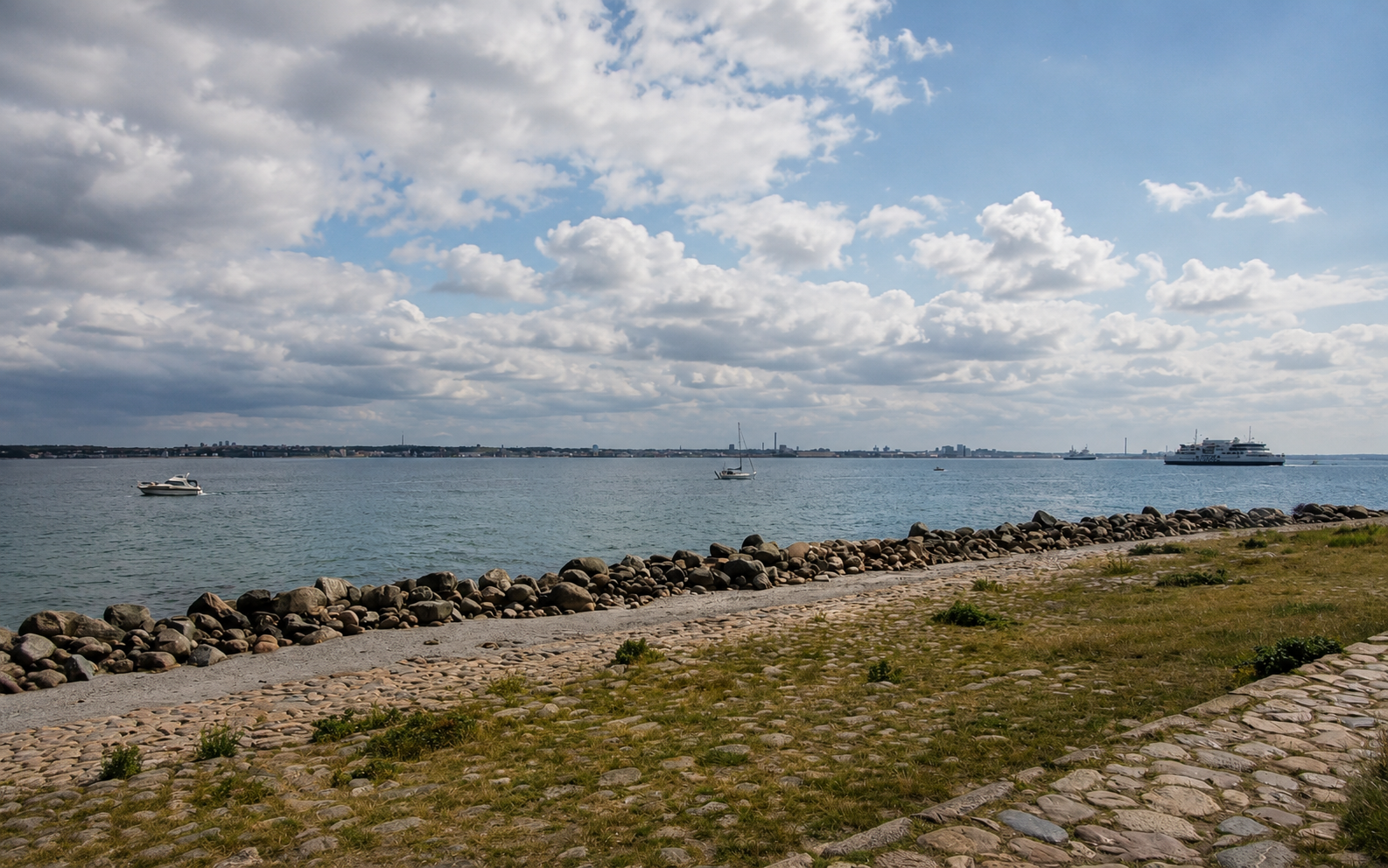
Today it is a UNESCO World Heritage Site, but its military purpose remains obvious. From the ramparts, Sweden appears startlingly close across the water. The castle was not built beside the sea merely to provide attractive views. It was positioned there because almost every ship entering or leaving the Baltic had to pass beneath its guns.
An absent groom and a fictional prince
Kronborg’s connection with Britain did not begin with Shakespeare.
In August 1589, fourteen-year-old Anne of Denmark was married at Kronborg by proxy to King James VI of Scotland. The groom was represented by the Scottish nobleman George Keith, while the marriage contract was signed by Anne’s mother, the Danish regents and Scottish ambassadors.
James himself was several hundred kilometres away.
Anne soon attempted to sail to Scotland, but storms and a damaged fleet forced her to seek refuge in Norway. James eventually sailed across the North Sea to meet her, and the couple were married in person in Oslo in November 1589.
The marriage would later become much more significant. When Elizabeth I died in 1603, James VI of Scotland also became James I of England and Ireland. The crowns were now held by the same monarch, and the Danish princess married in absentia at Kronborg became queen consort of England, Scotland and Ireland.
How Kronborg became Elsinore
This does not prove that Kronborg directly inspired Shakespeare. There is no evidence that Shakespeare visited Denmark, and the route by which the real castle entered his imagination remains uncertain.
Actors and travellers connected with the Danish court may have carried stories of Kronborg back to England. Whatever the precise explanation, the fortress was a remarkably suitable choice for a tragedy about royal surveillance, political corruption, murder and a court quietly collapsing behind an impressive façade.
Over time, the distinction between the real Kronborg and Shakespeare’s fictional Elsinore almost disappeared.
Hamlet has repeatedly been performed at the castle, and actors including Laurence Olivier, Christopher Plummer and Jude Law have appeared in productions associated with it.
Inside, there are royal rooms, ceremonial halls, a chapel, defensive passages and dark underground casemates. A dedicated visitor could spend most of the day there. I concentrated on the principal rooms, the architecture and several photographs I knew I would want to keep.
At some point, the inevitable question arrived.
To be, or not to be?
Hamlet’s existential crisis does look rather more attractive when contemplated from a Renaissance castle overlooking Sweden.
A real tragedy at Kronborg
Almost two centuries after Anne of Denmark’s proxy wedding, another British-born queen arrived at Kronborg under very different circumstances.
Caroline Matilda was the sister of Britain’s King George III and the wife of Denmark’s Christian VII. She had been married at fifteen to a king whose serious mental problems made court life increasingly unstable.
The king’s German physician, Johann Friedrich Struensee, gradually became one of the most powerful men in Denmark. He gained Christian’s confidence, began an affair with Caroline Matilda and eventually governed much of the country through the king, introducing a rapid series of reforms inspired by Enlightenment ideas.
A royal doctor had become the queen’s lover and the effective ruler of Denmark. It was never likely to end peacefully.
In January 1772, Struensee’s opponents carried out a palace coup. He was arrested and later executed. Caroline Matilda was taken to Kronborg, where she was confined for several months while her marriage and future were decided.
She was eventually sent into exile in Celle in northern Germany. She was never allowed to see her children again and died of scarlet fever only three years later, aged twenty-three.
Knowing this changes the atmosphere of Kronborg. The castle does not depend exclusively on Hamlet for tragedy. Its real walls also contained a young queen caught in a mixture of love, political ambition, reform and revenge.
Smørrebrød and a second royal castle
I finished my visit around lunchtime and stopped at the nearby cultural harbour for smørrebrød.
The name generally refers to rye bread topped with combinations of meat, fish, eggs, vegetables, spreads and herbs. Calling it an open sandwich is accurate, but it makes the dish sound more casual than it usually looks. A good smørrebrød is carefully composed rather than simply covered with whatever happens to be available.
I had initially been sceptical about a lunch based on cold ingredients placed on bread.
That scepticism did not survive the first plate.
The meal was simple, substantial and much better than expected—the right sort of food after several hours beside the cold waters of the Øresund.

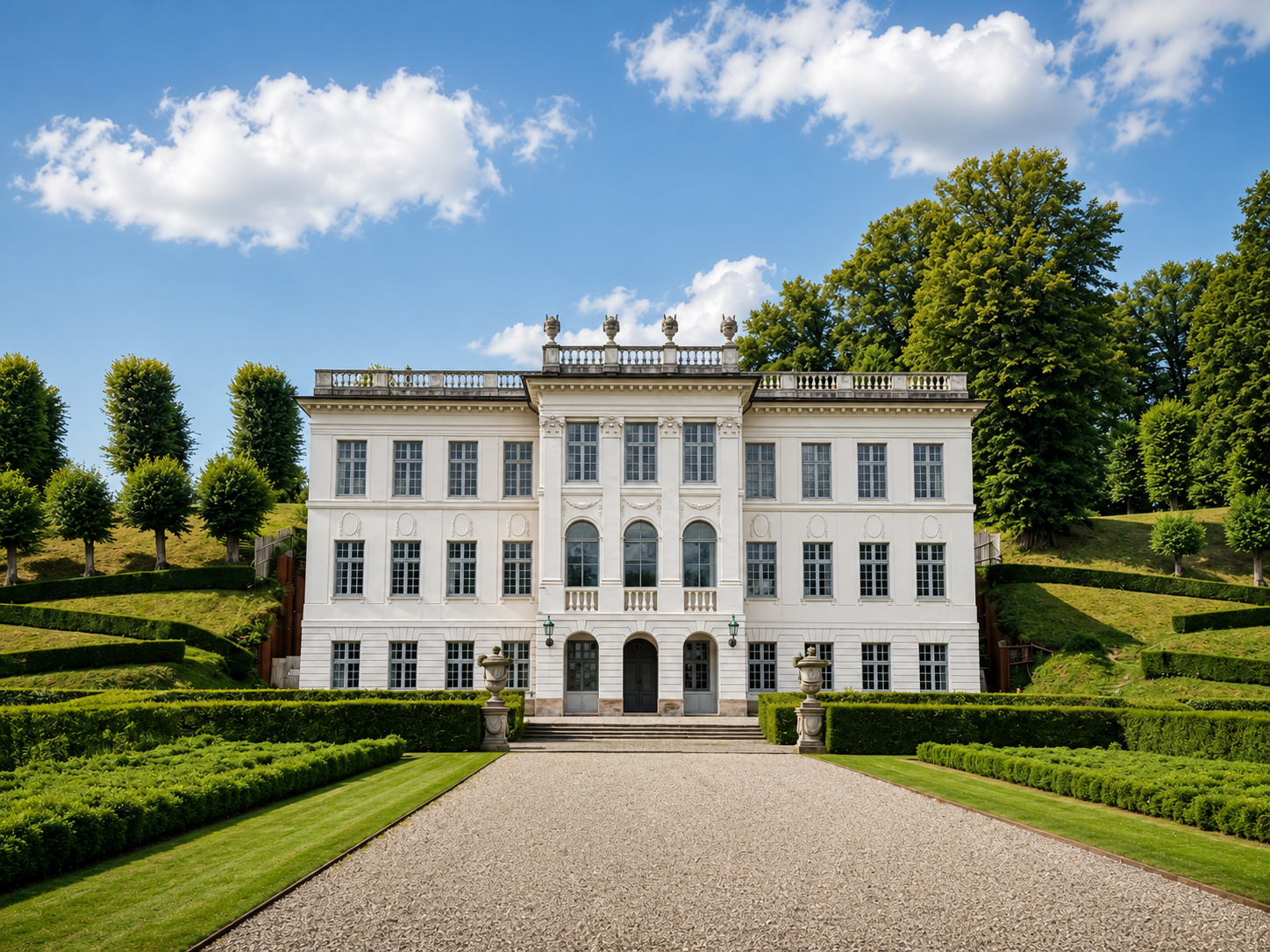
Kronborg is not Helsingør’s only royal castle. About fifteen minutes away stands the much smaller Marienlyst, surrounded by a public garden.
The site began in 1587–88 as Lundehave, a royal summerhouse built for Frederick II. Kronborg offered security, ceremony and military power, but its walls left little space for the sort of gardens expected around a Renaissance residence. Lundehave provided the king with a quieter recreational alternative.
The palace seen today is largely the result of an extensive rebuilding carried out between 1759 and 1764. Compared with Kronborg, it feels restrained and intimate. Kronborg faces the sea like a declaration of authority; Marienlyst sits behind its gardens as a place intended for retreat.
The grave of a man who never existed
The most entertaining feature of Marienlyst’s park is not the palace.
It is Hamlet’s Grave.
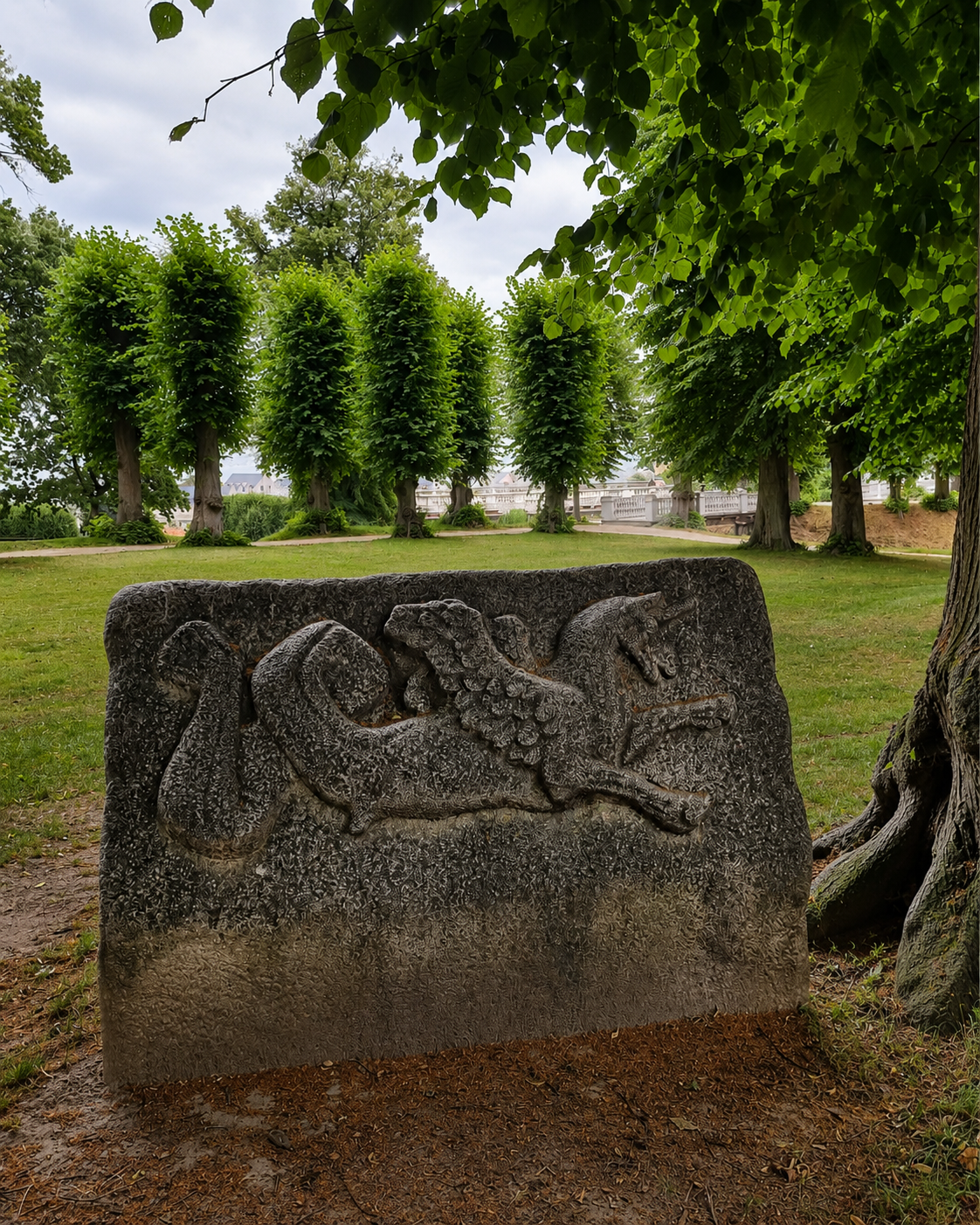
The fact that Hamlet was fictional did not discourage visitors from wanting to see where he had supposedly been buried. Helsingør has had several versions of the grave since the eighteenth century, and earlier arrangements of stones were gradually dismantled by tourists searching for souvenirs.
In 1926, on the 500th anniversary of Helsingør, a more durable granite monument shaped like a sarcophagus was installed in the park.
It was designed by the Danish sculptor Einar Utzon-Frank. One side bears a lion-like creature representing Hamlet and the masculine principle; the other displays a cornucopia representing Ophelia and the feminine principle. It is officially a literary memorial, not an archaeological claim that the prince ever lived.
The logic is wonderfully circular.
Shakespeare gave a fictional prince to a real Danish town. The town gave the prince a real castle. Visitors then demanded a grave, so Helsingør eventually gave him one of those as well.
A castle associated with a prince who never existed had produced a grave for a man who never died.
Beyond Hamlet
On my way back to the station, I walked through the historical centre of Helsingør.
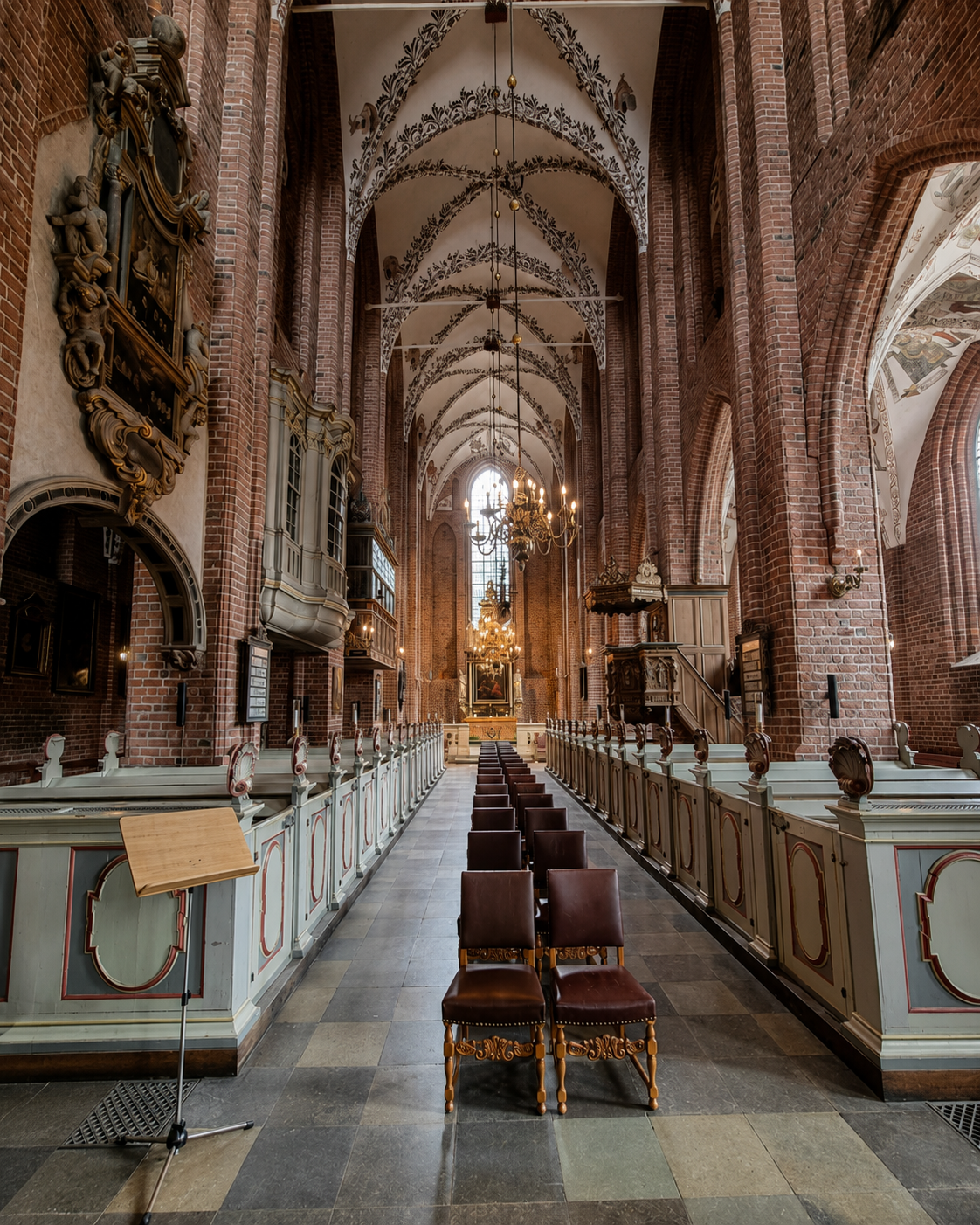
The route passes St Mary’s Church and its former Carmelite monastery, one of the best-preserved medieval monastic complexes in northern Europe, before continuing towards St Olaf’s Cathedral. Red brick, copper roofs and pale interiors give both churches a distinctly Danish appearance.
From there, I followed Stengade, Helsingør’s principal shopping street, with the tower of the town hall rising above traditional façades, cafés and shops.
Visitors who walk directly from the station to Kronborg and return by the same route see the city’s greatest monument, but not the town that developed around the trade it once controlled.
I was also pleased to discover that the physicist and mathematician Ludvig Lorenz was born in Helsingør. He is hardly the city’s principal tourist attraction, but such unexpected personal connections often remain in the memory longer than another royal bedroom or decorated ceiling.
Helsingør is usually presented as an easy day trip from Copenhagen. Geographically, that is exactly what it is. Historically, it is considerably more.
It is where a Pomeranian prince transformed a narrow strait into one of Europe’s most profitable toll stations. It is where a Danish princess married an absent Scottish king before becoming queen of England. It is where another young queen was imprisoned after one of Denmark’s greatest political and romantic scandals.
It has a Renaissance fortress, a maritime town, two royal residences, one of literature’s most famous tragedies and a completely fictional grave.
By the time I returned to the station, the question was no longer “To be, or not to be?”
It was much simpler:
Why had it taken me so long to come to Elsinore?
Practical information
Getting there: Direct trains run from Copenhagen Central Station to Helsingør approximately every twenty minutes. The journey takes around 46 minutes.
From Helsingør station to Kronborg: The castle is about a ten-minute walk along the harbour.
How much time to allow: Kronborg requires at least two hours. A full day leaves enough time for lunch, Marienlyst, Hamlet’s Grave and the historical centre.
Best for: Travellers interested in castles, Shakespeare, royal history, architecture and maritime trade.
