 Corleone, Sicily, Italy

A journey beyond the Hollywood myth, through inland Sicily and roads that made a battered town sign feel like a summit
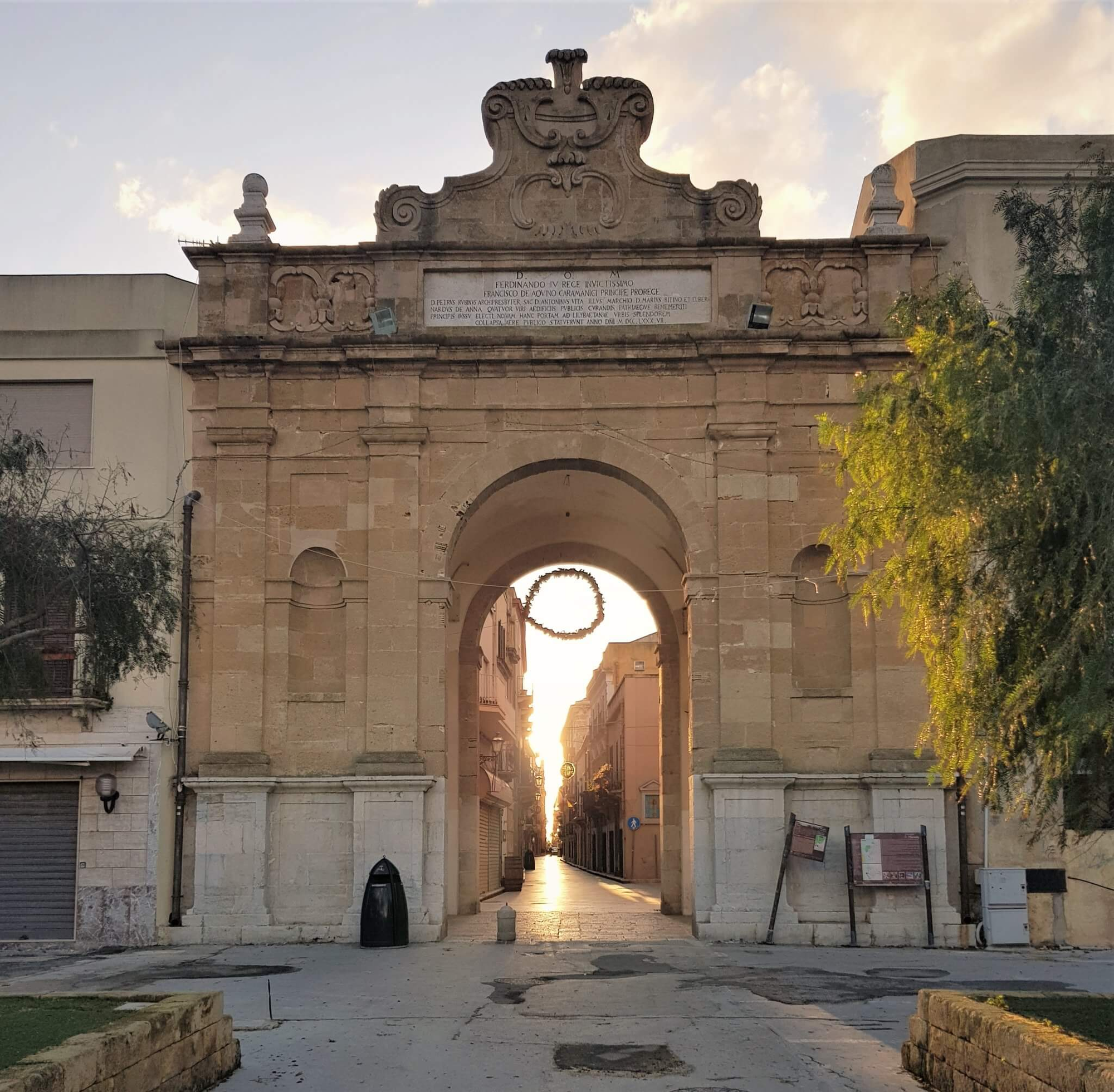
Morning in Marsala had the kind of effortless romance Sicily knows how to produce.
Soft winter light fell across the old town, and breakfast began with juice squeezed from oranges brought in from a nearby farm. It felt like the opening of a typically Sicilian day with every chance of becoming perfect.
The plan supported that impression. After another walk through Marsala, I would drive to Selinunte, one of the largest ancient Greek archaeological sites in the Mediterranean. From there, I would continue to Eraclea Minoa and reach Agrigento before evening, hopefully with enough daylight left for a first view of the Valley of the Temples.
History, scenery and a manageable route through western Sicily. It was the kind of itinerary that suggested preparation, maturity and at least temporary control over my own impulses.
Then I unfolded the paper map supplied by the rental company.
There was no practical reason to do so. The car had navigation, and I already knew where I was going. Paper maps usually improve a carefully planned journey only by revealing all the other places one does not have time to visit.
Across the Sicilian interior, one name appeared in considerably larger letters than the towns around it.
Corleone.
Why Corleone?
Some destinations attract us through beauty, others through history. Corleone belonged to a less respectable category: places whose names carry so much cultural weight that seeing them on a map produces an irrational need to go there.
I knew the obvious associations. The Godfather. Cosa Nostra. The fictional family whose surname had become far more famous than the actual town. I also knew that Coppola had not filmed the Sicilian scenes there. The real Corleone had supplied Hollywood with one of the most recognisable names in cinema, only to watch more photogenic villages receive the close-ups.
None of that made it a reasonable replacement for Selinunte.
An ancient Greek city that had survived wars, destruction, abandonment and more than two thousand years of Mediterranean history disappeared from my itinerary because one word had been printed in a larger font.
Selinunte lost to typography.
Through the corn to Salemi
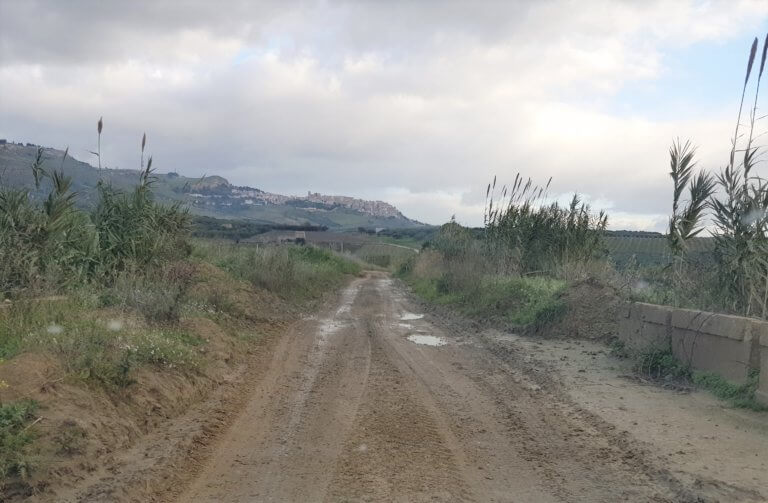
The first part of the drive gave me no reason to question the decision. I left Marsala and followed the SS188 through the Belice Valley, crossing broad agricultural landscapes under a heavy winter sky.
Then the navigation instructed me to leave the main road.
The new route narrowed and soon ran directly through a cornfield. Tall plants stood close to both sides of the car, blocking the wider landscape and reducing Sicily to a thin strip of road between two walls of vegetation.
For several kilometres, I wondered whether I was still using a public route or had accidentally entered somebody’s agricultural property. It looked much more like access to a field than a road connecting two towns.
There was no real danger. The surface remained passable and, to give the navigation its due, the road genuinely led to Salemi. It was strange rather than threatening, the first indication that I had left the conventional tourist route but not yet a reason to regret it.
At that point, the excursion still felt like an amusing improvement to the day.
An Accidental Stop in Salemi
Salemi rose above the surrounding countryside, its old centre gathered around the remains of a medieval castle.
I had not planned to visit it and knew almost nothing about it, which was already exposing the limitations of an excursion invented after looking at a map.
The town has an intriguing place in the history of Italian unification. After landing in Marsala in May 1860, Giuseppe Garibaldi reached Salemi and assumed authority over Sicily in the name of Victor Emmanuel II. The town therefore remembers its brief symbolic role as the first capital of the Italy that was still being created.
My own engagement with this former capital was less distinguished. I drove through it.
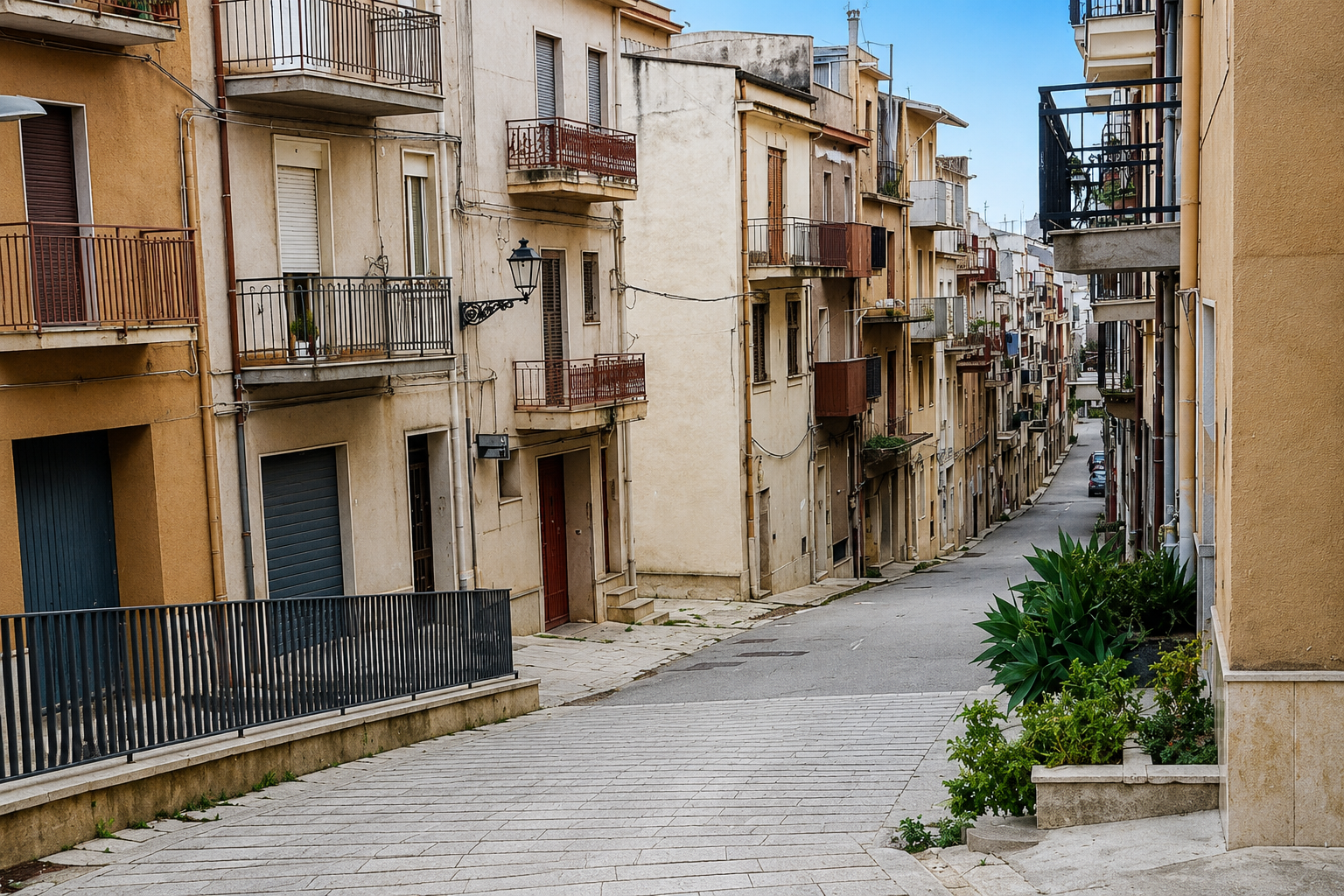
Salemi is small, so the passage did not become an urban expedition. It lasted only long enough for me to appreciate its steep, narrow and sharply curving streets—and the fact that the rental company had given me a Fiat 500.
Until then, I had regarded it simply as a small car suitable for one traveller and a suitcase. In Salemi, its dimensions began to look like inspired logistical planning. With anything wider, I might have ended the journey against a stone wall or become a permanent addition to the medieval street pattern.
Between the bends, I caught fragments of churches, old buildings and views across the valley, enough to realise that Salemi deserved several hours rather than a cautious drive through its centre. It also made a stronger visual impression than I expected from Corleone.
I had discovered it by accident, immediately understood that I should have researched it properly and continued because the more famous name farther inland had already taken control of the day. Travel occasionally rewards poor preparation by showing you exactly what you failed to prepare for.
After Salemi
Until Salemi, the journey had been merely unusual. The cornfield was peculiar, and the town’s streets demanded some concentration, but nothing had felt genuinely threatening.
That changed soon after I left.
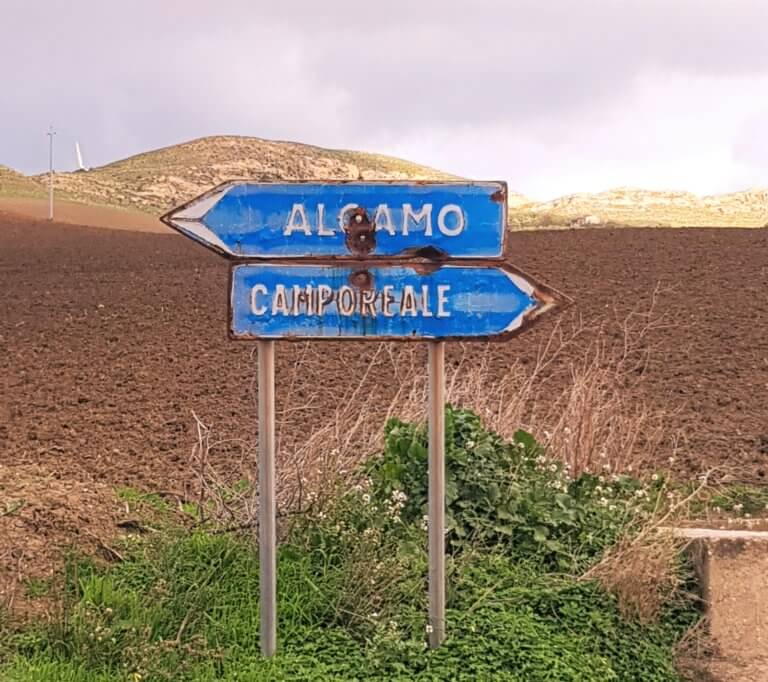
At a rural junction, I saw a road sign riddled with what looked unmistakably like bullet holes.
There may have been a perfectly ordinary explanation involving bored hunters, cheap ammunition and a shortage of more appropriate targets. A damaged sign on a country road proves nothing about organised crime, and I understood that perfectly well.
I was nevertheless driving alone through inland Sicily towards Corleone. My imagination showed remarkably little interest in the innocent explanations.
The sign did not make me turn back, but it changed the atmosphere. What had begun as an eccentric detour through agricultural Sicily now seemed to be accumulating details supplied by a particularly unsubtle screenwriter.
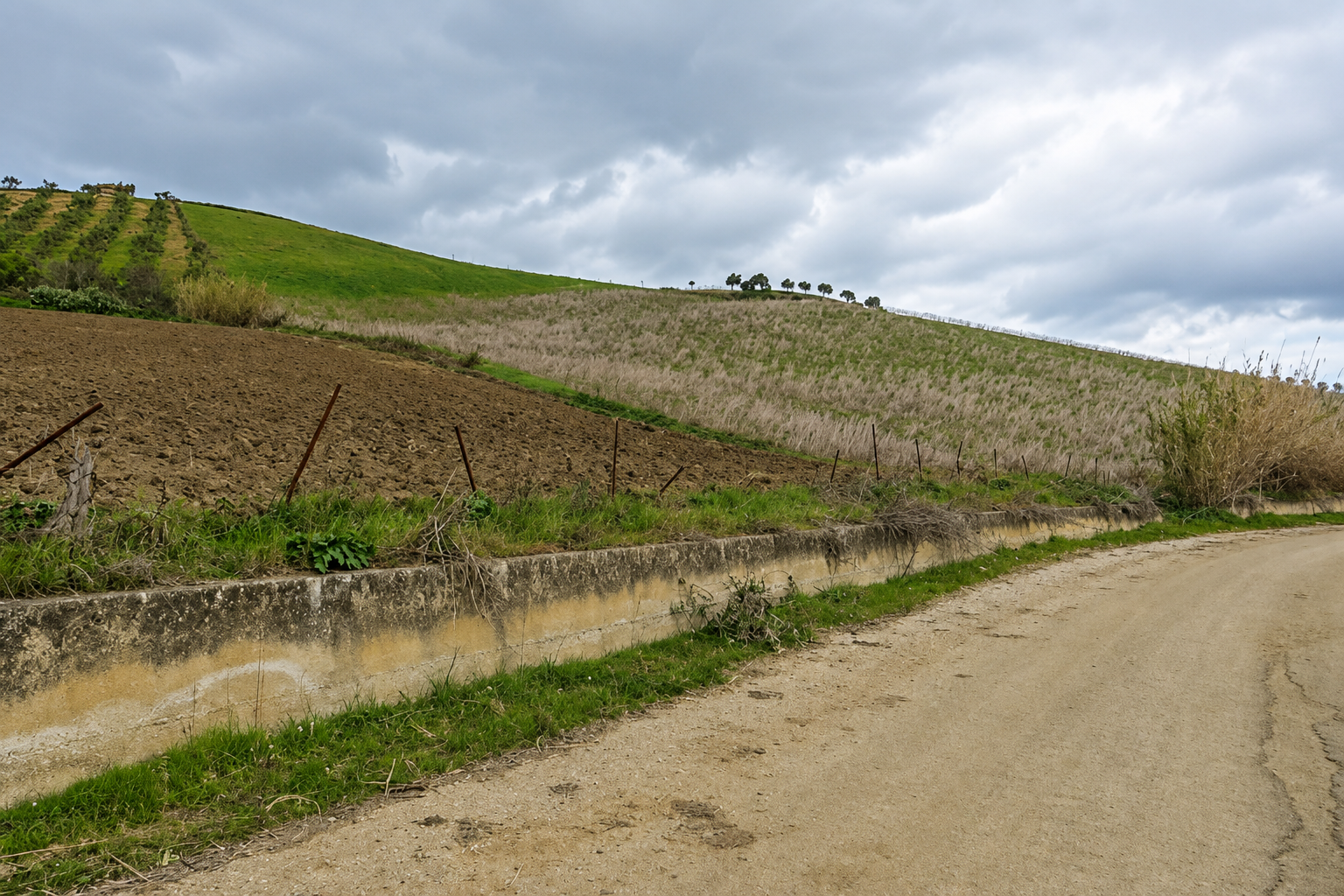
The road deteriorated soon afterwards.
Some stretches were heavily cracked. Others consisted of deep holes connected by narrow strips of surviving asphalt. I repeatedly slowed almost to a stop and studied the surface ahead, trying to decide whether the car could cross without grounding itself or dropping a wheel into something deep enough to end the journey.
There was rarely an obviously correct route. I selected whichever line looked least catastrophic and manoeuvred carefully through it.
At several points, I genuinely wondered whether the road remained passable. A small car offers obvious advantages on narrow Sicilian streets, but it is not a mountain goat or a piece of heavy construction equipment.
I started listening for unfamiliar noises beneath the car, which did nothing to improve my mental condition. Once a nervous driver begins listening carefully, every stone sounds like a damaged suspension component and every vibration suggests a future invoice.
The full insurance package, which had seemed rather expensive at the rental counter, now looked like the only genuinely intelligent decision I had made that day.
I began imagining the telephone call. I would have to explain that their car was immobilised in a crater somewhere in inland Sicily, beyond a bullet-riddled road sign and near a place I could not identify with confidence. The fact that I had abandoned Selinunte to end up there would probably not strengthen my position.
When the Road Fell Apart
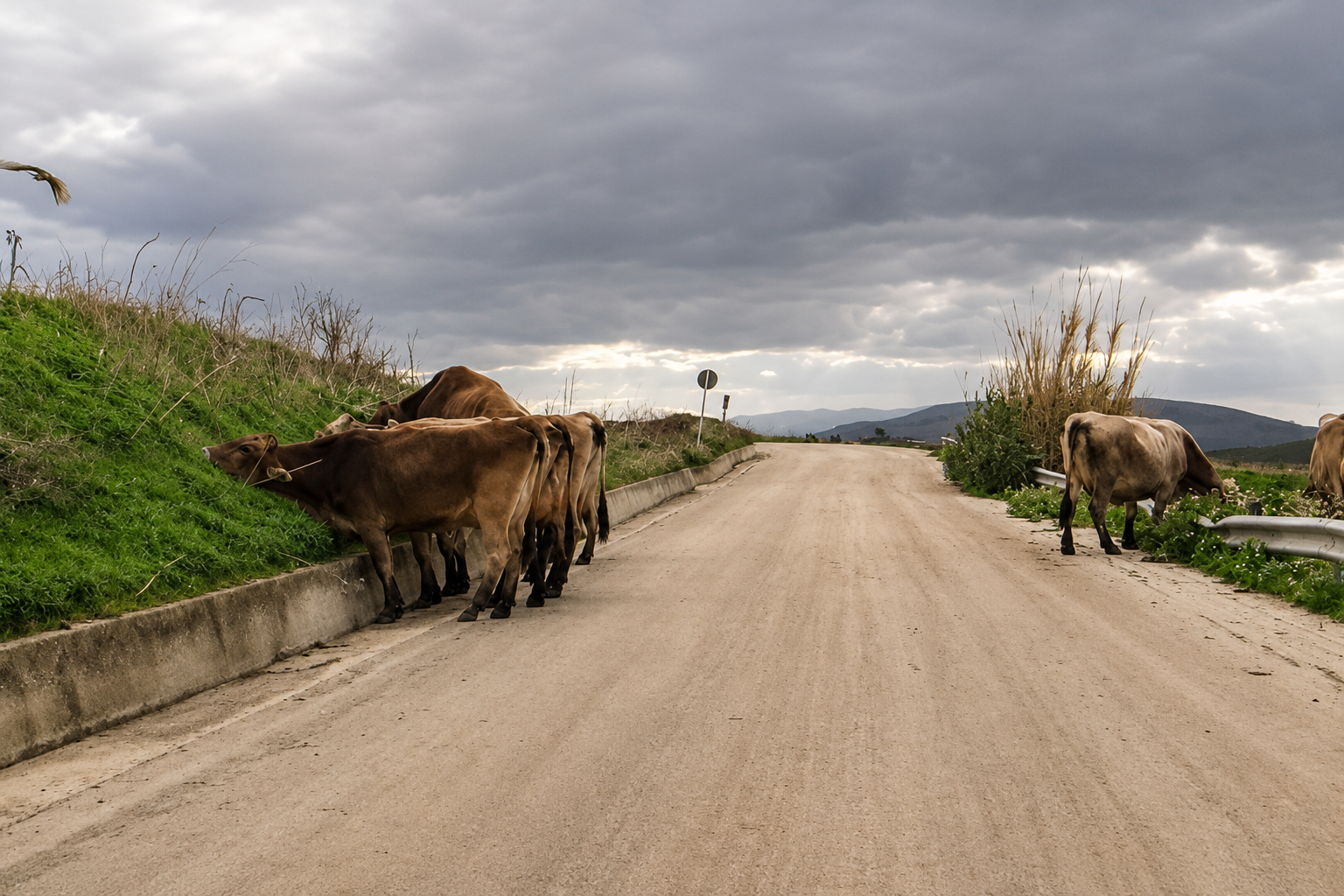
The animals appeared once the road had already weakened my confidence.
Cows stood directly on or beside the carriageway, large enough to make any argument over priority purely academic. Some moved after a little patience. Others watched the car with the calm certainty of creatures that had been using the road long before tourists with navigation systems discovered it.
The cows were obstructive but not particularly frightening.
The dogs were another matter.
They were large, loose and not obviously connected with any nearby owner. One rural dog can be dismissed as part of ordinary farm life. Several of them on an isolated and badly damaged road towards Corleone produce a rather less relaxed response.
I locked the doors and continued moving. I had no desire to discover whether they were friendly, merely curious or offended by the presence of an unfamiliar car. At that stage, stopping for a photograph no longer seemed essential to the integrity of the travel record.
My fear was not especially cinematic. I did not expect a black limousine to appear from behind the next bend or an armed man to emerge from the fields. What worried me was much more ordinary, and therefore much more plausible. The car could become stuck in one of the holes, leaving me stranded in some godforsaken corner of inland Sicily among wild dogs, cattle and a road sign that someone appeared to have used for target practice.
There would be no dark office, whispered threat or impeccably tailored patriarch. There would only be me, an immobilised rental car and the humiliating knowledge that I had created the entire situation because one town name had been printed prominently on a map.
Turning back remained theoretically possible, but it would have meant crossing the same holes, animals and doubtful roads again in the opposite direction. Continuing looked irrational; repeating the route looked only marginally less so.
By then, reaching Corleone had become necessary to justify everything already behind me.
The sign
By the time I approached Corleone, I no longer required the town to be beautiful or even particularly interesting.
It had become something closer to a summit. A summit is not necessarily the most attractive part of a mountain. Its importance comes from the decision to reach it, while every difficulty on the approach adds weight to the moment of arrival.
Then the sign appeared.
It was black and white, weathered and covered with layers of stickers. Some partly obscured the surface, as though previous travellers had also felt compelled to leave behind evidence that they had made it.
CORLEONE.
For a few seconds, the moment felt genuinely surreal.
The name had existed for years in films, books and popular mythology. That morning, it had been a word on a map. Now it stood beside the road in front of me.
I stopped the car and photographed it. I did not need to stand beside it; the sign itself was the image I wanted.
My reaction was immediate and completely sincere: I did it.
Objectively, the achievement was modest. I had driven across part of Sicily, not completed a polar expedition. Yet the road had offered enough resistance to make the arrival feel earned, and I experienced a simple, almost childish surge of traveller’s pride.
The sign looked battered, untidy and thoroughly unworthy of the mythology surrounding its name. At that moment, however, it felt like a trophy.
It remains one of the photographs I associate most strongly with the journey, not because it is especially beautiful, but because I remember exactly what reaching it meant.
The town behind the name
Corleone itself could hardly compete with the arrival.
To be blunt, it was not especially beautiful.
That judgment requires some context. The town suffers from the serious disadvantage of being located in Sicily, an island where even relatively minor places are expected to compete with Arab-Norman cathedrals, theatrical baroque façades, medieval settlements balanced above valleys and coastal villages positioned with almost indecent confidence.
Corleone was far more ordinary.
Its centre contained modest buildings, shops, traffic, churches and steep streets beneath striking limestone formations. It was not ugly and certainly had history, but it lacked the immediate visual power of many other Sicilian towns. Salemi, which I had discovered by mistake and barely visited, had made a stronger first impression.
Corleone’s most impressive monument was its name.
That name carries a cinematic myth and a more complicated historical legacy. The Godfather transformed it into a global symbol of family loyalty, inherited violence and criminal authority wrapped in religion, dark interiors and magnificent tailoring.
The actual town did not even appear in the films. Hollywood borrowed Corleone’s name, made it immortal and then hired prettier locations to perform the role.
How a Parallel Authority Took Root
The real history of the Mafia was less elegant, but it was not simply a story of criminals suddenly imposing themselves on an otherwise functioning society. In parts of nineteenth-century Sicily, the state was weak, distant and unable to protect property or enforce agreements reliably. Local networks entered that vacuum, offering protection and settling disputes with an efficiency formal institutions often lacked.
It would be sentimental nonsense to describe the Mafia simply as a defender of ordinary Sicilians. Its services were neither universal nor innocent. Protection quickly becomes extortion when the organisation offering safety can also create the threat. Still, the original mechanism fascinated me. A parallel authority developed its own rules, delivered results quickly and then discovered that a weak state served its interests rather well.
Once the same organisation can protect you, punish you and make refusal dangerous, the distinction between order and coercion disappears.
Coppola gave that world family dinners, baptisms and orchestral dignity. The real Mafia produced extortion, bombs and murdered magistrates. The films remain extraordinary art, but the history behind them makes their criminal elegance more difficult to enjoy without qualification.
The Museum I Failed to Enter
The place I most wanted to visit was CIDMA, Corleone’s documentation centre dedicated to the Mafia and the anti-Mafia movement. It would have provided the clearest bridge between the cinematic mythology and the reality of organised violence.
It was closed, entirely because I had designed the excursion around an impulse rather than opening hours.
I photographed the entrance, read what I could from outside and accepted the predictable consequences of my preparation. A local fair had complicated traffic in the centre, while a crowded pastry shop called Sweet Temptation offered possible consolation. The cakes looked excellent, but the shop was full and time was running short.
I left without trying anything.
Missing the museum could be explained by poor planning. Walking away from a promising Sicilian pastry required a less flattering explanation.
What remained
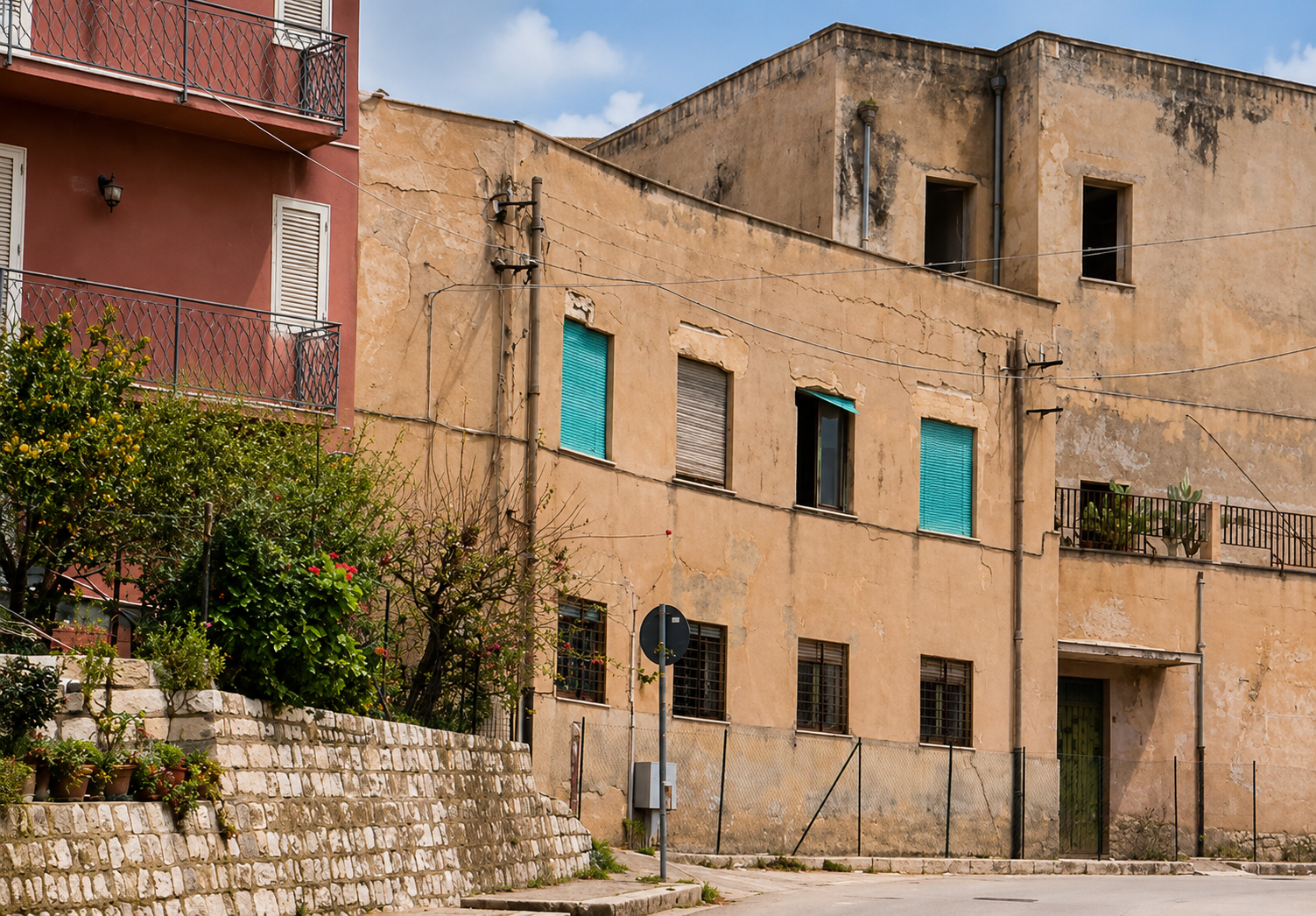
I spent some time in the centre, saw Piazza Garibaldi and the Chiesa Madre di San Martino, and looked towards the limestone rocks and remnants of old fortifications above the town.
There was enough to demonstrate that Corleone possessed a history far broader than either Cosa Nostra or American cinema. There was not enough to convince me that it ranked among Sicily’s most compelling towns.
Years later, I remember surprisingly little of central Corleone. I recall the general appearance of the streets, the rocks above them, the closed museum and the pastry I did not eat.
The journey remains much clearer.
The road through the corn before Salemi remains clear in my memory, peculiar but still almost amusing. So do the narrow streets of Salemi, where I was relieved to be driving a Fiat 500 rather than anything larger, and the bullet-riddled sign that changed the atmosphere without actually proving anything.
The damaged asphalt, the cows and the wild dogs are sharper in my mind than Corleone’s central square. I still remember wondering whether the car could cross the next section of road, and the very real possibility of becoming stranded somewhere far from anything resembling normal infrastructure.
Clearest of all is the Corleone sign: black and white, weathered, covered with stickers and far more emotionally powerful than anything I found after passing it.
Sicily contains many towns more beautiful than Corleone, and I would recommend several of them before advising a first-time visitor to sacrifice Selinunte for this route. A carefully organised day among Greek temples would have been more comfortable, more sensible and culturally much easier to defend.
It would also have given me exactly what I expected.
Corleone gave me a road through a cornfield, a bullet-riddled sign, destroyed asphalt, cows, wild dogs, an unexpectedly attractive Salemi, one extremely useful Fiat 500 and one of the purest moments of traveller’s pride I can remember.
Corleone itself was only the point on the map. The road made it mythic.
