
 Poznan, Greater Poland Voivodeship, Poland
How Vivaldi, an extraordinary countertenor and a convenient flight became the beginning of my first proper journey through Poland
Three hundred years before Instagram, Antonio Vivaldi wrote an aria about longing and the quiet certainty of seeing someone beloved again.
“Vedrò con mio diletto” belongs to Giustino, an opera first performed in Rome in 1724. It is not one of those pieces that announces its importance with trumpets, dramatic deaths or vocal fireworks. The accompaniment moves gently beneath a melody that seems suspended in the air. Its emotional power comes from restraint.
Three centuries later, one particular performance of that aria began following me around on social media.
The singer was Jakub Józef Orliński.
Orliński is a Polish countertenor, a male singer whose voice reaches the alto range more commonly associated with female singers. His ordinary speaking voice gives little warning of what will happen when he starts to sing. Then something startlingly pure and high emerges: delicate without being weak, ethereal without becoming bloodless.
He is also unusually visible for a classical singer.
He trained in Warsaw and at Juilliard and has performed on major international opera stages, but the version of him circulating online is not limited to formal portraits and solemn footage from recital halls. He is also a breakdancer, former competitive skateboarder and model who appears entirely comfortable with social media, cameras and forms of movement rarely associated with Baroque opera.
That combination certainly made him easier to notice.
It was not why I wanted to hear him.
The reason was the voice.
His performance of “Vedrò con mio diletto” was one of those recordings that made me stop whatever I was doing and listen properly. The contrast was almost absurd: an athletic young man known for spinning across floors producing a voice that sounded as though it had arrived from somewhere considerably less physical.
After hearing the aria enough times, I developed a simple objective.
I wanted to know whether that voice sounded equally extraordinary outside a screen.
Finding the right concert
I began checking Orliński’s performance schedule against my calendar and the airports within a reasonably practical distance from home.
Poznań was not a city I had spent years dreaming about, nor was Zadar the only airport I would consider. The calculation was more practical. I needed a date that worked, a destination I could reach without turning the journey into an expedition and enough surrounding material to make the trip worthwhile.
Poznań solved the problem neatly.
Orliński was performing there on 27 September 2024. A direct flight from Zadar fitted the dates, and I could continue afterwards by train to Warsaw and Kraków. My previous experience of Poland amounted to only several hours in Wrocław many years earlier, so the country still remained largely unexplored territory.
The concert would be the anchor rather than the entire journey.
That distinction was useful. Travelling to another country for one singer sounds slightly obsessive. Travelling through Poland with an excellent concert built into the itinerary sounds almost responsible.
Before reaching either version of the story, I had to park at Zadar Airport.
The parking price suggested considerable ambition. The business lounge displayed rather less.
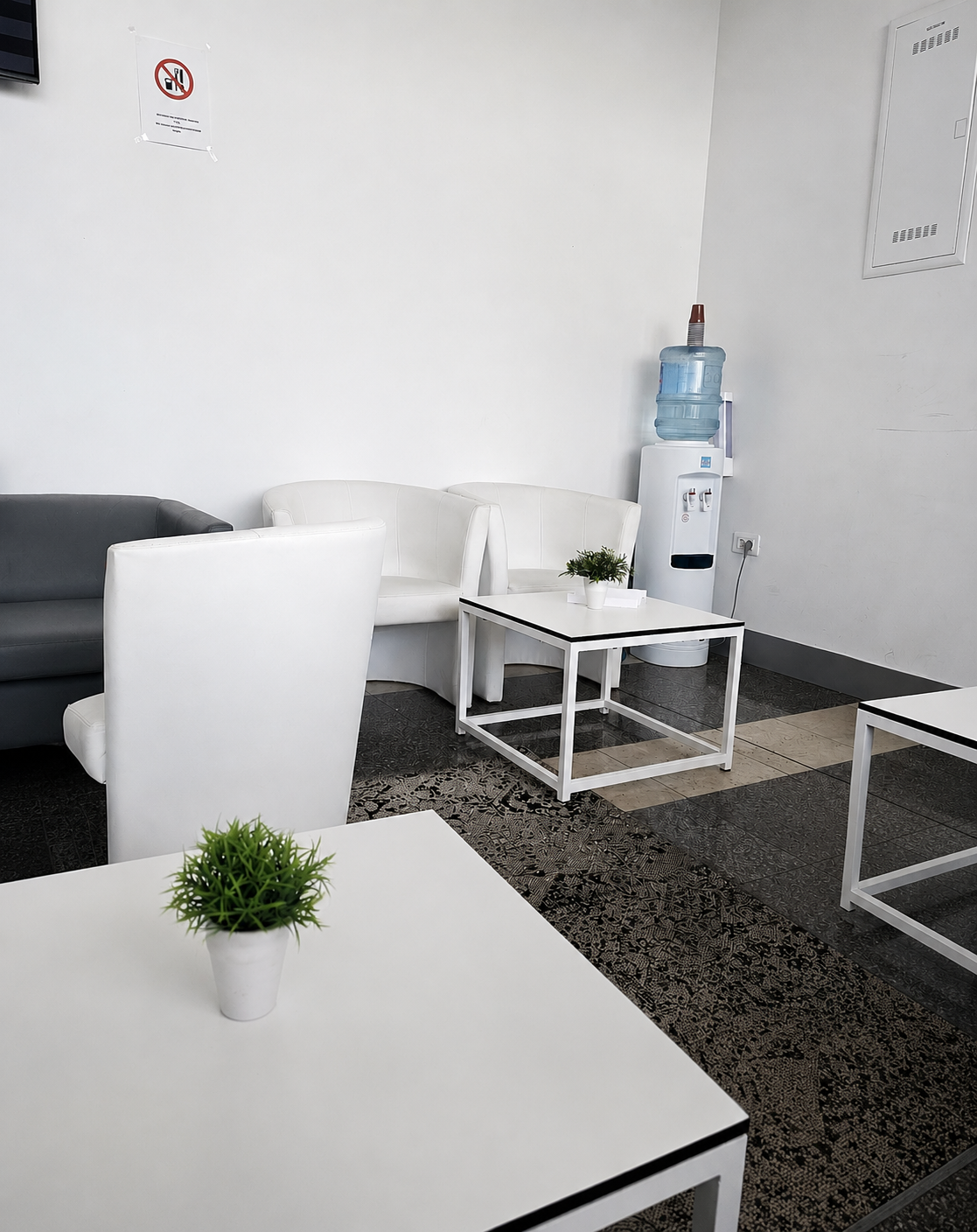
There was a quiet place to sit, a drink and something small to eat. It fulfilled the basic definition of a lounge, but the atmosphere was closer to a tidy storeroom into which someone had introduced furniture.
Not every journey inspired by Baroque music begins in Baroque splendour.
Why I chose the Sheraton
The flight left Zadar at 13:10 and landed in Poznań shortly before three. By four, I was checking into the Sheraton Poznań.
The Sheraton was one of the city’s more established full-service hotels, with spacious rooms, a pool and sauna, and a convenient position near the international fairgrounds, railway station and concert venue.
It was also part of Marriott Bonvoy, which was the decisive factor for me.
Hotel loyalty programmes rarely provide compelling literature, but they can provide useful benefits. I had elite status with Marriott, so choosing a property within the group could mean recognition, additional services and access to benefits that would not follow me to an unrelated hotel.
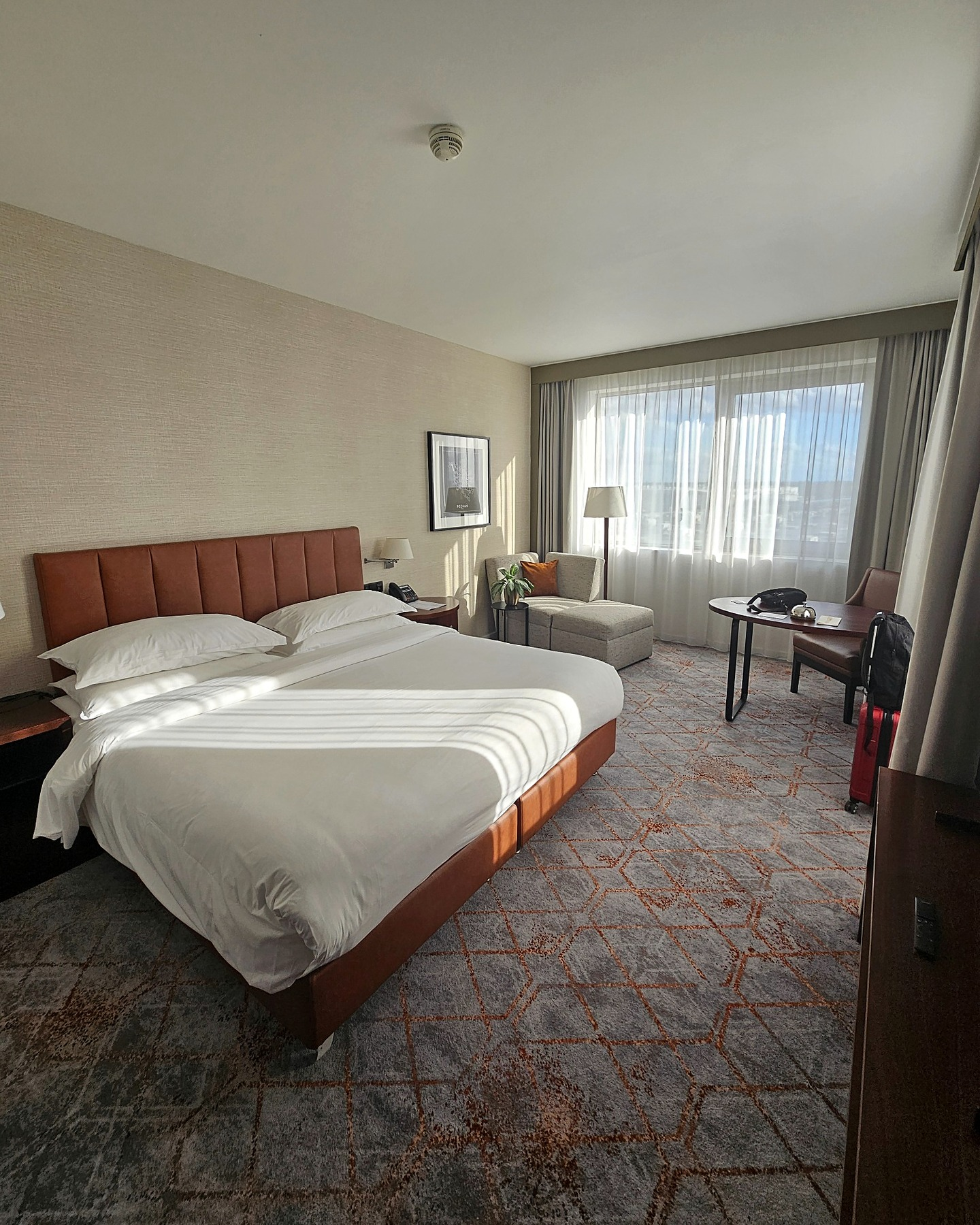
The hotel delivered everything I expected from it.
The room was large, comfortable and polished. I received a small afternoon snack and a drink, while the evening happy hour was served in the restaurant rather than in a separate lounge.
The spread was generous and looked impressive enough to make searching for dinner unnecessary. My enthusiasm diminished somewhat once I began eating. Nothing was particularly bad; much of it simply was not especially aligned with my tastes.
The selection was rich. My appreciation of it was more restrained.
Still, it was an excellent arrangement for a tightly organised afternoon. I could arrive, settle in, explore the city, eat at the hotel and walk to the concert without wasting time on additional transport or restaurant research.
Poznań in red
I had approximately three hours for Poznań.
My original itinerary was optimistic, as itineraries created at home usually are. It included the Old Market Square, Town Hall, cathedral, churches, Citadel and several streets across the centre.
Then it started raining.
The weather reduced the afternoon to a less systematic walk through the historic centre. I did not see enough of Poznań to claim any comprehensive understanding of it, but I saw enough to realise that the city deserved more time.
It appeared to be a handsome, recognisably Polish city: substantial historical buildings, church towers, reconstructed façades and public spaces that felt active rather than preserved behind glass.
What impressed me most, however, was not a particular monument.
It was a colour.
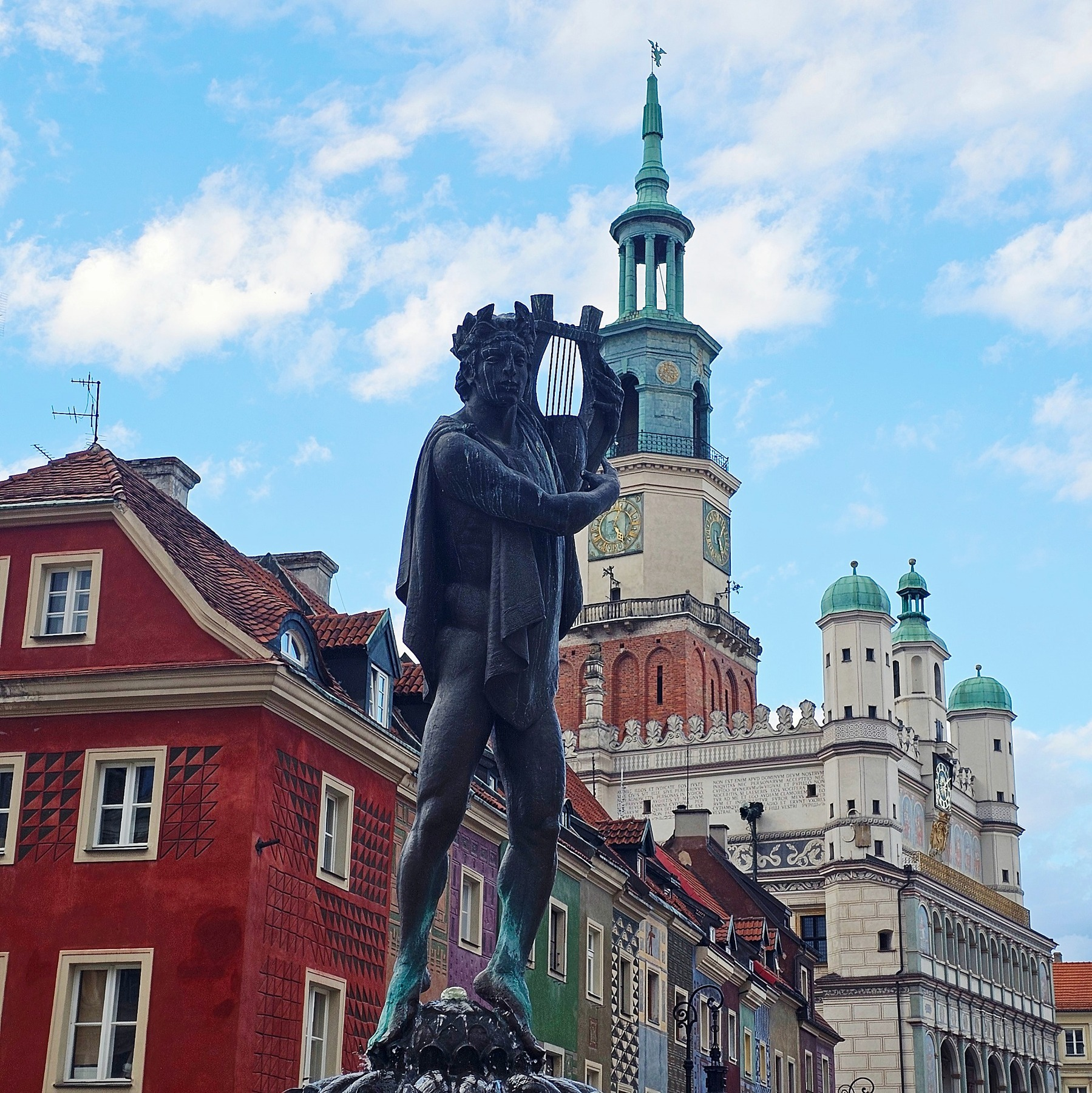
Red dominated the Old Market Square.
It appeared in brickwork, roofs and façades ranging from terracotta and rust to coral and deep crimson. Against the grey sky and wet paving, the warm colours became even more saturated. The square looked theatrical without trying particularly hard to be theatrical.
It also gave the afternoon a clear visual identity. My memories of Poznań are not arranged as a checklist of buildings. They are built from rain, red façades and flashes of colour around the Town Hall.
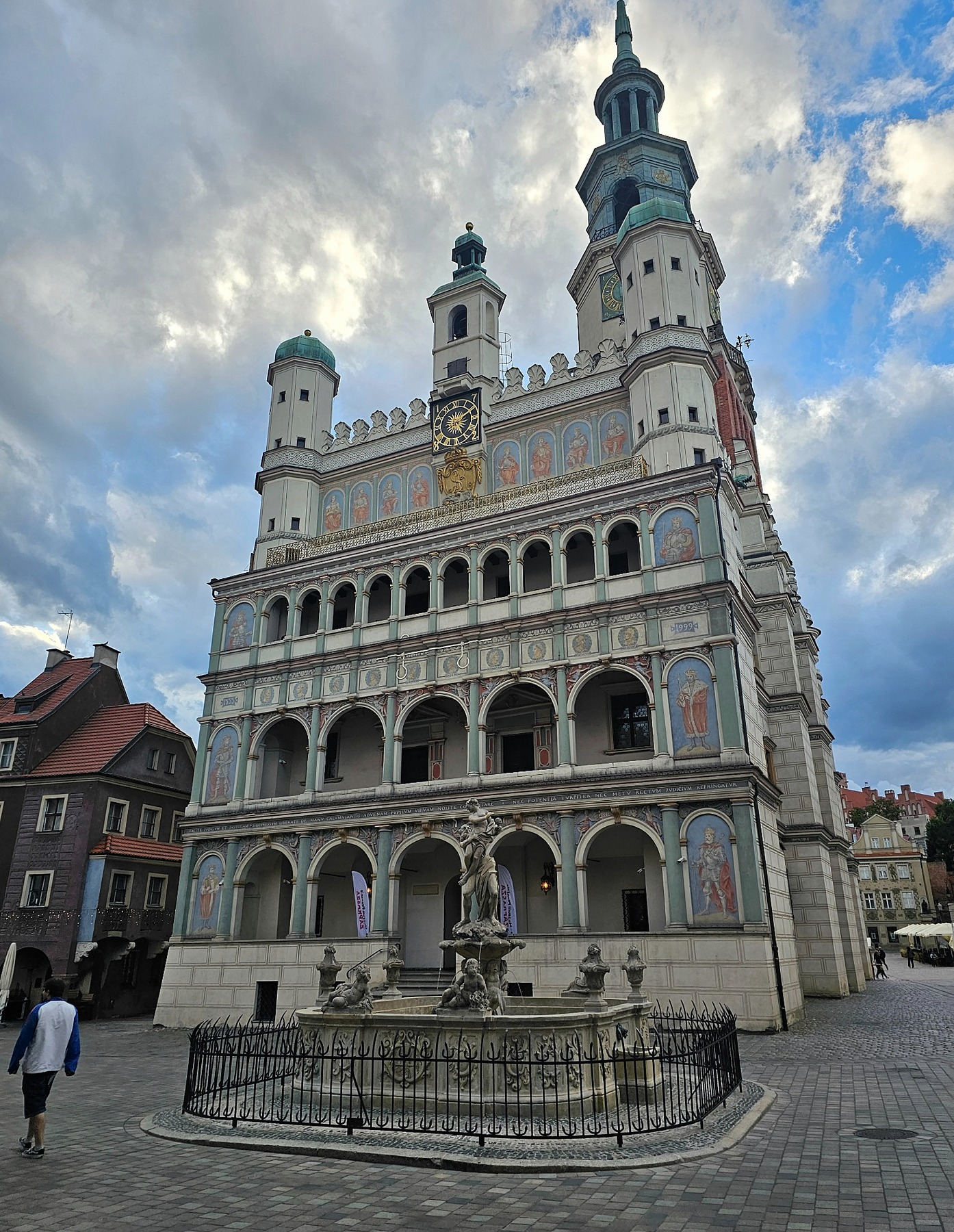
The Apollo Fountain provided another memorable detail.
Apollo stood above the water holding a lyre, an unexpectedly precise emblem for a journey built around music. Before Vivaldi entered the evening, Poznań had already supplied its own mythological overture.
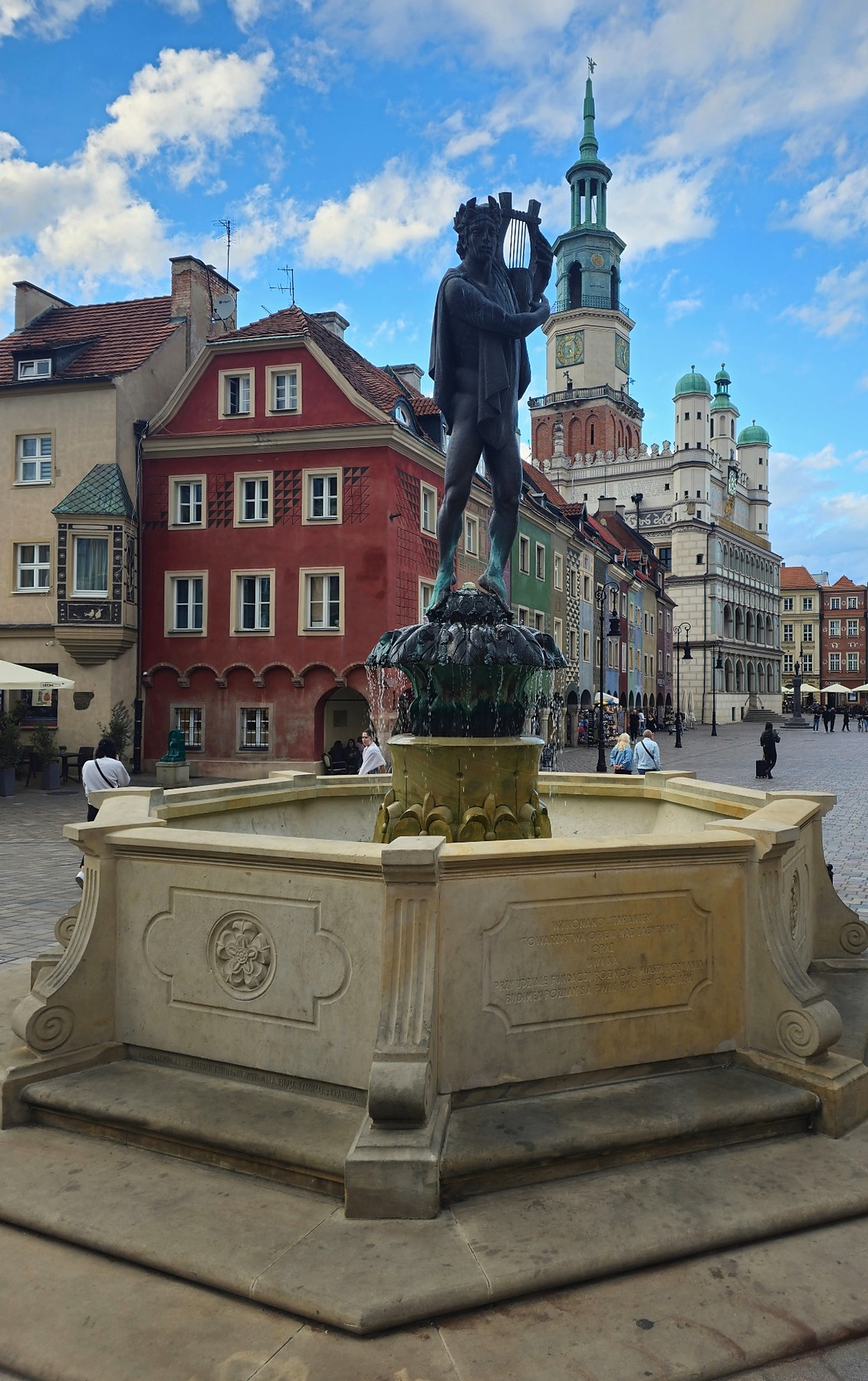
The connection was accidental but satisfying. I had come to Poznań for eighteenth-century music and found the god of music waiting among the red façades.
Elsewhere, a green tram passed through a city otherwise dominated by brick and red façades.
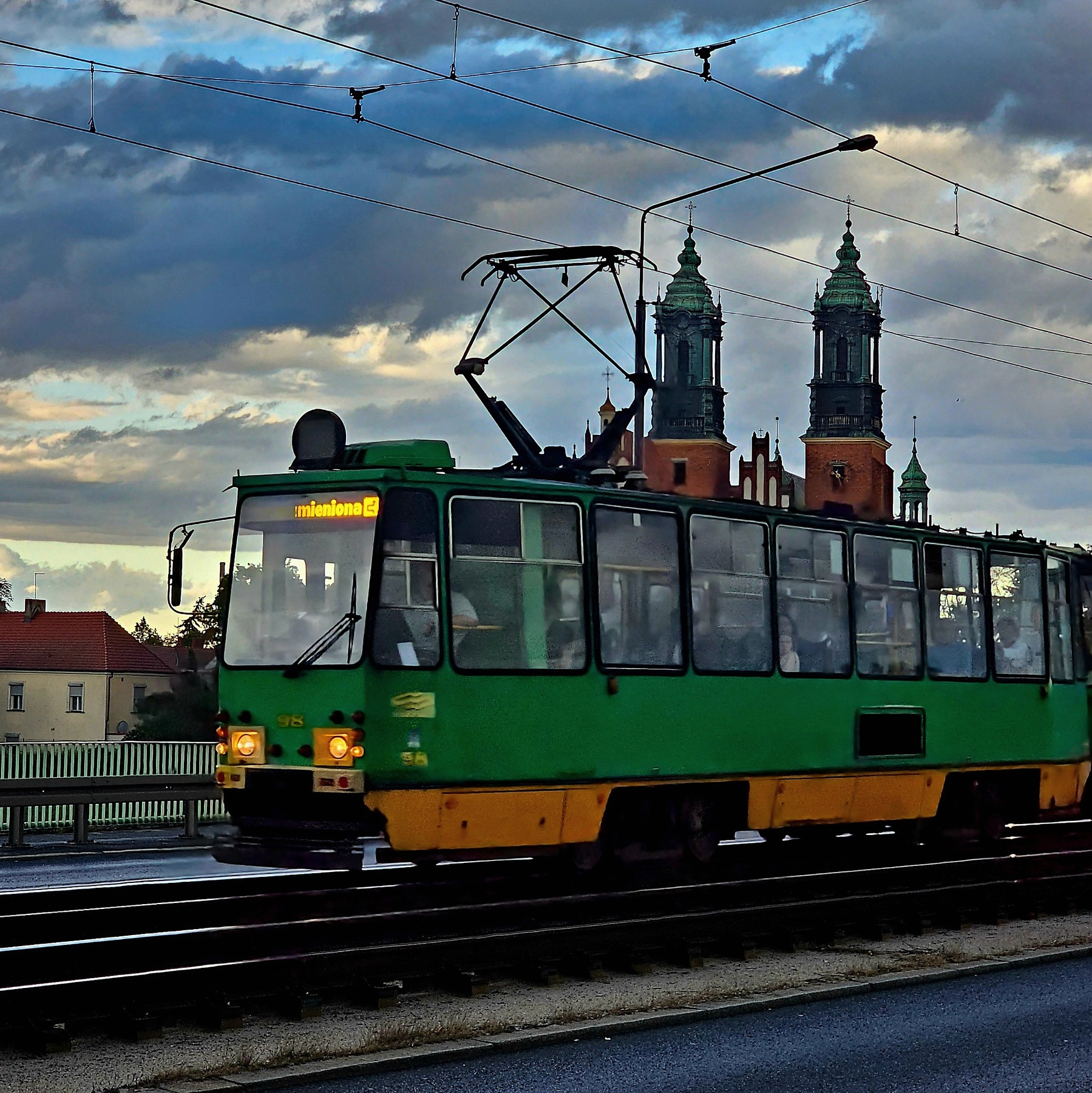
The rain prevented Poznań from becoming a complete destination story in its own right. That was not necessarily a weakness.
The city remained unfinished: attractive enough to justify returning, but not reduced to something I could claim to have “done” in one damp afternoon.
A modern hall for old music
At 19:15, I left the hotel and walked for about fifteen minutes to Sala Ziemi, part of the Poznań Congress Center.
This was not an ornate opera house designed around the unamplified human voice. Sala Ziemi was a large, modern auditorium equipped for congresses, shows and amplified productions. The surroundings immediately suggested that the performance would not be a conventional Baroque recital.
My ticket cost 249 złoty, roughly €58.
It was marked as row four in the tribune. That did not mean I was literally four rows from the stage: several rows of ordinary temporary chairs had been placed across the flat floor in front of the raised seating.
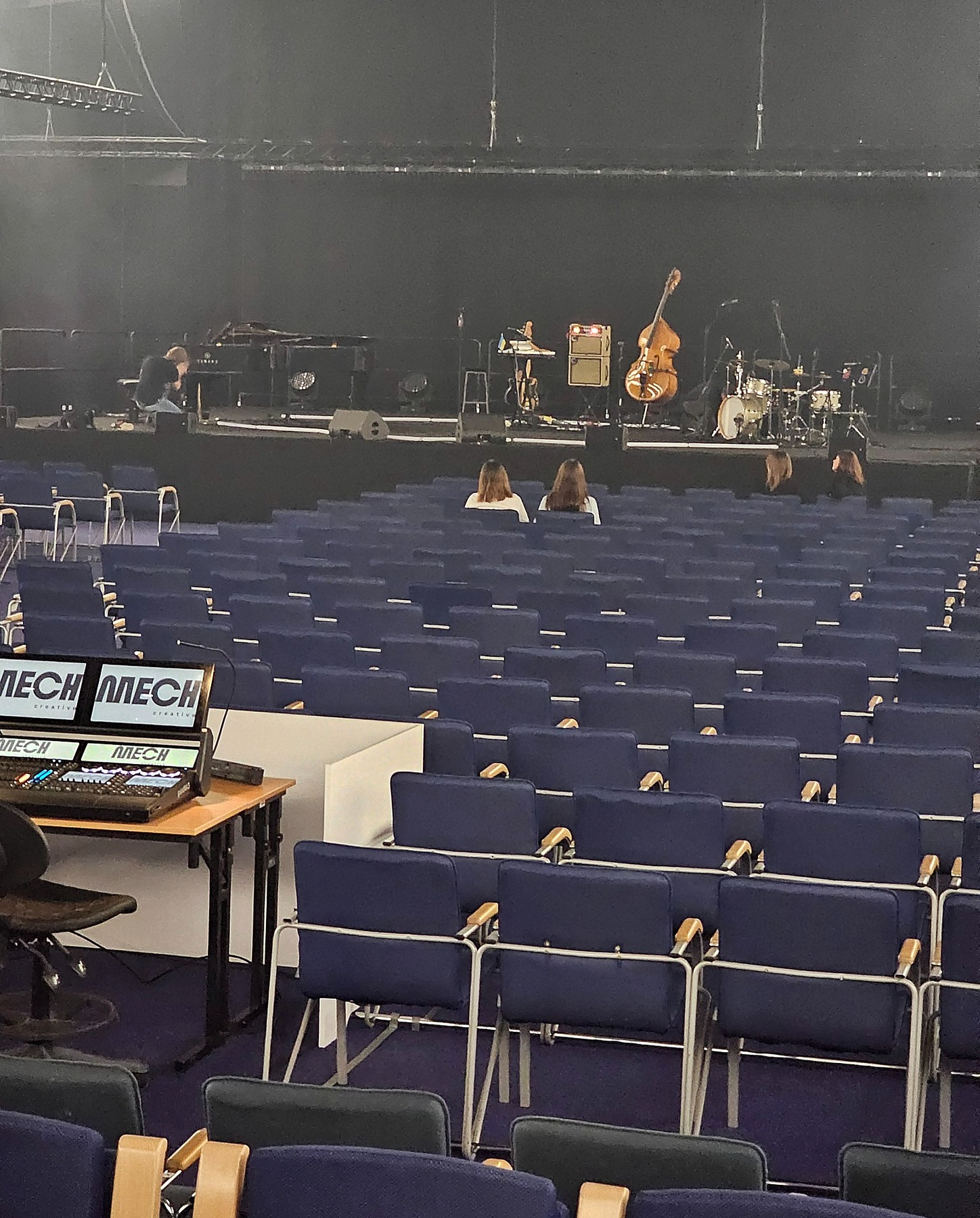
The seat was nevertheless perfectly adequate. I could see the full stage clearly and hear without feeling completely detached from the action.
The concert was #LetsBaRock, a collaboration between Orliński and pianist, composer and arranger Aleksander Dębicz. The album of the same name was released on that very day, and Poznań was the opening date of its Polish tour.
Dębicz was not merely an accompanist placed behind the star singer. He was central to the project’s musical identity.
Together, they reworked Baroque material for a modern combination of voice, piano, double bass, drums and synthesiser. The result was not old music with a few decorative contemporary touches. It was Baroque reconstructed through the vocabulary of a modern band.
Baroque dressed as pop
The first impression was visual.
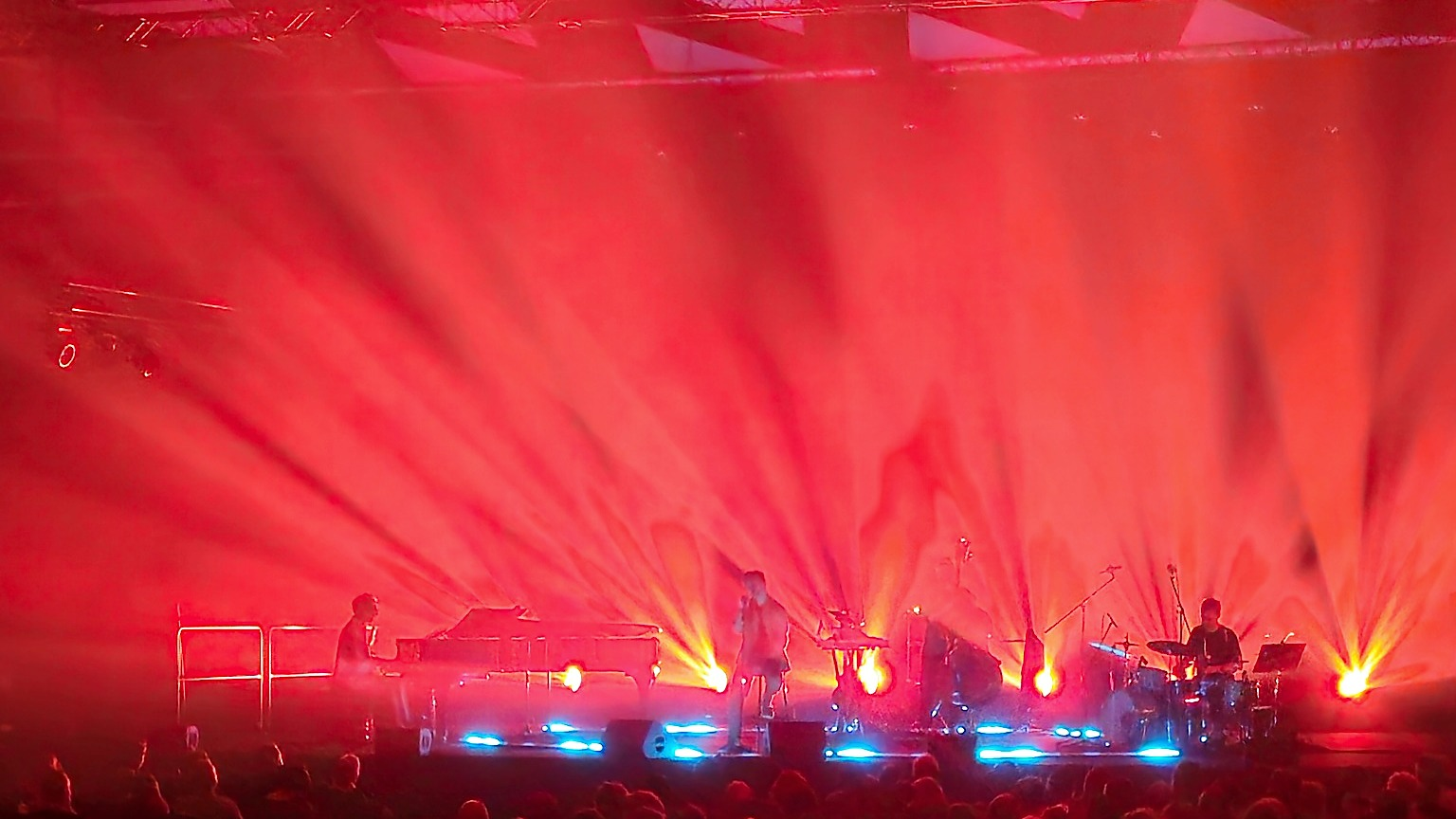
Red, orange and blue beams crossed the stage. The musicians appeared beneath lighting more familiar from a pop or rock production than an opera house. Bass, drums and electronic sound expanded the arrangements, while Orliński moved through the space like a performer accustomed to large stages and audiences that might never attend a traditional Baroque recital.
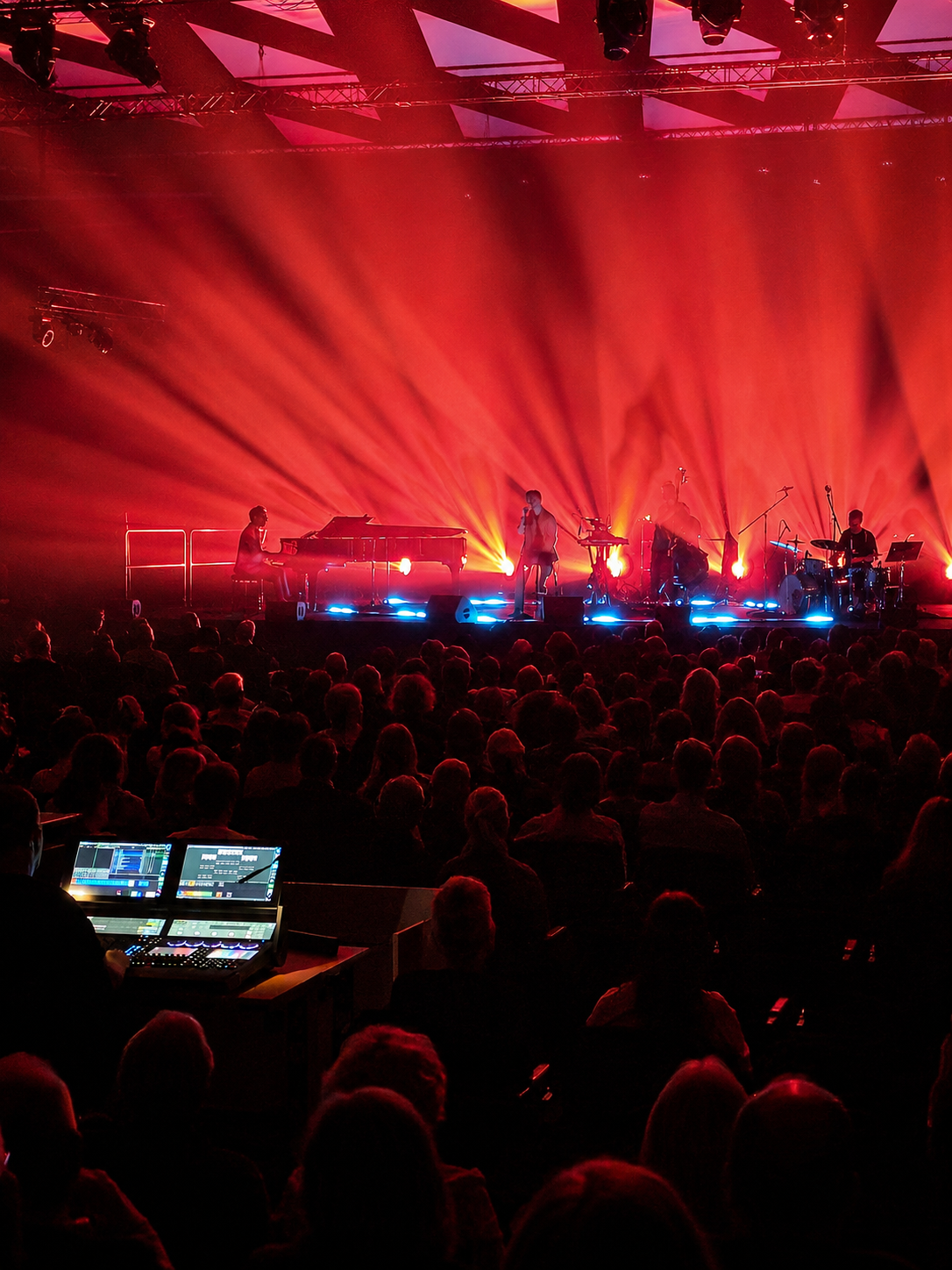
The evening felt much more like a pop concert than an operatic performance.
I am not automatically convinced by the idea that classical music must be wrapped in aggressive lighting and contemporary production before modern audiences can tolerate it. At moments, #LetsBaRock seemed almost too determined to prove that Baroque music could be cool.
The music did not always require that much assistance.
Yet the concept worked considerably better than that reservation might suggest.
The arrangements had energy and coherence. The lighting created a recognisable world rather than random spectacle, and Orliński possessed enough musical authority to ensure that the production enhanced rather than concealed the singing.
He was not a weak classical performer protected by clever marketing.
He was an exceptional singer experimenting with a form that did not entirely match my preferred way of hearing him.
That is an important difference.
The aria that started everything
The first of the concert’s two great moments was inevitable.
Orliński sang “Vedrò con mio diletto.”
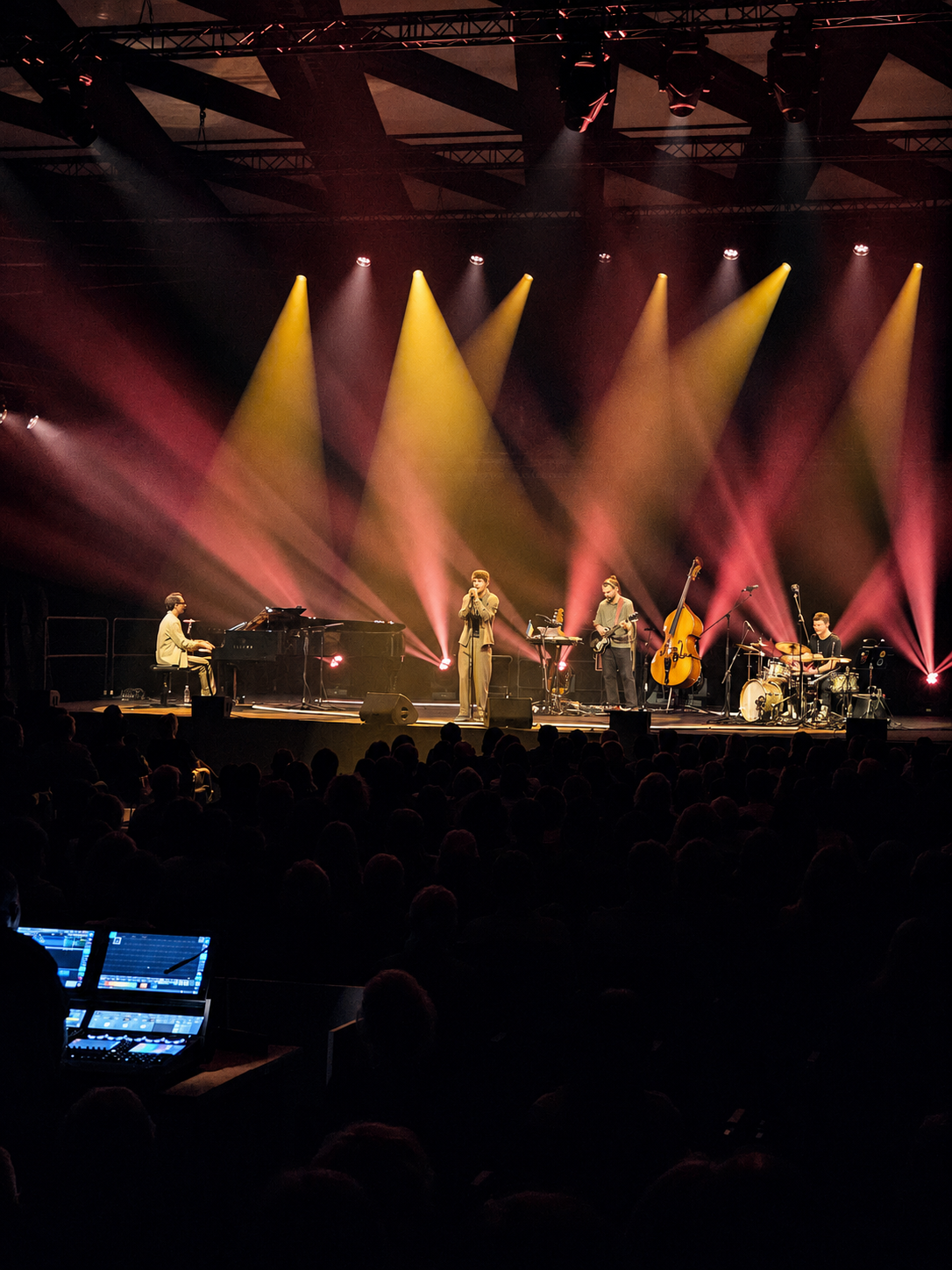
This was the music that had started the entire chain of events: discovering the singer, searching through performance dates, finding the flight and building a journey through Poland around one evening.
His voice was as extraordinary as I had expected.
“Angelic” is an overused adjective when applied to countertenors, but sometimes the obvious word survives because it is correct. The sound was clear, controlled and almost disembodied, seemingly incompatible with the athletic man producing it.
There was one limitation.
Sala Ziemi was a large hall, and Orliński sang with a microphone. Amplification allowed the entire audience to hear every detail, but it also introduced a thin technological layer between the natural voice and the listener.
The voice remained beautiful. Some of its immediacy was inevitably lost.
Angels probably sound better without amplification.
I understood that more clearly later in Ravenna, where I heard Orliński perform the complete Beyond concert programme with the Baroque ensemble Il Pomo d’Oro.
Beyond is not an individual composition but an entire early-Baroque project built from works by composers including Monteverdi, Caccini, Frescobaldi, Cavalli, Kapsberger and Barbara Strozzi. The concept looks beyond the most familiar Baroque repertoire and presents this four-century-old music as something still vivid, emotionally direct and alive.
In Ravenna, the programme was performed without microphones.
With Il Pomo d’Oro’s period instruments around him and no amplification between the voice and the hall, the experience was far more intimate. The natural colour, projection and vulnerability of the countertenor were immediately clearer.
Poznań revealed the performer.
Ravenna later revealed the voice.
The second climax required one hand
The evening’s other peak came from the opposite side of Orliński’s abilities.
During the breakdance sequence, he balanced on one arm and rotated above the stage.
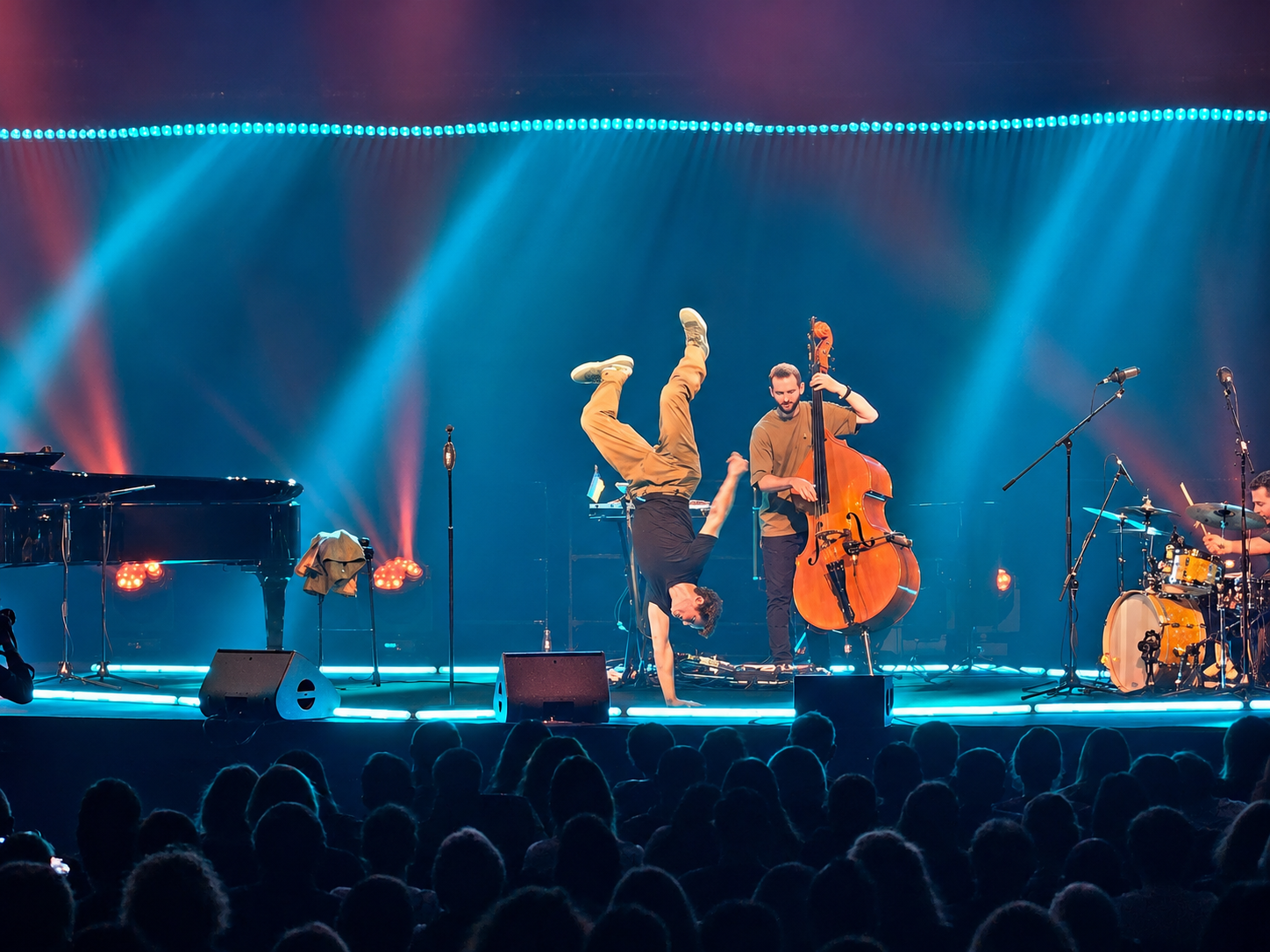
Had this been an opera singer executing an opportunistic dance move devised by a marketing department, it would have been painful to watch.
It was not.
Breakdance is a genuine and longstanding part of Orliński’s life. The movement therefore looked controlled rather than decorative.
The same man who had just produced Vivaldi’s slow, apparently weightless melodic line was now holding his entire body above the floor on one hand. The combination remained improbable even when seen live, but it did not feel false.
It explained why Orliński had reached an audience extending far beyond conventional opera followers.
He did not modernise Baroque music by apologising for its age. He placed it beside contemporary movement, amplification and visual culture, trusting that it would remain strong enough to survive.
Most of the time, it did.
Worth the journey
The concert justified the trip.
That does not mean it was the most overwhelming musical experience of my life. I did not leave Sala Ziemi shattered, speechless or convinced that I had witnessed the defining artistic event of the century.
Other concerts have affected me more intensely.
But the evening did not need to become a religious conversion to succeed.
I had travelled to hear a unique voice and heard it. I had hoped for “Vedrò con mio diletto,” and Orliński sang it. I had wondered whether the countertenor who also spun across floors was as extraordinary in reality as he appeared online, and watching him rotate on one arm answered that question decisively.
The performance delivered what had brought me to Poznań.
Nothing more dramatic was required.
From the stage to the pool
By ten, I was back at the Sheraton.
The swimming pool was almost empty.
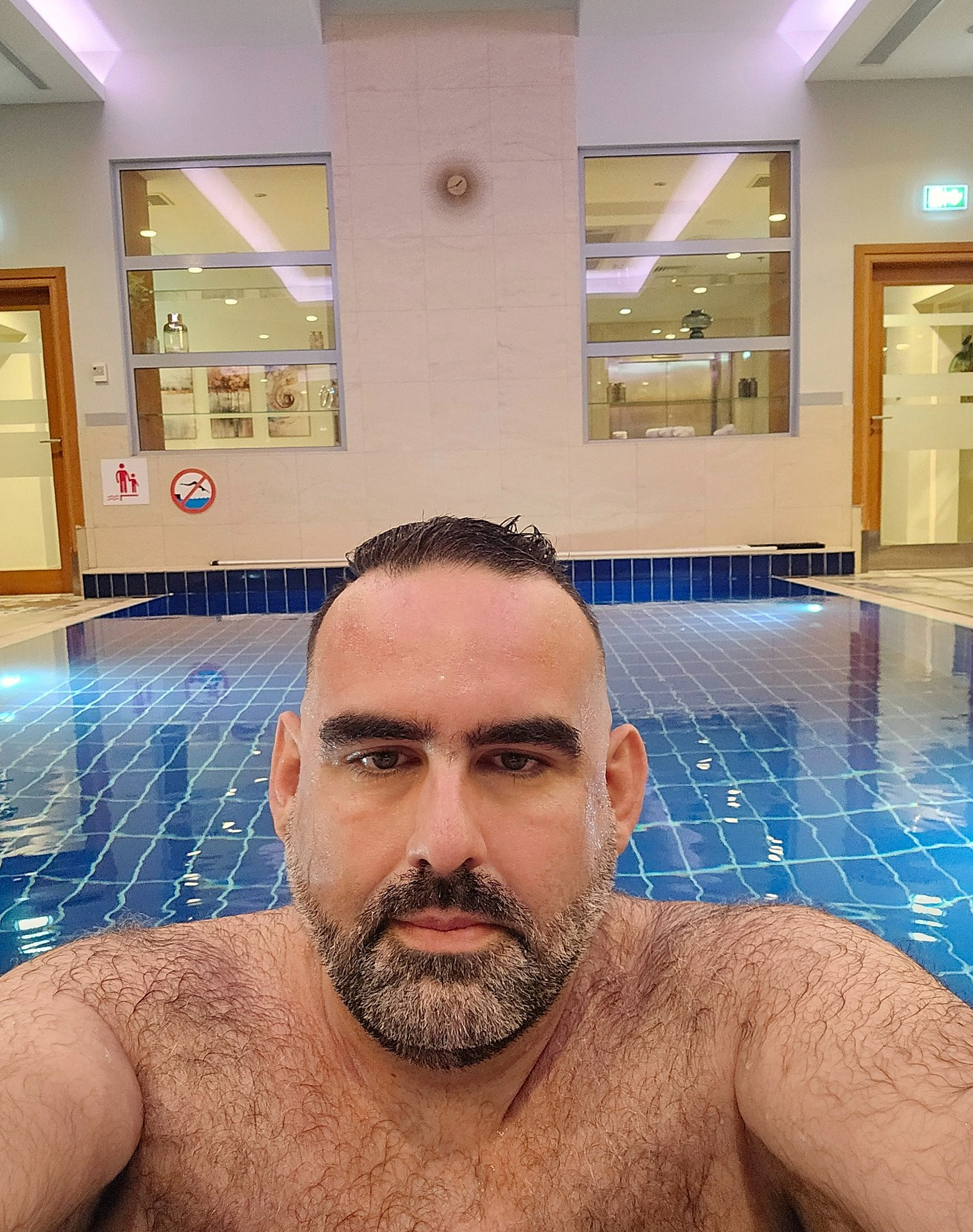
After the saturated colours, amplified sound and physical energy of Sala Ziemi, the quiet wellness area offered the ideal opposite.
There was no need to decide whether Baroque music benefited from red spotlights. There was only warm water, a mostly empty room and the satisfaction of having constructed an entire day around something I genuinely wanted to experience.
The Sheraton had been more than a convenient bed. Its location, Bonvoy benefits, restaurant happy hour and pool had allowed the trip to function without friction.
The expensive parking and pantry-like lounge in Zadar had become minor administrative details.
Poland beyond the concert
Had I flown directly home the following morning, the journey might still have looked like an elaborate excursion organised around one singer.
Instead, I continued to Warsaw by PKP Intercity.
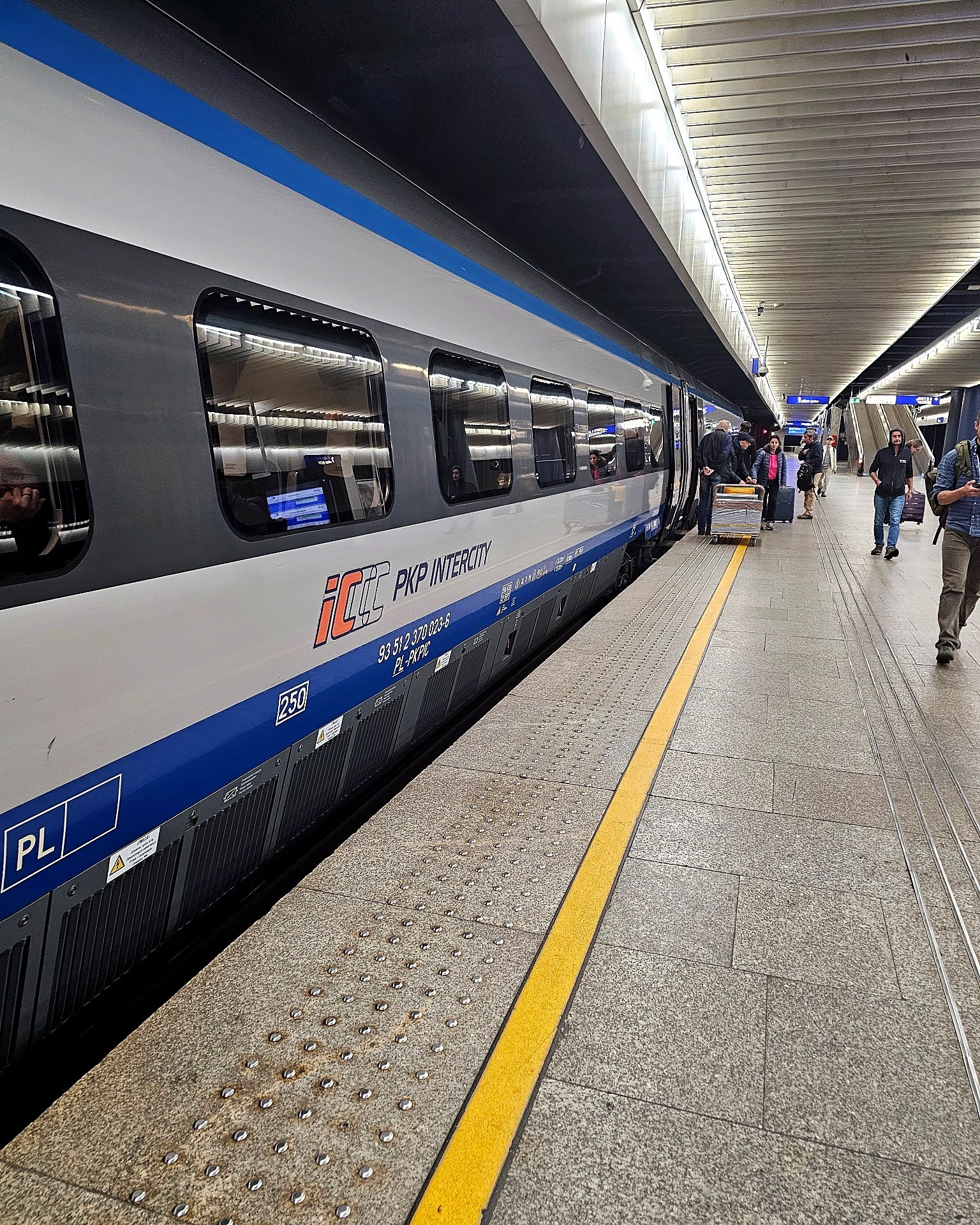
My first-class ticket gave me a reserved window seat in a modern open-plan carriage. The train was comfortable, polished and impressively organised—considerably better than the vague and probably outdated image of Polish railways I had carried with me.
That train became the first concrete sign that Poland would surprise me not only through its reconstructed historic centres, but through its modern infrastructure.
The stations, rolling stock and general efficiency felt contemporary and confident. I had expected history. I had not expected the present to make such a strong impression.
I continued through Warsaw and later Kraków.
The concert had provided the date and destination around which everything else could be arranged. Poznań added a red market square, an Apollo fountain, a very good hotel and an evening in which Vivaldi shared a stage with synthesiser, pop lighting and one-handed breakdance.
A 300-year-old aria sent me to Poznań.
Modern Poland made sure the journey became something larger than a concert.
