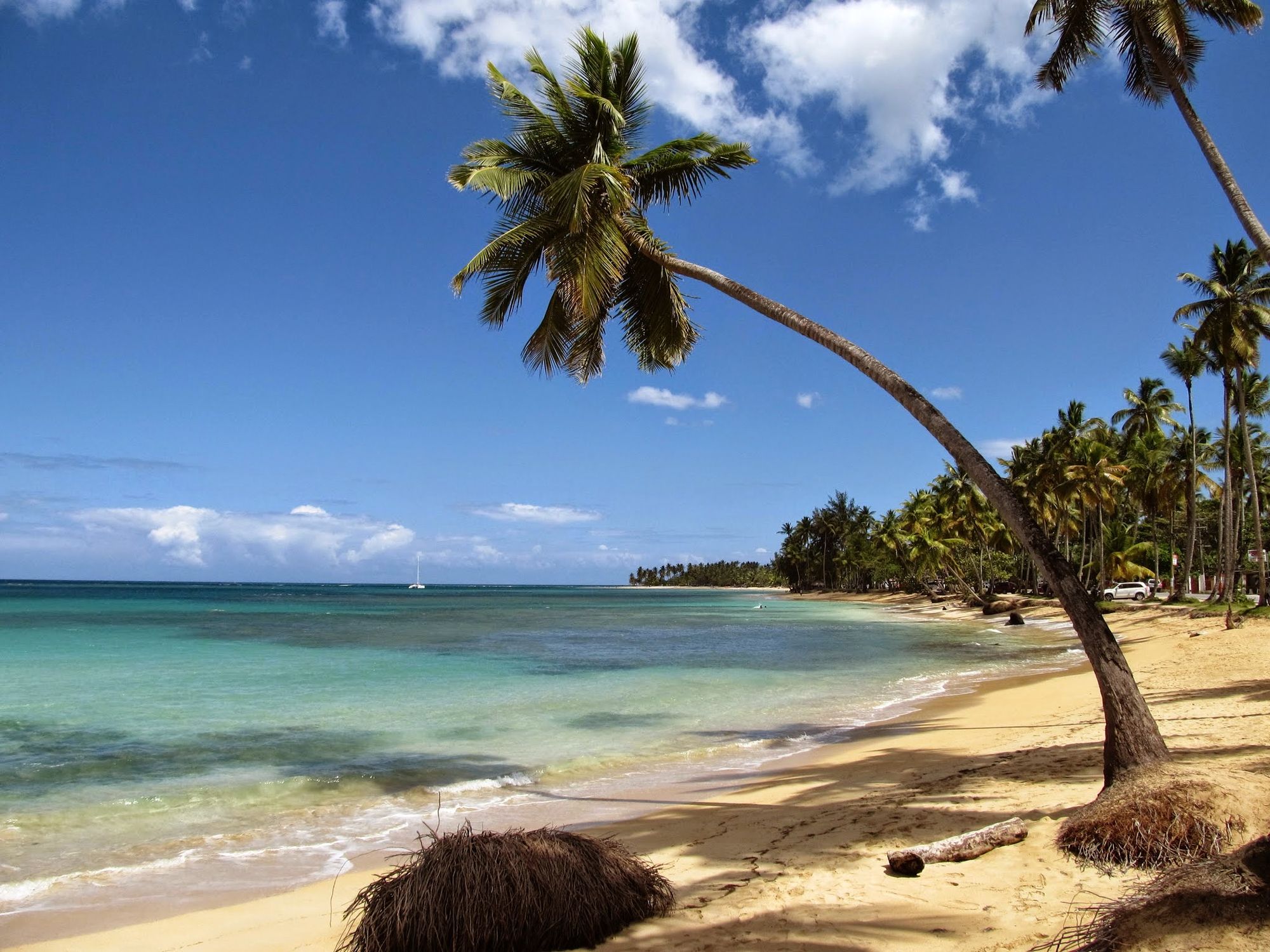
 Río San Juan, María Trinidad Sánchez, Dominican Republic
Yes, Playa Grande and Dudu Lagoon fit comfortably into one day from Cabarete, and they pair well. Playa Grande is a long beach near Río San Juan, about 60 kilometres east of Cabarete along the north coast. Dudu Lagoon is a park built around freshwater lagoons and caves near Cabrera, roughly 25 kilometres further on. Do the beach in the late morning, eat lunch there, and spend the afternoon swimming at the lagoon before the drive back west.
There are two catches, and both involve water. Playa Grande has currents strong enough to worry weaker swimmers, and the TravelFeed writer who snorkelled it saw no lifeguards. Dudu Lagoon has a 10-metre jump into its deepest pool, with no one stopping you from doing it badly.
This guide is built from three posts by @trip-hop, who drove the route from a base in Cabarete in November 2018, plus a Las Terrenas report by @verticallife and the Dominican Republic's official tourism site for the practical details. Peso figures from the posts are what those writers paid in 2018. Read them as scale, not as today's prices.
How the day fits together
The photo filenames in @trip-hop's two posts carry timestamps, and they show the order that works. The first Playa Grande shot was taken at 13:15 on 15 November 2018 and the last at 14:18. The first one at Dudu Lagoon is from 15:11. That's under an hour between them, including the drive.
On the map, the legs are:
- Cabarete to Playa Grande: about 60 km east. @trip-hop put it at "around 60km", and the route on OpenStreetMap agrees.
- Playa Grande to Dudu Lagoon: about 22 km by road from the beach car park to the lagoon entrance. @trip-hop described the lagoon as 25 km from the nearest tourist beach.
The Dominican Republic's official tourism site, GoDominicanRepublic, places Dudu Lagoon "approximately two hours' drive east of Puerto Plata and an hour from Playa Grande." @trip-hop's timestamps suggest less. Plan on the hour anyway.
Both places sit in María Trinidad Sánchez province, which the same site's province page puts two to three hours from Santo Domingo.
Getting there: car, motorbike or tour
@trip-hop rented a vehicle, and that's the setup the posts describe in detail. At Playa Grande there's plenty of parking in a well-kept, secure car park, with an attendant minding the vehicles. In 2018 the expected tip was about 20 pesos for a car, which @trip-hop called "relatively insignificant."
The other option is a tour. @trip-hop noted that most of Playa Grande's visitors arrive on day-trip buses around lunchtime, apparently with lunch built into the package, and called it "certainly the easiest way to arrive here." Operators in Cabarete and Puerto Plata sell Playa Grande and Dudu Lagoon together as an eight-hour day, often with other beaches added. The trade-off is time: typical itineraries listed online give about an hour at the lagoon, and you leave when the bus leaves.
If you have your own wheels, it's worth arriving at Playa Grande before the tour buses rather than with them.
Playa Grande: snorkelling, currents and lunch on the ridge

The official tourism site calls Playa Grande one of the most spectacular beaches in the country. @trip-hop was more specific: emerald water, a less touristy beach, and few places to stay nearby, so most of the crowd is day trippers who come in for lunch. The one big exception is the Aman resort, Amanera, which the tourism site describes as sitting above the beach.
The part to read carefully is the snorkelling. @trip-hop's Playa Grande post is blunt about it. The most impressive sights were out near the breaks, which is also where the waves and currents shove you around. They didn't see any lifeguards and suggest a life jacket for anyone who isn't a strong swimmer, and turning back the moment you feel uncomfortable. If you can handle the swim, they rate the visibility as spectacular.
If you don't want to snorkel, walk past the car park to the main stretch of sand, where swimmers and sunbathers gather. Snorkel sets, fins, rafts and floats are available to rent. @trip-hop noticed the low-pressure selling, "kind of rare for the Dominican Republic." No official source says whether lifeguards are posted today, and beach-listing sites contradict each other, so ask at the car park and assume you're on your own.

Eat here before you head on. A row of restaurants sits on a ridge at the west end of the beach, serving what @trip-hop called "cheap(ish)" food and drinks, and the tables are shaded all day. Their verdict was that a couple of hours at Playa Grande is enough for most people. That's roughly the span their photos cover, and it leaves the afternoon for the lagoon.

Dudu Lagoon: what's there and how risky the jump is
Dudu Lagoon (Laguna Dudú, also mapped as Laguna El Dudú) is in the La Entrada area of Cabrera. The official tourism site describes turquoise lagoons ringed by caves and forest, kayaks for rent, a cave you can explore on foot, an on-site restaurant and bar, and green space to spend the afternoon in.

@trip-hop's Dudu Lagoon post calls it "a truly remarkable and inexpensive day trip" that most beach-focused visitors skip. The entrance fee was 200 pesos, then under 4 US dollars. Prices quoted online in 2026 don't agree with each other, and we found none from an official source, so bring pesos in cash and expect to pay more than that.
There are two main swimming areas, and one of them is noticeably more extreme. The extreme part is the drop. The official site describes the zipline as "makeshift" and "at your own risk," dropping riders about 10 metres (33 feet) into the deepest lagoon. @trip-hop goes further: apart from the zipline, there were virtually no safety rules or restrictions, and jumping from more than 10 metres has hurt "many past visitors." The sign at the jump point says it in two languages.

The sensible order: swim and watch other people jump before you consider it. Skip the jump altogether after a beer at lunch on the Playa Grande ridge. The lagoon is a fine afternoon without it. @trip-hop found cafes and restaurants on the grounds, walking paths through well-kept gardens, and a fallen tree that carried on growing. The park wasn't busy, even though it was what counted as peak season.

Cabarete as the base
@trip-hop based themselves in Cabarete, and it's the obvious place to start from. Their Cabarete post covers Kite Beach, the stretch where the wind blows most days and the water has almost no waves except the ones the wind whips up.

Their numbers from 2018 are still useful for scale. Lessons at the established kite schools ran about 70 US dollars an hour, and newer schools charged around 50 with older equipment. Beers were about a dollar. Bungalows just back from the beach went for around 20 dollars a night. It took them about 30 minutes of training on the sand before they were in the water. Swimmers, surfers and kiters share the beach with no official rules, though the unspoken zones are obvious after a few minutes of watching.
Cabarete is also what makes the day trip worth doing. @trip-hop pitched Playa Grande as the escape from Cabarete's crowded beaches, and said the 60-kilometre drive was worth it for "the feeling of having the place to yourself."
Coming from Las Terrenas instead
If you're staying on the Samaná peninsula rather than in Cabarete, you're approaching from the other direction, and the beach at Las Terrenas is a good reason to stay put anyway. @verticallife, writing in Polish about a backpacking trip, found it almost empty, with clear warm water and coconut palms along the sand. It made their top two beaches in the country. The other was Playa Frontón, which they warn now draws boat trips organised by agencies and hotels.
Their beach-lunch story is a useful reference for prices on this coast. A restaurant owner waved them in to plastic tables under umbrellas on the sand. The menu was ambitious and the prices were high for the area. They negotiated about 30 percent off and ate calamari with rice and a Presidente beer. The lesson: a price on a beach menu here can be an opening offer.
When to go
@trip-hop did the whole run in mid-November, which they describe as peak season at Dudu Lagoon, and still found it uncrowded. November is also the wettest month in Río San Juan: the town's climate record averages 270.8 mm of rain that month, out of about 1,854 mm a year. In practice, that means some afternoons will be wet, so start early and save the lagoon for when the sky looks clear. The official tourism site lists the province as visitable year-round.
On any day, tour buses arrive at Playa Grande around lunch. Get there before them, or come after they've moved on.
For more on the country, the Dominican Republic destination page collects TravelFeed posts from across the country.
FAQ
Is Playa Grande in the Dominican Republic safe to swim?
The main sandy stretch is where swimmers gather. The water out by the breaks, where the best snorkelling is, has strong currents. @trip-hop saw no lifeguards in 2018 and recommends a life jacket for weaker swimmers. Online listings disagree on whether lifeguards are posted now, so assume none.
How far is Dudu Lagoon from Playa Grande?
About 22 km by road from the Playa Grande car park to the lagoon near Cabrera. The official tourism site allows an hour, and @trip-hop's photo timestamps show the move took less.
How much does Dudu Lagoon cost?
@trip-hop paid 200 Dominican pesos per person in November 2018. We found no official price list, and prices quoted online for 2026 vary, so bring cash in pesos and expect more than that.
Can you do Playa Grande and Dudu Lagoon in one day from Cabarete?
Yes. It's about 60 km to Playa Grande and 22 km more to the lagoon. Allow a couple of hours at the beach, including lunch, and the afternoon at Dudu. Organised tours from Cabarete and Puerto Plata run the same pairing in about eight hours.
