 Oslo, Norway
Four of the five museums clustered on Oslo's Bygdøy peninsula are open on ordinary hours in 2026: the Fram Museum, the Kon-Tiki Museum, the Norwegian Maritime Museum, and the Norsk Folkemuseum open-air site. The one that isn't is the one a lot of people go to Bygdøy for in the first place. The Viking Ship Museum has been closed since 2020, mid-rebuild into a larger "Museum of the Viking Age," and the current reopening estimate is 2027. If a trip report or old blog post mentions walking among the Oseberg and Gokstad ships on Bygdøy, it's describing a building that isn't receiving visitors right now.
That one closure is the detail that throws off most Bygdøy planning, because the five museums get lumped together in generic "things to do in Oslo" lists that don't note which building is currently shut. Two TravelFeed writers documented the Viking Ship Museum and the Fram Museum back when all five sites were running; a third spent a frozen November Saturday working through three of them on foot. Read together, their accounts plus the museums' current listings answer the two questions that actually matter here: what's worth the ferry ride today, and what isn't there anymore.
What's closed right now, and why
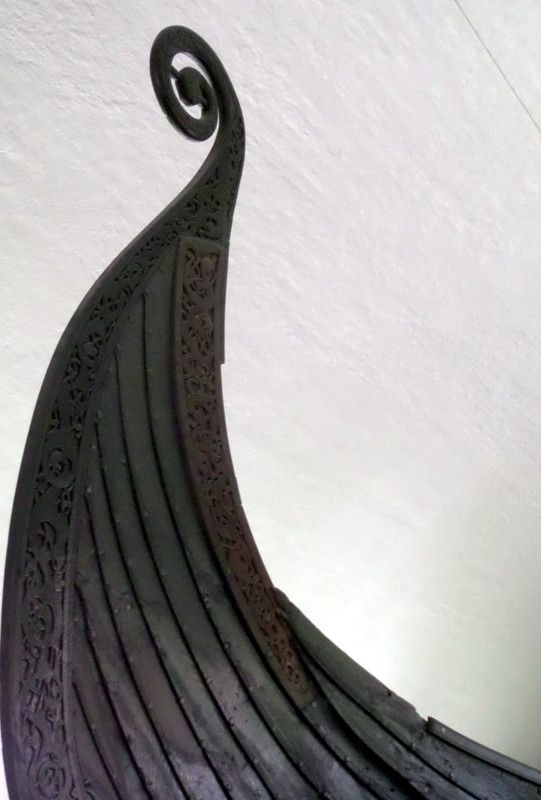
The Viking Ship Museum shut its doors for a structural rebuild, and the ships themselves — the Oseberg, Gokstad, and Tune vessels, all excavated from Norwegian burial mounds — spent the closure in storage before being moved into the new building. According to the Museum of the Viking Age's own site, that move and reinstallation finished in April 2026, but the museum is still not open to the public; the current target for a full public opening is 2027, and the date has slipped before. In the meantime, the site points visitors toward Oslo's Historical Museum in the city centre, which holds other Viking Age objects, as the nearest substitute.
One of the community's own Bygdøy visits happened before any of this started. In 2018, a TravelFeed writer toured what was then simply the Viking Ship Museum and described it as laid out "not unlike a church, with long halls containing the most complete ships," the walls thick enough to remind him of California mission architecture. The post is a useful record of what the building held — the Oseberg ship, built around 820 AD, and the Gokstad ship, from roughly 900 — but it's a description of a museum that, as of 2026, visitors can't walk into.
The Fram Museum: the peninsula's centerpiece
The Fram Museum is built around a single ship, the polar vessel Fram, launched in 1892 and designed to be squeezed up and out of pack ice rather than crushed by it. Fridtjof Nansen, Otto Sverdrup, and Roald Amundsen all sailed it on different Arctic and Antarctic expeditions over roughly two decades, and the building itself was purpose-built around the ship — visitors walk its full deck and can go below, rather than viewing it from a roped-off waterline.
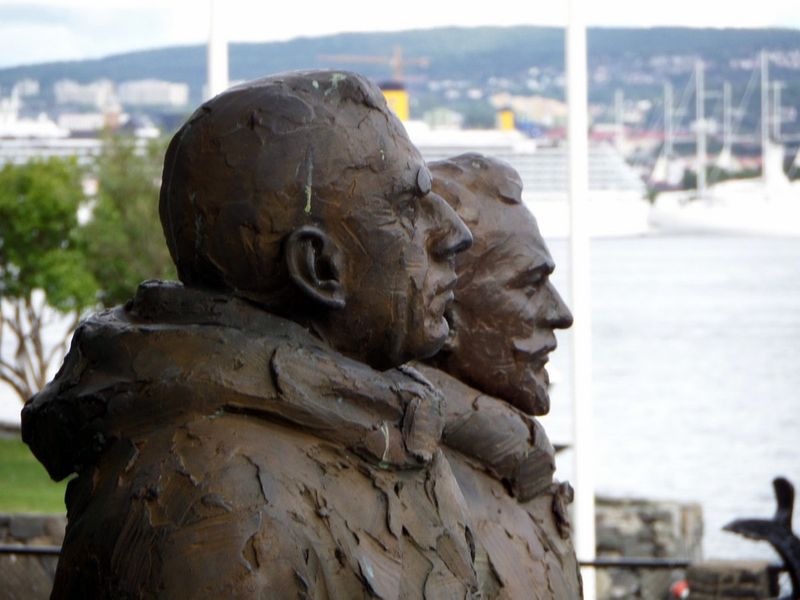
A 2018 TravelFeed account of the visit leans on exactly that: "the smell of the ship — paint, varnish, and wood — is ever present," and the writer notes you see "her entire ice-strengthened hull," not just the parts a dry-dock display usually shows. He singles out the statues of the polar expedition party as a highlight. A second, more recent community account, written by a cruise-industry worker who reached Oslo by ferry from Stockholm, adds a smaller detail worth knowing: the hand-carved wooden figureheads on display were recovered from the sea, not built for the museum, which is part of why the collection reads as artifacts rather than props.
Practically: the Fram Museum is open year-round, 10:00–17:00 October through April and 09:30–18:00 May through September, with adult admission at 180 NOK. A separate account, from a Polish visitor who spent a November Saturday working through Bygdøy on foot, adds that architect Bjarne Tøien designed the building around the ship, and that it opened on 20 May 1936 with King Haakon VII in attendance.

Kon-Tiki, a few steps away
The Kon-Tiki Museum sits close enough to the Fram Museum that trip reports treat them as a single stop. It holds the original balsa-wood raft Thor Heyerdahl sailed 8,000 kilometers across the Pacific in 1947, along with the papyrus boat Ra II from his later Atlantic crossing. One visitor's account calls out the 1951 Academy Award the expedition's documentary won — the same trip that made Heyerdahl's name — and quotes a line of his displayed in the museum: "Borders? I have never seen one. But I have heard they exist in the minds of some people."

The Kon-Tiki Museum runs 10:00–17:00 most of the year, extending to 09:30–18:00 in June through August, with the same 180 NOK adult admission as the Fram Museum. The two museums sell a joint ticket — 325 NOK for an adult, roughly a 10% saving over paying separately — which is worth buying at whichever museum you reach first, since both stops sit within a few minutes' walk of each other.
The Norwegian Maritime Museum: the one people skip
The Norwegian Maritime Museum sits on the same short stretch of Bygdøynes as Fram and Kon-Tiki, and it's the one most itineraries drop first when time runs short. That's a planning shortcut more than a verdict on the place: the November-Saturday account above spent time in all three and called each "very interesting and absorbing," singling out the maritime art gallery and the fishing and whaling exhibits at the Norwegian Maritime Museum specifically.

The Norwegian Maritime Museum is open 10:00–17:00 daily from April through early October, and 11:00–16:00 Tuesday through Sunday (closed Mondays) the rest of the year. Adult admission is 180 NOK, and it's included in the three-museum combination ticket alongside Fram and Kon-Tiki, priced at 485 NOK for an adult — worth it only if you're genuinely doing all three in one visit, since buying it and skipping a museum erases the saving.
Getting to Bygdøy, and why the season matters
Two ways to reach Bygdøy come up repeatedly in trip reports: the passenger ferry from Rådhusbrygge, the pier by Oslo City Hall, or driving. The ferry is the better option on paper — a short crossing, no parking to find — but it's a seasonal service, running roughly from mid-spring into early autumn and not at all in winter. That gap is exactly what caught out the writer behind the November Saturday account: with the ferry not running, he drove instead, and came away from the day with an unplanned parking fine for overstaying the time limit near the museums. His conclusion, after the fact, was blunt: "the ferry option is recommended" whenever it's actually running.
The same account is a useful data point on seasonal timing more broadly — he also found Akershus Fortress, back in the city centre, underwhelming in November cold and guessed a summer visit would land better, and skipped Vigeland Park entirely once the Bygdøy museums ran long. Worth reading as a pattern rather than a one-off: several of the sights around Oslo reward a summer or shoulder-season visit specifically because Bygdøy's ferry, and the city's outdoor sights generally, are built around that window.
How many museums can you actually do in one day
Fram, Kon-Tiki, and the Norwegian Maritime Museum sit close enough together that a determined visitor can cover all three in a day without much backtracking — the November-Saturday account did exactly that, on foot, after arriving by car. Where it gets tight is adding the Norsk Folkemuseum, Bygdøy's open-air museum of historic buildings, which by itself takes two to three hours to see properly. Treat three museums plus lunch as a full day, and treat four as a day where something gets rushed.
Since the Viking Ship Museum isn't part of the rotation until its 2027 reopening, the peninsula currently has one fewer stop than the "five Bygdøy museums" framing in most general guides suggests — which, if anything, makes three unhurried visits a more realistic day than it used to be.
For more on the wider region, see TravelFeed's Norway destination page.
FAQ
Is the Viking Ship Museum in Oslo open in 2026?
No. It has been closed since 2020 for a rebuild into the Museum of the Viking Age. The ships and the Oseberg burial finds were moved into the new building in April 2026, but the museum is not yet open to the public; the current target reopening is 2027.
Where can you see Viking Age artifacts while the Viking Ship Museum is closed?
The Museum of the Viking Age's own site points visitors to Oslo's Historical Museum, in the city centre rather than on Bygdøy, as the place to see other Viking Age objects during the closure.
How do you get to Bygdøy from central Oslo?
By passenger ferry from Rådhusbrygge, near Oslo City Hall, when it's running — roughly mid-spring through early autumn — or by car or bus year-round. Outside ferry season, driving is the practical option, though parking near the museums is time-limited and enforced.
Can you visit the Fram, Kon-Tiki, and Norwegian Maritime museums in one day?
Yes — they sit within a few minutes' walk of each other on Bygdøynes, and a combined ticket covering all three costs 485 NOK for an adult, against 540 NOK paying separately. Adding the Norsk Folkemuseum's open-air site on top makes for a fuller, more rushed day.
