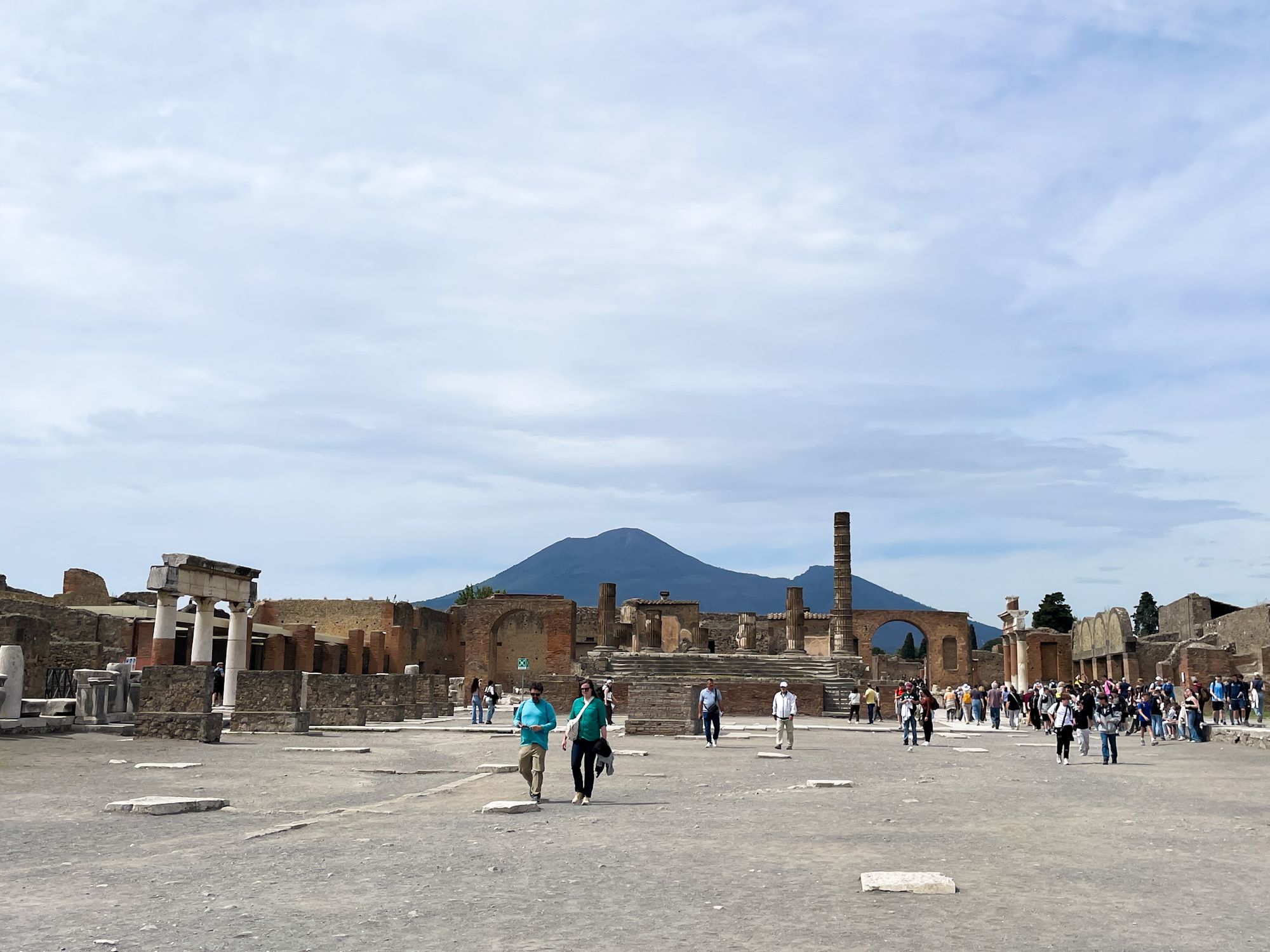
 Pompei, Campania, Italy
In late spring, I visited Pompeii as one of the stops on my honeymoon in Italy. Given our different backgrounds, it was also one of the few historical sites that both my husband and I had studied at school.
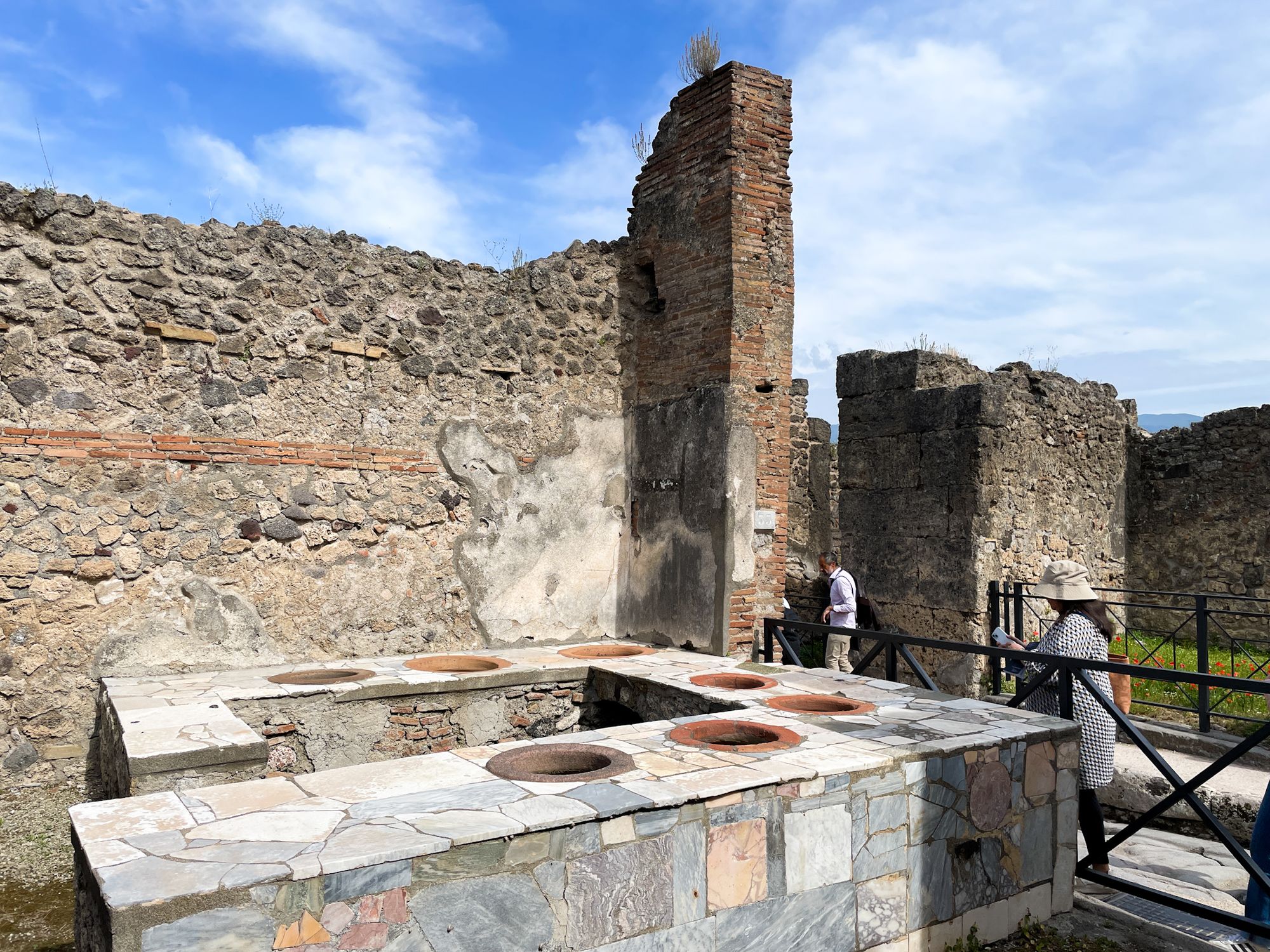
We booked a 90-minute guided tour and quickly realised that Pompeii was much larger than either of us had imagined. Before visiting, I knew that an entire settlement had been buried by the eruption of Mount Vesuvius. What I hadn't appreciated was just how much of the city remained. Walking through the stone streets, past houses, shops, and public spaces, it really was a well-preserved snapshot of everyday Roman life.
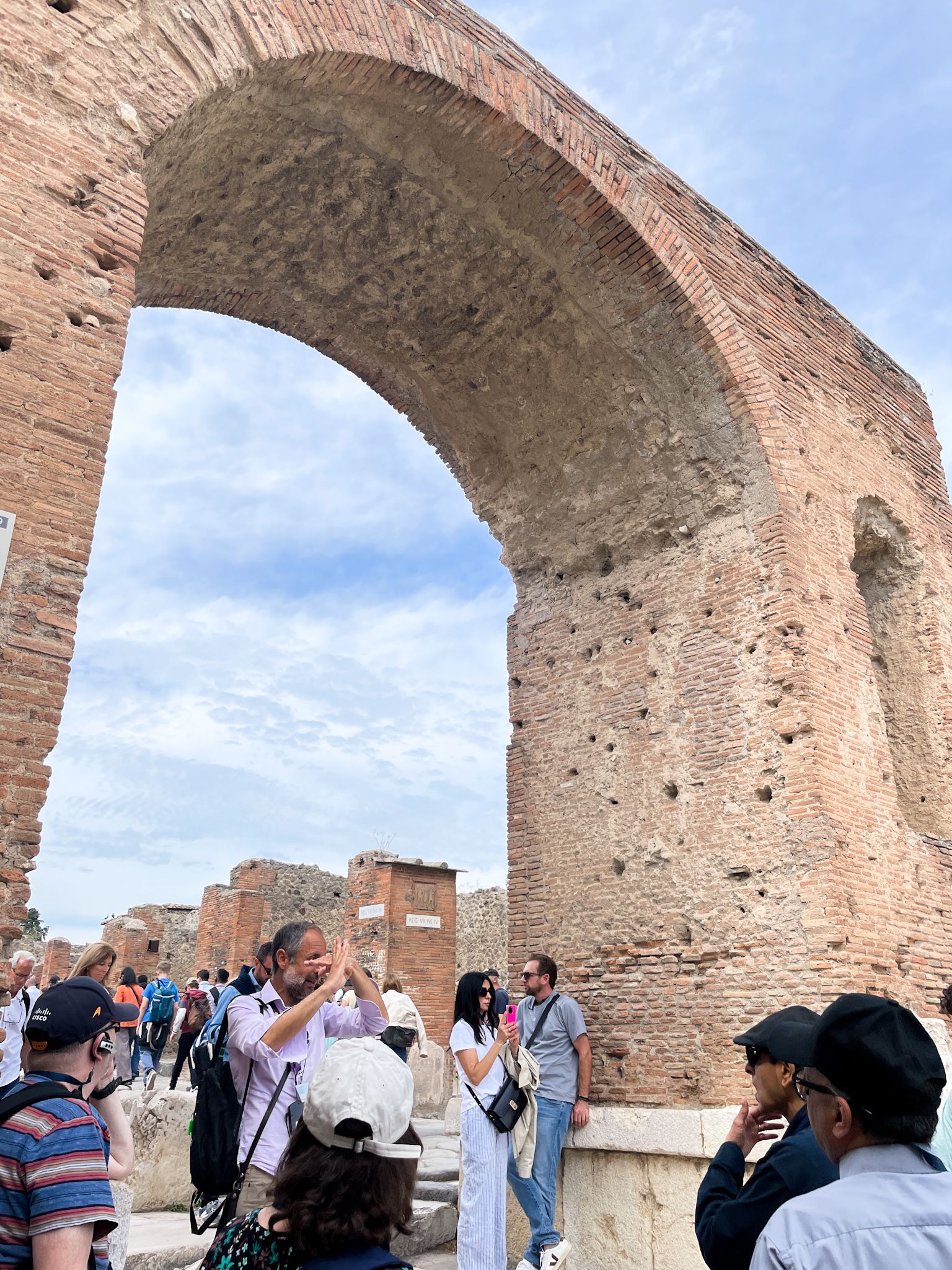
I was especially thankful that we booked a guide. Without his explanations, many of the ruins would have simply looked like piles of stone. Instead, he helped us understand the significance of small details that I would never have noticed on my own. My favourite stop was the House of the Faun, which once belonged to one of Pompeii's wealthier families. Through its architecture, decorations, and layout, it was possible to piece together what daily life might have looked like for the upper class nearly 2,000 years ago.
I also found myself repeatedly drawn to the sight of Mount Vesuvius in the distance. Standing among the ruins and looking back at the mountain made it easier to comprehend the scale of the disaster. It's one thing to learn about the eruption in a classroom and another to stand where it happened and imagine ash and debris reaching the very spot where you're standing.
Pompeii is not "fun" in the traditional sense of the word, nor is it full of dramatic photo opportunities around every corner. Instead, it is a place for learning and reflection. I wouldn't be surprised if some visitors found it boring after a while, especially without a guide to provide context.
Fortunately, our guide was actively involved in research at the site, and listening to him felt more like attending a university lecture from someone deeply passionate about their field. Although the tour was scheduled for 90 minutes, it ended up lasting close to two hours. To be honest, most of the tour group had drifted away by that point.
Before leaving, we did a little exploring on our own and made the longer-than-expected walk to the amphitheatre. By then we had already spent several hours at the site, yet it still felt as though there was plenty left unseen.
I would recommend Pompeii to anyone with an interest in history who can dedicate at least three hours to exploring it properly. While it's not the sort of place I feel compelled to revisit, I am glad I finally crossed it off my bucket list. Seeing such a remarkably preserved glimpse into everyday life nearly two millennia ago was a unique experience and made the ancient world feel tangible.
