Otočec, Slovenia
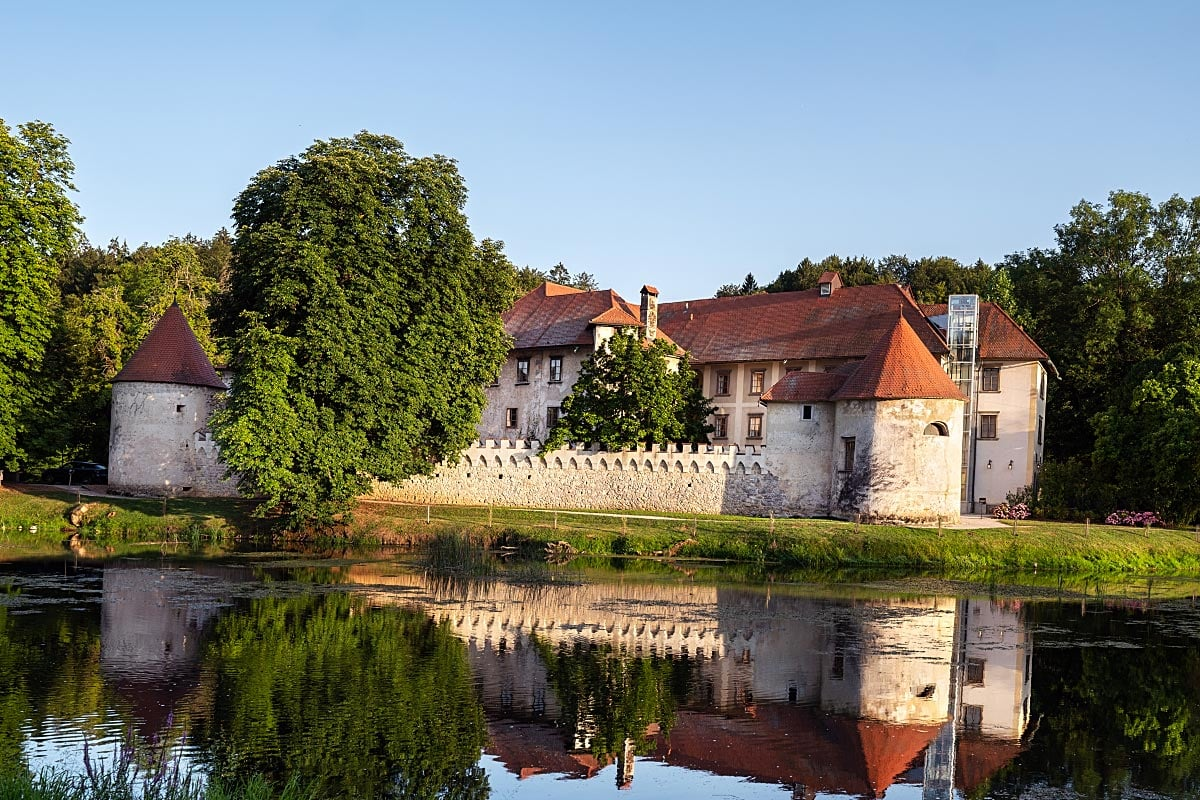
Helo Hive friends, today I will take you with me to the dinning experience at Caste Otočec, Slovenia. Dining in a castle has carried a certain prestige for centuries. Once, such tables were reserved for nobility, distinguished guests and the fortunate few who received an invitation. Today, anyone can book a meal at Otočec Castle, yet the sense of occasion remains. You cross the wooden bridge, enter Slovenia’s only castle on a river island and naturally begin to expect something memorable.
Restaurant Grad Otočec promises seasonal Slovenian cooking, produce from its own organic garden and the polished atmosphere of a five-star castle hotel. Our six-course tasting menu delivered several excellent dishes, thoughtful wine pairings and nearly flawless service, although the kitchen did not maintain the same level throughout the evening. In this Restaurant Grad Otočec review, we look at where the experience truly shone and where the fairy tale briefly lost its way.
Atmosphere at Restaurant Grad Otočec
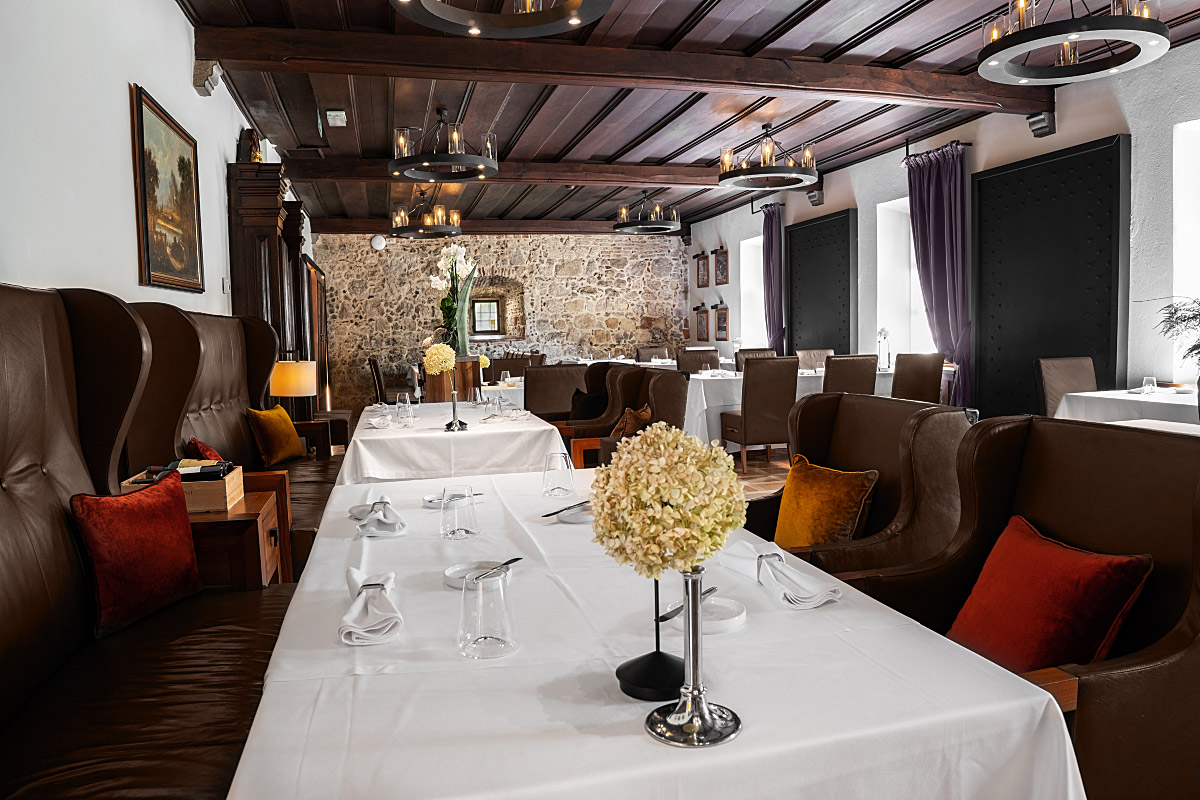
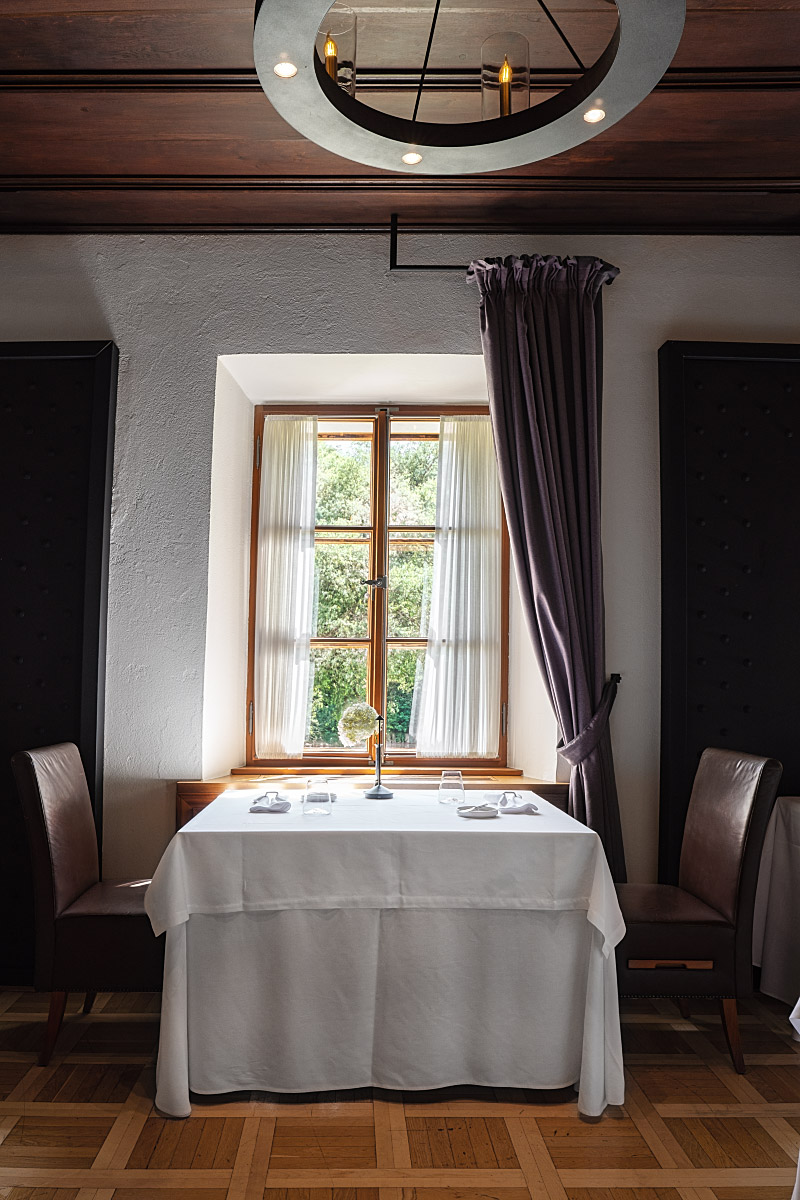
Timeless elegance rooted in medieval architecture still carries effortless class in the digital age. Dark wooden furniture, exposed stone and heavy ceiling beams give structure to the bright dining room, while crisp white tablecloths and carefully spaced tables reinforce the sense of occasion. Wherever the eye wanders, it finds calm, even when it settles beyond the windows on the pristine nature surrounding the castle.
About Restaurant Grad Otočec
Modern cooking feels entirely at home within the medieval walls of Otočec Castle. The seasons shape the menu, which gives a prominent role to high-quality local and organic produce. This commitment extends beyond carefully selected suppliers to the castle’s own organic garden. It is not quite within arm’s reach, but a short five-minute walk toward Hotel Sport will take curious guests there.
The restaurant is a member of the Chaîne des Rôtisseurs and is included in the Michelin Guide, which highlights its regional cooking, seasonal menus and vegetables from the kitchen garden. The hotel itself has also received a Michelin Key. These distinctions raise expectations, but the location does much of that work before the first plate even arrives.
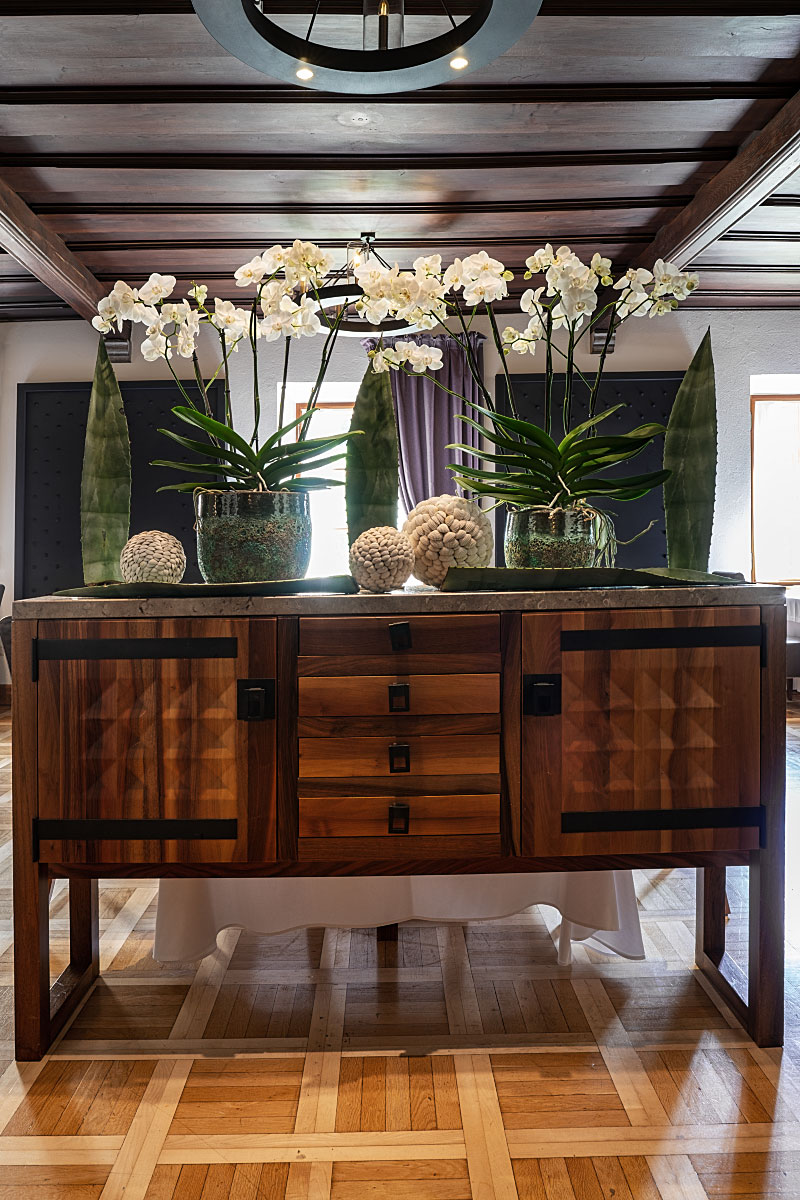
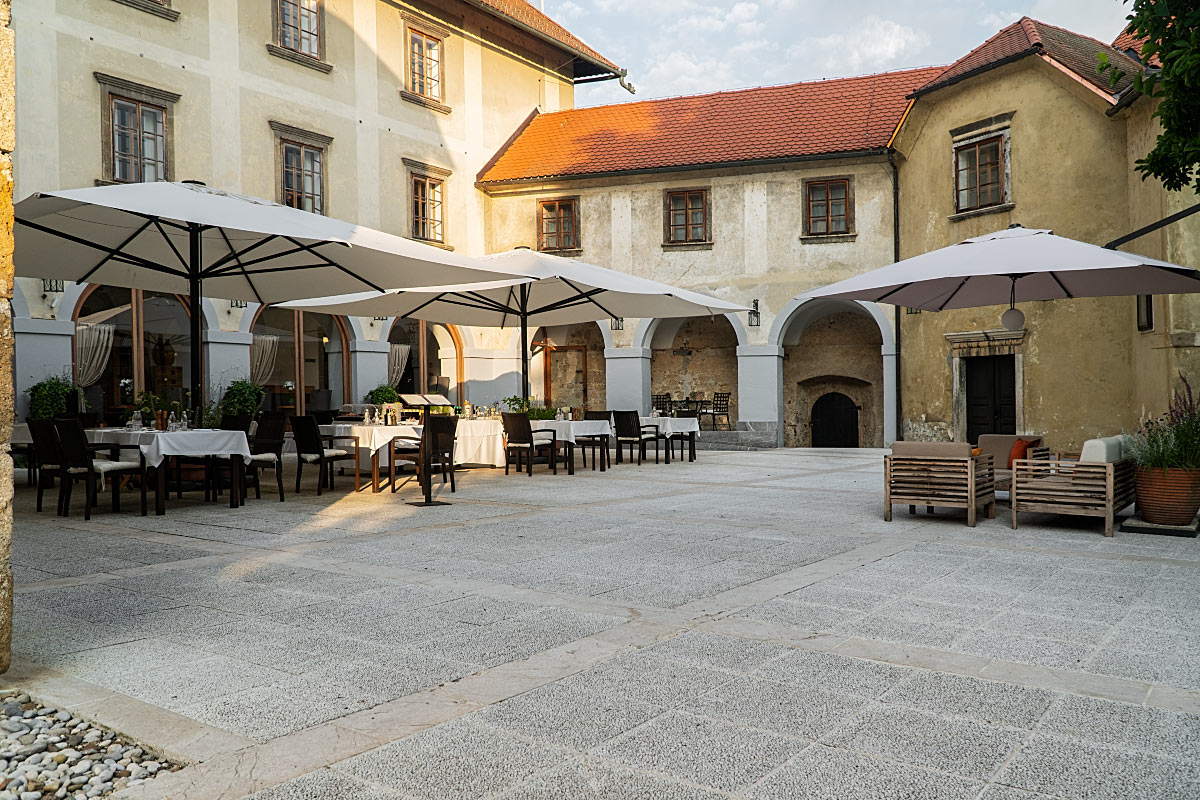
Restaurant Grad Otočec opens every day at noon and serves guests until 10 PM. The à la carte menu offers enough choice for different appetites, while the seasonal tasting menus provide a more complete view of the kitchen. Guests with dietary restrictions should notify the restaurant in advance. Reservations are recommended, especially if you hope to dine beneath the parasols in the enclosed castle courtyard, although the weather will always have the final say. Otherwise, the elegant main dining room and the cozy Hunting Room provide atmospheric alternatives.
The Wine Tower
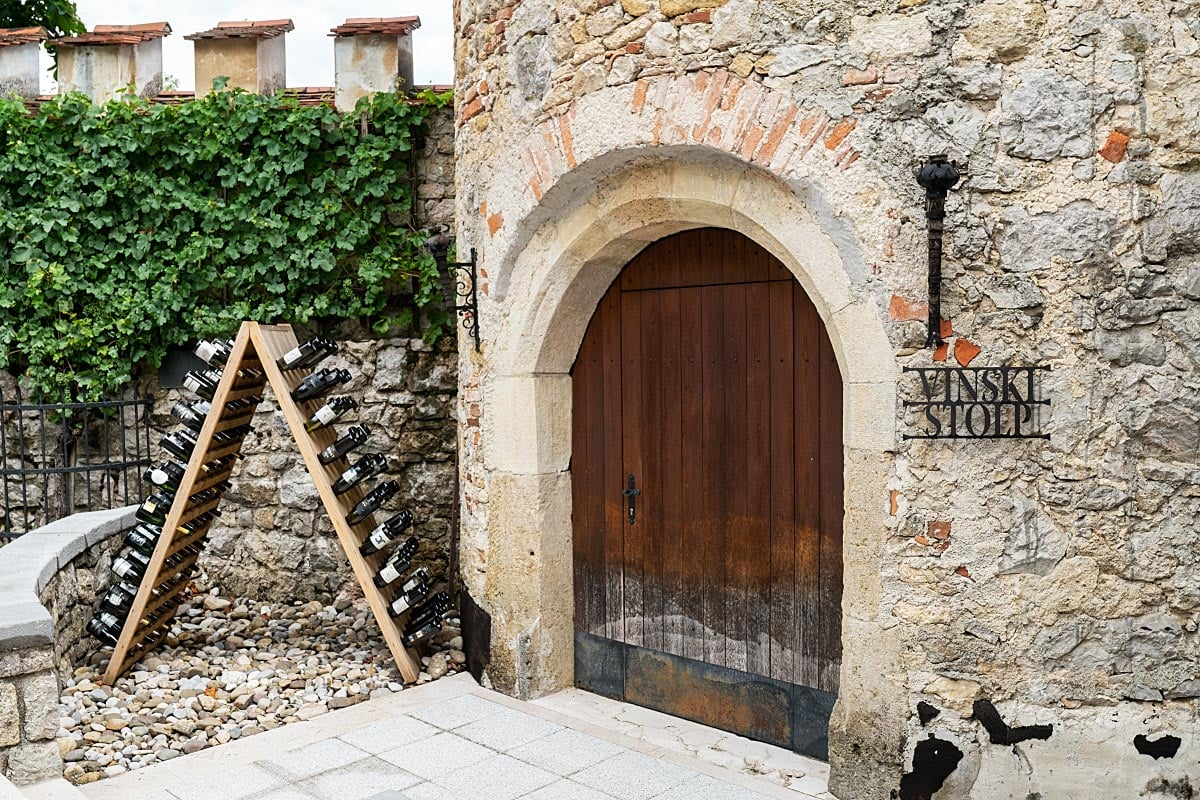
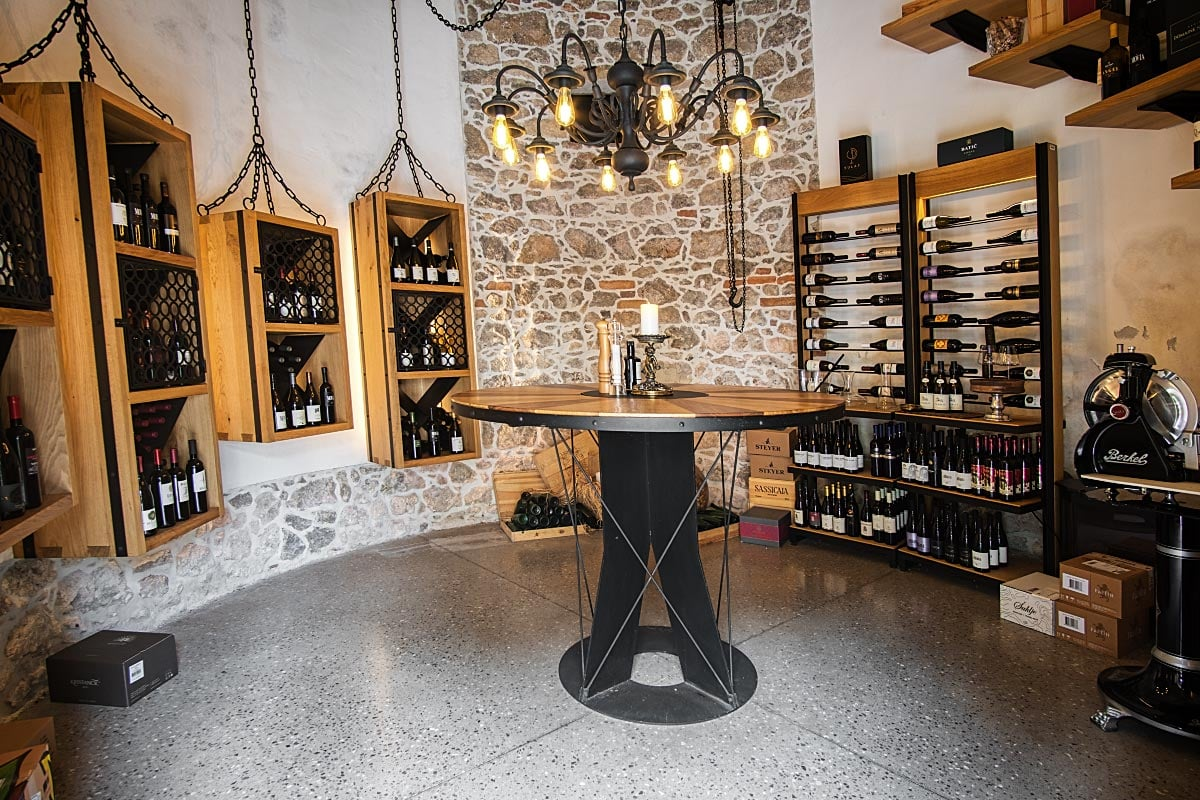
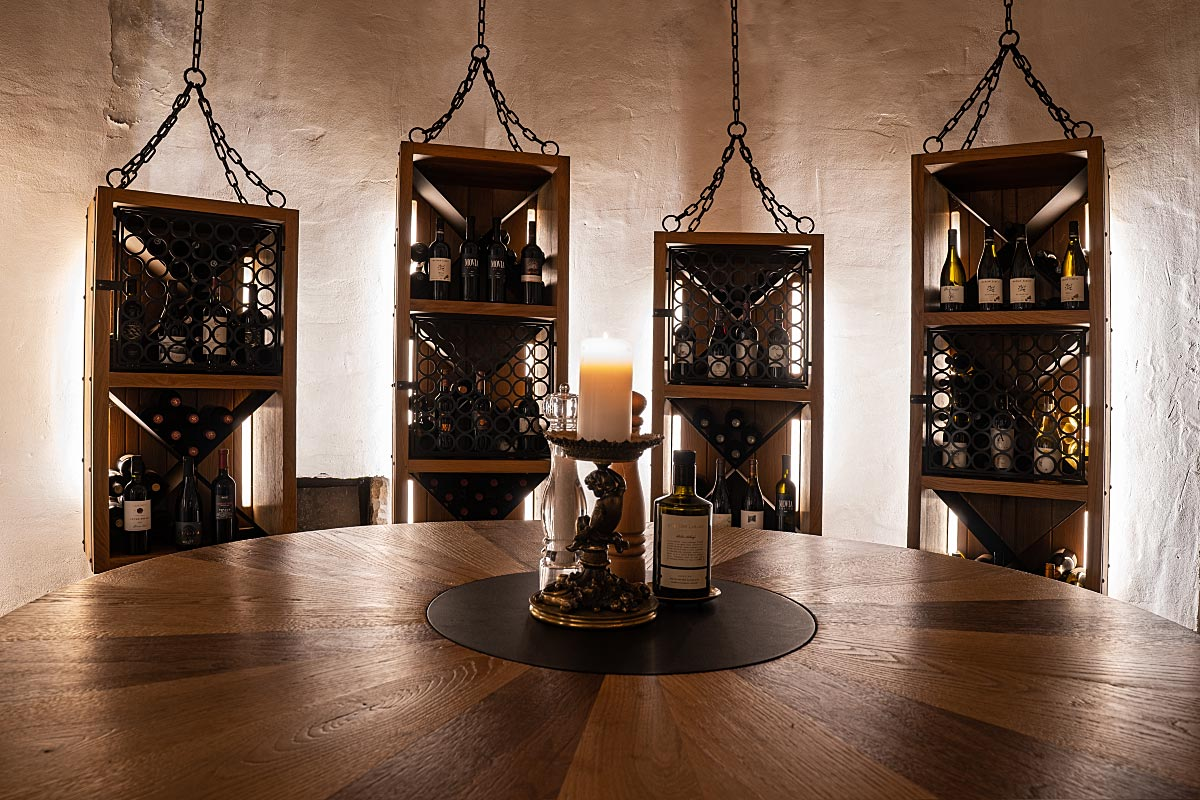
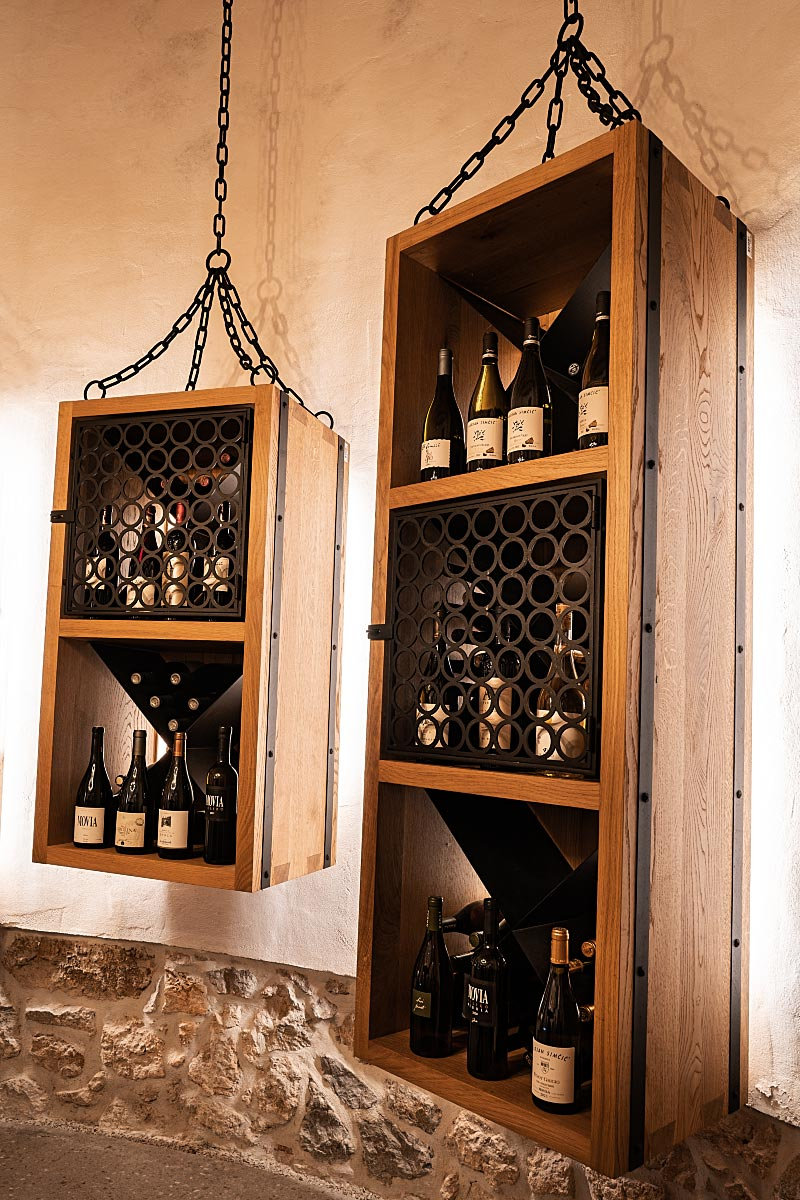
Restaurant Grad Otočec also has a beautiful wine tower designed for smaller groups eager to explore some of the country’s best bottles. Considering Slovenia’s compact size, the “region” can quite comfortably mean the entire country. An arched stone entrance leads into an intimate tasting room where suspended wooden cabinets surround a large round table. The medieval shell remains unmistakable, although the wine selection has progressed considerably since those days.
The Drinks Menu
Slovenian wine is the star of the drinks menu. You can explore it by wine region or leave the choice to the house sommelier with a pairing. A closer look also reveals several French, Italian and Portuguese bottles, along with a selection of stronger spirits. Those who prefer to remain sober are not forgotten, as the menu includes nonalcoholic choices as well.
Our Six-Course Tasting Menu
The tasting menu changes with the seasons and the ingredients available. Chef Đorđe Piperović presents traditional flavors through modern techniques while keeping the individual ingredients recognizable. Our six-course journey was accompanied by Slovenian wines selected to complement each plate.
Bread and Butter
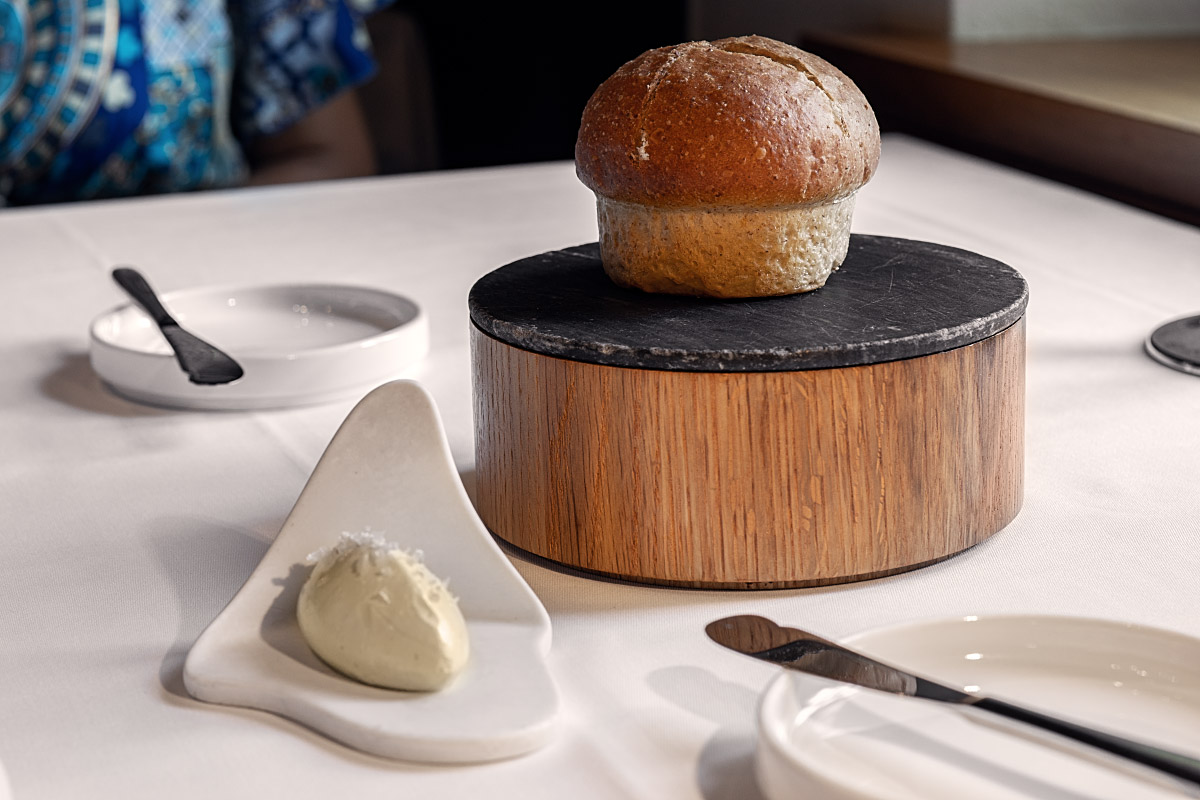
Bread and butter are time-tested crowd-pleasers that can still excite the palate when treated with care. We were welcomed by the aroma of freshly baked whole-grain bread shaped like a giant muffin and presented on a raised black slate. Its airy texture and rich flavor provided an ideal base for the light, whipped butter served alongside it.
Amuse-Bouche
A delicate profiterole filled with light Gorgonzola mousse softened the cheese’s familiar pungency and brought its sweeter, creamier side forward. Fig and honey added a natural partner to those flavors.
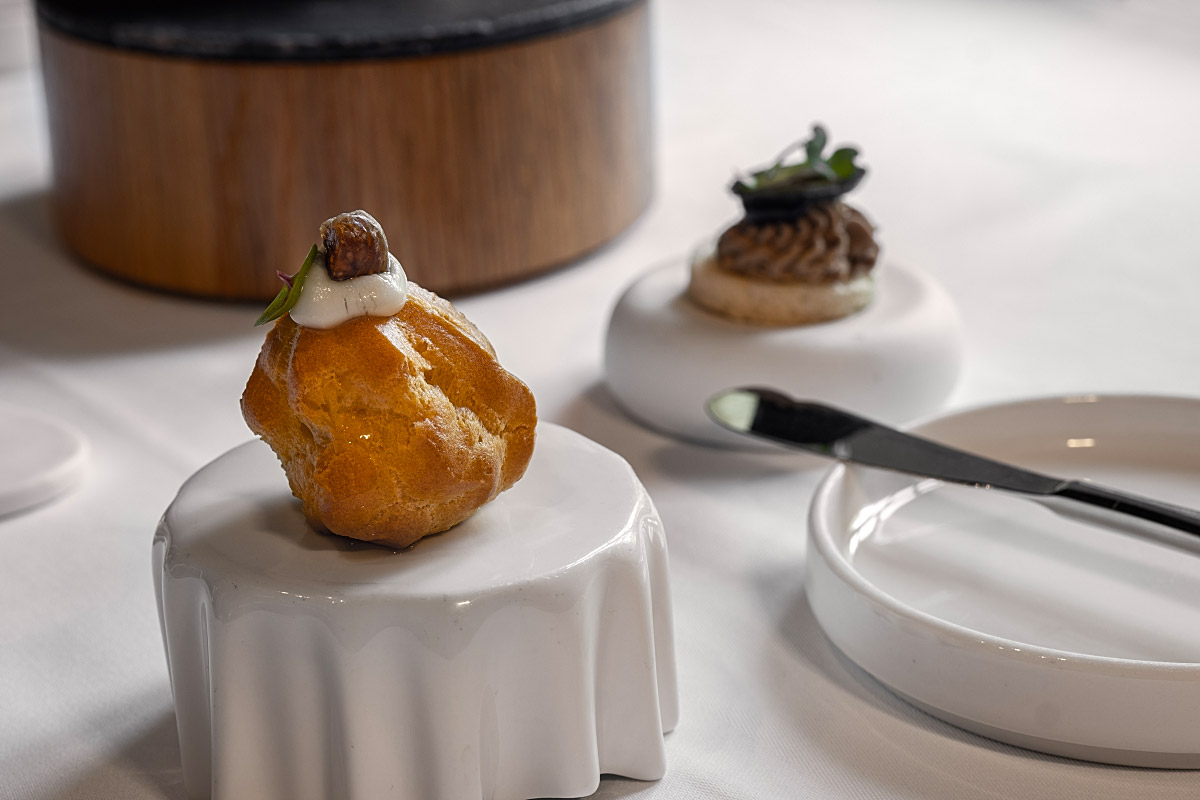
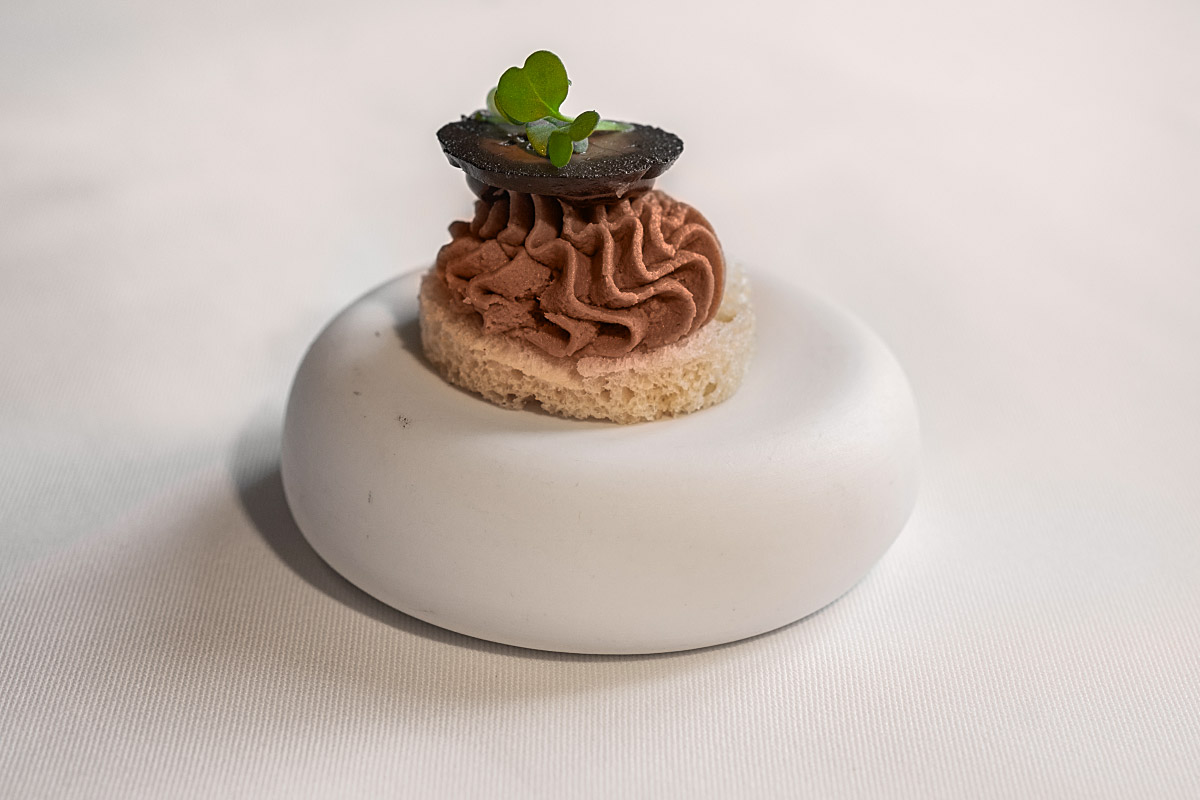
Game pâté on toasted brioche connected beautifully with the bread’s subtle buttery notes. A sweet Port wine gel balanced the pâté’s intensity, while roasted black walnut added a gentle crunch and a faintly floral quality.
Castle Caprese
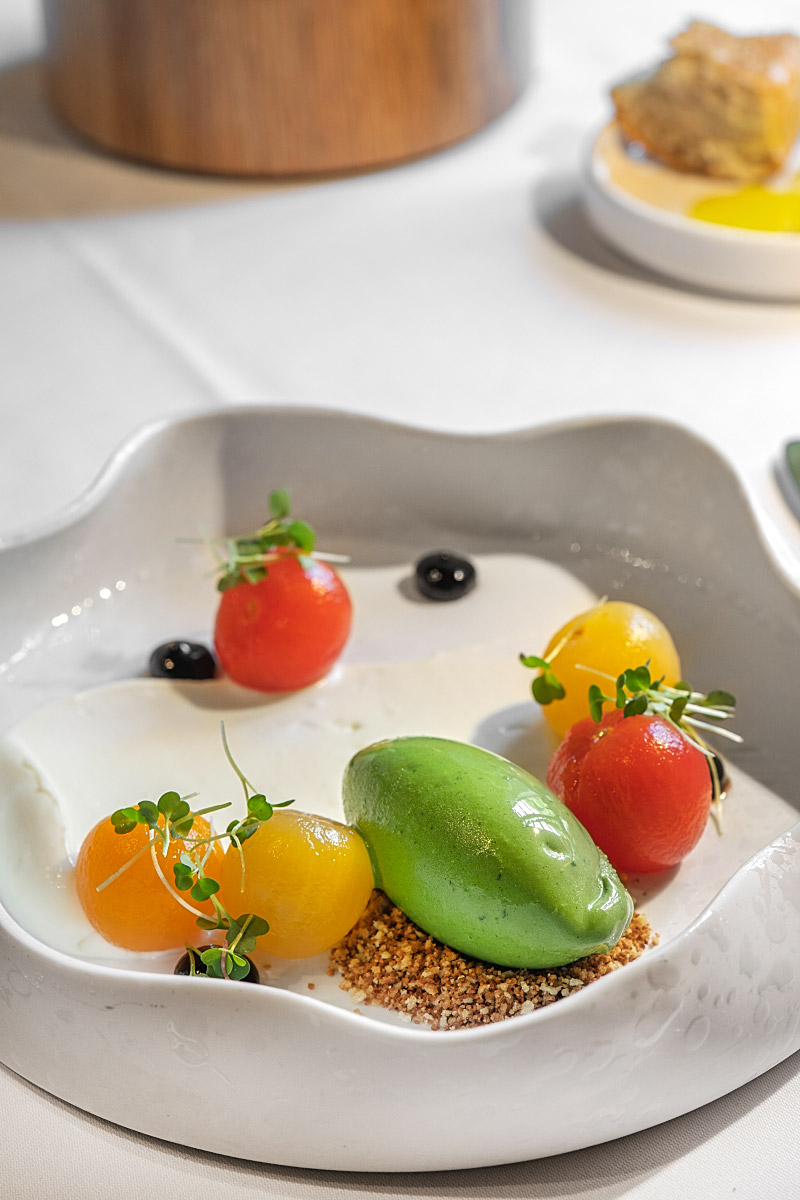
The basil ice cream quenelle and skinless pickled tomatoes sharpened our appetites before the first bite. The acidity certainly woke up the palate, perhaps a little too forcefully. We enjoyed the combination of mozzarella mousse, balsamic vinegar and savory basil ice cream, especially the layered aroma created by several basil varieties. The tomatoes, however, upset the balance. Once the mousse and ice cream were gone, their sharp vinegar flavor became too dominant.
Prawn Carpaccio
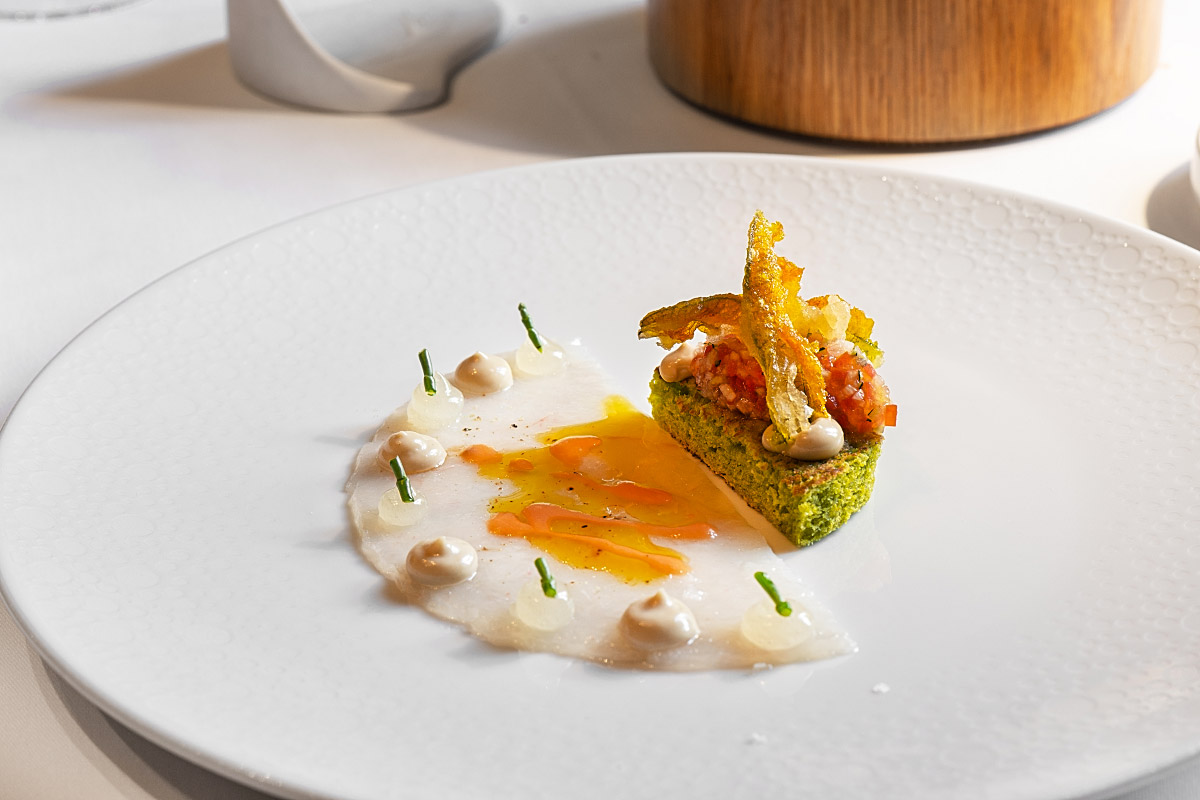
The sweet-and-sour balance of citrus gel and anchovy mayonnaise allowed the prawn carpaccio to shine. Sea asparagus intensified its maritime character with a clean saline note. Spinach brioche represented the land beside this creamy delicacy from the sea, carrying an aromatic quenelle of finely diced summer vegetables and a crisp fried pumpkin blossom.
Black Orzo with Squid
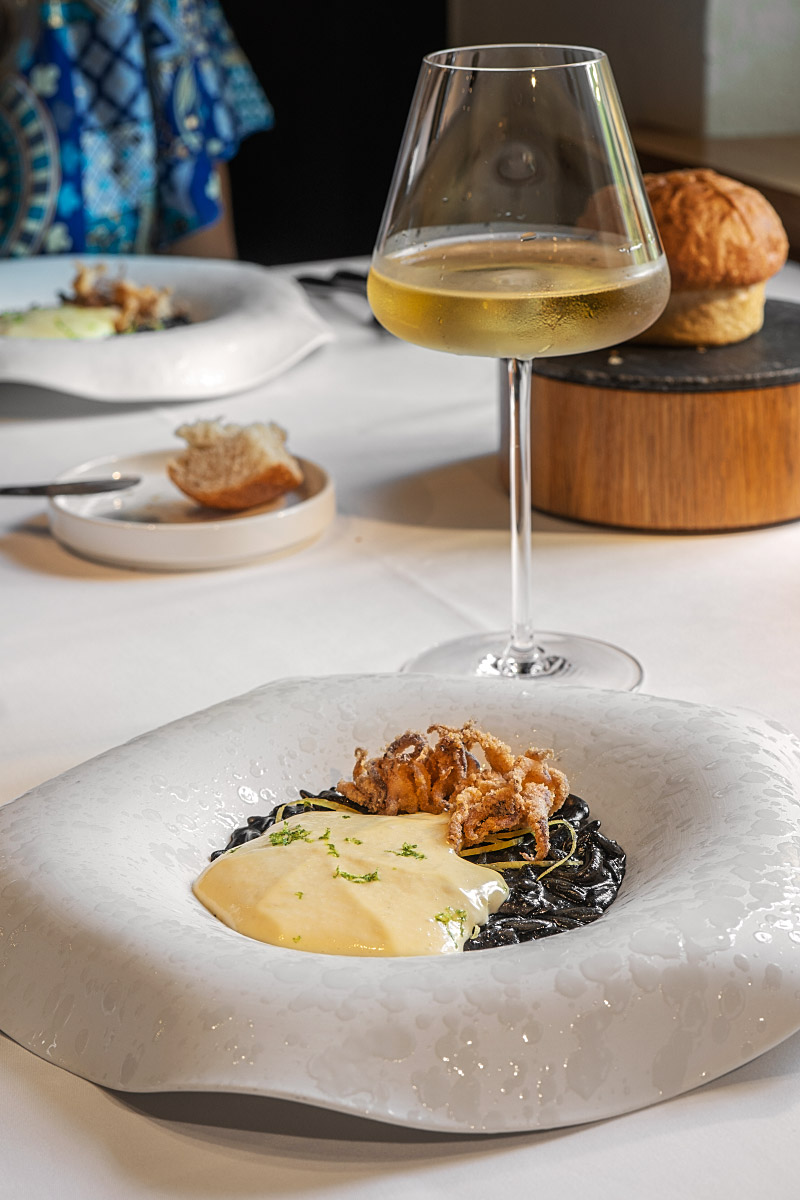
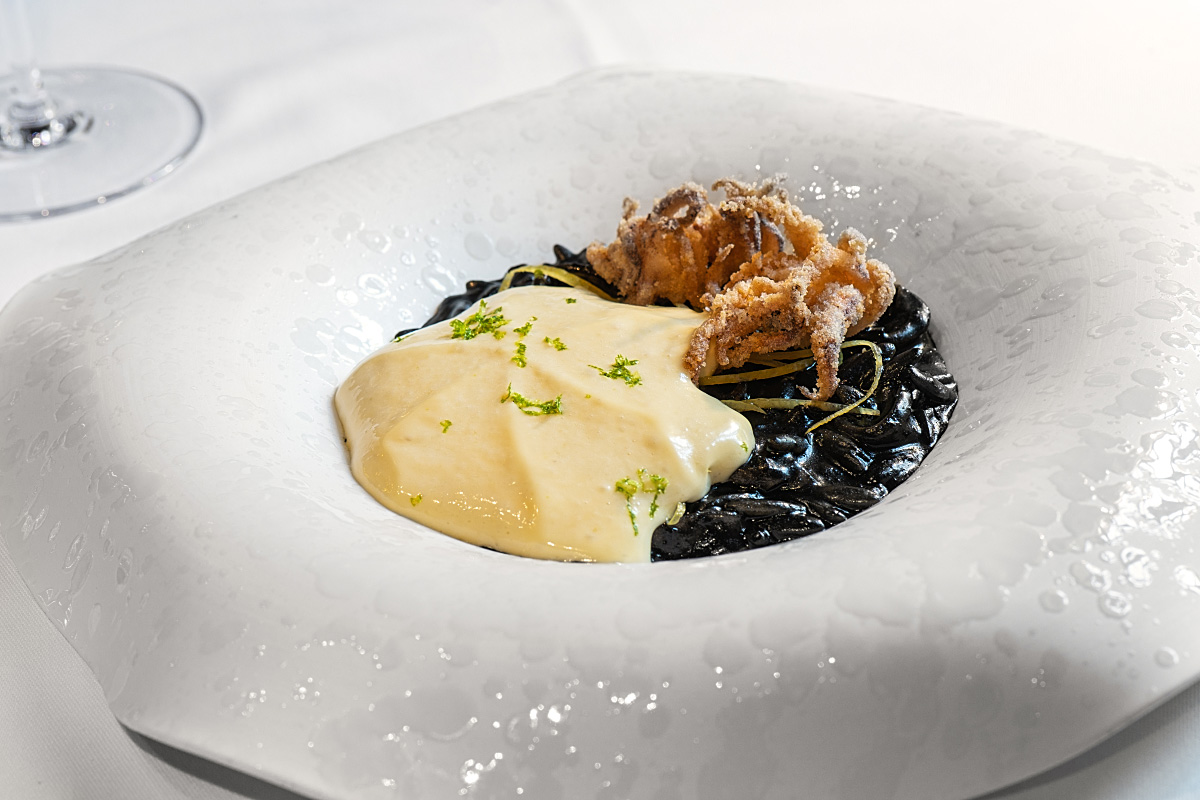
Its aroma carried us straight to a summer by the sea before we had properly studied the plate. The flavor followed the same direction. Squid ink gave the grain-shaped orzo its dramatic color and a clear ocean character, while the pasta retained just enough bite. Candied lemon zest cut through the richness with an exhilarating flash of freshness. Perfectly fried squid tentacles were another highlight, especially when dipped into the light miso foam. There was plenty to love on this plate.
Confit Sturgeon
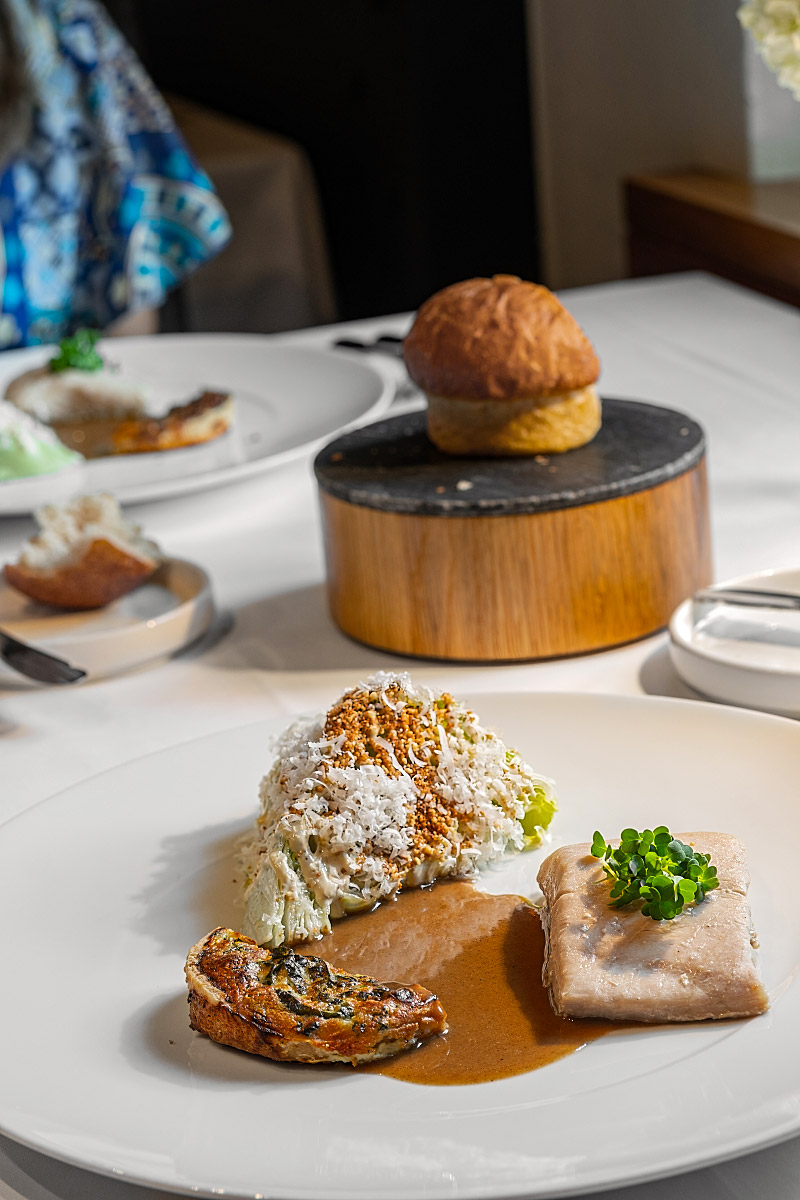
At first glance, the dish appeared rooted in the resourceful cooking of earlier centuries, when foraging, gardening and preservation shaped the Slovenian table. Sturgeon cooked in a buttery bath would, of course, have belonged to the upper classes. Here, its flesh was juicy and soft. A crisp, buttery crust showed why spinach and curd cheese pie never goes out of style, while iceberg lettuce hidden beneath a creamy layer of yogurt brought freshness. A gently sour, umami-rich sauce stood firm like the castle walls and held the elements together.
Veal Cheeks
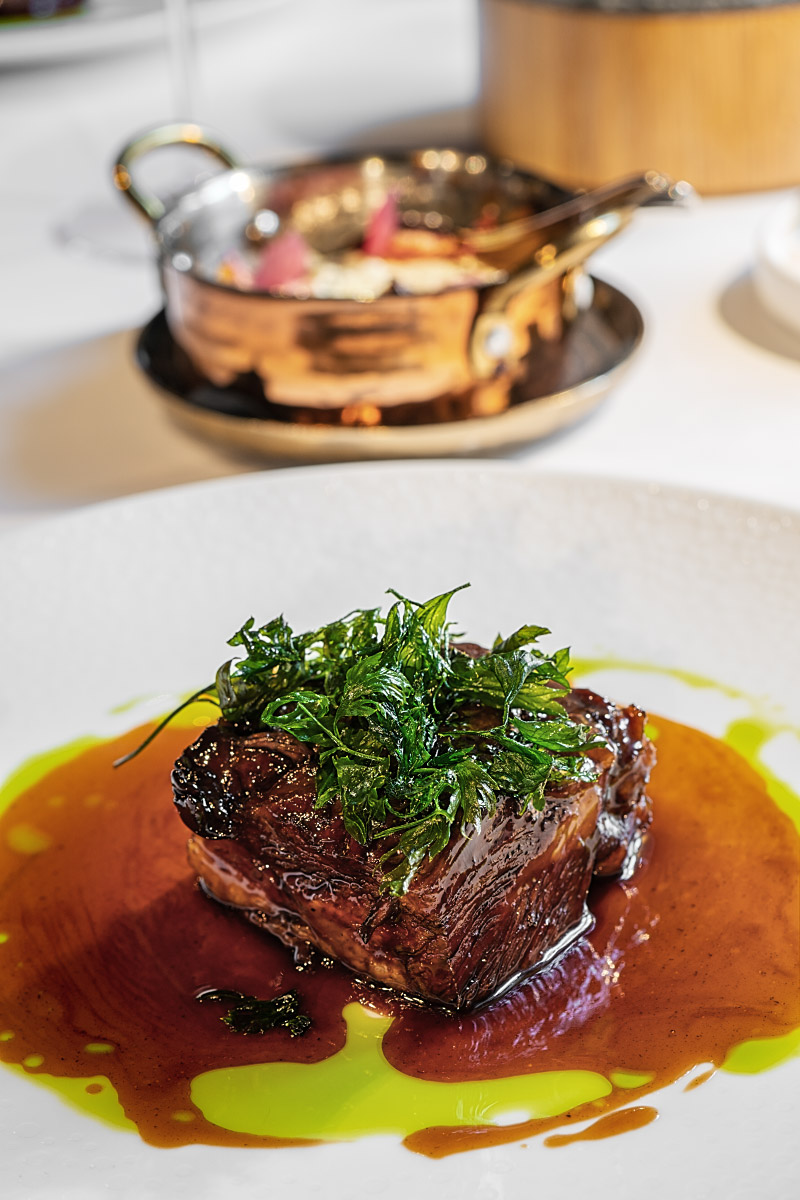
The veal cheek was so soft that it barely required a knife, with a pure and mild flavor of its own. Unfortunately, the expected depth from the veal demi-glace had been pushed too far, leaving an unpleasant bitterness. Parsley oil added freshness and its fried leaves lifted the texture. On the side, Balkan-style slow-cooked vegetables were finished with young kajmak, linking a refined castle plate to a familiar regional tradition.
Sour Cream Mousse
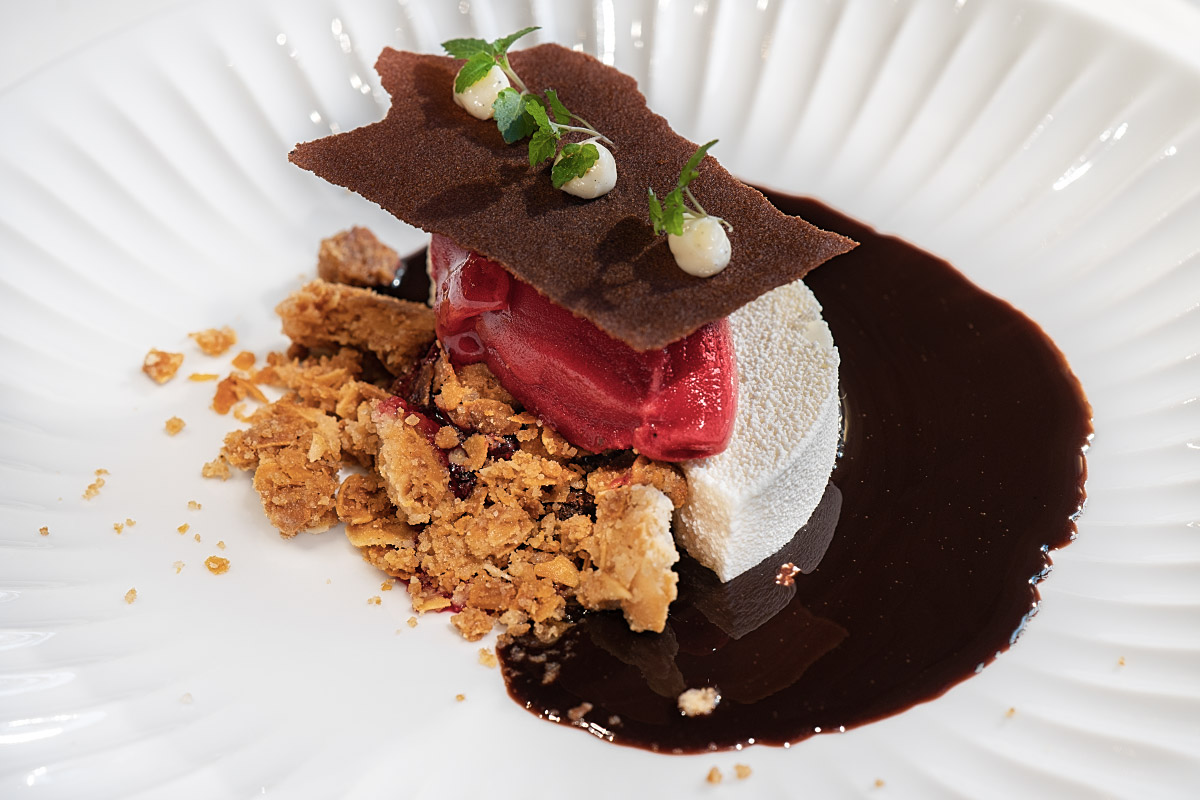
Chocolate tuile and a spiced chocolate sauce enhanced every element of the dessert. The sour cream mousse connected naturally with the sauce’s minty note, while sour cherry sorbet provided a cool, delicate contrast. Cinnamon-seasoned hazelnut crumble brought warmth and crunch, and a sour cherry compote waited beneath the glossy quenelle.
Petit Fours
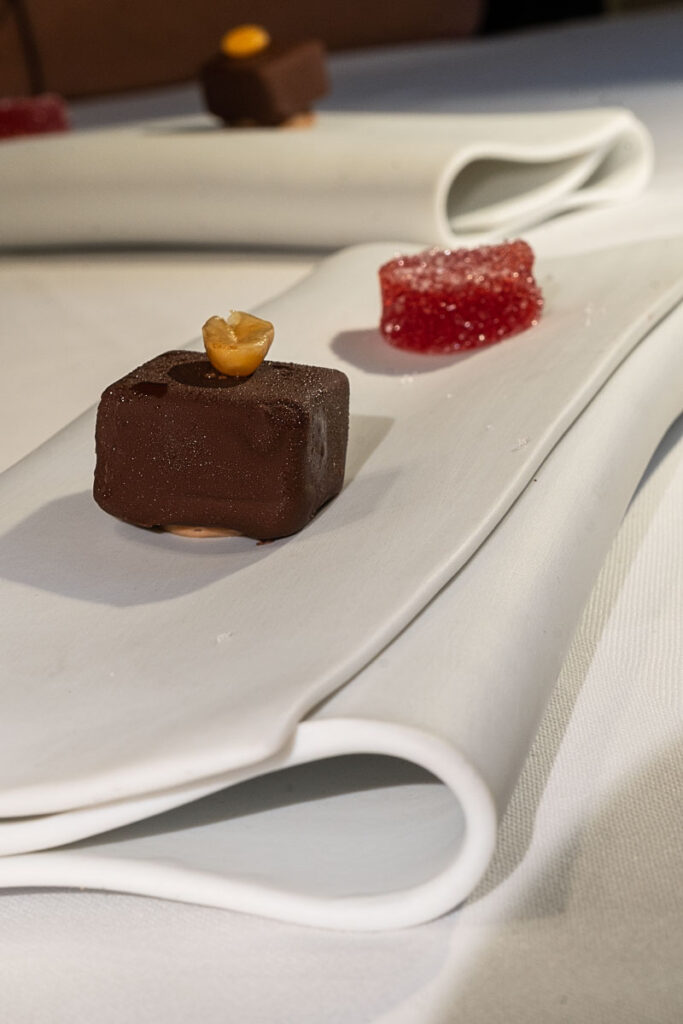
The Snickers-inspired chocolate tasted surprisingly light, ending with a satisfying crunch and peanut caramel. Our second bite began with a fine crackle before dissolving into an intense strawberry jelly.
Is Restaurant Grad Otočec Worth Visiting?
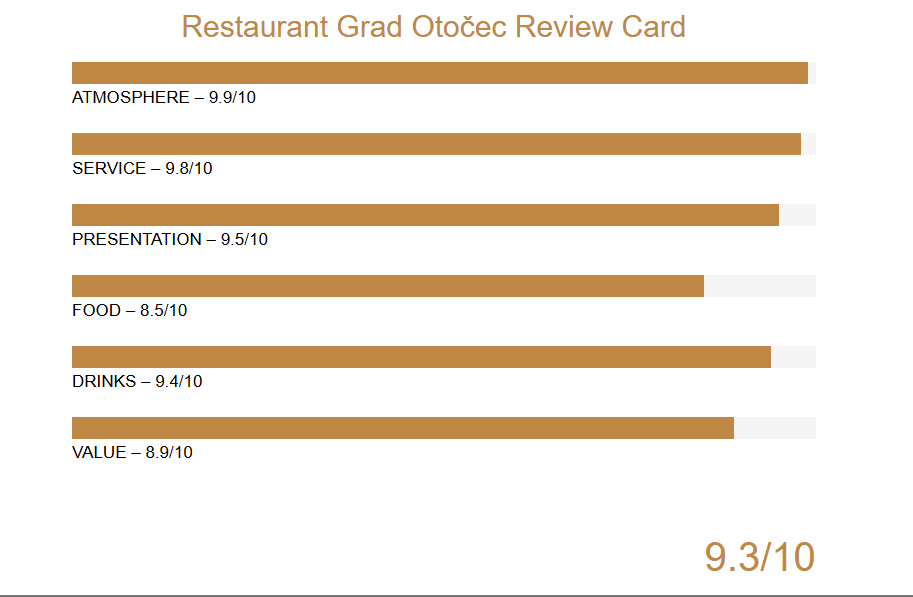
A romantic dinner in a castle sounds like a fairy tale, but can the experience live up to that promise? To a large extent, yes. The historic setting and highly professional service prepare you for something exceptional. The kitchen, however, did not maintain the same precision from beginning to end.
Our tasting menu felt a little like a roller coaster. The amuse-bouche provided a solid start, but the overly pickled tomatoes made the first cold course unbalanced. The black orzo then took us straight to the evening’s first high point, and the confit sturgeon followed closely behind. Just when we expected the main course to provide the climax, the veal cheeks and bitter demi-glace sent the experience downward again. Fortunately, the excellent dessert finished the meal on a high note, even if we left slightly puzzled by the uneven journey.
Restaurant Grad Otočec has an exceptional setting, excellent service, a strong wine program and several dishes worthy of the surroundings. The foundation is more than promising, but greater consistency would allow the food to match the almost flawless atmosphere. We would return, although we would do so with measured expectations rather than surrendering completely to the fairy tale.