
A capital can be a useful place to begin understanding a country: its history, its cultural habits and, inevitably for us, its food. In Ljubljana, the castle keeps drawing your attention uphill. Vivi and I decided to give it a whole day, exploring the exhibitions and underground passages as thoroughly as our legs and lunch reservation would allow. This Ljubljana Castle review follows that visit, from a foggy arrival to the last light over the city.
We found more variety behind the walls than the familiar skyline suggests. There were prison cells, Slovenian wines, contemporary jewelry, animated picture books and puppets we could try ourselves. A disappointing café visit and an expensive parking bill belong in the story too. Despite those two, the castle gave us a day we would happily recommend.
Visiting Ljubljana Castle: A Foggy Arrival
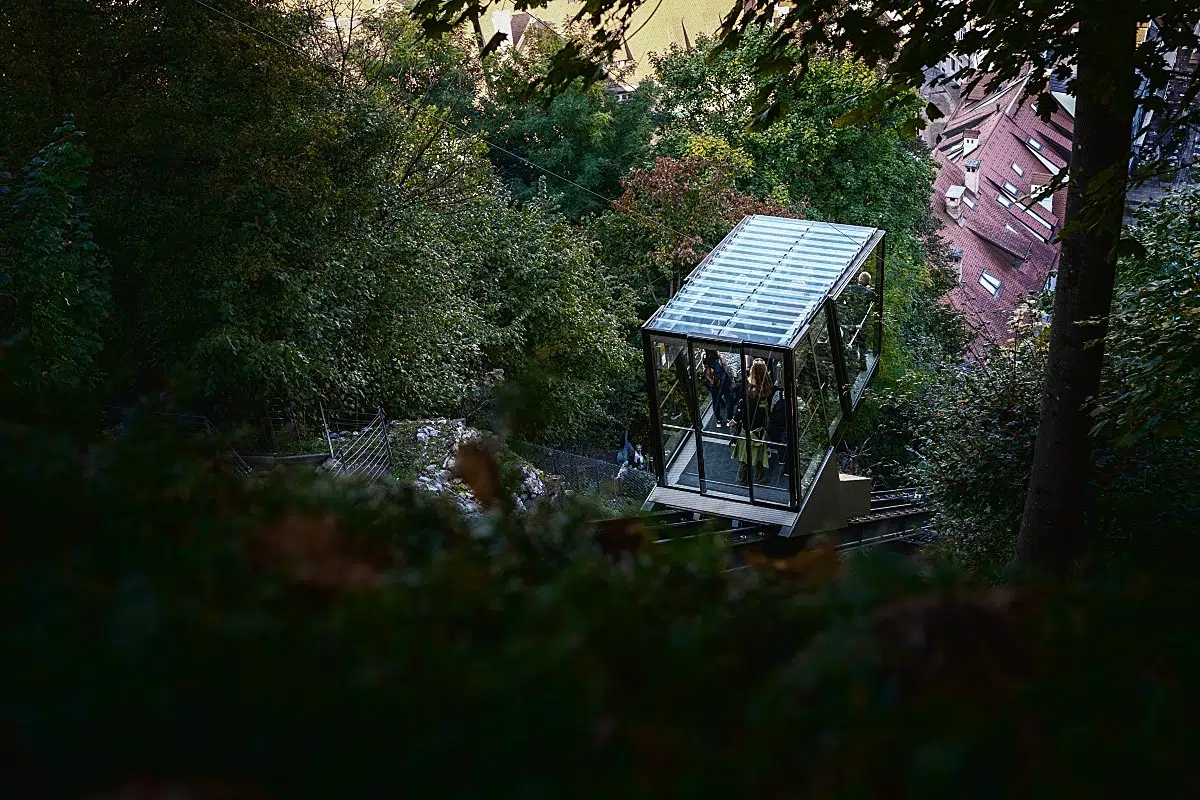
The castle is accessible on foot, by funicular and by road, with several walking routes from the Old Town. The lower funicular station is on Krekov trg, beside the Ljubljana Puppet Theatre and near the Central Market. If you are driving, the approach-road barrier currently opens at 9:00 AM; arriving earlier will not get your car onto the castle parking area.
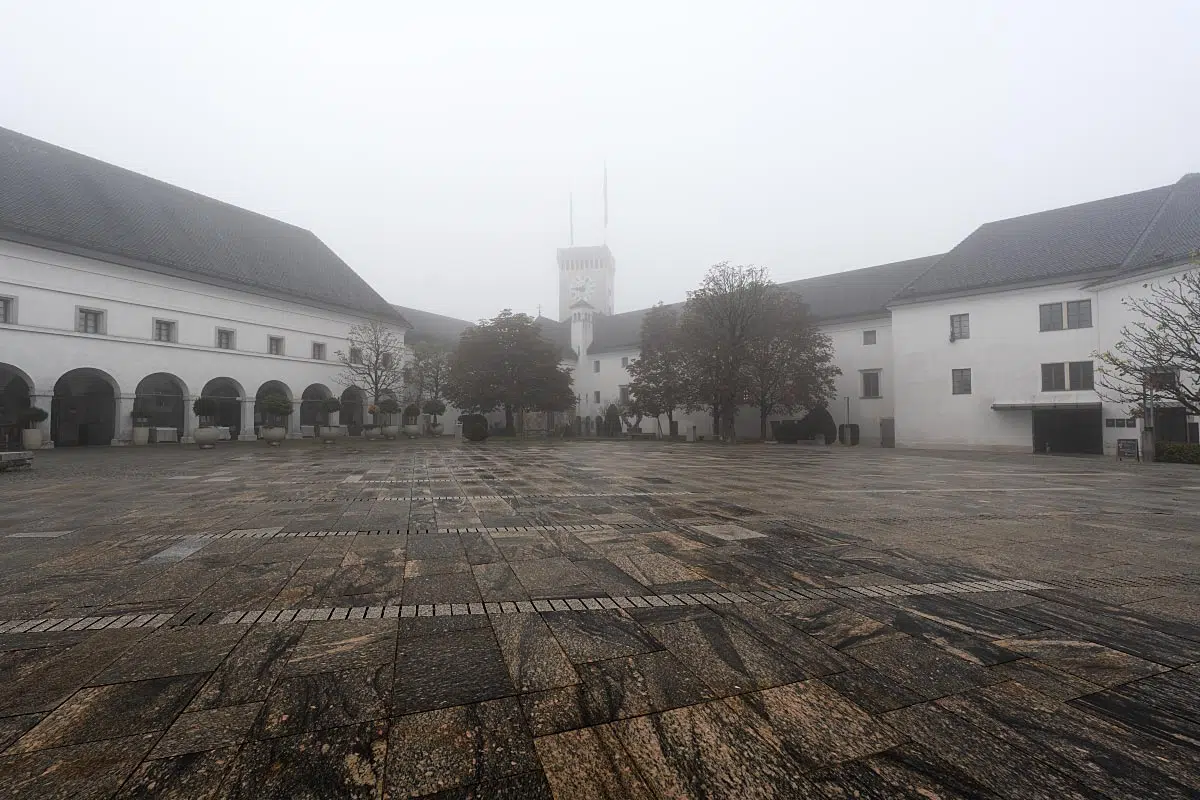
Our arrival came with thick fog. The walls emerged from it gradually, giving the approach the atmosphere of a film scene. We briefly thought we might be among the first visitors, then found a tour group already following a guide across the Castle Courtyard. Our own plan began in familiar WNF Diary fashion: find coffee, choose something sweet and decide where to go next.
Morning Coffee With a Bitter Aftertaste
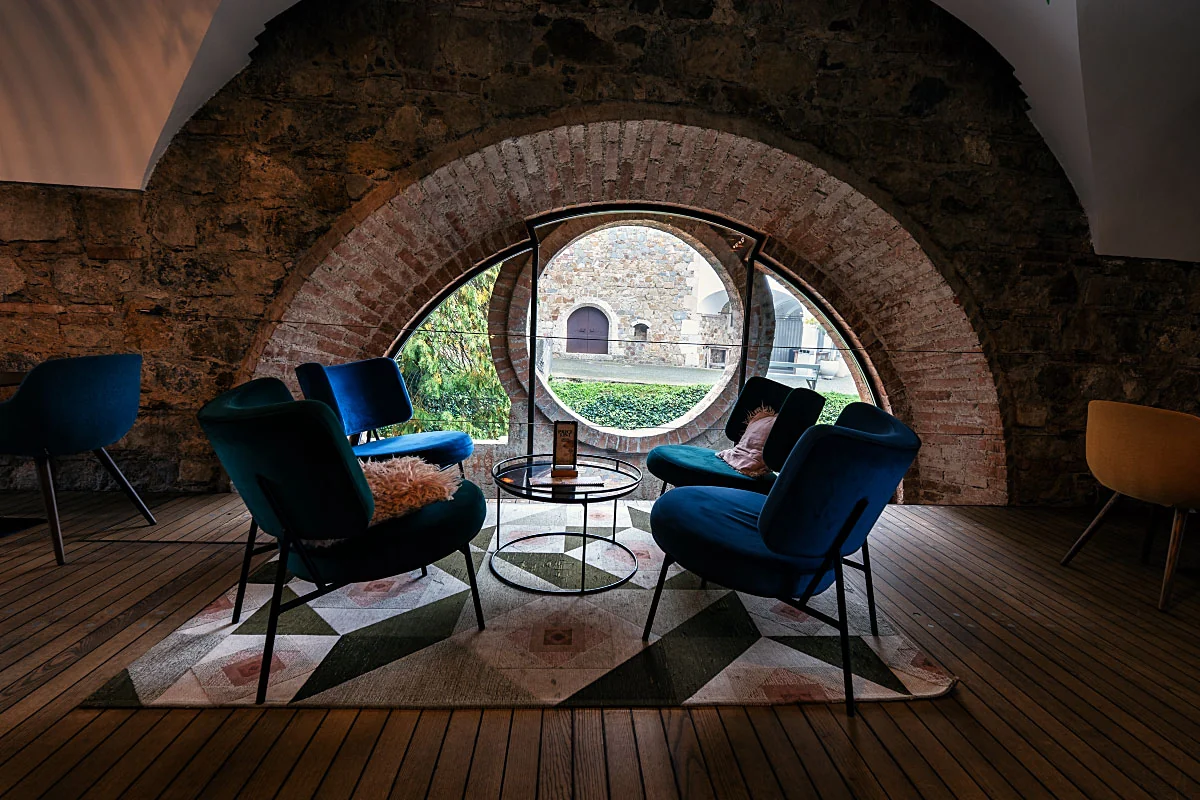
Grajska kavarna Lolita has an appealing interior, with subdued lighting and comfortable seating. Our drinks and cakes did not live up to the setting. Vivi ordered tea, which she enjoyed despite it being served in a tea bag; I chose coffee with milk. The large bubbles in the foam were an unpromising start, and the coffee itself gave me little reason to change my mind.
For something sweet, I picked a vanilla individual cake and Vivi chose a slice of Kinder Maxi cake. Mine was creamy, although white chocolate came through much more clearly than vanilla. Vivi’s slice was dry enough that we sent it back. The waiter agreed about its dryness and apologized, which we appreciated.
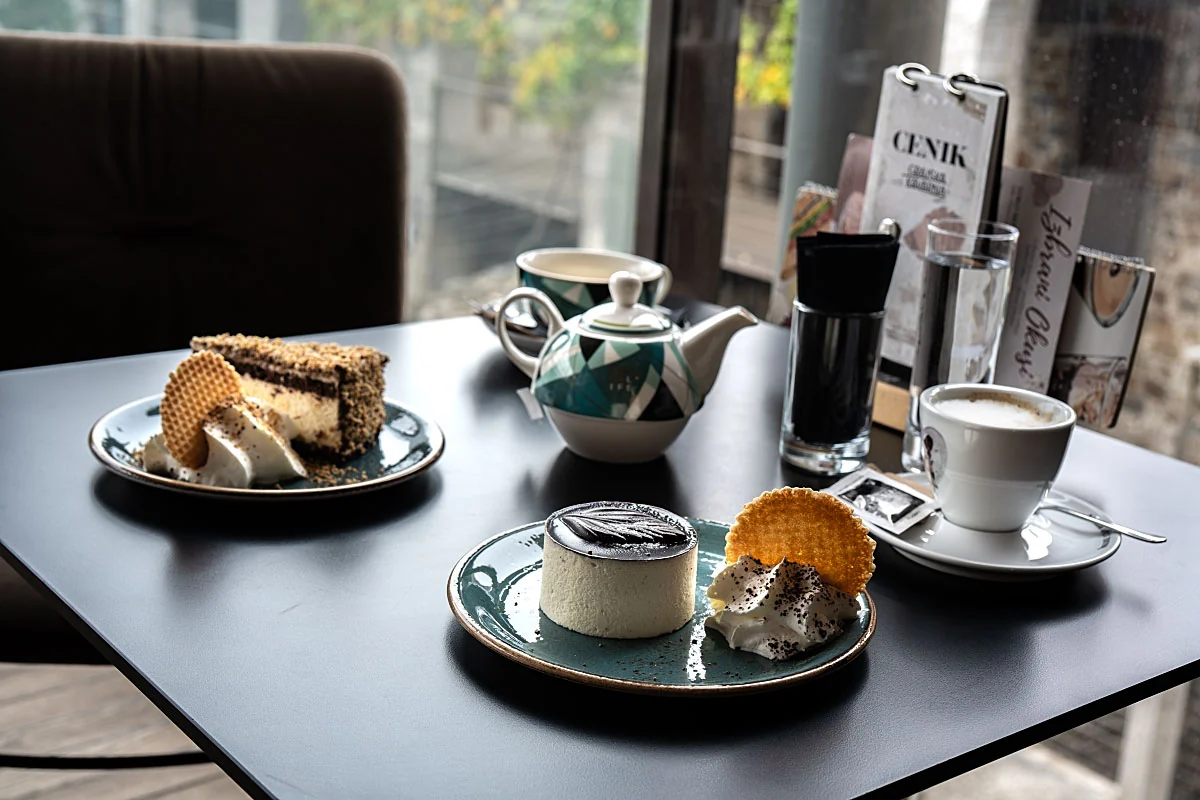
Expectations had been higher. Gault&Millau named Lolita in Ljubljana its best pastry shop for 2026, an award that made this visit to the castle location particularly disappointing. However, we went on to the exhibitions still thinking more fondly of the interior than of anything on our plates.
Stone Walls, Concrete Passages and Prison Cells
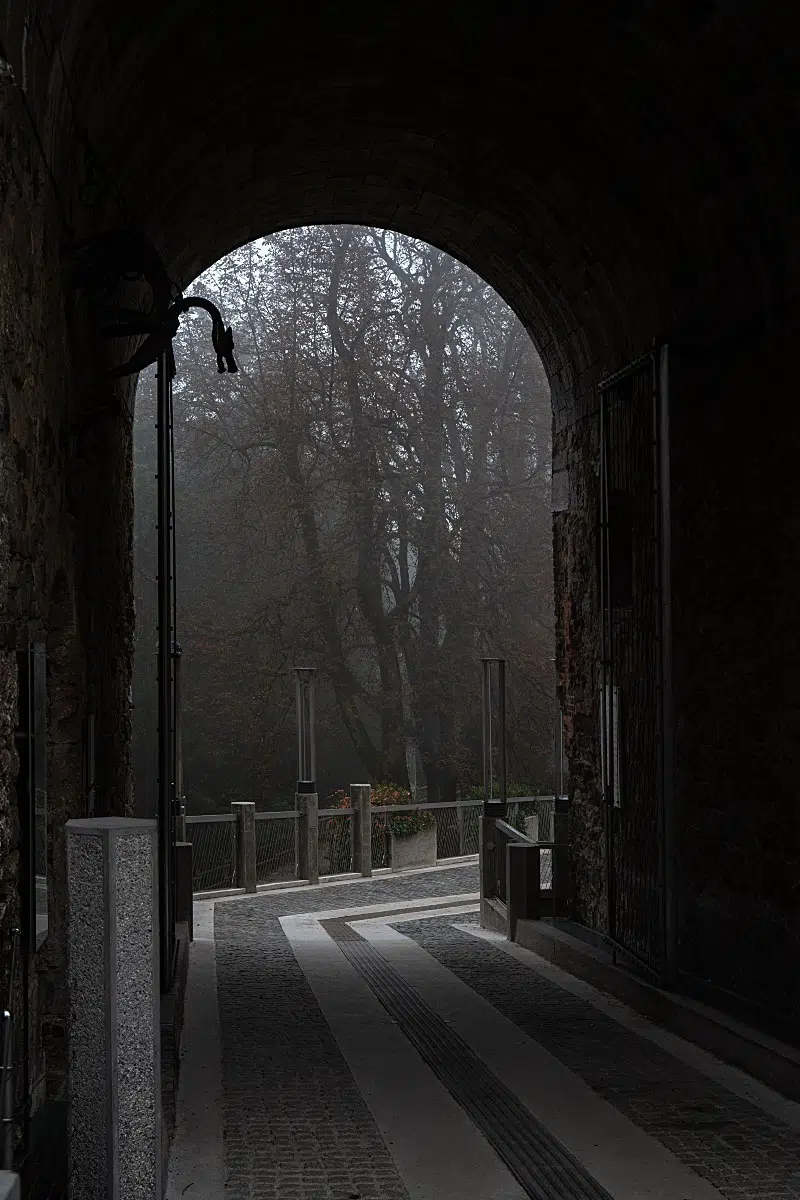
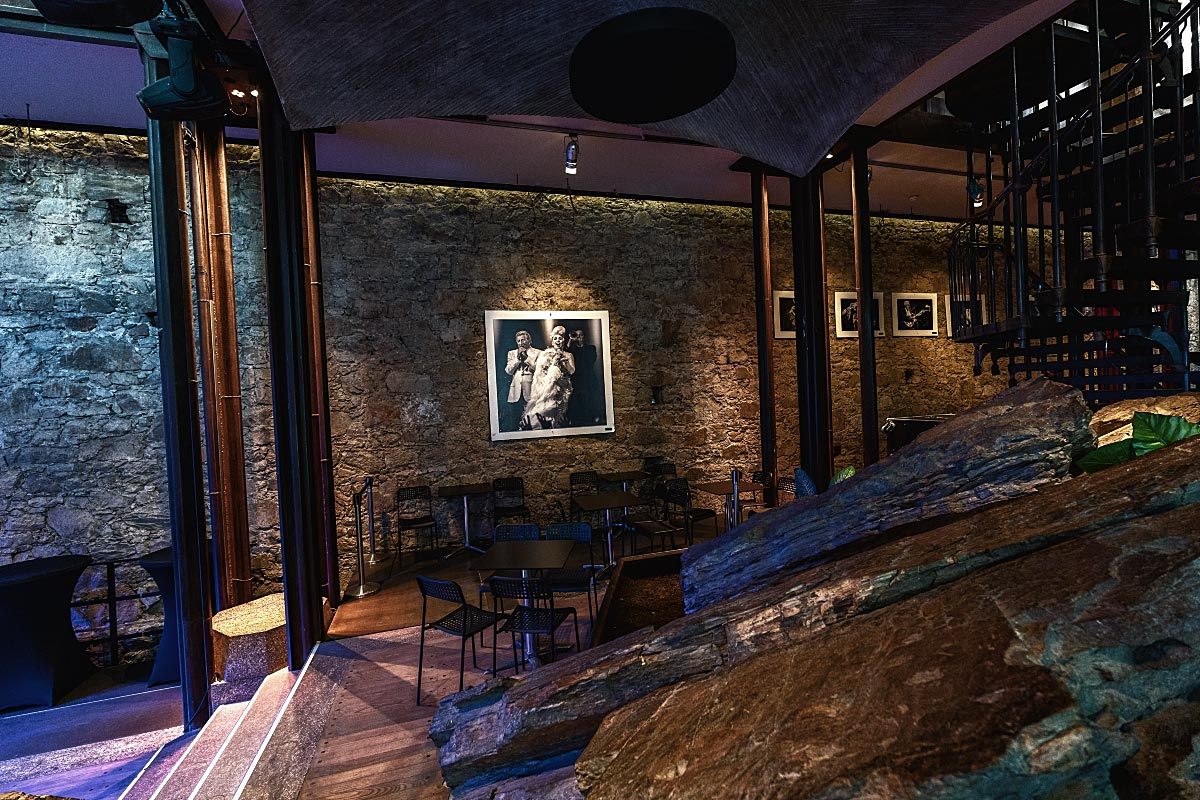
The underground passages were among our favorite parts of the building. Rough stone, exposed foundations and sharply defined concrete surfaces give the lower levels a character of their own. At moments, the sequence of passages reminded us of a Bond villain’s headquarters, with enough turns to encourage one more look around the next corner. We particularly liked the confidence with which the newer construction sits beside the old masonry.
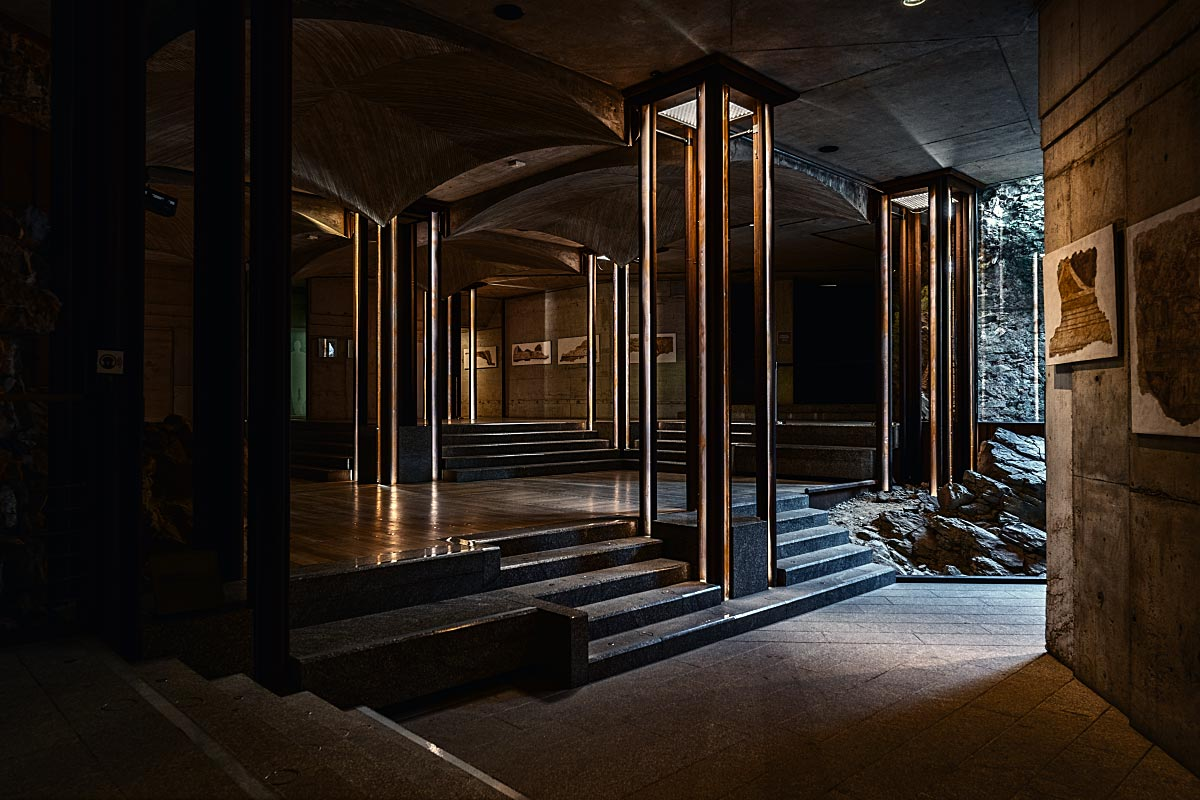
Keep an eye on the floor as well as the walls. An older visitor ahead of us missed a step whose concrete color was very close to that of the surrounding surface and fell. Fortunately, the incident did not appear serious. Look up at the walls by all means, but watch the changes in level too.
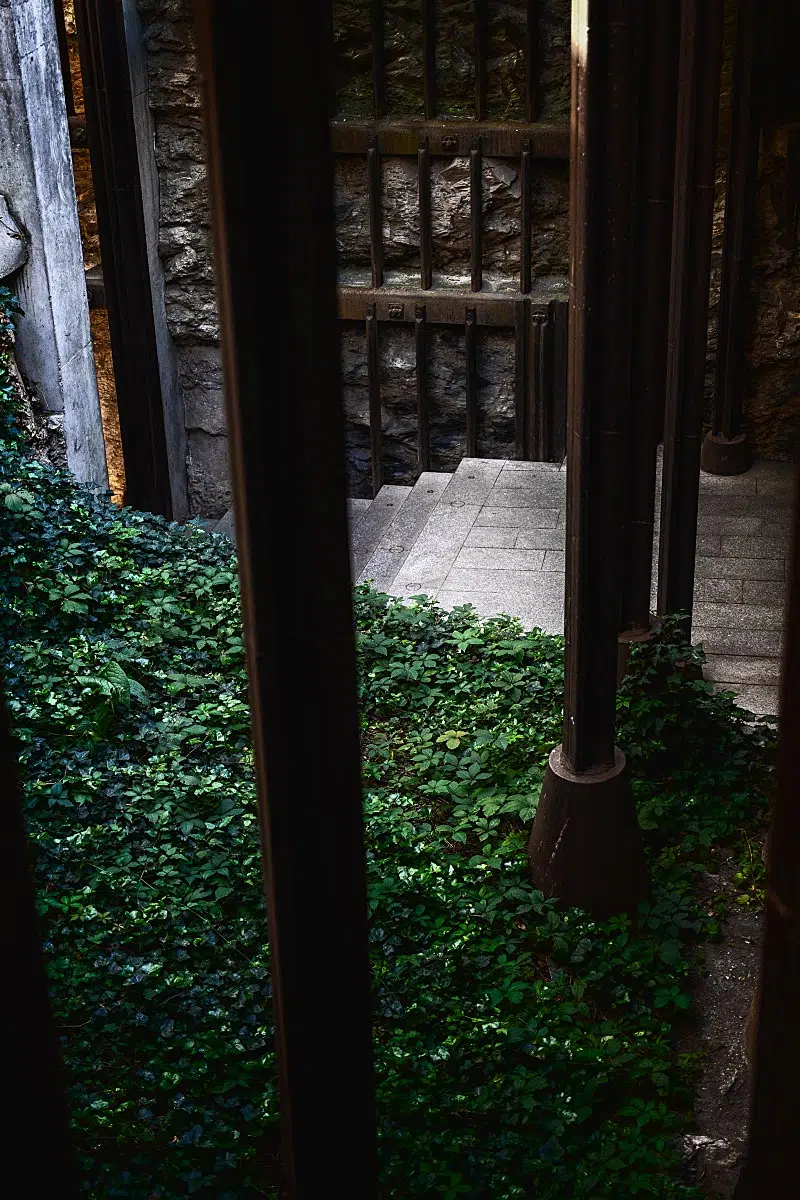
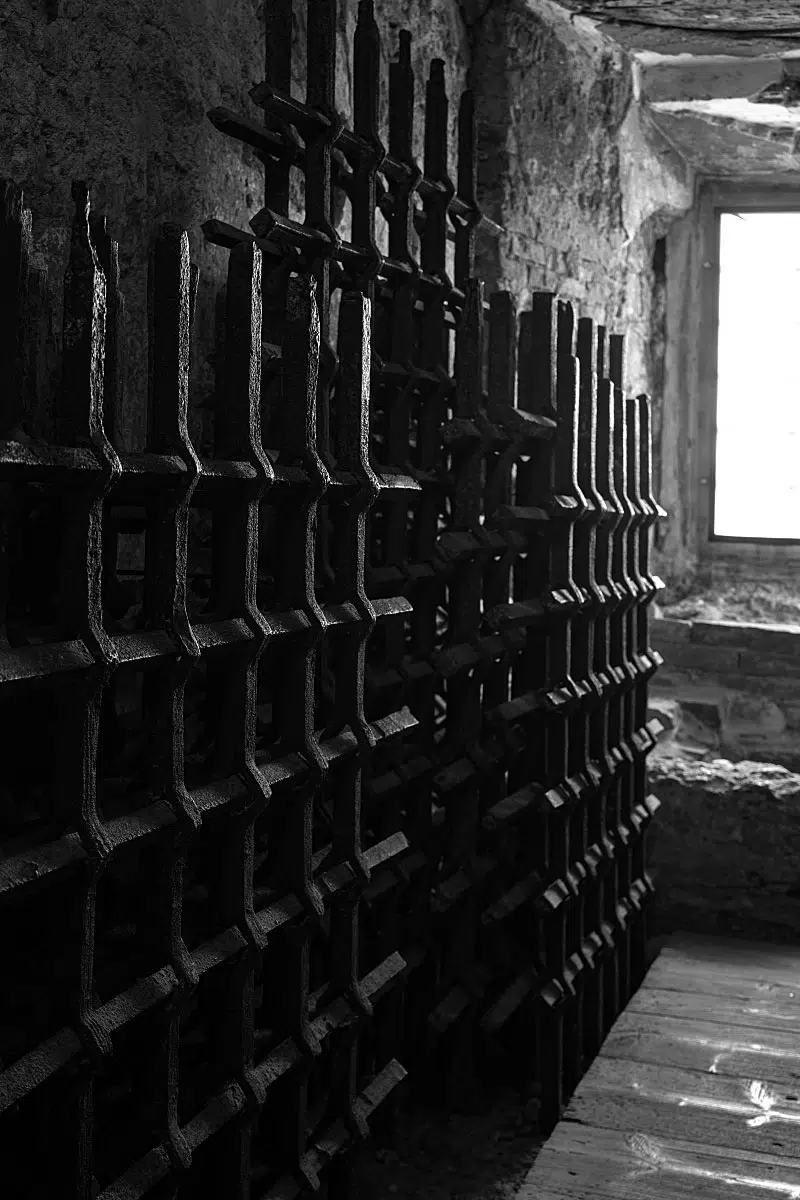
While exploring underground, we also visited the former prison cells. The castle served as a penitentiary from 1815 to 1895, with interruptions, and later held political prisoners considered “dangerous to the state,” including Ivan Cankar in 1914. One of Slovenia’s most important writers and playwrights, Cankar was known for his sharp criticism of social injustice.
A Walk Through Slovenian History
The Exhibition of Slovenian History gives a broad introduction to the territory that is now Slovenia. Its story extends from prehistory through Roman settlement and medieval life to the formation of the modern state. Objects, replicas, films and explanatory displays connect events that can otherwise remain scattered across separate museum visits.
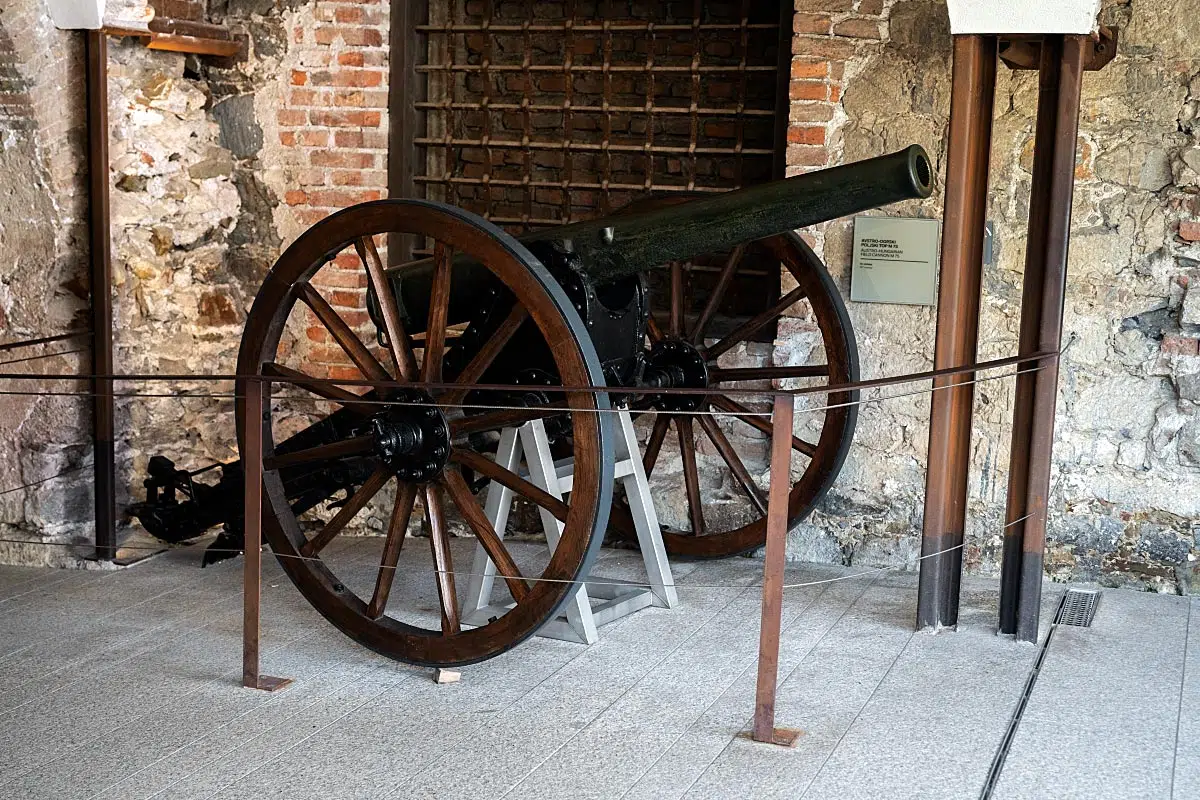
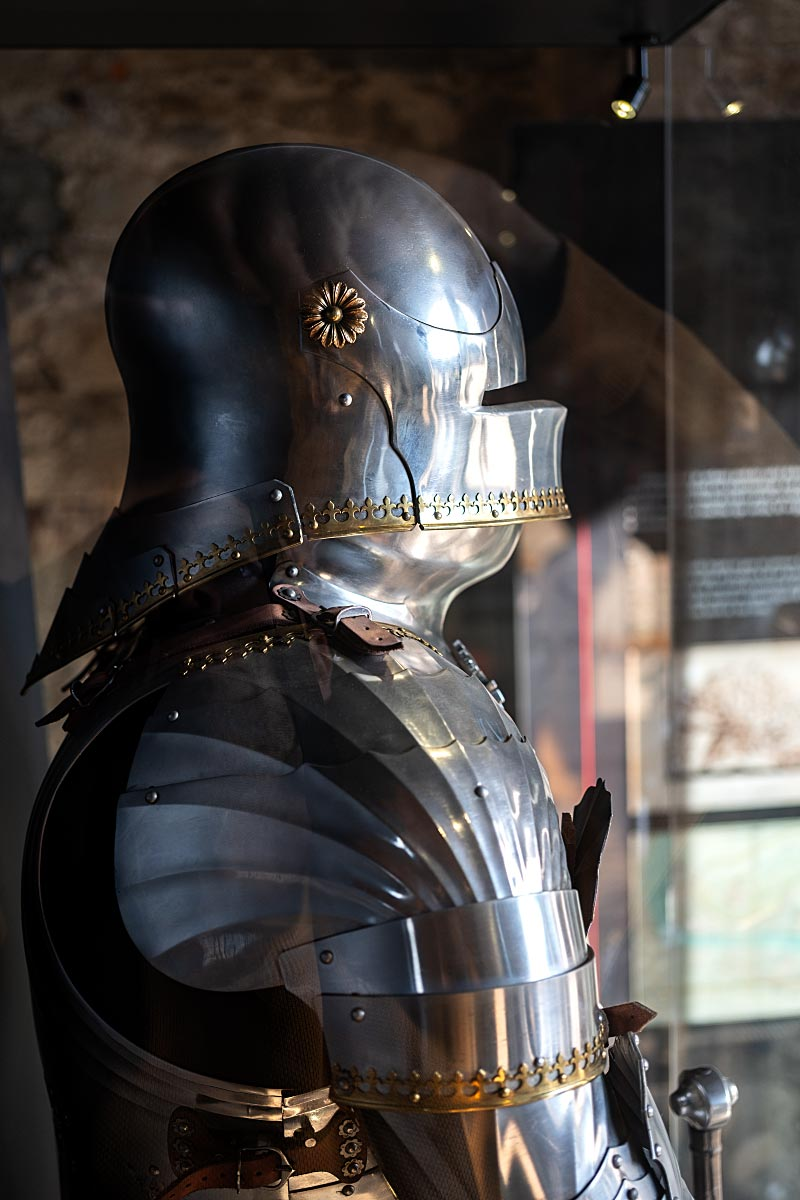
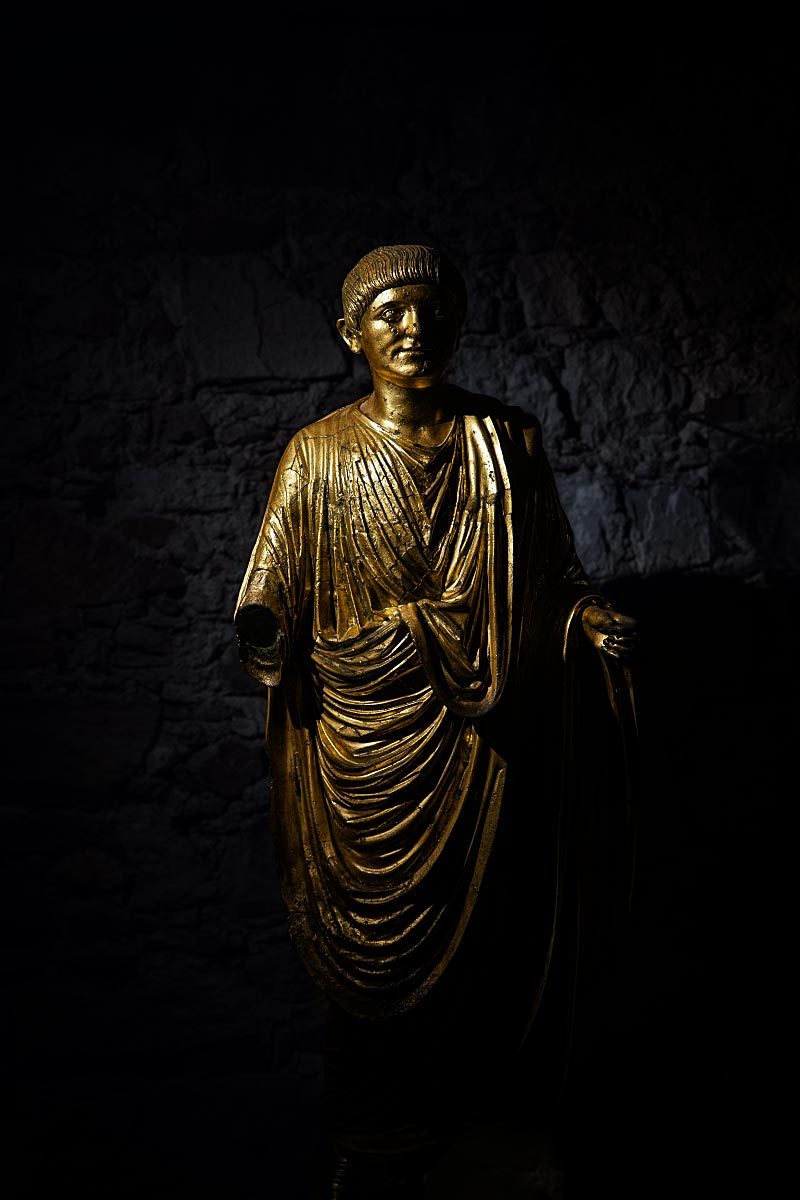
The exhibition takes you from prehistoric finds such as the Divje babe bone flute and the Vače situla to Roman Emona, beneath part of present-day Ljubljana. It continues through Slavic settlement, changing rulers and Yugoslavia to Slovenia’s independence in 1991. There is plenty to absorb, and we could easily have spent two or three hours watching every film and reading every panel. With our lunch reservation approaching, we gave some periods more attention than others and reluctantly kept moving.
Lunch at Gostilna na Gradu and Slovenian Wine
Gostilna na Gradu restored our confidence in the castle’s hospitality. Its contemporary furnishings sit comfortably within the historic structure, and the glass-enclosed dining area was particularly inviting in the afternoon sun. We liked how the room retained its connection to the castle while providing a comfortable setting for a proper lunch. After the morning’s disappointing café stop, this was much closer to the hospitality we had hoped to find.
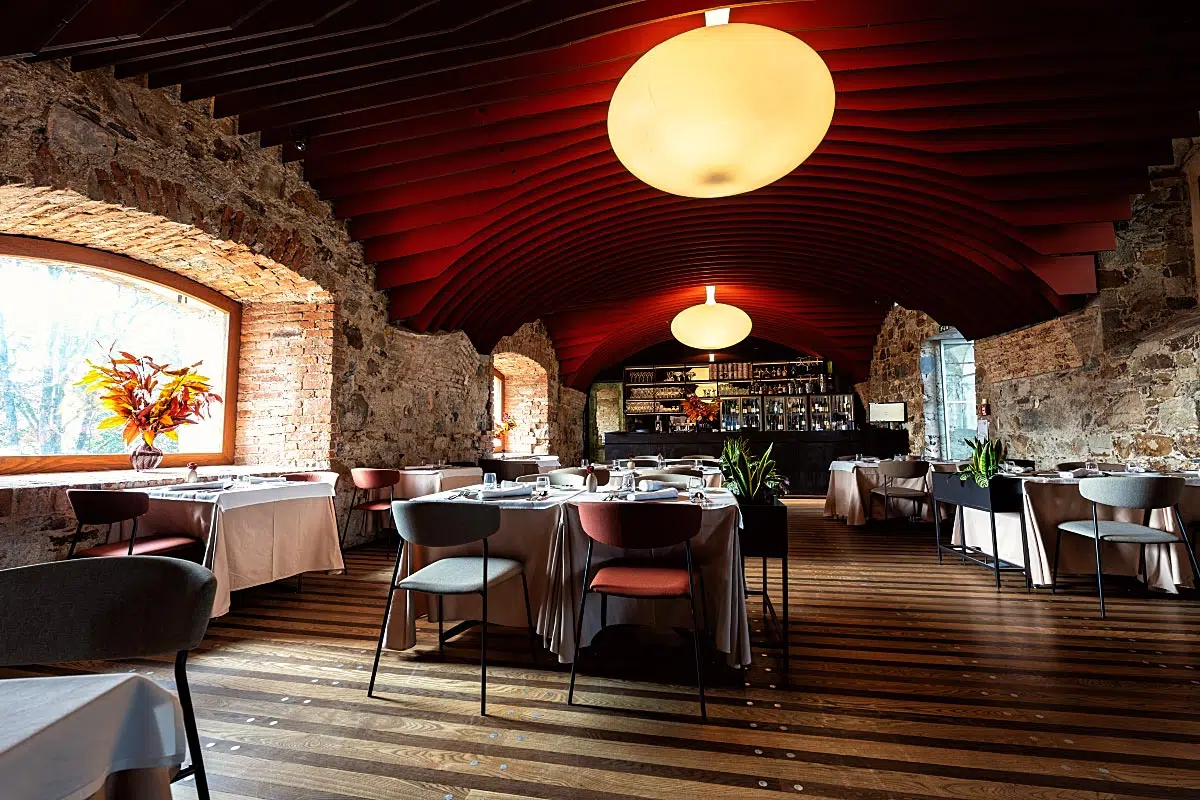
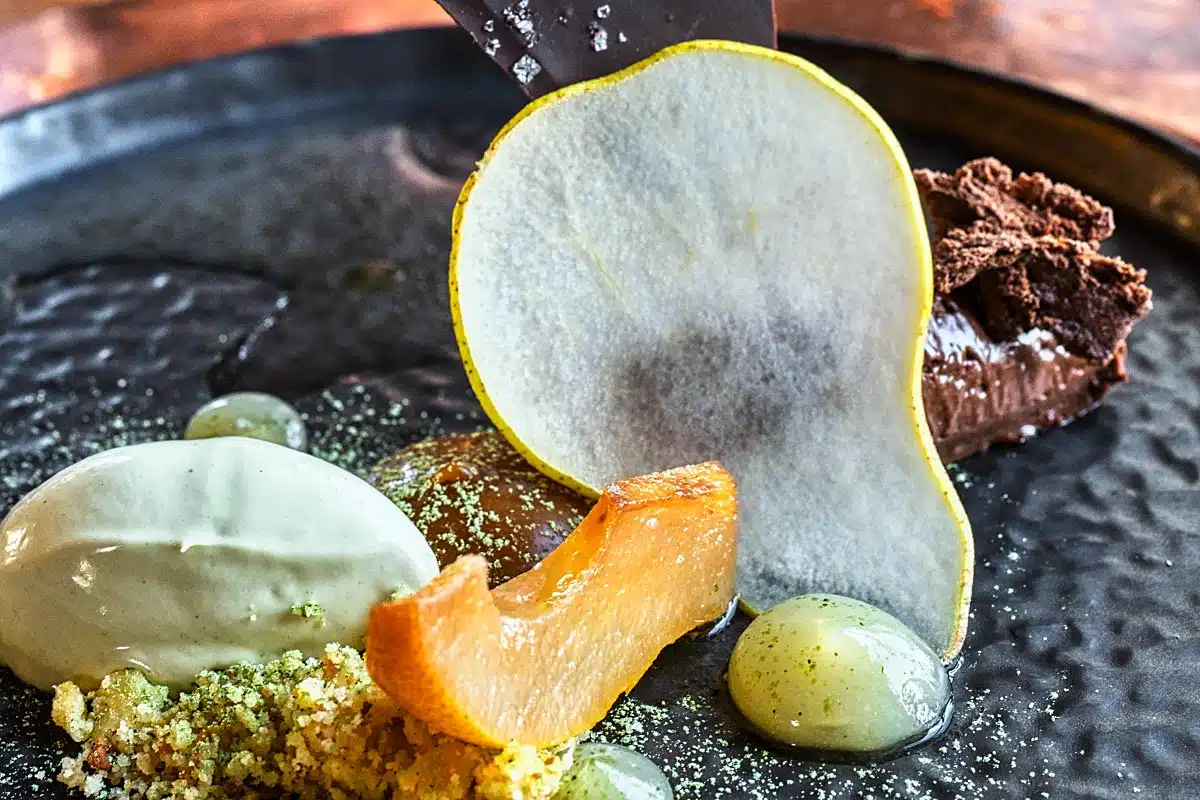
The cooking took Slovenian tradition and gave it a contemporary treatment; the plates were carefully presented, and the flavors lived up to the care taken over how they looked. Local, seasonal ingredients gave the meal a clear connection to the country we were exploring through the exhibitions. We left very satisfied, with one unexpected highlight: a vegan dessert that we both agreed was the best we had tried so far. The individual dishes deserve more attention in our forthcoming restaurant review.
Grajska Vinoteka: A Wine Map of Slovenia
Grajska vinoteka, the Castle Wine Bar and Shop, opened in 2019. Wood, brickwork, bottles and lower lighting give it a different rhythm from the courtyard above. We liked the long table downstairs, a space that suggested an afternoon of tasting with friends, and the combination of bottles to take home and wines offered by the glass.
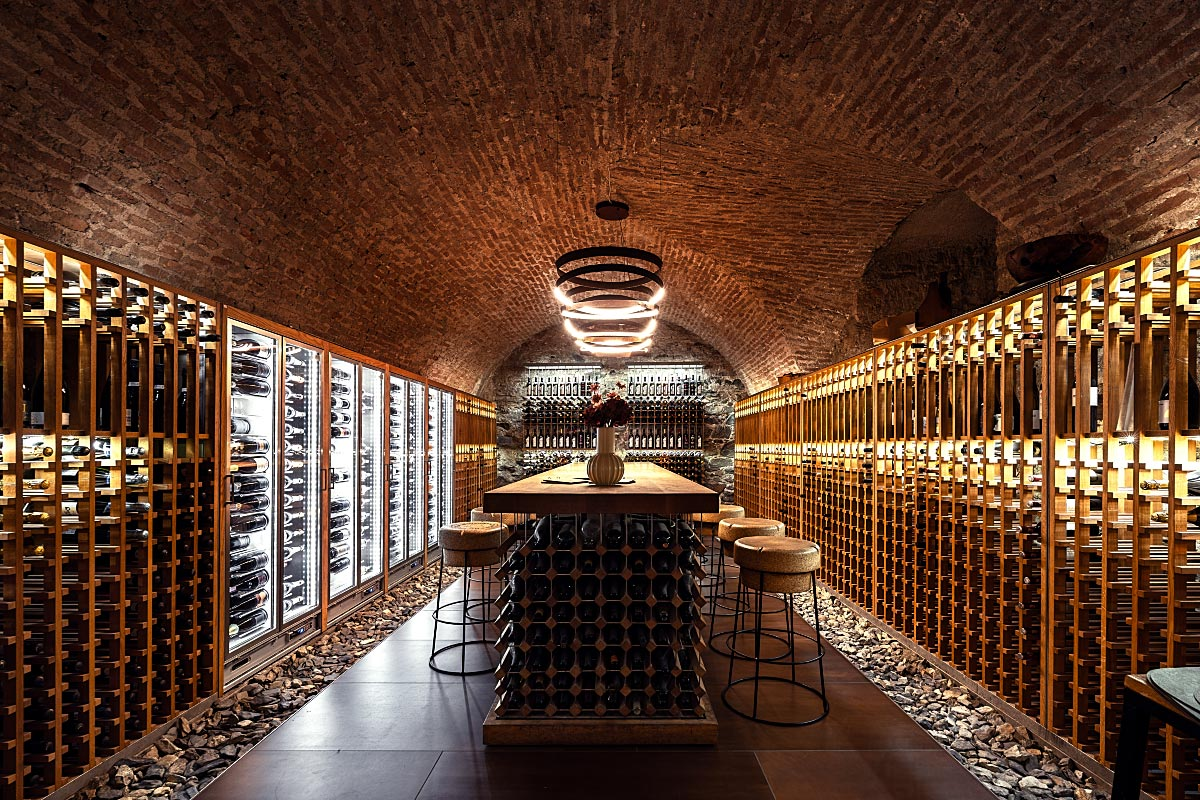
Its focus is Slovenian wine, drawing on all three of the country’s wine-growing regions. We recognized Šturm and Marof among the labels, two producers we have visited ourselves. Readers interested in exploring further can start with our account of visiting Marof winery in Prekmurje. Finding familiar names on the shelves also reminded us how many cellars we have yet to visit.
Our Favorite Castle Table Is Still Strelec
As much as we enjoyed lunch, Strelec remains the restaurant closest to our hearts here. Chef Igor Jagodic’s food and the circular room in the Archers’ Tower have stayed with us from an earlier visit. Vivi still names a cauliflower dish from that meal as her favorite restaurant plate, and the vegetable is hardly a luxury ingredient.
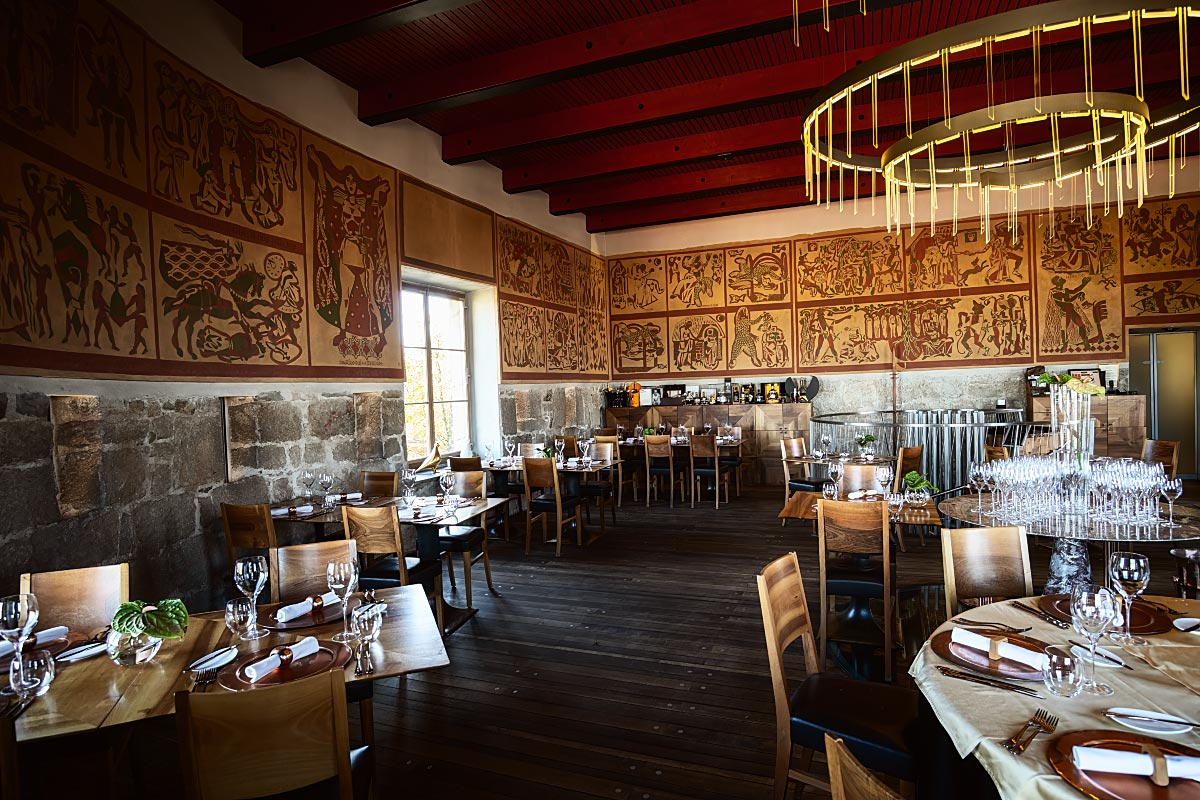
What we remember is the meal itself and the room around it. For that earlier dinner, including the dishes and our original assessment, read our Restaurant Strelec review. It is the place we associate most strongly with a special meal at Ljubljana Castle.
A Reason to Return on Friday Night
We also found a reason to return: Jazz Club Ljubljana Castle in the Rock Hall, or Skalna dvorana. The 2026–2027 program runs from September 11 to April 23, with Friday concerts featuring Slovenian and international performers across jazz and related styles. We have yet to hear the room in action or try its cocktails. Both are on our list for a future visit; the regular castle ticket does not include a concert.
Jewelry, Crystal Droplets and Stretched Rubber
During our autumn 2026 visit, the castle’s art spaces ranged from contemporary jewelry to underground light installations. Temporary exhibitions change, so later visits may bring something different.
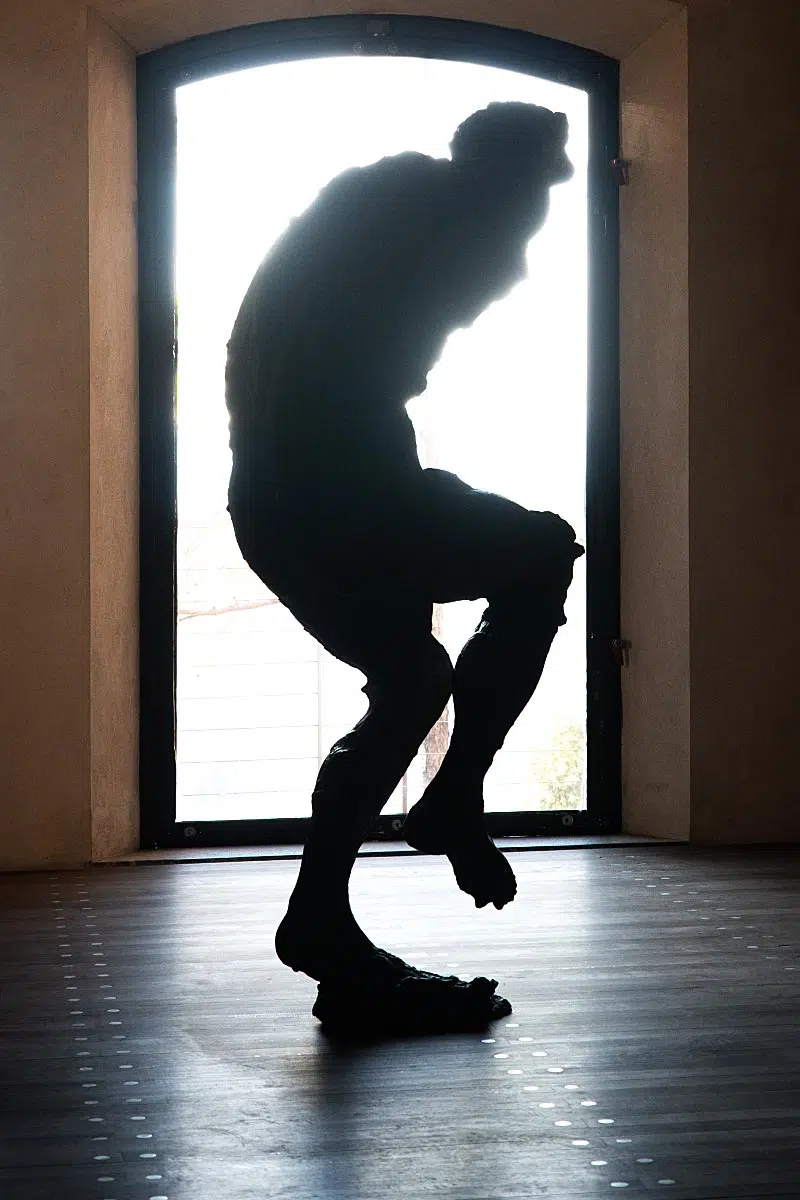
Ehosistem: Nature Translated Into Jewelry
In the Pentagonal Tower, Aleksandra Atanasovski and Maja Licul translate forms from the natural world into jewelry. We enjoyed the craftsmanship and the way familiar organic shapes took on a different character in precious materials. The pieces held their own as small artworks, and we lingered over the details of each one rather than picturing it on someone’s hand or neck.
Fluid by Tanja Pak
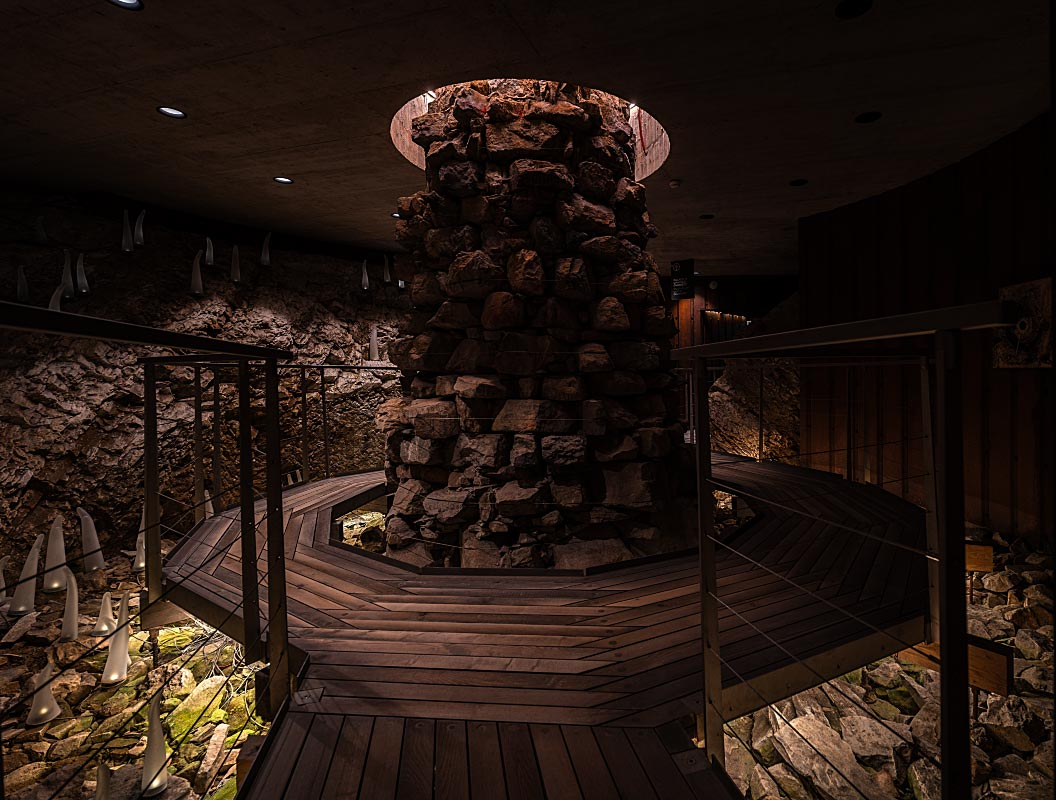
Beside the underground water-tank shaft near Gallery S, Tanja Pak’s permanent installation combines hand-blown crystal droplets, fiber-optic light and music. Inspired by Karst caves, these small points of light made an otherwise easily overlooked space worth pausing in.
Stretch 3789 in Gallery S
Tejka Pezdirc and Rok Bogataj fill the long gallery between rock and concrete with discarded tire inner tubes. Titled Stretch 3789, the installation explores tension and stretching. We understood the idea more readily than we connected with the work, which made the least impression on us.
Picture Books and Puppets for Children at Heart
Two of our favorite castle experiences might easily be mistaken for children’s attractions. The animated illustrations and the Museum of Puppetry both deserve time in an adult itinerary.
Illustrations in Motion
In the Casemate, Illustrations in Motion brings Slovenian picture-book illustrations to life across the surrounding surfaces, accompanied by music. The roughly 15-minute presentation gave our tired legs a welcome break, though we kept turning to follow the images around the room. We enjoyed it without recognizing every character or knowing the books.
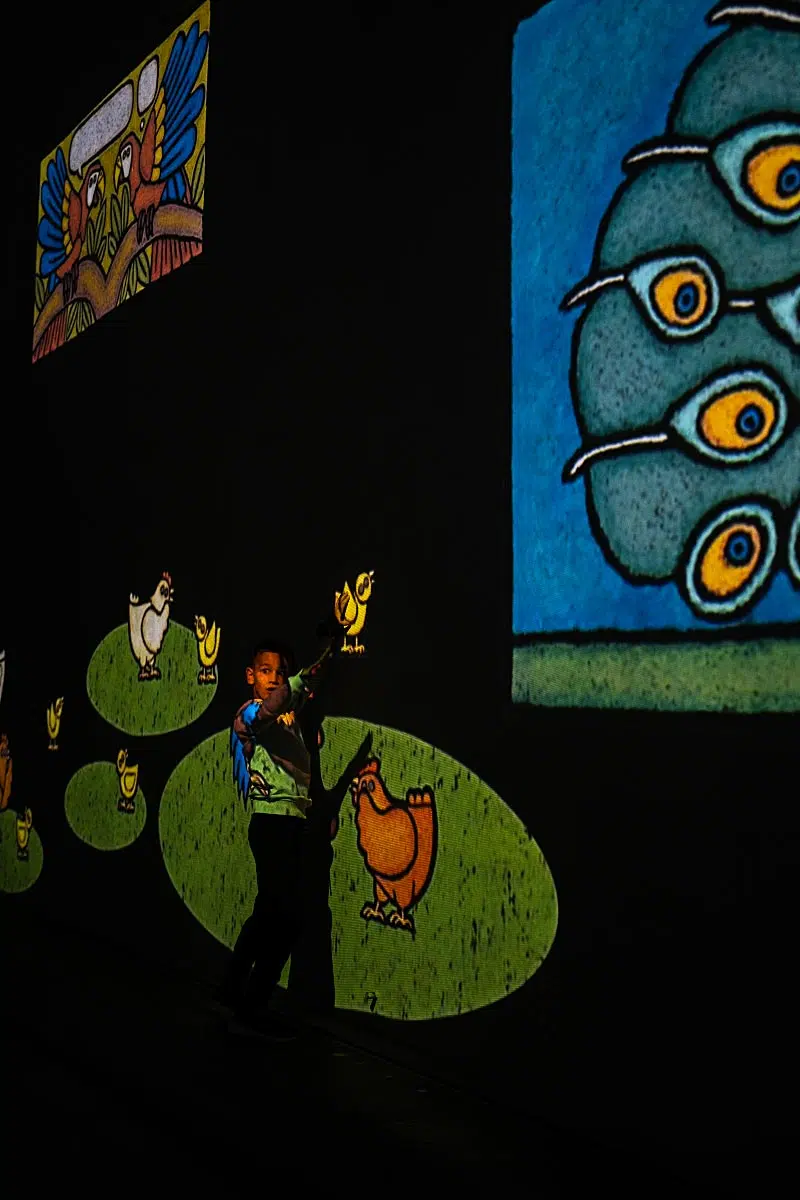
Illustrations in Motion surrounded us with Slovenian picture-book characters, making this much more than a stop for children.
The Museum of Puppetry
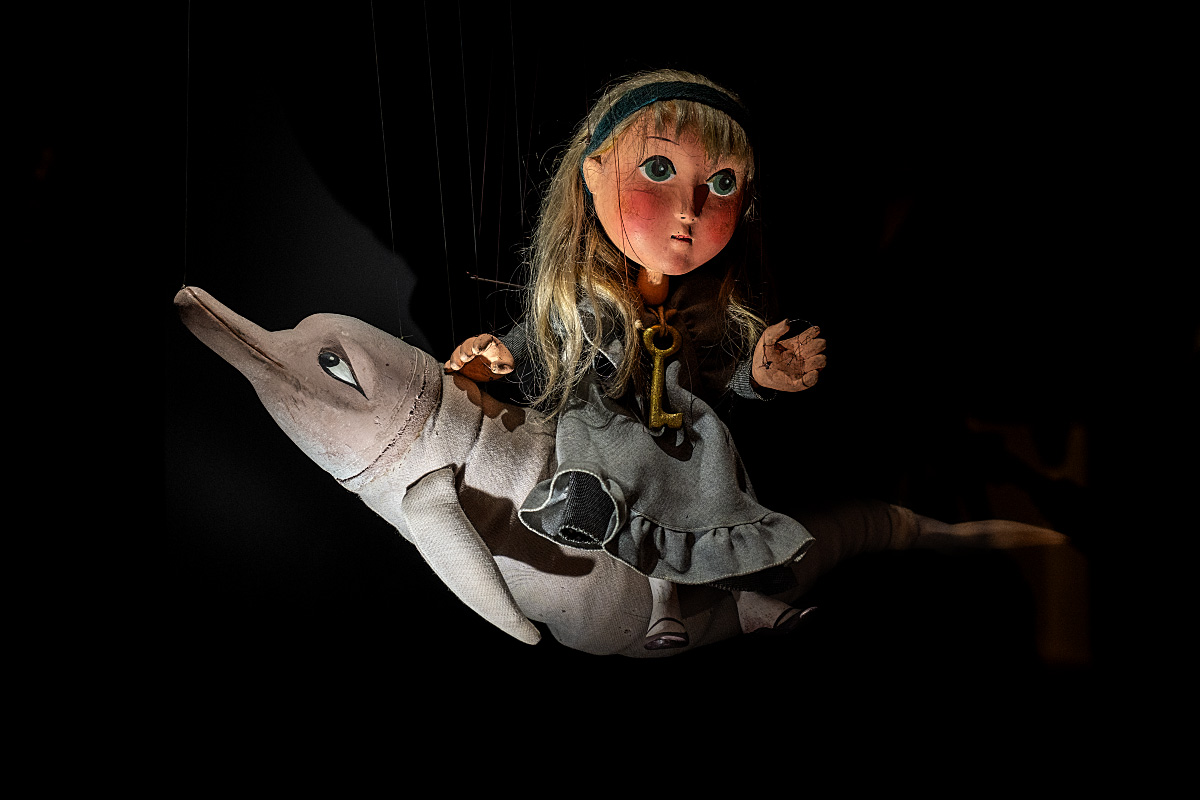
The Museum of Puppetry explores Slovenian puppetry through historic characters, marionettes, hand puppets and shadow theater. We admired the craftsmanship, from familiar storybook figures to a large dragon, then tried operating the visitor puppets ourselves. Making their movements look natural was surprisingly difficult. Our attempts were good for a laugh, and a real puppeteer’s skill now looks far more impressive to us.
Virtual Castle and the View Above Ljubljana
Virtual Castle is the castle’s 4D presentation of its own history. The film lasts about 12 minutes and is shown every half hour during operating hours. It gave us an entertaining explanation of the building’s development, with enough historical context to make the final climb more meaningful.
The story is narrated by Friderik, the castle rat, and combines animation, reconstructions, sound and physical effects. Its playful approach worked for us as adults too. By that stage we had already explored much of the complex, so recognizing the spaces and understanding how they had changed added to the enjoyment.
The Viewing Tower and an Almost Complete Sunset
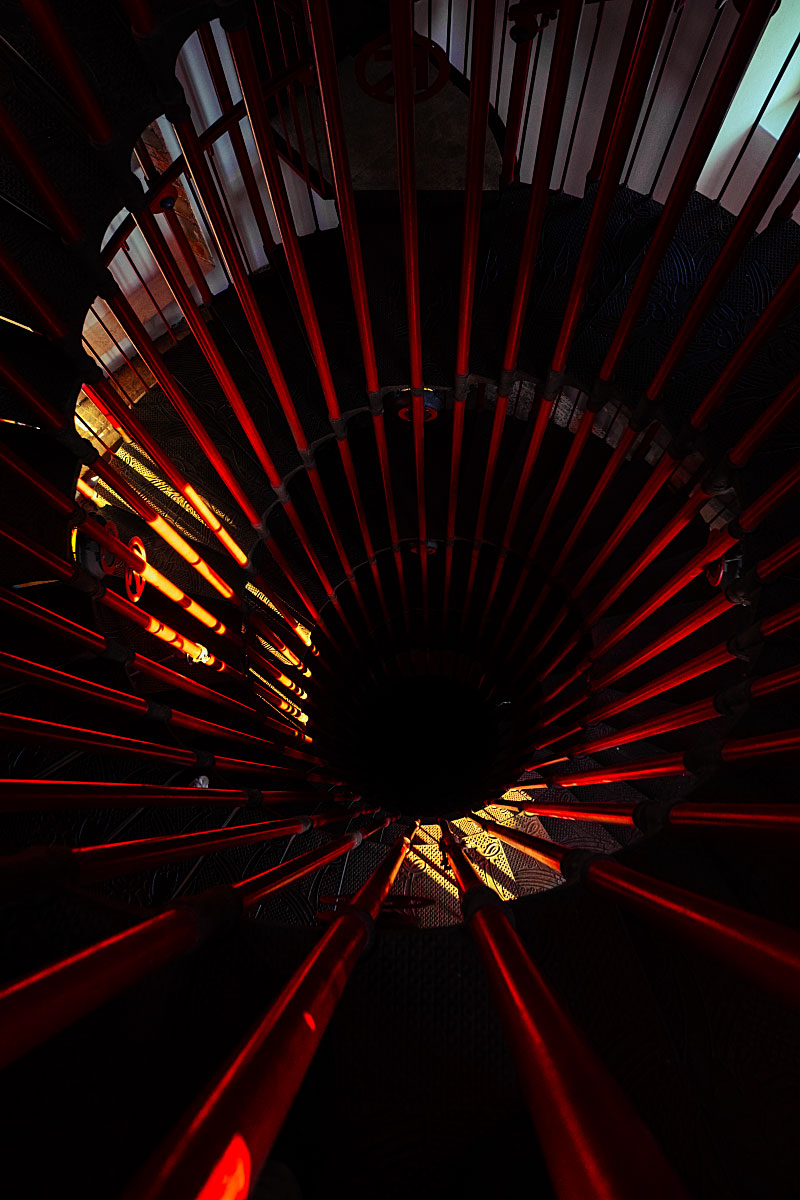
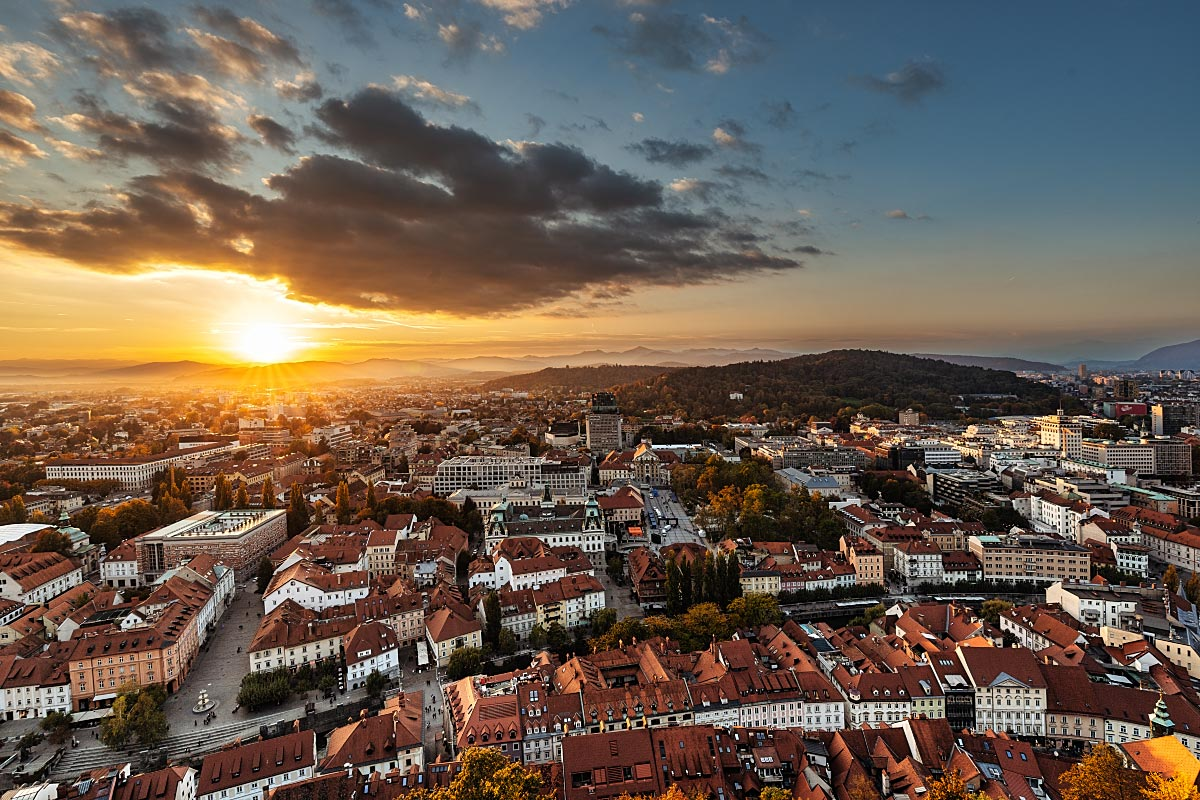
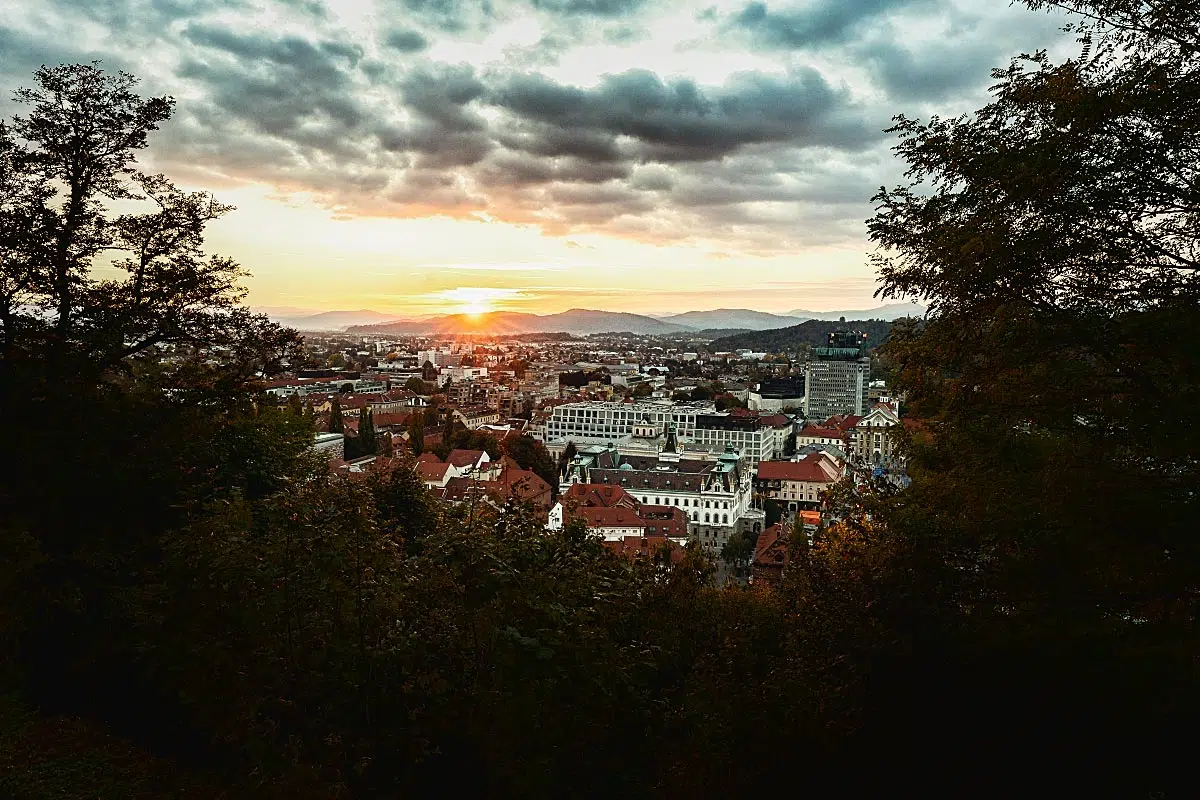
The tower’s double spiral staircase is a clever arrangement: people heading up and those coming down follow separate routes. Our legs noticed the climb. At the top, the view spread across Ljubljana’s streets, roofs and surrounding greenery, with the distant Alps giving the city a much larger setting. On a clear day, you can also see Slovenia’s highest mountain, Triglav, which rises to 2,864 meters.
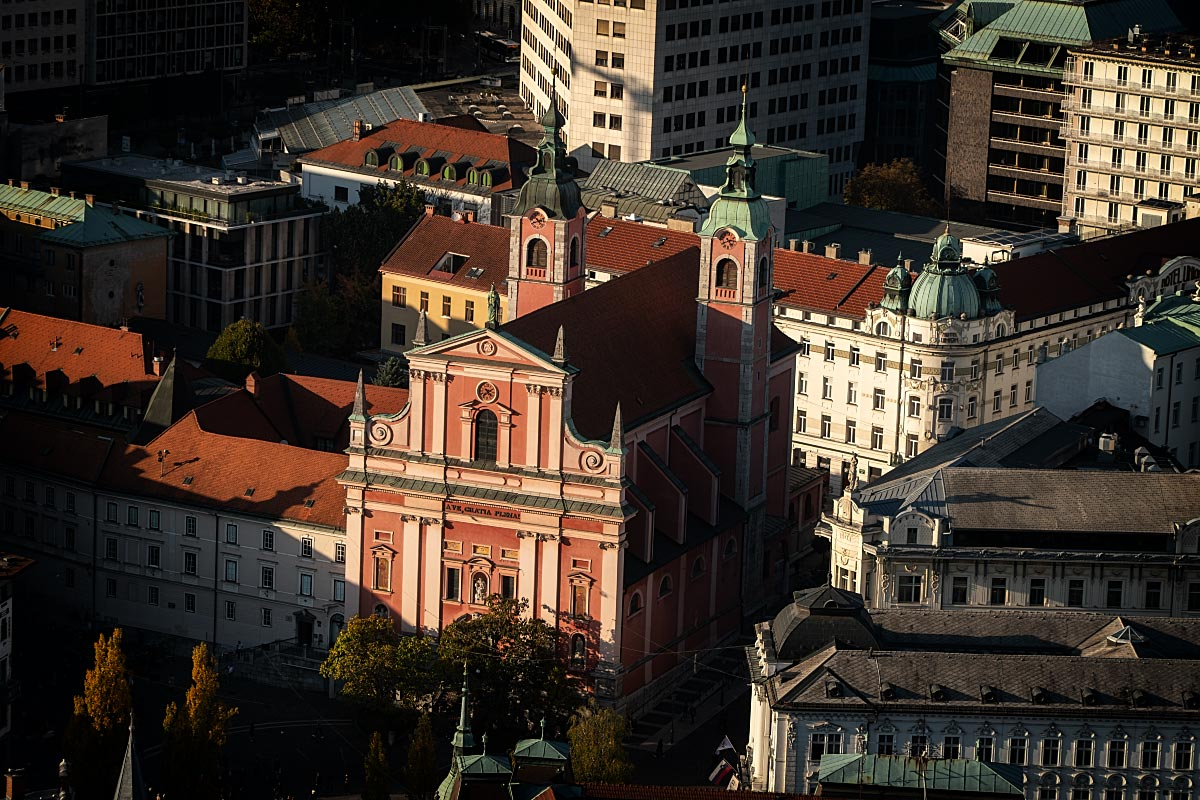
We had started our castle visit in fog and were now finishing it in sunshine, watching the light turn golden over the city. Unfortunately, staff asked us to leave around 5:50 PM, shortly before the posted 6:00 PM closing time and before the sun had fully set. It was still a memorable ending to our visit. If you want to enjoy the whole sunset, you can continue watching from the wine shop’s terrace.
The Parking Bill Brought Us Back Down to Earth
Parking is a separate expense, and a long stay makes it significant. After roughly nine and a half hours, our bill was uncomfortably close to what two castle tickets cost. That was a disappointing finish after spending the day exploring and using the castle’s cafés and restaurants. The published tariff is currently €2 for each of the first two hours, followed by €2.50 for each additional hour. We would have appreciated a parking arrangement that better accommodated visitors staying for several activities and a meal.
Our Ljubljana Castle Review: Who Should Spend the Day?
Ljubljana Castle suits travelers who enjoy moving between history, food and cultural discoveries at their own pace. We would recommend the full ticket to anyone interested in more than a courtyard stop, especially visitors willing to spend time with the puppets, the historical displays and the tower. Families have obvious reasons to come, and adults should give the playful exhibits the same consideration as the serious ones.
For us, the day’s strongest moments included the architecture below ground, lunch, the Slovenian wine selection and the pleasure of trying something unfamiliar in the Museum of Puppetry. The dry cake, poor coffee and parking bill remain fair criticisms. They did not outweigh how much we enjoyed exploring the castle, and we walked down in the evening well fed and pleasantly tired, still smiling about the puppets.
