

These Turtles are nesting on an Omani beach and I got up close, and personal with these amazing animals!
The Green Turtle is an amazing reptile. These gentle creatures spend their life time floating on the waves, riding the currents and following the tides. The females will come to shore, rarely, to nest and in Oman, at Ras al Jinz beach I found these endangered animals nesting in the early hours of the morning when I visited last October.
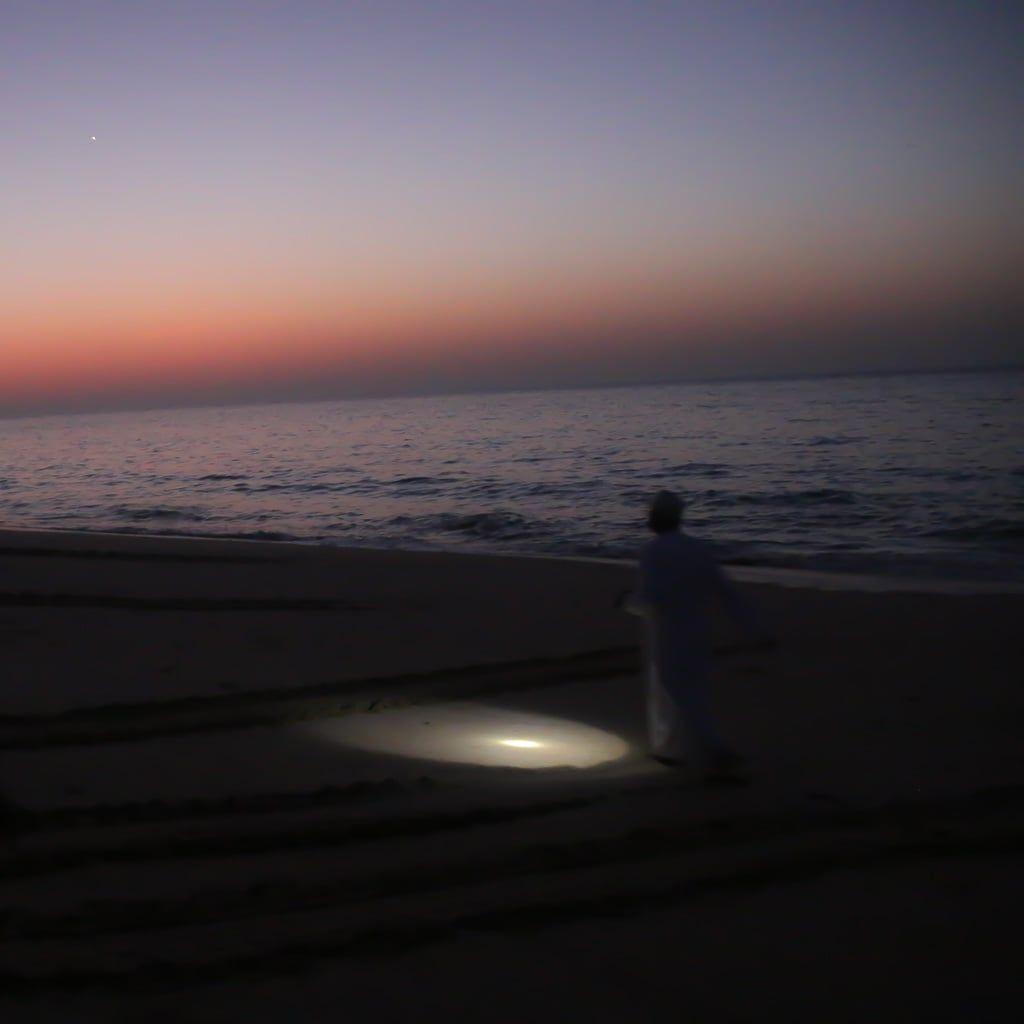

The Ras al Jinz Turtle Reserve in Oman
Green Turtles nest on this beach in Oman most night's of the year. The same turtles return to the same spots year after year, and led by a local Omani conservationist and guide I travelled to beach and turtle reserve before the sun rose, to catch a glimpse of these creatures on the shore.
I was lucky enough to see these turtles in their natural habitat, at this beautiful location in Oman that acts as a reserve to allow these animals to return to the same nesting ground each season, lay their eggs and give their young hatchlings a real chance to escape to the ocean.
The work this reserve does to preserve the ocean's marine life is incredible, and seeing first hand the turtles I really began to understand why they are so amazing, and need to be helped to survive in the wild.
I got up close and personal with these turtles, and here are the best pictures from the beach!


The turtles come ashore by night, hauling themselves along the beach and finding that perfect spot to nest. Once they have their suitable nesting ground, the female turtle will dig the sand out to create a deep hole before laying the eggs.
With the eggs laid, the turtle then camouflages the nest, covering it over completely with sand to hide it from predators that scavenge along the beach looking for the eggs to eat before they've hatched.


The Ras al Jinz Turtle Reserve is a protected area, and locals are taught to guide tourists to the beach and to conserve and protect the turtles which need this beach for the survival of their entire species.
The turtles face constant threats from human fishing endeavours, disruption of habitat and especially waste plastic. At least here at the beach they are safe to nest, at least from people.


The best time to view the turtles is either early morning, before sunrise or late at night. The female turtle will only come ashore once the sun has set and more often than not they will have returned to their marine homes by the time the sun comes up again.
In the dark, my guide led me to the beach front, and there he showed me the turtles nesting in the early morning, digging in the sand and laying eggs, before returning to the Indian Ocean.
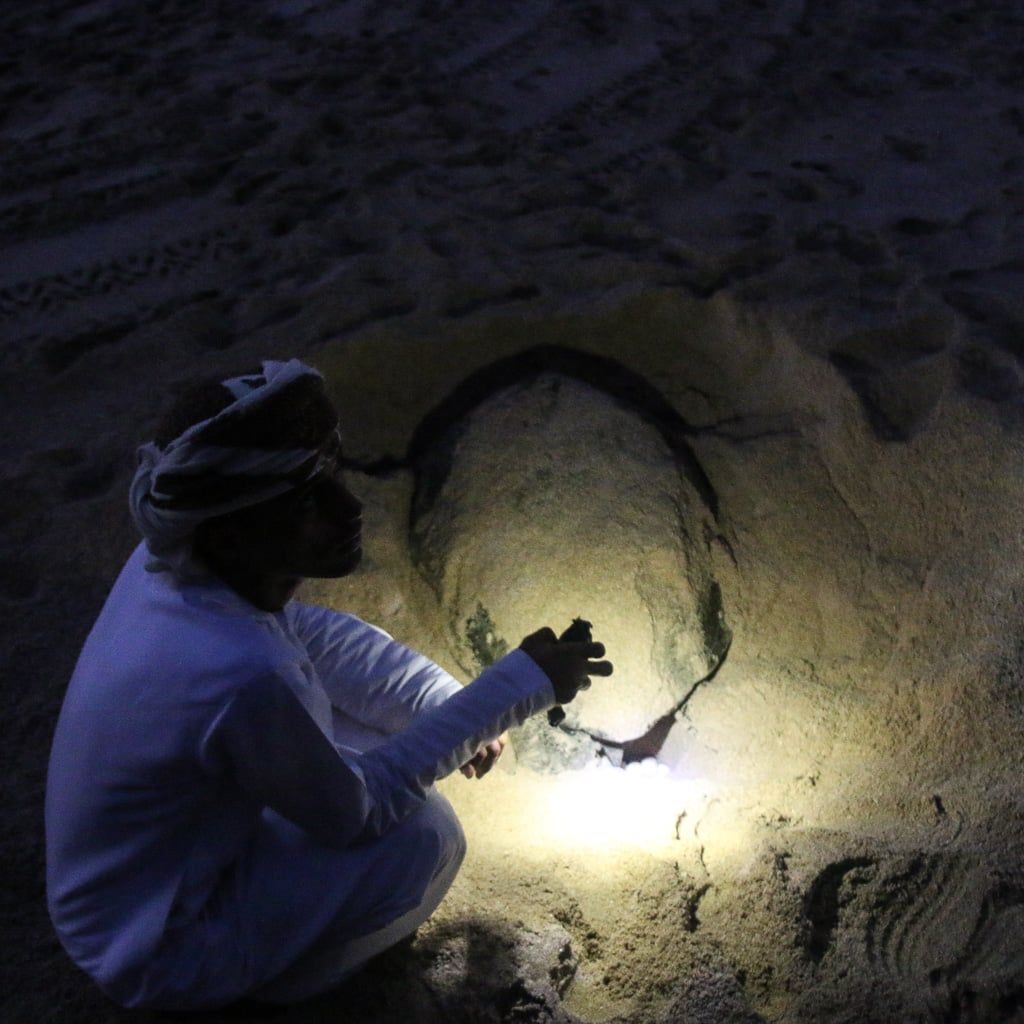


I was lucky enough to see two female turtles on the beach, and even luckier to witness the crazy, mad dash of the hatchlings breaking free from another nest which had been laid months earlier.
The young turtles have to make a break for the sea, before birds or crabs pick them off. They have one chance to make it, and many perish when they start in the wrong direction, distracted by man made lights. Of the lucky few that make it to the ocean, even less will return to this beach in later years to make their own nests, many more will be lost to the perils of the ocean, and humans contribute to that loss immeasurably.

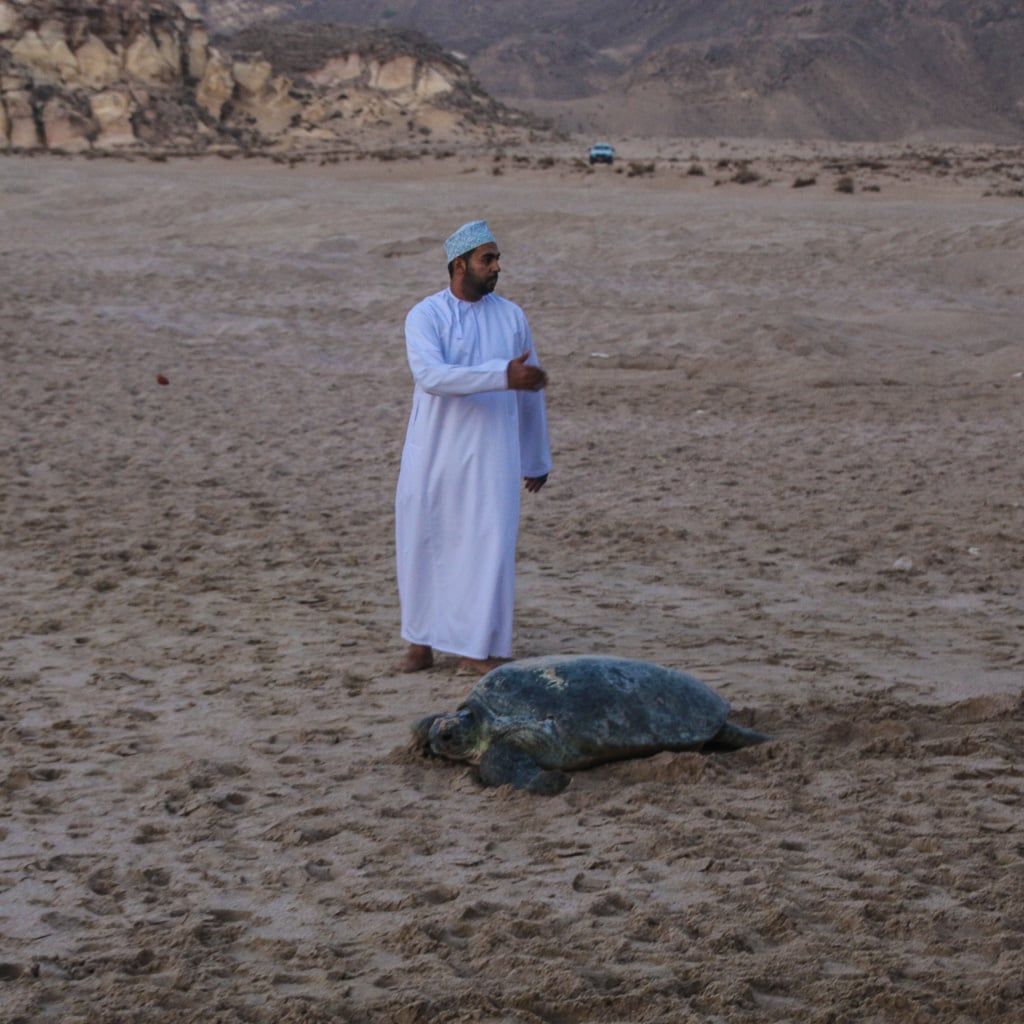

Seeing these gentle creatures first hand and witnessing the plight of the young turtles fleeing towards the ocean made me realise how perilous the survival of gentle species such as the turtle is.
We can do better, to help preserve our wildlife, and at least in some places such as here on the beach in Oman, reserves and scientific centres are proactively helping, and educating locals and tourists alike about our wildlife.


This article originally appeared in an edited format on my website Travel Tramp
All words and photos by Richard Collett
