
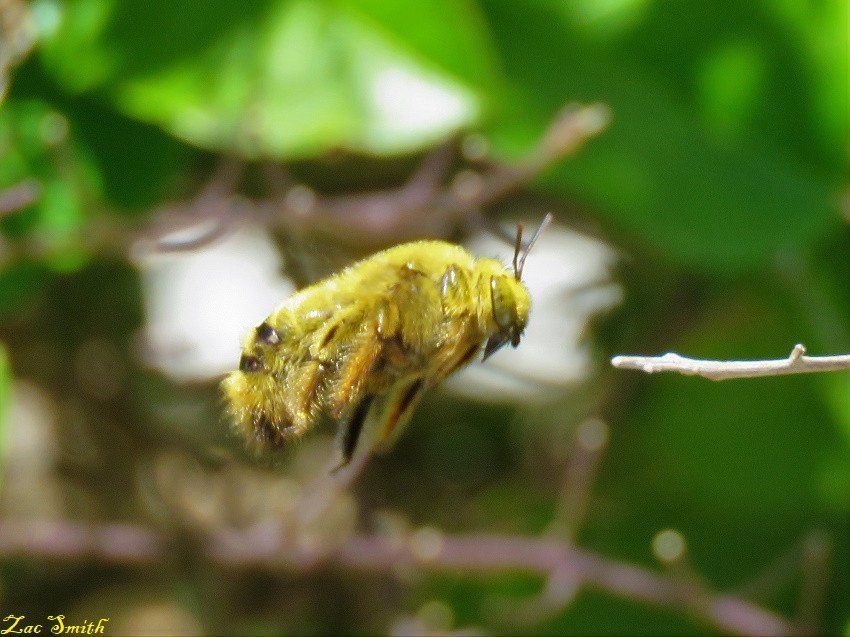
This type of Carpenter bee is only found in Africa and this post took place in South Africa.
I was out hunting dragonflies today when I saw this guy hovering at a flower bush. It is the male carpenter and they only hover, as I have never seen one in a sitting position.
But today something else happened and I want to share it with you!
Let's have a look!
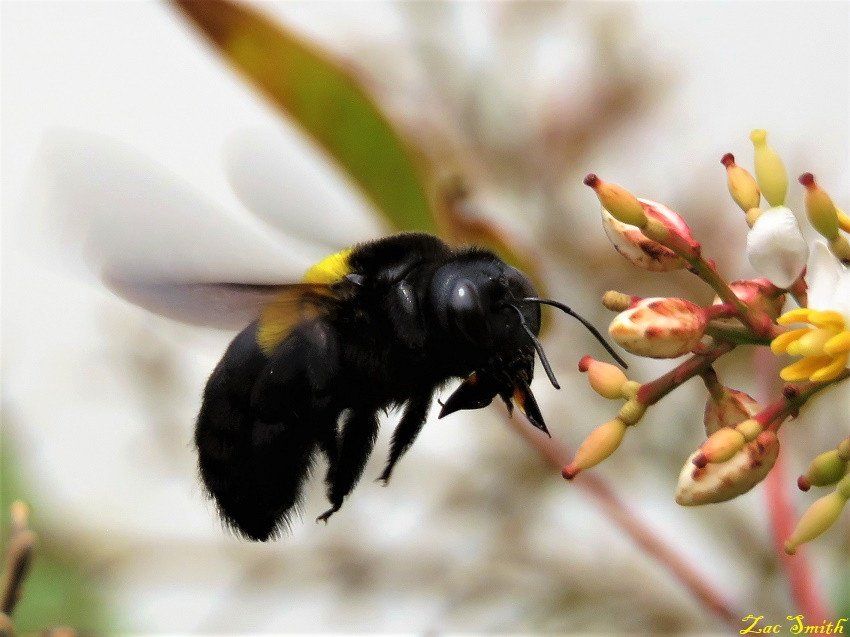
This is the female carpenter bee and she has two beautiful yellow stripes across her back!
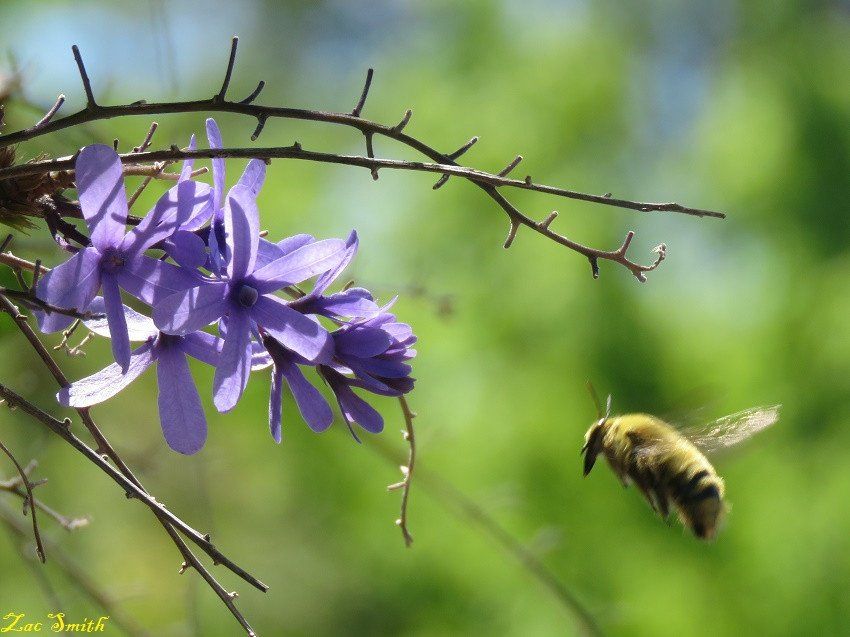
Well, I think the lady sent her mate out to go and get something sweet!
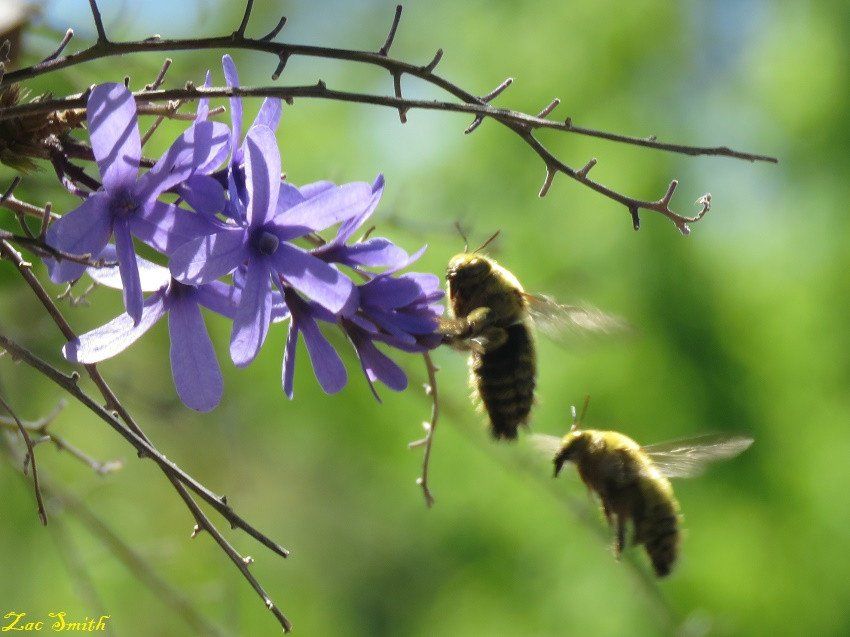
But hold on, suddenly there was another guy on the scene.

And here the fun started, as the challenge for a fight was accepted!
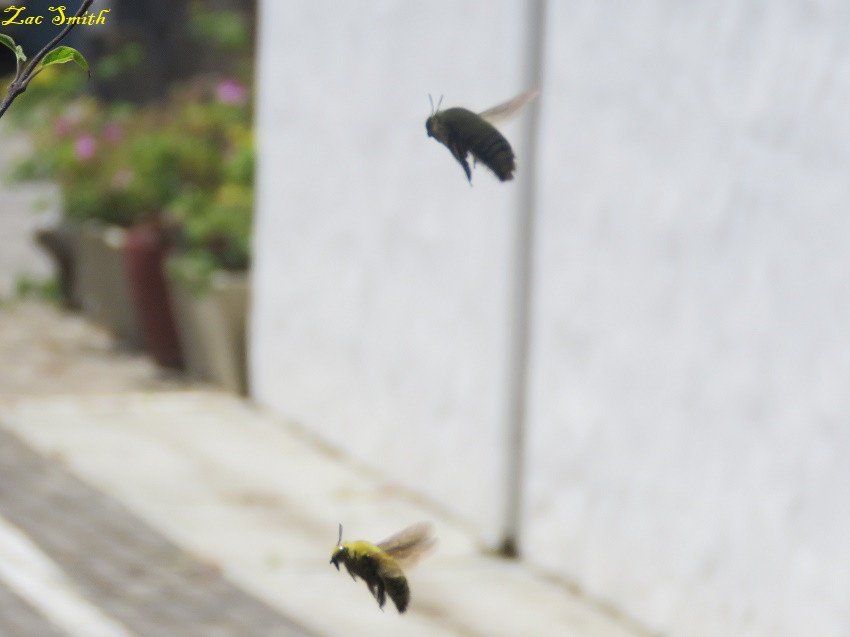
Fun in the sense that the residents must have wondered what this guy with the camera was doing running about and taking photos of the walls and the roads hahaha.
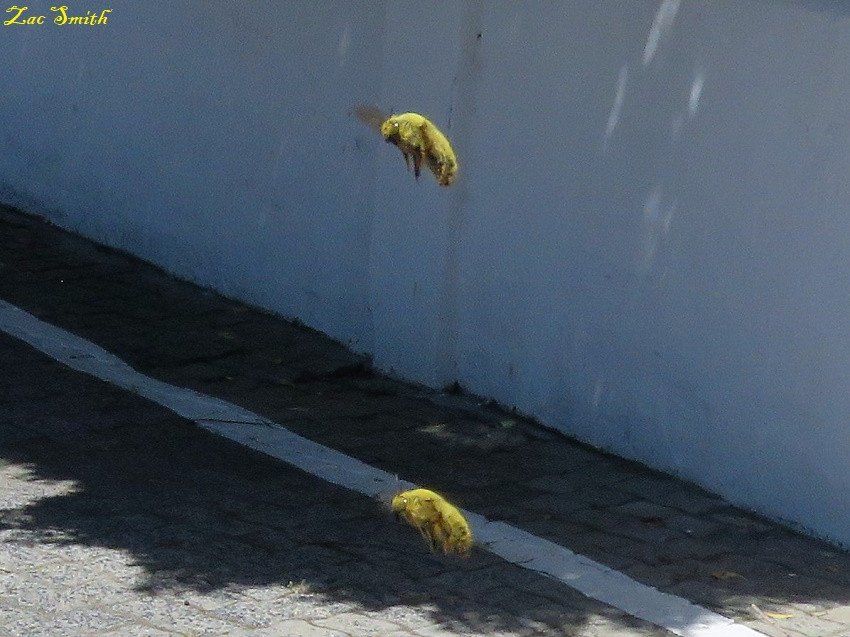
But this was a dance in flight like like no other I have ever seen!
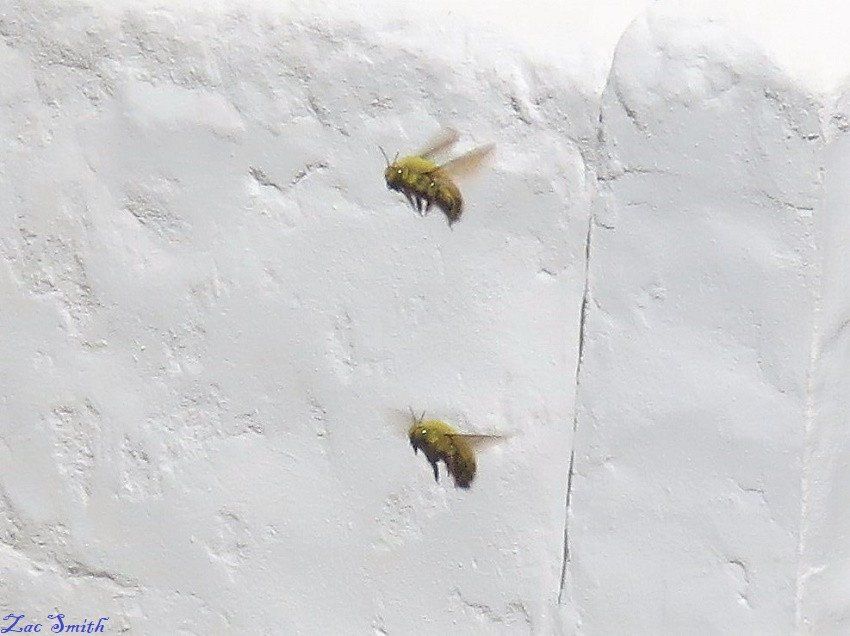
It seems that the winner is the guy that can stay at the top!
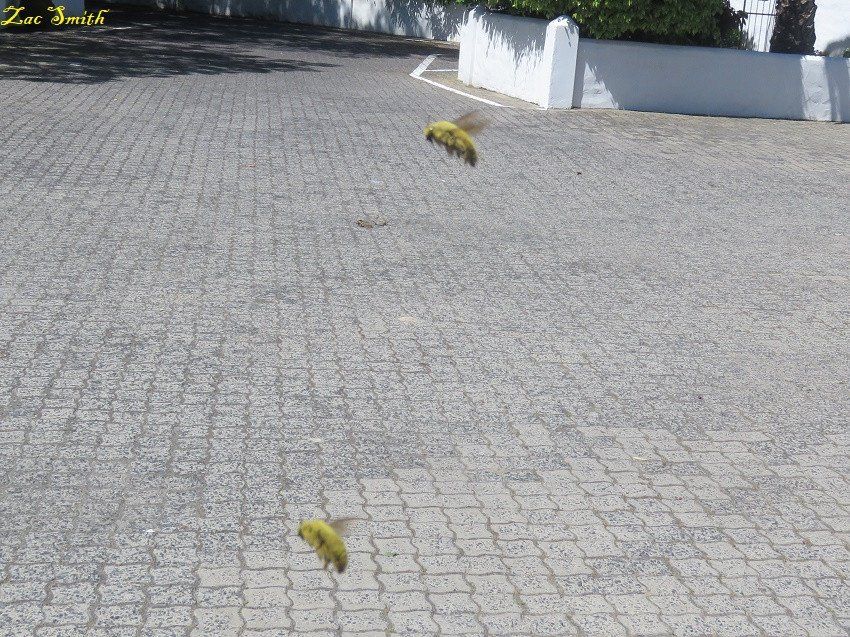
By this time I couldn't tell who was who as they flitted and flashed all over the place.
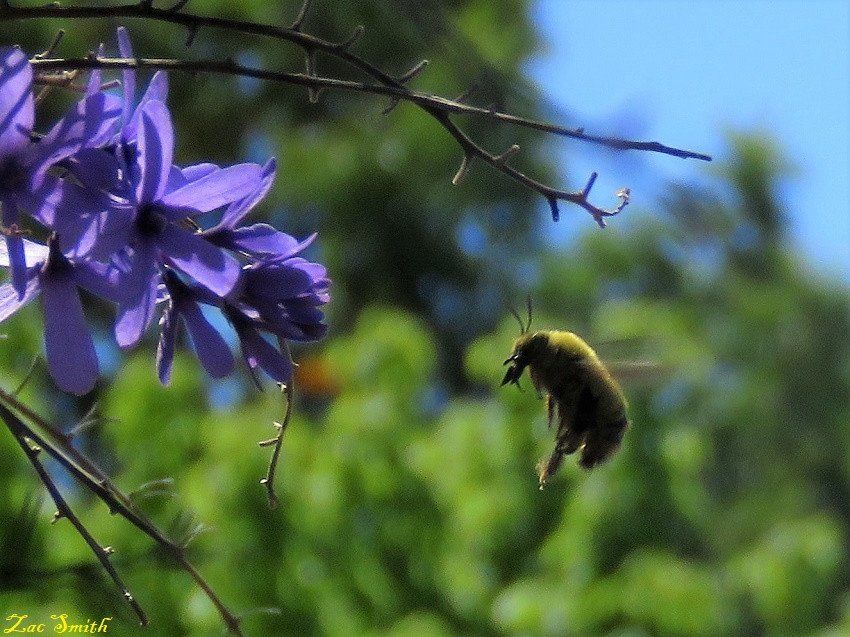
And finally, the winner returned alone to continue doing his thing!
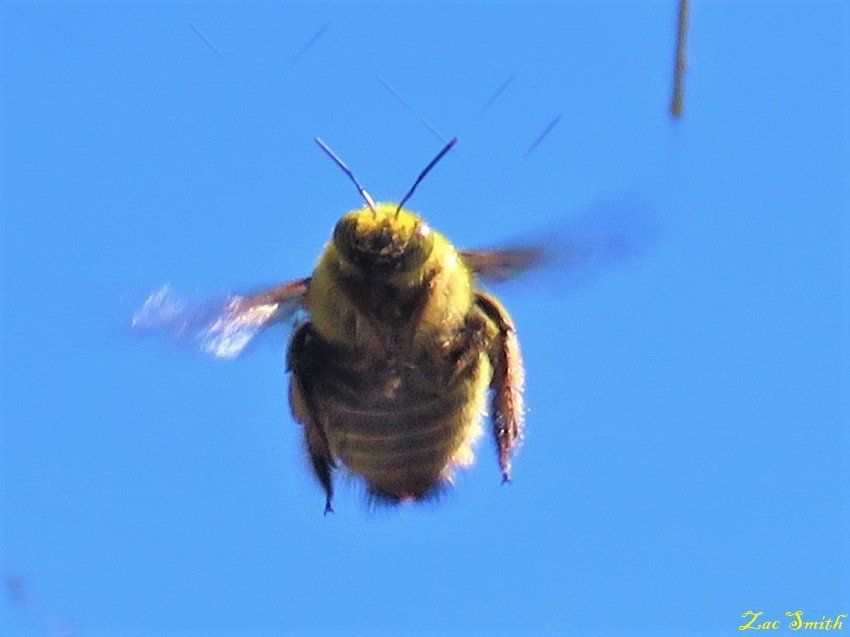
Here he was on his way back to his lady and it looks like he was smiling?
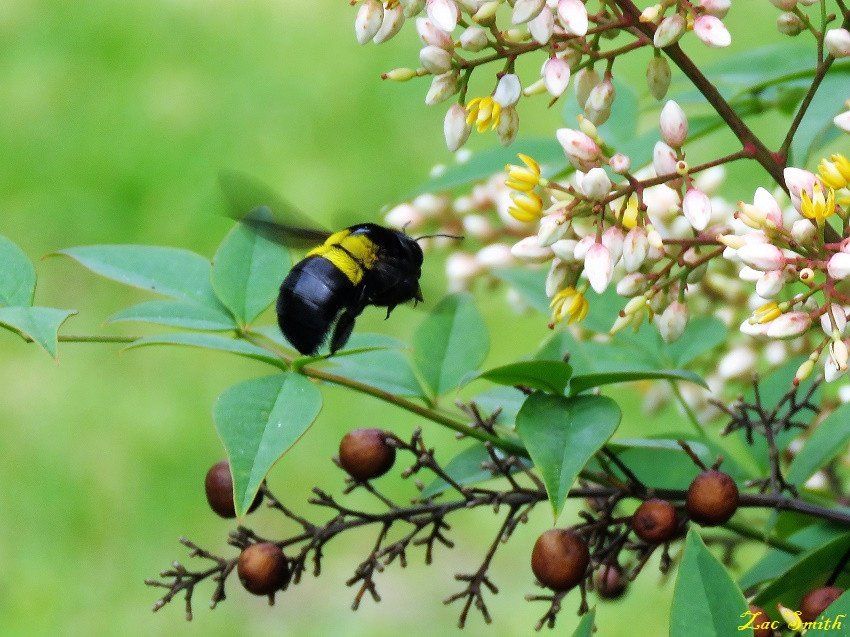
Of course the lady took no notice of the fight and calmly continued with her shopping tasks!
And That's All Folks!
Here is some information about the Carpenter Bees;
The specie name is; "Xylocopa caffra"
"The species have been recorded across the African Continent. In the Indian Ocean region, they occur in Madagascar, the Comoro Islands,and Seychelles.
It is at home in various habitat types, from moist coastal settings to dry savannah. The territorial males patrol areas around particular plants or flowers. The females are solitary nesters in Aloe or Agave stems, tree branches or timber.
The nests are partitioned into various cells, separated by walls of glued wood residue. A wide variety of plants are used as sources of nectar and pollen. As with other carpenter bees, the larvae are fed a mixture of pollen and nectar.
Mites feed on nest fungi that may infest the nectar and pollen provisions of the larvae.
Taken from source: https://en.wikipedia.org/wiki/Xylocopa
We hope that you have enjoyed the pictures and thank you for visiting a post by @papilloncharity


Connecting the people of #STEEM across South Africa. #steemsa


Comments