Borre, Region Zealand, Denmark
Anyone who wants to hike is usually drawn to the Alps, Nepal, the Way of St. James or at least to a famous long-distance hiking trail such as the Kungsleden, which leads up to the North Cape. But the real adventures await elsewhere, where there are no hordes of hikers. Where the landscape is unknown and the hiking trail is very often not even signposted.

Denmark is not a traditional hiking country, but the Danish Baltic Sea island of Møn is famous for its chalk cliffs - and is also a wonderful hiking destination for the curious. The Baltic Sea island has recently also had a hiking route that has been awarded top marks.
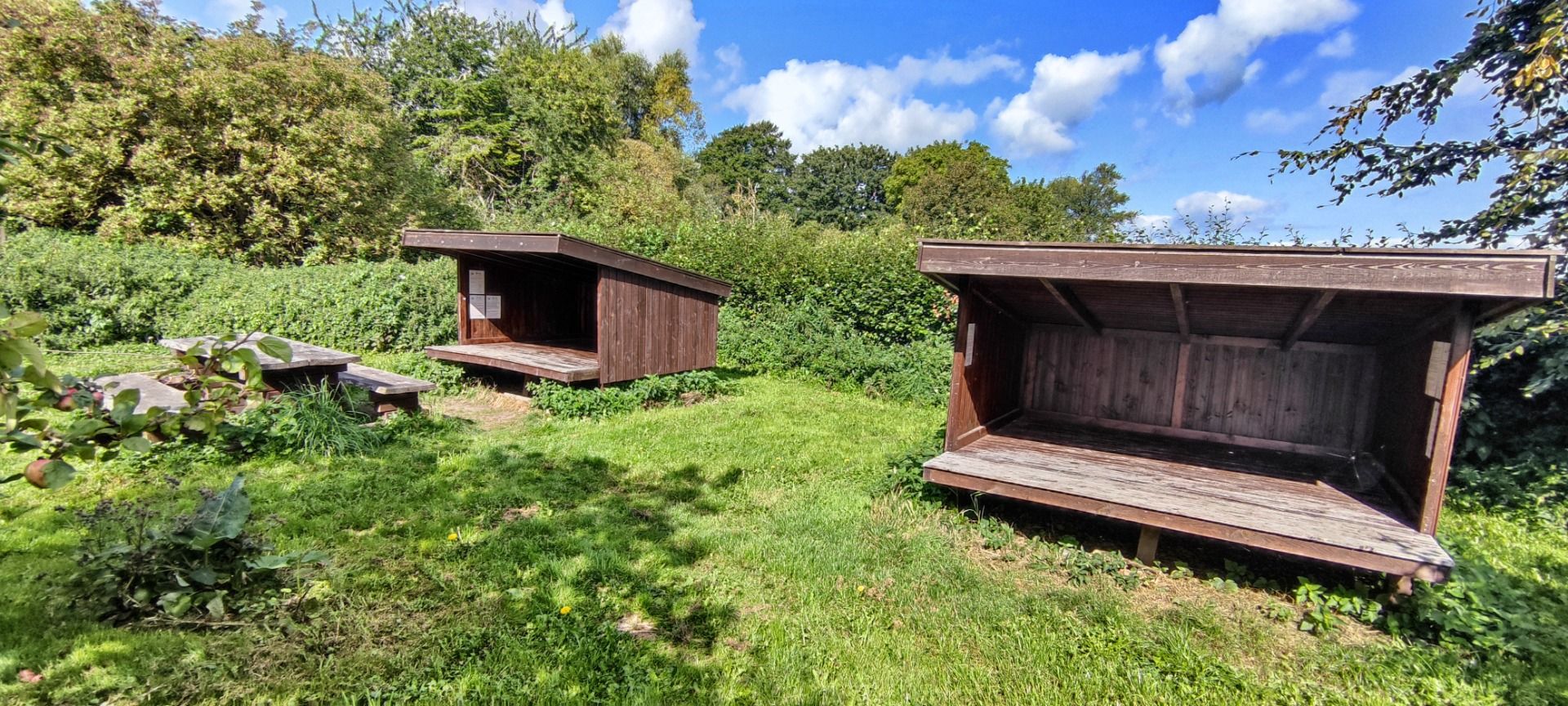
The Camønoen is 175 kilometer long
The Camønoen is a 175-kilometer-long circular route around the island of Møn, but it also leads over the islands of Bogø and Nyord and bears the lovely title of "friendliest hiking trail in the Danish kingdom".

And rightly so. Today we say goodbye to Borre, a small village in the middle of the island, which we had to visit because it is not possible and permitted to spend the night on the windswept north coast.

Our wooden houses are left behind and we head out of the town through the wet grass, along the central road. It is busy, because everyone who wants to see the cliffs of Klintholmen, the island's greatest attraction, has to go this way. Today we have to follow the Camønoen trail around the danish island Møn to the famous Garden of Liselund and into the steep Devil's Gap stairways down to the ocean.

Leave the highway
But soon we leave the highway and head into the well-kept Danish wilderness. Forests and fields, but luckily no more swarms of mosquitoes. We walk relaxed towards the sea.

In the middle of the wasteland, there is a huge antique shop that seems to be targeting the cliff visitors rushing past. Behind it the land becomes empty again, absolutely empty.

The nature is not breathtaking today, not yet. That will come later. The highly praised Danish Way of St. James, touted as "Camønoen", enchants slowly but irresistibly: When we reach the sea again, the view opens up. We head down to the shore. And then along a lonely coast towards Klintsholmen, these huge, towering chalk cliffs that attract hundreds of thousands of visitors every year.

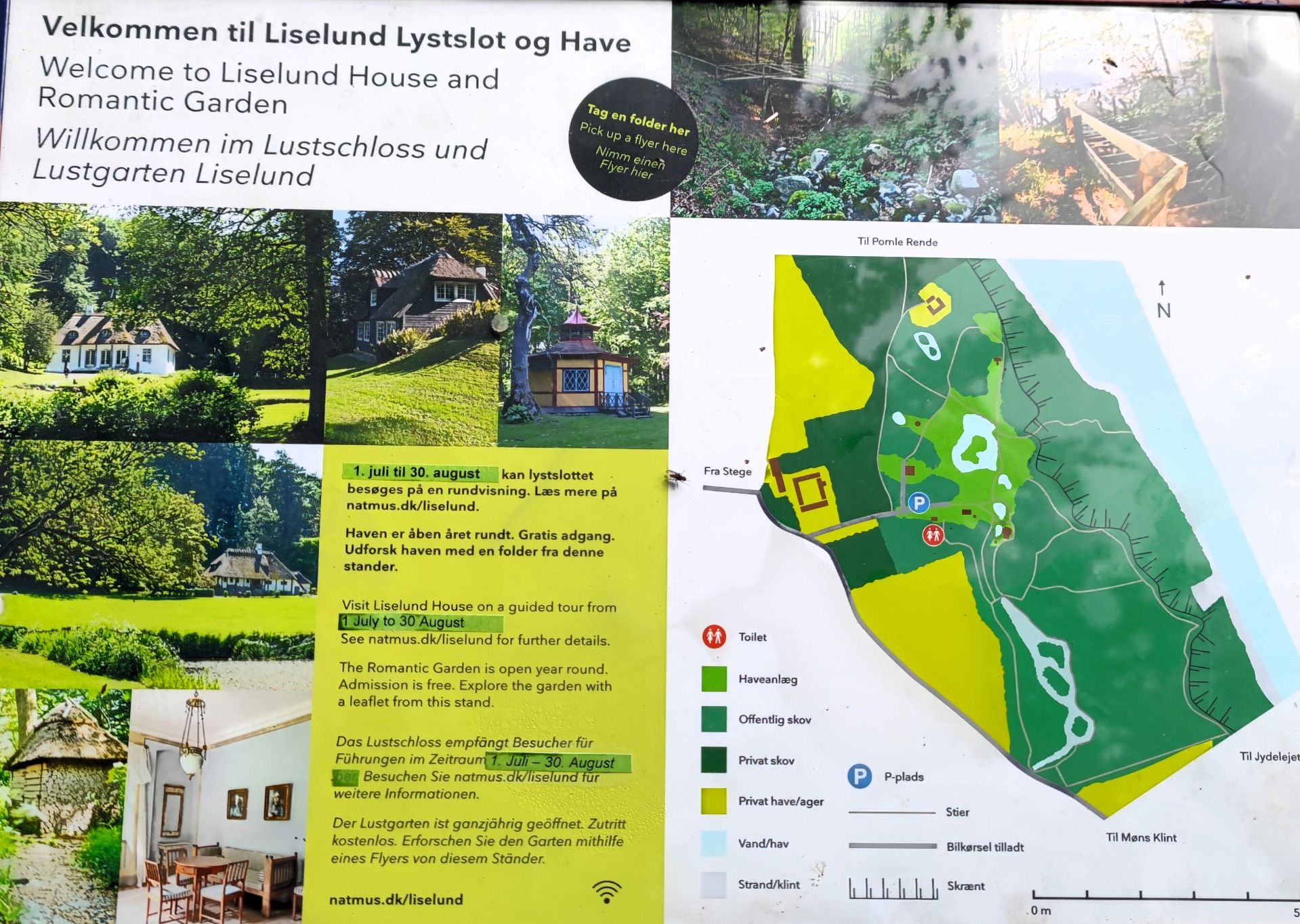
But now we have to follow the Camønoen trail to the garden of Liselund, a classicist pleasure palace with a Danish thatched roof and a classicist columned front, which Antoine and Lisa de la Calmette had built as their residence in 1792 by the architect Andreas Kirkerup. All around was an impressive park with ponds and water features, walkways and meadows. Court decorator Joseph. Chr. Lillie took care of the fine decoration and furnishing of the interior.

Dreamland for the rich
It is no longer even possible to guess that all of this was previously a moor and forest area called Sömarkegaard. In less than ten years, the landowner and bailiff Antoine de la Calmette (1752-1803) and his wife Lisa transformed the area into a dreamland for the rich.

The Garden of Liselund was designed according to the romantic models of the time. The area was cleared, drained, leveled and planted with plants and trees such as oaks, mulberries, firs and cypresses. A poetic garden, but also a romantic garden in which there are small buildings and many monuments.

The owners stayed in the small neo-classical pleasure palace in the summer. The other small houses were kept in strange and exotic styles, more to look at than to live in. For the sake of simplicity, De la Calmette (1759-1805) named the property after his wife and christened it "Liselund".

Through the Devil's Gap
Behind it, the path goes down the steep Devil's Gap, over the Devil's Bridge and down the jagged rocks by the chalk cliffs. Be careful, there are hundreds of steps waiting! But at the end, a unique sight: the rock stretches white, the sand strip stretches white, next to it the blue sea and above it the blue sky. The sound of the waves, the salty sea air and the endless expanse of the horizon - they are there again too.

The Camønoen trail is difficult to follow here. There is rubble under the seaweed, the ground shakes with every step. Here you can see the passage of time, stamped in the ancient chalk.

Unfortunately, the trail becomes impassable after a few kilometers: the tide pushes the water against the chalk cliffs, making it impossible to continue down below as planned.

Hundreds of Steps
So we go back up, hundreds of steps again, this time winding like cascades and also close to the top. Don't forget: we have 20 kilograms on our backs and another 15 kilometers in our legs.

The sun is burning, but nature makes up for it. The beech forest is magnificent, the air full of smells. At the top it gets even better, because now we can look down, into the abyss of a blue depth that the hiking trail leads right past.

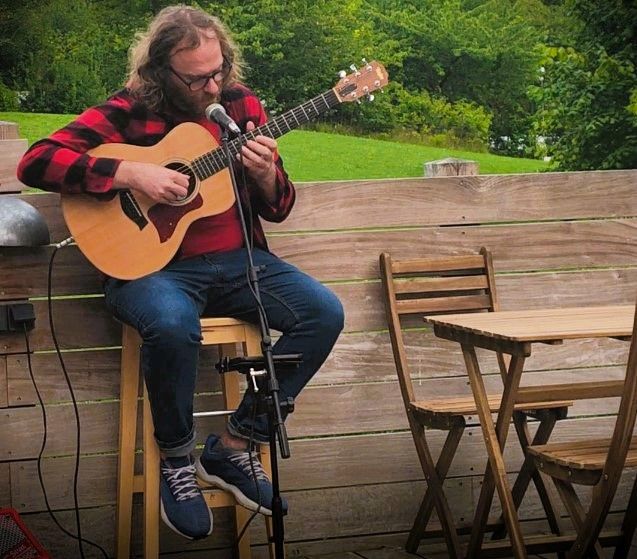
A few more bends past a lighthouse, which seem to extend the trail indefinitely. And then the place for the night appears behind a lowland full of luxurious clamping tents. A classy campsite with a pizzeria, beer in glasses and live music this time. Our tent is next to a Tesla. The green flashing of the charging light has a calming effect while enjoying an after-work beer.

Thank you for reading and if you like my work please follow me on Hive, Travelfeed or Steem or visit my homepage koenau.de