
 Vatican City
From Castel Gandolfo’s Private Avenues to the Gardens Behind St Peter’s
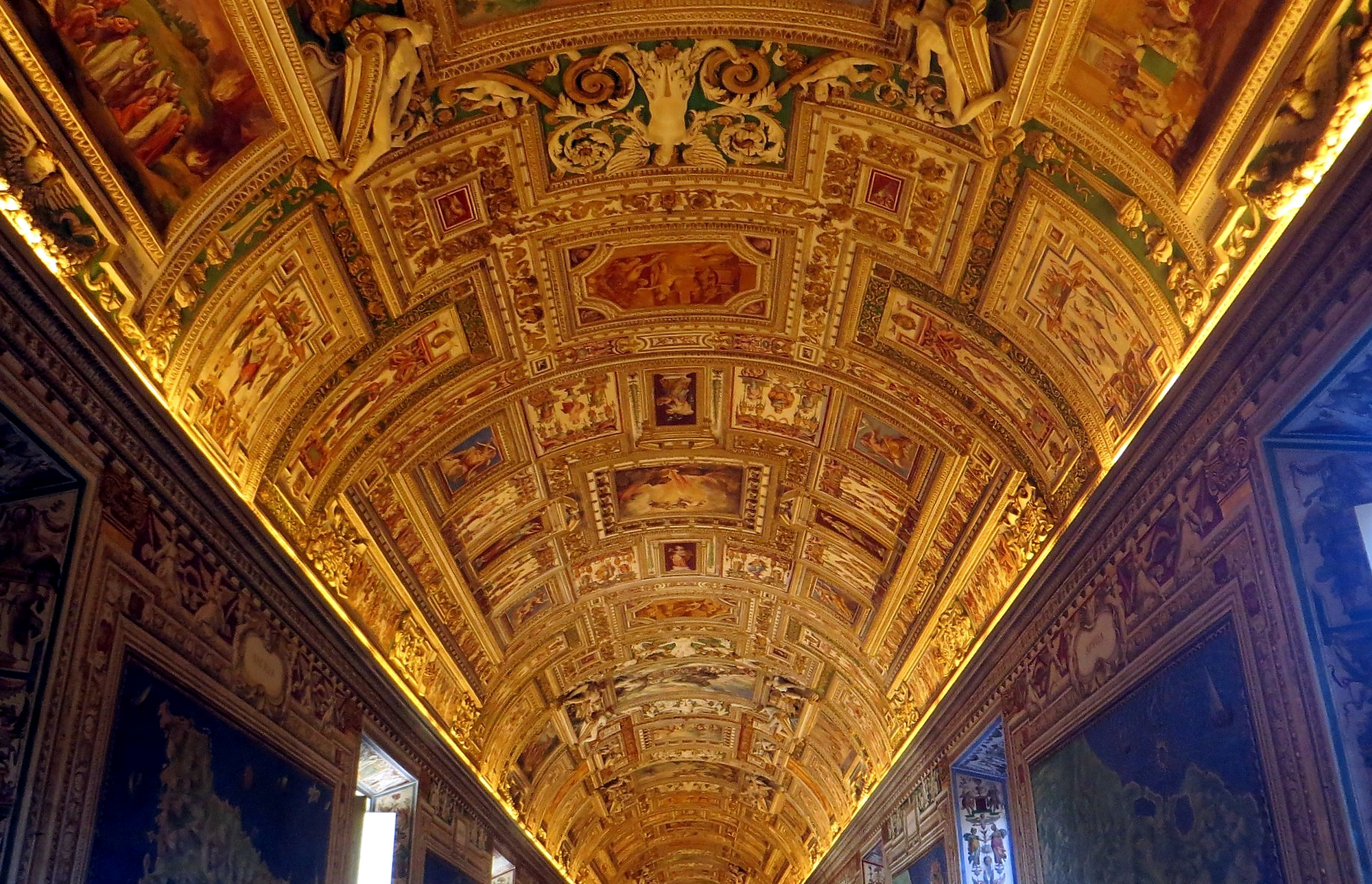
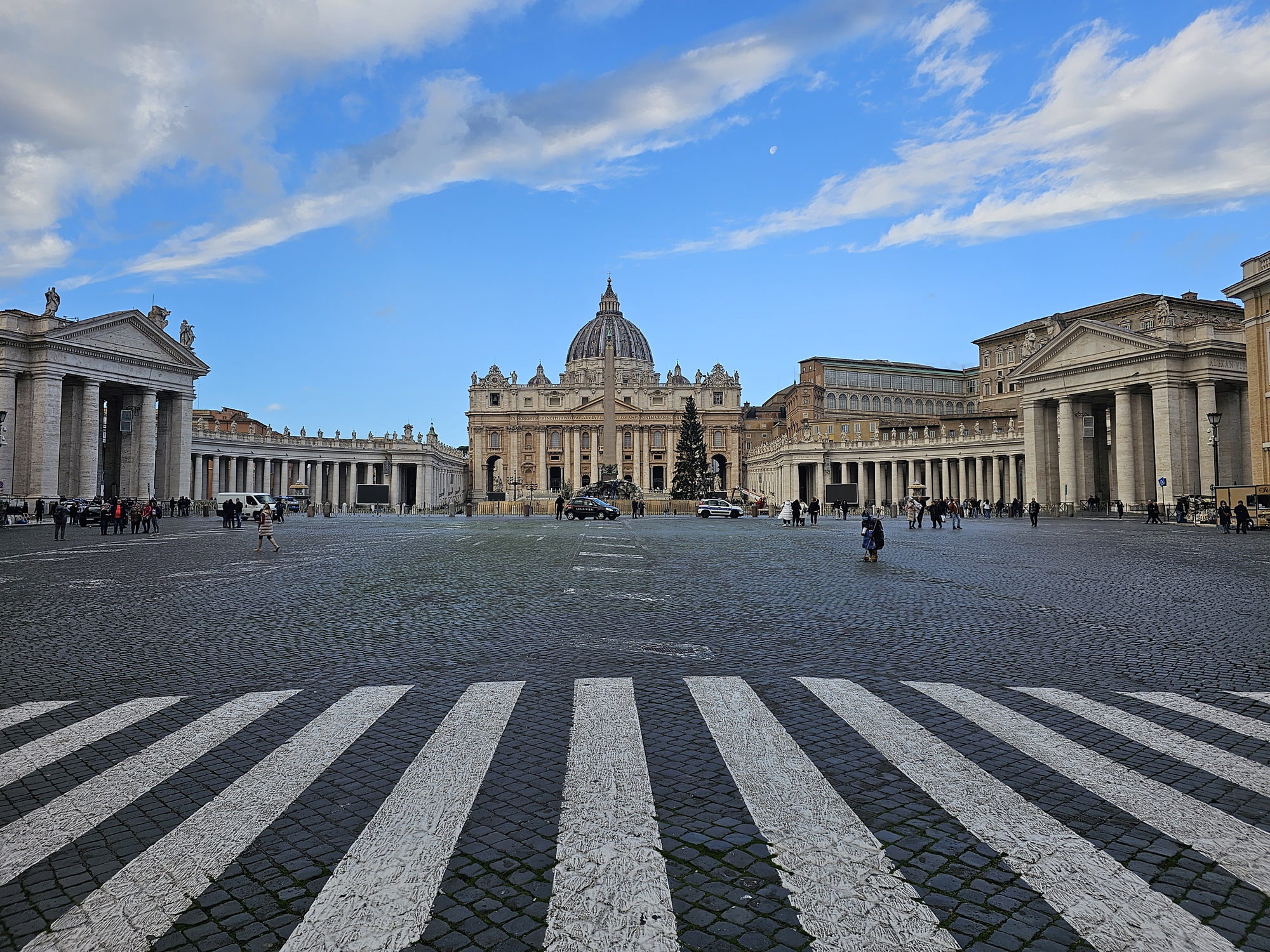
For years, the Vatican existed in my mind as an extension of Rome: St Peter’s Square, the basilica and the long route through the Vatican Museums, culminating in the Sistine Chapel.
I knew perfectly well that it was a sovereign state, but it rarely felt like one. Its public face was too familiar, too crowded and too seamlessly attached to the city surrounding it.
What fascinated me was the part behind that public face: the roads beyond the walls, the gardens closed to casual visitors and the places where popes could withdraw from the exhausting business of being permanently visible.
I explored that hidden world through two deliberately planned visits, two years apart. The first took me to Castel Gandolfo, the small hill town outside Rome that had long intrigued me as the traditional papal retreat. The second led me through the Vatican Gardens themselves.
I had not originally conceived them as two halves of the same story, but that is what they eventually became. Castel Gandolfo revealed the Vatican as a world of retreat, privacy and monumental calm. The gardens behind St Peter’s revealed something different: a controlled internal landscape of roads, residences and infrastructure that finally made Vatican City feel like a state rather than an exceptionally elaborate part of Rome.
I explored papal privacy on two separate trips and, with admirable spiritual consistency, stayed at a Marriott on both.
Together, the two gardens showed me where the Vatican goes when it wants to disappear.
The Papal Retreat I Knew from the Screen
Castel Gandolfo had fascinated me long before I went there. For years, I had heard it mentioned in the media as the secluded place where popes withdrew from Rome. It belonged to that category of names which sound familiar even when one has only a vague idea of what they actually contain.
The 2019 drama The Two Popes gave that vague image a more tangible form. It was a film, not a documentary, but with Anthony Hopkins as Benedict XVI and Jonathan Pryce as Cardinal Bergoglio, the future Pope Francis, it transformed the papal retreat from a name in the news into a place I specifically wanted to enter.
When I planned an excursion outside Rome, Castel Gandolfo was therefore not a random choice. I wanted to see whether this repeatedly invoked papal refuge actually felt as private and remote as it appeared in the media and on screen.
The local train journey was simple. The climb from the station was not.
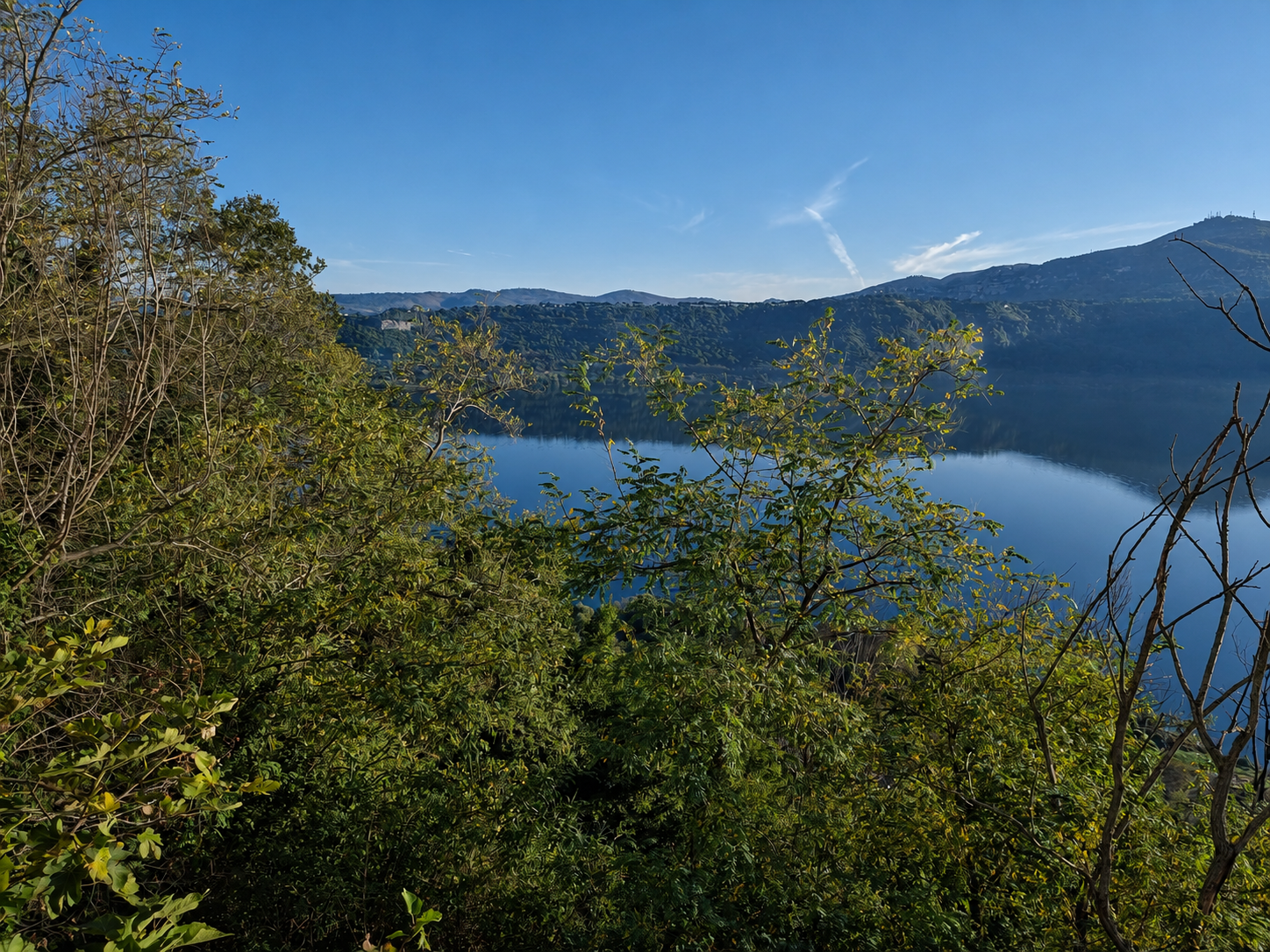
The railway station lies well below the centre of the town, and the ascent is not a ceremonial stroll designed to prepare visitors spiritually. I walked the entire way, climbing towards the historic centre while being reminded that hill towns tend to place their best views at the direct expense of one’s lungs.
Fortunately, I already knew that the garden tour would be conducted by vehicle. After reaching the top, the thought of sitting down became unexpectedly theological.
A Palace in the Middle of a Town
My mental image of Castel Gandolfo had been wrong.
I had expected an isolated and monumental residence hidden behind walls somewhere above the lake. Instead, I arrived at the main square of a compact Italian town and found the Apostolic Palace standing almost casually among the surrounding buildings.
There was no vast ceremonial approach. The palace did not rise above the town as an inaccessible fortress. It simply formed one side of the square, integrated into a place with cafés, pedestrians and ordinary local life.

Its public face was considerably less imposing than the Castel Gandolfo I had constructed in my imagination. Had the visit ended there, I might have left wondering why the place had acquired such a powerful reputation.
But the façade on the square was not the real story.
The world behind it was.
The World Behind the Palace
I had expected a palace with a large garden. I had no real sense of the scale of the Barberini Gardens.
The visit was conducted in a small ecological vehicle, with the historical commentary provided primarily through an audio guide. It began as a pleasant drive through immaculate grounds. Then the road continued.
Another avenue appeared, followed by another lawn, another formal arrangement of hedges and another view framed by umbrella pines. Every time I assumed that we had reached the limits of the complex, the vehicle turned and entered another part of it.
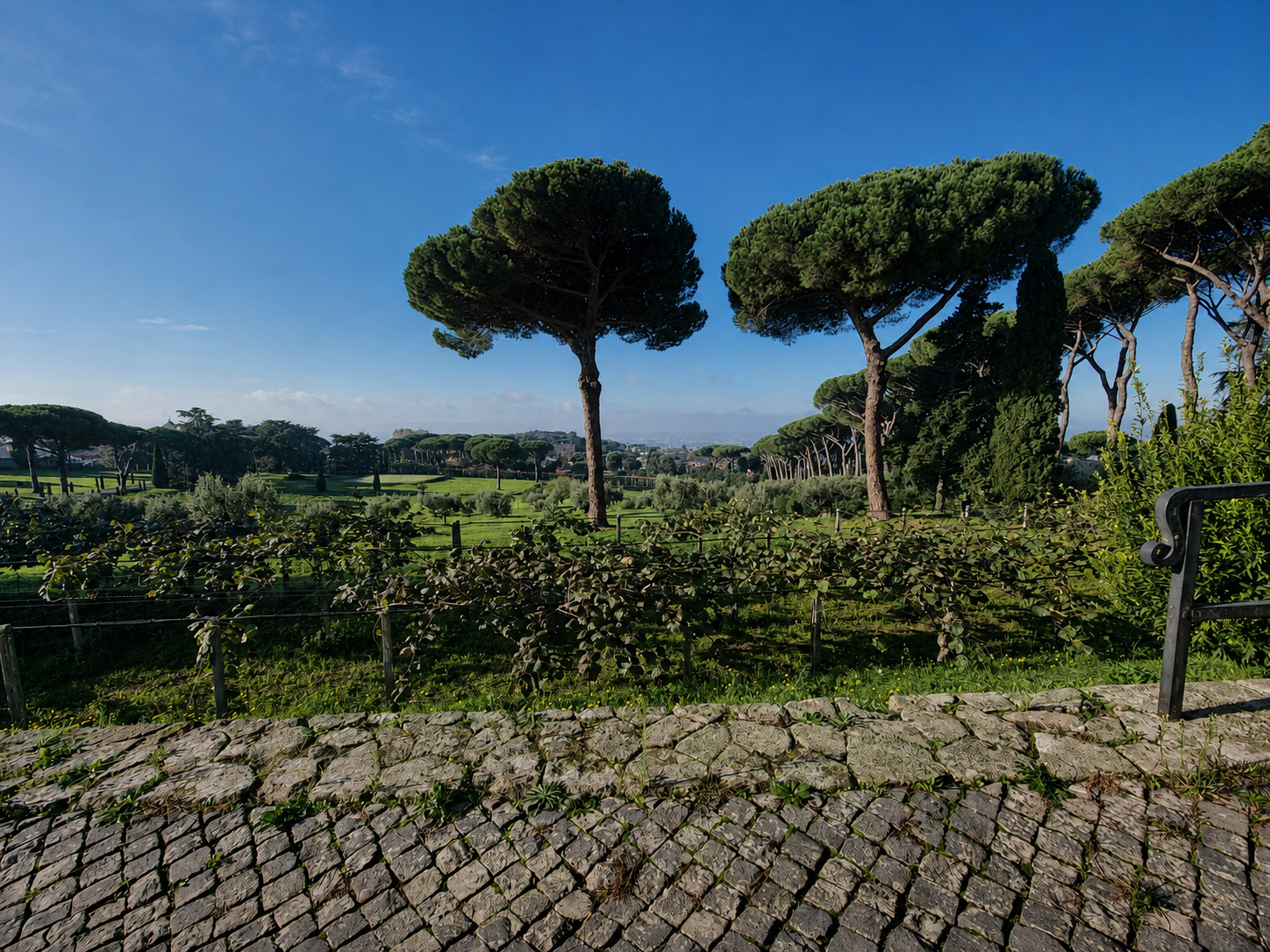

The duration of the drive, more than any figure in hectares, explained how large the property really was. These were not decorative gardens arranged behind a summer residence. They formed an extensive landscape of avenues, terraces, formal parterres and open spaces, large enough for the papal world to withdraw into itself.
The contrast with the town was extraordinary. Minutes earlier, I had been standing in an ordinary square. Now I was travelling through a private landscape that seemed detached from everything outside its boundaries.
The longer the vehicle continued, the more understandable the idea of a papal retreat became.
The Gardens That Briefly Became Mine
I had booked the first tour of the morning. It was November 2021, when travel had resumed but the effects of the pandemic were still visible in visitor numbers.
I was also extraordinarily lucky.
There were no other guests on my tour. It was just me and the man driving the vehicle. The explanations came from the audio guide, but the absence of a group changed the rhythm of the experience completely.
There was no need to keep twenty people moving at the same pace. The driver could stop while I took photographs. At one point, he allowed me to step out and walk briefly through one of the formal sections. He even took photographs of me.

I do not pretend that this was the normal Castel Gandolfo experience. It was a combination of an early reservation, pandemic-era visitor numbers and sheer bloody luck.
For that morning, however, the gardens felt almost private.
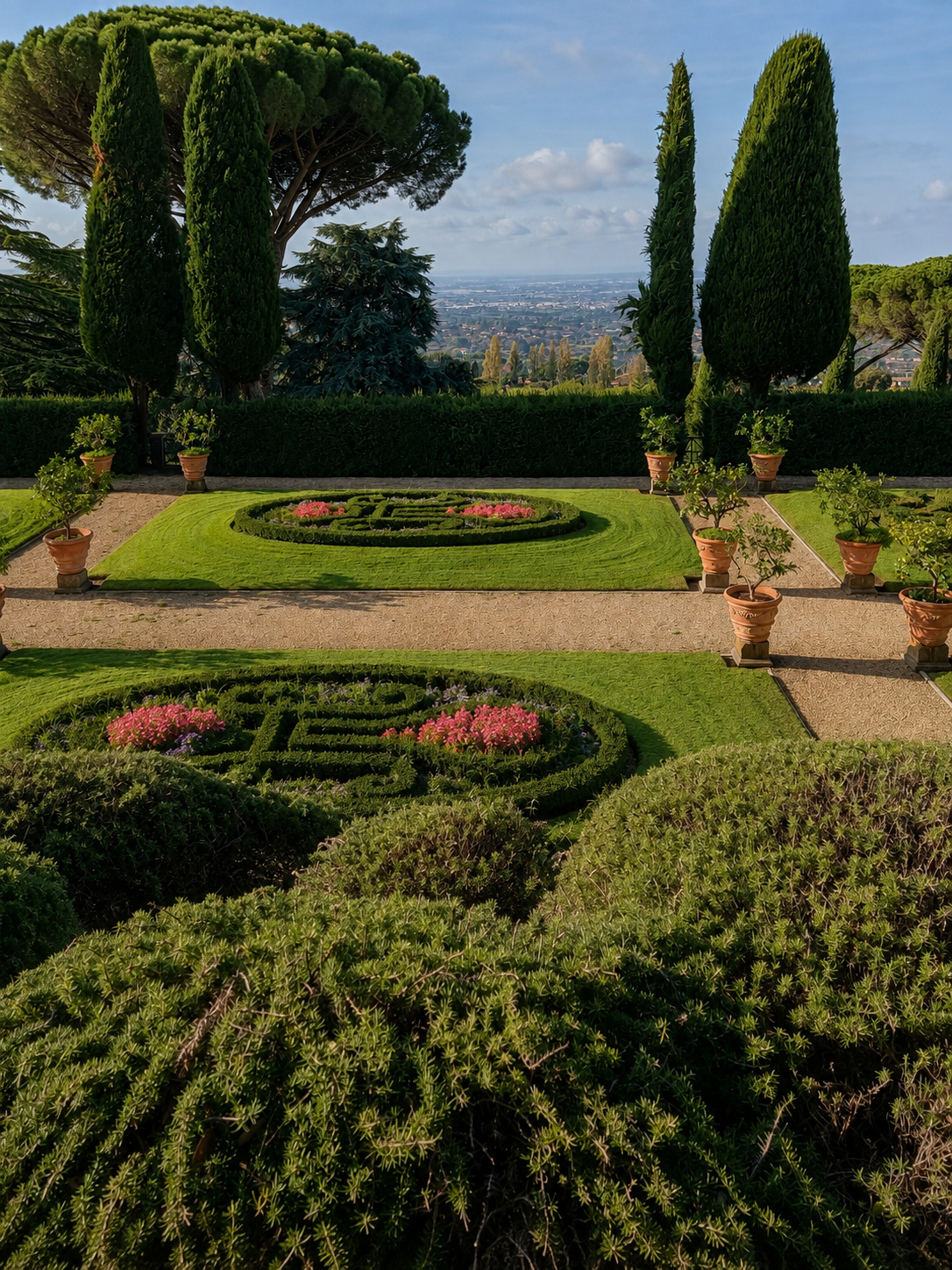
The strongest sensation was not grandeur but peace. Part of it was the luxury of having no one else around. But there was also something more contemplative in the long avenues, the carefully controlled silence and the complete removal from the public world.

The gardens were monumental without feeling designed primarily for spectacle. Their size created distance. Their emptiness created privacy. Together, they produced a strange combination of luxury and spiritual retreat.
For a short time, the space seemed to belong to me.
That may be why the visit has remained unusually vivid years later.
Why Popes Came Here
Before visiting, I understood Castel Gandolfo intellectually. It was the traditional papal summer residence, a place of rest outside Rome.
After travelling through the gardens, I understood it physically.
The palace itself was not what explained the retreat. The distance did. The avenues did. The absence of people did.
A pope could disappear here without being completely disconnected from the machinery of the Vatican. There was space to walk, think and withdraw from the constant visibility of St Peter’s. The complex offered privacy without total isolation and peace without severing the connection to Rome.
The enormous grounds did not strike me primarily as a demonstration of power. They felt more like an elaborate mechanism for escape.
Perhaps that is why the gardens impressed me more than the palace ever could.
The Palace After the Gardens
The Apostolic Palace was a disappointment.
I had expected a stronger sense that modern popes had actually lived there. Instead, much of the interior felt like a preserved museum: formal rooms, historical objects and furniture that seemed far older than the relatively recent use of the residence.
I expected at least some convincing trace of contemporary papal life. Instead, I found myself wondering what recent popes had seen in the rooms.
The view, the silence and the privacy were obvious. The furniture was less persuasive.
The palace did not explain Castel Gandolfo. The gardens did.
I had originally planned to remain in the town longer, but after completing the palace visit I returned to Rome earlier than expected. The gardens had fully justified the excursion. The palace had not, and larger plans were waiting for me in Rome.
Two Years Later, Behind St Peter’s
Two years later, I approached the papal world from the other side.
This time, I was visiting the Vatican Gardens. The tour begins through the Vatican Museums, not through St Peter’s Basilica, an important distinction when organising the day.
For this visit, Le Méridien Visconti was a particularly practical base. It was close enough for me to walk to the museum entrance without adding public transport to an already organised morning. Unlike The Regency, which had served its logistical purpose for the Castel Gandolfo trip without inspiring any particular loyalty, Le Méridien is a hotel I would readily choose again for another Vatican visit.
I selected the minibus tour rather than the walking option. The available timing suited me better, and I was not entirely certain that I wanted to commit to a longer and more physically demanding route.
Once the drive began, I was glad that I had not underestimated it. The gardens contain more slopes and cover more ground than their compact position on a map suggests. The minibus was not merely the lazy option. It was an effective first overview of a space that would have required considerably more effort on foot.
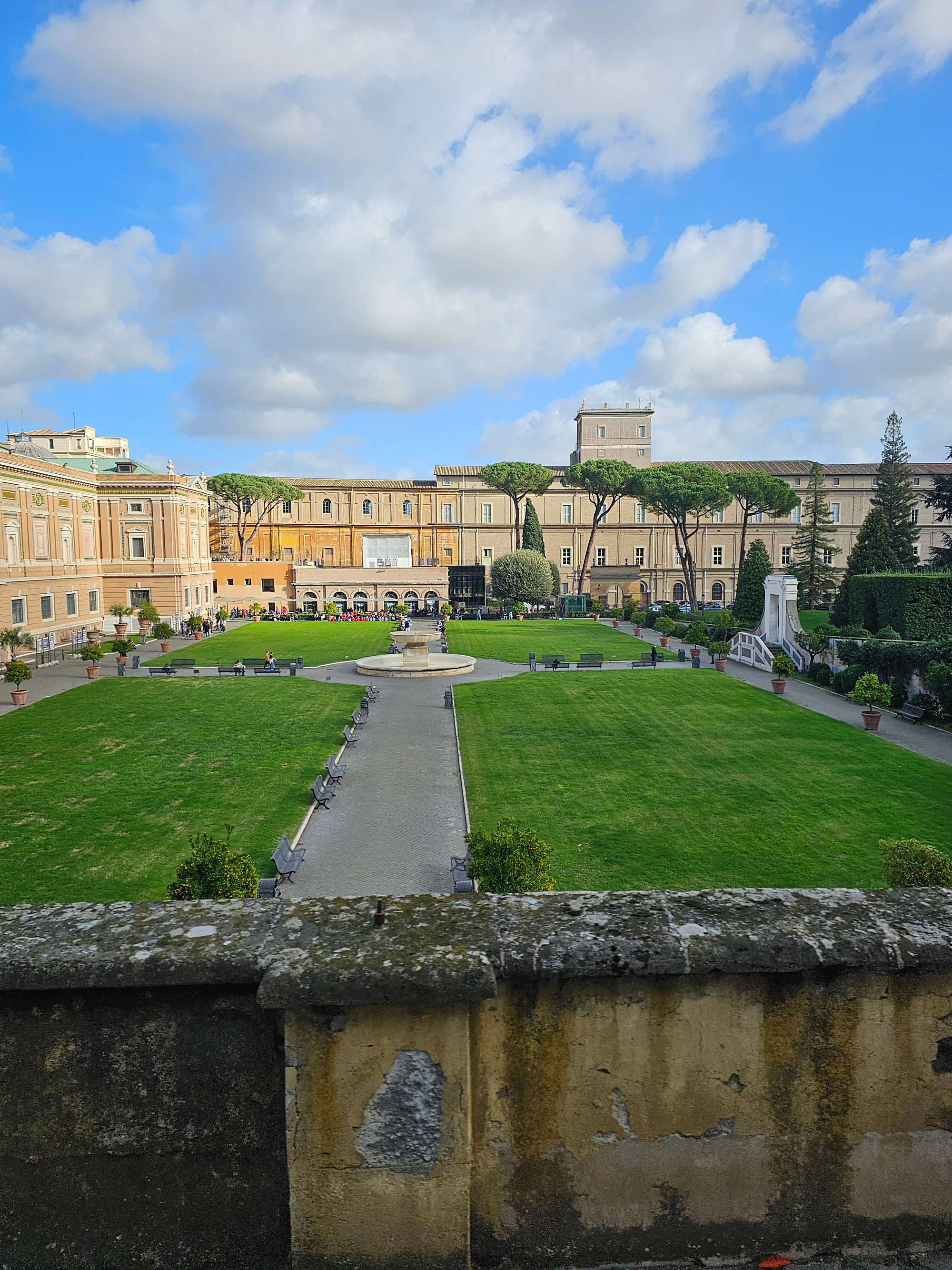
The atmosphere was immediately different from Castel Gandolfo.
There were more restrictions, a fixed route and much less freedom to stop. Yet that controlled movement reinforced the feeling that I had entered a part of the Vatican not designed for ordinary public circulation.
Less Splendour, More Mystery
The Vatican Gardens were not as lavish as I had expected.
They were carefully maintained, orderly and beautiful, but Castel Gandolfo had already recalibrated my sense of scale. After its monumental avenues and vast formal spaces, the gardens inside Vatican City felt smaller, more urban and more contained.
Yet they were also more mysterious.
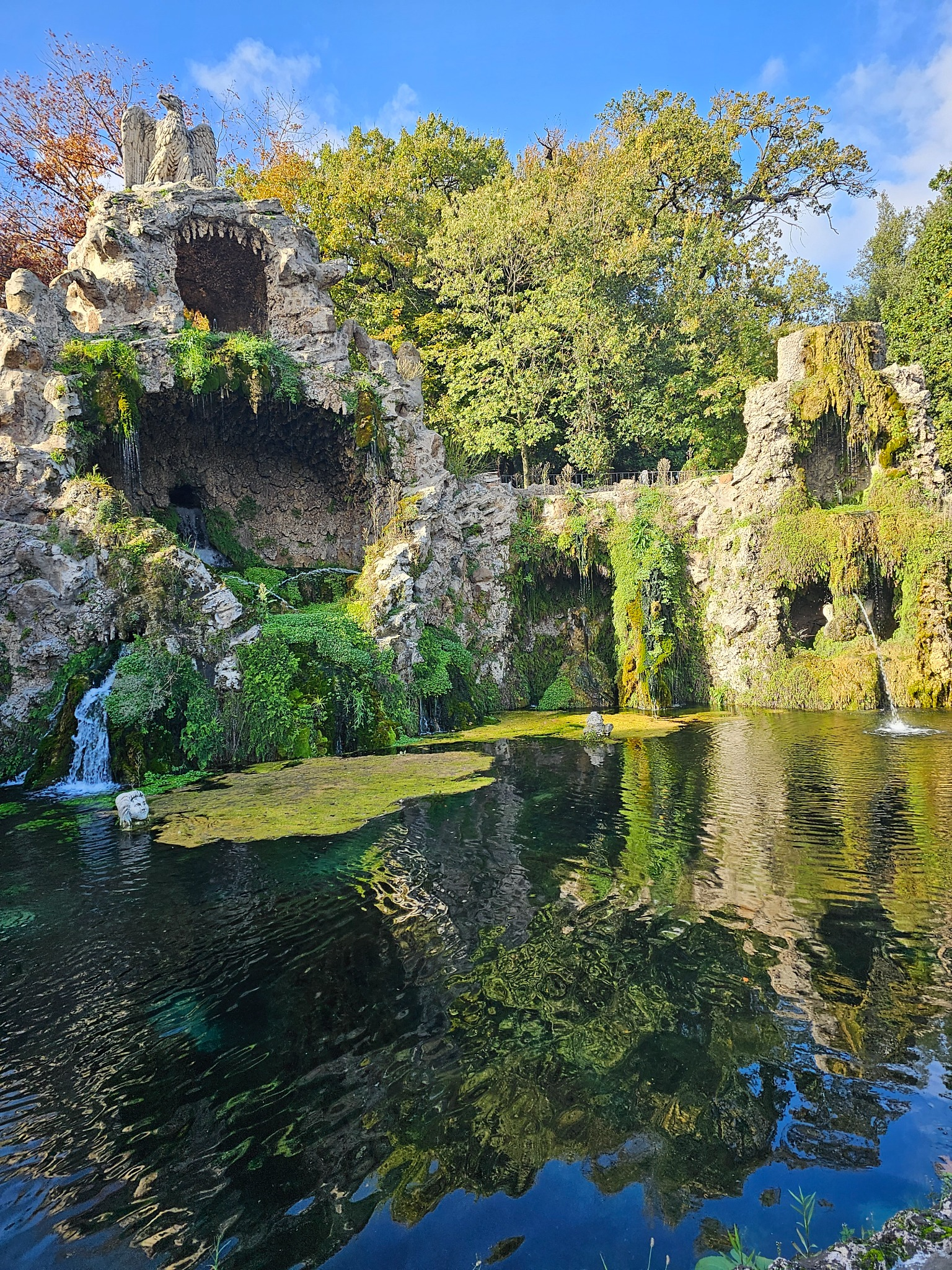
The fascination came less from horticultural splendour than from what appeared between the trees and hedges. Internal roads curved towards buildings that most visitors never approach. There were very few people and almost no one in ordinary civilian clothing.
The space felt active but not publicly inhabited.
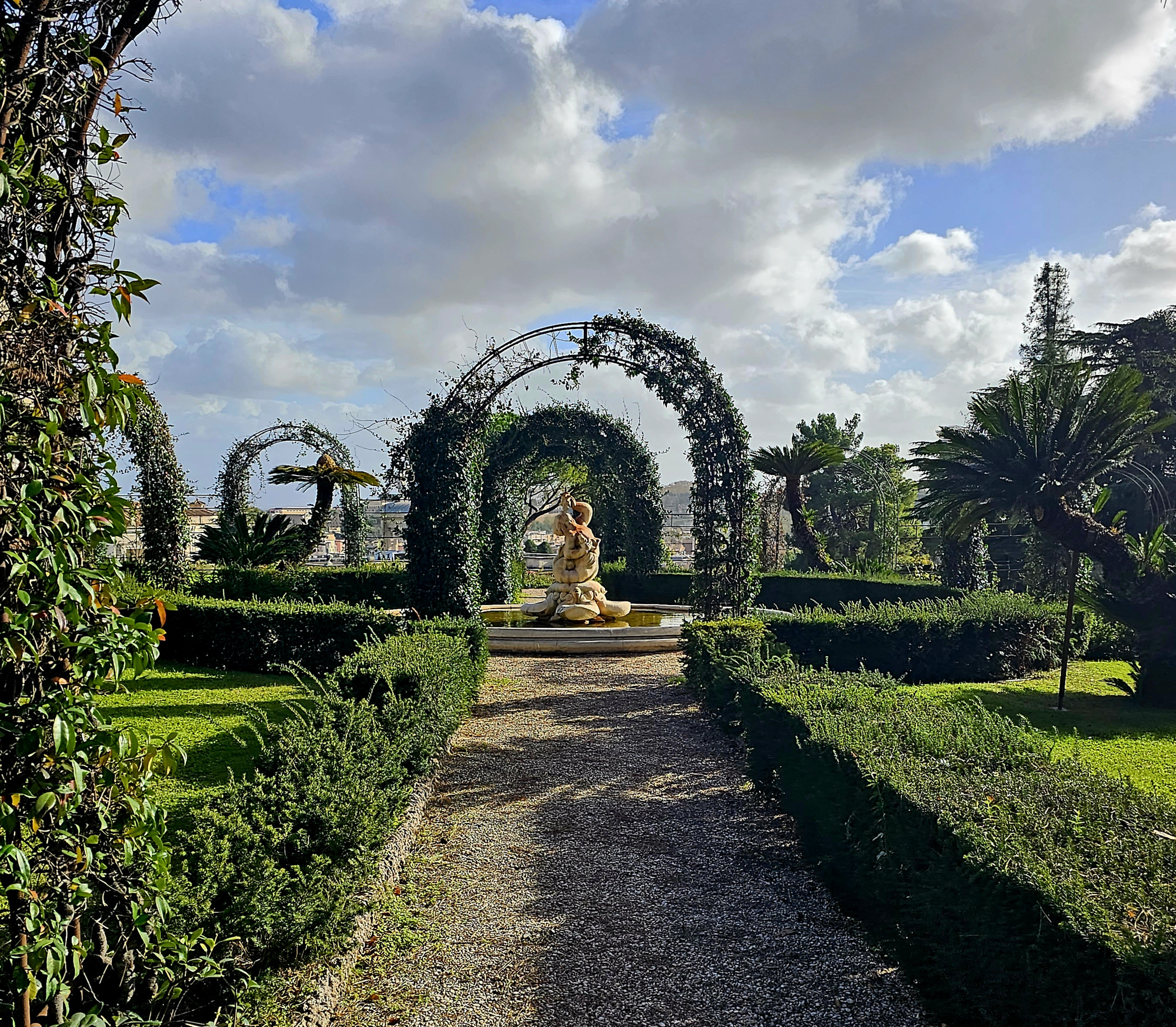
This was not a public park attached to a museum. It was the internal landscape of a very small state: part garden, part circulation system and part protective layer around its institutions and residents.
At one point, the route passed the residence in which Pope Francis had chosen to live. Elsewhere, internal roads, service buildings and guarded spaces appeared between carefully maintained sections of greenery.
The lack of people did not make the gardens feel sterile. It made the access feel privileged.
At Castel Gandolfo, privacy had explained papal retreat. Here, privacy began to explain the Vatican itself.
The Dome from the Inside
The strongest visual moment from the visit involved something I had already seen countless times.
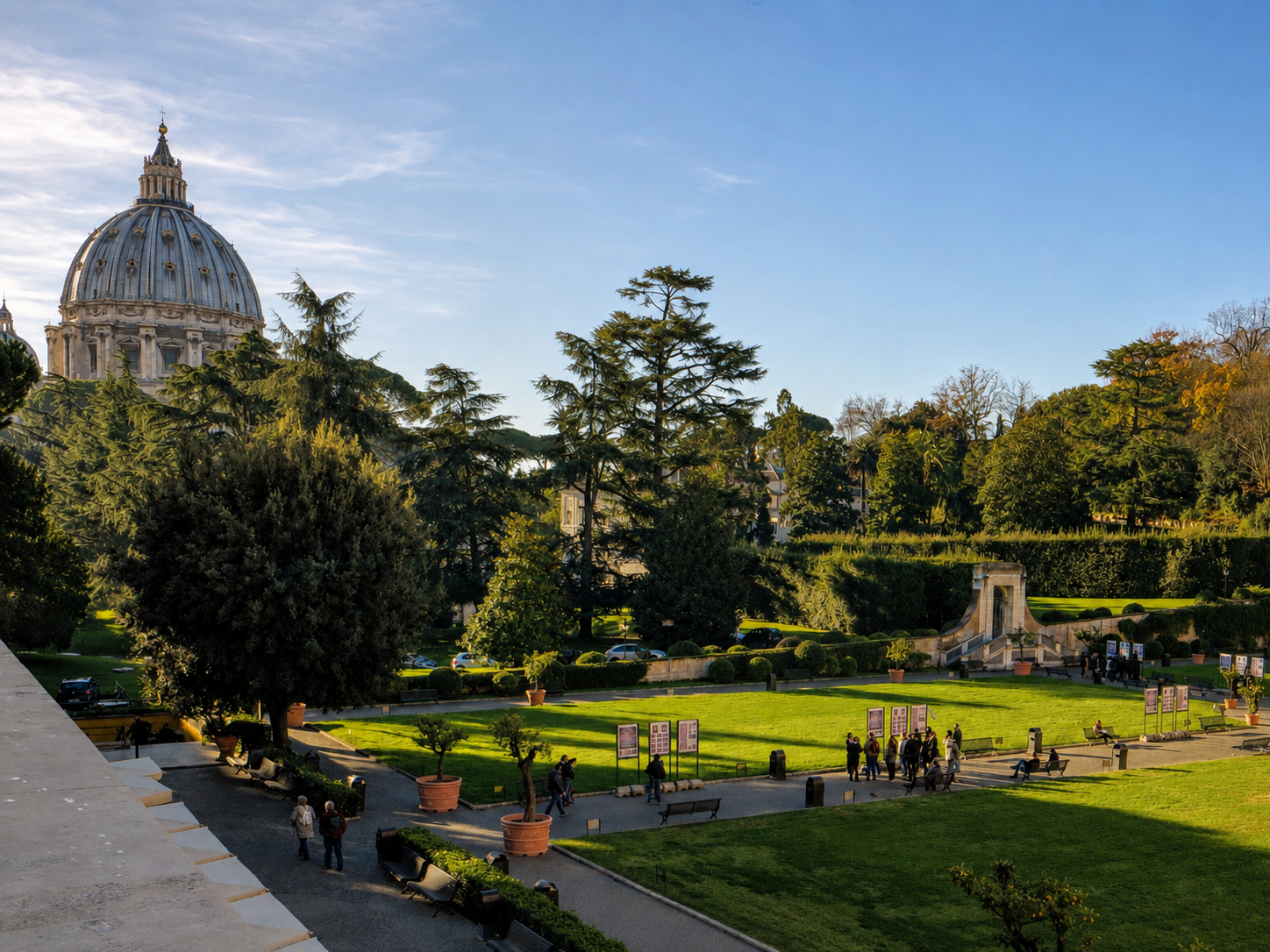
The dome of St Peter’s appeared beyond the gardens.
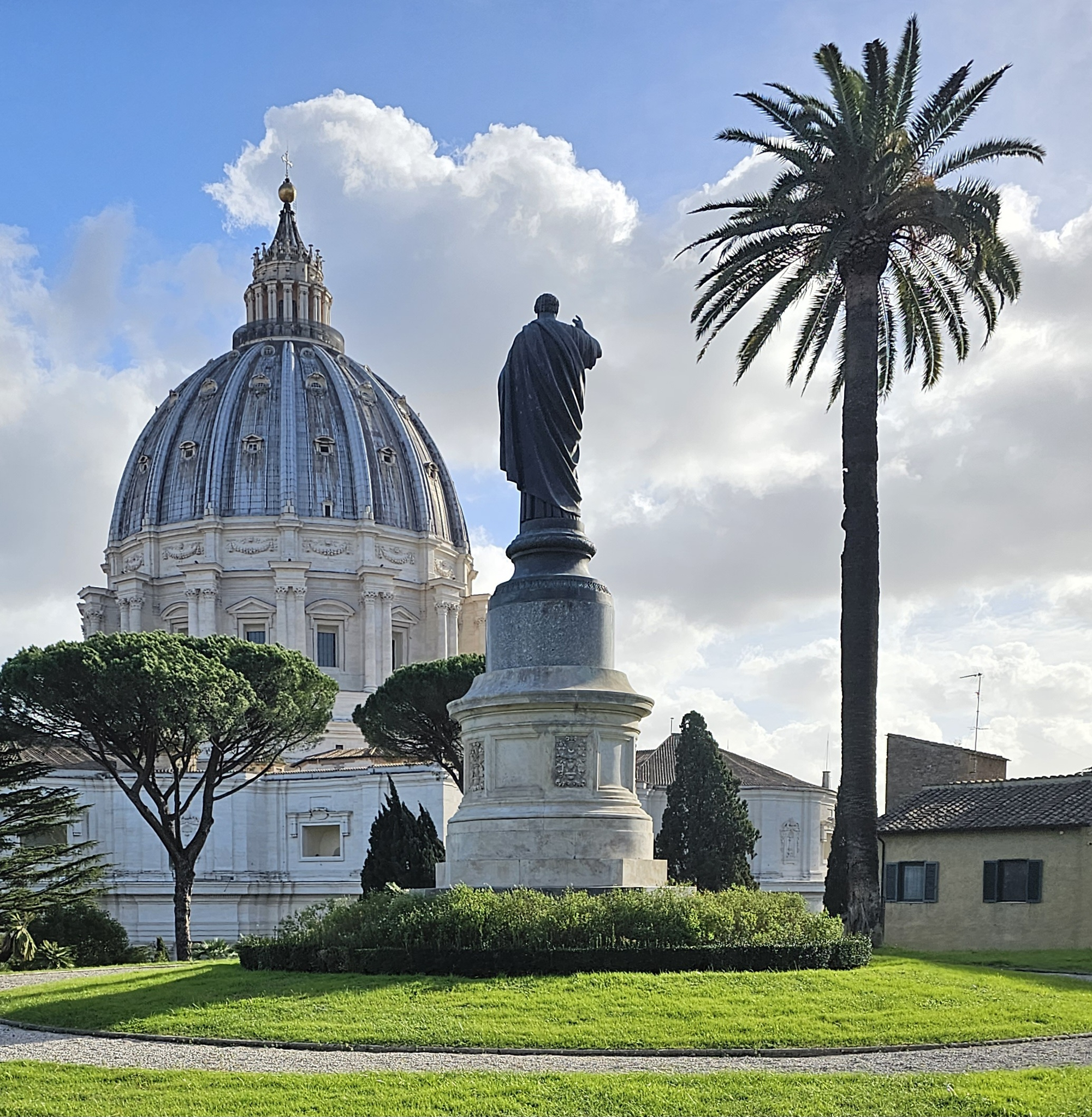
It was not simply an unusual angle for a photograph. The significance came from where I was standing.
I had always seen the dome from Rome: from the square, from surrounding streets or from viewpoints across the city. Now I was looking at it from inside the territory it represented, from behind the public stage presented to millions of visitors.
The building was unchanged. My position relative to it was not.
For the first time, I was not looking towards the Vatican from Rome. I was looking through the Vatican towards its public façade.


That reversal changed how I understood the entire place.
A Railway Made It a Country
The final element was the Vatican railway.
I have always liked travelling by train, so the existence of a railway inside Vatican City fascinated me before the tour even began. The Vatican and a railway seemed almost incompatible: one of the smallest states in the world possessing tracks, a station and a physical connection to the external rail network.
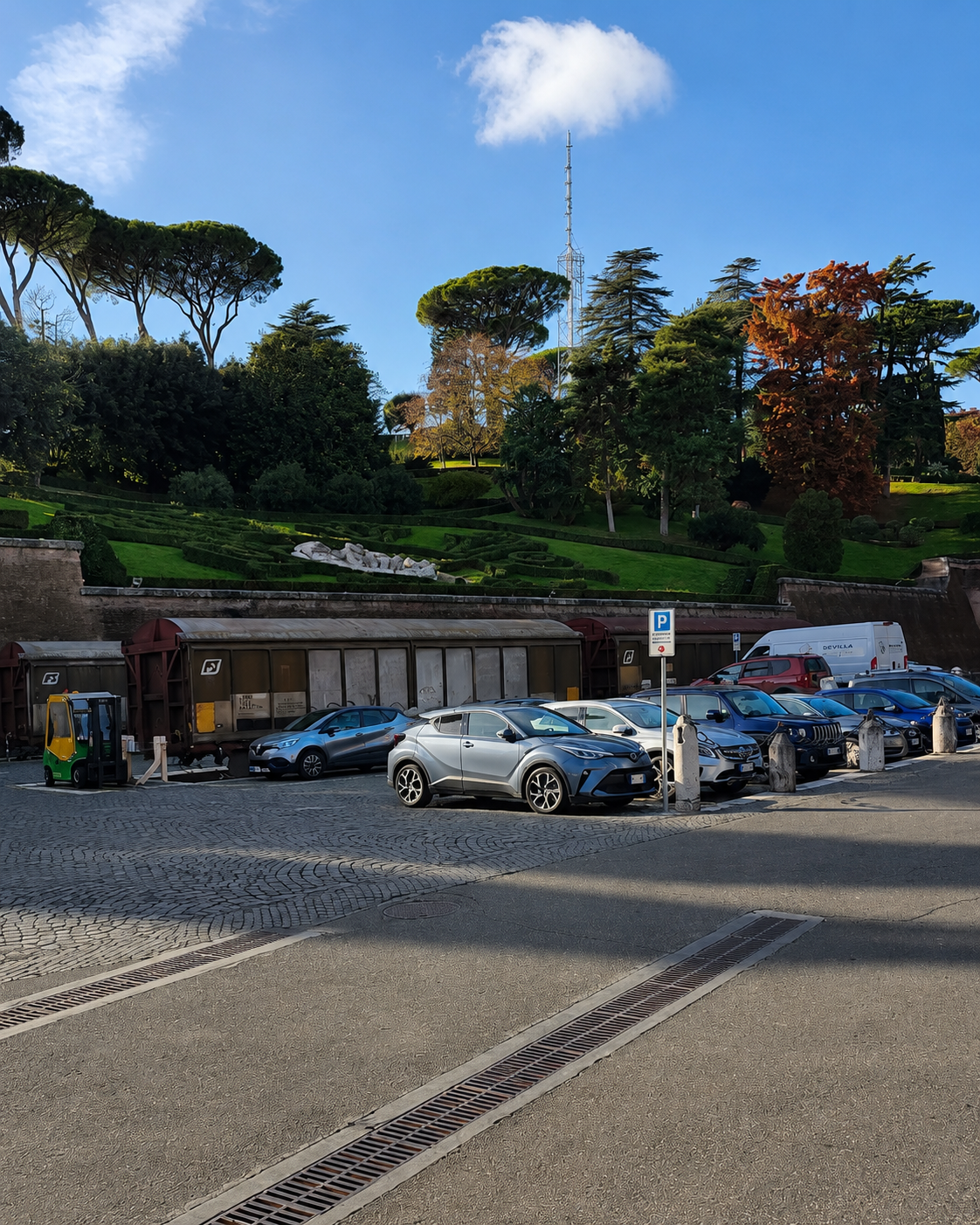
Yet it was precisely that apparent contradiction which finally made the Vatican feel like a state.
A basilica can belong to a city. A museum can be woven into it. Even walls can become another Roman landmark. But internal roads, working buildings, residential spaces and a railway suggest an organised territory with its own infrastructure and its own relationship with the world outside.
The railway did what sovereignty on paper had never quite managed to do. It separated the Vatican from Rome in my imagination.
Before entering the gardens, I understood that Vatican City was an independent state.
After seeing its internal landscape, I finally felt it.
Two Ways to Disappear
Castel Gandolfo and the Vatican Gardens revealed two different forms of withdrawal.
Castel Gandolfo showed how a pope could retreat from public life. Its scale, endless avenues and deep calm created the possibility of rest and privacy. The palace itself mattered less than the protected landscape behind it.
The Vatican Gardens showed how the state withdraws from view. Behind St Peter’s Square lies a controlled internal geography of roads, residences, gardens and infrastructure which remains almost invisible from the public side.
Castel Gandolfo opened itself to me through a fortunate, almost private tour. I left feeling that I had genuinely entered its hidden world.
The Vatican was different. The minibus revealed enough to change my understanding of it, but not enough to satisfy my curiosity. It remained partly concealed, a place viewed from a moving vehicle and through a route chosen by someone else.
That is why, of the two, the Vatican is the one I would revisit first.
Ideally, I would return without the bus and without the strict rhythm of a tour. I would want to walk, stop and understand how the pieces connect. Completely independent exploration is unlikely to be offered inside such a controlled space, which is precisely why the desire remains.
Castel Gandolfo showed me how the Vatican retreats from the world.
Behind St Peter’s, I finally saw how it exists when the world is not looking.
Practical Notes
Getting to Castel Gandolfo: The local train from Rome is straightforward. The serious part is the climb from the station to the historic centre, which should not be underestimated.
Reserve the gardens in advance: The Barberini Gardens are the real reason to make the excursion. Even without the Apostolic Palace, they justify the journey.
Choose an early tour when possible: My almost private experience was exceptional and heavily influenced by pandemic-era visitor numbers, but an early slot still offers the best chance of a quieter visit.
The palace is optional: It provides context, but the gardens explain Castel Gandolfo far better. Travellers with limited time could reasonably prioritise the gardens.
Vatican Gardens by minibus: The minibus is a sensible choice for a first visit. The route is longer and hillier than it appears and provides a useful overview of otherwise inaccessible areas.
Use the correct entrance: Tours of the Vatican Gardens begin through the Vatican Museums, not through St Peter’s Basilica.
