
 Verona, Veneto, Italy
A cancelled flight, a flooded detour and two radically different Violettas led to an Addio del passato that made the Arena disappear.
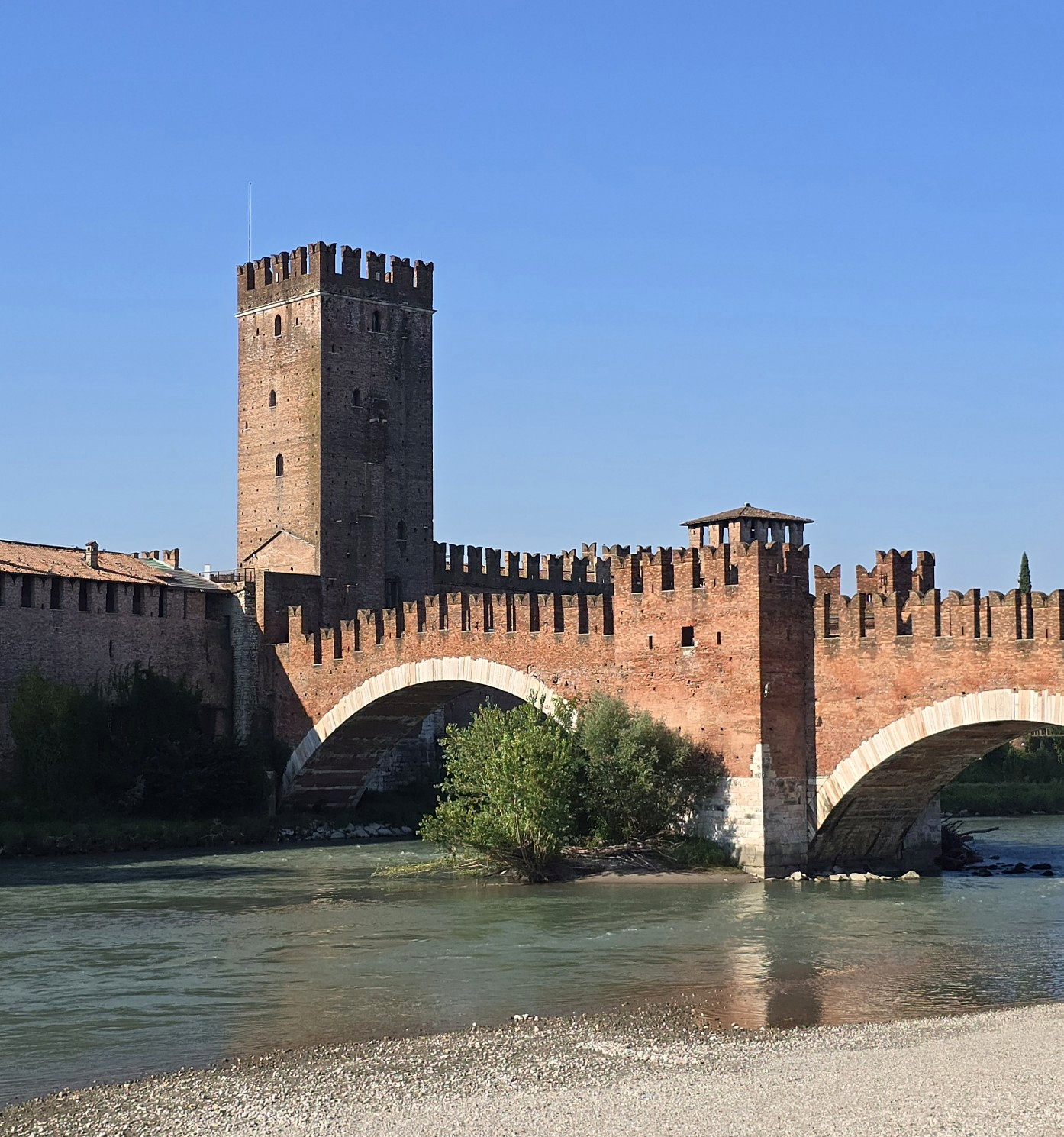
By the time Vasilisa Berzhanskaya reached Addio del passato, the Arena no longer felt like an arena.
A thread of voice crossed row after row without appearing to grow any louder. I had travelled to Verona to discover what a mezzo-coloured Violetta might sound like. I had not expected her to alter the dimensions of the building.
The story had begun more than two years earlier with Diana Damrau.
The Accidental Discovery of Vasilisa
Damrau is the German coloratura soprano whose Queen of the Night became one of the defining interpretations of Mozart’s famously murderous role in the modern era. At the Metropolitan Opera, she even made history by singing both the vengeful Queen and the gentle Pamina in different performances of the same run of The Magic Flute — two characters normally associated with very different voices.
She was the reason I travelled to Vienna for Easter 2024.
On 31 March, I heard her in the Golden Hall of the Musikverein with the Wiener Symphoniker. That concert alone justified the journey.


Once in Vienna, however, I naturally began checking what else was being performed. Elīna Garanča was singing Kundry in Wagner’s Parsifal at the Vienna State Opera. Garanča is one of the leading mezzo-sopranos of her generation, equally capable of immaculate control and considerable dramatic force. I had heard her live before and wanted to do so again.
There were no tickets.
So I continued browsing without any particular plan. I was not searching for a replacement star or constructing the next two years of my operatic life. I was simply moving through programmes, cast lists and videos when I encountered a name I had never heard:
Vasilisa Berzhanskaya.
Pure chance sent me to YouTube.
Her voice made me stay.
It was not merely powerful or technically impressive. It had a colour that was difficult to forget: dark, rich and particularly compelling whenever she descended into the lower register. Those notes did not simply sound deeper. They seemed to alter the emotional temperature of an entire phrase.
Berzhanskaya had built her reputation largely in mezzo roles, especially Rossini, bel canto and French repertoire, while increasingly moving into soprano territory. That vocal ambiguity made her more interesting, not less. She possessed the agility required by bel canto, but also a density and darkness rarely associated with a conventional Violetta.

I followed her, hoping that sooner or later the right role would give me a reason to hear her live.For the moment, Vasilisa remained a future possibility.Lisette Oropesa was different. I already knew her work and already wanted to hear her in person. The Cuban-American soprano had become one of the leading lyric and bel canto singers of her generation, with Violetta among her most admired roles.
One of my favourite opera clips remains a performance of Sempre libera, Violetta’s dazzling first-act declaration that pleasure and freedom are safer than emotional attachment. Alfredo’s phrases are normally sung from offstage. In this particular performance, a young tenor in the audience suddenly supplies them. Oropesa reacts with visible delight and continues as though an Alfredo materialising from the auditorium were the most natural thing in the world.
When I later found her announced in a Vienna La Traviata, the decision already required very little thought.
Then I saw the rest of the cast.
Alfredo would be sung by Juan Diego Flórez, the Peruvian artist who became one of the defining bel canto tenors of his generation by making Rossini’s most punishing vocal writing sound almost indecently easy. Giorgio Germont, Alfredo’s father, would be Ludovic Tézier, a French baritone particularly associated with the central Verdi repertoire.
To someone who does not follow opera, these may sound like three more names on a poster. In operatic terms, it was an exceptional combination: an acclaimed contemporary Violetta, a tenor central to the modern revival of difficult bel canto repertoire and one of the most important Verdi baritones working today.
I had never heard any of the three live.
Only a few usable seats remained.
I bought one.
The Woman Everyone Wants and No One Will Accept
La Traviata premiered in Venice in 1853 and was based on Alexandre Dumas fils’s La Dame aux camélias. Its title can be translated as “the fallen woman” or “the woman led astray” — the label respectable society applies to its heroine long before the opera asks whether she is, in fact, the most honourable person onstage.
Violetta Valéry is a celebrated Parisian courtesan. Wealthy men attend her parties, enjoy her company and participate in the glamorous world built around her, but that same society will never accept her as an equal.
Then Alfredo Germont falls genuinely in love with her.
Violetta initially resists him, convinced that pleasure and independence are safer than emotional attachment. Eventually, she leaves Paris and attempts something radically ordinary: a private life with a man who loves her.
That possibility is destroyed by Alfredo’s father, Giorgio Germont. He asks Violetta to abandon Alfredo because their relationship threatens the family’s respectability and may prevent Alfredo’s sister from making a suitable marriage. Violetta agrees to sacrifice her own happiness but promises not to reveal the real reason.
Alfredo believes she has betrayed him. In one of the opera’s cruellest scenes, he publicly humiliates her at a party. By the time he learns the truth and returns, tuberculosis has almost completed what society began.
Their reunion arrives only moments before her death.
The opera survives not simply because it tells a devastating love story, but because its moral structure remains uncomfortable. The respectable characters consume Violetta’s world, condemn her for inhabiting it and finally demand that she prove her goodness through self-destruction. The woman labelled “fallen” behaves with greater dignity than almost everyone judging her.
That is also why productions matter so much. Every staging must decide what destroys Violetta: illness, romantic misunderstanding, social hypocrisy, public judgement — or all of them together.
Simon Stone would turn that judgement into social media, screens and permanent digital exposure. Verona’s Moulin Rouge concept would place Violetta inside an even larger machine of glamour, entertainment and public consumption.
The role itself is as difficult vocally as it is dramatically. The first act demands brilliant coloratura and exposed high notes; the second requires lyrical warmth and dramatic authority; the final act strips everything back to physical exhaustion and a line of sound that sometimes seems barely present.
That is why Oropesa and Berzhanskaya could both be convincing while offering almost opposite women.
When Instagram Added Brno
With the Vienna ticket secured, the journey appeared complete.
Then Instagram complicated it.
Maayan Licht had begun promoting Here I am, Orlando with enough persistence to make ignoring Brno increasingly difficult.
Licht is an Israeli sopranista, or male soprano — an exceptionally rare type of high male voice. His bright, direct and immediately recognisable instrument had made him one of the more intriguing emerging singers on the European stage.

The National Theatre in Brno was presenting him in Here I am, Orlando, a new opera by Slovak composer Ľubica Čekovská, inspired by Virginia Woolf’s novel about a protagonist who lives across several centuries and changes sex along the way.
The dates aligned almost indecently well:
14 September 2024: Here I am, Orlando in Brno.15 September 2024: La Traviata in Vienna.
Two performances built around singers I specifically wanted to hear, in two cities, on consecutive nights.
It looked almost too elegant.
Naturally, the journey began by collapsing.
The Aircraft That Returned Without Me
My original plan was to fly from Rijeka Airport on the island of Krk. It is approximately twenty minutes from my house, which makes it almost offensively convenient.
I checked in, passed security and was already waiting to board when the incoming aircraft failed to land because of strong wind.
It returned to Vienna.
The airline could offer no realistic way of getting me there that day. The opera tickets had already been bought, however, and I have never regarded transport failure as a persuasive argument for abandoning an entire journey.
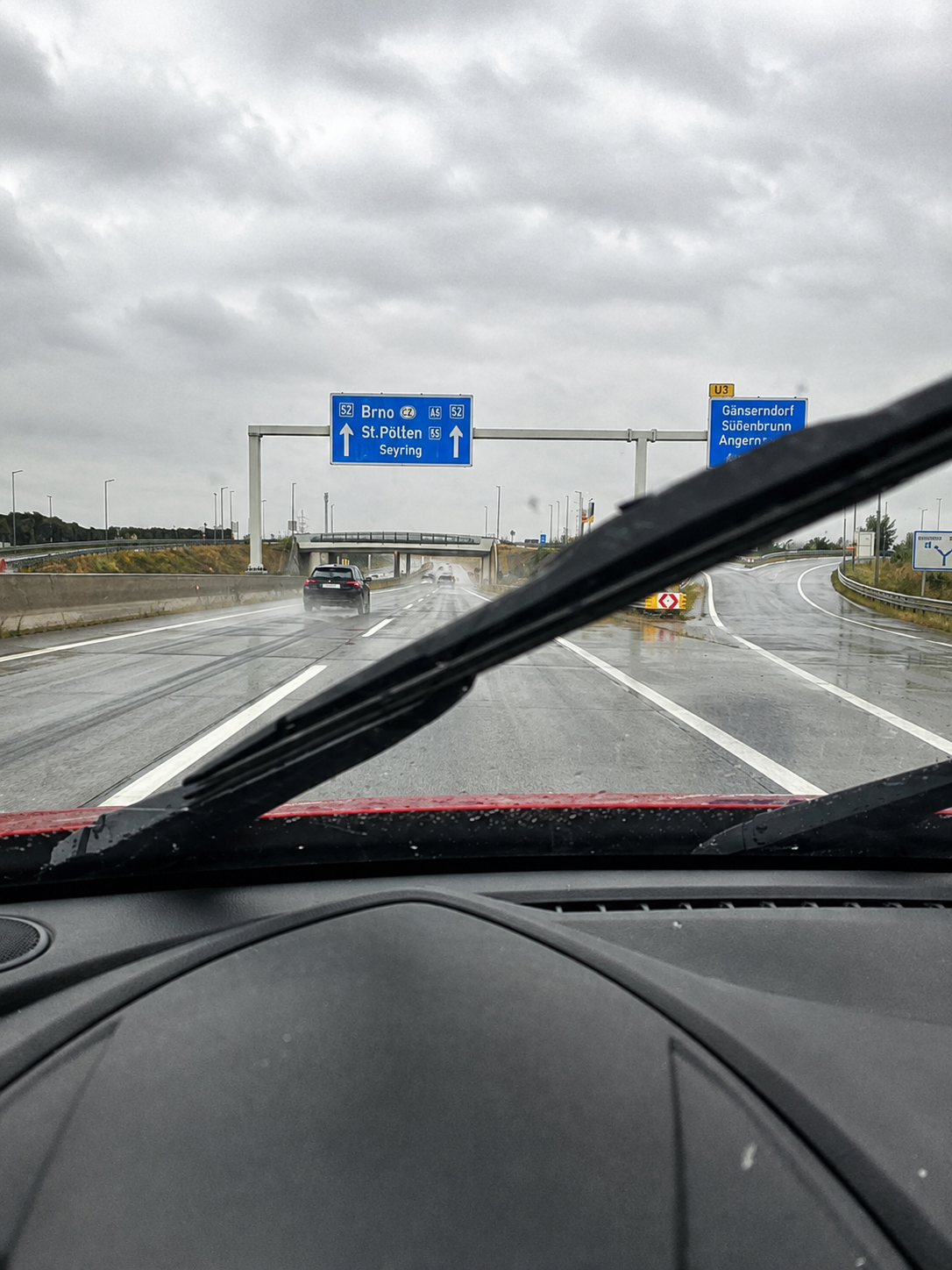
I requested a refund, walked back to my car and began driving towards Vienna.
The original itinerary had included a short retreat in Prague before Brno. I had intended to continue there by train from Vienna, but the sudden transformation of a brief flight into a long drive made Prague impossible.
I cancelled the RegioJet tickets and eventually obtained a refund, although the company appeared determined to involve an actual railway station in a process that any reasonable digital business would have completed online.
Hotel STAGES in Prague allowed me to cancel without charge because the same weather system was causing serious flooding across the region. Their decency stayed with me. In July 2026, I finally stayed there, partly because I remembered how fairly they had treated me when the original journey fell apart.
Because I had expected an easy flight, I had barely slept the previous night. Somewhere on the road, fatigue finally defeated determination. I stopped in Vienna and booked the Imperial Riding School hotel, a familiar base, rather than forcing myself onwards.
The following day, I drove to Brno.
The flooding did not make the journey impossible, but its consequences appeared in smaller disruptions. The garage at my hotel could not be used. Services in both Brno and Vienna were limited because employees had been unable to reach work.
Opera travel had acquired the atmosphere of a minor civil emergency.
Brno, Spare Heels and an Opera That Withheld Its Star
I arrived in Brno during the afternoon, shortly before the performance, and checked into the Courtyard by Marriott.
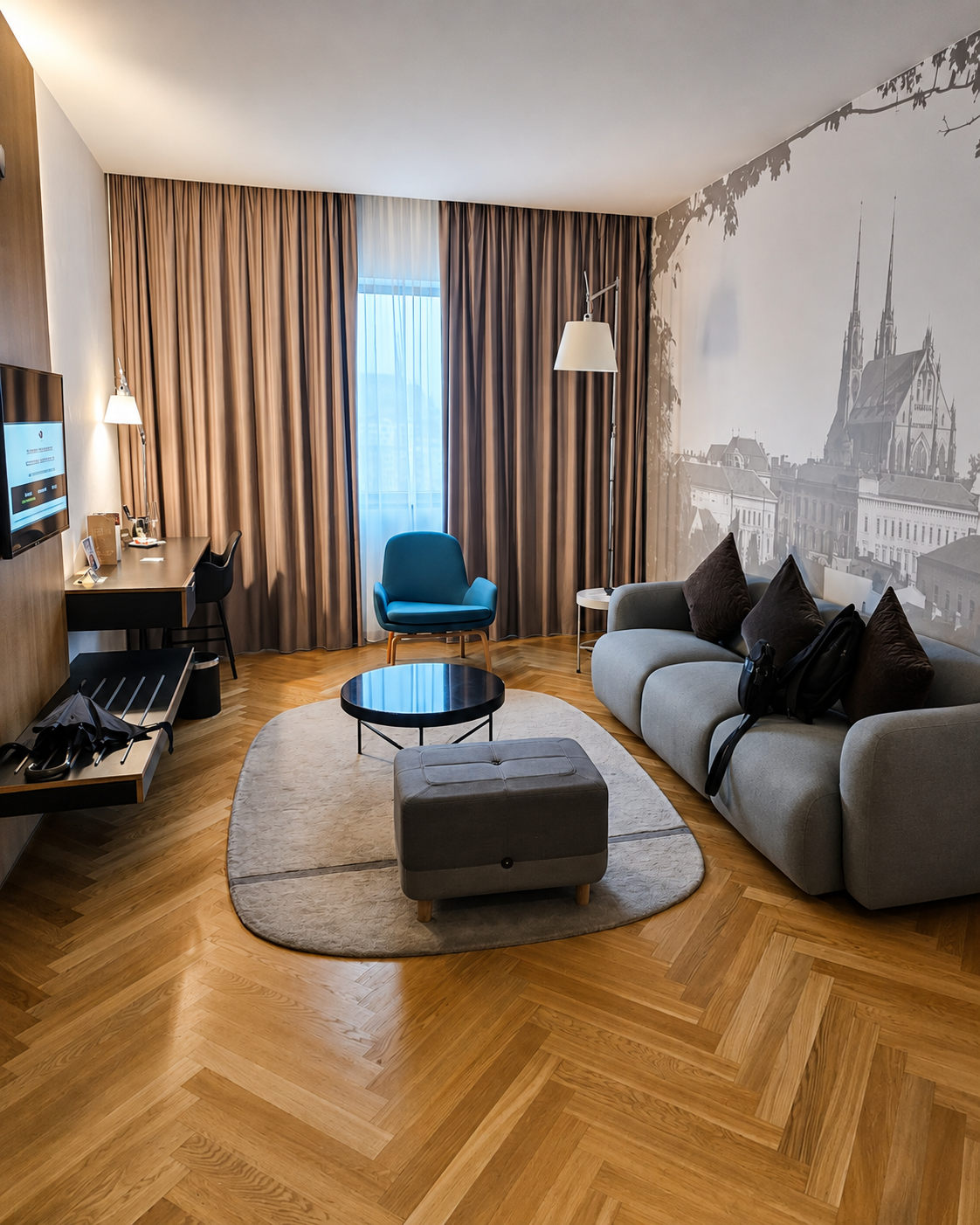
Marriott status produced one of its occasional genuine triumphs: a large suite with an expansive view across the city. After the cancelled flight, abandoned Prague plan and drive through a storm-affected region, the upgrade felt almost indecently comfortable.
I took an Uber to the theatre through the rain.
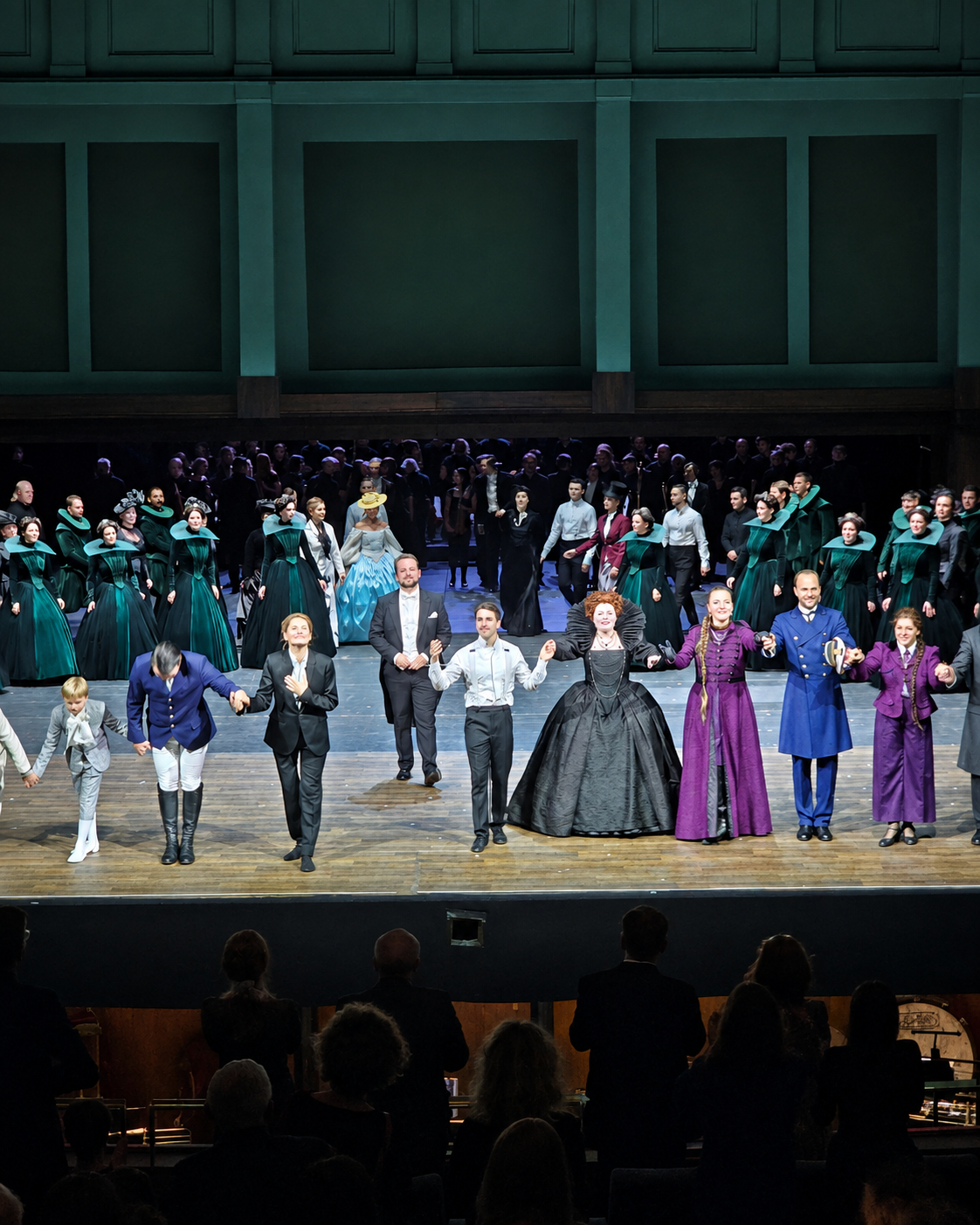
The audience immediately fascinated me. People had dressed for the occasion with far more care than I had become accustomed to seeing in many Western European opera houses. Numerous women arrived in practical shoes, carrying their heels in bags and changing before entering.
The weather could interfere with transport. It would not be permitted to interfere with the outfit.
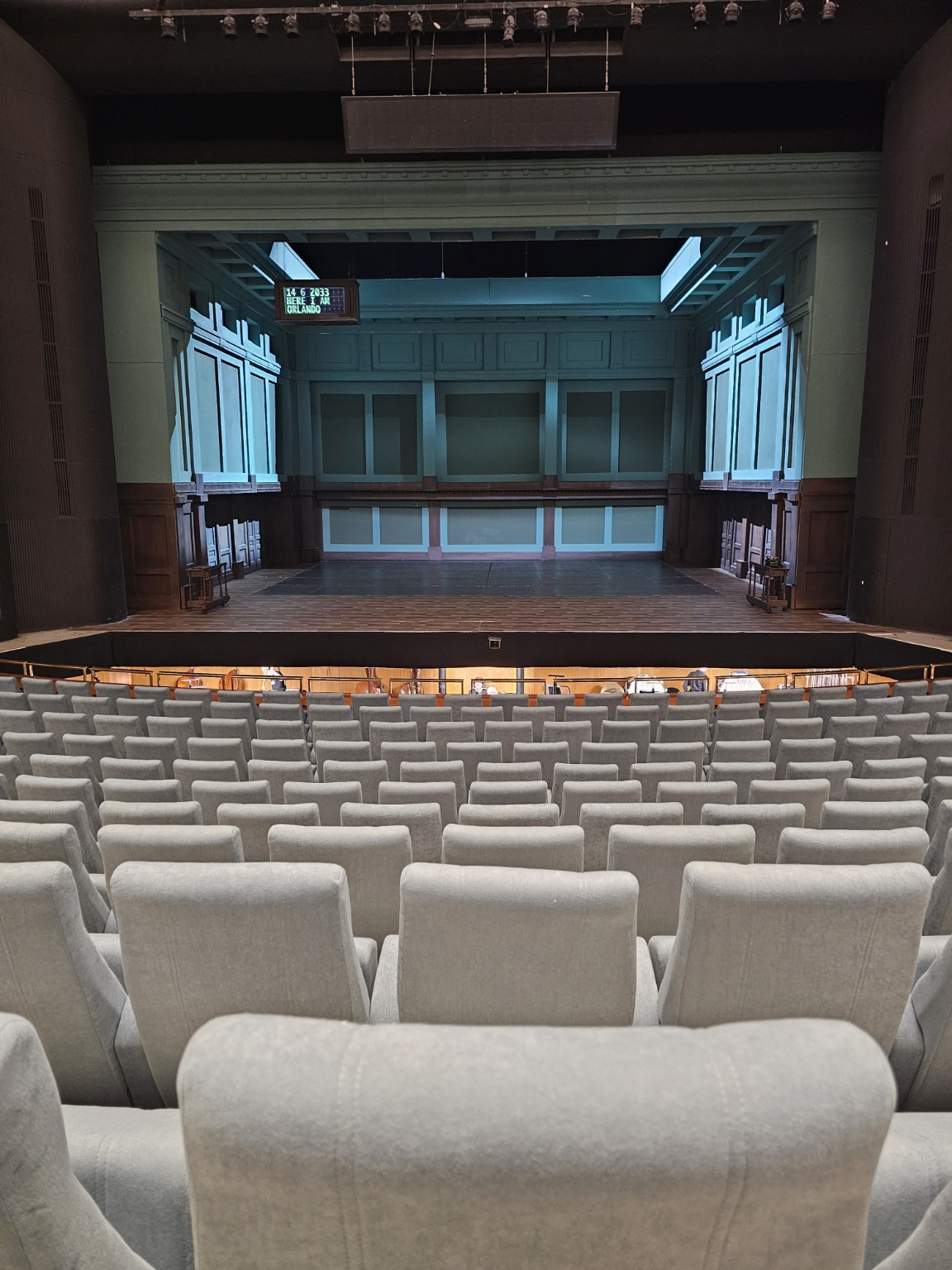
Unfortunately, Here I am, Orlando did not entirely justify their efforts.
The title character was divided between two singers: Licht as Orlando and mezzo-soprano Markéta Cukrová as Orlanda. It was an intelligent way of embodying Woolf’s protagonist, whose identity moves across sex, gender and several centuries.
The production framed much of the story as a futuristic trial. Orlando’s life and identity were examined through testimony, fragments and reconstructed episodes, against a stage dominated by cold geometry and striking visual structures.
Critics generally admired Licht. Responses to the work itself were more divided, with some questioning the fragmented libretto, explanatory staging and uneven dramatic continuity.
My frustration was narrower.
Licht was one half of the title character, and his presence was clearly central to the concept. Yet the courtroom structure repeatedly left him standing, observing or being observed while other characters carried the dramatic and vocal material.
He genuinely spent a remarkable amount of time simply standing there.
That may have been intentional. It was not what I had travelled to hear.
I wanted sustained exposure to one of the most unusual voices emerging in opera. The production gave me considerably less of it than expected.
I saw Licht live and heard enough to confirm that the instrument was extraordinary. But the evening made him feel more like a fascinating presence inside an elaborate concept than the vocal centre of an opera bearing his character’s name.
The next morning, I walked briefly around Brno, visited the station to complete RegioJet’s refund ritual and drove back to Vienna.
Brno had given me a visually elaborate work that produced less emotional impact than expected.
Vienna would do the opposite.
A Promise Made from the Hotel Bristol
I reached the Imperial Riding School hotel at around four in the afternoon.
For the second night, I had originally booked the Moxy near Vienna Airport. After the weather, the car and the dismantling of the original itinerary, returning to a familiar and more convenient hotel made considerably more sense.
At approximately five, I ate a Wiener Schnitzel in the hotel. Around six, I took an Uber to the Vienna State Opera.
The building had occupied my imagination long before I entered it.
Years earlier, I had stayed directly opposite at the Hotel Bristol. My room had a small balcony overlooking the opera house. I remember standing there, looking at its illuminated façade and imagining that one day I would attend a performance inside.
I could technically have bought a ticket even then, but only in the sense that one can afford something by ensuring the rest of the month becomes noticeably less pleasant.
I watched the opera house from the balcony instead.
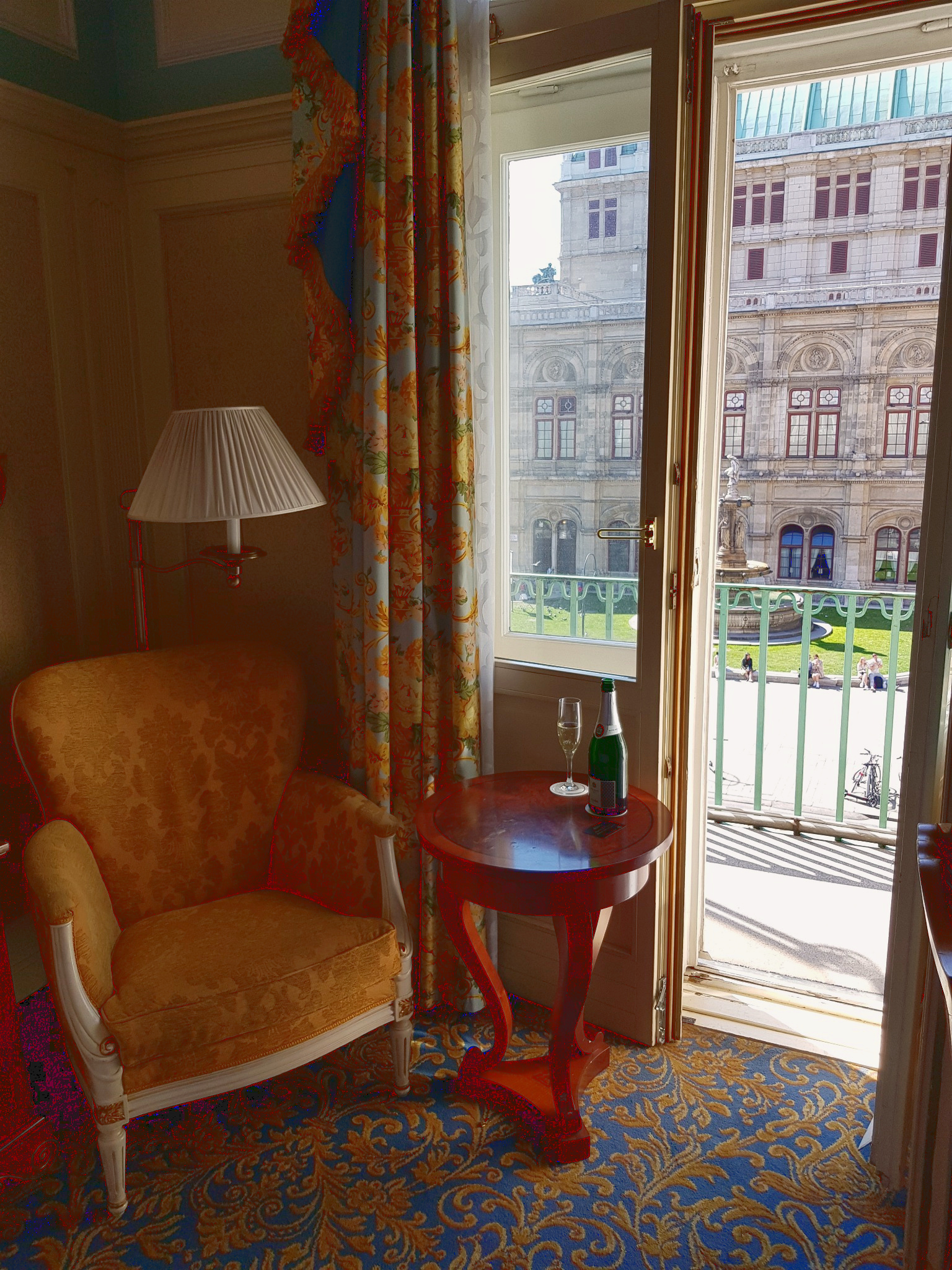
When I eventually returned for La Traviata, I finally fulfilled that old promise — and then slightly compromised it by remaining too sensible.
My ticket cost €69. The seat was in the fifth row of the balcony, towards the centre on the right. The acoustics were good and the entire stage was visible.
I should have marked the occasion properly and bought a seat in the stalls. I did not. That mistake permanently cured me of economising on opera seats.
The entire stage was also visible from approximately the cruising altitude of a small aircraft.
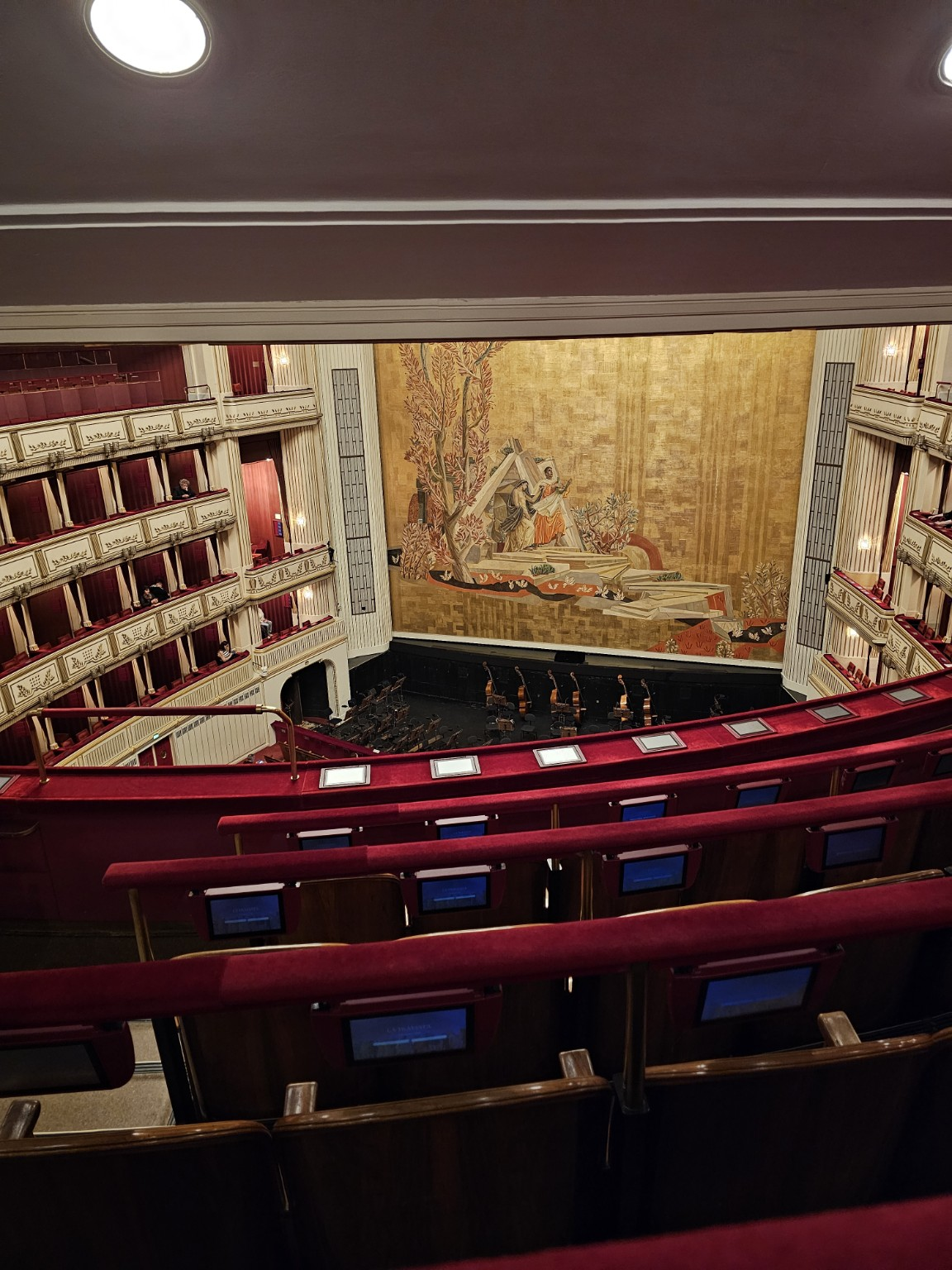
The Vienna State Opera belongs to the small group of institutions at the summit of international opera, alongside houses such as La Scala in Milan, the Metropolitan Opera in New York and the Royal Opera House in London.


Standing inside the building, that status did not feel like empty reputation.
Then I looked down at the stage and saw a large, strange cube.
The Cube That Explained La Traviata
I had bought the ticket because of the singers. I had not realised that the production would become almost equally important.
Its director, Simon Stone, is an Australian theatre, film and opera maker known for taking classic works and rebuilding their social worlds in recognisably contemporary terms. His productions have appeared in major houses and festivals across Europe and the United States.

From my distant balcony seat, his cube initially looked more puzzling than promising.
Then it began to move.
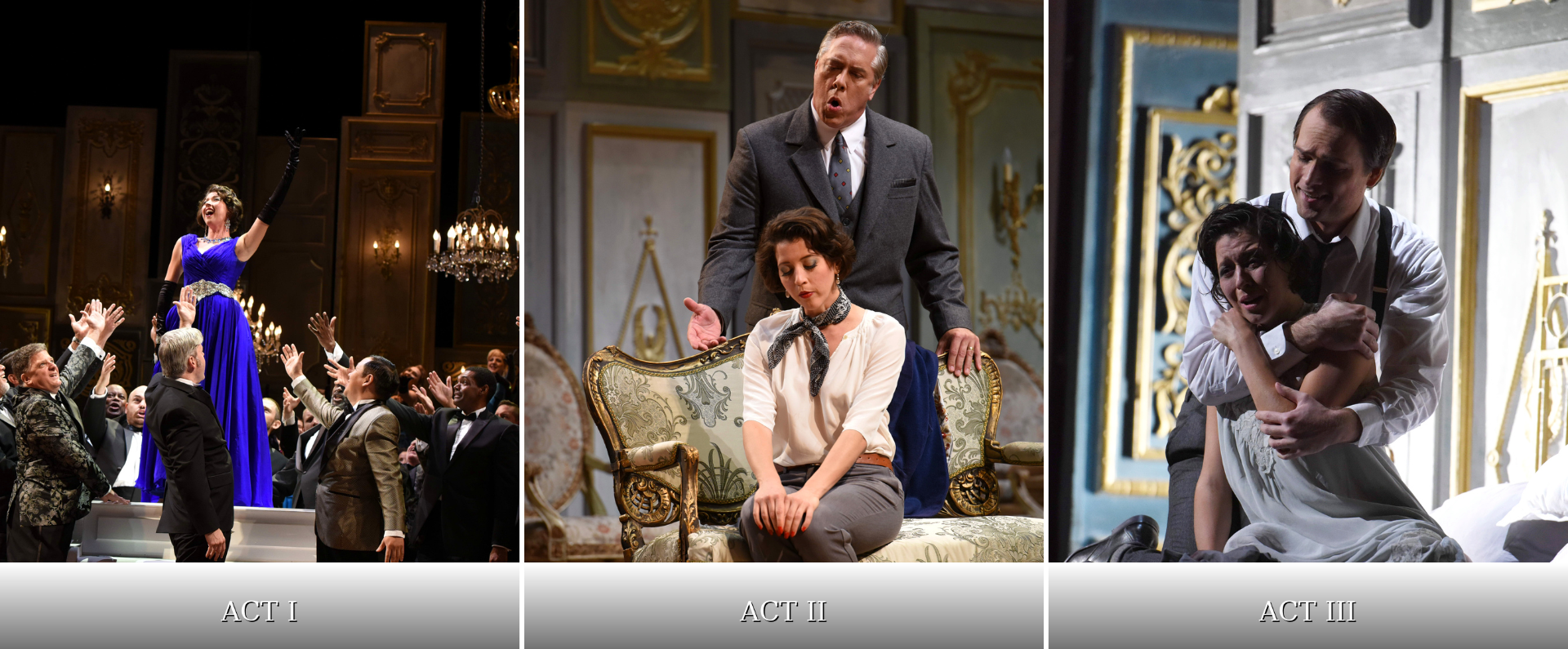
It rotated, opened and revealed apartments, public spaces, screens and fragments of contemporary urban life. Instagram posts and stories appeared across its surfaces. Messages and digital images clarified connections between characters and exposed the social machinery surrounding Violetta.
This was not a director placing a few mobile phones onstage to prove that the nineteenth century had ended.
Stone had translated the opera.
Violetta became a woman whose survival depended on visibility: photographed, consumed, discussed and judged by others while becoming increasingly isolated in private. The digital material supplied context that a traditional production often expects the audience either to know already or to reconstruct from the libretto.
The contrast between her glamorous public identity and private collapse became immediate.
What had initially appeared to be an austere box became one of the finest pieces of operatic stage design I had encountered.
The production did not simply move La Traviata into the present. It explained why the story still belongs there.


Not every critic agreed. Klassik begeistert, reviewing another performance from the same run, strongly rejected Stone’s visual world.
I found it revelatory.
That disagreement mattered. The critics largely confirmed what I heard in the singers; on the production, I was entirely capable of reaching my own conclusion.
Oropesa and the Classical Ideal
Oropesa was exactly as good as expected, which may sound like faint praise until one considers how high those expectations were.
Her performance followed an almost perfectly even line. She did not need to recover from an uncertain first act or wait for one exceptional scene to justify the evening. From beginning to end, she delivered a technically controlled, elegant and emotionally coherent Violetta.
I would not claim to know precisely what Verdi wanted. Dead composers make inconvenient witnesses.
But Oropesa came remarkably close to the classical ideal of the role.
The first act requires brilliance, agility and exposed high notes as Violetta insists that pleasure and freedom are safer than love. The second demands warmer and broader lyricism. By the third, the same singer must sound physically diminished without losing control of the musical line.
Oropesa made those transformations feel natural.
She did not surprise me. She justified everything I had expected.
Online Merker’s review of my exact performance reached much the same conclusion, describing her as an almost ideal Violetta, equally convincing in the exhilaration of the opening and the resignation and despair of the final act.
Flórez had also been part of my listening life long before that evening. I admired his willingness to perform Cessa di più resistere, the brutally difficult final tenor aria from Rossini’s The Barber of Seville that many singers and productions have historically preferred to omit.
His Alfredo was elegant, musical and apparently relaxed.
Flórez has never relied on an enormous tenor instrument. His distinction lies in clarity, phrasing, flexibility and technical ease. In Vienna, conductor Domingo Hindoyan understood exactly what such a voice required. He kept the orchestral texture sufficiently transparent for Flórez’s refinement to carry through the theatre rather than forcing him to manufacture weight he did not naturally possess.
Klassik begeistert considered Hindoyan’s careful orchestral balance decisive.
From my position somewhere below the roof, it clearly worked.
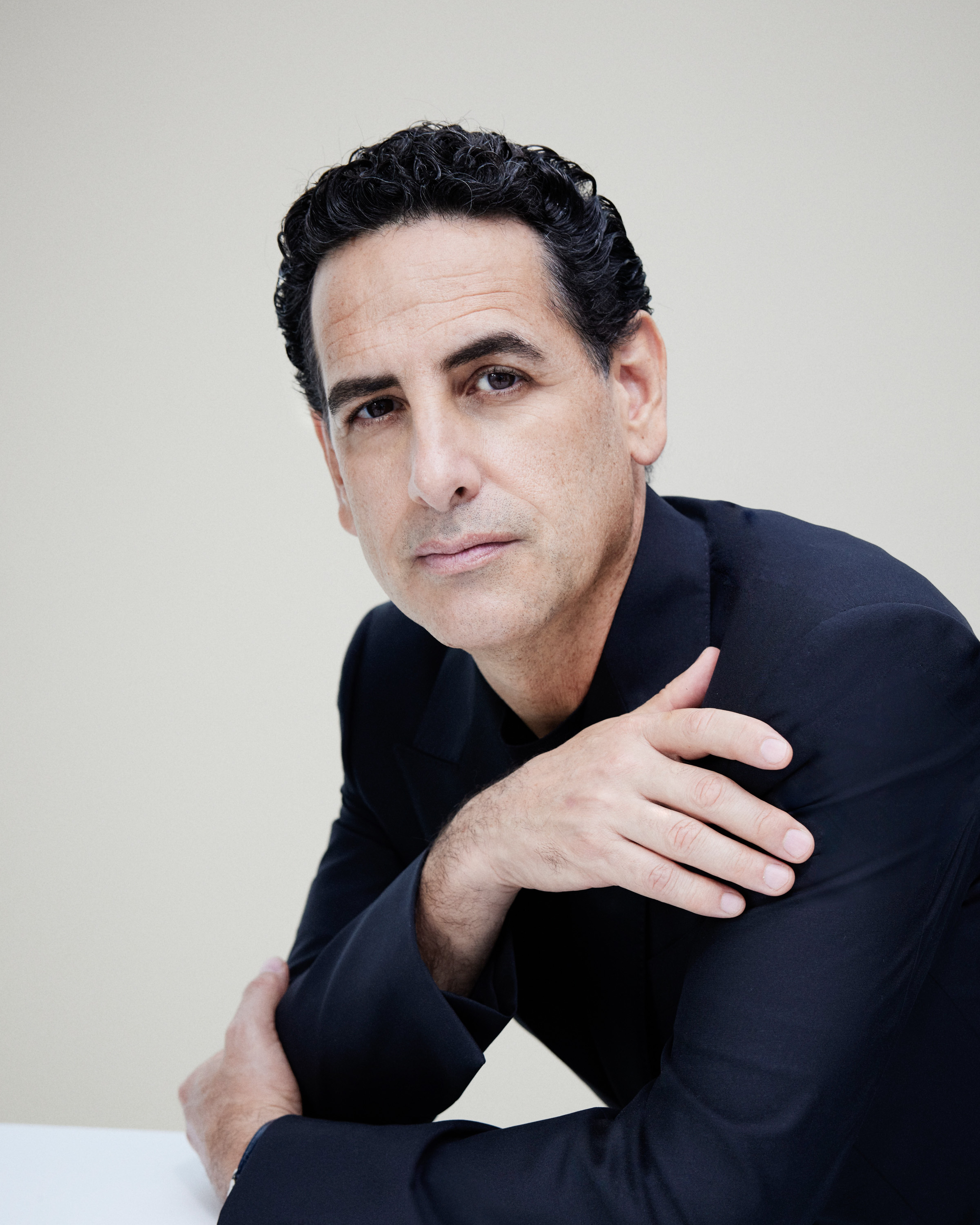
Tézier was the one I knew mainly by reputation. This was my first opportunity to understand that reputation in person.
His Giorgio Germont possessed authority without becoming a cardboard patriarch. In the long confrontation with Violetta, he gave the impression of a man whose social certainty had real physical weight.
The review of that evening noted that he had begun cautiously after illness before opening out more fully in the duet. I did not leave thinking I had heard a flawless superhuman object. I left understanding why Tézier had become so closely associated with Verdi’s baritone roles.
The secondary cast has mostly disappeared from my memory. That is not necessarily criticism. In a Traviata led by Oropesa, Flórez and Tézier, competent performers can do honourable work and still become part of the furniture.
The ovations were exactly what such a cast deserved.
I left deeply satisfied and slightly irritated with myself for not having bought a better seat.
Vienna had given me an exceptional Traviata: three major artists operating in balance inside a production whose visual language strengthened the drama rather than merely decorating it.
I thought the standard had been established.
Almost two years later, Berzhanskaya challenged it.
A Journey Built Around One Voice
By the summer of 2026, two previous visits had already taught me how deceptive the Arena di Verona could be.
Even from the seventh row, proximity had not guaranteed perfect audibility. Sitting too close also made it harder to absorb the monumental stage as a coherent whole.


This time I wanted both a credible acoustic position and the full visual scale of the production.
More importantly, I wanted to hear Vasilisa.
I had followed Berzhanskaya since stumbling across her name during that purposeless browsing in 2024. What had remained in my mind was not celebrity or marketing, but the instrument itself: the unusual density of the sound and the way its lower register could suddenly darken an entire musical phrase.
By then I was no longer following a famous name. I was following a sound I had first encountered by accident and had been unable to forget.
Then Verona announced that she would sing her first Violettas that summer, including the performance on 31 July.
That created a genuine artistic question.
Violetta already demands several different singers inside the same body. Berzhanskaya, however, came to those demands from a strikingly different vocal world. Her mezzo background promised darkness, sensuality and weight where many Violettas offer lightness and apparent vulnerability.
Would the voice remain flexible enough for the first act? Would its darker foundation give the later tragedy greater weight? Would a Violetta who did not initially sound fragile make the final collapse more violent?
I did not want to read the answer afterwards.
I wanted to be there.
The previous year, I had used Arena discounts for educators. Berzhanskaya’s performance was not included among the discounted dates.
They apparently knew what they had.
This was not a holiday that happened to contain an opera. It was a journey made for one voice.
Opera tickets at this level buy access to a combination of singer, role, production and venue that may never recur in precisely the same form. For Vasilisa’s Violetta, I paid €245 without pretending it was reasonable — only that it mattered to me.
Verona in the Heat
My route was routine: car to Trieste, then train to Verona. It is my usual way of travelling through northern Italy without voluntarily adding more motorway stress than necessary.
I checked into the Moxy, my standard Verona base.
The cash rate was offensively high for what remained, fundamentally, a Moxy. Bonvoy points rescued me from paying a price that suggested the room had been given a solo in the second act.
The real obstacle was the heat.

It controlled the entire stay. I abandoned sightseeing and cancelled a planned trip to Mantua. The day contracted into a strategic sequence of air-conditioned interiors, minimal movement and preparation for several hours inside an ancient stone amphitheatre.
Before the performance, I returned to Liston 12, directly across Piazza Brà from the Arena.
The restaurant sits on the historic Liston, Verona’s broad red-stone promenade. Laid out in the late eighteenth century, it has served for more than two hundred years as the city’s ritual space for strolling, meeting, drinking and being seen.
Liston 12 understands its position in that theatre perfectly.
I have developed considerable affection for the place. Even when the terrace appears entirely full, the staff somehow finds me a table with a proper view of the Arena.
Perhaps I project aristocratic authority.
More probably, they recognise a man who is clearly capable of ordering and eating an elephant.
The food is entirely respectable, but gastronomy is not the principal reason to be there. I return for the atmosphere, the direct view of the amphitheatre and the traditional, slightly formal service, which makes dinner feel like the prologue to the performance rather than merely the meal before it.
I began with cold cuts and olives, continued with spaghetti carbonara, finished with gelato and drank an Aperol Spritz.
The total was approximately €50.
I considered that perfectly reasonable.

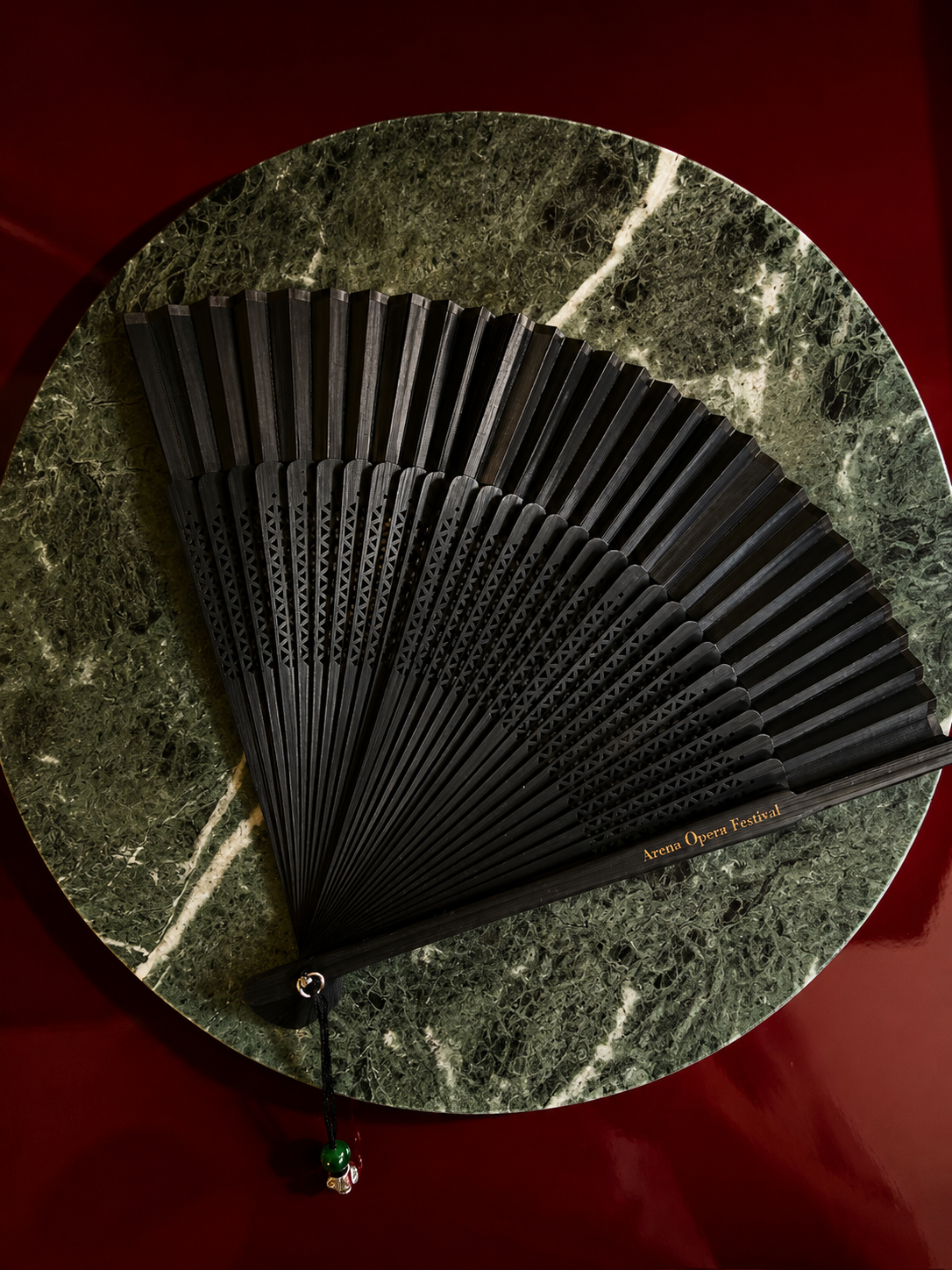
The €20 hand fan I bought immediately afterwards was the true robbery.
Twenty euros for a fan is offensive. Twenty euros for a fan in that heat is also entirely rational.
Inside the Arena, hundreds of similar fans fluttered throughout the performance. During quieter passages, their constant rustling became an unofficial additional section of the orchestra.
My ticket was Poltronissima Gold: row eighteen, seat seven.
This time I had not repeated my Vienna mistake.
I had deliberately avoided the first rows. Earlier experience had shown that proximity could not manufacture projection, while being too close made it harder to see an enormous production as a coherent whole.
Row eighteen appeared close to optimal: near enough to follow relationships between the singers, far enough to absorb the complete stage and positioned well enough that weak audibility could not be blamed on exile in the stone terraces.
If a voice failed to reach me from there, the seat was not responsible.
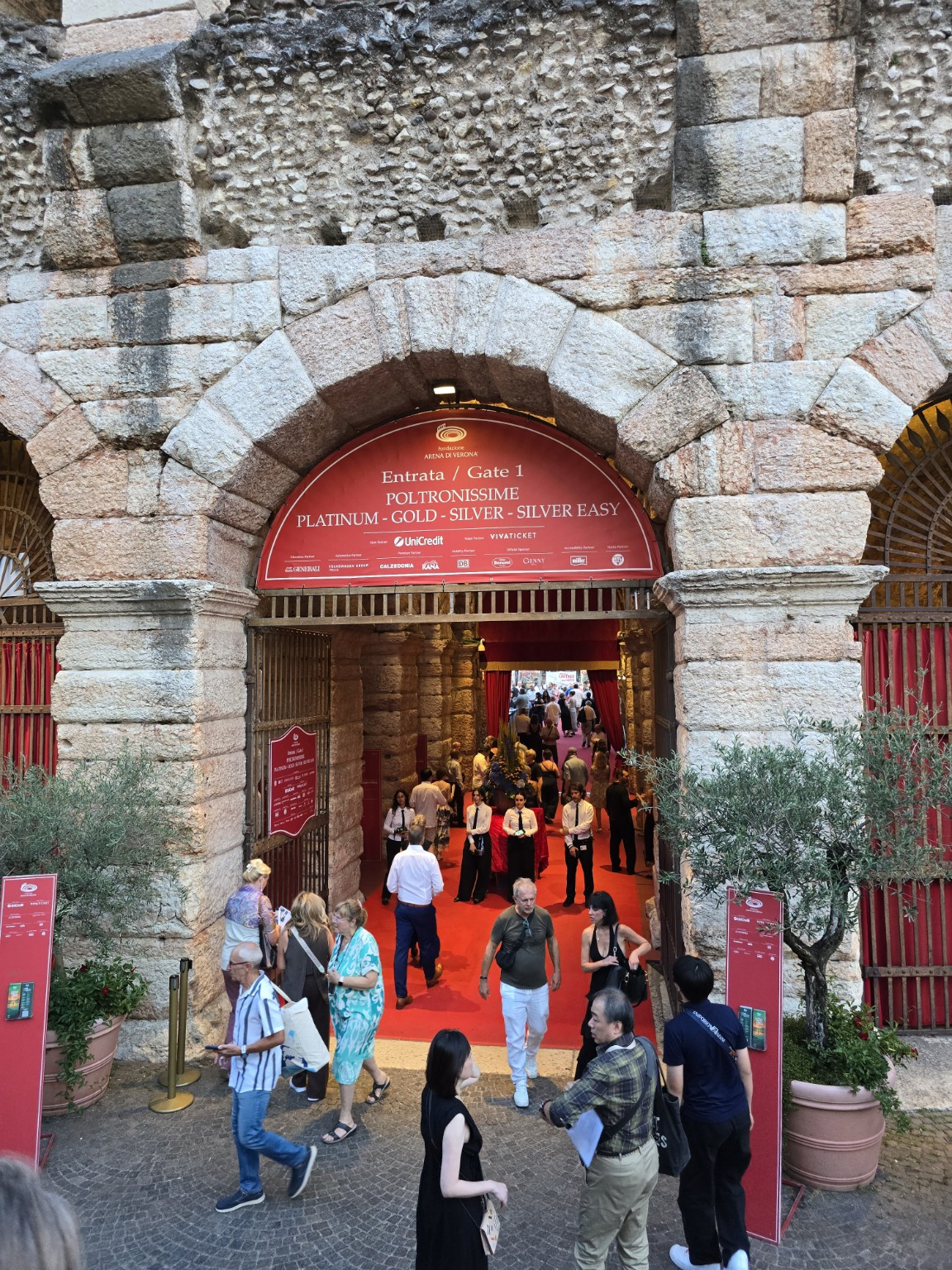
The Arena operates on a scale that can be difficult to understand from photographs. Its 2025 opera festival attracted 404,715 spectators, 61 per cent of them from abroad. Separately, the 2024 SIAE report found that the Arena and Teatro Filarmonico together accounted for 22 per cent of Italy’s opera audience.
The size of the phenomenon cannot be debated.
Moulin Rouge: Monument Before Meaning
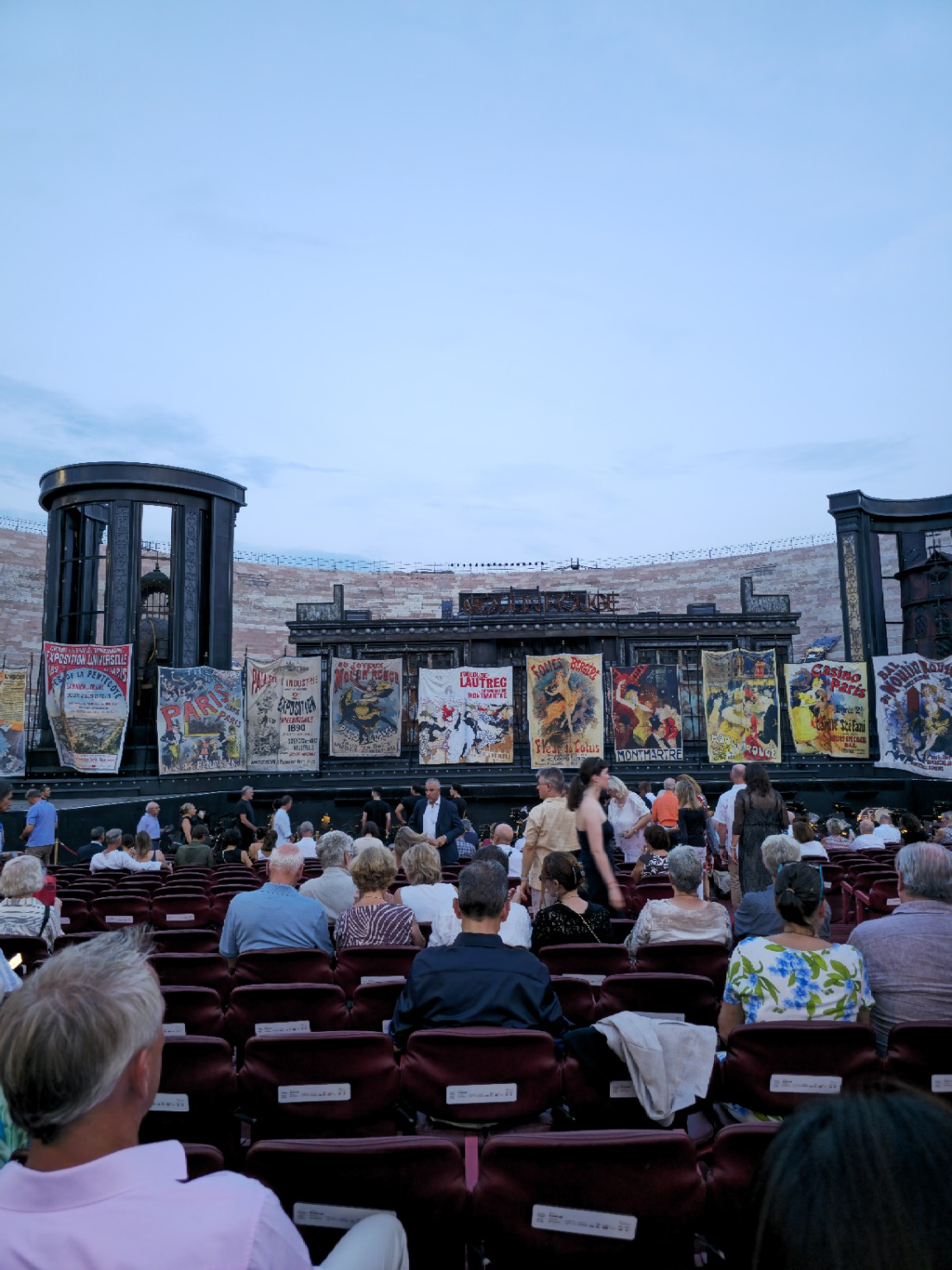
The production connected La Traviata with the Moulin Rouge.
I have visited the actual Moulin Rouge, so the name alone was not enough to send me into aesthetic collapse. The association felt less like a dramatic necessity than a saleable idea: an internationally recognisable brand attached to an internationally recognisable opera.
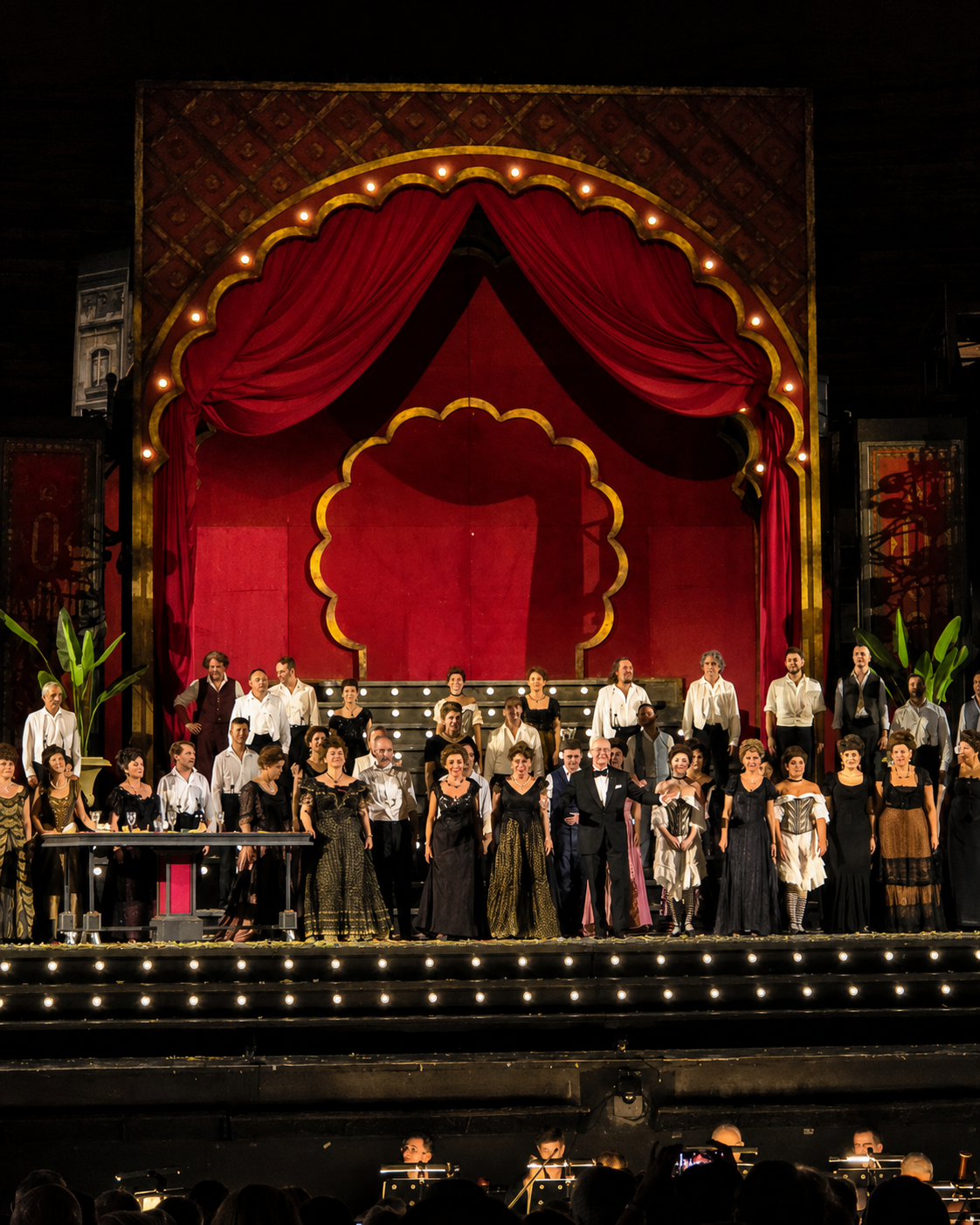
The giant windmill, dancers, Belle Époque costumes and enormous elephant certainly gave the Arena the scale it demands.
The production worked as monument, but I remained unconvinced that it worked as interpretation.
Stone’s Vienna staging had translated the opera’s social cruelty into contemporary language. It had helped explain the mechanisms surrounding Violetta.
Verona enlarged her surroundings until they became spectacular.
Somebody had found an idea that would sell. The physical scale of the Arena made it appear more dramatically convincing than the underlying concept actually was.
The critical response had identified much the same division. OperaTeatro described the production as sumptuous but largely an end in itself: visually overloaded, crowded and insufficiently connected to Verdi’s drama. Forum Opéra admired the visual triumph while acknowledging that emotion struggled to penetrate the spectacle.
That was almost exactly my problem.
The Moulin Rouge gave the Arena a magnificent surface. I remained unconvinced that La Traviata needed it.
Then Berzhanskaya began to sing, and arguments about branding became secondary.
A Stronger Violetta
In the first act, Oropesa retained the advantage.
Her technical command, brightness and precision had made that act feel almost definitive. Berzhanskaya was very good, but her Violetta did not appear as light or immediately fragile.
She looked and sounded stronger.
At first, that strength seemed slightly at odds with the conventional image of the role: a brilliant but vulnerable woman whose physical collapse is already waiting beneath the surface.

Then the second act began.
Berzhanskaya started using the lower colours that had fascinated me when I first discovered her. She did not simply descend into the register. She seemed to flirt with it, allowing darker notes to alter the character of an entire line.
This Violetta did not sound as though she had been born to die.
She sounded capable of resistance.
That made her eventual surrender to Giorgio Germont more painful. During their long duet, particularly after she agreed to sacrifice her relationship with Alfredo and reached Dite alla giovine, Luca Salsi could meet her dramatically.
By then, comparing her directly with Oropesa had become increasingly pointless.
Oropesa had offered the more classically complete and technically immaculate first act. Berzhanskaya’s darkened second act created a different woman entirely.
They were no longer competing on the same terms.
The reviews of Berzhanskaya’s earlier performances in the same production traced something close to the development I heard. OperaTeatro praised the clean agility of her first act while finding the interpretation initially somewhat cool. Forum Opéra described a remarkable Violetta, secure throughout the range and distinguished by nuance, delicacy, contained pain and an unusual but highly effective technique.
That was close to my own trajectory.
In the first act, I still preferred Oropesa. As the second progressed, the comparison became less useful.
By Addio del passato, I was no longer measuring Berzhanskaya against anyone.

A Thread of Voice Across the Arena
The final act strips away the parties, money and public display. Violetta is dying, largely abandoned, reading a letter that has arrived too late.
In Addio del passato, she says goodbye to the happiness and dreams that will not return.
The aria lives at the edge of audibility. It begins in pain and pianissimo. Near its end, the score asks for un fil di voce — a thread of voice.
That thread crossed the Arena.
Again and again, Berzhanskaya reduced the line to pianissimo, yet every phrase still reached row eighteen.
The effect was not that she filled the amphitheatre with overwhelming sound. She did something more difficult.
She made the amphitheatre feel intimate.
I had experienced that particular physical shock only once before: at Madrid’s Teatro Real, when Georgian dramatic mezzo-soprano Anita Rachvelishvili sang Azucena’s Stride la vampa in Verdi’s Il trovatore.
In Madrid, the force and dark colour of Rachvelishvili’s voice bypassed analysis and produced an immediate physical response.
Berzhanskaya’s Addio del passato did the same through almost opposite means.
Instead of overwhelming the theatre, she reduced the sound until the theatre seemed to shrink around it.
For several minutes, the Arena disappeared.
The Men Beside Her
Antonio Poli was not an inexperienced singer thrown into an impossible venue. He is an established Italian lyric tenor with experience in Mozart, bel canto and roles such as Alfredo, which favour elegance, legato and musical refinement rather than brute vocal force.
His misfortune was that those qualities are not always the easiest to project through the Arena.
Beside Berzhanskaya’s darker and more penetrating sound, Poli frequently appeared at a disadvantage. At moments I could sense him working to maintain the balance, and his voice did not travel through the space with her consistency.
That did not make him an unsuccessful Alfredo.
His singing remained musical, and then came Parigi, o cara.
In that final duet, Alfredo imagines taking Violetta away from Paris, still unable to accept that they no longer have enough time.
Poli relaxed. The phrasing found its natural line, the visible effort disappeared and, for those few minutes, he became a genuinely moving partner to Berzhanskaya.
He deserved full credit for that scene.

Vienna had nevertheless given me Flórez, whose polish, freedom and distinctive vocal personality made Alfredo feel more complete. Flórez had also benefited from Hindoyan’s carefully controlled orchestral balance inside an enclosed theatre.
Poli’s problem was not simply the Arena.
It was also the comparison.
Luca Salsi presented a more complicated problem.
Salsi is an internationally established Italian baritone with serious credentials in Verdi repertoire and long experience in major opera houses. His Giorgio Germont was professionally shaped, experienced and authoritative.
The audience rewarded him warmly.
Nothing about the performance suggested failure.
Yet it never quite reached me.
That is harder to explain than a cracked note or obvious technical weakness. He supplied the role’s authority, but not the gravitational pull I had felt from Tézier.
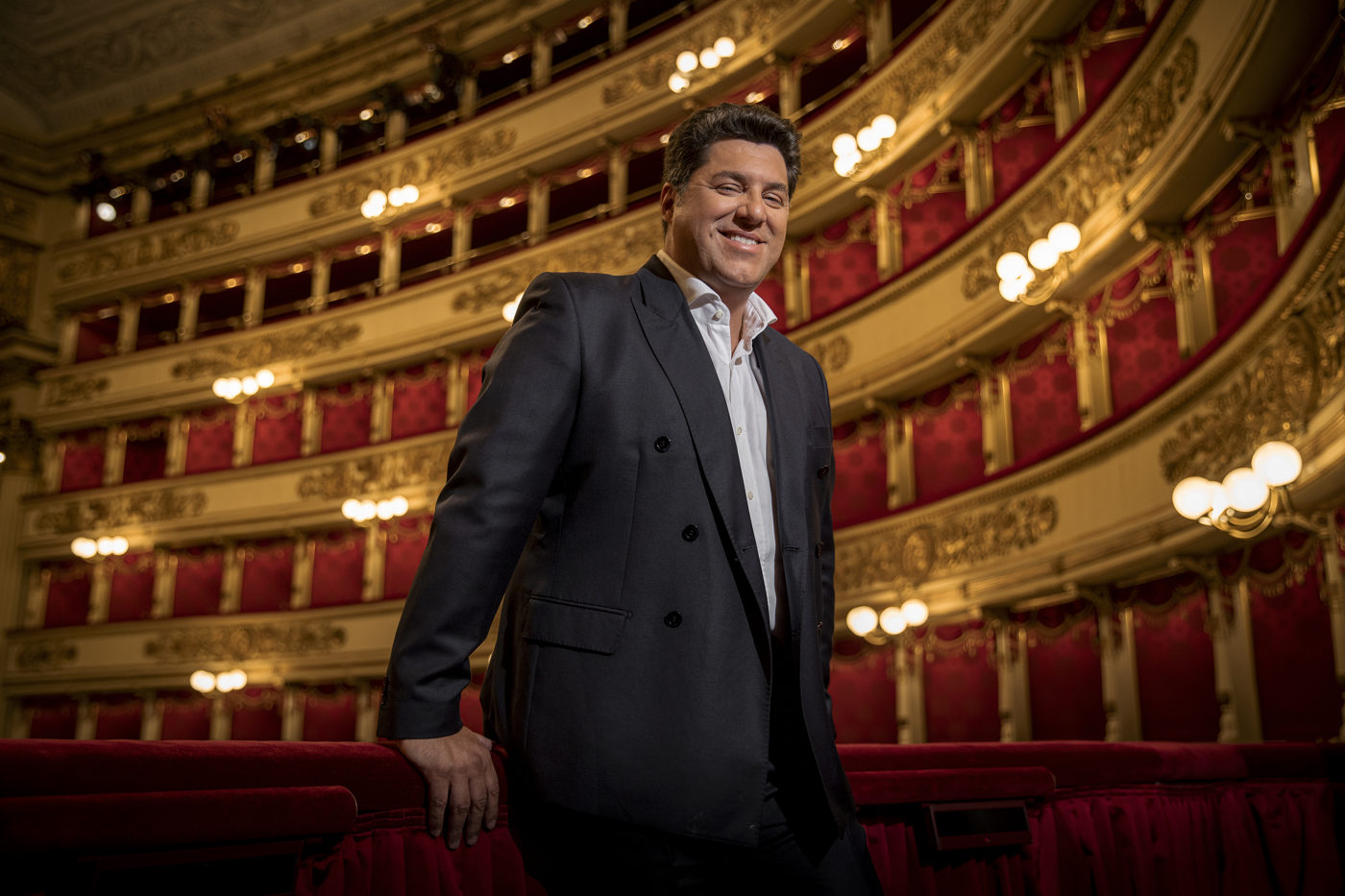
The comparison was admittedly cruel, although not entirely abstract. I had already heard Tézier project through this same Arena as Rigoletto. I knew what that particular combination of vocal weight, focus and dramatic authority could do in the space.
Salsi was more settled than Poli, and his scenes with Berzhanskaya had genuine dramatic substance. He also received one of the evening’s strongest male ovations, and it was deserved.
But Berzhanskaya remained the clearest and most commanding presence between them.
That does not make Salsi a poor Germont. It makes him a good and respected Germont beside an unusually dominant Violetta — and one who, for reasons I cannot reduce to a simple technical complaint, did not move me.
Sometimes objectivity means admitting that a performance can be accomplished, deserving of applause and still leave no emotional mark.
Annina, Flora and Vocal Focus
The supporting cast produced the evening’s clearest contrast.
Annina, Violetta’s loyal maid and final companion, is a small role. Francesca Maionchi made it sound anything but insignificant.
Maionchi is a young Italian lyric soprano already moving towards larger parts, not an anonymous supporting singer enjoying one fortunate evening. Reviewers of this production had already noticed the precision of her sound and her ability to project both voice and character across the immense stage.
From row eighteen, every one of her phrases reached me with remarkable clarity.
A short supporting part cannot be compared mechanically with one of opera’s most demanding principal roles. The orchestration and duration are different.
But focus is focus.
Maionchi’s voice travelled.
Anna Werle presented the opposite and more uncomfortable discrepancy.
Werle is an established German mezzo-soprano moving into heavier dramatic repertoire. Reviews of earlier performances in the production had generally found her an effective Flora, Violetta’s wealthy friend and hostess of the second-act party.
That was not what reached me on 31 July.
Her vocal projection lacked concentration, and the acting replaced authority with broad and occasionally coarse gestures. In a production already overflowing with movement and spectacle, Flora needed precision.
This may have been one uneven evening rather than a verdict on the singer.
It was nevertheless the performance I heard.
Vienna Had the Better Traviata
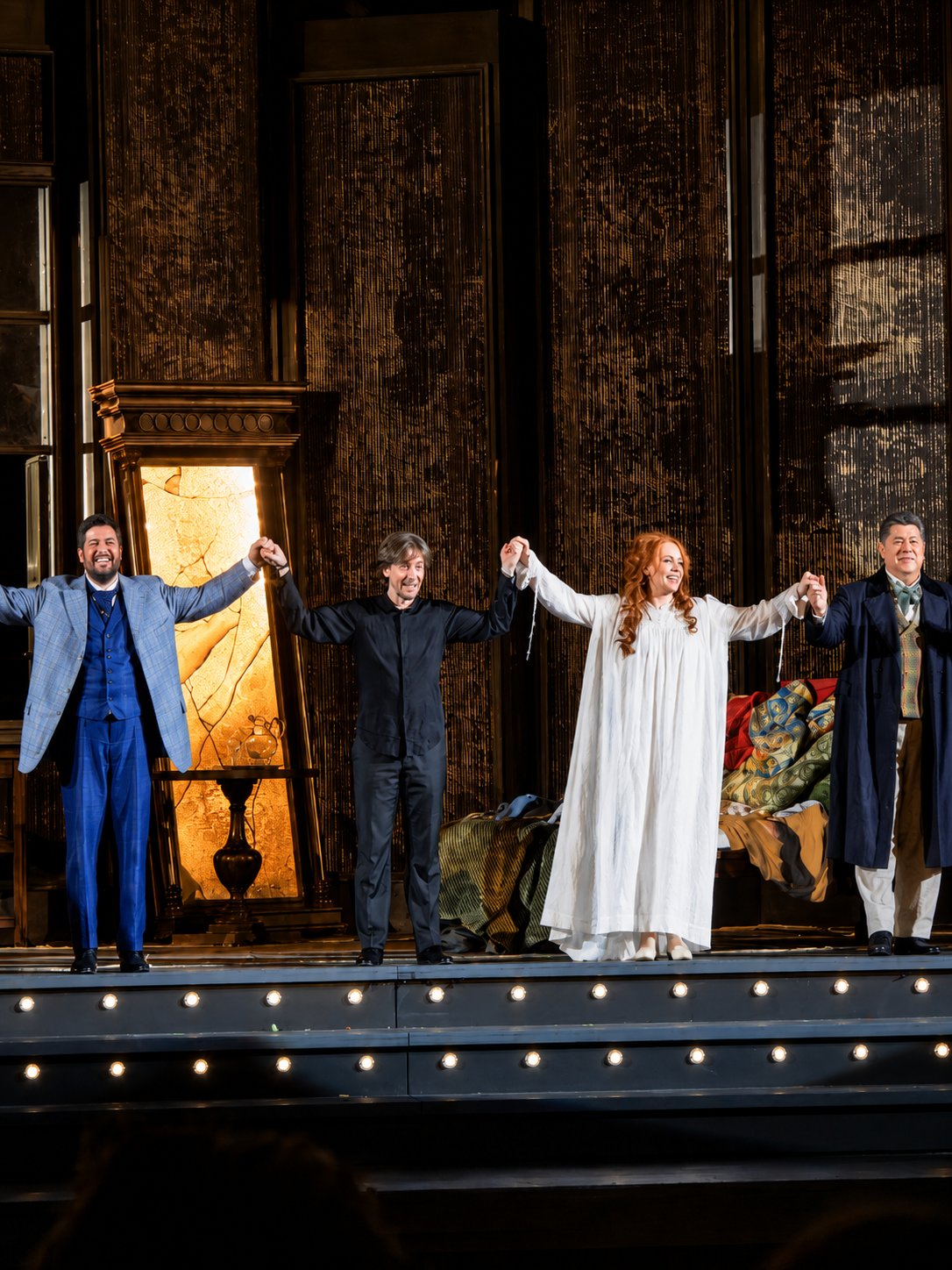
Berzhanskaya received the largest ovation of the evening.
The orchestra under Michele Spotti was warmly rewarded. Both Poli and Salsi also received substantial applause, slightly less than hers but by no means dismissive.
The audience clearly recognised serious, accomplished performances even where I had reservations about projection or emotional impact.
The ovation did not settle the comparison between Vienna and Verona.
Nor could it answer the tempting but fundamentally unfair question of whether Berzhanskaya was better than Oropesa.
Oropesa had given me something close to the ideal classical Violetta: technically brilliant, fragile, coherent and excellent from beginning to end.
Berzhanskaya gave me a different conception.
Her Violetta was darker, stronger and less obviously designed for victimhood. The mezzo colours added sensuality and resistance. When that woman finally collapsed, the tragedy acquired a different violence.
Oropesa was a perfect line.
Berzhanskaya changed shape in front of me.
The two journeys could hardly have been more different.
Vienna had required a cancelled flight, a long drive, an abandoned Prague retreat, flood disruption, an underwhelming evening in Brno and a seat purchased with slightly too much financial restraint.
Verona required only my usual car-and-train routine.
Then it attempted to cook me alive.
Vienna gave me the better overall Traviata. Its three principal singers operated in exceptional balance, and Simon Stone’s staging offered a contemporary dramatic intelligence that the Moulin Rouge concept never matched.
Verona gave me the greater single moment.
The journey had begun more than two years earlier with Damrau bringing me to Vienna. A sold-out Parsifal with Garanča left me browsing without purpose. Chance introduced me to Berzhanskaya, and the colour of her voice made me remember her long before I heard her in person.
Oropesa then drew me back to the Vienna State Opera and established a standard that appeared almost unassailable.
Berzhanskaya did not defeat that interpretation.
She refused to imitate it.
Vienna had the better Traviata.
Verona had Vasilisa — and an Addio del passato during which one of the largest opera venues in the world ceased to feel large at all.
