
 City of Edinburgh, Scotland, United Kingdom
I returned to Edinburgh for Elizabeth II’s private rooms. W Edinburgh rewrote the script.
By the time I reached Edinburgh, Queen Elizabeth II had already hijacked my Scottish itinerary from beyond the grave.
Balmoral had top billing. It was the reason for returning to Scotland: the private Highland estate where the late Queen spent her summers, received prime ministers and persuaded generations of Windsors that tartan upholstery represented emotional restraint.
The supporting cast was not exactly weak. Aberdeen arrived dressed entirely in granite. Dunnottar occupied a cliff with the confidence of a ruined fortress that had selected its location specifically for the publicity photographs. St Andrews supplied cathedral ruins, university prestige and the campus where William met Kate before Netflix converted their courtship into royal television. Dundee added the V&A, the Discovery and the mild embarrassment of proving far more interesting than cities treated as convenient railway connections generally are.
The temporary opening of Elizabeth II’s private apartments at the Palace of Holyroodhouse then placed Edinburgh at the end of the route. Britannia, her retired royal yacht and the strongest memory from my first visit eight years earlier, was invited back for the sequel.
W Edinburgh had not been cast.
It was accommodation.
That is usually how scene-stealers enter.

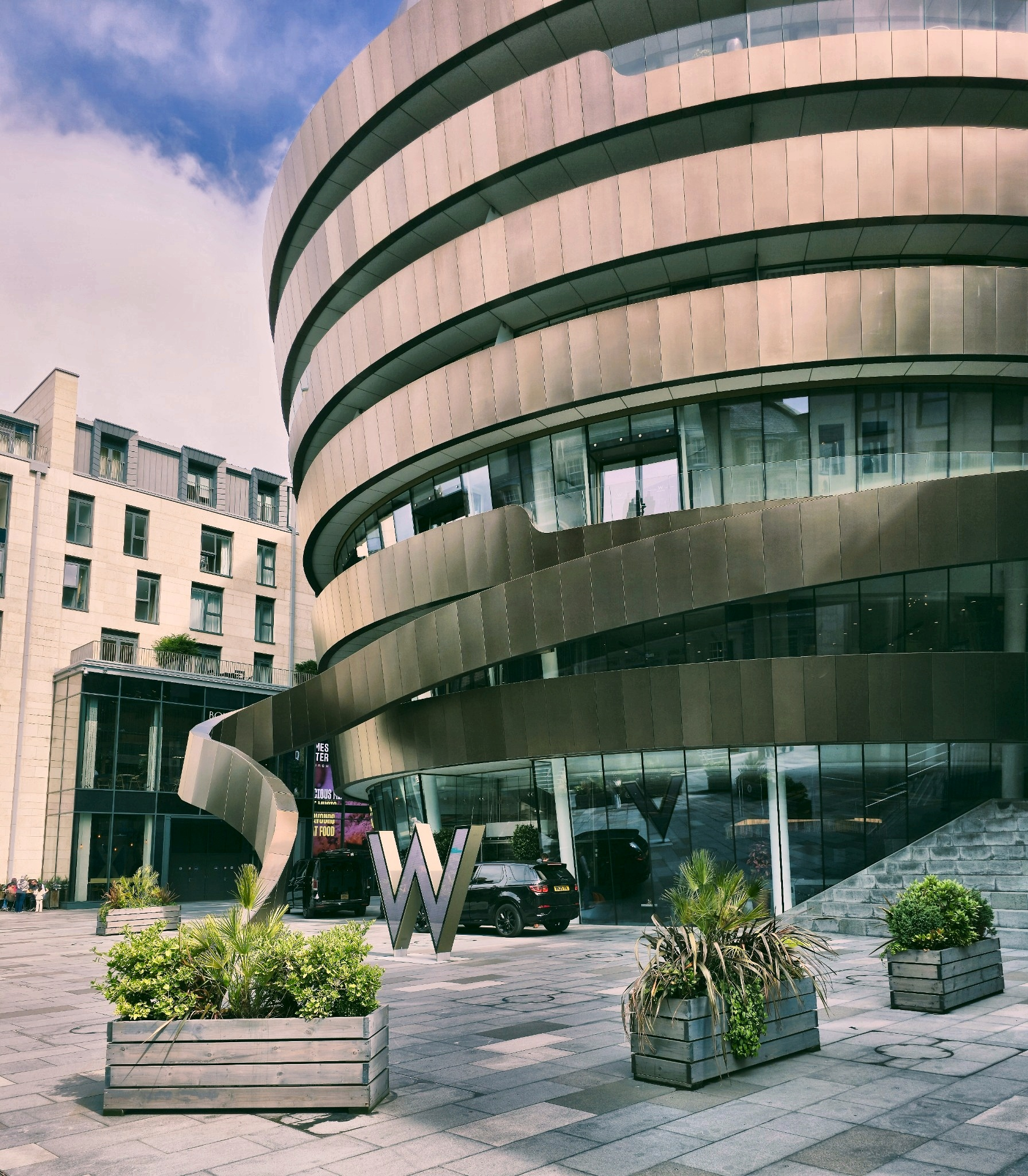
A bronze ribbon walks onto the set
I arrived by train from Dundee with one night, two royal appointments and a flight to Stansted the following afternoon.
This was not my first Edinburgh. Eight years earlier, I had completed the standard curriculum with the manic efficiency of someone who believed cities issued final grades. I had walked the Royal Mile, entered the castle and St Giles’ Cathedral, descended into Mary King’s Close, visited Holyroodhouse and Britannia, photographed Greyfriars Bobby and climbed Calton Hill.
The surviving itinerary specifies tram frequencies, bus numbers, museum closing times and the precise hour at which afternoon tea would begin at The Balmoral.
Apparently, I once regarded spontaneity as a logistical defect.
There would be no repeat examination. The castle had survived since my previous inspection. St Giles had not requested reaccreditation. Greyfriars Bobby was unlikely to have grown.
This visit was supposed to be selective: Elizabeth II’s apartments, another afternoon aboard Britannia and a comfortable night before the airport.
Then W appeared above St James Quarter.
Edinburgh generally performs in dark stone, Gothic silhouettes and centuries of accumulated authority. W looked as though someone had dropped an enormous bronze flourish into the city centre, turned up the music and informed the skyline that subtlety was now optional.
The Ribbon Building makes no serious attempt to appear old, modest or universally agreeable. It curls above the surrounding development with the confidence of an object that has never once wondered whether everyone will like it.
I fell for it immediately.
More than one night
A one-night hotel stay is normally a poor financial joke. The room officially becomes yours in the afternoon, breakfast consumes part of the following morning, and checkout arrives just as the place begins to feel familiar.
W gave me the room at 11:30.
That transformed an overnight booking into something approaching an actual stay. Late checkout the following day extended it until four, giving me more than twenty-eight hours in the hotel.
My Signature room was spacious, polished and unmistakably W. The bed was excellent, the lighting flattering and the design contemporary without resembling the headquarters of a technology company that had recently discovered velvet.
The view was not one of Edinburgh’s great panoramas. The balcony mattered more.
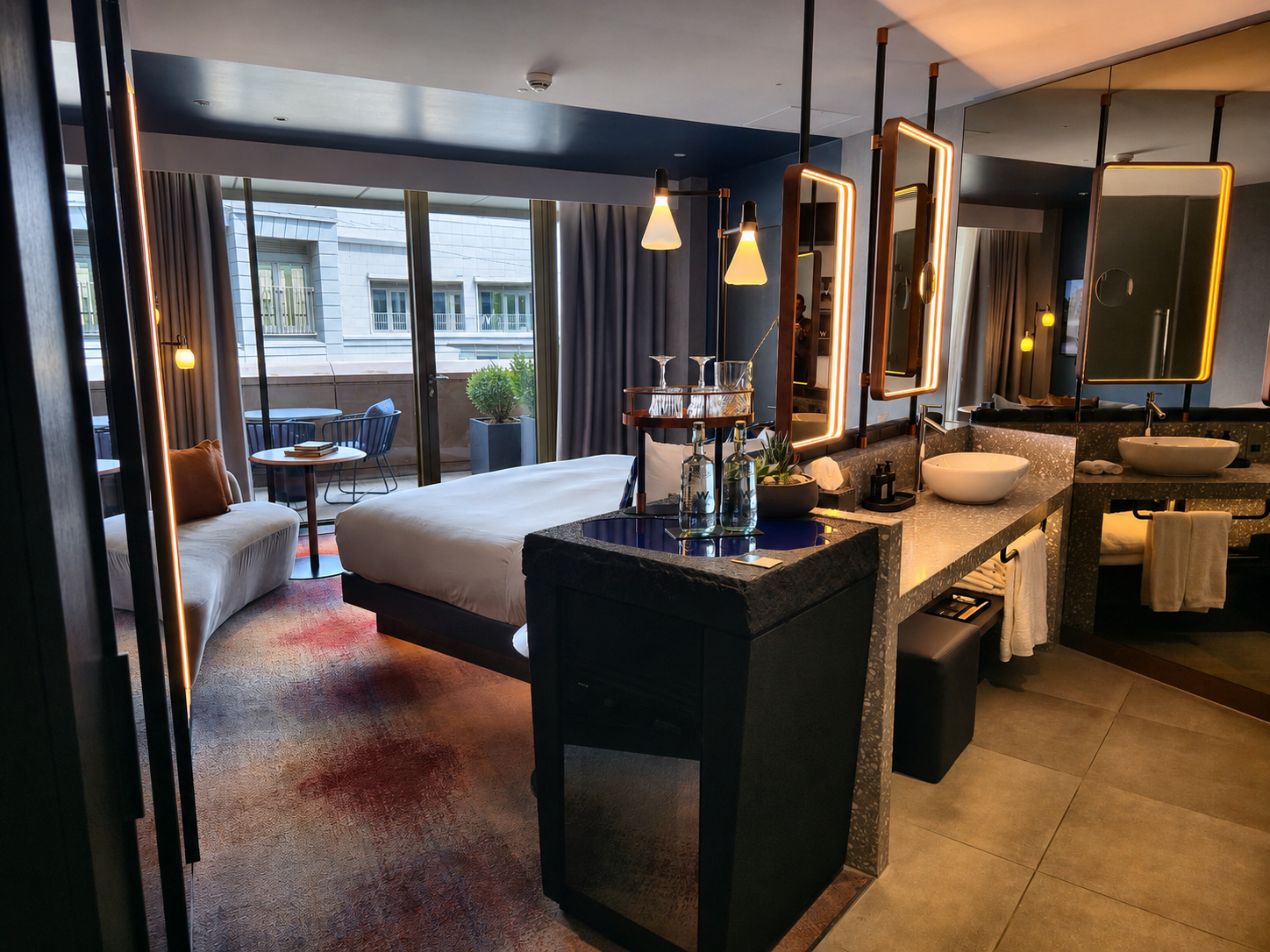
A balcony in a central hotel creates a small, unnecessary territory of privilege. It may overlook rooftops rather than castles, but it still allows the guest to step outside in a hotel robe and briefly behave as though the surrounding city has been organised around the room.
More importantly, W had energy.
The music, lighting, public spaces and clothes of the guests belonged to the same production. Most people appeared to be from my generation or younger. They had dressed deliberately. Nobody looked as though they had wandered into the bar after becoming separated from a coach tour.
The hotel was vibrant in the actual sense of the word, not merely because somebody in marketing had inserted it into a press release.
That distinction mattered because Edinburgh had put me inside an architecturally unusual Marriott before.
The hotel that had watched this one being built
During my first visit in 2018, I stayed at The Glasshouse, a modern hotel entered through the surviving façade of a Victorian church.
The concept was excellent. My room was large, the balcony overlooked York Place and the hotel possessed an unexpectedly extensive rooftop garden near Calton Hill. I chose it because it belonged to Marriott and looked expensive. It largely delivered.
It also had the rhythm of a luxury retirement home.
The décor was contemporary, but many of the guests were pensioners, the atmosphere was quiet and the pace suggested that nobody intended to make a rash decision before breakfast. I liked it, spent the evening beside the fire and drank a whisky whose identity I have completely forgotten.
This is unlikely to cause lasting damage to the whisky industry. Neat whisky has always tasted to me like an exceptionally confident yellow spirit surrounded by other people’s descriptions of peat, smoke and ancestral weather.
The important detail was outside the room.
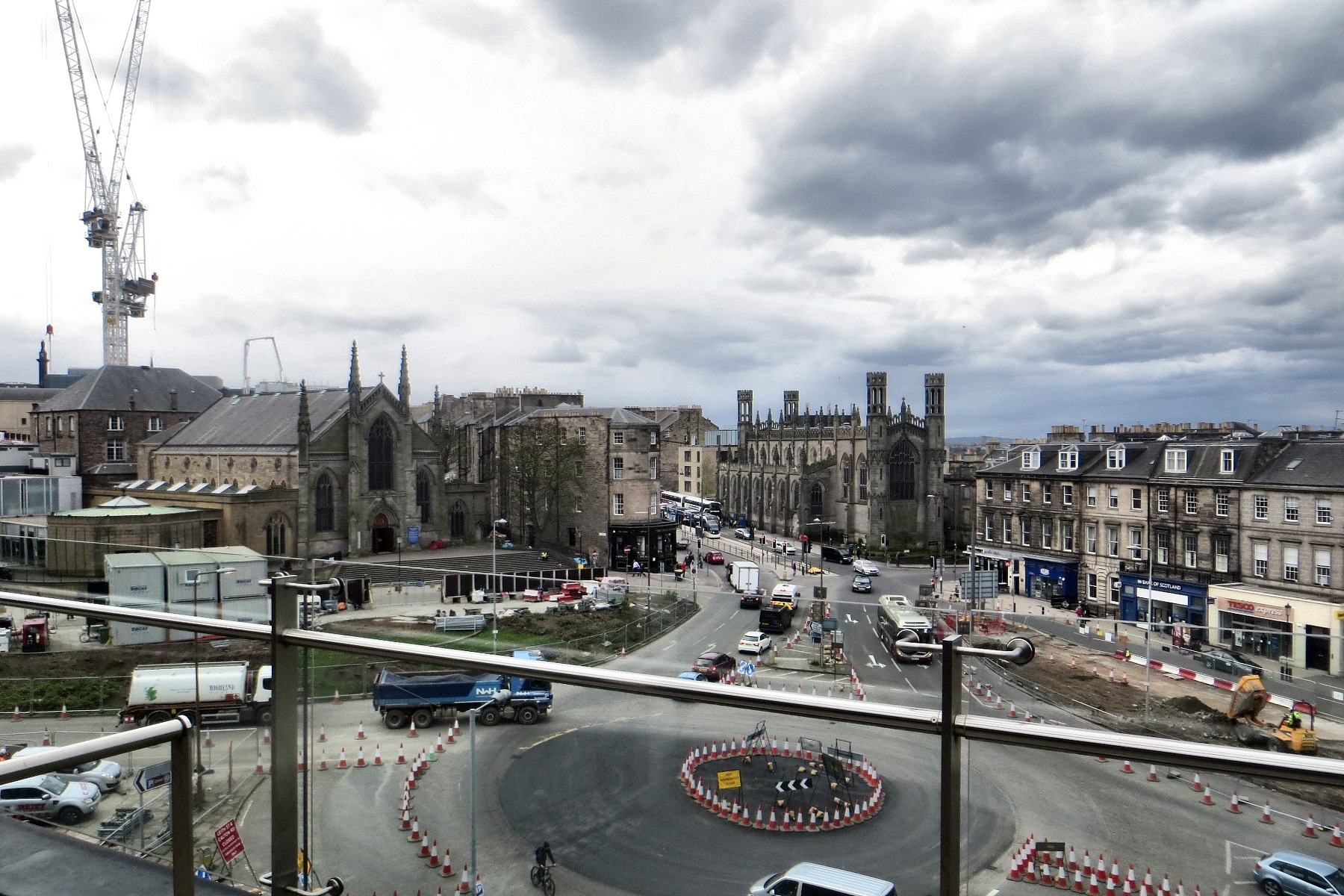
From the balcony, I had photographed the cranes and excavation of the vast St James redevelopment. Somewhere within that construction landscape, Edinburgh was preparing a hotel that would become obnoxiously photogenic.
Eight years later, I had returned to sleep inside it.
The Glasshouse negotiated with Edinburgh by concealing its modern hotel behind a Victorian church façade.
W walked onto the same stage wearing bronze.
Before the wind became dangerous
W’s rooftop delivers the view its architecture promises. Edinburgh spreads below in layers: monuments, dark stone, Georgian order, church towers, distant hills and occasional contemporary buildings either trying to disappear or start an argument.
I went up almost immediately after arriving.
That proved useful because the hotel later closed the rooftop terrace and the outdoor restaurant areas due to heavy wind.
There was a breeze.
Perhaps the upper floors had received meteorological information unavailable at street level. Perhaps bronze ribbons are more sensitive than their appearance suggests. Either way, I had already photographed the city before health and safety discovered the atmosphere.
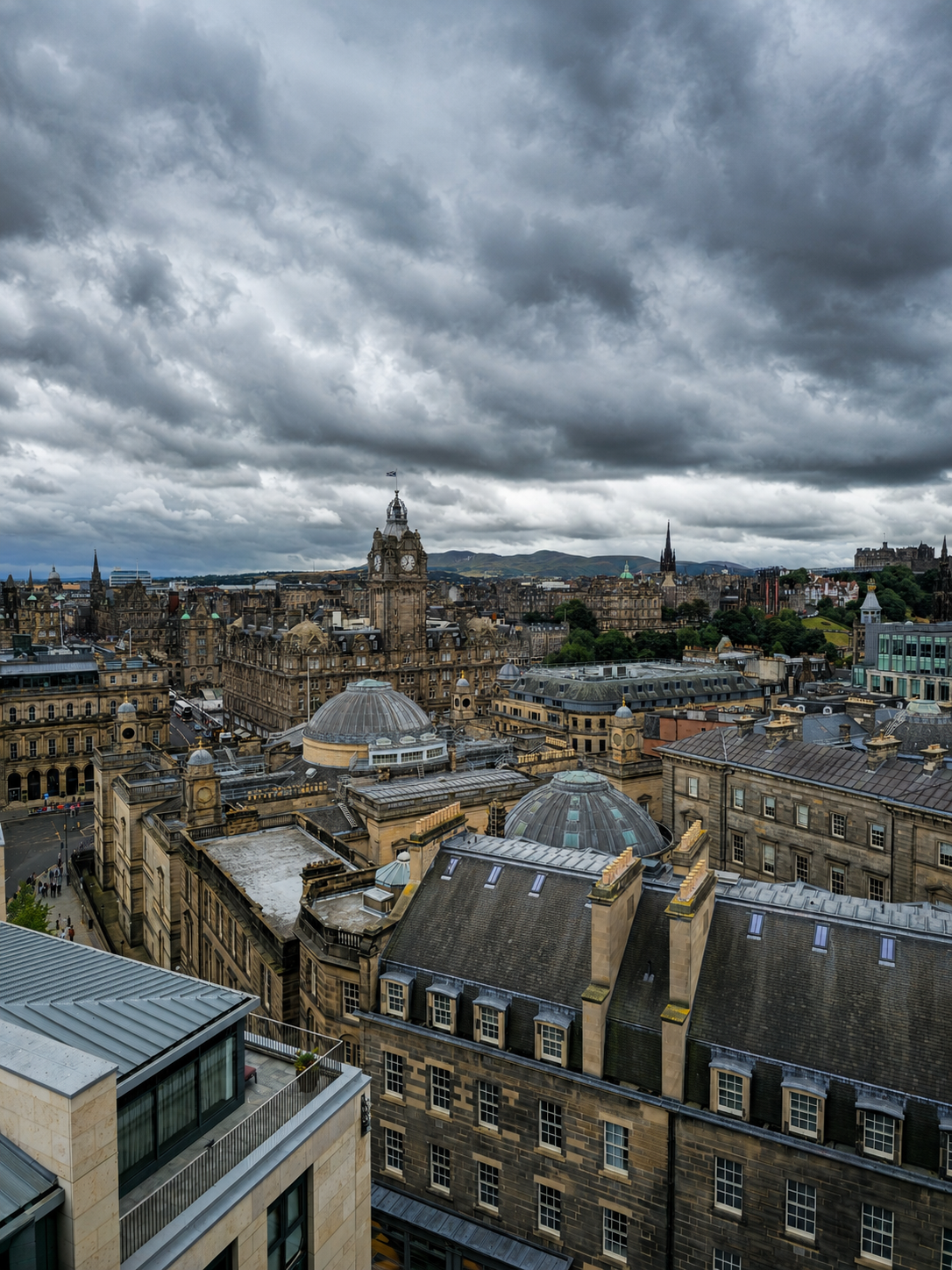
The closure was irritating but not disastrous. I had seen the roof, taken the photographs and confirmed that W was not merely interesting from below. It functioned as architecture, viewing platform and public announcement that Edinburgh’s skyline was still accepting applications.
The historic centre remained visible beneath me.
I simply felt no urge to descend and repeat it.
The Royal Mile could manage without me for a day.
Britannia could not.
The Queen’s yacht, still refusing to look extravagant
The Royal Yacht Britannia is permanently moored at Leith, where one of Britain’s most potent symbols of twentieth-century monarchy is accessed through a shopping centre.
This should diminish the experience. Somehow, it does not.
Britannia served the Royal Family and the British state for more than four decades. It functioned as a residence, diplomatic venue, working ship and mobile projection of national prestige. Yet its interiors resist almost every modern fantasy of royal excess.
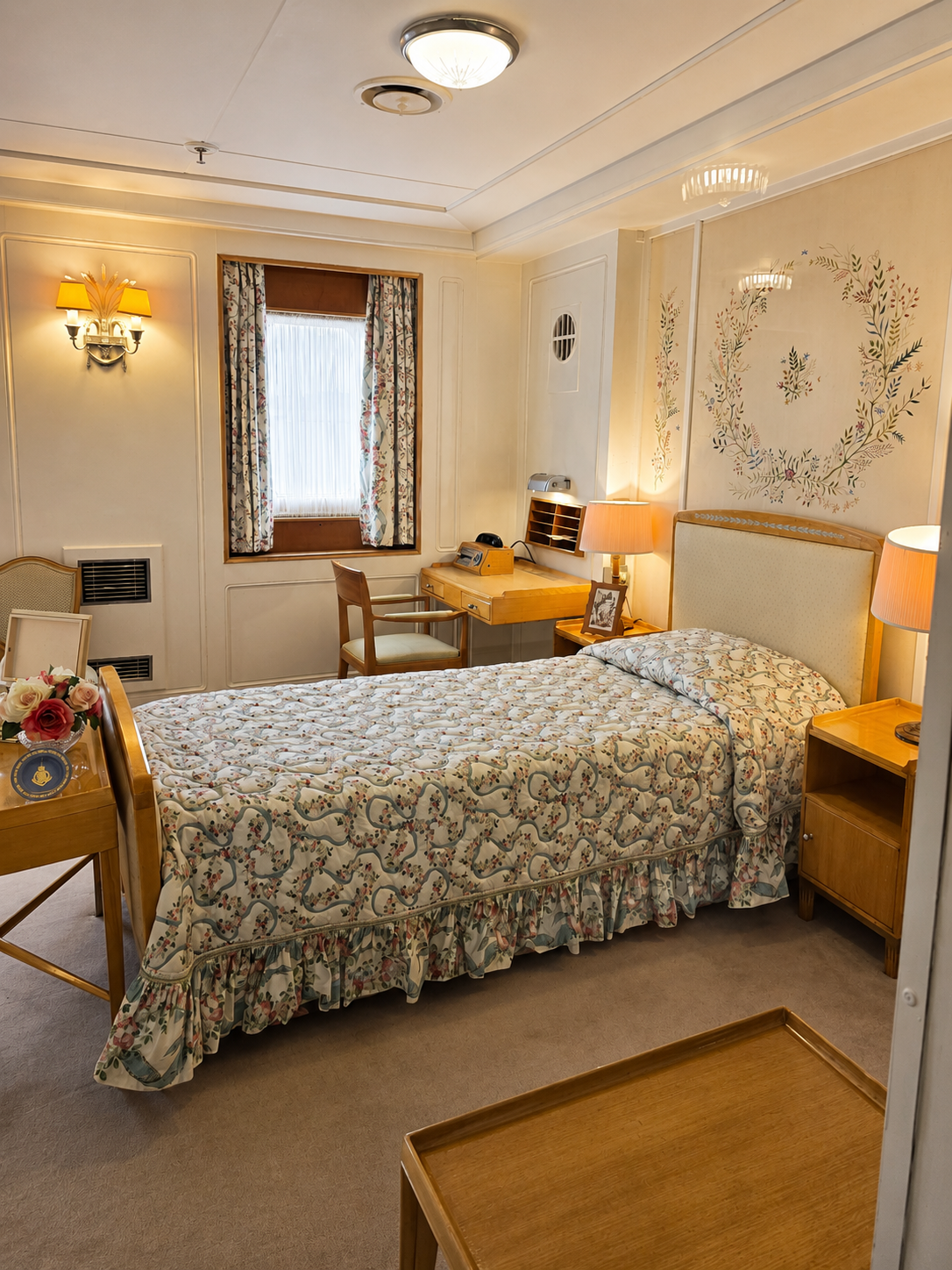
The royal rooms are comfortable rather than spectacular. There are practical desks, floral fabrics, restrained sitting rooms and separate single beds. Nothing resembles a floating Versailles. At moments, Britannia feels more like the meticulously maintained home of a respectable British aunt who regarded ostentation as evidence of poor breeding.
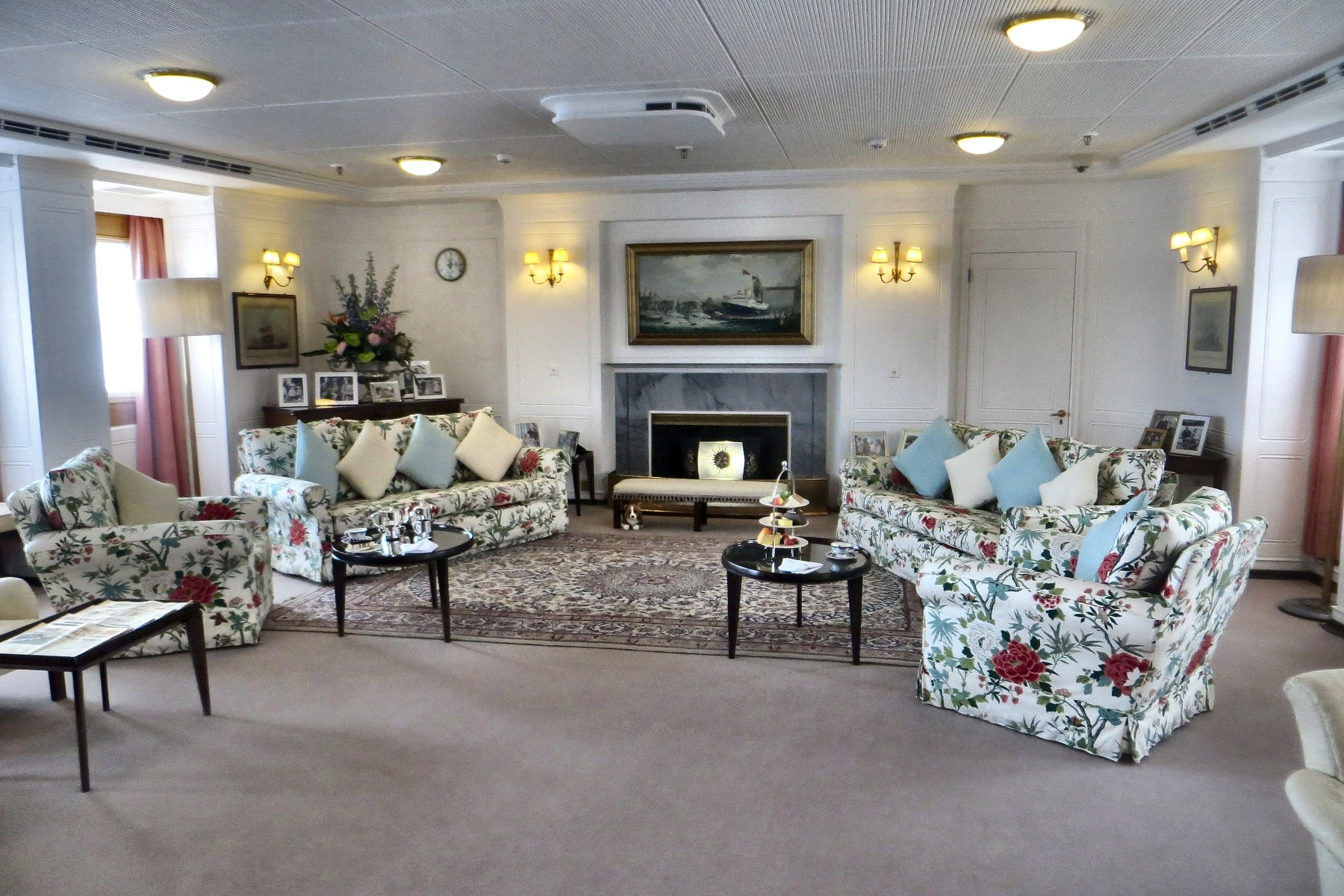
That domestic quality is precisely what makes the ship compelling.
Above deck, the monarchy travelled, entertained and performed official duties. Below, officers, sailors, engineers, cooks, medical staff and laundry workers sustained the entire operation from compact cabins, industrial kitchens and technical rooms.
Britannia preserves not merely royal furniture but a complete social hierarchy.
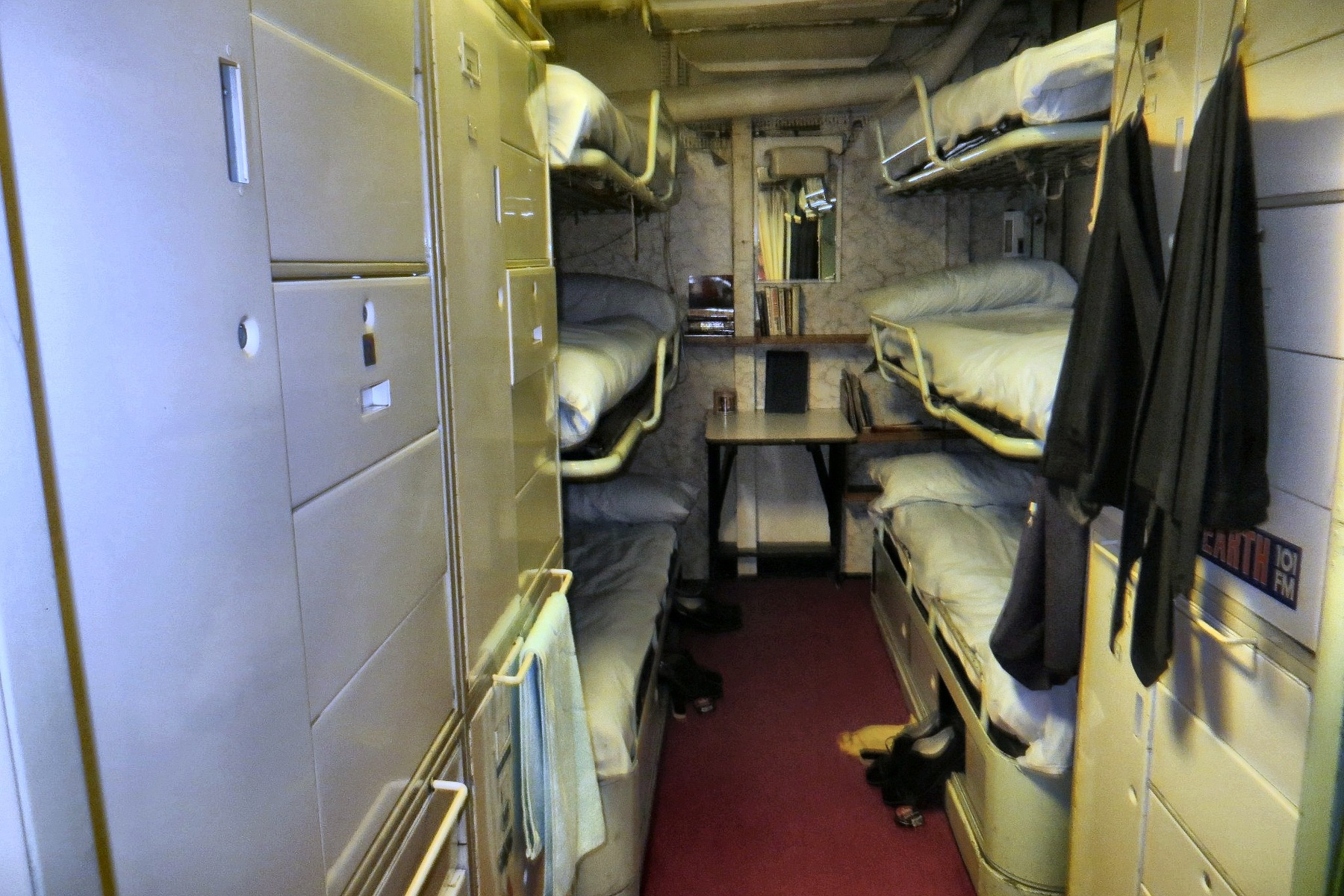
I had considered it the best attraction of my first Edinburgh visit and returned because I genuinely wanted to experience it again. Almost everything remained where I remembered it. The royal bedrooms retained their strange domestic modesty, the crew quarters remained narrow and the laundry continued to demonstrate that even monarchy eventually produces dirty linen.
The difference was that I no longer photographed every room as though assembling evidence for a court case. I moved more slowly and left enough time for lunch.
On my first visit, I had stopped for tea and chocolate cake. This time I ordered a coronation chicken sandwich, a fruit scone with cream and jam, lemon drizzle cake and Britannia’s original tea blend.


It was an unapologetically British sequence: a sandwich with royal branding, a scone requiring the standard negotiations between cream and jam, lemon cake and tea aboard a retired royal vessel.
Britannia had barely changed.
Fortunately, lunch had.
Behind Holyrood’s formal rooms
Britannia was a desired repetition. The Palace of Holyroodhouse was the actual reason Edinburgh had returned to the itinerary.
The palace stands at the lower end of the Royal Mile beneath Arthur’s Seat, opposite the Scottish Parliament and beside the ruins of Holyrood Abbey. It remains the monarch’s official Scottish residence and is normally experienced through state rooms, historic apartments, portraits and the architecture of public monarchy.
I had seen those areas during my first visit.
This time, private apartments used by Queen Elizabeth II during her annual stays had been opened to visitors. I bought the ticket before choosing W.

The word private inevitably creates expectations. It suggests secret rooms, intensely personal objects and the illicit sensation of having crossed a line normally defended by footmen, velvet ropes and constitutional convention.
The reality was more measured.
Elizabeth II used the apartments for only a relatively short period each year. Holyroodhouse was a working royal residence, not the centre of her daily private life. The rooms felt used but not exposed, intimate mainly in comparison with the state apartments beyond them.

They were also fairly old-fashioned.
That should surprise nobody. The late Queen was not waiting for a boutique-hotel consultant to introduce statement lighting and an open bathroom. The rooms reflected continuity, practicality and a generation that did not treat regular redesign as proof of emotional health.
What surprised me were some of the photographs of Prince Philip. Several showed him relaxed, handsome and far more vivid than the stern elderly public figure who later became familiar. They gave the rooms a personal quality the furniture could not create on its own.
The strongest impression, however, came from the other visitors.
British and Scottish guests around me were not simply inspecting royal interiors. Many appeared sincerely moved. They slowed in front of photographs, listened closely and treated the rooms less like a museum than a form of access to someone they believed they had known.
The décor did not move me particularly.
Their reaction did.
The late Queen’s cultural power was easier to understand in those visitors than in any chair, side table or preserved fabric.
Photography was prohibited, as it had been at Balmoral. I still find the rule difficult to justify. These rooms are now organised for public access, and a visitor photographing an armchair is unlikely to compromise national security.
The ban does not make the apartments meaningfully private. It merely gives memory more work than it deserves.
Still, the visit justified adding Edinburgh to the route.
Pork belly, Padrón peppers and a mythical whisky
Dinner at W was planned. I wanted to experience the hotel rather than inspect the room and leave in search of something more conventionally Scottish.
I ordered pork belly skewers with ají panca and yuzu, Padrón peppers with sea salt and lime, and heritage tomatoes dressed with pomegranate molasses, pickled onion and mint.


The Padrón peppers were the clear winner.
I order them almost automatically in Spain and frequently elsewhere, partly because they are excellent and partly because every plate contains the small possibility that one pepper will suddenly become vindictive.
The pork belly skewers were tasty but considerably fattier than I had anticipated. Had I fully understood what I was ordering, I might have selected something else. I enjoy meat; I am less enthusiastic when most of it appears to consist of insulation.
The tomato salad was adequate rather than memorable.
The food did not triumph equally across the table.
The atmosphere did.
Then the whisky returned.
Eight years earlier, I had drunk whisky neat beside The Glasshouse fire because Scotland appeared to require seriousness. W offered the Unicorn from Edinburgh, built around Dewar’s 12 — a twelve-year-old blended Scotch — and softened with chuckleberry, raspberry-infused mead, heather honey and citrus.
It arrived almost whisky-coloured, but with a rosy cast and a cap of pale pink foam.
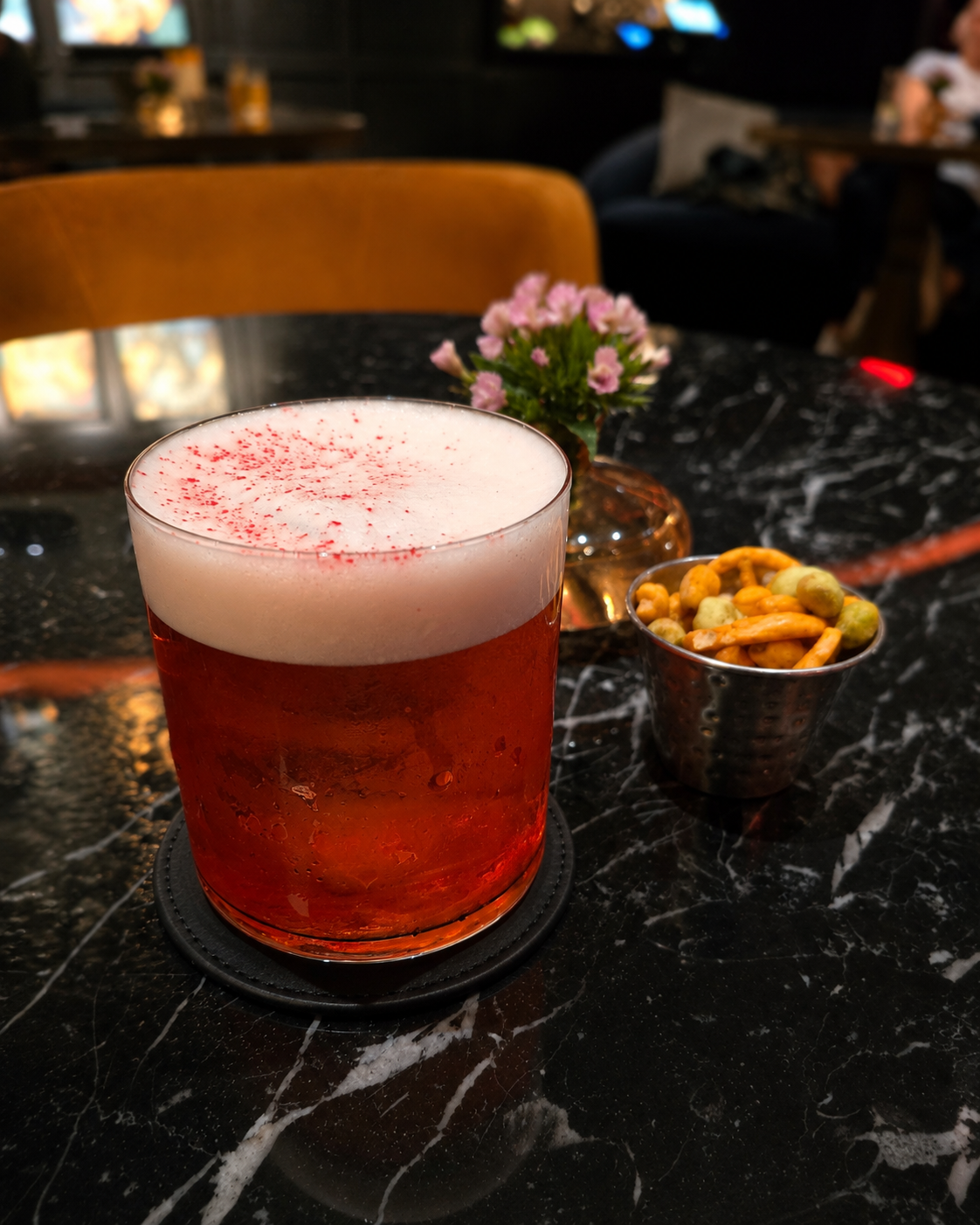
The expected evolution of masculine sophistication should presumably proceed in the opposite direction. A younger man orders colourful drinks; an older and wiser version graduates to neat whisky, stares into the middle distance and claims to detect maritime smoke.
I had matured incorrectly.
The Unicorn was far more enjoyable.
Whisky had not grown on me. It had simply acquired berries, honey, mythology and the good sense to become a cocktail.
Breakfast, declared in public
Breakfast was served à la carte rather than as a buffet.
In theory, this is more refined. In practice, it requires the guest to declare exactly how much food he intends to consume.
At a buffet, appetite remains private. One may return several times and pretend each plate is an unrelated incident. With a menu, every item must be requested aloud.
Embarrassed by the amount I might realistically eat, I deliberately ordered less.
The kitchen still produced enough food that I could not finish it.
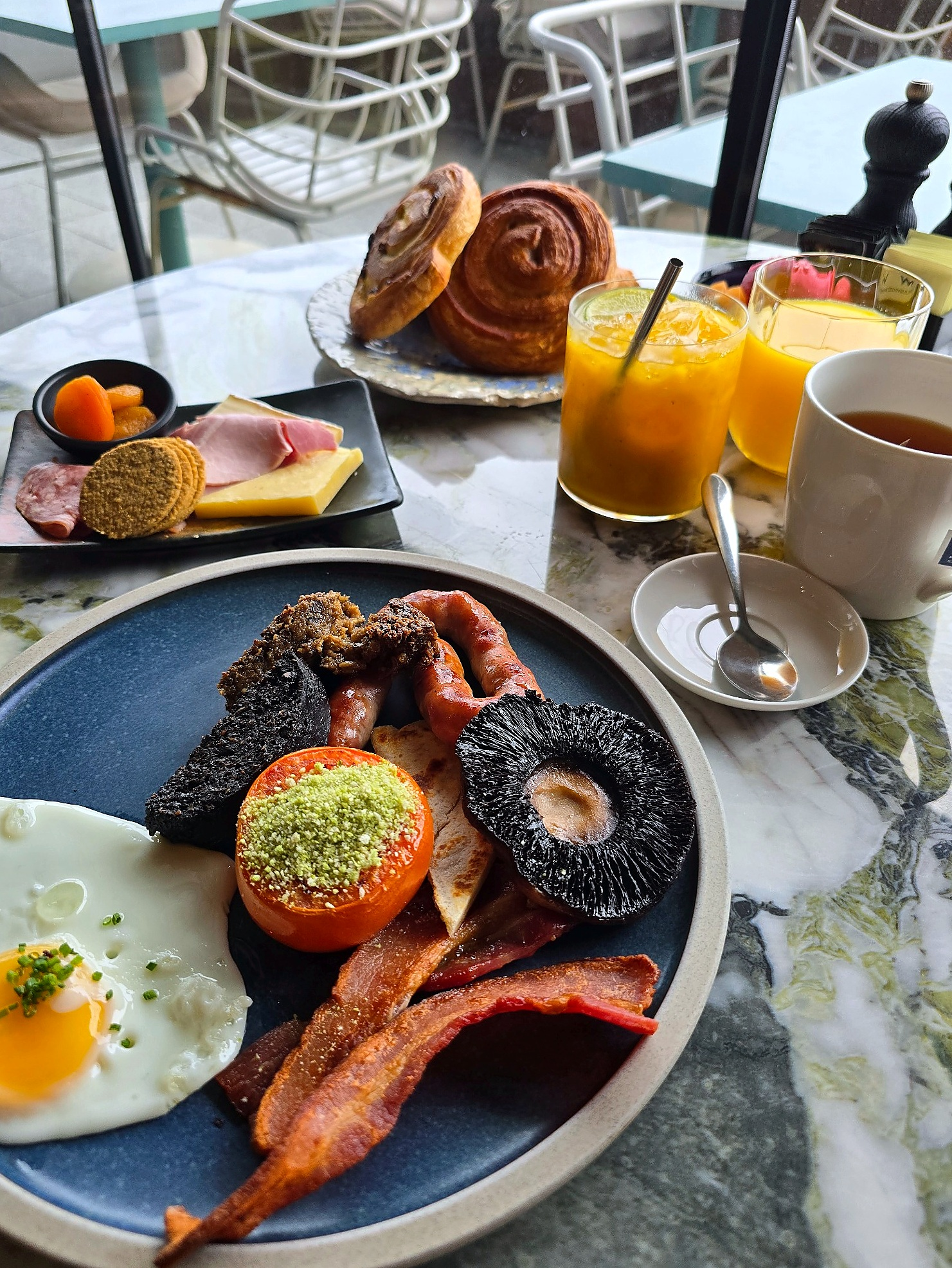
My attempt to appear moderate had achieved both waste and humiliation.
The breakfast was good. I missed the anonymity of self-service.
The morning Edinburgh lost
I had intended to spend the final morning taking more photographs.
Edinburgh deserves them. Its steep levels, blackened stone, sudden views and theatrical skyline make it almost offensively photogenic. Rain suits it particularly well. Wet pavements deepen the colours, low cloud gives scale to the monuments and the Old Town begins to resemble the setting of the story it has always believed itself to be.
But this was the end of the journey.
Balmoral, Aberdeen, Dunnottar, St Andrews and Dundee were already behind me. I had accumulated trains, hotels, meals, photographs, weather and enough Scottish history to support several independent constitutional arrangements.
When morning came, I simply did not feel like restarting the city.
So I did not.
Edinburgh had not become less impressive. I had already seen its principal sights during my first visit. Repeating the Royal Mile, castle and cathedral would have demonstrated discipline rather than curiosity.
Remaining in W was more appealing.
The late checkout allowed me to eat slowly, use the room and leave for the airport without spending the final hours dragging myself between attractions I already knew.
The first time, the hotel had framed my visit to Edinburgh.
This time, it had become part of the destination.
Leaving Edinburgh unfinished
I came to Scotland because of Balmoral. I added Edinburgh because Elizabeth II’s private apartments had opened, and I returned to Britannia because the yacht had been the highlight of my first visit.
All three royal experiences justified the journey.
W Edinburgh entered the itinerary as accommodation and left with the leading role.
I would return to Edinburgh again with a different script: its theatres, serious photography and, ideally, enough rain to make the stone properly dramatic. There would be no attempt to complete the city. That had already been done once, with bus numbers, closing times and an entirely unnecessary sense of duty.
Edinburgh had already shown me its castle, cathedral, palace and royal yacht.

Comments