 Udhagamandalam, Tamil Nadu, India
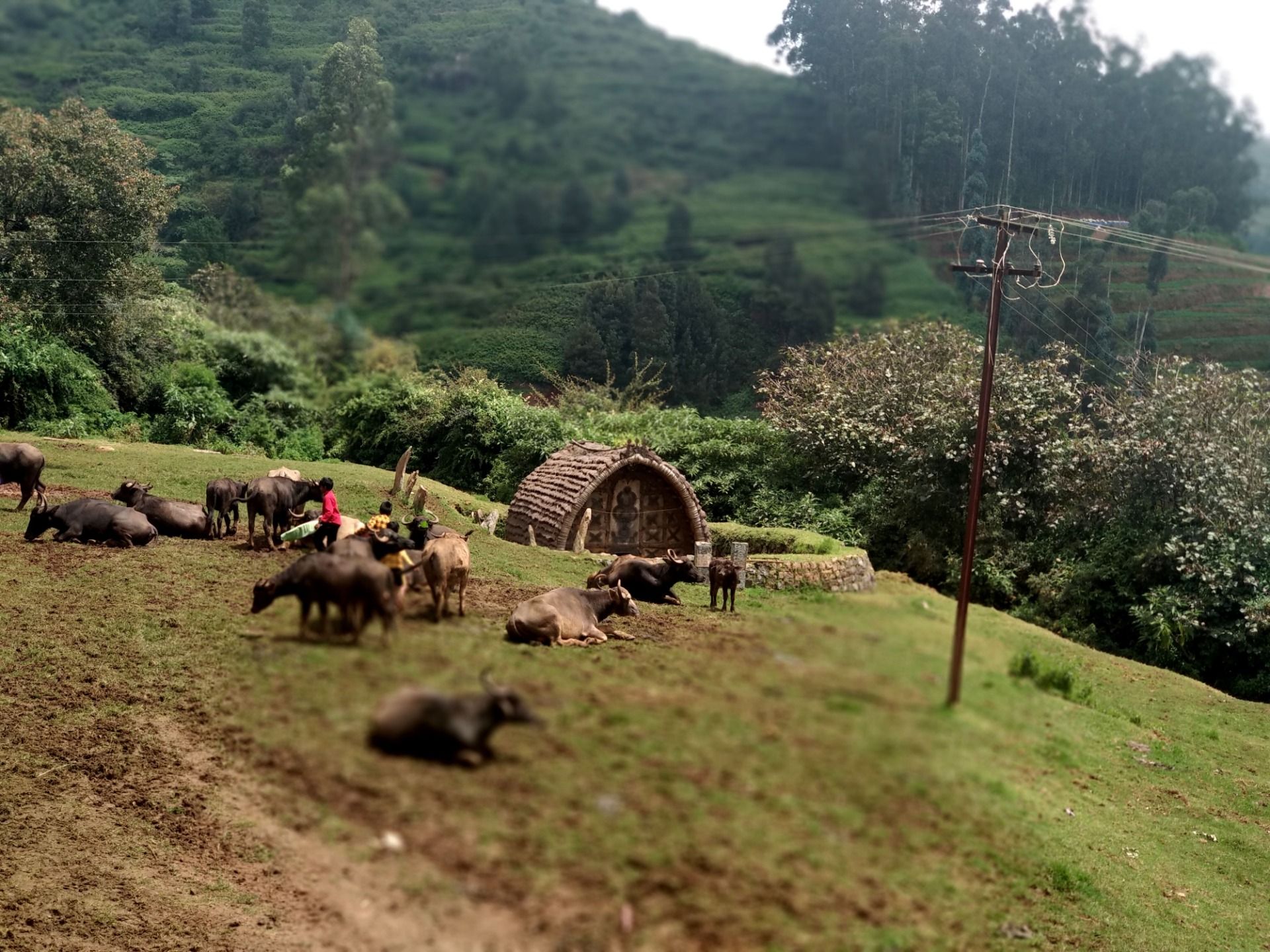
The Toda hut most visitors to Ooty photograph is a replica. It stands inside the Government Botanical Garden, where it doubles as a shop for Toda embroidery. The real thing is a short walk uphill: a Toda settlement, called a mund, sits above the top of the garden, and its barrel-roofed dairy temple stands on open grazing ground with buffaloes lying around it.
You can look at that temple. You can't go in, and neither can most Toda people. The families who live there are clear about this, and a "No Entry" board makes the point to anyone who missed it. This guide covers where the huts are, how to reach the mund without getting lost, what the dairy temple is for, and how to visit without becoming the kind of tourist the village complains about.
Most of the ground-level detail comes from TravelFeed writer @elsaenroute, who spent a day in the Ooty mund in October 2019 and wrote it up across three posts. The architectural and historical facts come from published references, named where they appear.
What a Toda hut is, and why most of them are gone
The Todas are a pastoral people of the Nilgiri hills whose life traditionally centred on buffalo herding and dairy work. The 2011 census counted 2,002 of them, according to the Wikipedia article on the Toda people. They traditionally lived in small hamlets of three to seven houses, built in the shape of half-barrels from bamboo lashed with rattan and thatched over.
Those houses are small. The same reference gives typical dimensions of about 10 feet high, 18 feet long and 9 feet wide, with a front opening roughly 3 feet square that people have to crawl through.
In the Ooty mund, though, the families no longer live in huts like that. As @elsaenroute found on their visit, the dome-shaped dwellings have been replaced by ordinary concrete houses, and the residents go to school and hold regular jobs. On arrival they couldn't even see the temple they'd come for; at first it was just a cluster of small houses. What survives in the traditional form is the sacred building, the dairy temple, plus the buffaloes around it.
The dairy temple: what it is and who can enter
Toda temples come in two forms, per Wikipedia: the Paluvarsh, which is barrel-vaulted like a traditional hut, and the Poovarsh, which has cylindrical walls and a tall conical roof. The one at the Ooty mund is the barrel-vaulted kind, with a carved front wall facing the grazing ground.
@elsaenroute was told that only one chosen Toda man goes inside. He serves a term of a few months, lives in the temple for that period and carries out the rituals, which mainly involve making dairy products from a sacred buffalo. Inside there are two rooms. Women are not allowed past a particular stone near the "No Entry" board.
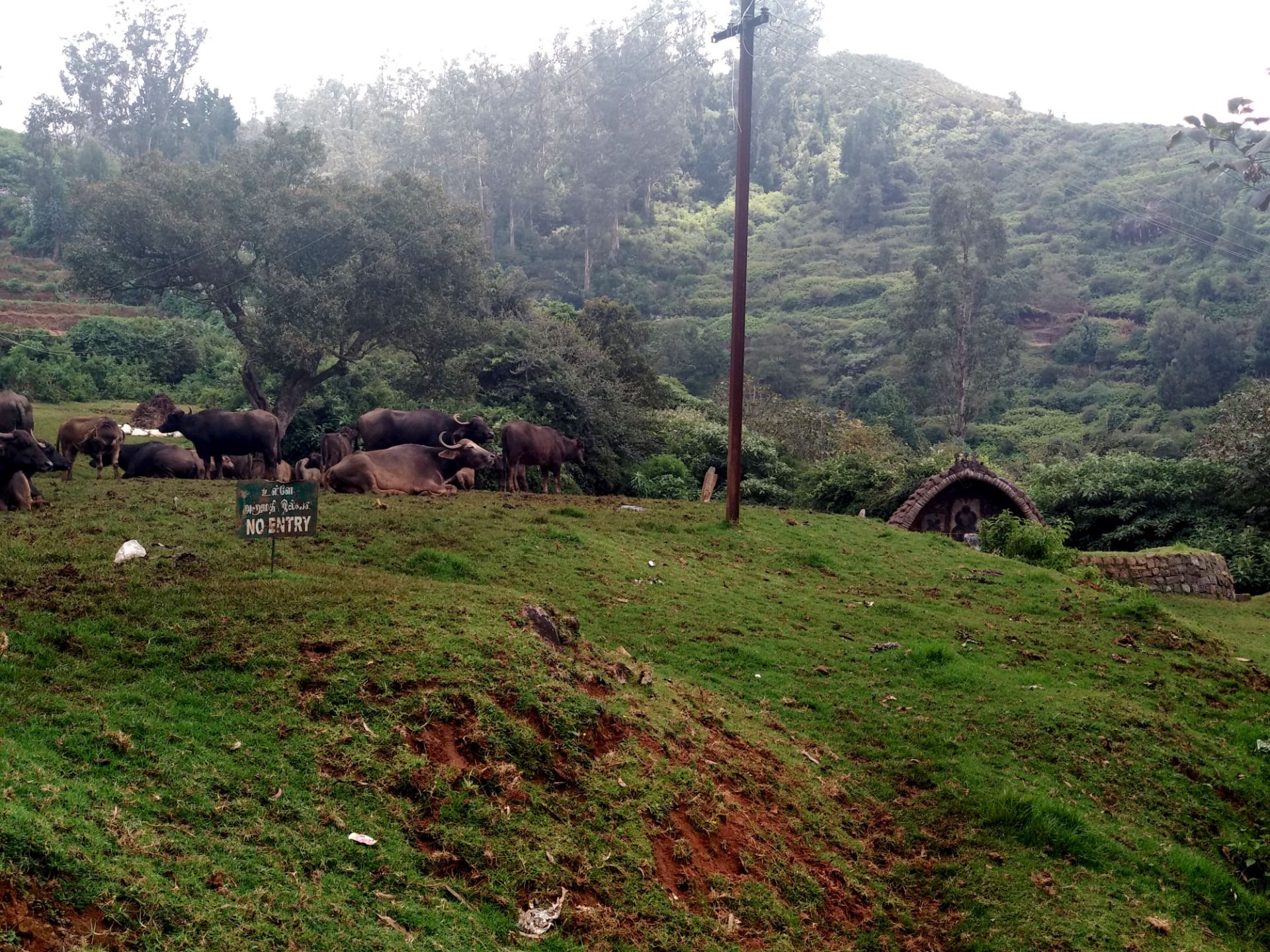
The rule isn't aimed only at outsiders. In the second part of the account, @elsaenroute describes meeting Toda men from another village who had come for a funeral. They said they weren't allowed into this temple either, because they belonged elsewhere. One of them said his own village has three temples where rituals run all year, while the Ooty temple is now used roughly once a year, mostly to keep the tradition going.
The front wall carries carved symbols. In the centre, @elsaenroute noted buffalo horns, a sun and a moon, with many cross-like marks around them. When @elsaenroute asked what they meant, the answer was "it's just like that". That's an honest reminder that a short visit gets you a look at a living practice, not a guided explanation of it.
The village takes trespass seriously. The men told @elsaenroute about a foreign tourist who had walked into the temple without the villagers knowing, and said they had filed a case against him. Take that as the one rule of the visit that can't be bent: the grass in front of the temple is someone else's sacred ground.
Where the Toda huts are in Ooty
There are two places to see a Toda hut, and they serve different purposes.
The model hut inside the Botanical Garden. The Government Botanical Garden, laid out in 1848 and run by the Tamil Nadu Horticulture Department, has a replica hut inside its grounds where Toda clothing and other products are sold. In a separate route guide, @elsaenroute describes it as a close model of the temple. If walking uphill is hard for you, or you mainly want the embroidery, the replica covers most of what you'd come for.
The real mund above the garden. Wikipedia's article on the garden says it is also known for its Toda hill, the Toda mund. This is where the actual temple stands and where Toda families live. Here you can see the temple from a distance and, if people are willing, talk to them.
Other munds exist across the Nilgiris. @elsaenroute heard of Toda villages near Thalakunda and Neri, on the Coonoor side, though they flagged that they weren't sure of the spellings. The Ooty mund is the one a visitor can reach on foot from town.
How to get to the mund (and the route to avoid)
The usual recommendation, and the one @elsaenroute gives after doing it the wrong way, is to go through the Botanical Garden. They paid around Rs. 40 for a ticket in 2019. Fees have changed since and different sites quote different figures, so check the price at the gate.

The directions from inside the garden:
- Walk to the top of the garden on the right-hand side and continue through the tall trees until you reach a spot that joins a small building. The temple and the village are there.
- Or take the exit pathway from the gate up to the top, which also leads to the village.
- Or ask someone at the model hut inside the garden for the way.

The route @elsaenroute warns against starts outside the garden. Locals pointed @elsaenroute and their travel companion toward a "small hike" that turned out to be a concrete path past a transformer. It got steeper and steeper, with cow dung and standing water on the surface. After a rainy week it was muddy, and the smell and the slope left @elsaenroute close to fainting on the way up. It came out at the back of the village, and the residents were puzzled to see anyone arrive that way. It's the path the cattle use to go down and graze. The verdict on that route: "Nobody has to" take it.
The account also shows how unreliable directions were. Shopkeepers near the garden didn't know the way, and online reviews were full of people who had looked inside the garden and failed to find the village. If you get conflicting answers, ask at the model hut.
Is the walk up worth it?
It depends on why you're going, and @elsaenroute lays out the trade-off plainly. If you want Toda embroidery, you can buy it at the model hut in the garden, or in other shops nearby that sell Toda products. If you want to see the temple but walking far is difficult, the replica is a close match.
The mund is worth the climb for one reason: there are people there. Most of what @elsaenroute learned came from conversation. Laxmi, a resident, saw the pair looking lost at the back of the village and introduced them to two of the elder women. Before long there were photos and selfies, and one woman showed the tattoos on her arms and legs. Those tattoos, patterns of circles and lines, were something @elsaenroute saw only on older people; the younger generation didn't seem to have them. The residents spoke Toda among themselves and switched to Tamil for their visitors. The language has no script, @elsaenroute was told, though the children still speak it.
The visit came three days after a funeral, which is why several elders still wore the curled hairstyle seen in old photographs. Normally that style is kept for special occasions, so on most days you won't see it.
Toda embroidery: what it is and what it cost
Outside the hills, the Todas are best known for their embroidered cloth, as @elsaenroute notes. The craft, called pukhoor, is done only by Toda women, according to Wikipedia's article on Toda embroidery: red and black thread on a white cotton base, usable on both sides, with motifs like the sun, the moon and buffalo horns. It received Geographical Indication registration in March 2013.
In the mund, @elsaenroute saw a difference worth knowing before you buy. The shawls made for sale are shorter and single-layered, since buyers want them for the pattern. The one an elder woman wore for herself was much longer, double-layered with an inner lining, and covered in thicker, denser patterns. The women once spun fibre from nettles; the raw cloth now comes from Tirupur.
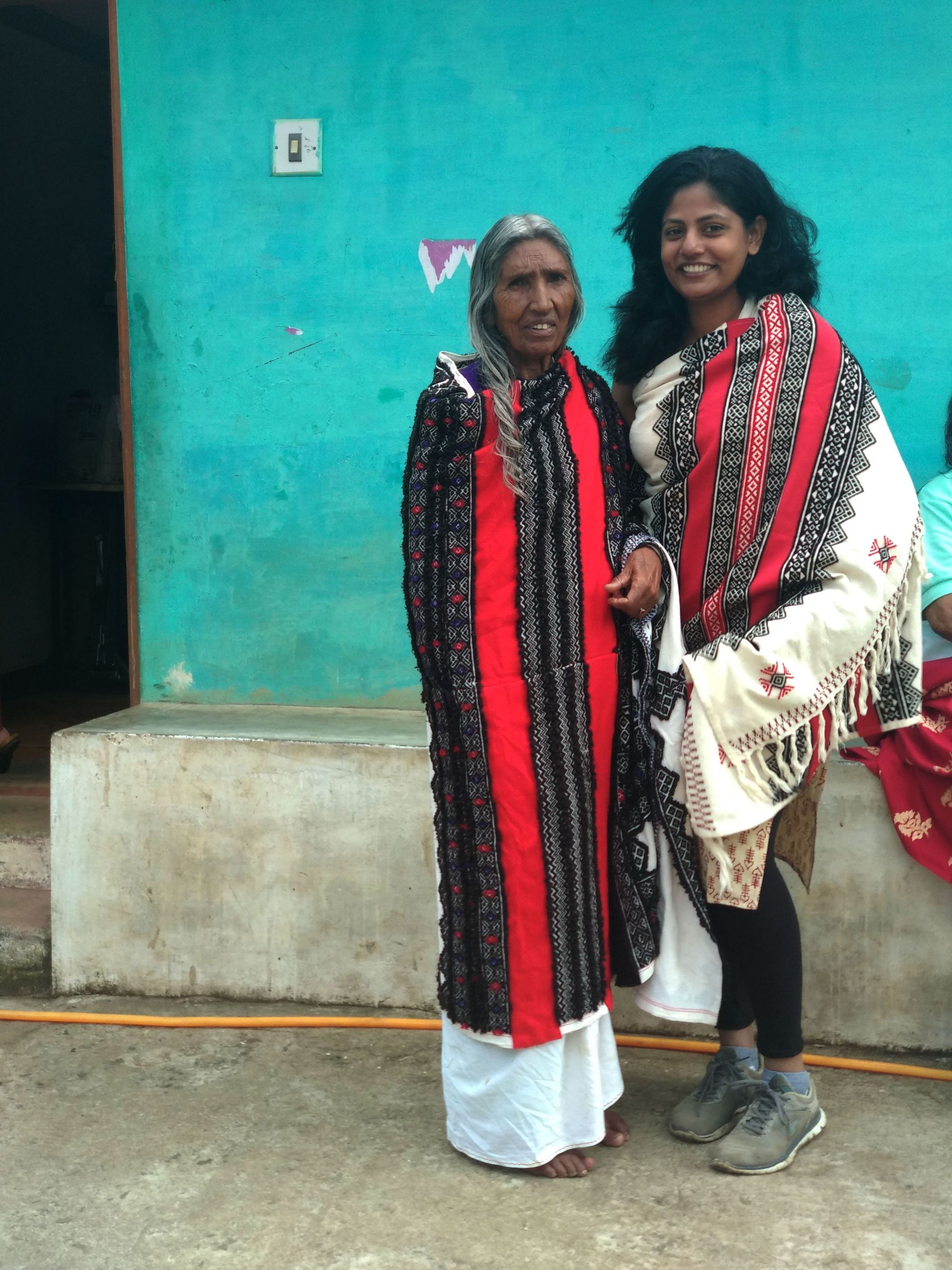
On prices, the most recent first-hand figures in the community posts date from 2019, so treat them as a rough guide. Laxmi laid out the women's work on a mat in her house: sling bags from Rs. 250 up to shawls at Rs. 2,000, plus tablecloths and shawls in other sizes. @elsaenroute was told the price was the same as at the shop inside the garden, because the pieces are collective work by the tribe's women. Buying in the mund doesn't get you a bargain.
If you're staying in Coonoor rather than Ooty, @elsaenroute's Coonoor shopping post describes Red Earth, a small shop selling local and organic products that also stocked Toda-print sling bags, beanies, purses and shawls. The shop had only just opened when @elsaenroute found it, so check it's still trading before you make the trip.
Toda food: butter, rice and a vegetarian table
Toda food comes back to dairy. The Todas traditionally ate a vegetarian diet heavy on milk products, and ghee and butter have long been what they trade. @elsaenroute covers this in the first post and comes back to it in the second.
Laxmi insisted they stay for lunch. It was rice and a potato curry with a lump of homemade butter in the middle, which @elsaenroute singled out as "incredibly soft". It was hospitality they hadn't expected, and you shouldn't arrive expecting a meal either.
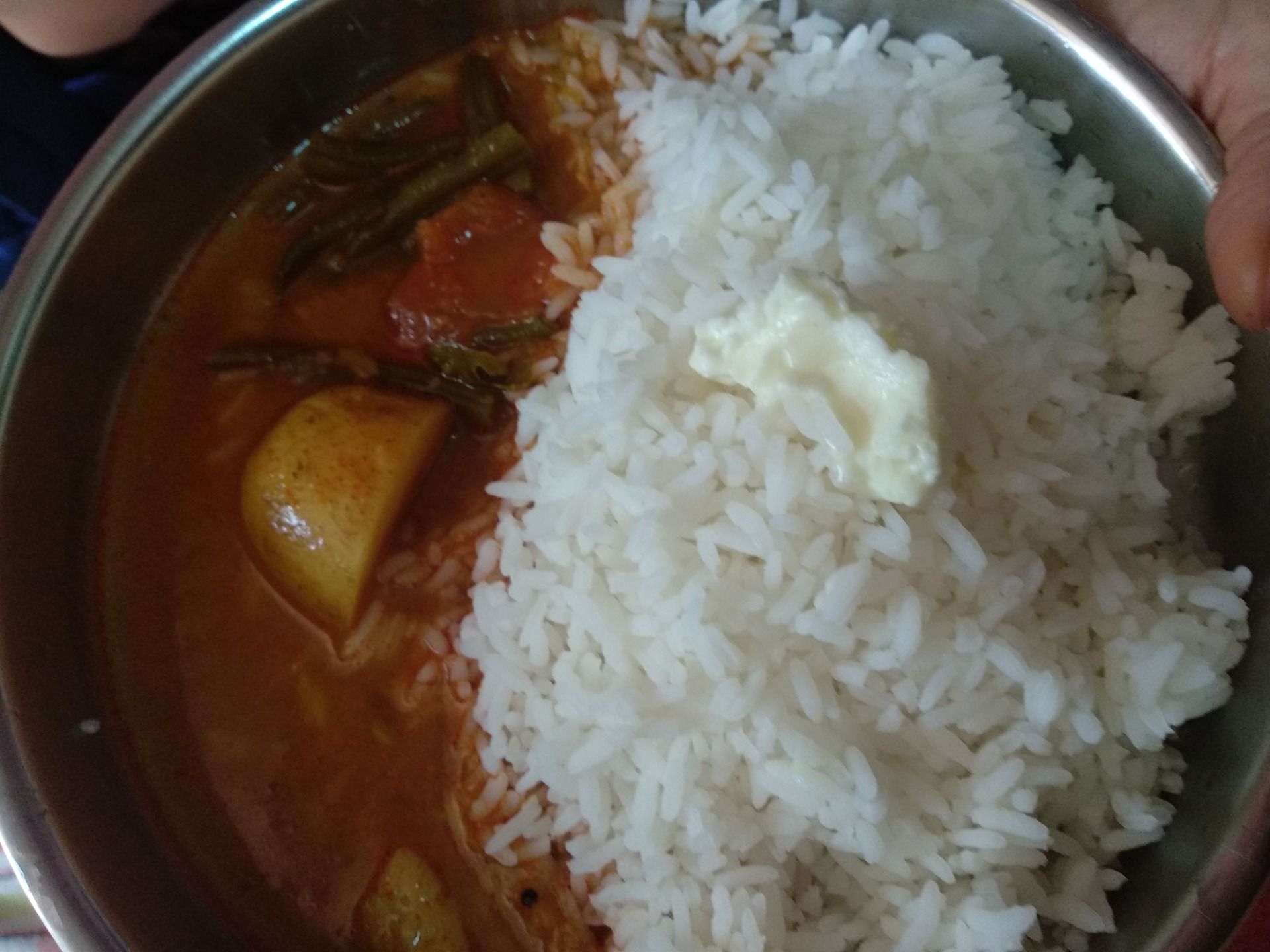
Some food rules still hold. One of the men told @elsaenroute that children from different tribes now study together, but they are "not supposed to share food". When residents offered tea, @elsaenroute and their companion declined politely. That's a reasonable default unless someone insists, as Laxmi later did with lunch.
How to visit without being a problem
Nothing here is a formal code of conduct. It's what the community posts make obvious:
- Stay out of the temple area. Keep behind the "No Entry" board, and remember the stone near it marks a further limit for women. For a clearer view, @elsaenroute found that the open terrace of a community hall near the temple gave a better angle without getting any closer.
- Ask before photographing people. The elders @elsaenroute met were happy to pose, but that was their choice to make.
- Come in through the garden, not up the cattle path. Arriving at the back of someone's village unannounced is awkward for everyone.
- Remember it's a home. Funerals and family visits happen here. The men @elsaenroute met had travelled in for a funeral two days earlier.
There's also a tribal information and research centre in the area, which @elsaenroute found helpful. The post doesn't give its location or hours, so ask locally if you want background before you go up.
Practical details
Where: The Government Botanical Garden is on the lower slopes of Doddabetta in Udhagamandalam (Ooty). The mund is above the top of the garden. Coordinates for the garden are 11.4188° N, 76.7110° E.
Cost: Visiting the mund itself is free as far as the community posts record. The garden ticket, around Rs. 40 in 2019, is the practical way in. Confirm the current fee at the gate.
After rain: Avoid the outside path completely. @elsaenroute climbed it after a rainy week, and the mud, smell and gradient made it the low point of the day.
More of the Nilgiris: More travel writing from the region is on the TravelFeed India destination page.
FAQ
Can you go inside a Toda hut in Ooty?
Not the temple. The dairy temple in the Ooty mund is closed to visitors and to most Toda people; only one chosen man enters during his term of service. The model hut in the Botanical Garden is a shop, and is the closest you can get to a Toda hut interior.
Where is the Toda village in Ooty?
Above the top of the Government Botanical Garden. The easiest route is to buy a garden ticket, walk up the right-hand side through the tall trees, and follow the path to the small building near the temple. Someone at the garden's model hut can point the way.
What do Toda people eat?
The Toda diet is traditionally vegetarian and built around dairy. Butter and ghee are long-standing trade goods. The lunch @elsaenroute was served in 2019 was rice, potato curry and homemade butter.
Is the Toda village free to visit?
The community posts don't record any charge for the mund itself. You pay for the Botanical Garden ticket if you take the recommended route through the garden.
