 Municipal Unit of Nafplio, Peloponnese Region, Greece

Yes, you can see Epidaurus and Mycenae in a single day from Nafplio, and with a car it is a comfortable day. Each site is about 25 minutes' drive from town, Mycenae to the north and Epidaurus to the east, so the day is two short legs with Nafplio in the middle. The part that catches people out is the clock. From November to March, Mycenae closes at 15:30 and Epidaurus at 17:00, so in winter Mycenae has to come first.
This guide is built from what TravelFeed writers recorded at the two sites and in Nafplio between 2015 and 2024, checked against the Greek Ministry of Culture's current listings for hours and tickets. The writers did not all have the same day. One ran out of time and saw only the theatre. Another left Mycenae without seeing a tomb that the ticket already covered. Both mistakes are easy to avoid.
Which site first: Mycenae in the morning, Epidaurus after lunch
The winter timetable decides this for you. The Ministry of Culture lists Mycenae's winter hours as 08:30 to 15:30, while the Sanctuary of Asklepios at Epidaurus stays open 08:00 to 17:00. Start at Epidaurus on a November day and you are racing a mid-afternoon closing at the other end. Start at Mycenae when it opens, drive back through Nafplio for lunch, and you still have the afternoon for the theatre.
From April to October the problem goes away. Both sites run the same summer schedule, 08:00 to 19:00 in April and 08:00 to 20:00 from 2 May 2026, stepping back to 18:00 by the second half of October. In those months the thing to plan around is heat instead. @alexanderfluke reached Epidaurus in September 2015 in the middle of the day, with the temperature at 30°C or more, and left having seen only the theatre: the sanctuary, the stadium and the museum went unvisited. @madeirane, writing about Mycenae in April 2024, thought a summer visit would be worse than the off-season, because there is very little shade on the hill.
So the rule of thumb is simple. Winter: Mycenae first, because of the early close. Summer: whichever you want to see properly goes first, before the heat builds.
What one ticket covers, and what it costs in 2026
Each site is a separate ticket, and prices have gone up a long way. @alexanderfluke remembered paying about €6 at Epidaurus in 2015. The Ministry of Culture now lists both Epidaurus and Mycenae at €20 full price and €10 reduced. The Mycenae listing adds that reduced tickets are sold only from 1 October to 31 May, with only the full ticket from June to September.
The Epidaurus ticket covers the theatre, the wider archaeological site and the museum of the Asklepieion. The Mycenae ticket covers the citadel, the site museum and the Treasury of Atreus, which matters more than it sounds (more on that below).
One way to save money, from the same listings: from 1 November to 31 March, entry to both sites is free on the first and third Sunday of each month. Plan around the closures too. Both sites shut on 1 January, 25 March, 1 May, Easter Sunday, and 25 and 26 December, so a holiday weekend can cost you a site.
Mycenae: start in the museum, and don't miss the Treasury of Atreus
@madeirane went through the site museum before the ruins, and it is a sensible order. The finds from the citadel are there: fragments of inscribed clay tablets, small seals, carved stone. Then you walk the path to the Lion Gate with some idea of what the people behind those walls had.

Expect the gate to be the high point of the citadel itself. @madeirane found it remarkably well kept and the area behind it mostly foundations, with a path that climbs to the palace remains at the top and then drops again past scattered stones. Their verdict was frank: without a guide or some reading beforehand, it is easy to see only "stones, yes, stones". The writers who enjoyed it most came with the myths in their heads. @haydae called Mycenae one of the most mysterious ancient sites in Greece, not the best preserved, but on a rocky hill surrounded by mountains that does a lot of the work.

Here is the easy mistake. @madeirane reached the domed tomb named after Clytemnestra, but did not get to the Tomb of Agamemnon, better known as the Treasury of Atreus, because it sits away from the main complex. It is included in the same €20 ticket. Ask at the ticket office where it is before you set off up the hill, so you don't drive away without it.
Two practical warnings from the same post. The ground is uneven and moving around is awkward, so @madeirane would not bring very young children. And the views are worth stopping for: the citadel looks out over valleys of vineyards and olive trees.
Epidaurus: the theatre, then the sanctuary most people skip
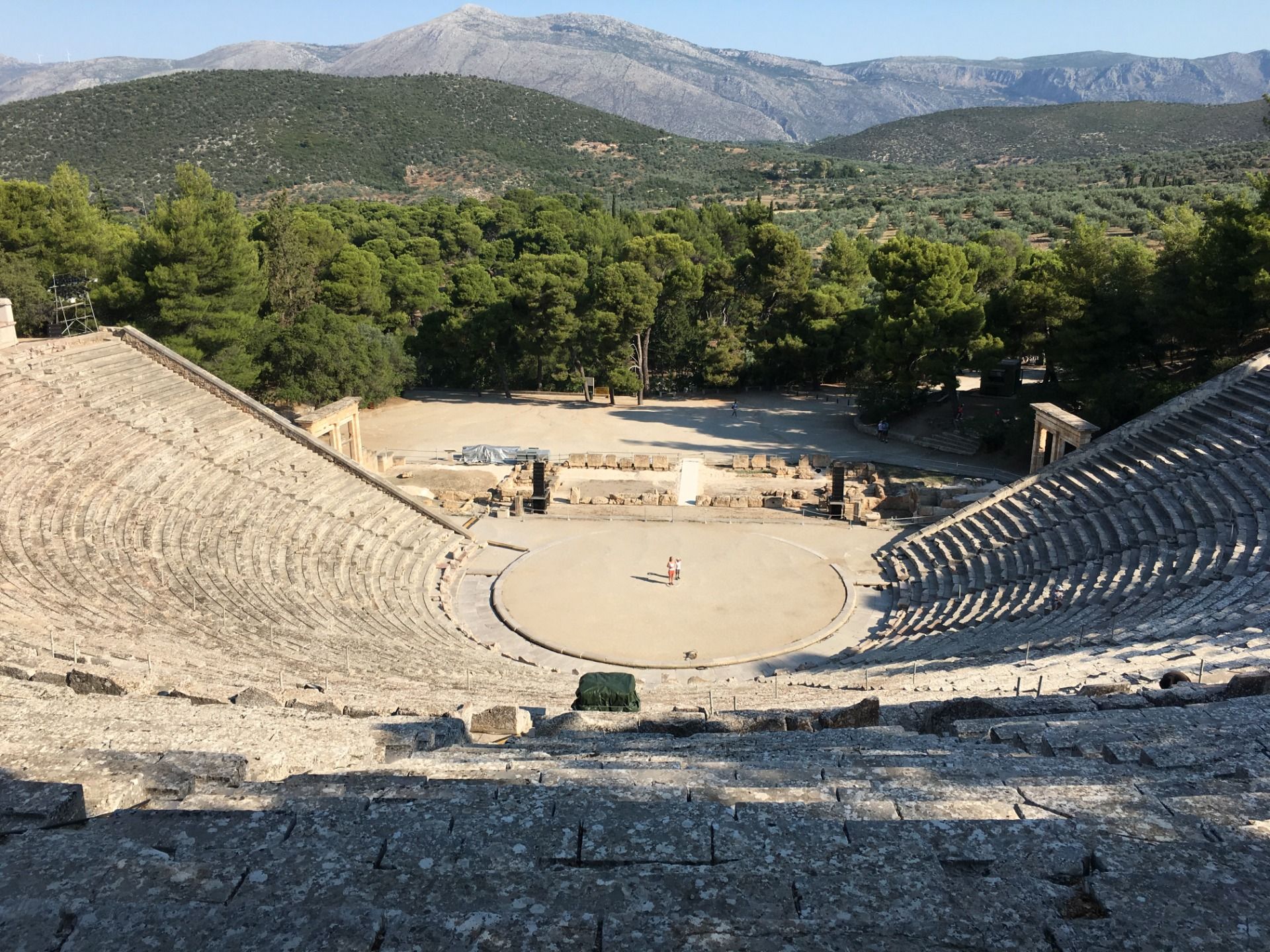
The theatre is the reason most people come, and none of the writers here came away disappointed. @haydae counted the original 34 rows plus the 21 the Romans added, 55 in all, and found it almost untouched. @alexanderfluke gives the history: the architect was Polykleitos the Younger, the theatre was uncovered only in the late 19th century, and it was restored in the middle of the 20th.
Then there is the acoustics test, which is half the fun. @haydae admits it sounded like a tourist trick until they heard it work for themselves. @madeirane, visiting on a Sunday in March 2024, tried the lot: coins, whispers, loud singing. Other visitors were singing to the crowd from the orchestra. Their note is that from the top rows you hear more clearly than you see, because the last rows are very high up. @alexanderfluke watched a group talking quietly in the middle of the orchestra and could still make out the voices from row after row higher up.
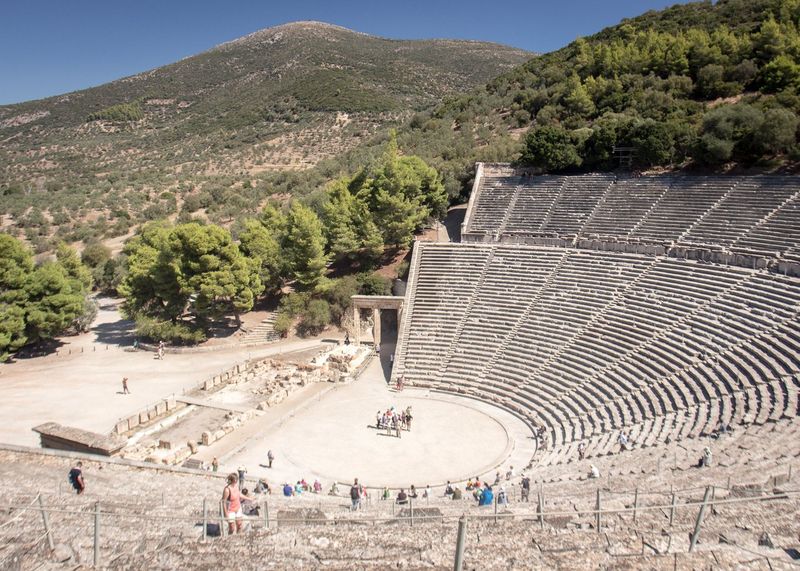
@haydae's advice is to come early in the morning for the theatre if you can, and then not to skip the ruins, which many visitors ignore. Epidaurus was a healing centre before it was a theatre town. Pilgrims came to the sanctuary of Asklepios, the god of medicine, and that wealth paid for the theatre.
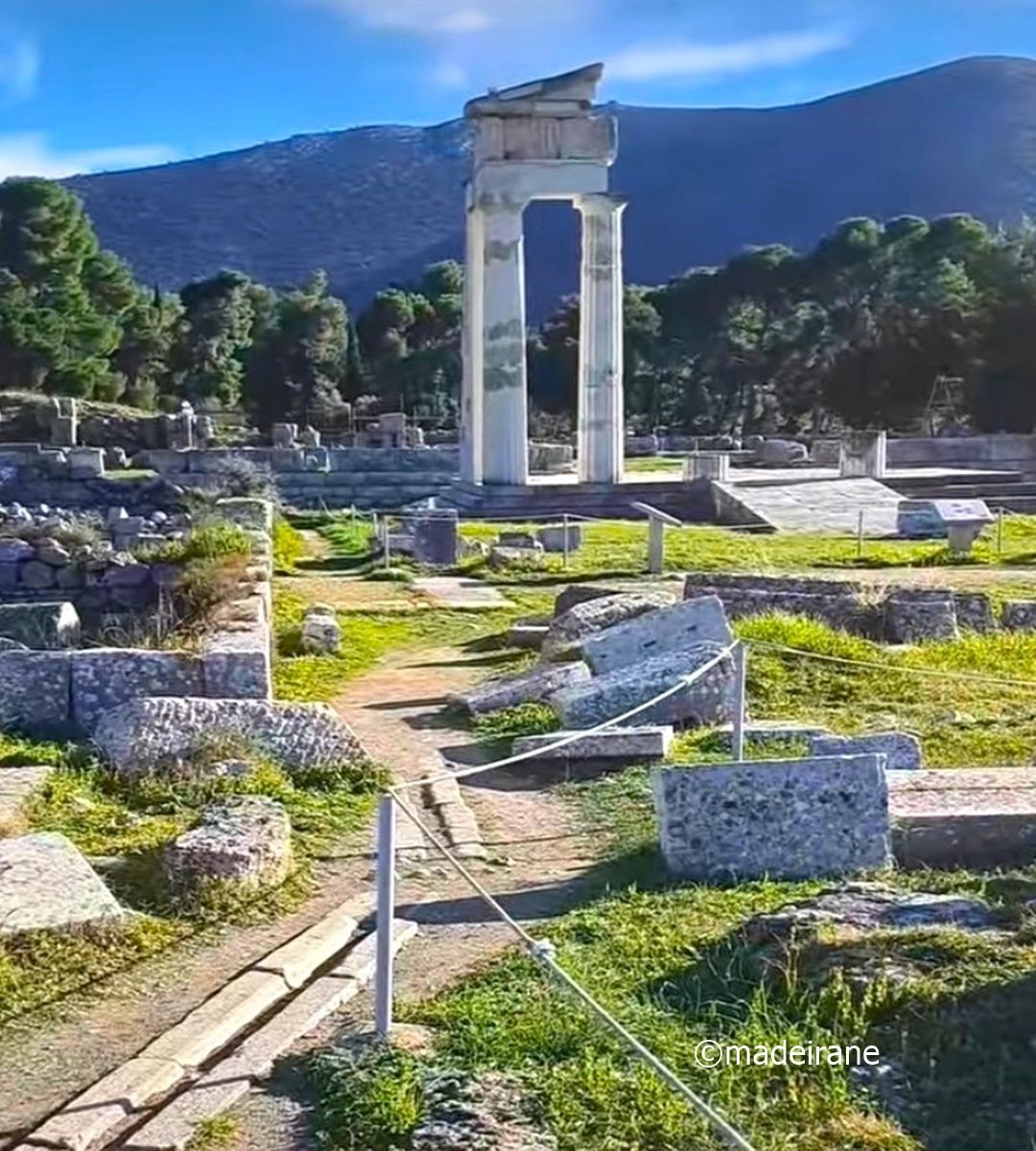
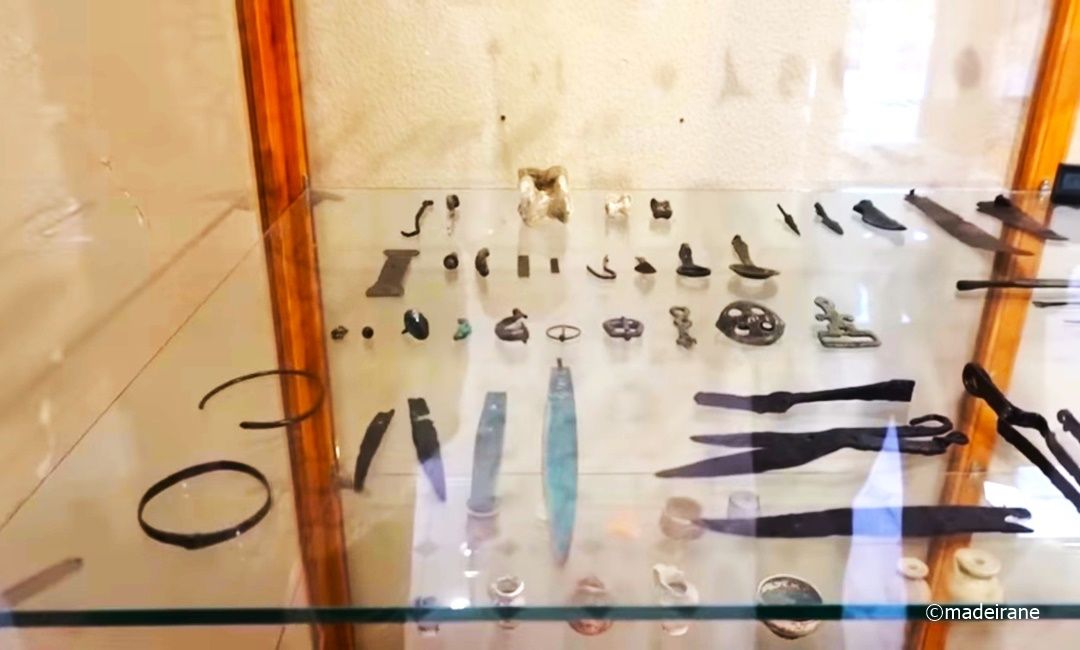
Little is left of the temple itself. @madeirane found mostly paving stones where it stood, plus the remains of a Roman odeon, the abaton where patients slept, and the stadium. The museum at the entrance to the sanctuary is the place to make sense of it all. It is small, three rooms. The first holds ancient medical instruments, lamps, and remedies carved on stone tablets. The second has statues and offerings from cured patients. The third has a model of the temple. Some pieces are casts; the tip from @madeirane is that the copies are easy to tell apart because they are made of lighter marble.
Wear proper shoes. The last piece of advice from @madeirane is closed shoes with grippy soles, because the sanctuary is all loose stones, grass and tree roots. On a map, look for both names, Epidaurus (Epidavros) and the Sanctuary of Asklepios. The theatre also still works as a theatre: @alexanderfluke points out that performances are staged there each summer as part of the Athens festival, which is a reason to check the programme if you are visiting in summer.
Getting there from Nafplio: car or bus
Every writer here who mentions transport drove. @haydae and their travel partner did both sites as day trips from Nafplio on a road trip, each about 25 minutes by car. @alexanderfluke places Epidaurus about 30 kilometres east of Nafplio. If you are driving into Nafplio itself, @madeirane found a large free car park on the waterfront in February 2024, close enough to walk to almost everything in the old town.
Without a car, the regional bus company is KTEL Argolida, which runs services out of Nafplio. None of the writers in this guide took the bus to either site, and we could not confirm the current timetable, so check it at the Nafplio bus station before you build a day around it. A bus day that has to fit both sites around a 15:30 winter close at Mycenae is much harder to make work than a car day. On public transport, splitting them over two days is the safer plan.
Nafplio itself: what to fit around the day trips
Nafplio is a good base because it is worth seeing too. In a February 2024 walk around town, @madeirane counted three fortresses and noted that each could claim to be the city's symbol. Palamidi sits on its hill 216 metres up. Akronafplia, the oldest part of the town, you can walk up to. Bourtzi is a small fort on an island in the bay, reached by boat.
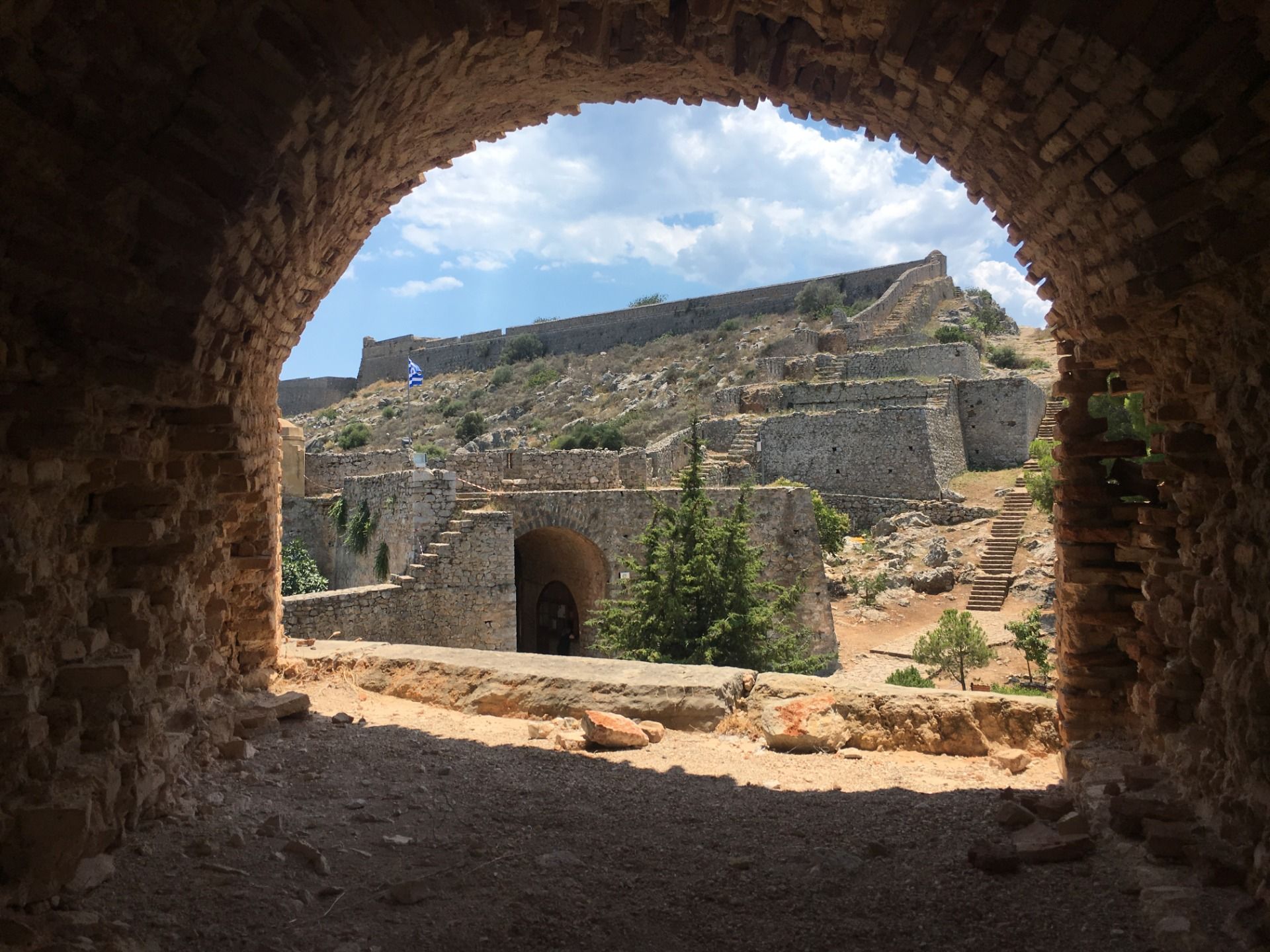
Palamidi is the obvious plan for the morning after. You can drive up, but @haydae climbed the famous 999 steps from town and calls it exhausting on a hot day, with the views as the reward. @madeirane notes that nobody agrees on the count, with figures of 999, 921 and 800 all in circulation. Afterwards, @haydae suggests Arvanitia Beach below the old town. It is gravel, the current can be strong, and parts are reserved for hotel guests, but the rest is free and you can walk to it. For sand, Karathona is about 3 kilometres out and needs a car.
If you have a third day: Monemvasia
@haydae's road trip did not stop at Argolis. It carried on south to Monemvasia, the medieval town built on the slope of a huge rock just off the coast, known as the Gibraltar of the East. It is a different kind of day from the two ancient sites, and @haydae made it an overnight stay rather than a day trip.
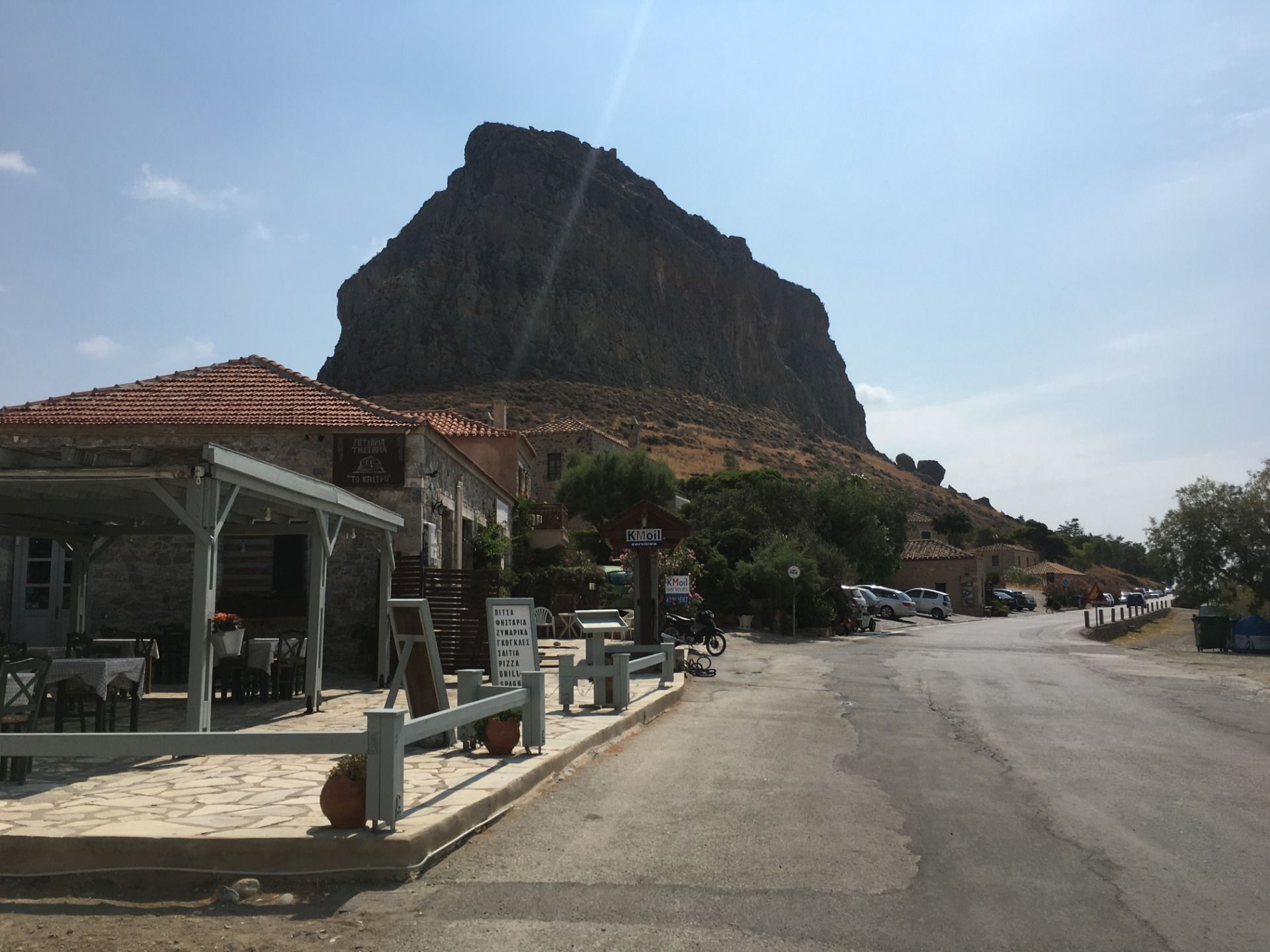
The practical tip holds for anyone driving. They slept in the modern town on the mainland, parked by the hotel, and walked across the short bridge to the rock while cars and tour coaches circled for parking. Inside, the main street was already busy in the early morning, but the side alleys of the lower town emptied out fast, and a path climbs to the ruins of the Agia Sophia church at the top. For more on Greece, see the Greece destination page.
FAQ
Can you do Mycenae and Epidaurus in one day from Nafplio?
Yes, by car. Each site is about 25 minutes from Nafplio, Mycenae to the north and Epidaurus to the east. In winter, go to Mycenae first: it closes at 15:30, while Epidaurus stays open until 17:00. By bus, it is much harder, and two separate days are safer.
How much are tickets for Epidaurus and Mycenae?
Per the Ministry of Culture, each site costs €20 full and €10 reduced; at Mycenae the reduced ticket is sold only from 1 October to 31 May. Entry is free on the first and third Sunday of each month from November to March.
Is the Treasury of Atreus included in the Mycenae ticket?
Yes. The Mycenae ticket covers the archaeological site, the museum and the Treasury of Atreus. The tomb sits apart from the main citadel, so ask at the ticket office where it is before you leave.
What are the winter opening hours at Epidaurus and Mycenae?
The Ministry of Culture lists winter hours of 08:00 to 17:00 at Epidaurus and 08:30 to 15:30 at Mycenae. Both close on 1 January, 25 March, 1 May, Easter Sunday, and 25 and 26 December. The official listings are on the ministry's pages for Epidaurus and Mycenae.
