 Chinchero, Cusco, Peru

Chinchero sits at about 3,762 metres (12,343 ft) above sea level. That's roughly 360 metres higher than Cusco, which is around 3,399 m (11,152 ft). Chinchero is the highest of the stops on a standard Sacred Valley day, and it's usually the first one.
That runs against a piece of advice most Cusco visitors hear: go down to the Sacred Valley first and let your body adjust there. The advice holds for where you sleep. Urubamba, Ollantaytambo and Pisac are all well below Cusco. But the road from Cusco to the valley crosses the high plateau where Chinchero is, so on the way down you first go up. If you've just flown in and Cusco is already giving you a headache, Chinchero won't help.
This guide uses the official elevation figures, CDC guidance on altitude, and posts from TravelFeed writers who took this route. It explains what the height means on the ground and how to plan a valley day around it.
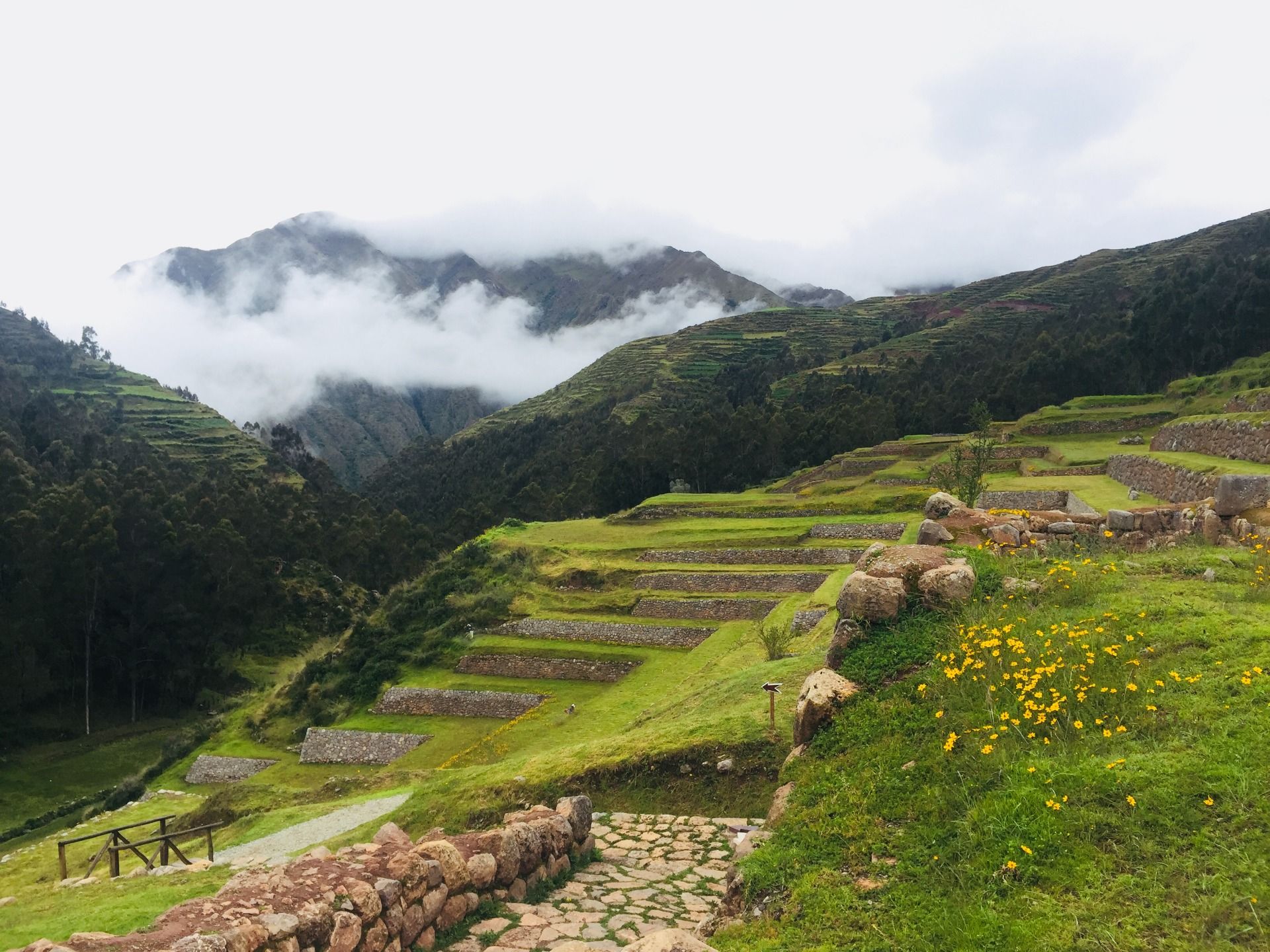
How high is Chinchero compared with Cusco and the valley?
The figures below come from Wikipedia's articles on each place. Sources vary by a few metres depending on whether they measure the town, the district or the ruins, but the order doesn't change:
- Chinchero: 3,762 m (12,343 ft)
- Planned Chinchero airport: 3,720 m (12,200 ft)
- Cusco: 3,399 m (11,152 ft)
- Moray: 3,385 m in the infobox, though the article text puts the plateau at about 3,500 m
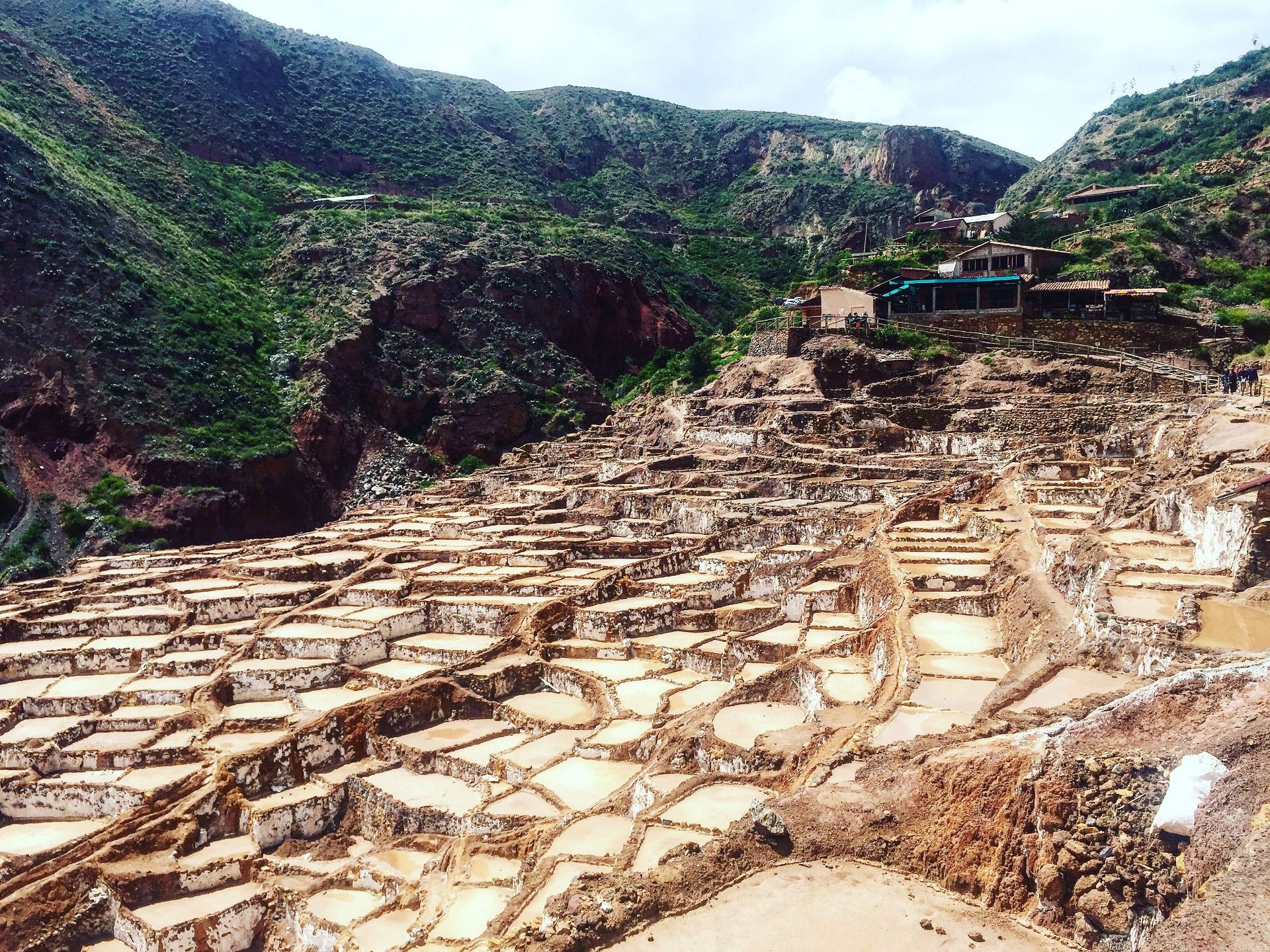
- Salineras de Maras (the salt pans): 3,200 m (10,500 ft)
- Pisac: 2,972 m (9,751 ft)
- Urubamba: 2,870 m (9,420 ft)
- Ollantaytambo: 2,792 m (9,160 ft)
So there are two levels. Chinchero, Moray and the salt pans are up on or near the plateau, within a few hundred metres of Cusco's height. Pisac, Urubamba and Ollantaytambo are down on the valley floor, 400 to 600 metres lower than Cusco and 800 to nearly 1,000 metres lower than Chinchero.
Chinchero is not a peak, just a farming town on high, open ground, so you won't notice the climb from a car window. @hanggggbeeee noticed it on foot, though. Their post on Chinchero says the walk from the parking lot to the site took only a few minutes, but at that altitude "walking was probably the last thing I wanted to do."
Why "acclimatize in the Sacred Valley" still holds
The advice to go down to the valley first is about sleeping altitude. The CDC's Yellow Book chapter on high-altitude travel lists Cusco among high-altitude destinations. It notes that in places like Cusco, travelers can sleep at lower elevations before going higher, which may mean they don't need medication. It also gives the Wilderness Medical Society's rule: once above 3,000 m, raise your sleeping altitude by no more than 500 m per night.
A first night in Urubamba or Ollantaytambo, at under 2,900 m, follows that rule well. A first night in Cusco, flying in from sea level in Lima, doesn't. The rule is about where you sleep, though, not where you stand at lunchtime. A couple of hours in Chinchero on the drive down is a short daytime visit to a higher altitude. That's a different thing from sleeping up there.
What matters is how you feel when you arrive. The CDC says symptoms of acute mountain sickness usually start 2 to 12 hours after reaching high altitude, often during or after the first night. Headache is the main symptom, usually with something else: loss of appetite, dizziness, fatigue or nausea. If you landed at 9am and take a valley tour the same day, you'll be standing in Chinchero right when symptoms tend to start. The CDC also advises only mild exercise and no alcohol for the first 48 hours. If symptoms get worse despite rest, the advice is to descend.
None of this is medical advice for your own case. If you have heart or lung problems, or you're thinking about acetazolamide, talk to a doctor before you go.
What a Sacred Valley day tour does to your altitude
@hanggggbeeee booked a full-day valley tour from Cusco and wrote about it stop by stop. The tour went Chinchero, Moray, Maras, Ollantaytambo, Pisac, and according to @hanggggbeeee, any Sacred Valley day tour "normally comes up with almost same sequence of stops."
Put that route next to the elevation list and you get a falling line with one hump at the start:
- Leave Cusco at about 3,400 m.
- Climb onto the plateau to Chinchero, at about 3,760 m: the highest point of the day, early in the morning.
- Moray, at roughly 3,400 to 3,500 m, where the walking means stairs.
- The Maras salt pans at about 3,200 m.
- Down to Ollantaytambo at under 2,800 m, then Pisac at under 3,000 m.
- Back up to Cusco to sleep.
If Cusco is your base, you spend the day above your bed only at the start. That's fine on day three of a trip. On day one, the first two stops are the hard part, and the last leg back up to Cusco is what you'll feel overnight.
What there is to walk at Chinchero
The physical demands at Chinchero are fairly small, which is one reason it works as a first stop. In a post on Chinchero, @hanggggbeeee calls the site "not very extensive": a colonial church built on top of Inca walls, a set of terraces, an open pasture between them, and local women selling textiles. On the day of that visit, the church was closed to the public and could only be seen from outside. The village market was shut too. @hanggggbeeee spent about an hour in Chinchero in total and thought that was enough.
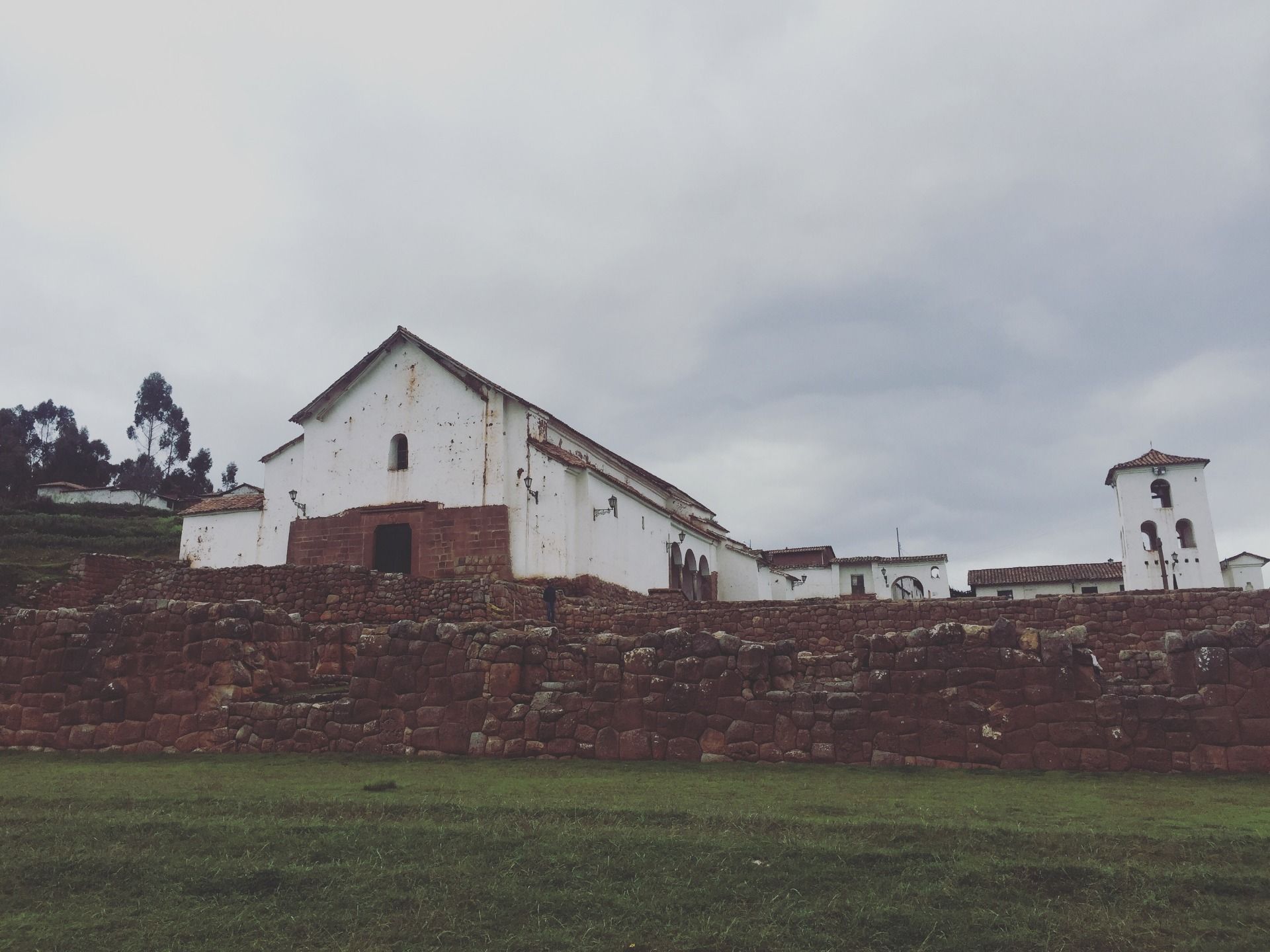
The terraces are the one place where the altitude matters. The best view, by @hanggggbeeee's account, was from down in the pasture, looking back up at the terraces. Getting there means walking down a stone path and then coming back up it. At 3,760 m on your first day, take the climb back up slowly and stop when you need to.
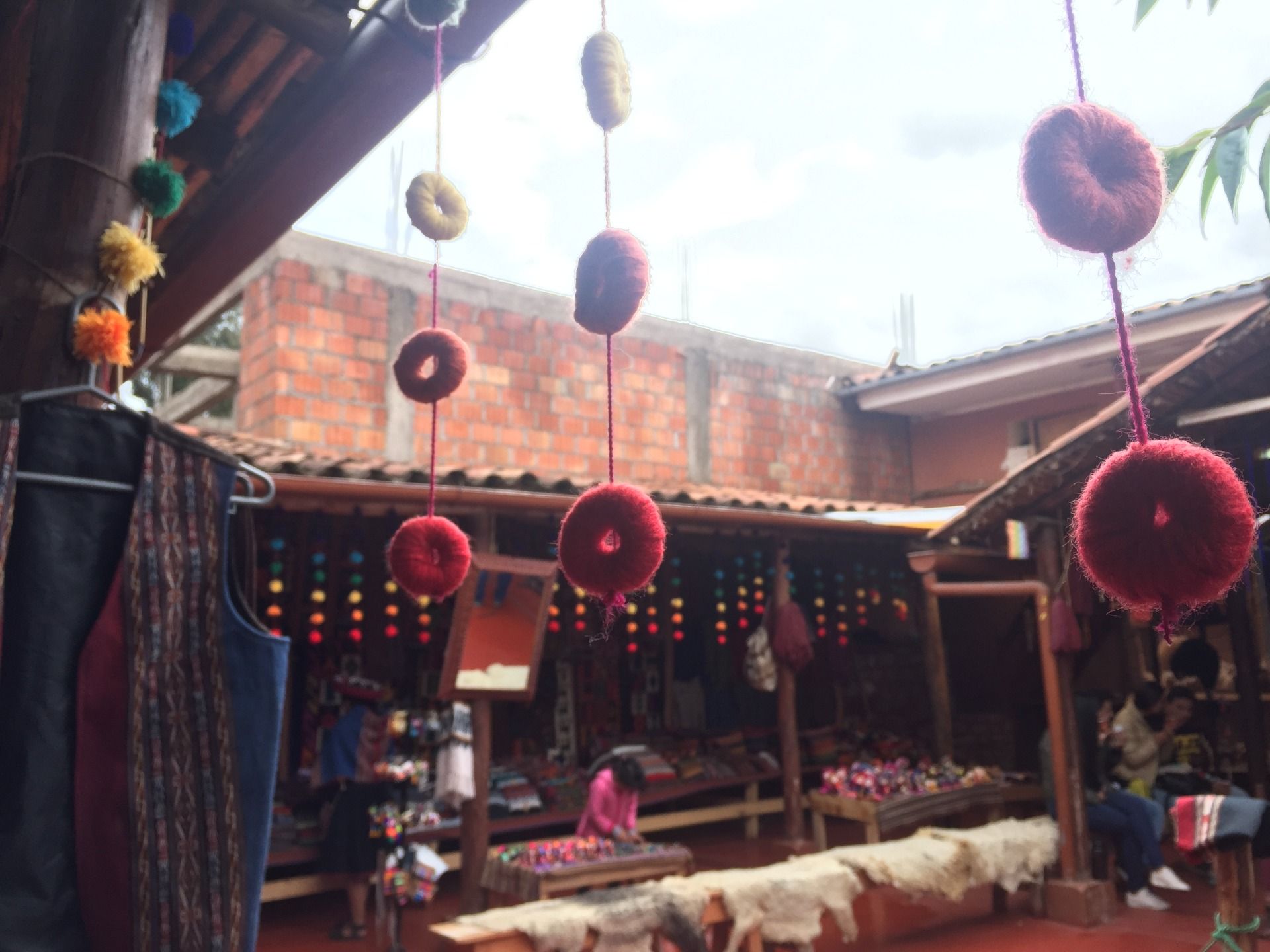
Tours also stop at a weaving centre in Chinchero. The one on @hanggggbeeee's tour was Centro Textil Acllas, where the group sat down, got a cup of mint tea and watched a demonstration in Spanish and English. A local woman washed wool with soap made from a plant, then dyed it with natural colours. Purple corn gave a dark red that a few drops of lemon juice turned bright red. @hanggggbeeee admits the stop exists partly to sell textiles, but says nobody pushed anyone to buy and the women were happy for visitors to take photos. Sitting down with a hot drink is no bad thing at this height.
Moray and Maras: lower, but more stairs
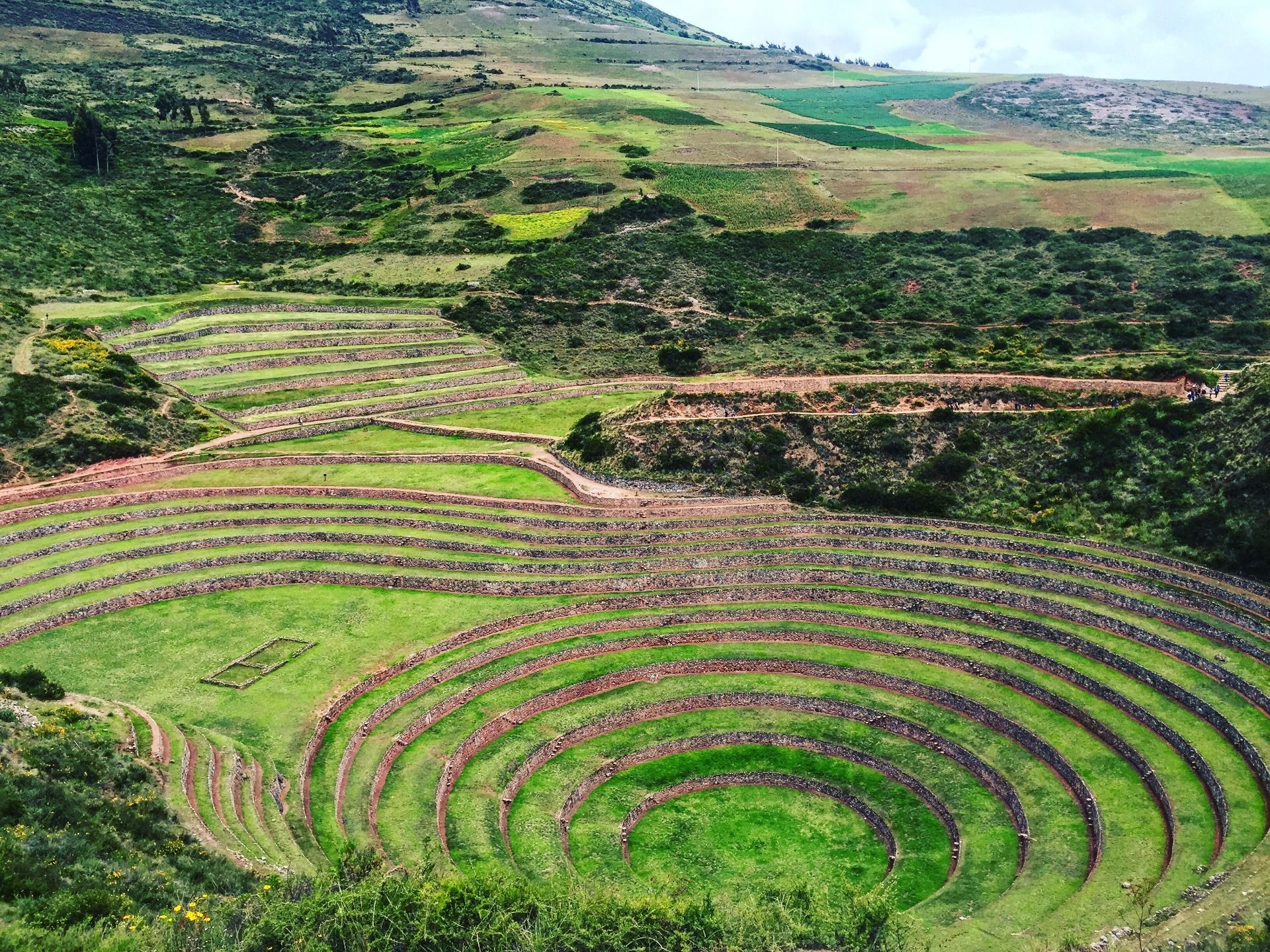
After Chinchero, tours drop a little to Moray and the salt pans. These are lower than Chinchero but still around Cusco's height, and there's more walking. In the follow-up post on Maras and Moray, @hanggggbeeee describes the walk at Moray. A path and stairs go down through the circular terraces, each level about two metres below the last. Altitude sickness stopped @hanggggbeeee from going all the way to the bottom circle, because the climb back up "would be too much for me."
Wikipedia gives the largest of Moray's depressions a depth of about 30 metres. That's like climbing out of a ten-storey building at around 3,400 m. If your head is pounding, look down into the circles from the rim. The Moray photos in @hanggggbeeee's post were taken from up there.
The salt pans at Maras are the lowest of the plateau stops, at about 3,200 m. Wikipedia counts roughly 4,500 salt pools on the hillside. They're worked by around 400 families from Maras and Pichingoto, through a company owned by local residents. @hanggggbeeee's tip is to dip a finger in the channel water and taste it. The spring that feeds the pans is said to be saltier than seawater. The warning that comes with it: not all the white crust on the rocks is salt. Some of it is just rock.
Coca tea, and where Cusco buys it
Coca is the local answer to altitude sickness, and in Cusco it's sold openly. @waybeyondpadthai visited Mercado San Pedro, Cusco's central market, and found stalls selling fresh and dried leaves, powder, tea bags and coca candy. They report that the tea tastes like ordinary tea. In 2020, a bag big enough for a month or two of tea cost about S/2, and a bag of candies was S/5 to S/10. Expect those prices to have gone up since.
Treat the tea as a warm drink, not as a substitute for sleeping low and going slow. And as @waybeyondpadthai points out, coca is illegal in most countries, so finish the bag before you fly home.
Ordering your days: Chinchero first or last?
There are three usual ways to plan this. From easiest on your body to hardest:
The gentlest is to go straight down to the valley and see Chinchero on the way back. From Cusco airport, go directly to Urubamba or Ollantaytambo and sleep there, below 2,900 m. Spend a few days in the valley, do Machu Picchu from Ollantaytambo, and stop at Chinchero (and Moray and Maras, if you like) on the drive back up to Cusco. By then you've had several days at altitude, and Chinchero is just a slightly higher stop on the way to the city. This is the order the CDC's sleep-low advice points to.
The middle option is to base yourself in Cusco but wait before the day tour. If you're staying in Cusco the whole time, spend the first two days on easy walking in the city. The Plaza de Armas is the obvious place to start. In a post on the plaza, @hanggggbeeee describes going back again and again from an Airbnb within walking distance. The post mentions the benches, the Inca walls in the side streets, and a lot of vendors, who weren't overly pushy and could be sent off with a "No, gracias." A square with plenty of benches is exactly what the first 48 hours call for. Book the valley tour for day three or later.
The one to avoid is a day tour straight after arrival. You fly in from sea level, the tour picks you up the next morning, and you're at the highest point of your trip so far before you've slept a full night at altitude.
If you're doing it yourself rather than on a tour, getting down to the valley floor is cheap. @waybeyondpadthai took a colectivo (shared van) from Cusco to Ollantaytambo. In their Ollantaytambo post they say it took about two hours, cost S/6 to S/8 for a shared ride with 10 to 15 people, and S/60 for a private car for up to four. Vans leave from the colectivo terminal for Urubamba and Ollantaytambo in Cusco. Those are 2020 prices, so expect more now. They describe Ollantaytambo as a really small town, with wood-oven pizza, alpaca burgers by the river, and the station for trains to Machu Picchu.
Tickets: the Boleto Turístico covers Chinchero and Moray, not Maras
Chinchero's archaeological park and Moray are on the Boleto Turístico del Cusco, the regional combination ticket. According to the official COSITUC price list, the partial ticket for Circuit III (Valle Sagrado) covers four sites: Ollantaytambo, Pisac, Chinchero and Moray. It costs S/70 for foreign visitors and is valid for 2 days. The full ticket covers all three circuits, costs S/130 and is valid for 10 days. The Maras salt pans aren't on the Circuit III list, so the boleto doesn't cover them.
The 2-day validity matters for the altitude question. With a partial ticket, you can't see Chinchero and Moray on your way down and then Pisac and Ollantaytambo a week later. If you're going to split the valley across a longer trip, which is the gentlest way to do it, the 10-day full ticket is the one that fits.
One more thing for the future: Peru is building a new international airport at Chinchero, at 3,720 m. Wikipedia currently lists its planned opening as late 2027 to early 2028. When it opens, some visitors will land higher than Cusco, and the "sleep low first" advice will matter even more. For now, flights still come into Cusco.
For more of the region, see TravelFeed's Peru destination page.
FAQ
What is the altitude of Chinchero?
Chinchero is at about 3,762 m (12,343 ft) above sea level, the figure Wikipedia gives for the district. Travel guides quote between 3,725 m and 3,765 m depending on where they measure. It is the highest regular stop on a Sacred Valley tour.
Is Chinchero higher than Cusco?
Yes, by roughly 360 metres. Cusco is at about 3,399 m (11,152 ft). Chinchero is on the plateau between Cusco and the valley, so on the usual tour route you go up to Chinchero before you go down to Urubamba, Ollantaytambo or Pisac, which are all below 3,000 m.
Is Chinchero worth visiting if you're struggling with the altitude?
The site itself is small and doesn't take much effort. @hanggggbeeee spent about an hour there, which was enough. The only real climb is back up from the terraces. If you feel unwell on your first day, it's better to visit Chinchero on the way back up from the valley later in your trip. For a full account of the site, see @hanggggbeeee's Chinchero post.
Does the Boleto Turístico include Chinchero?
Yes. The official COSITUC price list includes the Chinchero archaeological park in Circuit III (Valle Sagrado), together with Ollantaytambo, Pisac and Moray. The partial ticket for Circuit III is S/70 for foreign visitors and is valid for 2 days.
