
 Nepal
Nepal
Nepal Yatra – Where Every Step Feels Like a Prayer, and Every Path Whispers Peace

Some journeys take you across borders. But a Nepal Yatra takes you beyond the surface—deep into silence, simplicity, and something sacred. It’s not just a trip to the Himalayas. It’s a slow unfolding of faith. A quiet transformation in the lap of nature. A sacred walk through timeless temples, living legends, and humble hearts.
From the ghats of Pashupatinath to the shadow of Mount Everest, from Lumbini’s peace to Janakpur’s devotion—Nepal is a yatra that walks beside you long after your feet return home.
Why Nepal Yatra Is More Than a Trip – It’s a Journey of Soul and Silence
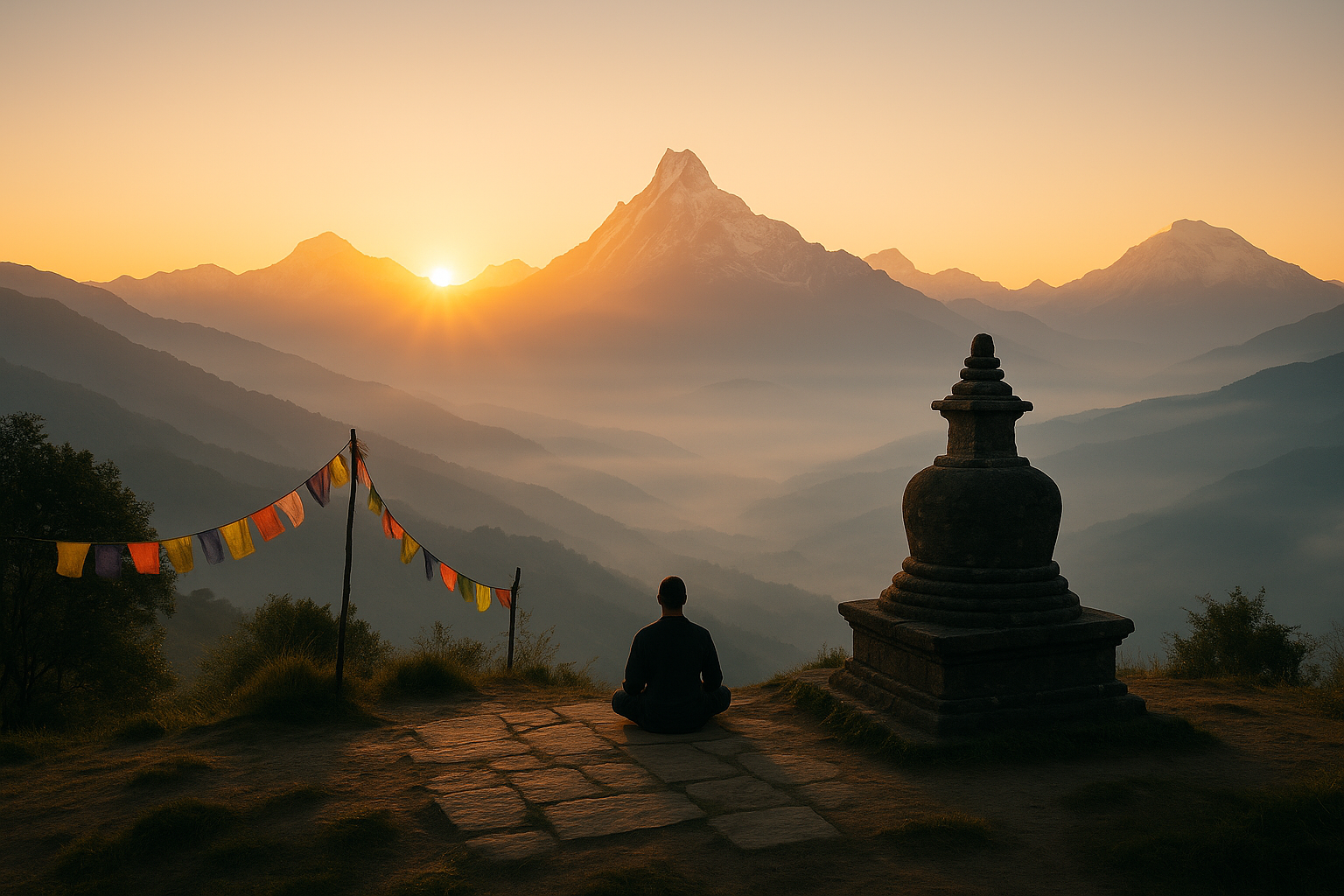
In Nepal, you don’t just see places—you feel them breathe. The air here carries incense and snowflakes. The skies don’t just stretch—they bless. The people don’t just live—they believe.
There’s something about Nepal that pulls you inward. Maybe it's the way prayer flags flutter between mountain peaks. Or the way monks chant before sunrise. Maybe it's the way strangers fold their hands in Namaste, making you feel like you've arrived—not just physically, but spiritually.
What Makes Nepal a Timeless Yatra Destination for Every Seeker
Whether you’re a pilgrim, a poet, a peace-seeker, or a wanderer, Nepal gives you space to pause. Here, spirituality isn’t performed—it’s lived. In quiet temples, forest monasteries, mountain trails, and humble homes.
Nepal holds within it the wisdom of the East and the grace of the divine, calling people of all faiths, ages, and dreams.
Spirituality, Simplicity, and Sacred Landscapes That Speak Without Words
Top Spiritual Destinations That Define the Essence of Nepal Yatra
Pashupatinath Temple – Where Life and Death Coexist Along the Bagmati

This is not just a temple—it’s the beating heart of Hindu Nepal. One of the holiest Shiva shrines, Pashupatinath sits by the Bagmati River, where funeral pyres burn beside wedding rituals, showing that life and death are just two sides of the same prayer.
Here, sadhus sit under peepal trees, bells echo endlessly, and the air smells of sandalwood and moksha.
Muktinath – The Temple at the Edge of Heaven and Faith

Nestled at 3,800 meters in the Trans-Himalayas, Muktinath is a sacred site for both Hindus and Buddhists. To bathe in its 108 ice-cold spouts is to cleanse more than the body—it cleanses lifetimes of karma.
This is not a tourist stop. It is a test of endurance and surrender, offering the kind of peace that can only be earned.
Janakpur – Birthplace of Sita and the Story of Dharma in Daily Life

Janakpur isn’t just historical—it’s epic. The place where King Janaka discovered baby Sita while ploughing his field. The city where Ram broke Shiva’s bow and the idea of love rooted in dharma was born.
Every corner of Janakpur still hums with Maithili music, Ramayana murals, and women offering bangles at Janaki Mandir, as if time stood still in devotion.
Lumbini – The Birthplace of Buddha and the Beginning of Peace

Here, silence is not empty—it is sacred. Lumbini, the birthplace of Siddhartha Gautama, radiates a stillness that invites you inward. Walk through the Maya Devi Temple. Sit by the pond where Buddha’s mother bathed. Hear nothing but the wind and birds. You’ll realize that peace isn’t an idea—it’s a presence.
Other Sacred Sites – Manakamana, Gosaikunda, Bouddhanath, Swayambhu
- Manakamana – The wish-fulfilling goddess atop a hill, reached by a thrilling cable car ride.
- Gosaikunda Lake – A glacial jewel high in the mountains, believed to be created by Lord Shiva.
- Bouddhanath & Swayambhunath – Stupas where eyes of wisdom gaze over the city, watching your spirit awaken.
Natural Wonders That Turn Your Yatra into a Himalayan Dream
Pokhara – Mirror Lakes, Mountain Shadows, and Peaceful Mornings

Wake to the reflection of the Annapurna Range in Phewa Lake. Take a boat ride under a sky full of blessings. Meditate at World Peace Pagoda, or simply sip coffee by the lakeside, feeling gratitude rise like the sun.
Pokhara is where nature, leisure, and faith blend seamlessly.
Nagarkot – Where the Sky Touches Prayer and the Sun Rises on the Soul

30 km from Kathmandu, Nagarkot is a hilltop sanctuary where you’ll find the most peaceful sunrise in Nepal. Watch as golden light slowly reveals the Himalayas—from Everest to Annapurna—as if the universe is bowing before you.
Annapurna & Everest – Trekking Routes That Test Your Body, Strengthen Your Spirit

These treks aren’t just for mountaineers. They’re for anyone willing to face themselves in silence.
Every step is a prayer. Every ridge is a reminder. Every snowfall is a surrender. In the Himalayas, you lose your ego and find your essence.
Chitwan – From Forests of Silence to Rhinos and Rituals

Chitwan isn’t just about safaris—it’s where nature and spirituality meet. Spend the evening at the Tharu cultural center, or float on a canoe under the setting sun as birds sing lullabies to the jungle.
Cultural Encounters That Make Nepal Yatra a Living Heritage Trail
Bhaktapur & Patan – Walking Through Living Museums of Wood, Stone, and Worship

These two ancient cities are not ruins—they are rhythms. Bhaktapur’s Durbar Square feels like a scene from another century, with carved temples, artisan alleys, and bronze bells echoing old mantras. Patan, with its golden windows and hidden courtyards, invites you to slow down and listen to stones that still remember gods.
Here, every home is a shrine. Every artisan is a storyteller. Every chisel mark on wood whispers a prayer.
Maithili, Newari, Sherpa, and Tamang Cultures – Diversity Woven in Devotion

In Nepal, unity doesn’t erase diversity—it celebrates it.
- The Maithili women paint devotion on walls.
- The Newars cook festivals into feasts and architecture into offerings.
- The Sherpas carry not just loads, but legends.
- The Tamang sing ancestral songs that echo through forests.
Nepal’s strength lies in its cultures rooted in karma, customs, and collective soul.
Nepal’s Festivals – Living Celebrations of Gods, Seasons, and Stories

Every month, some corner of Nepal dances in faith.
- Tihar lights up homes like hearts.
- Holi bursts with playful devotion.
- Buddha Jayanti is a day of calm reverence.
- Indra Jatra, Gai Jatra, Makar Sankranti—each one ties people to seasons, stories, and stars.
These aren’t performances—they are living traditions, keeping gods and generations close.
Local Art, Food, Music – Spirituality Beyond Temples

- Listen to a flute played by a boy in Pokhara, and you’ll feel a breeze in your chest.
- Taste a handmade yomari in Patan, and your tongue will remember joy.
- Watch a Maithili mural unfold on a wall in Janakpur, and you’ll witness prayer in color.
In Nepal, art is devotion. Food is offering. Music is meditation.
Planning Your Nepal Yatra – The Soulful Traveler’s Guide
When to Go – Best Seasons for Spiritual Energy and Clear Skies

- Autumn (Sep–Nov): Crystal-clear skies, festivals, and fresh air. Ideal for both trekking and temple visits.
- Spring (Mar–May): Rhododendron forests in bloom, moderate weather, and peaceful vibes.
- Winter (Dec–Feb): Chilly mornings but fewer tourists—perfect for quiet seekers.
- Monsoon (Jun–Aug): Lush and green, ideal for offbeat spiritual travelers (with caution).
Each season brings its own rhythm of reflection.
Entry Requirements, Permits & Local Customs to Respect

- Indian citizens can enter without a visa, but carry valid ID (passport/voter ID).
- Permits may be needed for treks (e.g., TIMS, ACAP, Annapurna, or Everest regions).
- Always remove shoes before entering temples. Dress modestly. Greet elders with Namaste and folded hands.
In Nepal, respect is the real currency.
How to Travel Within Nepal – Flights, Buses, and Faith-Filled Footsteps

- Domestic flights are quick but subject to weather.
- Tourist buses and jeeps connect major towns.
- Walking, especially in spiritual places, is not slow—it’s sacred.
Let your pace match your prayer.
Choosing the Right Yatra Package – Budget, Mid, and Luxury Options

- Budget: Ashram stays, shared jeeps, local meals – under ₹15,000 for 5–6 days
- Mid-range: Boutique hotels, private transport – ₹25,000–₹35,000
- Luxury Yatra: Wellness resorts, helicopter to Muktinath – ₹70,000+
Focus less on money, more on meaning.
Where to Stay During Your Yatra – From Ashrams to Himalayan Homestays
Kathmandu & Pokhara – Peaceful Hotels, Retreat Centers, Monastery Guesthouses
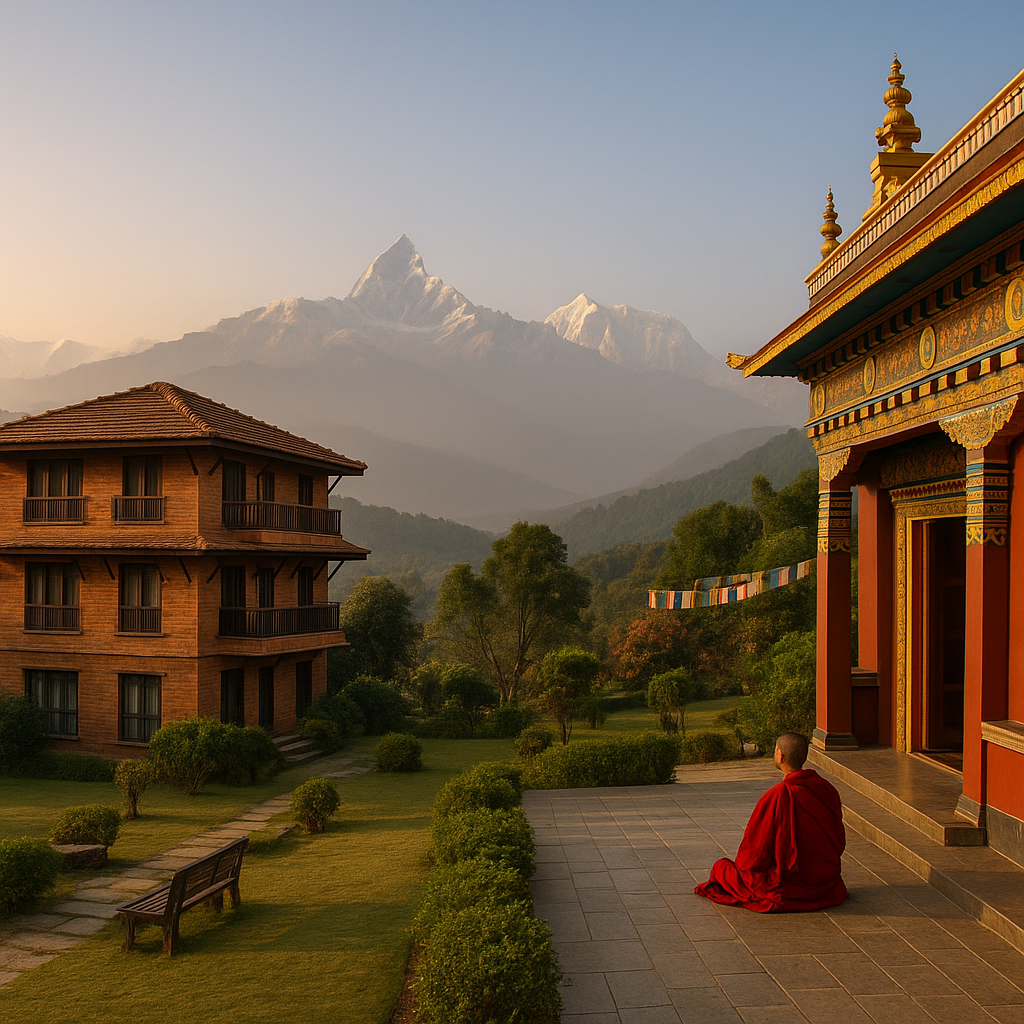


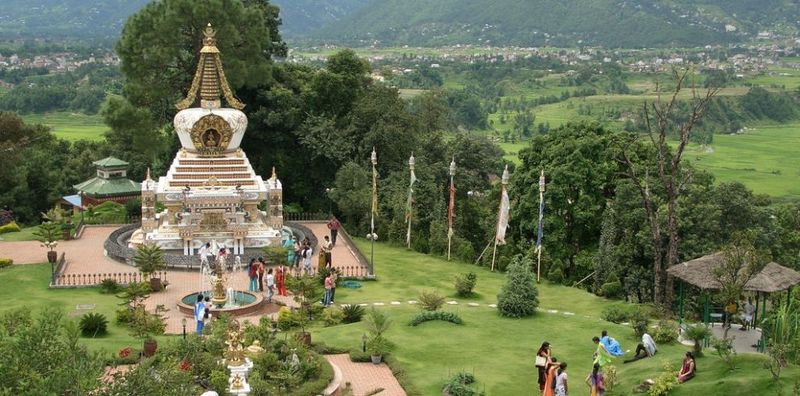

- Kopan Monastery (Kathmandu) – For those seeking silence and self-inquiry
- Pema Thang Guesthouse (Pokhara) – Simple, spiritual, and sunrise-friendly
- Shambaling Hotel (Bouddha) – Tibetan touch with tranquil energy
Staying in Villages – Living the Slow, Spiritual Life with Locals

Nothing teaches you more than waking up to a rooster, praying under a tree, and eating food made from faith. Stay with locals in Ghandruk, Jomsom, or Chitwan and you'll learn that real yatra is in shared smiles.
Ashrams, Meditation Retreats, and Yoga Centers for Deeper Transformation

- Vipassana Centers in Lumbini & Kathmandu
- Tushita Meditation Centre
- Nepal Yoga Home – For yogis and seekers alike
These places offer inner silence, not just outer comfort.
What to Expect, What to Carry, and How to Book Authentically
- Carry warm clothes, reusable bottles, spiritual texts, and humility
- Book through verified sites or direct calls to ashrams
- Always ask: “Is this place aligned with my peace?”
Food That Nourishes More Than the Body – What to Eat on Nepal Yatra
Dal-Bhat, Thukpa, and Soulful Soups in Cold Evenings

Simple. Nourishing. Sacred.
- Dal-Bhat: Not just a meal—it’s Nepal’s daily prasad
- Thukpa: A Tibetan-style noodle soup that warms even cold doubts
- Gundruk ko Jhol: Fermented greens with ancestral flavor
Prasad, Temple Offerings, and Sattvic Meals

At temples like Pashupatinath or Janaki Mandir, you’ll receive fruits, sweets, or laddoos blessed by mantras. Eat with reverence. Not because it’s tasty—but because it carries energy.
Local Specialties Across Regions – From Sel Roti to Yomari

- Sel Roti: Sweet, ring-shaped bread at every festive gathering
- Yomari: Rice flour dumplings with jaggery and sesame
- Thekuwa: Janakpur’s love-letter to Lord Ram, in cookie form
Eating Mindfully in Sacred Places – Traditions to Follow
- Sit while eating
- Wash hands before and after
- Offer a small prayer, even if it’s silent Because food is not just consumption—it’s communion.
The Inner Yatra – How Nepal Quietly Transforms You

Letting Go of Hurry, Embracing Silence
You’ll start walking slower. Talking softer. Listening deeper. Nepal teaches that not every question needs an answer—some just need presence.
Finding Clarity in a Temple Bell or a Mountain View
It’s strange how a wind chime in Lumbini or a sunrise in Nagarkot can clear years of mental fog. Clarity doesn’t always come with logic. Sometimes it comes with light.
How the Simplicity of Nepal Teaches You What Really Matters
- A monk’s smile.
- A child’s folded hands.
- A mountain’s stillness. These are the true teachers of the yatra.
When the Destination Turns Inward – Realizing the Yatra Within
One day, on a quiet walk in Janakpur or after your 108th step at Muktinath—you’ll feel it: The destination is not outside anymore. It’s inside. And your Nepal Yatra becomes your soul’s return home.
Final Reflections – When You Leave Nepal, It Doesn’t Leave You

Nepal Yatra Is Not About Distance, But Depth
You may have covered a thousand kilometers—but what truly counts is how far you traveled within yourself.
Nepal teaches us that peace isn’t found in doing more. It’s in being still, seeing clearly, and loving deeply.
From Pilgrimage to Presence – What This Journey Truly Leaves Behind
Long after your bags are unpacked, you’ll carry:
- A mantra in your breath
- A mountain in your heart
- A temple in your soul
This is Nepal’s gift to you. Not souvenirs, but stillness.
And if somewhere along the way, you feel the call to begin your own soulful journey—quiet, deep, and true—then let us walk beside you.
At HappyOuting, we don’t just guide you across places. We help you return to yourself.
Visit : HappyOuting — Where every outing becomes a memory worth keeping.
