Somewhere around the third week of a long trip, the family group chat gives up. Photos land out of order and stripped of their captions, your aunt wants to know which country the waterfall was in, and anyone who mutes the thread for a day loses the plot entirely. If you've been searching for how to make a travel blog for friends and family, some version of that group chat is probably why.
A blog fixes it with one link. The whole trip lives at a single address, newest post on top, every photo attached to the words that explain it. Your family opens it in the browser they already have — no account to create, no app to install, no algorithm deciding whether your mom sees the post about the waterfall.
Quick disclosure before the walkthrough: we build TravelFeed, the platform this guide uses, so we're not neutral about the later steps. If you're still choosing a tool, we compared the best travel blog platforms — ours and nine others, real prices included. And if you want an audience beyond the people at your dinner table, the general-purpose version of this guide is how to start a travel blog. This page stays on the family case, which turns out to be its own small craft. (Deciding what to build the blog with, compared against albums, trackers and templates, is its own question — that one lives on the family travel blog creator page.)
Why Start a Travel Blog?
The case for a family travel blog is mostly logistics, and logistics are underrated:
- One link instead of forty attachments. You post once; everyone from your best friend to your grandmother reads the same page. Nobody asks you to resend the photos.
- The story stays in order. A blog reads like a journal: arrival, mishap, redemption, next town. Group chats and feeds shred that sequence; a blog keeps it, which is the difference between updates and a story.
- The least technical person you love can read it. If someone can open a news website, they can read your blog. No Instagram account required, no WhatsApp group to be added to.
- Comments beat likes. Your dad can ask a question under the exact photo he's asking about, and the answer is still there when your sister reads the post two weeks later.
- It becomes the archive. Ten years on, the group chat has been deleted with an old phone and the photos are buried in a camera roll nobody scrolls. A blog keeps the pictures and the words together, in a place you can actually find again.
- It's yours. No ads around your writing, nothing between you and your readers deciding what belongs — and later, if you like, an address of its own.
Since plenty of people arrive here having searched for a private travel blog for family, one thing to know upfront: a blog is a public website. That's the feature — it's why nobody needs an account to read it — but it means the usual precautions apply. Leave your home address out of it, skip the live "we are at this exact spot right now" updates, and if it makes you more comfortable, write about a place once you've left it. In practice your readers are the people you send the link to; just don't publish anything you'd mind a stranger finding. If you need actual secrecy, a shared photo album is the better tool, and we'd rather tell you that than sell you the wrong thing.
Travel Blog vs Instagram
The real question underneath this comparison is who you're publishing for. Instagram is built to win the attention of strangers; a family blog only has to serve people who already love you. That difference settles most of the tradeoffs:
- Reach vs. reliability. On Instagram, an algorithm decides who sees each post, and it doesn't know your grandmother exists. On a blog, whoever opens the address sees everything, every time.
- Captions vs. stories. Instagram tops out at a caption. The sleeper-bus disaster that needs three paragraphs to become funny doesn't fit in one.
- Your friends are on Instagram. Your family mostly isn't. The relatives who most want to follow along are often exactly the ones without the app.
- Rented vs. owned. Your Instagram profile lives on Instagram's terms; a blog is a website that answers to you.
Instagram keeps two genuine advantages: posting takes thirty seconds, and the friends who live there will catch your stories between everyone else's. The practical answer for most people is both — the blog holds the full story, and an Instagram story saying "new post is up" points at it. If Instagram is your main stage and you want to work it properly, we wrote how to start a travel blog on Instagram.
The other tool people weigh here is a trip tracker like Polarsteps, and for a single trip it's honestly fine — the app records your route and turns it into a shareable map with photo stops. The tradeoff is that everything lives inside an app, on the app's terms, and long-form writing was never the point. A blog is a website you own: it outlives any app, holds as many words as the sleeper-bus story needs, and your grandparents can open it in a browser. The full head-to-head is in our Polarsteps alternative comparison.
TravelFeed is our attempt at keeping Instagram's effort level with a blog's depth: posting is drag-photos-and-write, and what comes out is a real website built for travel stories. (Coming from the WordPress world instead? That's a different argument — WordPress vs TravelFeed makes it.) Here's the setup, start to finish.
Getting Started: A Simple Guide
From here on, this is the hands-on part of how to make a travel blog for friends and family: a name, an account, a profile — about ten minutes of work.
Pick a name you can say out loud
The test for a family blog name isn't search rankings; it's whether your uncle can remember it after hearing it once at dinner. Surname puns age surprisingly well — the Roams, Wanders and Go-Places genre exists for a reason. Our travel blog name generator suggests names and checks in one click whether the matching domain and username are free, and if you'd rather browse than generate, we collected 312 travel blog name ideas sorted by style. Don't spend a week here; the name matters less than the second post.
Create your account
Signup is deliberately short: enter your email, type the one-time code we send you, done — or use your Google account. A minute later you're looking at your TravelFeed dashboard. Your username doubles as your address on the community — travelfeed.com/@yourname — so pick one you won't mind reading aloud over the phone to a grandparent.
Set up your profile
Add a display name, a profile photo and a line of bio. Your family knows who you are — the bio is for the friends-of-friends your link inevitably gets forwarded to. Something like "Two teachers eating their way through Central America, updated most Sundays" does more work than a paragraph of biography: it tells a stranger what this is, and it tells your family when to check back.
Crafting Your First Post: A Step-by-Step Guide
Click "Publish" in your dashboard and you're in the editor. It's block-based — each paragraph, image or gallery is a block — so posts come out cleanly structured without you touching any code.
The editor, in two minutes
Press / on any empty line to open the block menu — or use the + in the left margin, which follows your cursor. Either way you get:
- Headings to split a long post into chapters
- Image and image gallery — the gallery packs a dozen photos into a masonry wall or a carousel, so a photo-heavy post doesn't scroll forever
- Lists, buttons and post cards that link your other posts
- Table of contents, generated from your headings — useful once the Sri Lanka post passes two thousand words
You can also embed YouTube videos, Instagram posts and Spotify tracks directly in a post, and draw a map of the trip from what you've already written — a map of the hike does more than a paragraph of directions. Every block has a handle in the left margin: drag it to move the block, click it to duplicate or delete. The complete tour is in the editor guide.
Title, location and the sidebar
Give the post a title; if you're staring at a blank field, the "AI" button next to it will suggest some. In the sidebar, upload a thumbnail (otherwise your first image is used), then pin where the story happened — drag the pin on the map or search the place name. The pin matters more for a family blog than you'd expect: it's how "where are they now?" gets answered without anyone texting you. Pick the category for your location, add a few topics, and leave the SEO and visibility settings alone until you're curious. Then "Publish", confirm with "Publish Now", and it's live.
What to actually write, when the readers are family
This is where a family blog differs from the influencer kind, and it's a nicer genre to write in:
- Skip the manifesto. Don't open with a post about starting a blog; open with the trip. "Day one: we made it to Hanoi and immediately overpaid a taxi by 400%" beats any introduction.
- Write to one person. Pick your most curious relative and write the post as a long message to them. The tone lands for everyone else too — warm, specific, no thesis statement.
- Specifics carry it. What breakfast cost, what the night bus smelled like, the sentence your host said that you'll be quoting for years. Your family doesn't want a review of Hoi An; they want to know what happened to you in it.
- Six to ten photos, not sixty. Lead with the ones that have a story, and put the overflow in a gallery block at the end for the relative who genuinely wants all of them. There will be one. Hi, Mom.
- Phone photos are fine. Upload them straight from your camera roll; TravelFeed resizes everything for readers automatically. A sharp story with okay photos beats the reverse.
- Length is whatever the email home would have been. Five hundred words with good photos is a complete post. Nobody is grading you.
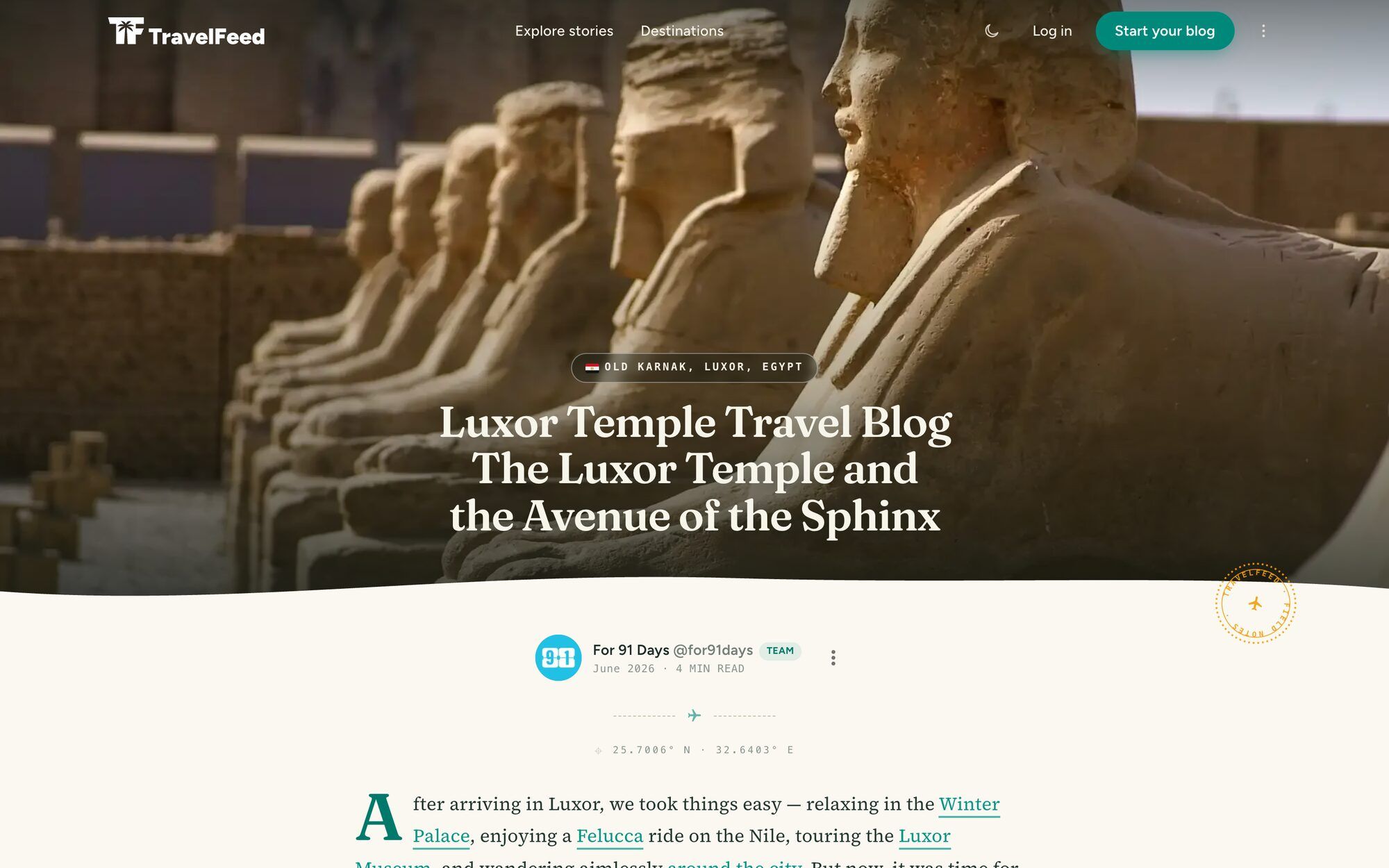
Here's what the result looks like — a live post in TravelFeed's editorial layout:
Keeping the Momentum: Sharing Your Travel Tales with Friends & Family
A family blog has the easiest distribution problem in publishing: you already have everyone's number.
- Drop each new post in the group chat. Same chat, every time — the link becomes a small ritual, and the chat goes back to doing what it's good at: reacting to the post instead of transporting it.
- Email the grandparents. For relatives who live in their inbox, a two-line email with the link works better than any platform. They can also just bookmark the blog; new posts are simply there at the top.
- For the technically keen. Fellow TravelFeed members can follow you on the community, and once your blog runs on its own domain it publishes an RSS feed automatically — the one relative with a feed reader will find it. Everyone else: the group chat works.
- Facebook, if that's where your aunts are. Share the link on your timeline and you'll reach exactly the audience this blog is for.
Two small habits help the link stick. Pin the blog address in the group chat (or put it in the group description) so nobody has to scroll for it, and recruit one relative as your unofficial editor — the person licensed to ask "where's the next post?" when you go quiet. Accountability from someone who misses you works better than any content calendar.
The posting rhythm that survives real travel is one post per place, not per day. Daily blogs die in week two, usually somewhere with bad Wi-Fi; a post every week or so, written on the bus or in the airport where travel hands you dead time anyway, keeps arriving for the whole trip. If people at home know roughly when to expect it — a Sunday-ish habit, say — your family gets something to look forward to and you get a deadline gentle enough to keep.
When comments arrive, answer them. For a family blog the comments are half the point: part guestbook, part conversation, attached to the exact story they're about. And you're not publishing into a void while the family warms up — your posts also appear on the TravelFeed community feed, where other travelers read, comment and reward writing they like. Most family bloggers are pleasantly surprised that strangers show up at all. When a relative gets inspired and wants in — it happens — they can start a blog of their own and turn the following into a two-way street.
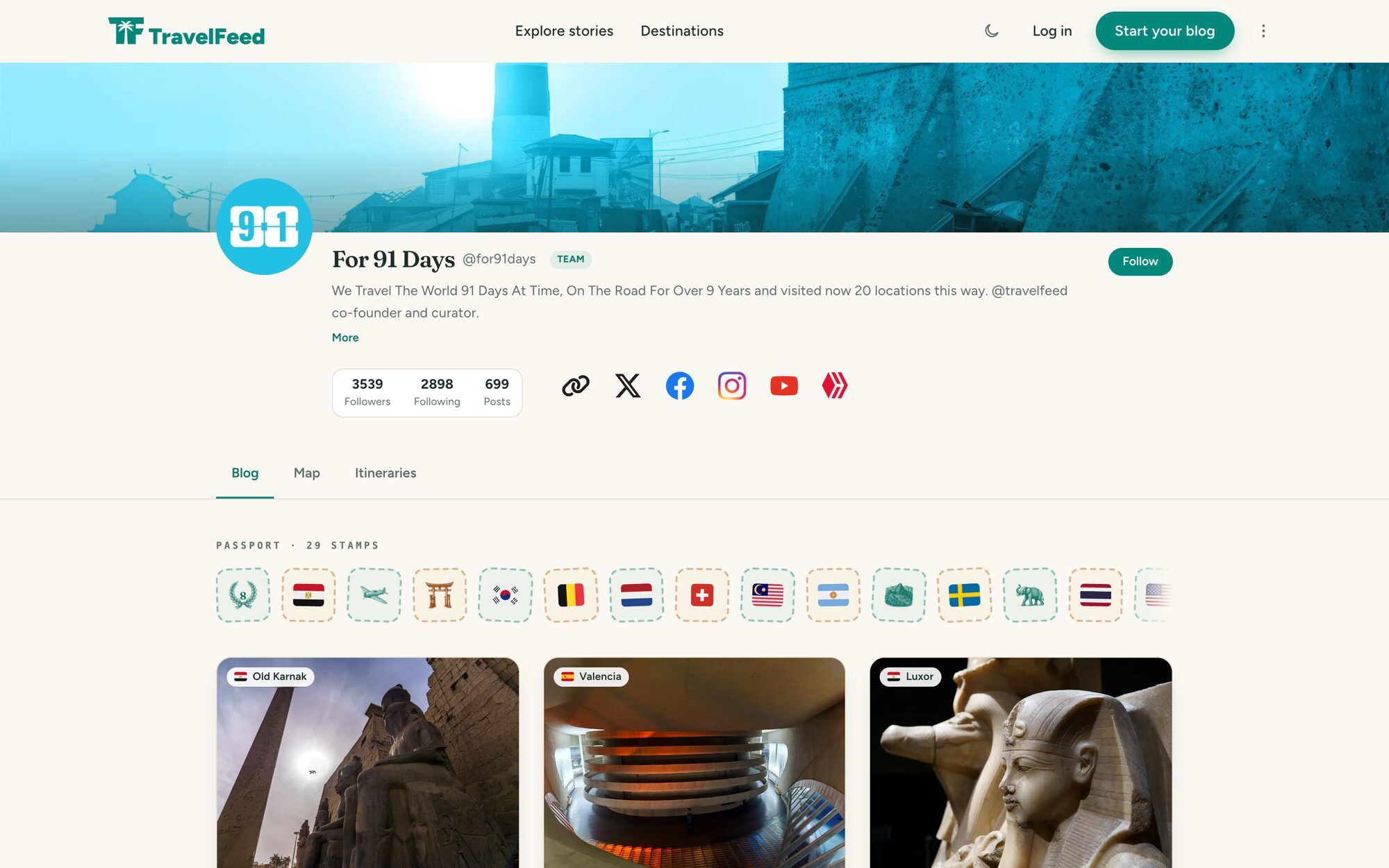
Creating Your Personalized Blog: A Simple Step
Everything so far happens on your TravelFeed profile, which is plenty for sharing. The upgrade that changes how the whole thing feels is hosting your blog as its own website: your name on it, your colors, an address of its own for the family to remember. Here's a real member blog to make that concrete — wanderein.com, a slow-travel blog on TravelFeed hosting:
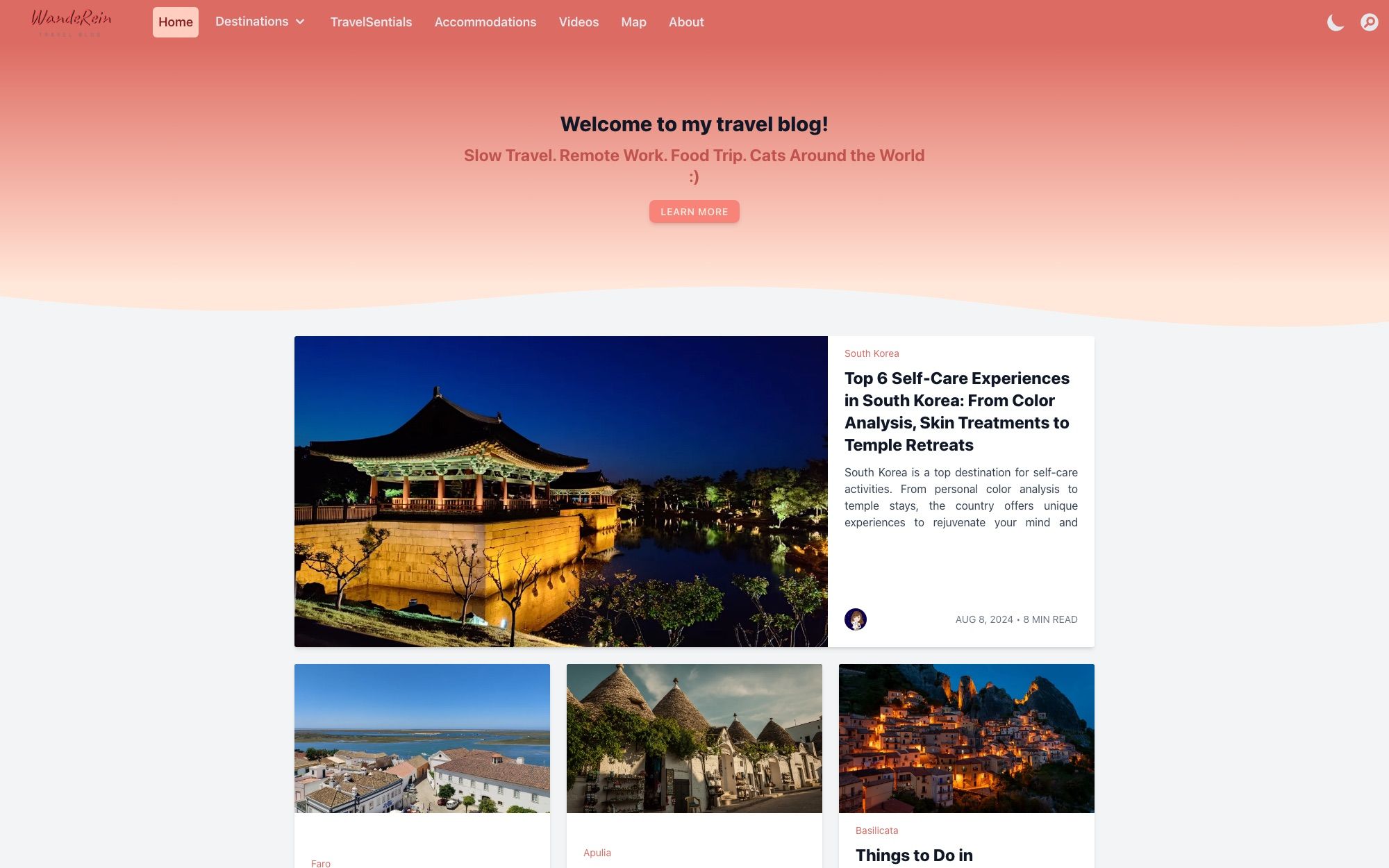
Setting yours up is a short form, not a project:
- Open the Hosting section of your TravelFeed dashboard.
- Pick your subdomain (included with hosting), then give the blog a title and a short description — this is the moment "The Martins Go Places" becomes an actual website header.
- Choose a theme color. A couple of minutes later, your blog is live on your subdomain.
- Adjust it in the site builder if you like: move sections around, change layouts, add widgets — no code, and no theme to buy first.
For your own domain — the yourfamilyname.com your relatives can type from memory — register it with any registrar (Namecheap, for instance) and follow the step-by-step instructions in the hosting dashboard to point it at your blog. It's a copy-paste job, and support will walk you through it if DNS settings are not your idea of a holiday.
An address of your own also quietly opens a door: a blog on its own domain can earn, through affiliate links and the community rewards you're already collecting, if the trip ever turns into a habit. No pressure from us — how to make money with a travel blog is there when you're curious.
What a Family Travel Blog Costs
TravelFeed has no free tier, so here are the real numbers, as of July 2026:
| What you want | Plan | Price |
|---|---|---|
| Publish on the TravelFeed community | Starter | $19/year |
| Your own blog on your own domain | Basic | $15/month billed yearly ($19 month-to-month) |
| Adds interactive world map, search, analytics, dark mode | Pro | $25/month billed yearly |
| Everything TravelFeed hosting offers | VIP | $45/month billed yearly |
For most family blogs, Starter is the honest recommendation. Nineteen dollars a year covers publishing on the community, ad-free, with a verified badge, optional cross-posting to the Hive blockchain and 50,000 monthly credits for the built-in AI writing tools — around seventy goes at tidying a paragraph, turning your notes into prose or describing a photo. Upgrade to Basic when you want the blog living at its own address, and add your registrar's fee on top — domains are bought separately.
For context: a single month of Squarespace ($16) costs almost as much as a full year of Starter, and self-hosted WordPress realistically lands at $150–250 a year once introductory pricing expires — before it has solved a single travel-specific problem like maps. The full price rundown across ten platforms is in our platforms comparison.
Why no free tier, since you'll wonder: hosting photo-heavy websites costs money, and platforms that charge nobody tend to charge with advertising instead. We'd rather send you a small invoice than put ads between your stories and your family.
Getting the Help You Need: TravelFeed Support and Community
You won't be figuring any of this out alone:
- The Help Center. Press Ctrl+K (⌘K on a Mac) anywhere on TravelFeed and search. The guides run from editor basics to moving an existing WordPress blog over.
- Support. Send us a message and a human answers.
- Discord. The community server — for questions, feedback on your blog and travel talk with people who also know which country the waterfall was in.
- The TravelFeed blog. Guides like this one, plus whatever we've shipped lately.
That's the whole of how to make a travel blog for friends and family: pick a name your uncle can remember, make an account, write the first post like a long message home, and drop one link in the group chat. The setup takes an evening, most of which is choosing photos. Create your account and send the first link home this week.
Frequently asked questions
Can my family read my travel blog without creating an account?
Yes. A blog is a regular public website, so anyone you send the link to can open it in their browser — no account, no login, nothing to install. Family can keep the link bookmarked or wait for new posts to appear in the group chat, and a blog on its own domain also publishes an RSS feed for anyone who uses a feed reader.
How much does a travel blog for friends and family cost?
TravelFeed Starter is $19 per year and covers a family blog comfortably: you publish on the TravelFeed community, ad-free. A blog on your own domain starts at $15 per month billed yearly, plus whatever your registrar charges for the domain. There is no free tier — for comparison, self-hosted WordPress realistically runs $150–250 a year once renewal pricing kicks in.
Is a travel blog private?
No — a blog is a public website, and that is exactly what makes it easy for family to read. In practice your readers are the people you send the link to, but anything you publish could be found by strangers, so keep your home address and live location out of posts, and consider writing about a place after you have left it. If you need genuinely private sharing, a shared photo album or the group chat is the better tool.
Do I need technical skills to make a travel blog?
No. The TravelFeed editor works like writing an email with better photo handling — blocks for text, images, galleries and maps, no code anywhere. Setting up a personal blog is a short form (name, description, theme color), and connecting a custom domain is the most technical step: copy a few settings from your dashboard into your domain registrar, with instructions in the dashboard and a support team if you get stuck.