
 Mpumalanga, South Africa
With all our travel it may seem that we are always on vacation, but we really switched it up this week with an actual offline, no laptops holiday. We didn’t have much of a choice, as we spent the work week in remote camps throughout South Africa’s Kruger National Park. It was an incredible time! Because we saw so much and have far too many photos, I’ll post about what we did, and separately about the wildlife.

Sept 5-8 - Lodge in Hazeyview
We initially planned this trip because of a home exchange. One of the couple we exchanged with is a tour guide, and instead of their house, she offered us some time shares, including the beautiful Kruger Park Lodge just 15 minutes outside the park. It took under an hour to drive from our last stop on the Panorama Route, so we actually went into Kruger on our very first day before checking in. This southern section of the park has the most wildlife density, and we saw most of the greatest hits within the first hour - elephant, giraffe, zebra, warthog, wildebeest, water buffalo and many, many impala.


On other days we caught some rarer sights, hyenas at their den with a baby, and even a leopard in a tree!


The lodge itself presented viewing opportunities, including these nyala grazing in front of our unit, views over a river full of hippos, and, unfortunately, these adorable, evil vervet monkeys. After being cooped up in the car all day in the park, I wanted to go on a short run around the hotel grounds. As I crossed a narrow bridge, this monkey leapt from the tree to the railing and ran parallel, creepy little fangs bared. I feared an attack and fled, noticing only after escape that my ankle was tender. By the time I hobbled home, I couldn’t put weight on it at all. For the rest of the week, sitting in the car looking at wildlife was just about all I could manage!


Sept 8-11 - Hut on the Letaba River
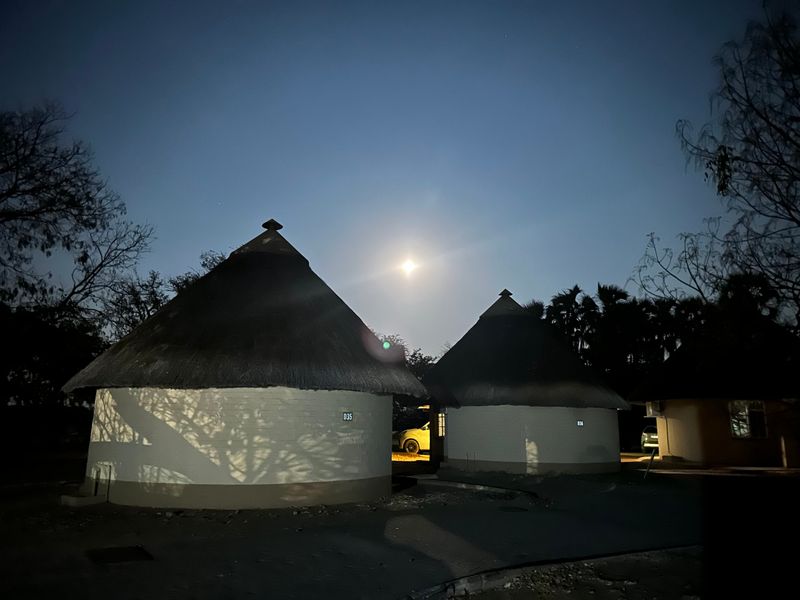
That suited the first day just fine, as we had an eight hour drive through the park (average speed around 30km/hr) to our first stop at the Letaba Rest Camp, midway up the park along the shores of the river. From our cute little hut we could see elephants bathing and impala grazing and hear hippos bellowing and birds singing. There were shared bathrooms and kitchens, but we had our own sink, fridge and braai (BBQ) pit, where we did most of the cooking. Most camps have a shop full of essentials, including grillable ones, so we made use of that along with the restaurant and pool.


This region of the park is mopane shrubland. You don’t see animals every minute like in the southern section of the park, but some were still very common, like elephant, and bigger antelope like kudu, waterbuck, and rare sable. We were a bit frightened to see two honey badgers had snuck past the electric fence and were strolling in camp at night!


We got to take a guided night safari drive - the only way to leave camp after dark - and saw some nocturnal animals including the Spring Hare, Large-Spotted Genet Night Jaw and tiny nocturnal antelope called ___.


One day we drove further north to the Mopani Rest Camp and had breakfast overlooking that river, also teaming with wildlife! On another, we went east to Olifants, which wasn’t, but had some glorious viewpoints.


This area is also home to baobab trees, which live for centuries or even thousands of years! The further north you go, the more prevalent they are. We went as far as the Tropic of Capricorn!


Sept 11-13 - Fancier Hut at Satara
The Satara camp is about two hours south of Letaba, and the scenery changes dramatically. Vegetation got a lot more sparse with more open savanna. It lent itself to pretty sunsets which we watched from a nearby watering hole before rushing back to camp before curfew. After dark at camp, the sky kept putting on an amazing show.


It is also lion country, and we had our first two sightings in this area! First a big male prowling right along the road, and later a lioness under a tree. We heard she had cubs, but never spotted them. Other common animals here were crocs and baboons. We saw some interesting raptors, guinea fowl and huge, snake-eating, endangered 'thunderbirds.'


From this camp, we took a sunrise drive, also letting you exit the gates outside of opening hours and well before dawn. We didn’t see any new species on this outing, but saw a different side of a kudu - the inside. Nothing but a rib cage and horns, being picked thoroughly clean by dozens of vultures.


Sept 13-14 - Simple Bungalow on the Lower Sabie River


After our early morning drive at Satara, we headed for our next stop, another couple hours south on the Lower Sabie River. We traveled some truly desolate roads, seeing nothing for hours. Only lizards were braving the oppressive heat when we got out at a couple viewpoints. Once we got to camp we hit the pool and had the biggest surprise, this brilliant blue lizard doing some sunbathing.

Around camp more animals started to appear. We had another lion sighting on our way, along with elephants and hyenas bathing in the same water hole. The nearby dam was a great spot to watch hippos and waterbirds.


Though it didn’t have a bathroom, this unit had a whole kitchenette with utensils, and we were able to make a more elaborate breakfast. Being Nathan’s birthday, though, we still did the actual cooking on the braai!
Sept 14-15 - Crocodile Bridge Safari Tent
Our last night in the park was the most rustic in a permanent tent, but still not totally roughing it, with a light and power outlet inside.


We arrived right at check in so we would have time to braai before our last guided safari drive at sunset. It was still hot when we left camp, but the wind picked up, followed by thunder and rain. We were only semi-prepared for the cold and not the wet, but we still had a great time watching the animals react to the storm. Impala and giraffe were spooking and running around at random.


We saw a very rare sight on this drive, a pair of wild dogs feeding eight pups on a fresh kill. A little gruesome, a little adorable, especially hearing the puppies wine and watching them scatter when thunder struck. Just like my dog!


Just as we were getting back to camp in the dark and driving rain, we had to stop one more time. We came across two lionesses on the hunt! They were chasing a herd of impala, and we didn’t see the kill, but I’m guessing at least one more was going to meet a similar fate to the dogs’ impala.

In case that isn’t enough circle-of-life for you, one more carcass the next morning. This one really blew my mind. I thought I spotted a leopard in a tree, but binoculars revealed it was not the cat but its meal - an impala carcass draped in the branches, saved for later.

On that note, it was time to leave the park. We had a rather scenic drive back to the airport to return our rental car. It had been brand new, and now has 6000 km of back roads and one-lane bridges, a layer of dust and a few new scratches.


With Kruger in the rearview, we’re on our way to Cape Town!

