


From the shore of Lake Taupo to the shore of the Bay of Plenty, we drove through New Zealand’s original tourist hub. We didn’t stay in Rotorua, but we saw so much on our two stops there that I decided it needed its own post.

While we were moving between home swaps, we made a lunch stop at Kuirau Park and ended up getting to see quite a lot of thermal activity within a short walk. The lake in this park used to be used for bathing, but it got hotter over time and is now fenced off. You can see the plant life dying off as the hot pools claim more and more of the land.


We saw an interesting building in the distance and decided to walk over to what turned out to be the Maori village of Ohinemutu. It was not a tourist attraction, just a church, some housing, a big dining hall and some regular people living life. We got a recommendation for a Maori cafe where we got to re-try Hangi, along with fry bread and a very thick, herby seafood chowder. Everything was much more flavorful than during our last attempt, but equally filling, to last us the rest of the day.


It was cool to see the non-touristy village, but the tourism one is one of the top sites in New Zealand and probably the best ‘living culture’ site I have personally visited in the world. On the following weekend, we returned from the coast for a tour of Whakarewarewa Village from a Maori guide and former resident. Her ancestors used to run the country’s first tourism operation at a unique formation called Pink & White Terraces. That site and their village were destroyed by an eruption in 1886. Survivors moved to Rotorua, where they re-established tourism there.
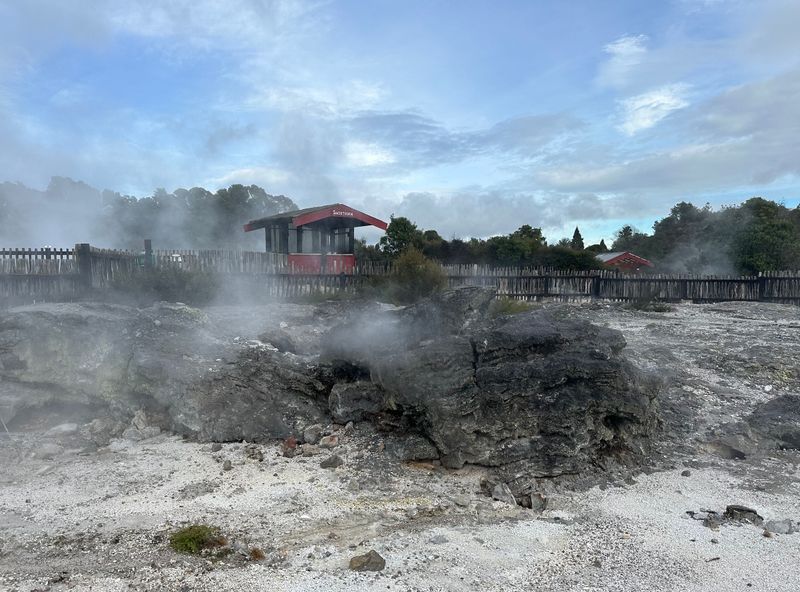

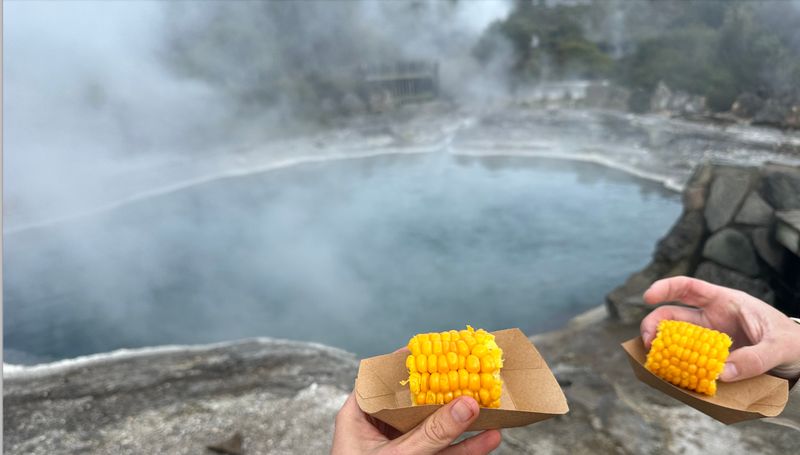
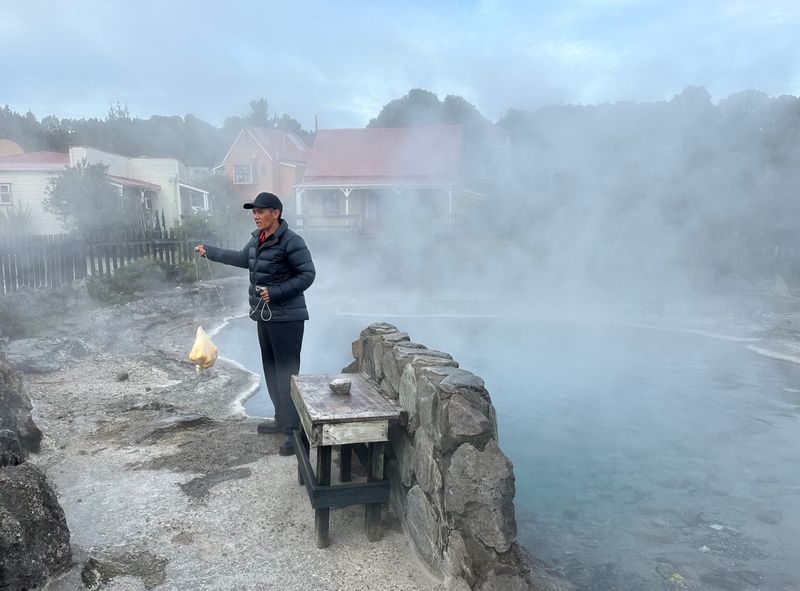
The guide grew up in this village, with no electricity or water other than that from the springs. She had to move outside the confines when a new hot spring swallowed up her family home, but still comes in to cook, eat, and bathe communally, using mostly geothermal resources. These pools have flavorless and harmless minerals, not sulfur. To prove it, she gave us some corn cooked in one of the hot pools. They only use it for veggies, while the meat cooks over a steam vent.
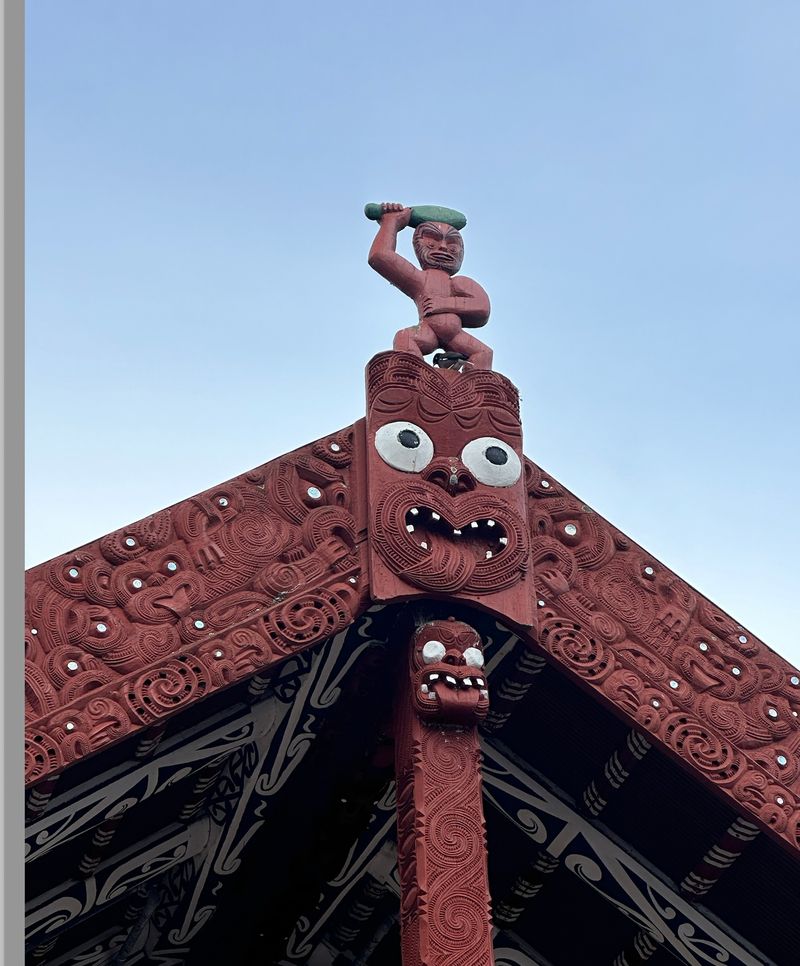
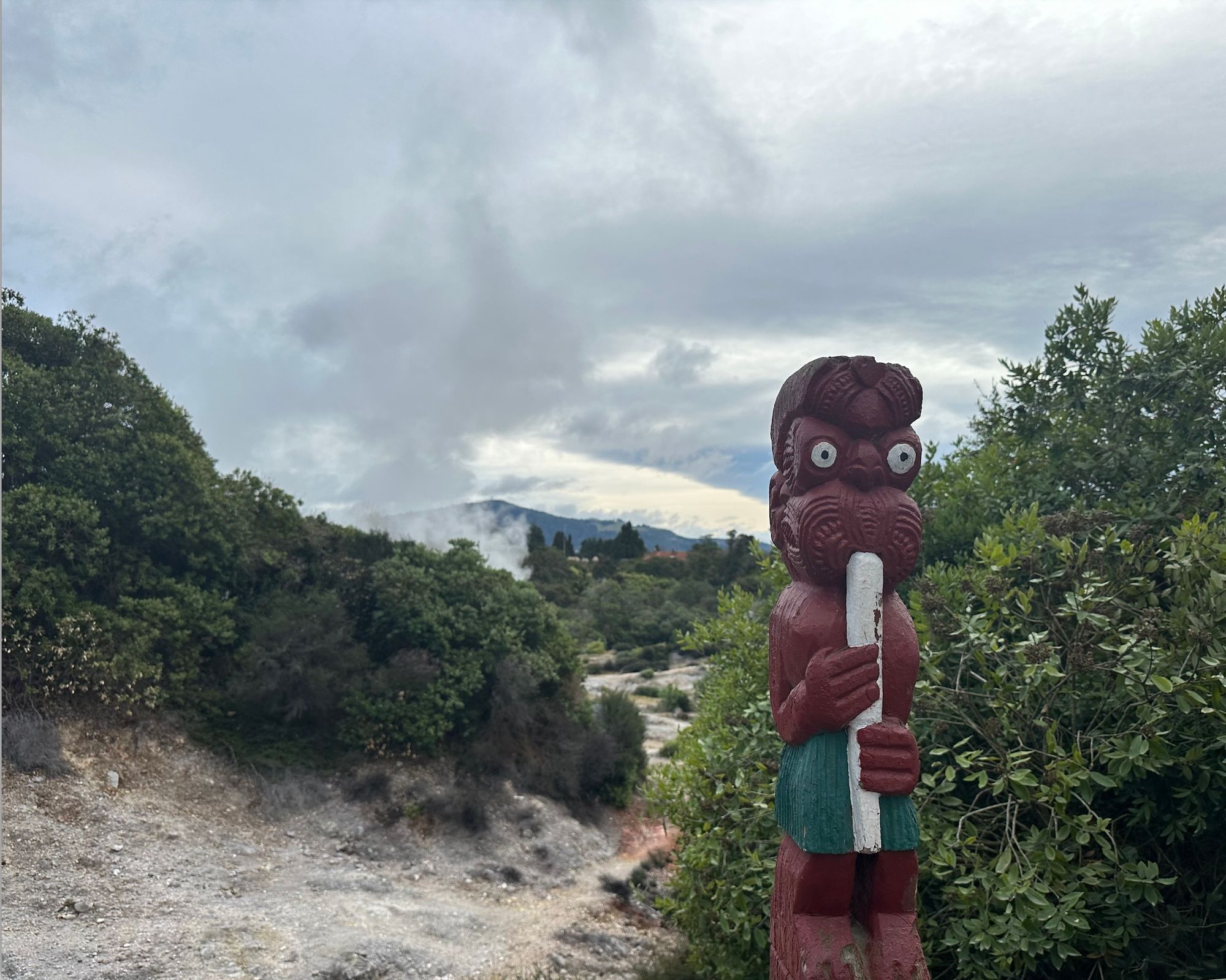
Both Maori villages we saw had an Anglican and a Catholic church. Interspersed with that iconography, you see these statues which represent ancestors, instead of a gravestone. For obvious reasons, they can’t dig down and bury their dead.
After this tour we went for a picnic in the Redwood Forrest. Not exactly California scale, but a nice walk to work up some more appetite for dinner.


We also stopped at another city park with this huge museum, and a Maori war canoe on display. It adjoined a wildlife reserve called Sulphur Point - I wouldn’t want to cook any food in that one.


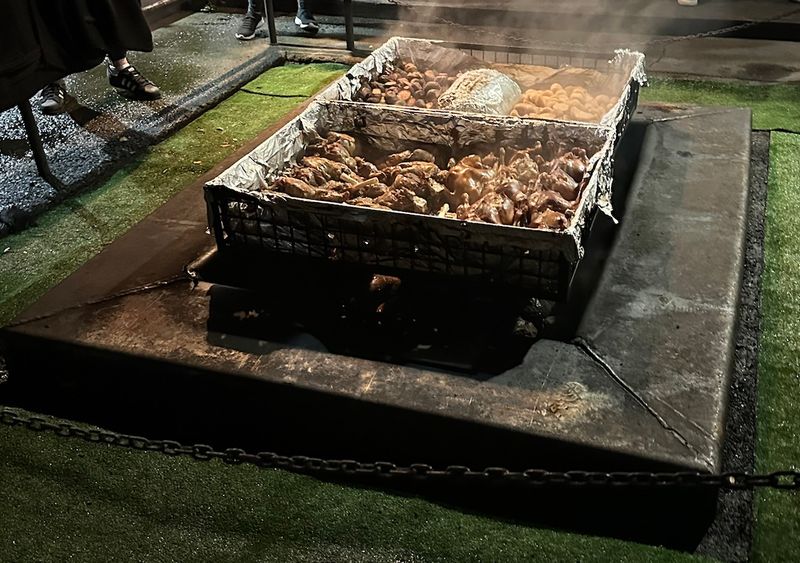
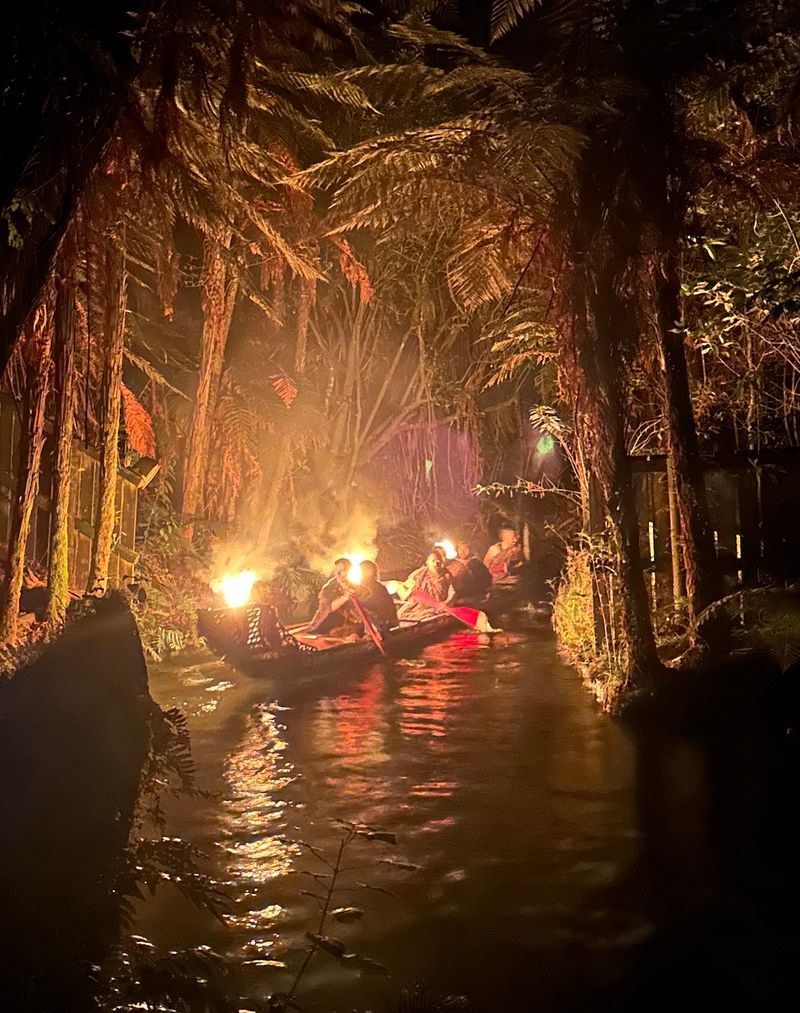
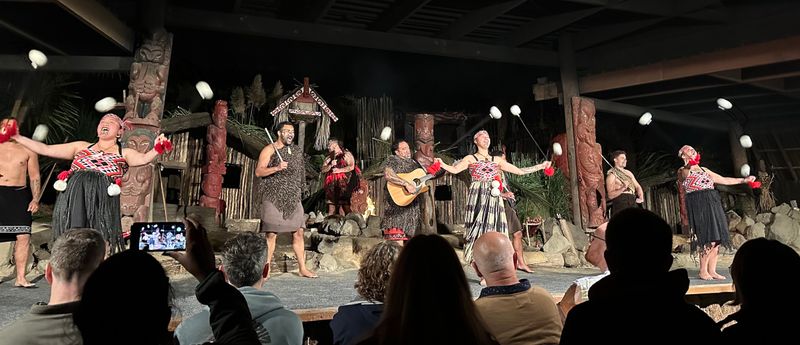
We finished the day off with the most touristy event of all, a Hangi dinner and Haka show. It started with a demonstration of another war canoe, then a welcome ceremony, several war dances (haka), entertainment dances (poi, etc) and a big buffet of pit-roasted lamb, chicken and pork. Though we had been hiking all day and were hungry, it was still way too much food. It ended with another short tour through their glow worm valley. I took pictures, but they just look like a few bluish dots on a black background.

This was the most ‘vacation day’ of all our time in NZ and a fitting penultimate weekend here. We have had some fun explorations at the beach too, which I’ll share next time.
After that, we fly all the way across the earth!
