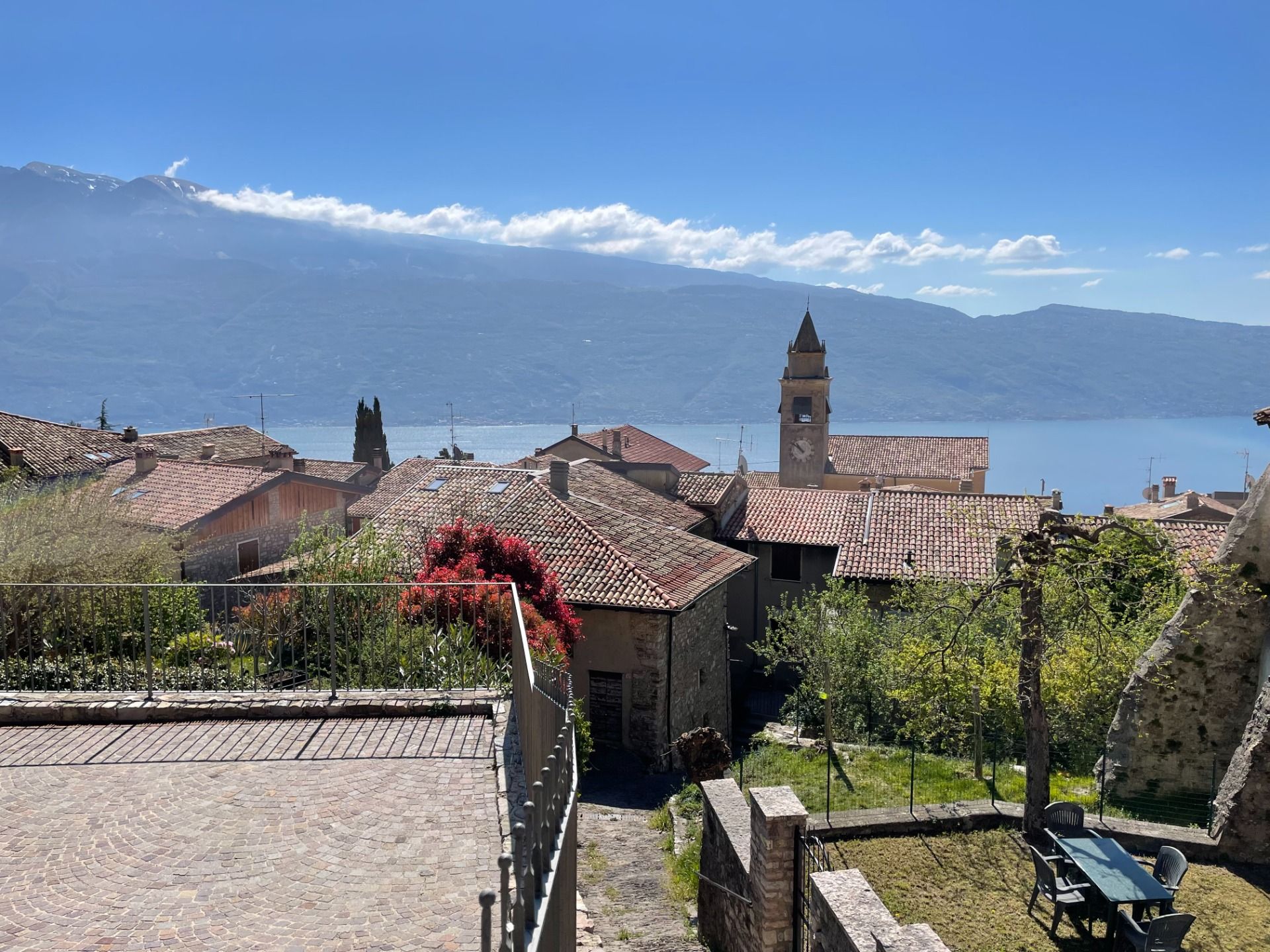
 Gargnano, Lombardy, Italy
Historische Dokumente bezeugen, dass das Bergdorf Muslone schon im 12. Jahrhundert in Feudalbesitz war. Zuvor war es eingegliedert in das Gemeindegebiet von Gargnano, wurde dann autonome Gemeinde auf Beschluss der Adelsfamilie Visconti aus Mailand, die Muslone 1421 als Lehen an ihren Hofarzt Maffeo Medalli aus Gagnano vergab.
Historical documents testify that the mountain village of Muslone was already feudal property in the 12th century. It was previously incorporated into the municipal territory of Gargnano, then became an autonomous municipality by decision of the noble Visconti family from Milan, who gave Muslone as a fief to their court physician Maffeo Medalli from Gagnano in 1421.


Obwohl Muslone später unter der Herrschaft der Adelsfamilie Lodron geriet, die wiederum ein Treuebündnis sowohl mit Venedig als auch mit Trient eingegangen war, blieb es weiter unabhängig bis es 1871 in Gargnano eingemeindet wurde. Eine Zeichnung aus dem Besitz der Grafen Cigola stellt die Abbildung eines Kastells dar, das sich am Ortseingang erhob, vor dem heute noch ein Wohngebäude zur Seeseite hin erhalten ist. Musione lebte vom Oliven-, Wein- sowie auch vom Gemüseanbau im Gebiet von Campià (darunter die berühmten weißen Kohlrabi), vom Zitronenanbau in den riesigen und arbeitsaufwendigen Gewächshäusern (Limonaie) unterhalb des Ortes im Gebiet von San Gaudenzio, von den Esskastanienwäldern, den Weiden und vom Holzverkauf aus den Wäldern des Hinterlandes sowie vom Fischfang in San Giacomo, seinem Zugangshafen zum See. All dies sicherte der Dorfbevölkerung (ca. 200 Personen) für Jahrhunderte ihren Lebensunterhalt. Ende des 19. und in den ersten Jahren des 20. Jahrhunderts führte die allgemeine Krise in der Landwirtschaft, insbesondere im Zitronenanbau, zu Verdienstausfall und Massenarbeitslosigkeit, so dass viele junge Männer auswanderten (die meisten nach Amerika) in der Hoffnung, dort genug zu verdienen, um ihren in den Dörfern zurückgeblieben Familien das Überleben zu sichern.
Although Muslone later came under the rule of the noble Lodron family, which in turn had entered into a loyalty alliance with both Venice and Trento, it continued to remain independent until it was incorporated into Gargnano in 1871. A drawing owned by the Counts Cigola depicts the image of a fort that rose at the entrance to the village, in front of which a residential building facing the lakeside is still preserved today. Muslone lived from the cultivation of olives, wine, and vegetables in the Campià area (including the famous white kohlrabi), from the cultivation of lemons in the huge and labor-intensive greenhouses below the village in the San Gaudenzio area, from the chestnut woods, the pastures and the sale of wood from the hinterland forests, and from fishing in San Giacomo, its port of access to the lake. All this ensured the livelihood of the village population (about 200 people) for centuries. At the end of the 19th and in the first years of the 20th century, the general crisis in agriculture, especially in lemon cultivation, led to a loss of earnings and mass unemployment, so many young men emigrated (most of them to America) in the hope of earning enough there to ensure the survival of their families who remained behind in the villages.


Nach dem 2. Weltkrieg entvölkerte sich das Dorf allmählich. Wegen fehlender Verkehrsverbindungen und der abgelegenen Lage waren die meisten Familie gezwungen, das Dort zu verlassen und anderswo Arbeit zu suchen. Heute zählt der Ort nur noch wenige, meist schon hochbetagte Einwohner (insgesamt ca. 60). Im Sommer belebt sich der Ort ein wenig dank der Ferienhäuser und Feriengäste. Mitten im Ort gibt es einen kleinen Lebensmittelladen, der die Einwohner mit dem Nötigsten (auch frisches Brot) versorgt.
After World War II, the village gradually became depopulated. Due to the lack of transport connections and the remote location, most of the families were forced to leave the village and look for work elsewhere. Today, the village has only a few, mostly elderly inhabitants (about 60 in total). In summer, the village comes to life a little thanks to the holiday homes and holidaymakers. There is a small grocery shop in the centre of the village, which provides the inhabitants with the most basic necessities (including fresh bread).
