 Santiago de Compostela, Galicia, Spain
What could be better in summer than an off‑road motorcycle trip through Spain? Stunning mountain landscapes, epic trails and pleasantly warm weather - until you arrive and suddenly freeze like it’s off‑season in England.
Crossing Into Spain
We planned to cruise from east to west across northern Spain, enjoying a few relaxed days of riding, camping and soaking up the southern European sun. Instead, we were greeted by massive rain fronts and temperatures more suited to a Siberian survival show. It became clear very quickly: this trip would be everything - except what we had planned.
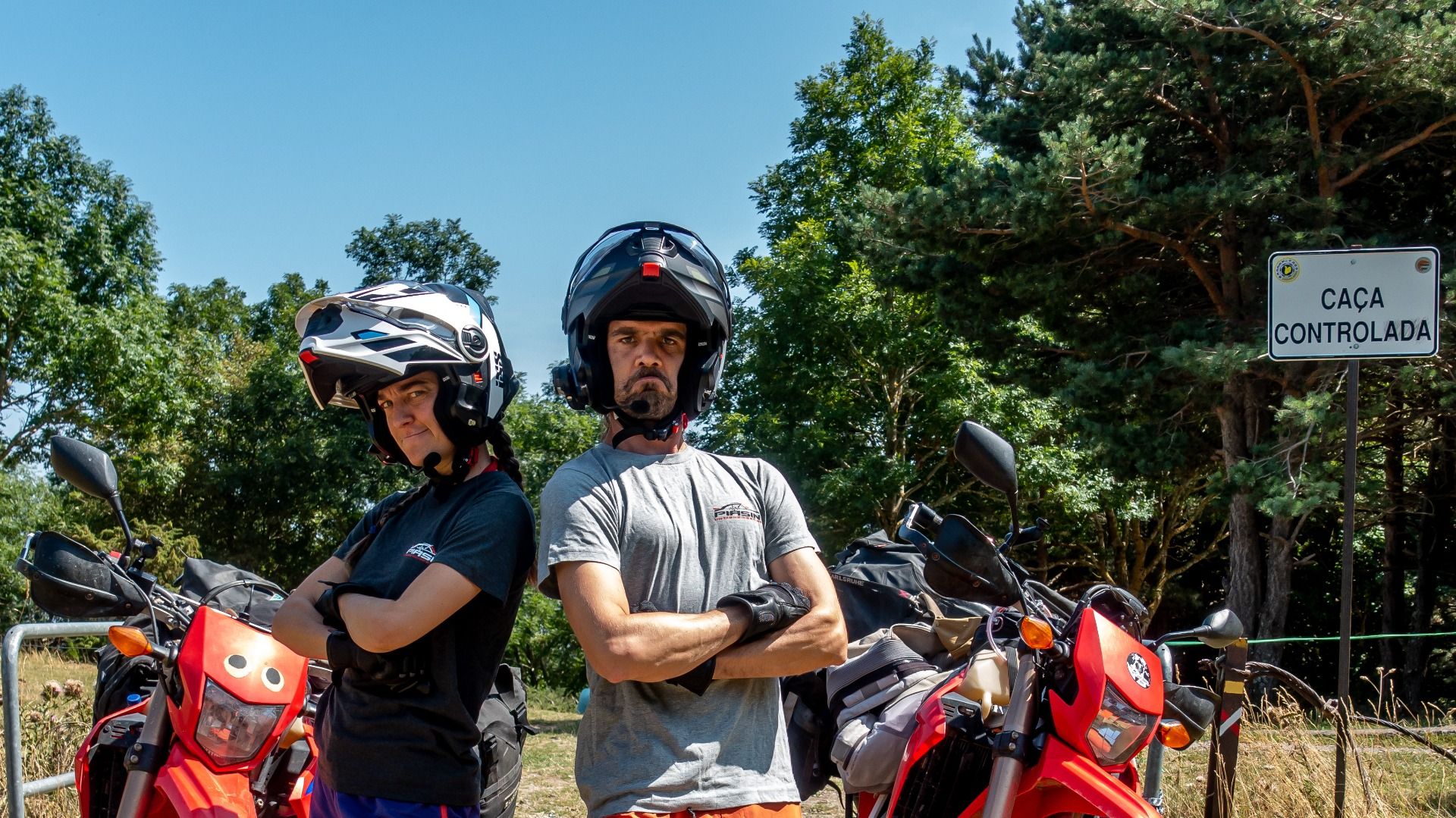
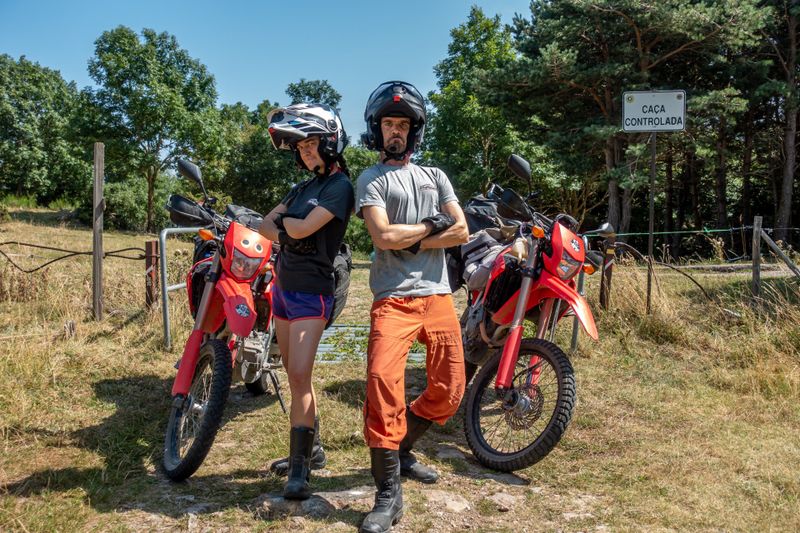
Our journey began at a tiny border crossing between France and Spain, which also marks the start of the Spanish section of the Trans Euro Trail - an off‑road route stretching across the continent. In reality, it’s just a meadow with a small fence, and suddenly you’re in Spain. Adventures don’t get much simpler than that.

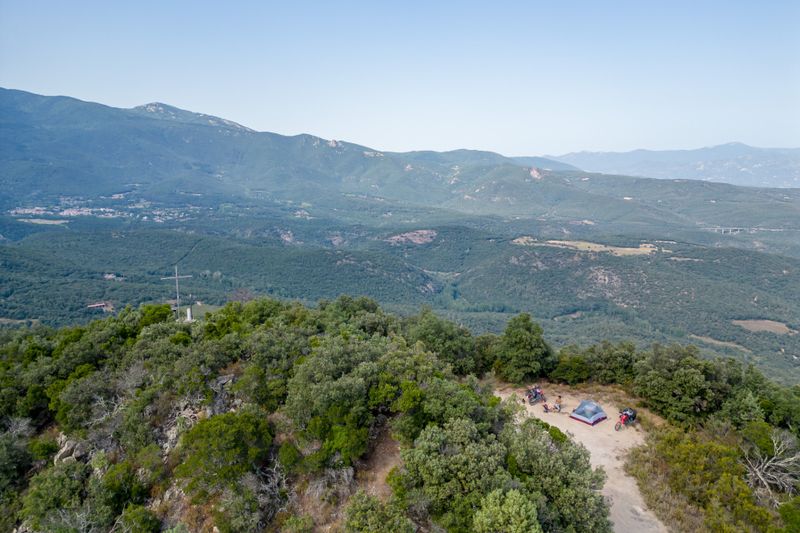
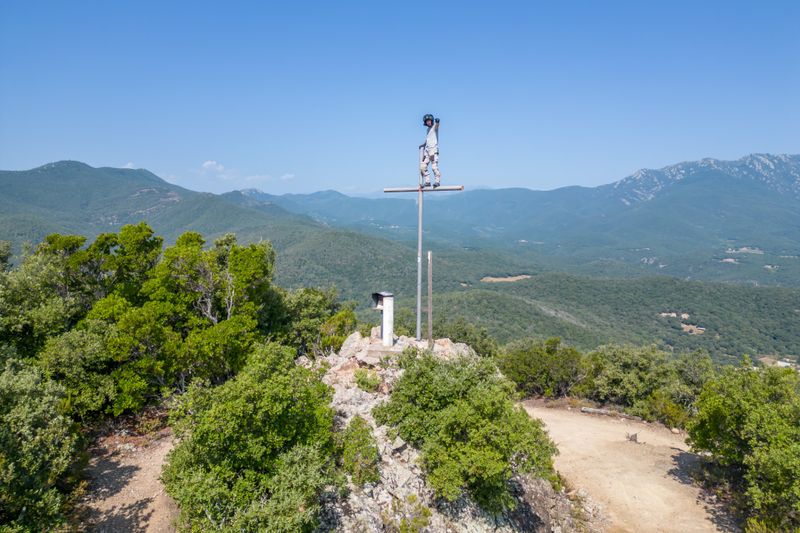
Northern Spain is a fantastic place for wild camping. Away from the touristy coastal regions, you can easily find quiet spots surrounded by nature. Officially it’s not allowed, but in practice, nobody seems to mind - especially in remote areas where no one passes by anyway.
The next morning we continued along endless, empty off‑road trails. And sometimes, completely unexpectedly, you stumble upon something remarkable. Like an abandoned copper mine hidden in the hills. After crawling through a narrow entrance, we found ourselves in a scene straight out of Mordor: oxidized copper deposits had turned the small stream inside the mine into a surreal glowing blue. A mind‑blowing place - and perfect for some unique photos.


Andorra & The High Pass
Our route then took us through the tiny principality of Andorra. The weather still wasn’t on our side, but we stopped for cheap fuel before climbing towards the Coll de la Botella at just over 2,000 m. A freezing wind chased us off the summit quickly. Here the paved road ends and Spain begins again. A rocky track, the infamous ancient Smuggler Trail, winds down between snowy peaks, looking more like the Alps than the Pyrenees.
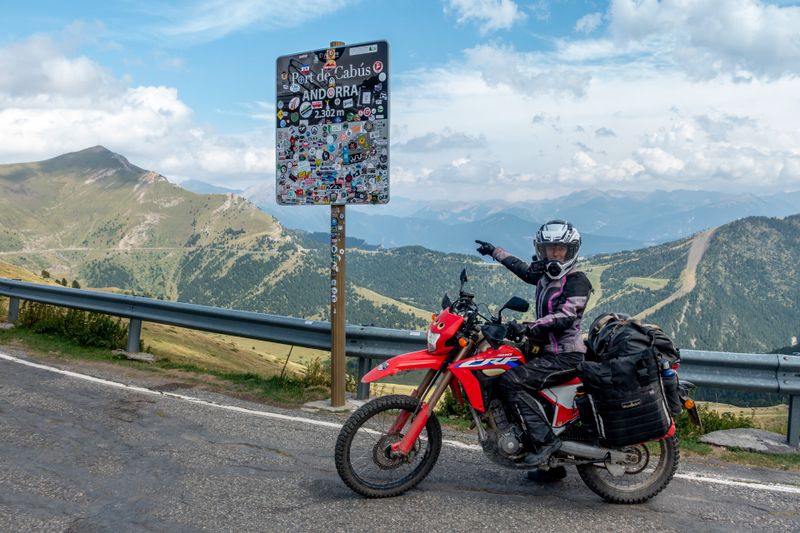
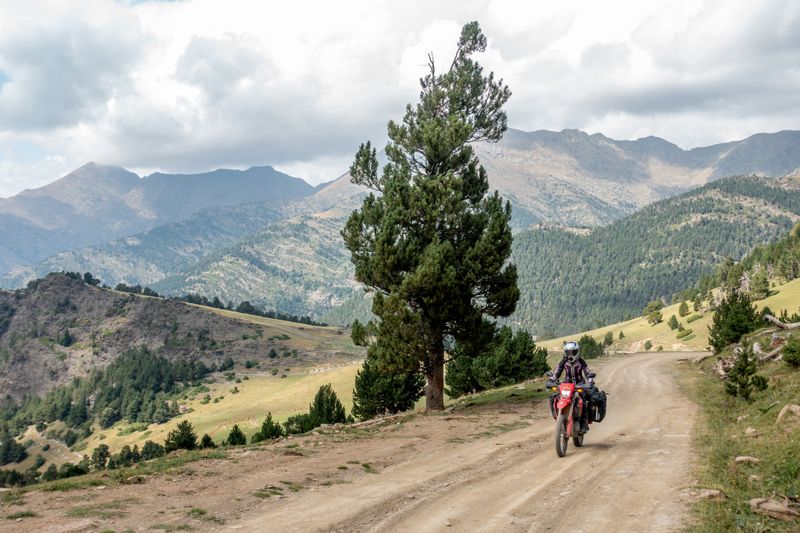
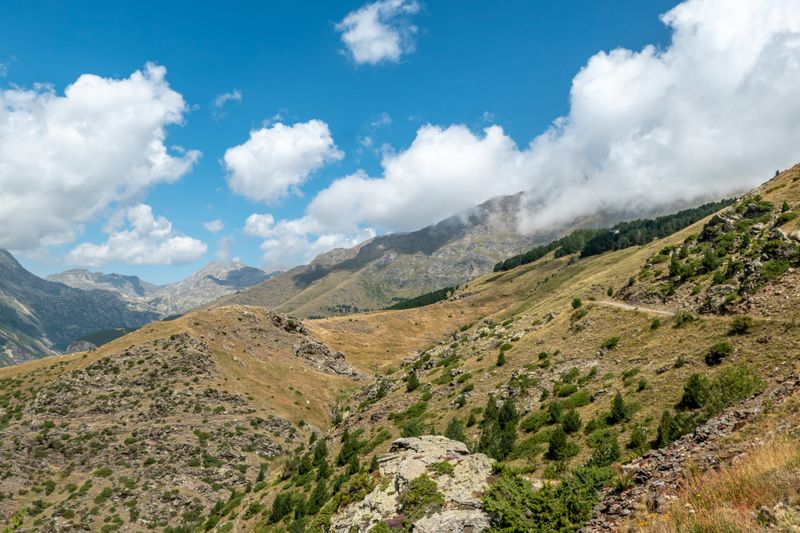
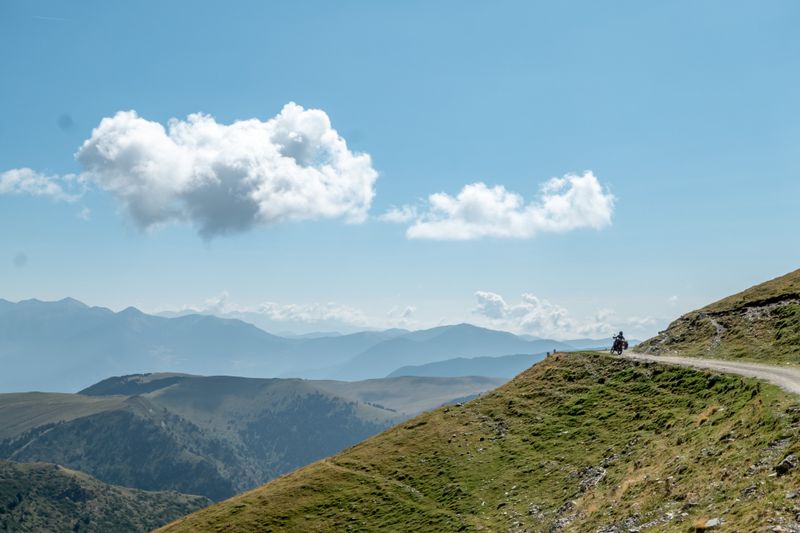
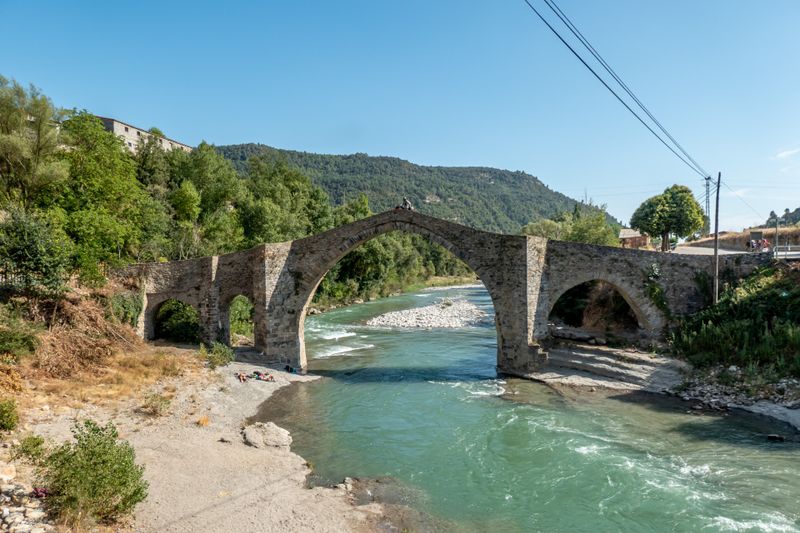
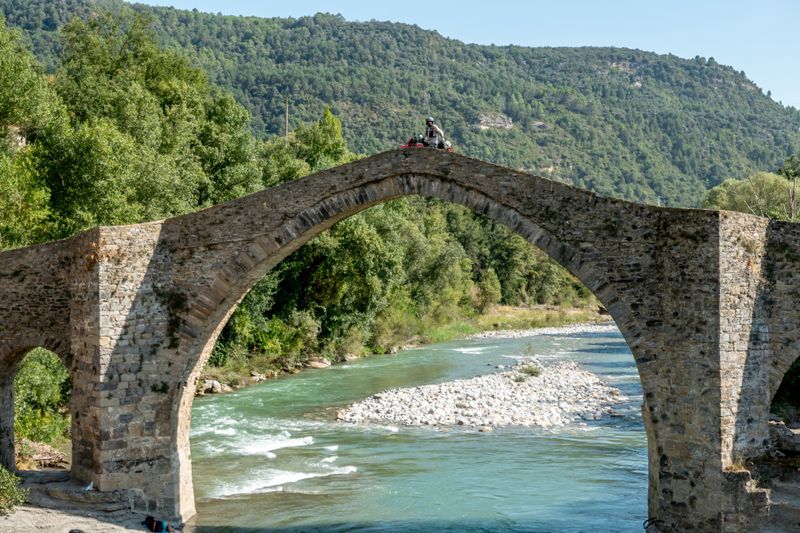
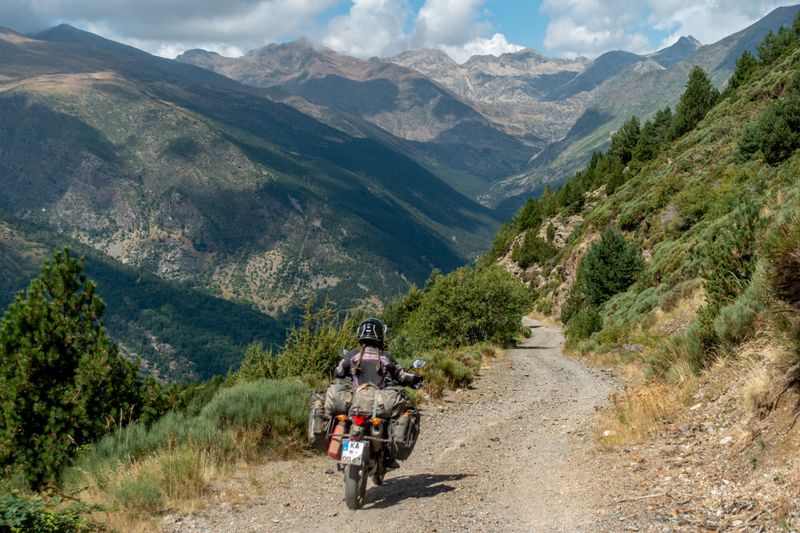
Back in Spain, we climbed once more into the mountains. The gravel track through the Parc Natural de l’Alt Pirineu was in much better condition, and the weather finally improved. Pine forests, fresh air and patches of sunlight made it feel like a different world. Horses grazed on wide green meadows, barely acknowledging our presence. The silence up here was incredible - just the crunch of gravel under the tires and the occasional snort of a horse.

Riglos & The Desert That Wasn’t
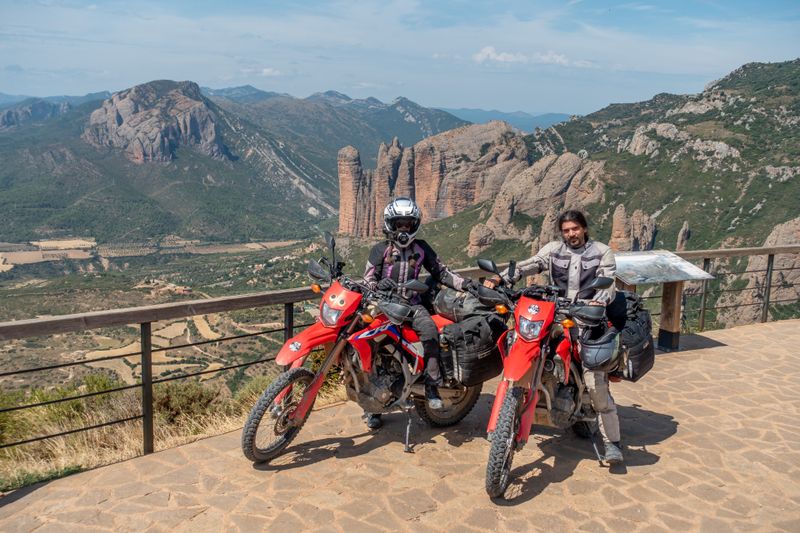
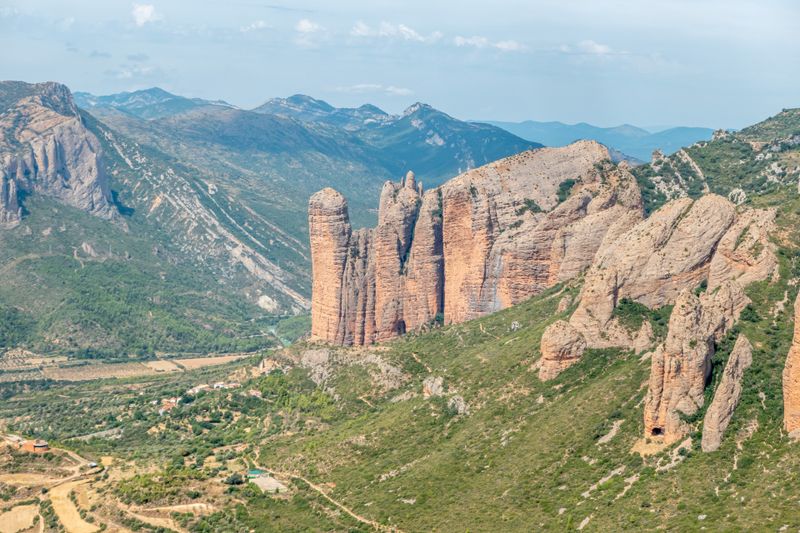
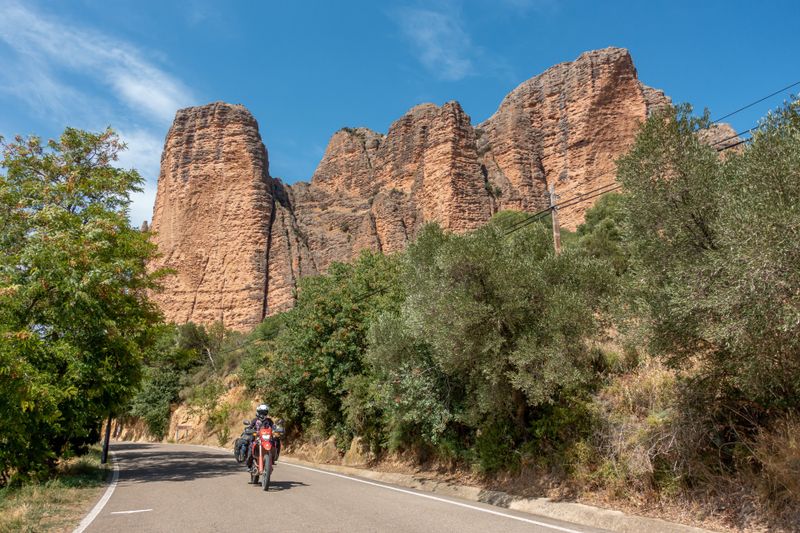
The next day we followed small mountain roads westward until the landscape changed dramatically. The Pyrenees faded behind us and the massive conglomerate cliffs of Riglos appeared on the horizon. We stopped at a viewpoint that nearly knocked us off our bikes - in a good way. We had visited Riglos 25 years ago, when it was a quiet, almost forgotten place. Today it’s still impressive, but far more touristy.

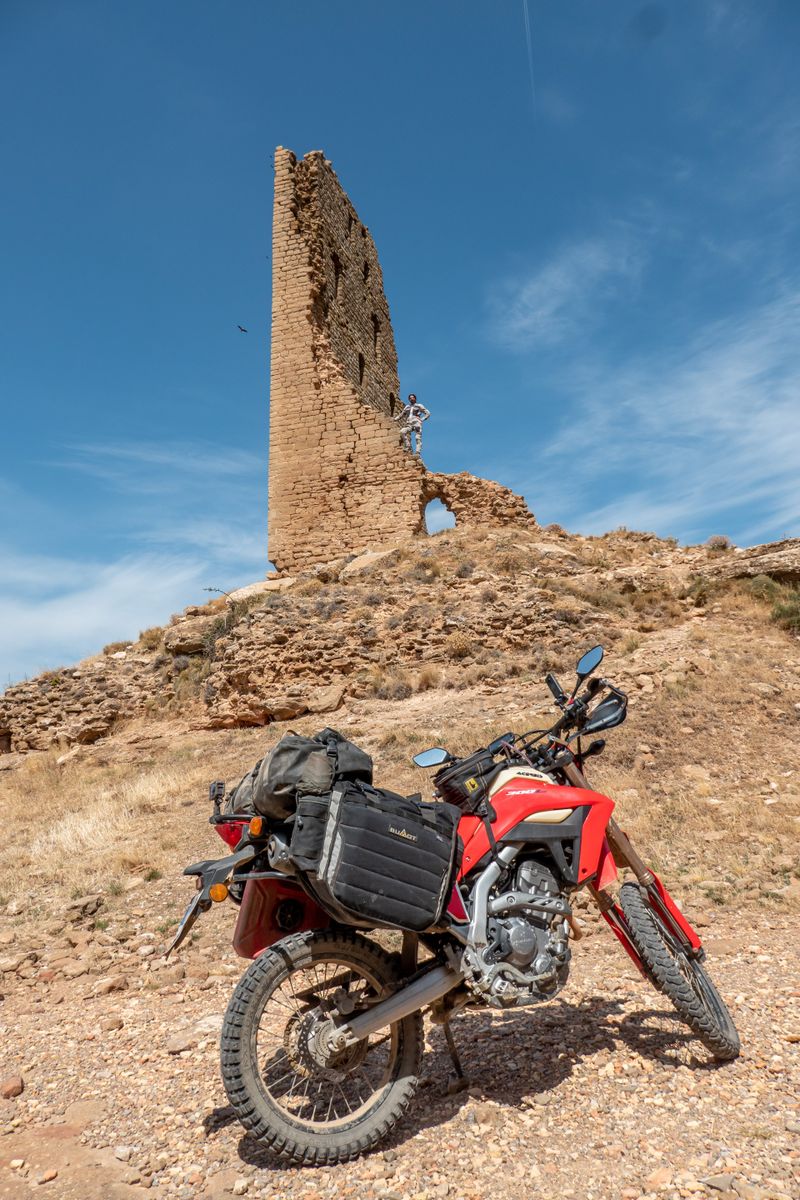
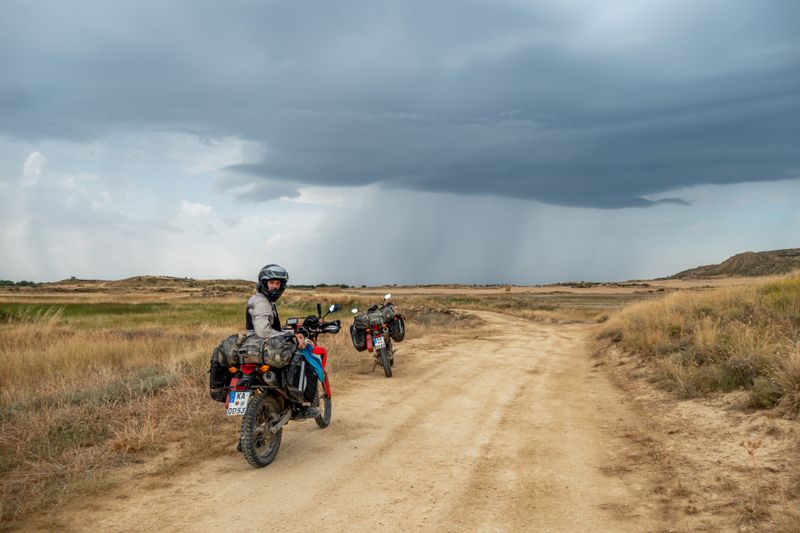
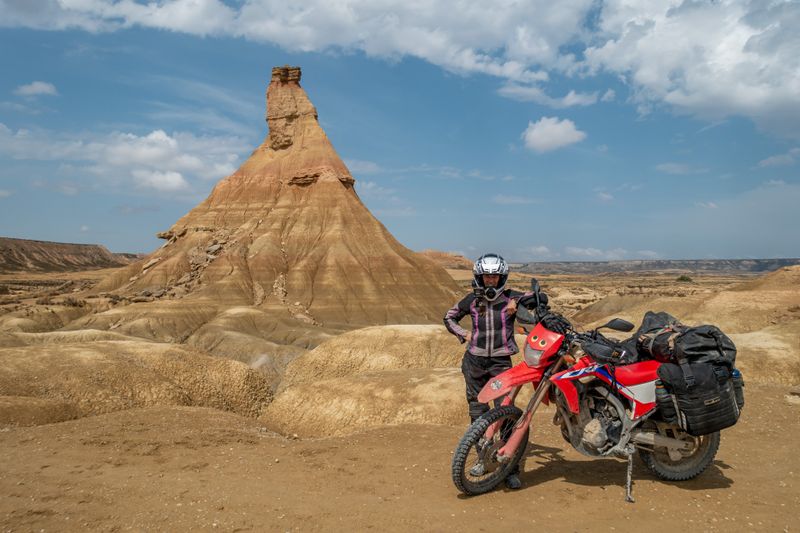
From Riglos, the scenery changed again - so abruptly it felt like someone had swapped the backdrop. We entered the semi‑desert of Las Bardenas Reales, one of Spain’s most surreal landscapes. Dry plains, bizarre rock formations, eroded hills - a mix of Wild West and Mars. Normally it’s scorching hot here, but of course we got the opposite: thick rain clouds, wind and the constant fear of sinking into mud.

Rain, Pilgrims & Mushrooms
After a night of heavy rain, the trails turned into muddy slides. Huge puddles stretched across the track, and we wondered whether we were still riding motorcycles or training for an enduro mud race. Eventually we reached Estella - and the first pilgrims of the Camino de Santiago. That’s when we realized our motorcycle route overlaps with the world‑famous pilgrimage trail.
Since the weather was still anything but friendly, we went looking for a dry spot and found an old chapel. A bit run‑down, but at least it had a roof - and after yet another night of rain, that was luxury enough
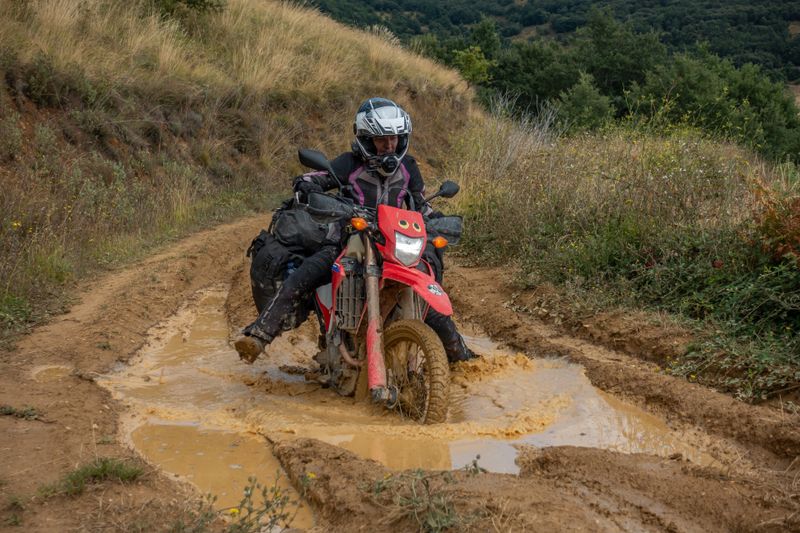
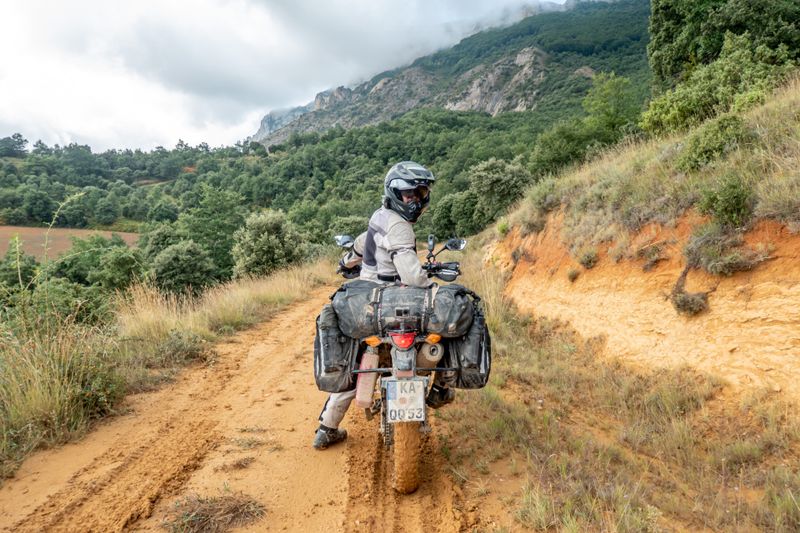
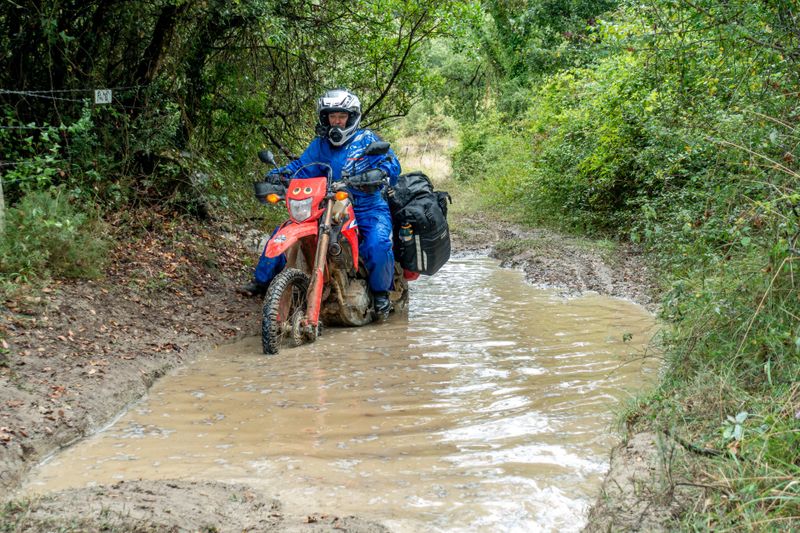
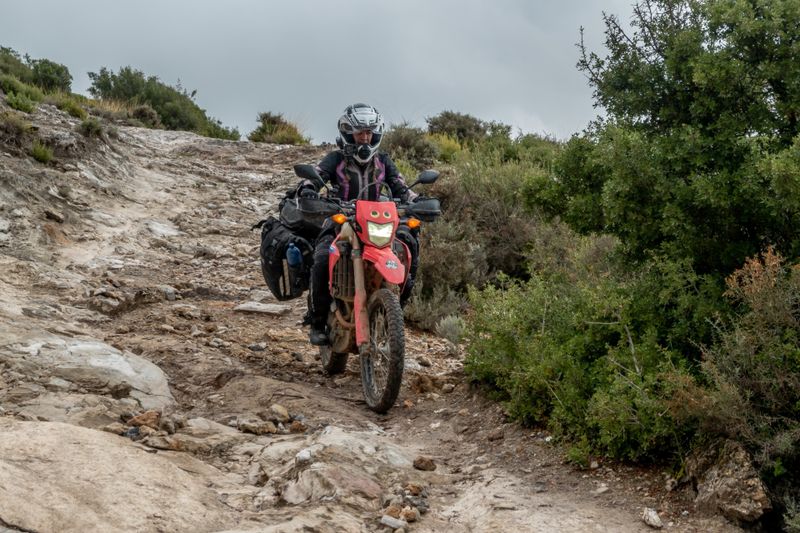
Further west, the Trans Euro Trail splits, and given the conditions, we chose the coastal route. It rained… and rained… and rained. But whenever the sky opened for a moment, the landscape was breathtaking: lush green hills, drifting mist and a light that looked more like Scotland than Spain.
The moisture had one advantage: mushroom season! When we suddenly passed chanterelles and porcini, the decision was obvious. Bikes off, pots out - dinner sorted. Unfortunately my greedy wife grabbed most of them and there weren't many left for me.


Santiago & The Western Edge
As we got closer to Santiago de Compostela, we started sharing the trails with pilgrims from all over the world. Some greeted us warmly, some looked a bit confused, and some stared at us as if we were two motorcycles that had accidentally taken a very wrong turn. But most of them smiled — and we smiled back as we carefully weaved our way past. After all, the last thing we wanted was to knock anyone out of their spiritual awakening.
A little later, we found ourselves completely in the middle of nowhere again, without a single person in sight. Just wild nature, mountains, and valleys stretching as far as the eye could see. Hard to believe there was still so much untouched landscape out here.
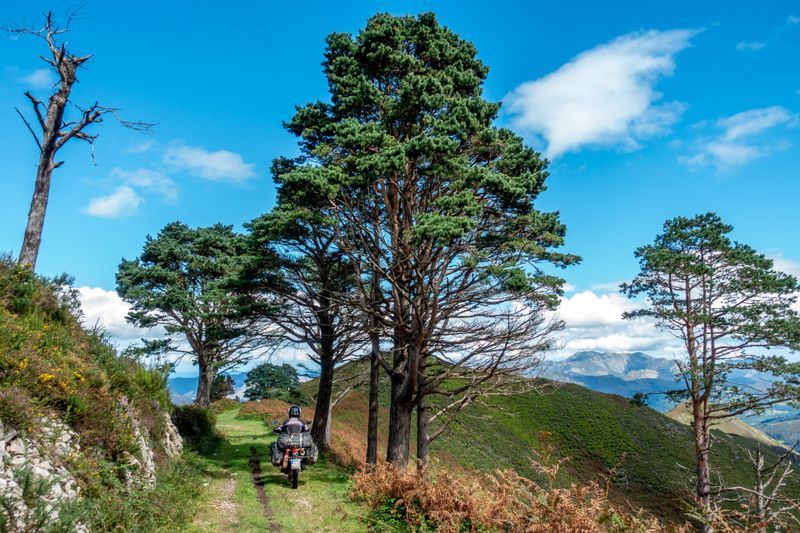
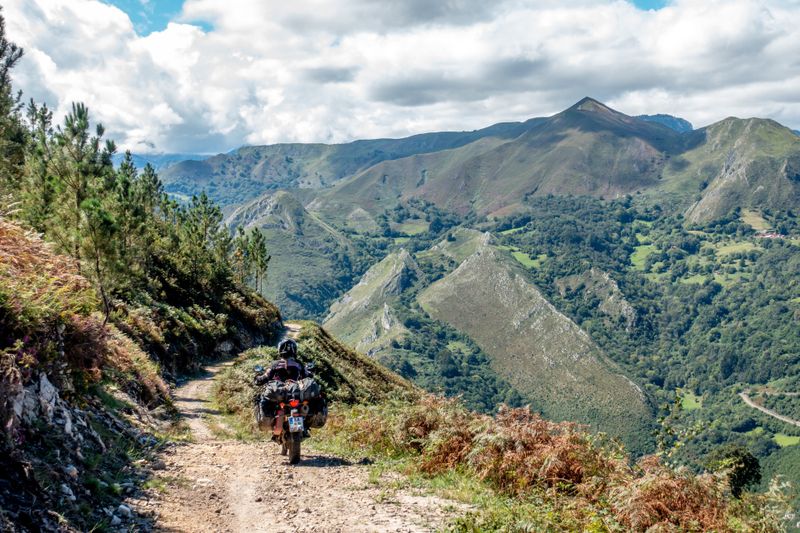
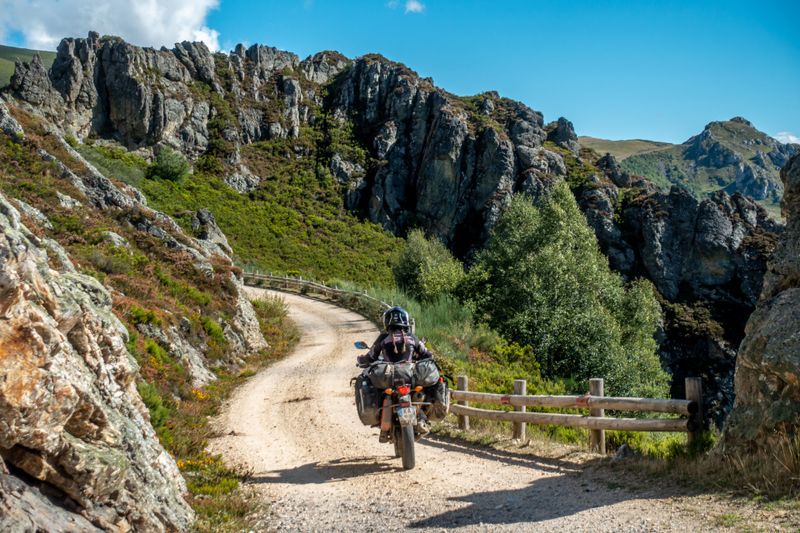
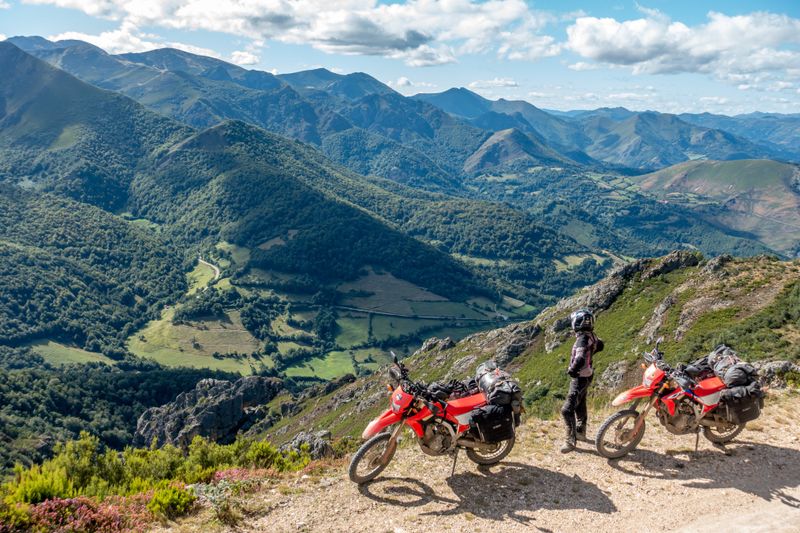
Every now and then we were lucky enough to find a roof for the night - a perfect chance to enjoy some local food (like shrimp) and, of course, a cold beer, which was definitely more pleasant than squeezing into a damp tent. And if we did end up without a roof, it was no problem to camp on a farmer’s field. As Central Europeans we immediately expected trouble, but the next morning he greeted us with a smile, we exchanged a few words, and even took a photo together.
Finding drinking water was just as easy. Many small mountain villages had fountains or springs where you could refill your bottles. No stress at all - out here, the world still felt in order.


Santiago de Compostela is a city that feels like it’s breathing history. The old town is a maze of narrow stone alleys polished by centuries of pilgrims’ footsteps, all leading toward the massive cathedral that dominates the skyline. Even if you’re not walking the Camino, you feel the same quiet energy - a mix of exhaustion, relief and something almost spiritual in the air. The city blends medieval architecture with a surprisingly lively atmosphere: street musicians, cafés tucked under ancient arcades, and the constant flow of travelers arriving from every corner of Europe. It’s the kind of place that feels magical when the sun is out - but we arrived in absolutely miserable weather, soaked to the bone and with zero interest in wandering the old town. Instead, we escaped into a nearby forest and found a wild camping spot with a fantastic view, proving once again that sometimes the best moments happen far away from the postcard version of a place.

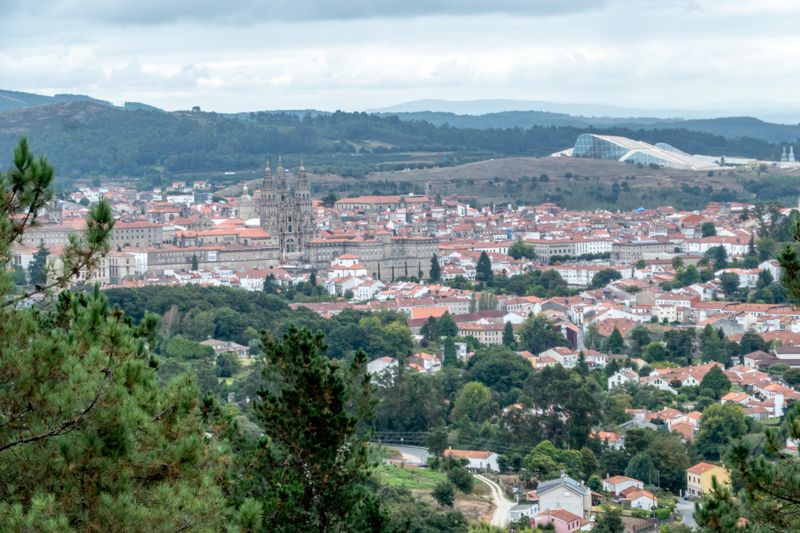
The next morning the weather still wasn’t great - low clouds hanging over the hills, damp air, and that kind of stubborn drizzle that makes everything feel colder than it is. But we decided to ride all the way to the westernmost point of mainland Spain anyway: Cape Touriñán. The road out there felt like the end of the world, winding through tiny stone villages and past windswept fields before dropping toward the Atlantic.
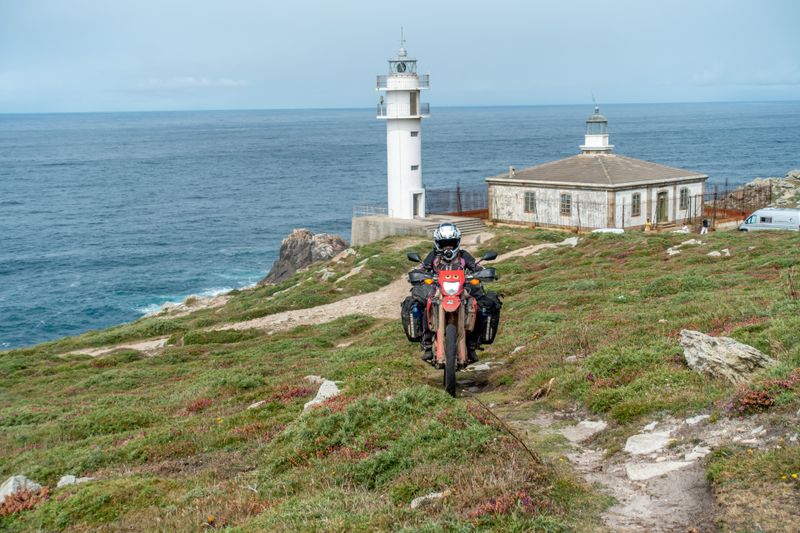
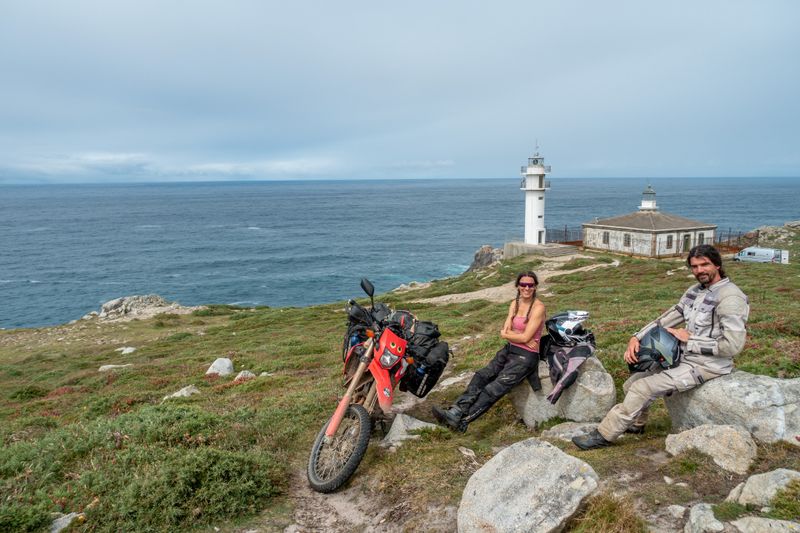
By the time we reached the cape, the sky finally opened up. Suddenly everything transformed: rugged granite cliffs glowing in the sunlight, two lonely lighthouses standing guard over the coastline, and the ocean crashing violently far below. The contrast between the stormy ride and the perfect weather at the cape made the place feel even more dramatic - like Galicia wanted to reward us for pushing through the morning gloom.
Hot Springs & The End of the Road
Following the coast southward, the landscape changed once again: granite hills, beautiful bays (sadly too cold for swimming) and dense eucalyptus forests.
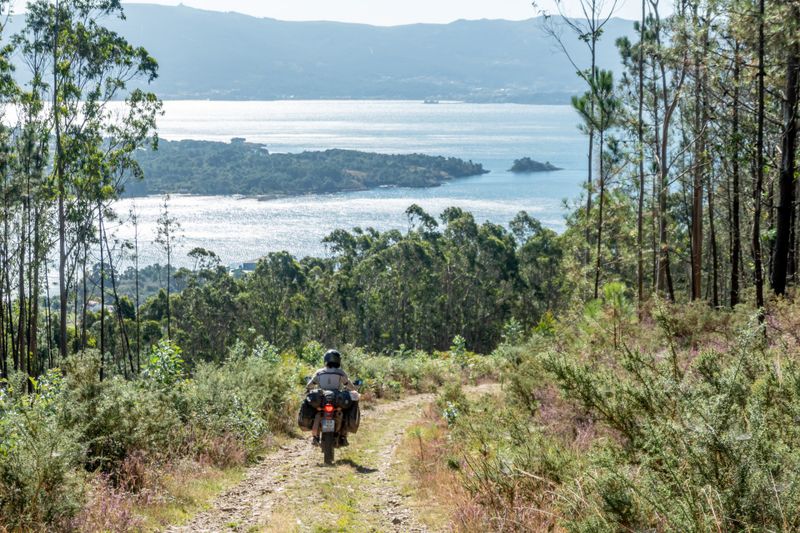
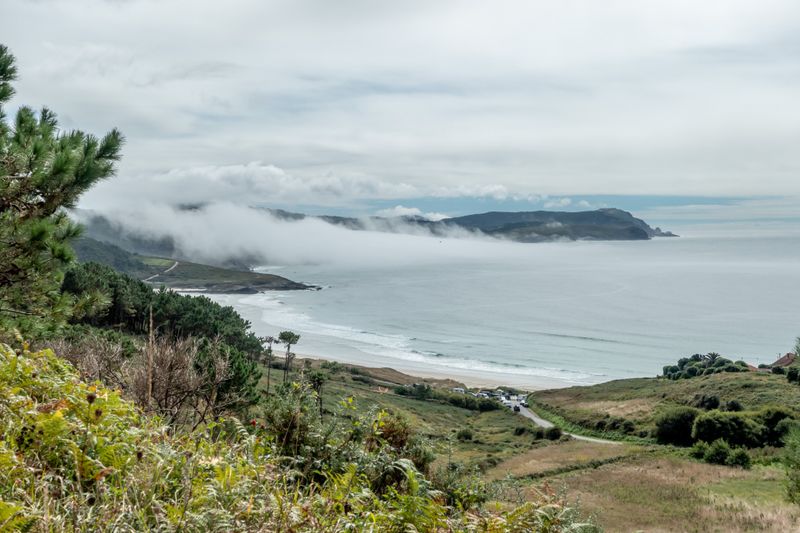
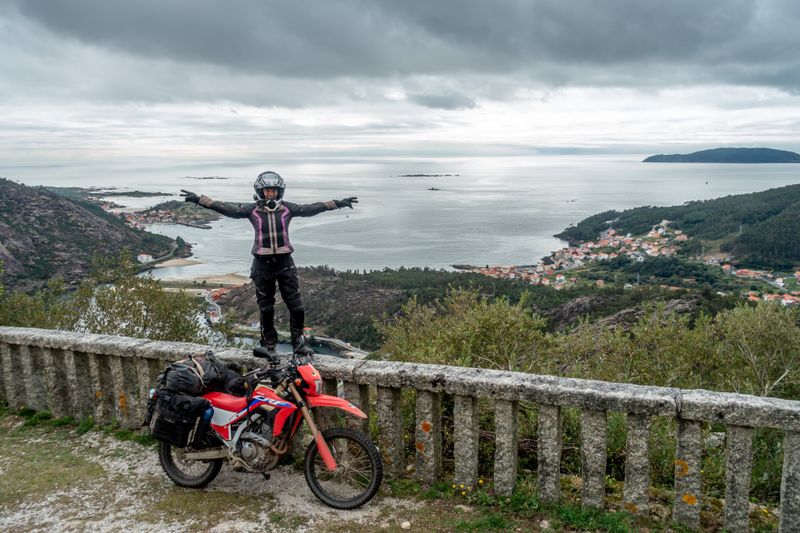

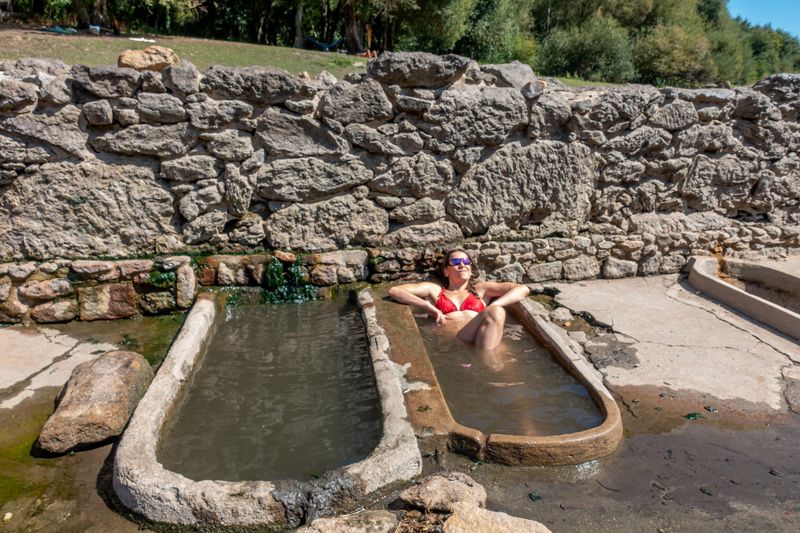
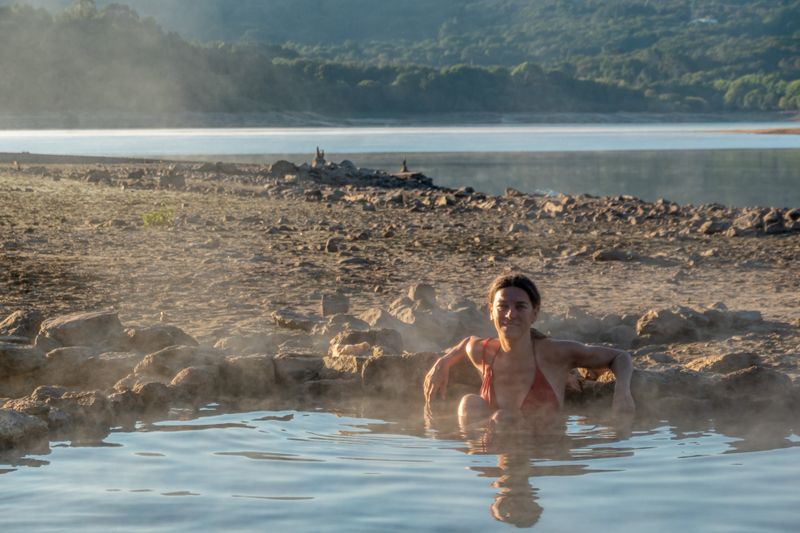
We rode to Vigo and then turned inland toward a special place we had been told about. Near the Portuguese border, at the Encoro das Conchas reservoir, lie the ruins of an ancient Roman fort - and right beside it, natural hot springs. After days of cold and rain, soaking in warm, mineral‑rich water felt like heaven. The springs weren’t flooded, and we could even camp right next to them. A small paradise - so we stayed for two nights.
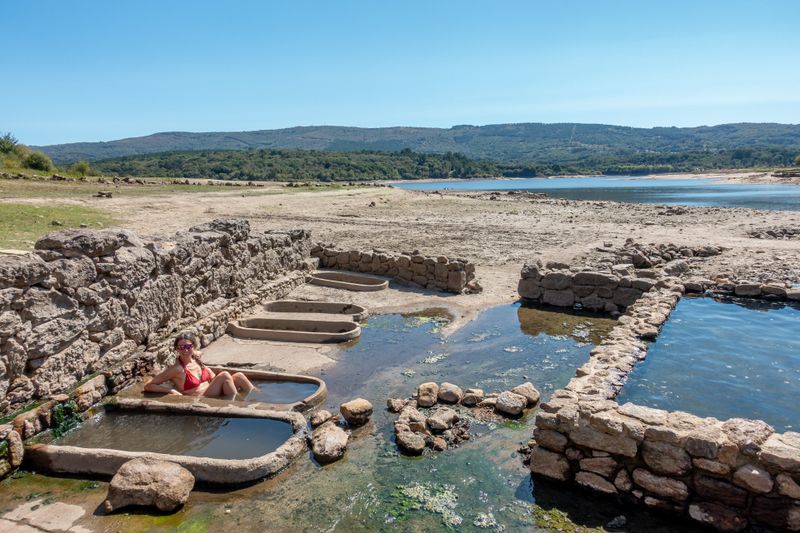

And so our lush, wet, wild journey through northern Spain came to an end. We packed up, pointed the bikes south and crossed into Portugal.
But that… is another story.
About the Authors
We’re Miri and Tobi, aka RTWriders - two adventure riders who prefer muddy trails over crowded beaches and wild camping over hotel breakfasts. We’ve been exploring the world on two wheels since 2018, always chasing remote places, unexpected moments and the kind of stories you only find far away from the main roads. If you enjoy off‑road travel, wild landscapes and honest adventure reports, feel free to follow along for more rides.


Comments