 Reykjavik, Capital Region, Iceland
While working at this picture the HF20 happened to everyone on the platform. So the picture was a bit late but thankfully it made it to the competition from @derangedvisions, thanks for that!. But anyhow it was way to fun to read into this building so I’ll decided to create a post about it.
The competition for last week was about architecture, and to be more specific buildings from all around the world. I choose one of my favorite buildings. From the moment we’ve met in Iceland I loved it. You can ask @dboontje I’ve spent quit some time here, enjoying the always changing natural and artificial lights on the building.
Why Harpa
As we all know the weather changes a lot in Iceland, and by a lot I mean a lot. From minute to minute the weather can change instant. This ecosystem is formed I assume because of all the volcanic activity, all the ice everywhere and the strong winds. All these things create an ecosystem that never stops moving I assume.
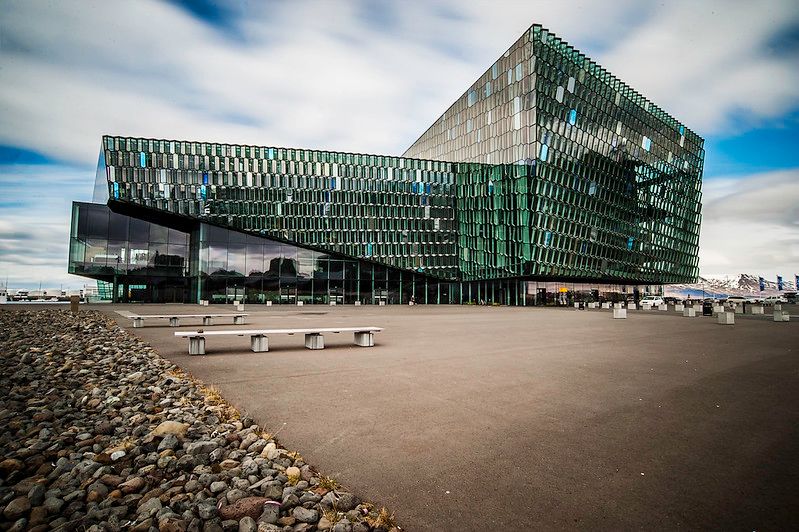
The designers from Harpa took this always changing weather as the main influence too model this building for hosting concerts and opera. The designers from this building are Henning Larsen en Olafur Eliasson. They tried to catch the always changing light and the different forces that created Iceland the way it is nowadays. These different forms of energy are modeled so that they feel as tangible as possible.
History of Harpa
Harpa is designed in the year 2001, started building in 2006 and they opened the doors in 2011 for the public. This building is a symbol for the economic boom from the nineties en the first years of the zero’s, but for the crisis years also. Since 2007 Iceland got into a financial crisis that paralysis life in the whole country. The same year the Landsbanki (biggest financier for this project) had the choice to stop the construction works while they were halfway or just finish the project. Thankfully they choose for the last option. Iceland has a new hot spot and a tourist highlight. Finally the Icelandic people have a place for their concerts and the bank has a perfect location for conferences.
Talking about finance… What will they pay each year for window cleaning? 🤔
Location
Harpa is located in Iceland, the (my opinion not a fact) most beautiful country in the world, photographer’s paradise. Placed in the capital Reykjavik at a spot between the harbor and the city center.
The residential area where Harpa is located is entitled to reinvent themselves. Another reason the building is built at it’s current location.
Architecture
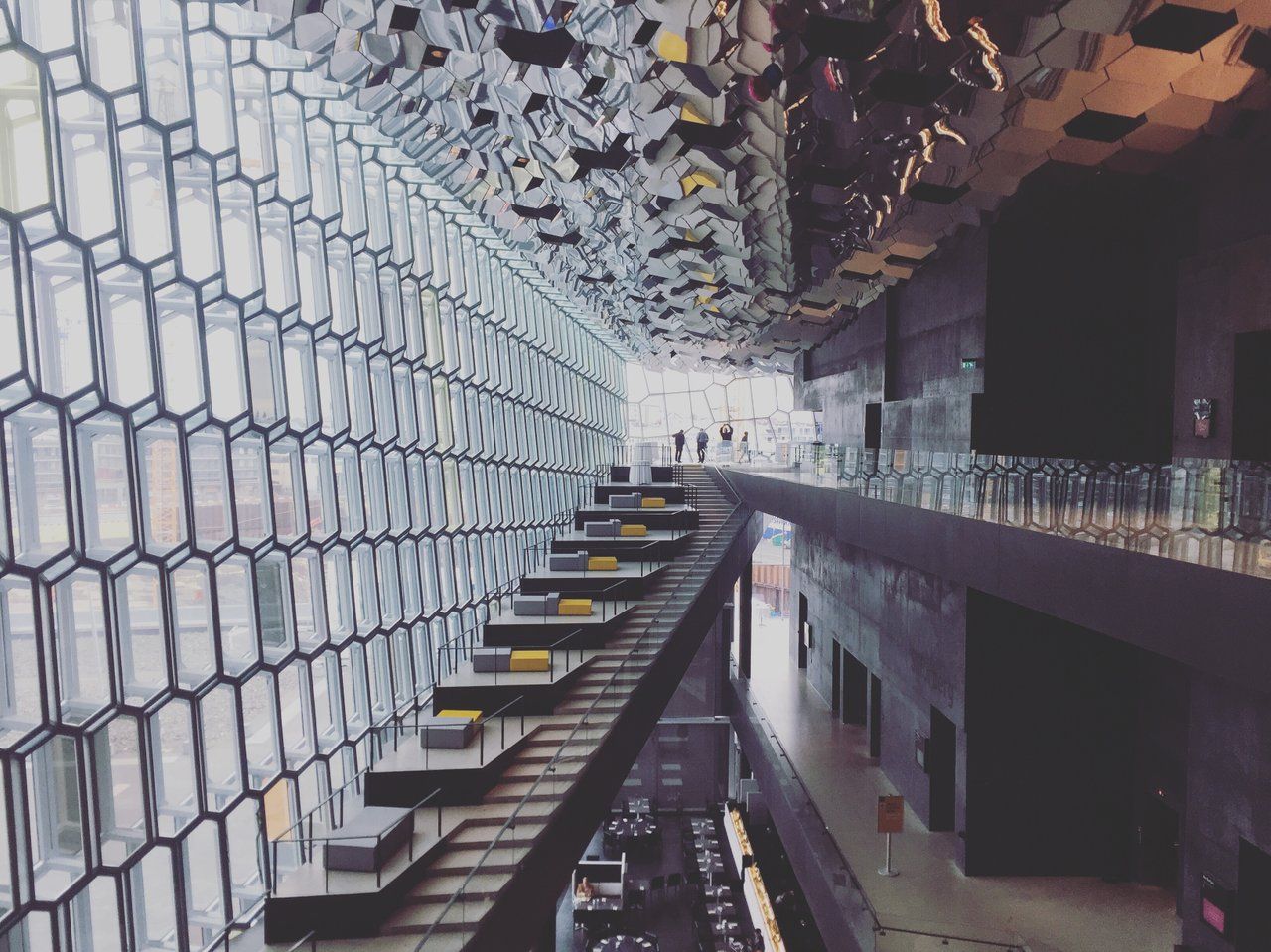
Hara’s unique feature is light and by that I mean artificial lights and natural lights. The 3D facade of the building creates endless optical views and perspective distortions. When you walk from the water toward the building you will notice how the reflective glass panels shine in the light and with every step the light changes. But not only the light also the views of the building blending in the Icelandic landscape change with every step. Once your inside look at the glass interior and the views across the harbor.
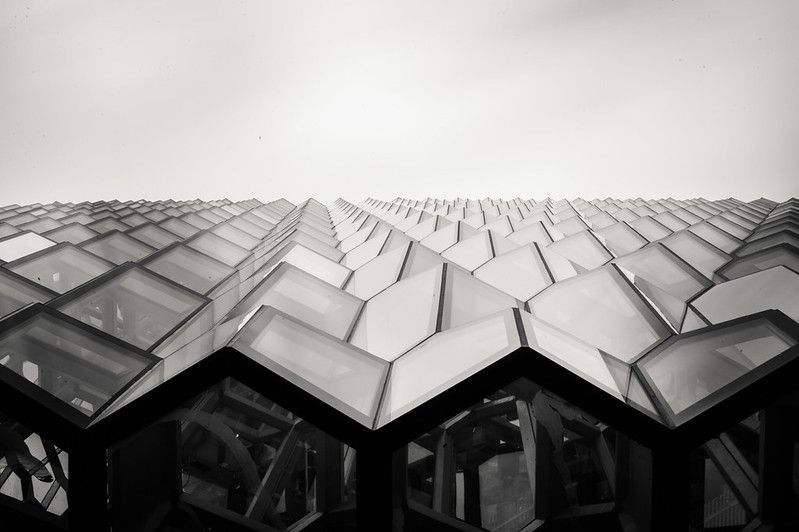
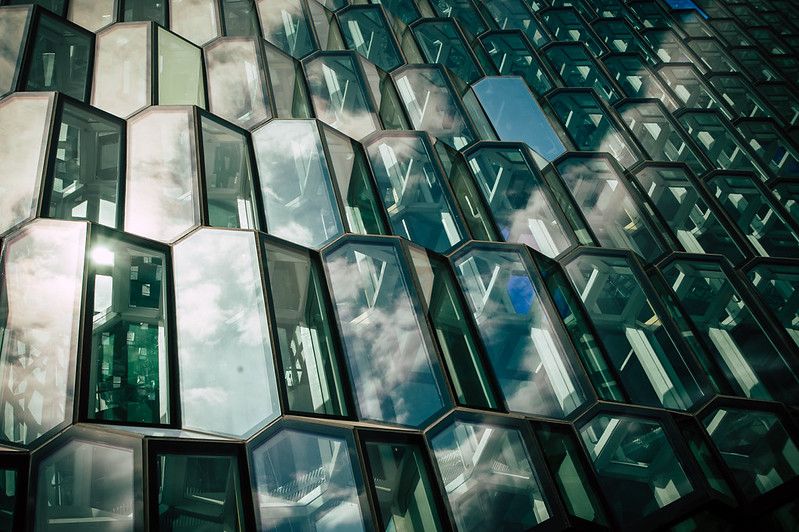
The signature of Harpa is its skin the facades creates a connection between the concert and conference hall volumes. The overlay is actual the structure of bricks builds from stain and glass. There are different facades created of those geometric bricks. For example, the south facade features 823 individually crafted 12 sided bricks. To give you an idea of the size of the different bricks, in each one a human being would easily fit. The remaining facades and the roof are made by 2D variants of the bricks. All those bricks are designed with 3D computer models
 |  |
|---|
Light
The team studies the movement of the sun and the city lights from Reykjavik. This study was needed to create this surface that reflects the clouds and sky when you look from the outside of the building towards it. The inside the colored glass panels create a play of light by different colors on the floor, balconies, and the polished steel from the ceiling.
Not only the natural light plays a role in the lightplan from the architect. There are also more than 700 LED strips embedded in the façade of the building. Each strip is covered in a handmade extrusion to match the geometry of the brick. Each LED strip uses the full spectrum of RGB LED’s, and very cool part has a unique address. The address can be used to program the strips individually so that a unique color changing light show can be programmed.
There are 10 different types of glass used across all the bricks, including three dichroic colored glass. The yellow-green-orange and this will reflect the blue-red and purple. Also did they use plain simple clear glass, anti-reflective with different coatings to have a difference between the reflectivity and colors are used.
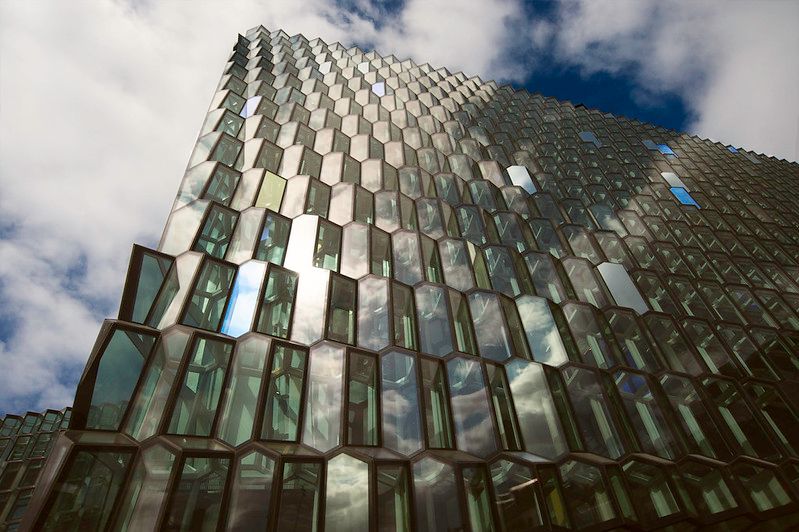
All those types of glass are combined to create the visual effects in the south façade. Small example when you combine anti-reflective glass with clear glass behind it the viewer will have a clear view, but when you combine it with a dichroic glass it reflects a kaleidoscopic view of the interior. And you can go on and on like this when you pair the dichroic glass with an anti-reflective on the front and back of it. By all those combinations the architects did use their study of the sunlight. For example in the morning a brick can look solid, but when the light changes during the day the same brick can appear transparent in the afternoon. At this point we’re getting crazy when you start combining daylights with the LED strips. Each brick interacts different with the LED strips and the different colors it produces.
Imagine they created a program for each individual light. This program is a 75 second loop for each light and the lightning for each brick is the same. But the start time for each brick is different. So, this means that none of the bricks will ever run the same sequence at the same time.

Materials used
The Icelandic landscape isn’t only used to design the outside of Harpa, but they thought about the inside as well. The four halls have black pigmented concrete walls. They absorb the warmth of the sun and are inspired by a cooled down lava theme. The interior of the concert hall continues with this volcanic theme with the red of heated lava.
Acoustics
But they didn’t only put so much money in the building for the light effects. Oh dear thankfully not. Sound is the most important thing of course while the building has the function of being a concert hall. All the halls have perfect calculated acoustics. The halls itself have a simple form, the so called shoe-box. This is a traditional shape for a concert hall. This shape in all its simplicity guarantees acoustic quality’s by nature. But the designers wanted it better than anywhere else in the world. They hired the best company in the world Artec consultants inc.
They installed multiple elements in the hall that changed the acoustics immensely. The first one that everyone will notice is a heavy weighted element that hangs partially over the auditorium and covers the stage completely. This acoustic object can be lowered till almost floor levels and raised in the ceiling. In addition to this object they created acoustic doors. These doors can be opened according to the need, last subject is the paneling installed to absorb sound. Reverberation from the sound can range from 1,7 till 3 seconds. I measured it at my own place and I can have 6 at it’s best at the moment.
Quote
"I must say that the sound is really beautiful. . . . I think it could be one of the best houses in Europe. I think we have to learn to play our instruments again, because the things we do don’t work in here, which is a great thing. But it will take a long time I think and we will have to be patient and optimistic, but at least already everything is much smoother sounding."

- Sigrún Eðvaldsdóttir
The Principal Violinist in the Iceland Symphony Orchestra
Hereby some images from the concert hall insides where you can see the acoustic elements mentioned above.
 |  |
|---|
Pricewinner
Harpa did win some prices, and I think the most important one has been the EUMiesAward. This is a price for contemporary architecture. This award is granted every two years to acknowledge and reward architectural production in Europe. Last year Amsterdam won this price with the DeFlat Kleiburg. In 2013 Harpa had some though competitors in the Red Bull Music Academy in Madrid, the Market Hall in Ghent and the Metropol Parasol in Sevilla.
Sources
Arctec Consultants
VoxEurop
EumiesAward
Nordic Life
The Guardian
The picture for the contest
Hereby the picture I delivered for the competition.
@derangedvisions thanks for creating this wonderful contest. Keep up the good work! 😀👍
Please Follow, Upvote and Resteem
If you like my content, don't forget to upvote this post and follow me for more every day life stories! Also, I will be happy if you leave a comment to tell me your thoughts and resteem this post to share my work!

Travelfeed
 |
|---|
Learn more about our travel project on Steemit by clicking on the banner above and join our community on Discord. How does travelfeed work? Simple just use the tag #travelfeed in your travel posts (min. 250 words) for a chance to be curated!

Comments