 Paris, Ile-de-France, France
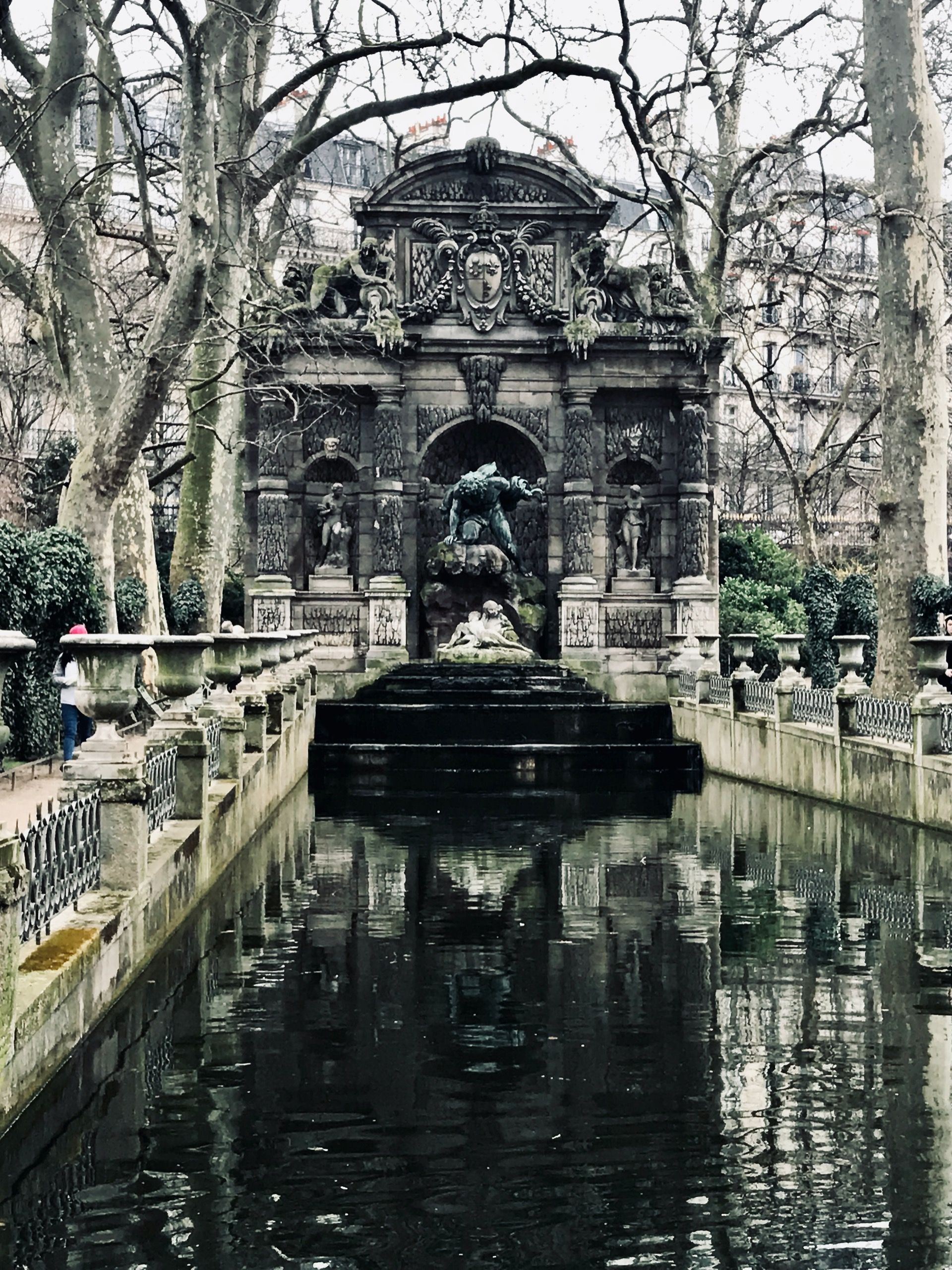
Bleak. That's how I would describe Paris. Well, Paris in the month of March, anyway. Cold. Dismal. Dormant. Hey, it can't always be springtime in Paris...
As we were making our way around the city, the 6th arrondissement to be exact, we found ourselves here, at the La Fontaine Médicis, at the edge of Luxembourg Gardens. As I stood peering into the darkened pool of water, the absence of color in this scene washed over me.
The stone basin, covered in ancient algae, had also collected a fair amount of black soot from the modern streets of Paris. Even the iron grating set between decorative stone pillars was dulled by oxidization. And with the Spring yet to emerge, the trees, bare and stark, added no warmth, no life, to this French fountain.
Constructed around 1620 by Queen Marie de' Medici, second wife of King Henry IV, perhaps the darkness of this pool and its surrounds was intentional. King Henry IV died the day following Marie's ascension to the throne, and she then served as Regent to her son, King Louis XIII.
Her seven year rule of France while her son gained the age necessary to govern by himself was marked by extreme intrigue and turmoil within the French Court. So often the tumult that rests in our hearts is exposed through our works...
Perhaps in summer the green of leaf and the warmth of sunshine transforms this place into one of gentle, soft beauty. But I doubt it. The imposing backdrop of the grotto set over those squared steps leading down to the water seems incapable of the merest whisper of softness.
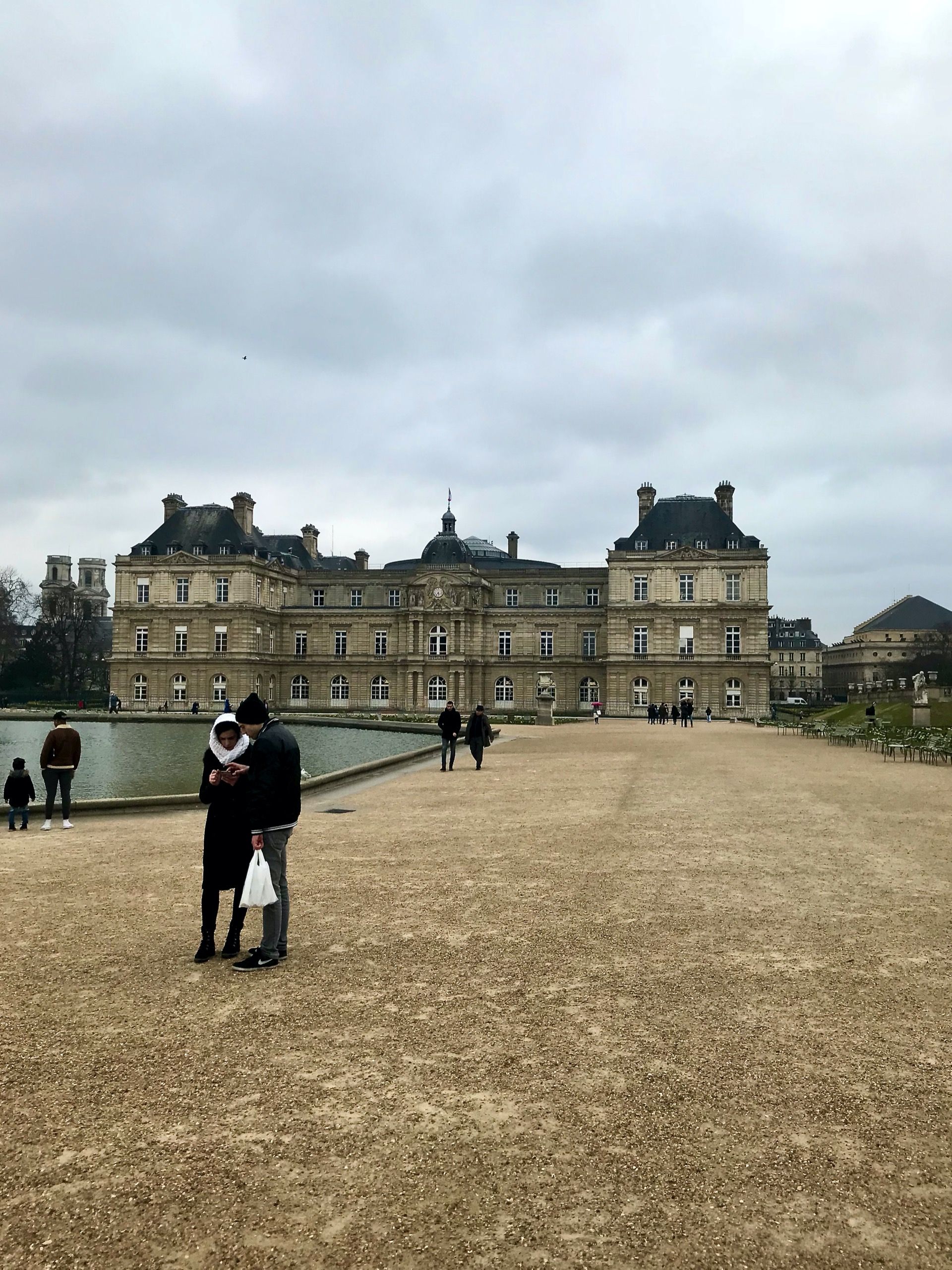
The Palace, itself, or as Marie de' Medici referred to it, Palais Médicis, was fashioned after the Palazzo Pitti in her native Florence, Italy. It served as her principle residence until the 1640's when it began to pass through the hands of family members until the mid-1750's.
Covering 23 hectares, the Jardin du Luxembourg features gardens that stretch away from the palace with tree-lined avenues, flowerbeds, gardens, and of course, the Medici Fountain. It is an oasis, of sorts, in the heart of Paris. A green respite amongst the fashionable buildings and bustling streets of Paris proper.
On this stormy day, however, the open spaces serve only to provide zero resistance to the harsh, winter winds that whipped away at us as we paraded the grounds. The skies above Palais Médicis as dark and tempestuous as the fountain that also bears her name.
The Jardin du Luxembourg, Palais Médicis, and La Fontaine Médicis are within easy reach from most parts of Paris as it lay in the near center of île-de-France. While the crowds of tourists are certainly more tamed in the colder months of the year, I would willing trade the solitude for sunlight, and to view what must be beautiful displays of flora and fauna all around what is now the home of the French Senate.
I also must return to La Fontaine Médicis in summer. I wonder if it transforms to something lighter and more forgiving, although my heart suggests that it does not.
Cheers!


Comments