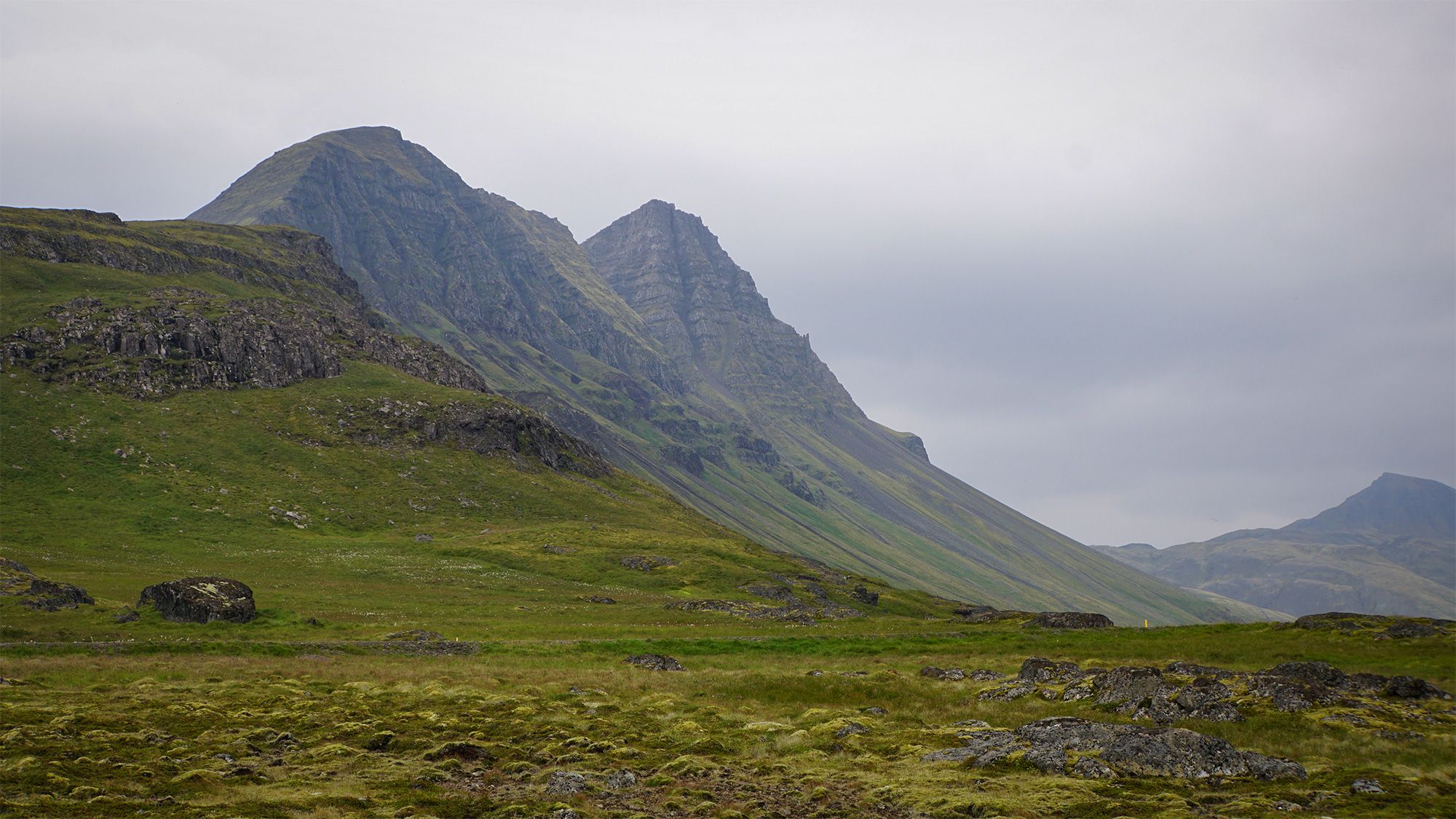
 Árneshreppur, Iceland
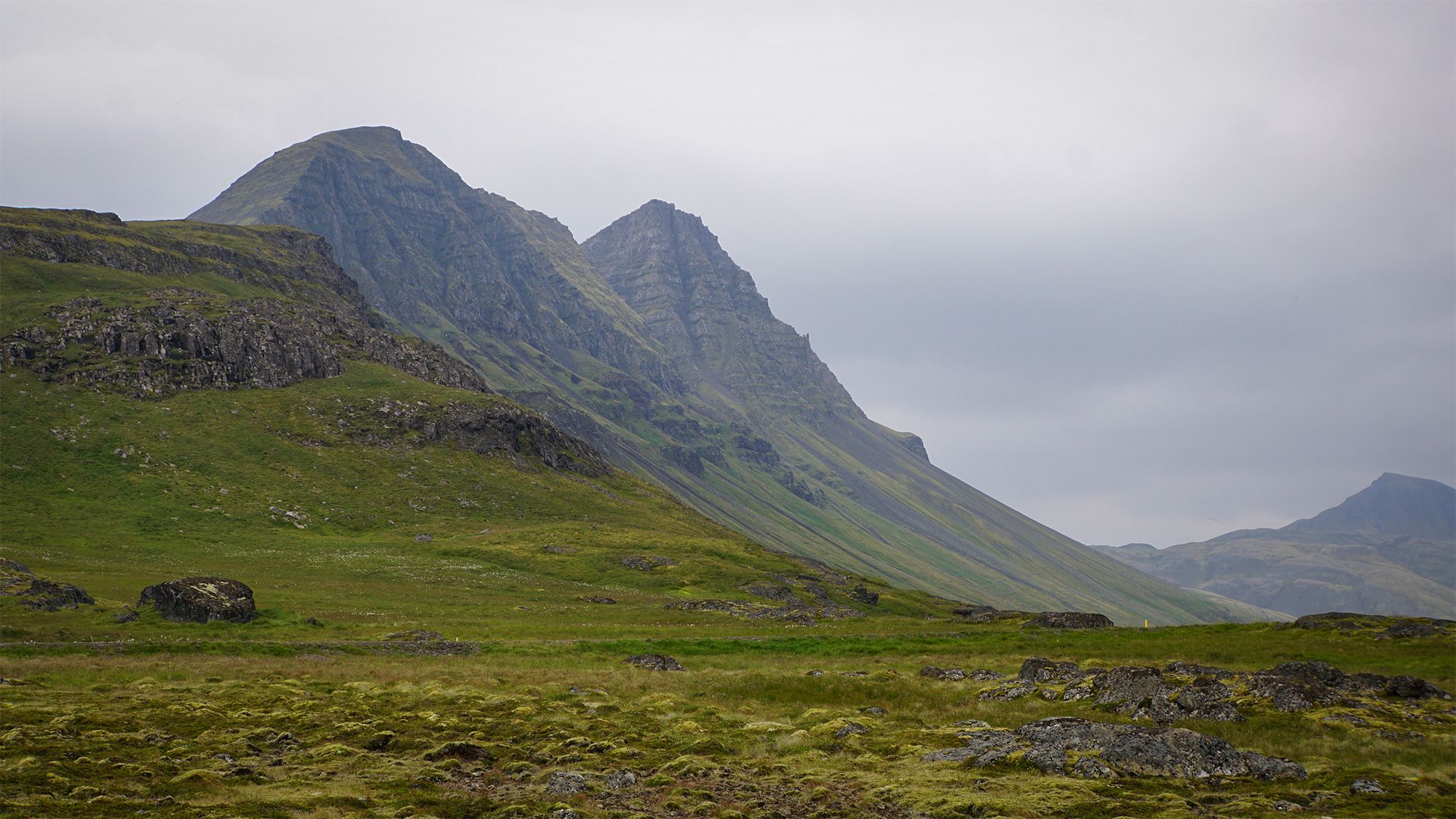
The last day in the Westfjords was cloudy and rainy. The key thing was the lack of strong wind - I have a rule that if there is no wind, it means it's warm and you can explore ;) So I decided to use the time I had left to visit at least a small part of the mysterious Strandir. It's a small coastal region that includes, among other places, Norðurfjörður and the nearby settlements. It's an absolutely fascinating land - raw and magical.
In the morning, my friend and I had an invitation to have coffee at her friend's place. I also had the chance to meet him two years ago, when he came to our area to restore a hiking path near Djúpalónssandur beach. He does this kind of work all over Iceland, and his projects are special because he decorates them with his own carvings.
After a very nice meeting, we went out. Her dog Kubbur (in Icelandic - block) came with us.
First, we visited a path that her friend recently built in the small bay of Kistuvogur. It commemorates the story of three victims burned here in 1654 for practicing witchcraft. This event started Brennuöld (the Age of Fire) - a period of witch hunts. In Iceland, twenty men and one woman were killed at that time.
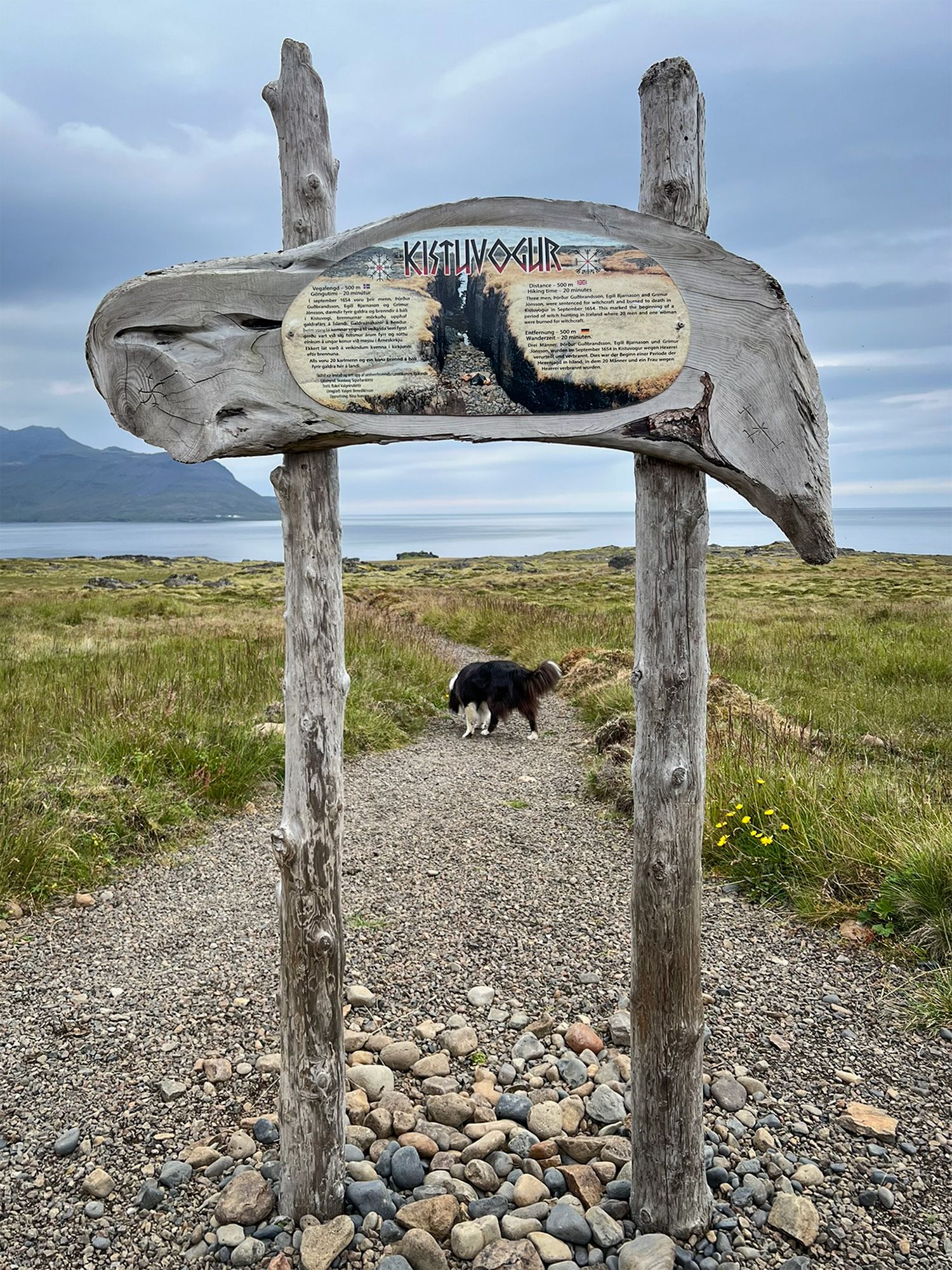
This madness happened all over Europe and on other continents. We all know about it, but today we treat it more like folklore, or fascinating horror stories. But it really happened back then. I felt it while walking along the short path, decorated with carvings, toward the place where, in the name of a sick idea, three living and feeling human beings were tortured to death.
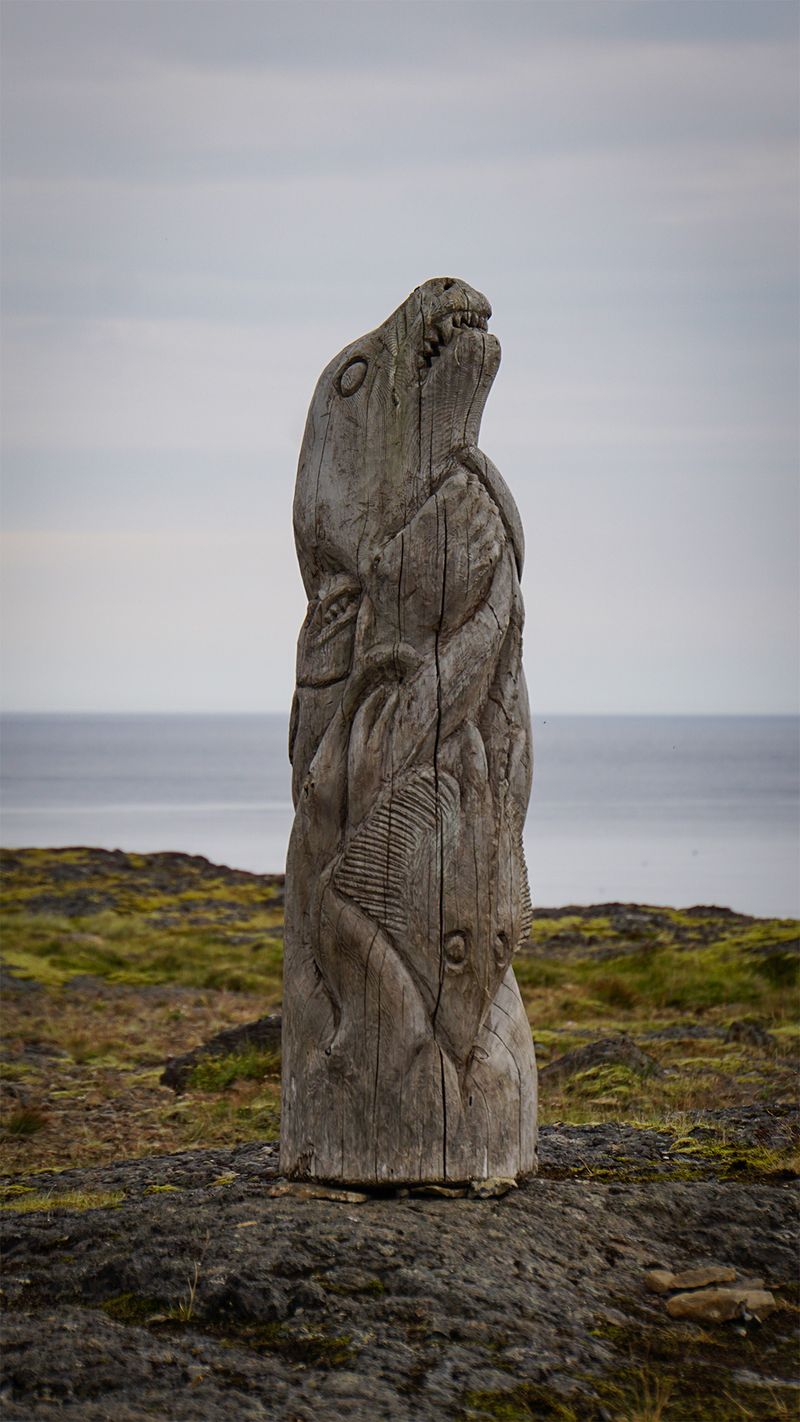
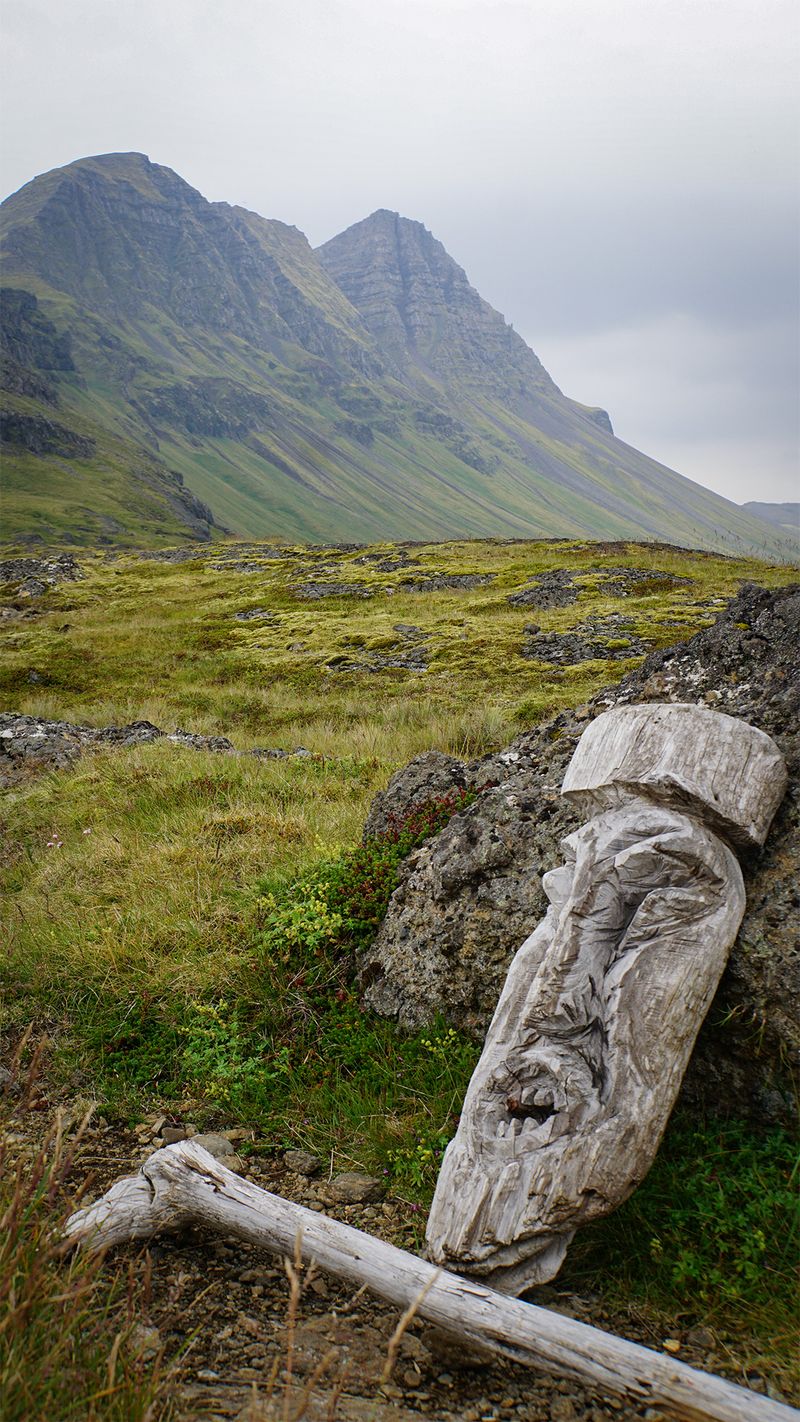
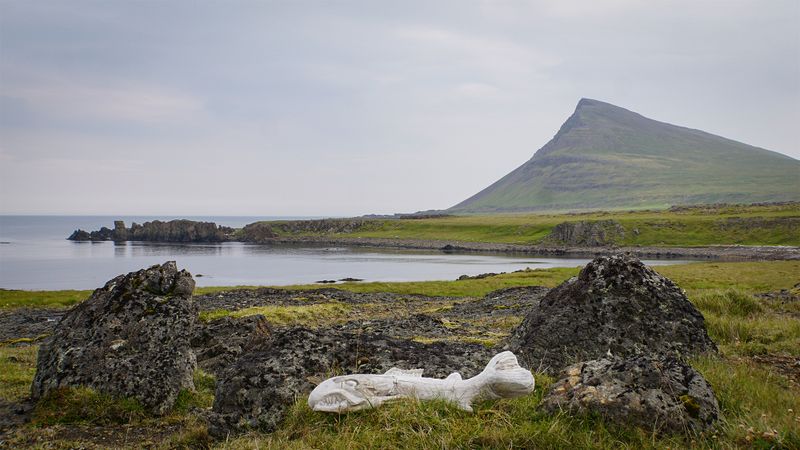
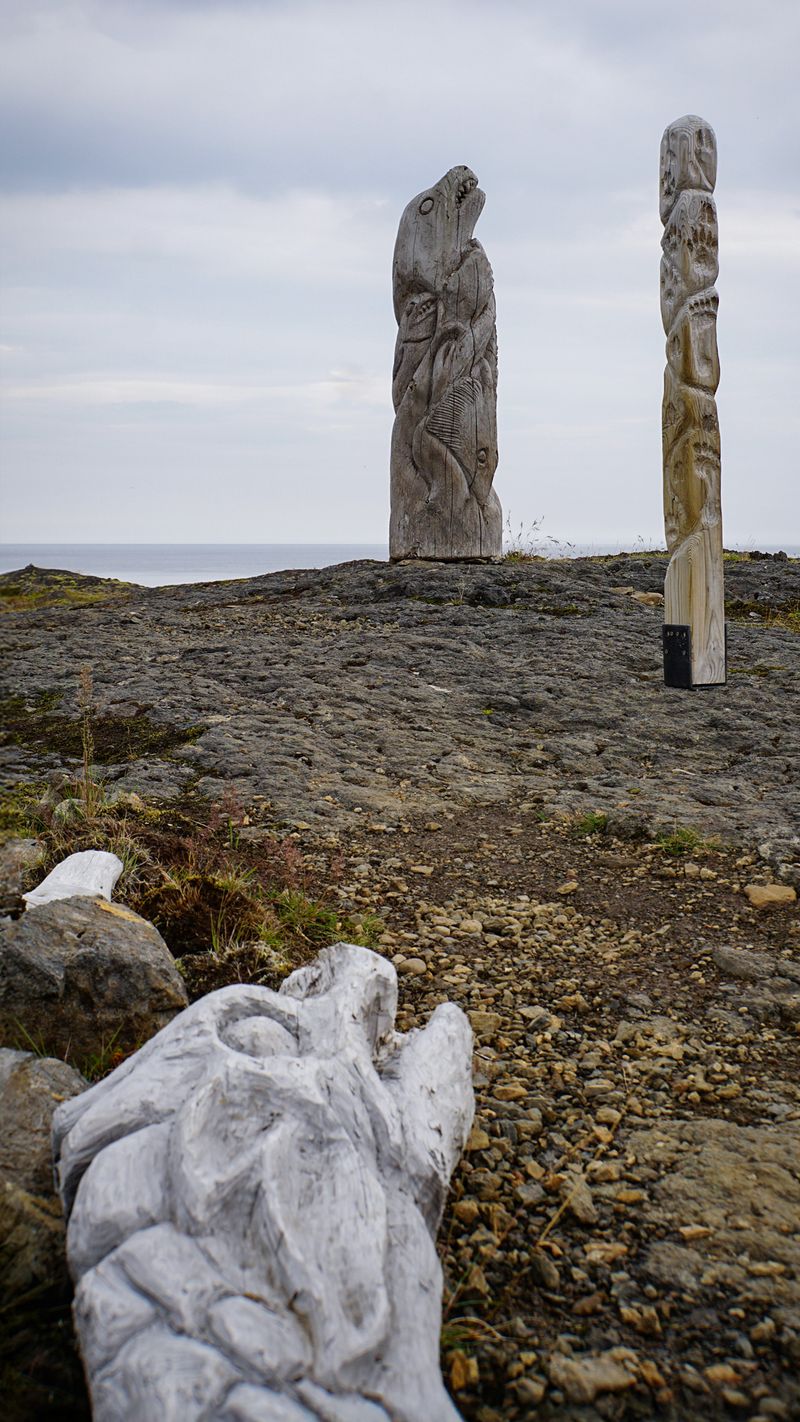
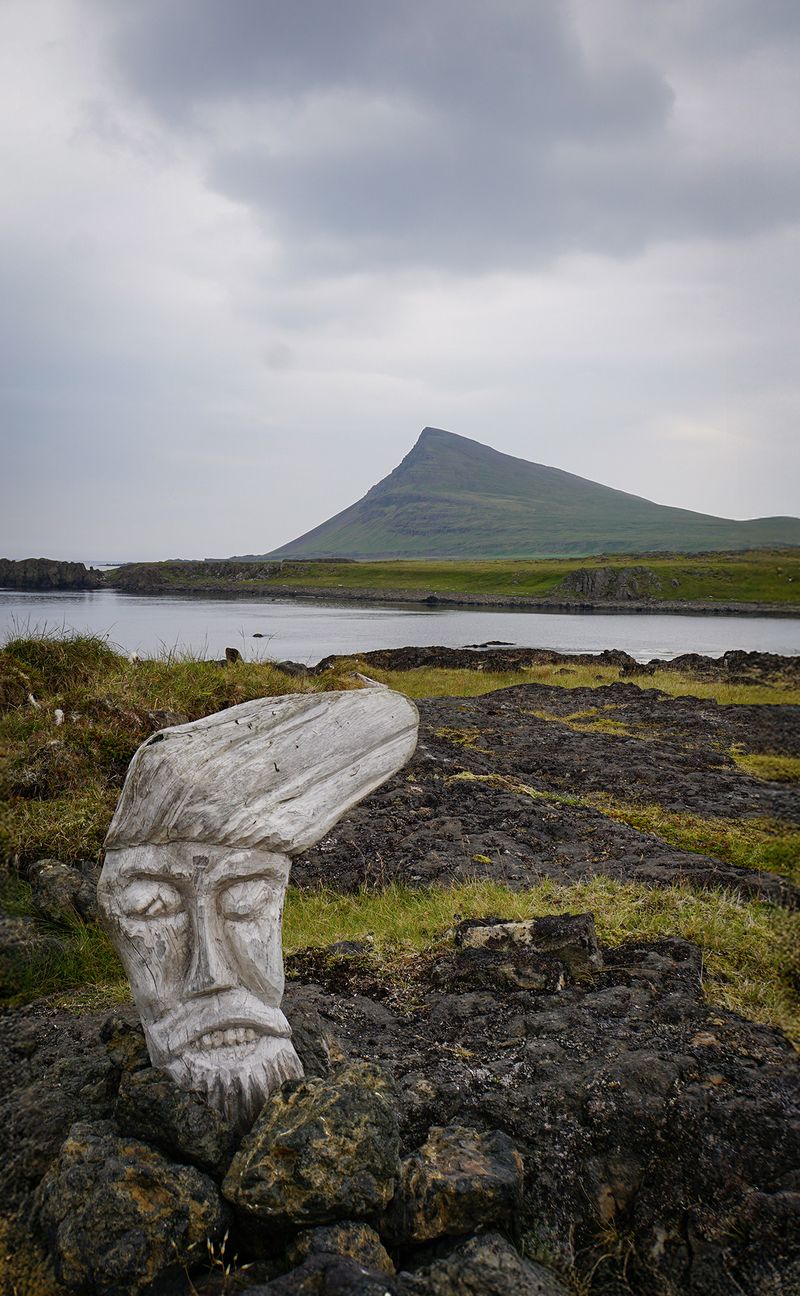
The place is unusual. On one hand, you can feel tension, as if those terrible moments are still there. On the other hand, raw nature holds it all in its arms, calming human despair. The carvings perfectly combine the painful history of humanity with the wild energy of nature. Some stand proudly like totems. Others are left carelessly here and there, like fossilized remains of ancient beings.
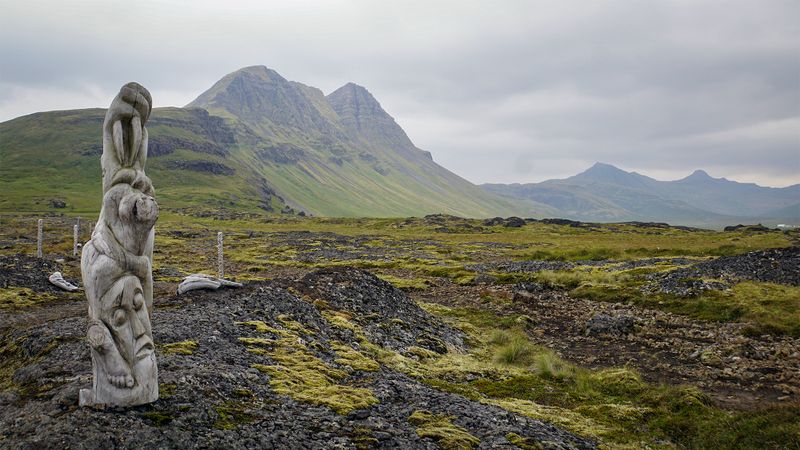
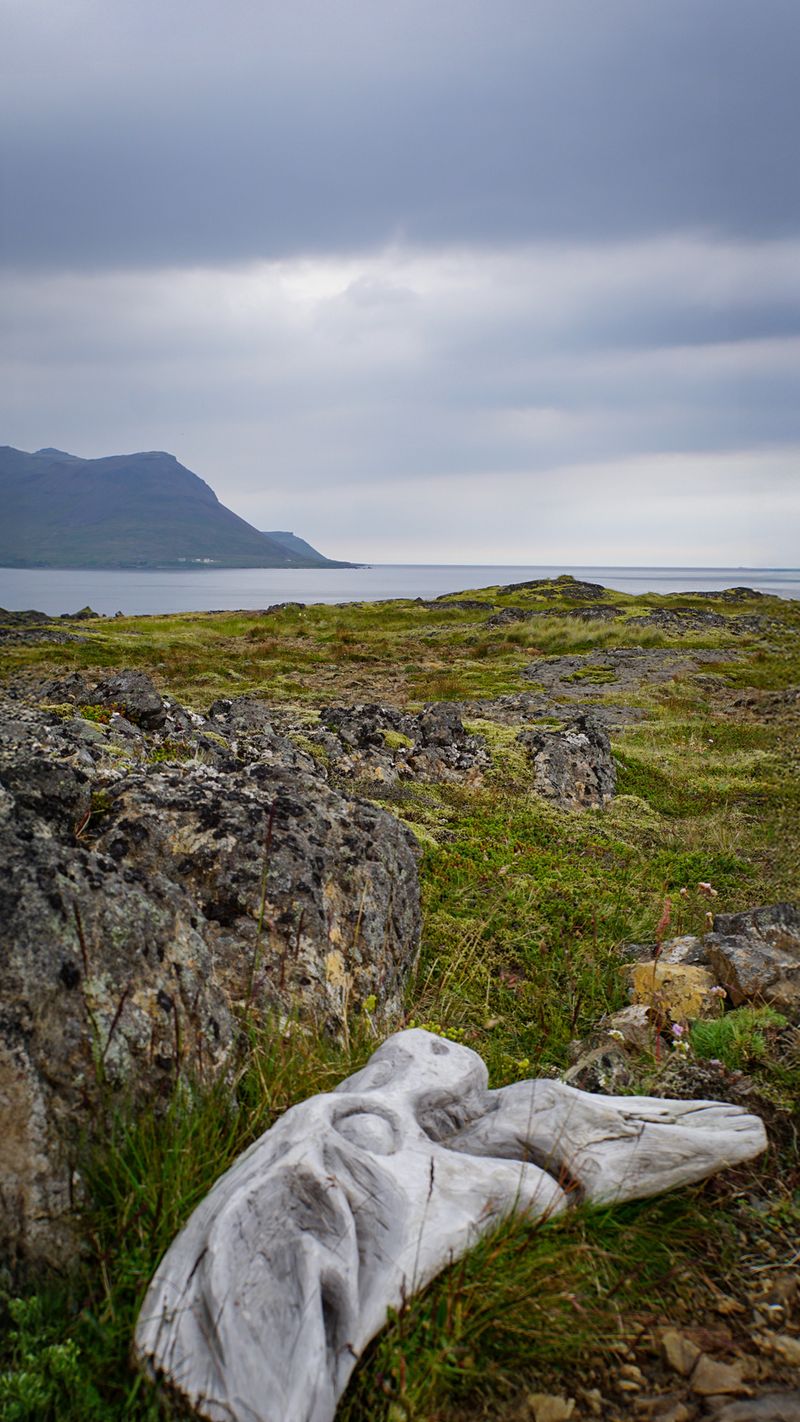
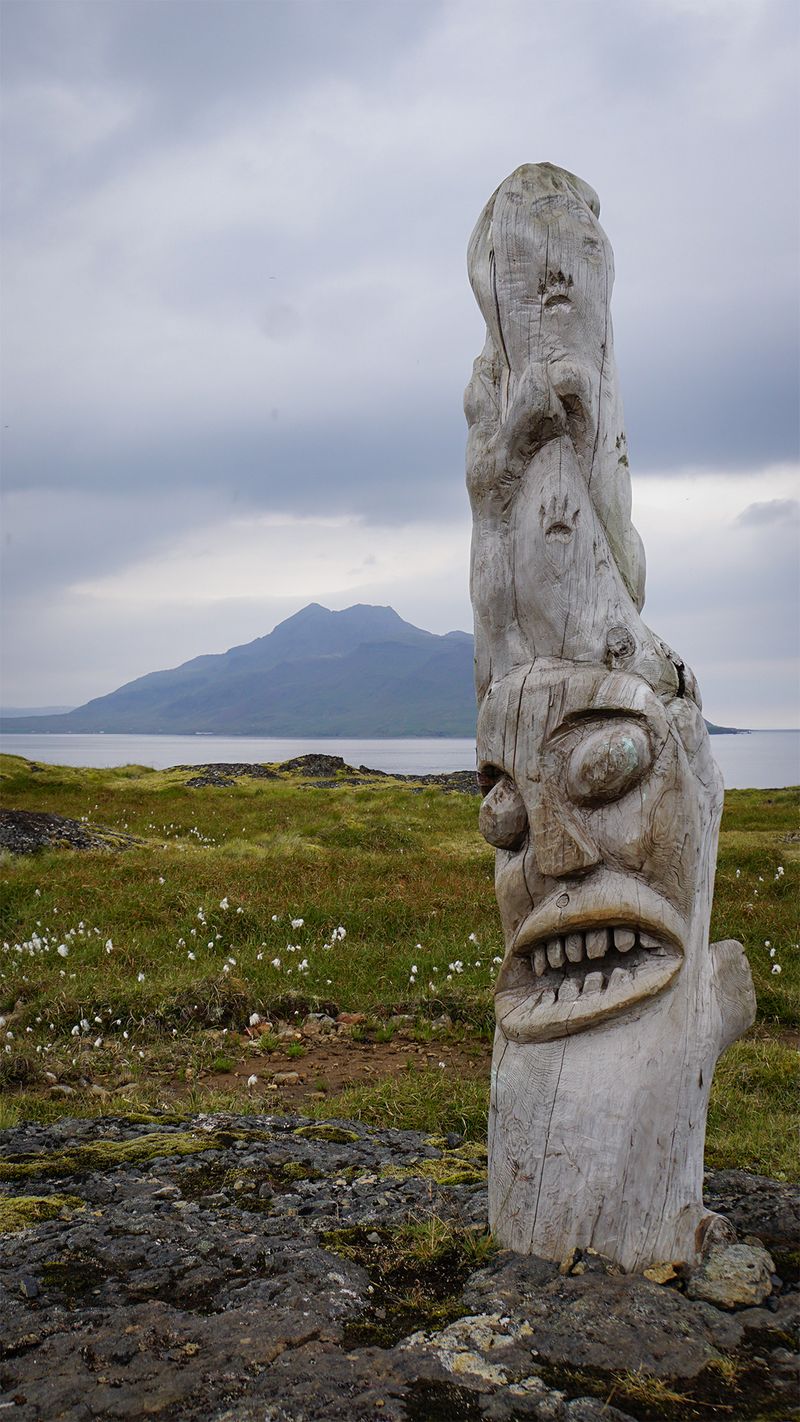
The place of execution is a narrow crack in the coastal rocks, cutting deep into the land. You don't know how to behave in a place like this. Usually I do what I do in cemeteries - take a moment to see the people who are no longer here, honor their existence, and show respect.
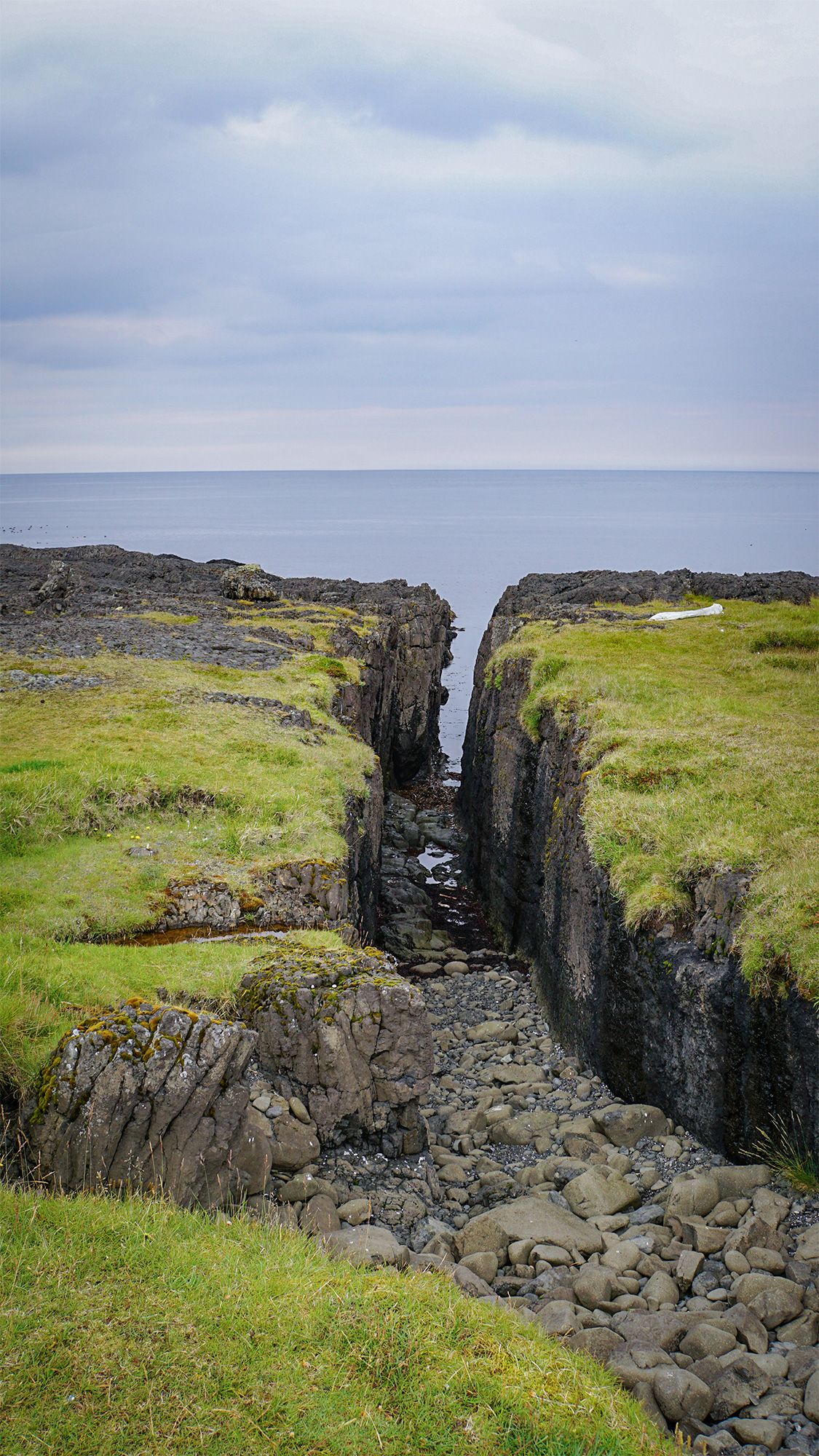
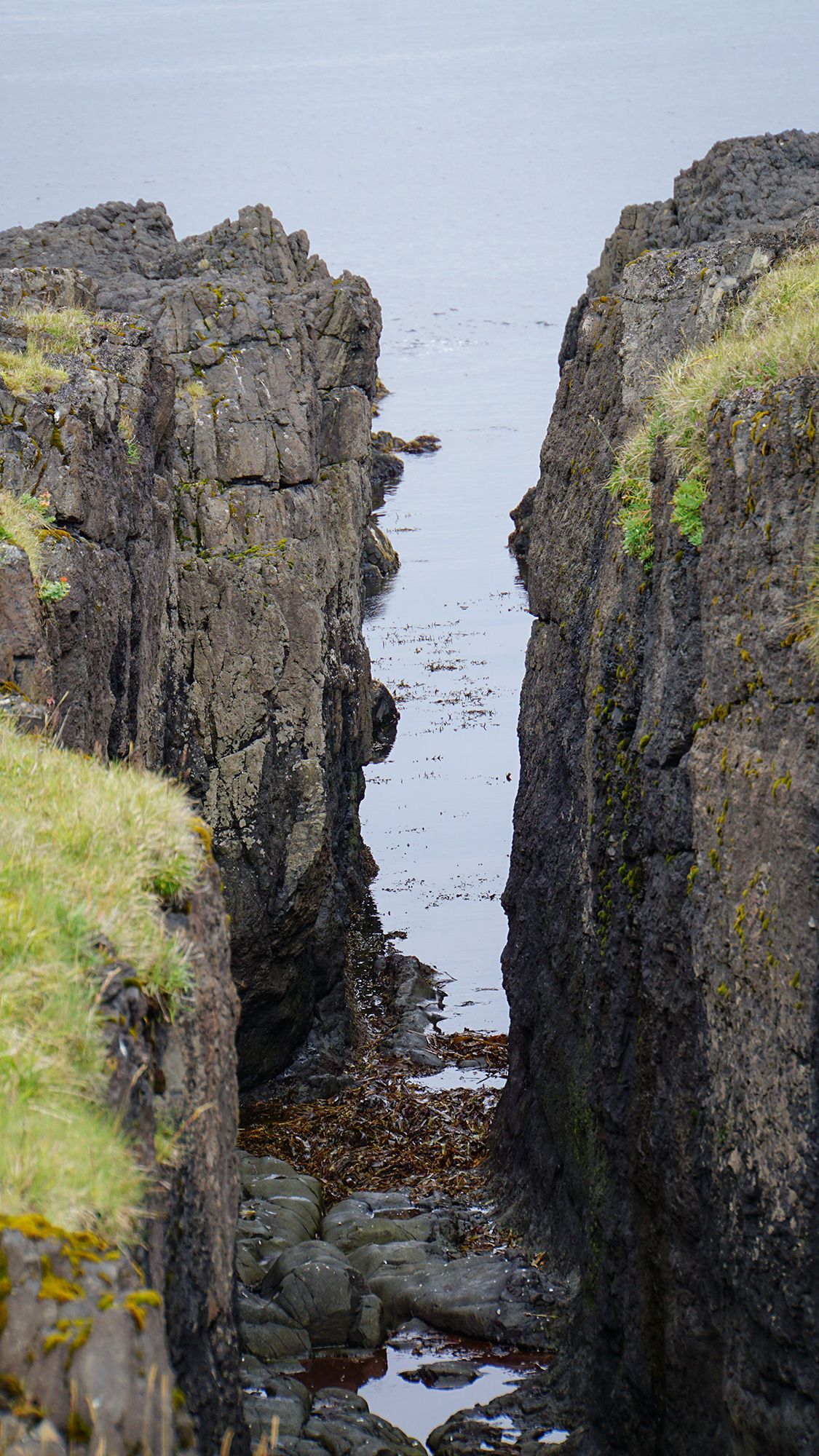
After that, you can only walk away, back to your own life and your own matters.
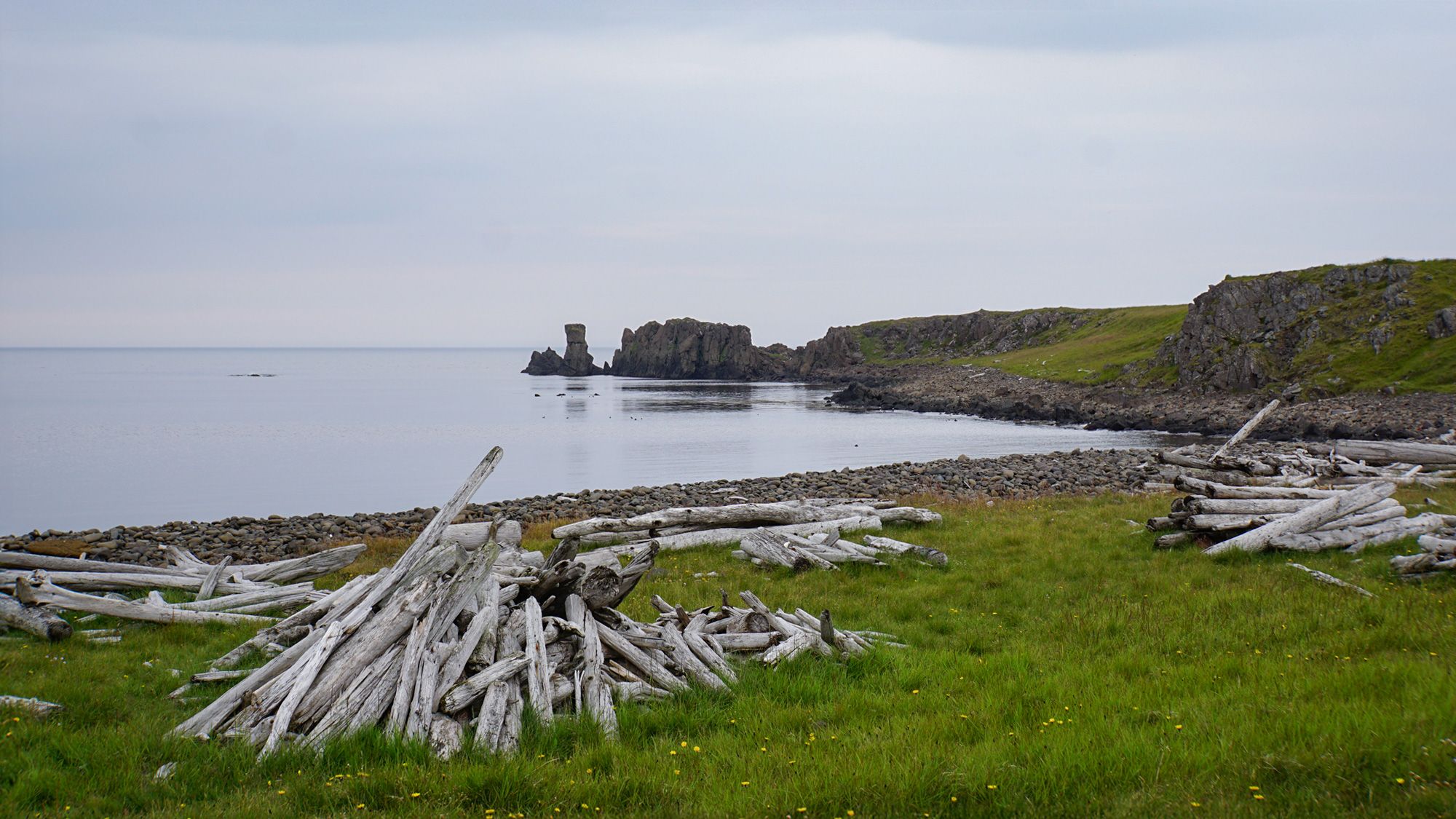
While we were there, we also walked around the nearby area for a while. Both here and the day before, when I was driving along the coast, I noticed large amounts of wood washed up on the shore. Some of it lay in a mess, and some logs were stacked in piles.
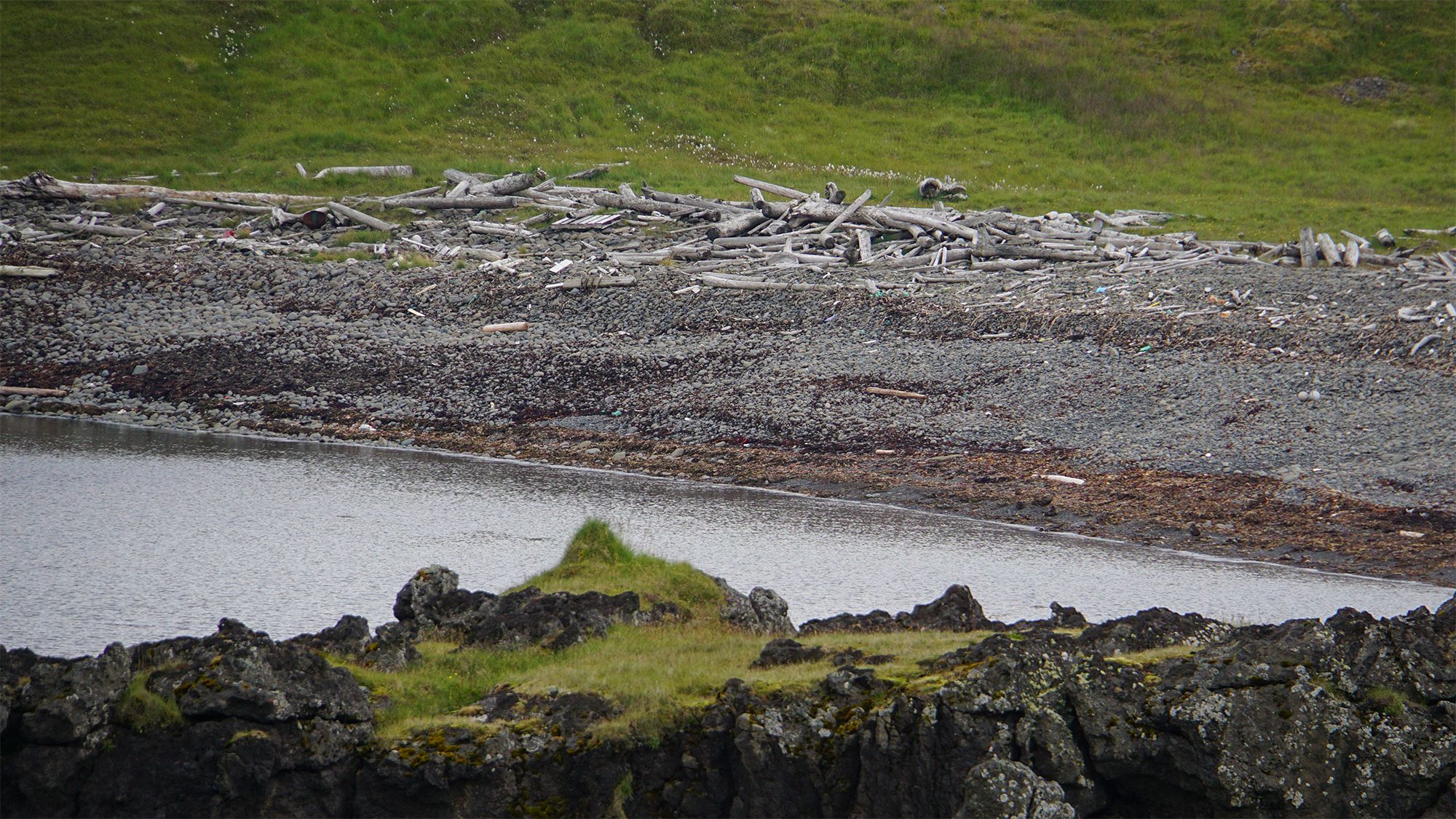
It is driftwood that drifts to Iceland from Siberia. It used to be one of Strandir’s main resources, because wood was and still is a rare material in Iceland. The wood that washes up belongs to the owner of the shore. You should not just take it freely. So far I have met two sculptors in Iceland, and both carve in this kind of wood, which makes their works look a bit like they were made from old bone.
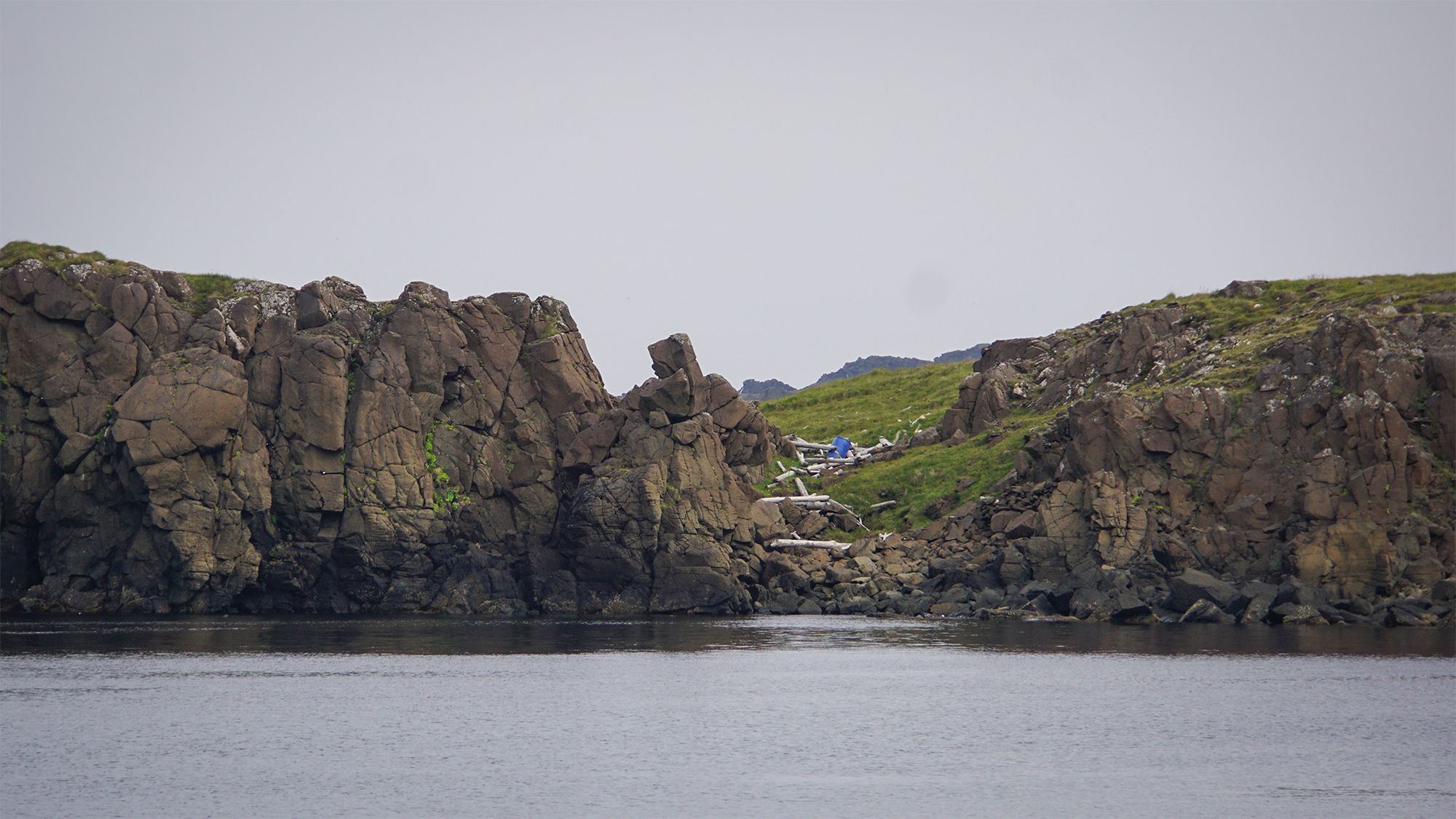
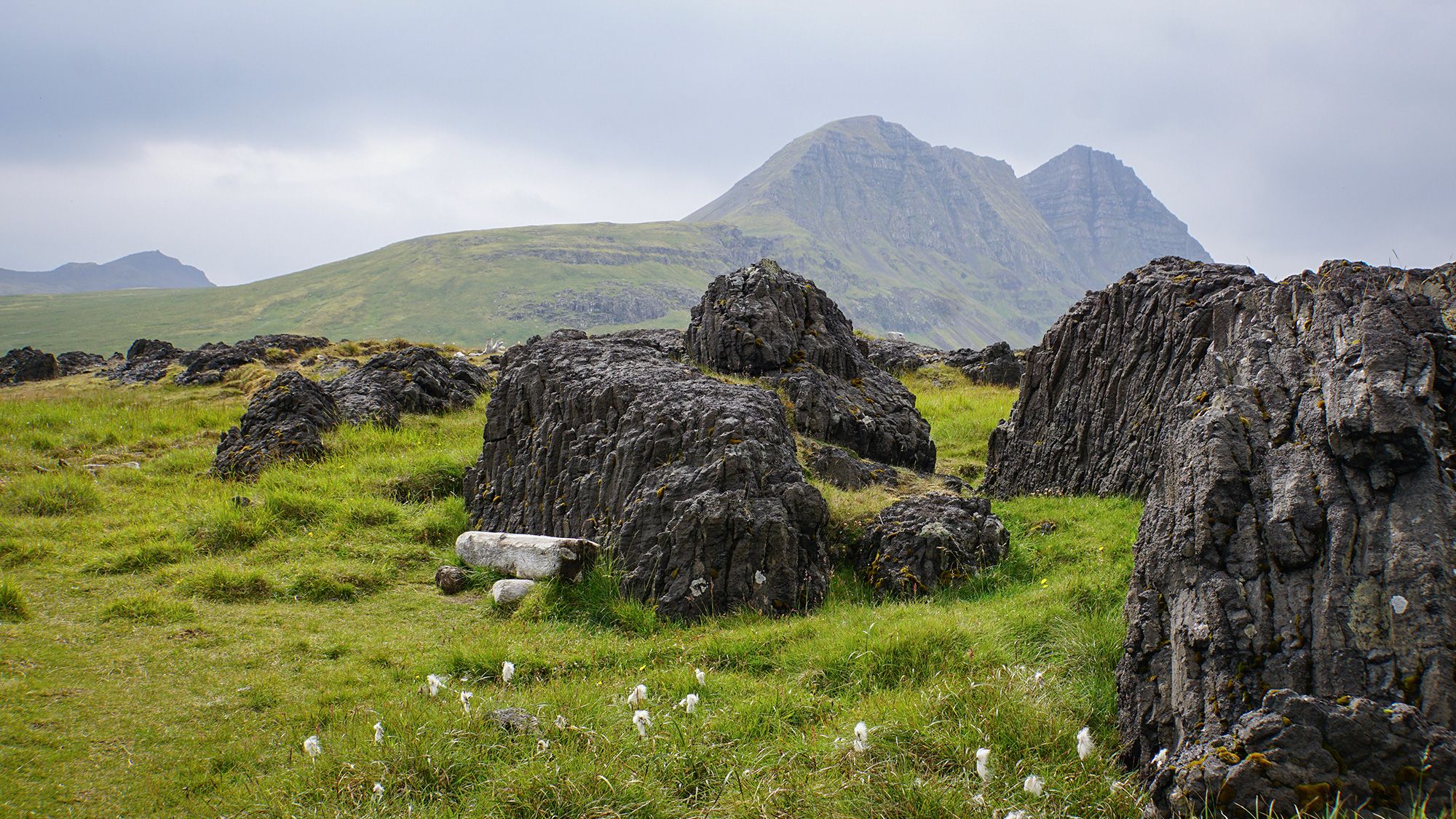
Of course, there are also elf stories connected to this place. It's better to live with them in friendship, even if you do not believe in them - just in case. You have to respect the places where they live and not disturb their peace. It's also good to leave them small treats.
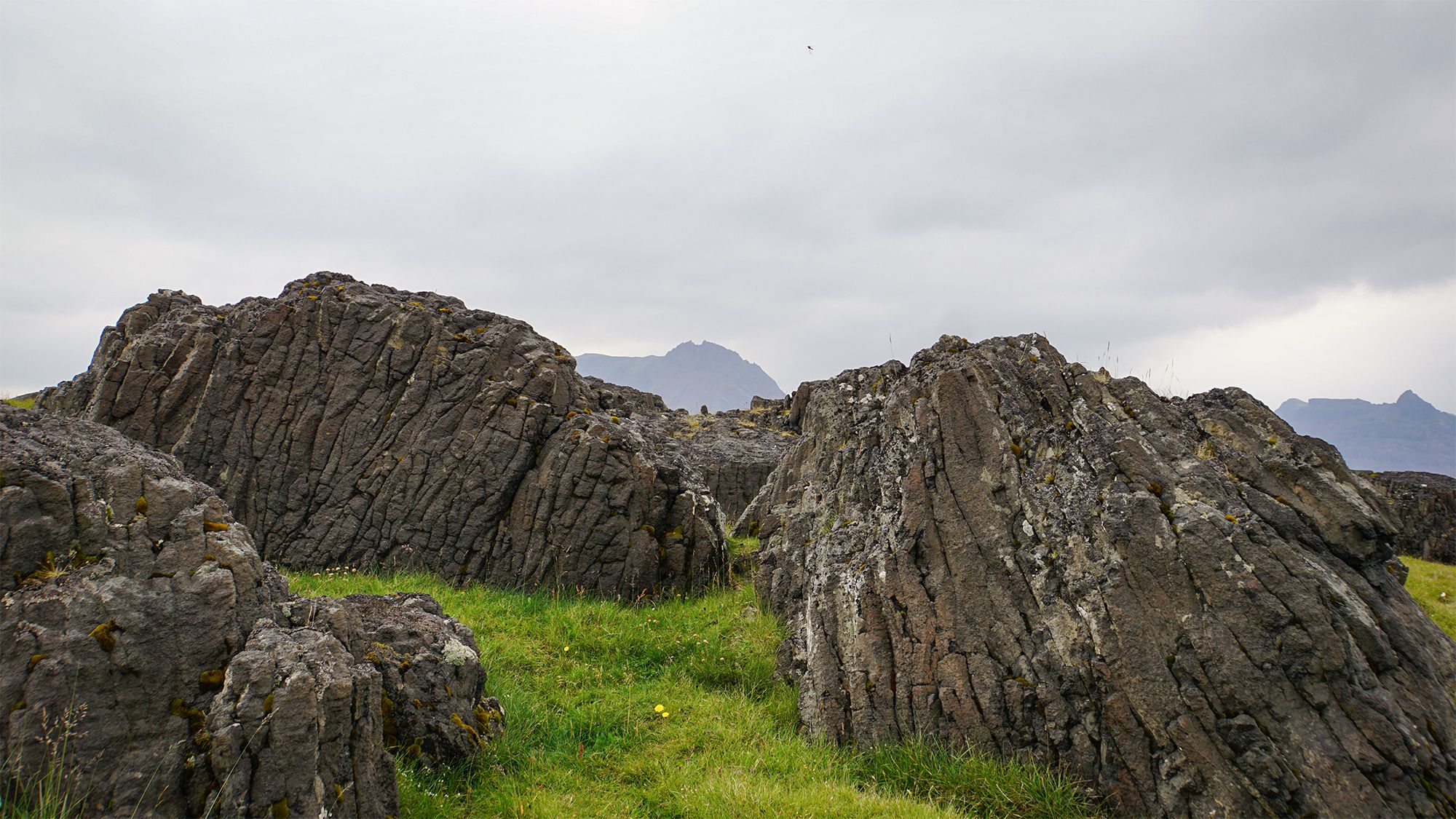
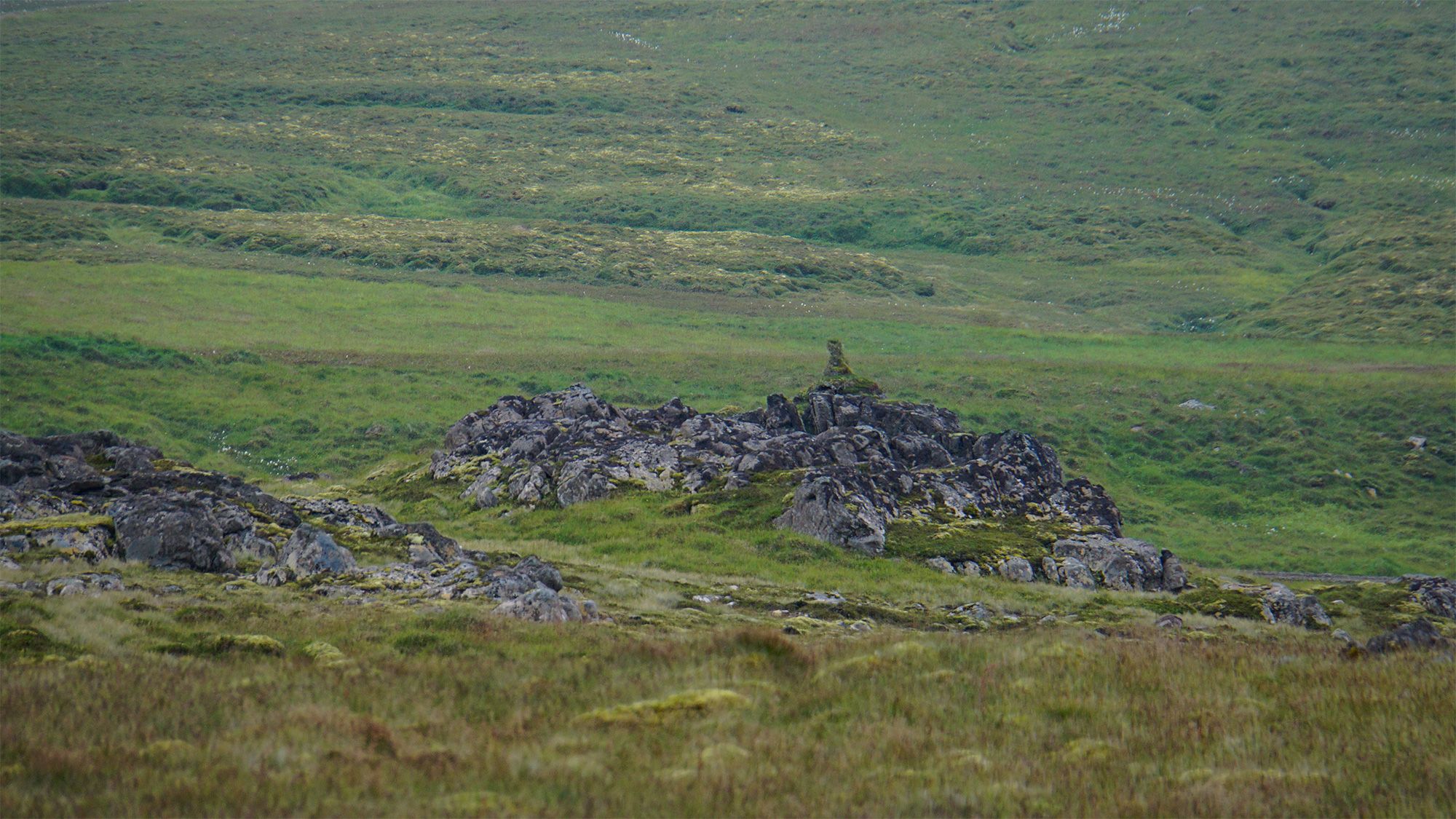
Right by the road there is an elf stone, which is said to be their home. It's marked with a small stone post, and no one dares to point at it, because you can lose your hand. That is what tradition says. I did not dare to test this legend.
I love these Icelandic stories. In places like this, you can feel like a child who has entered a fairy-tale land. Nothing surprises you here. Everything is possible.
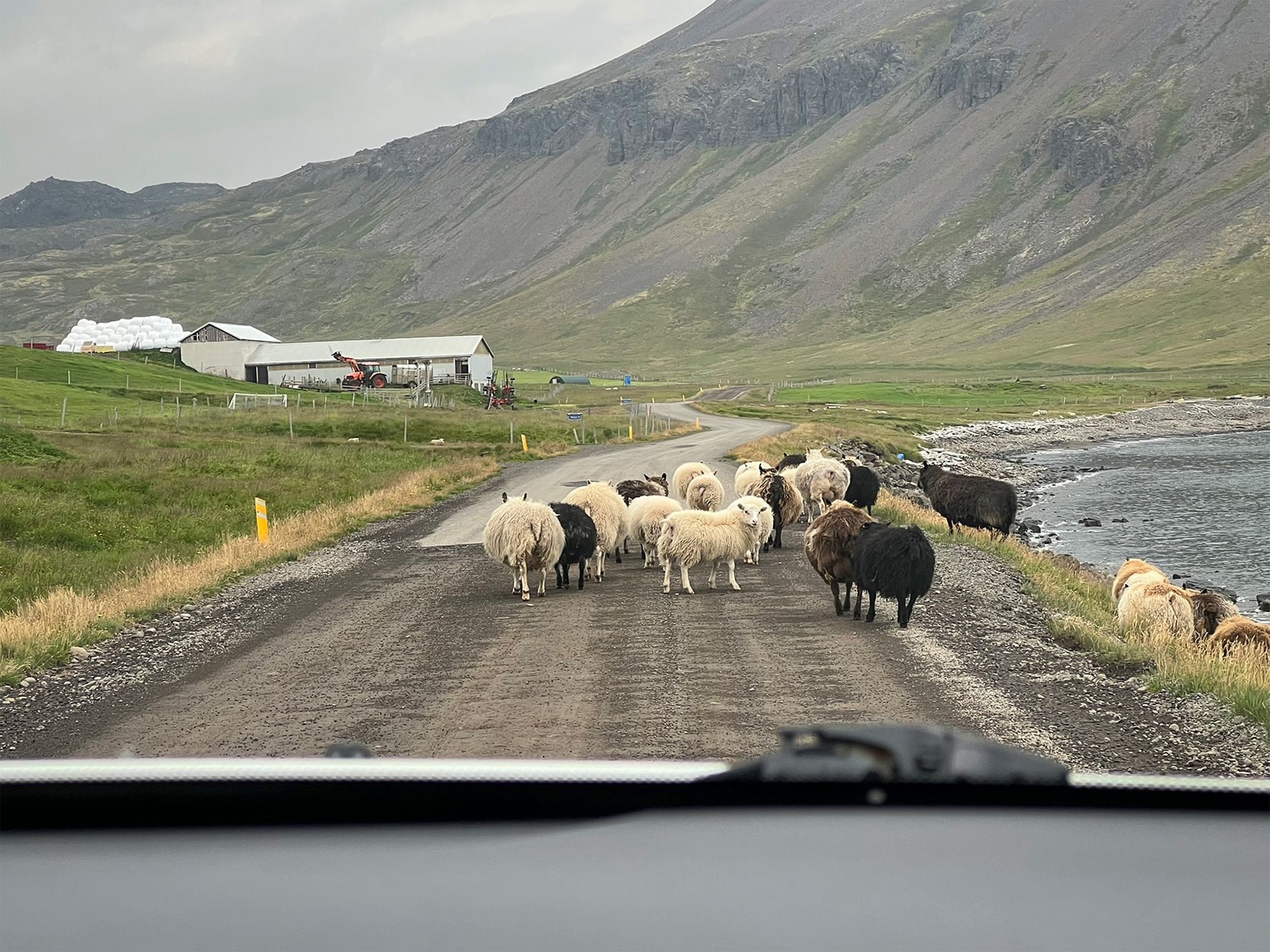
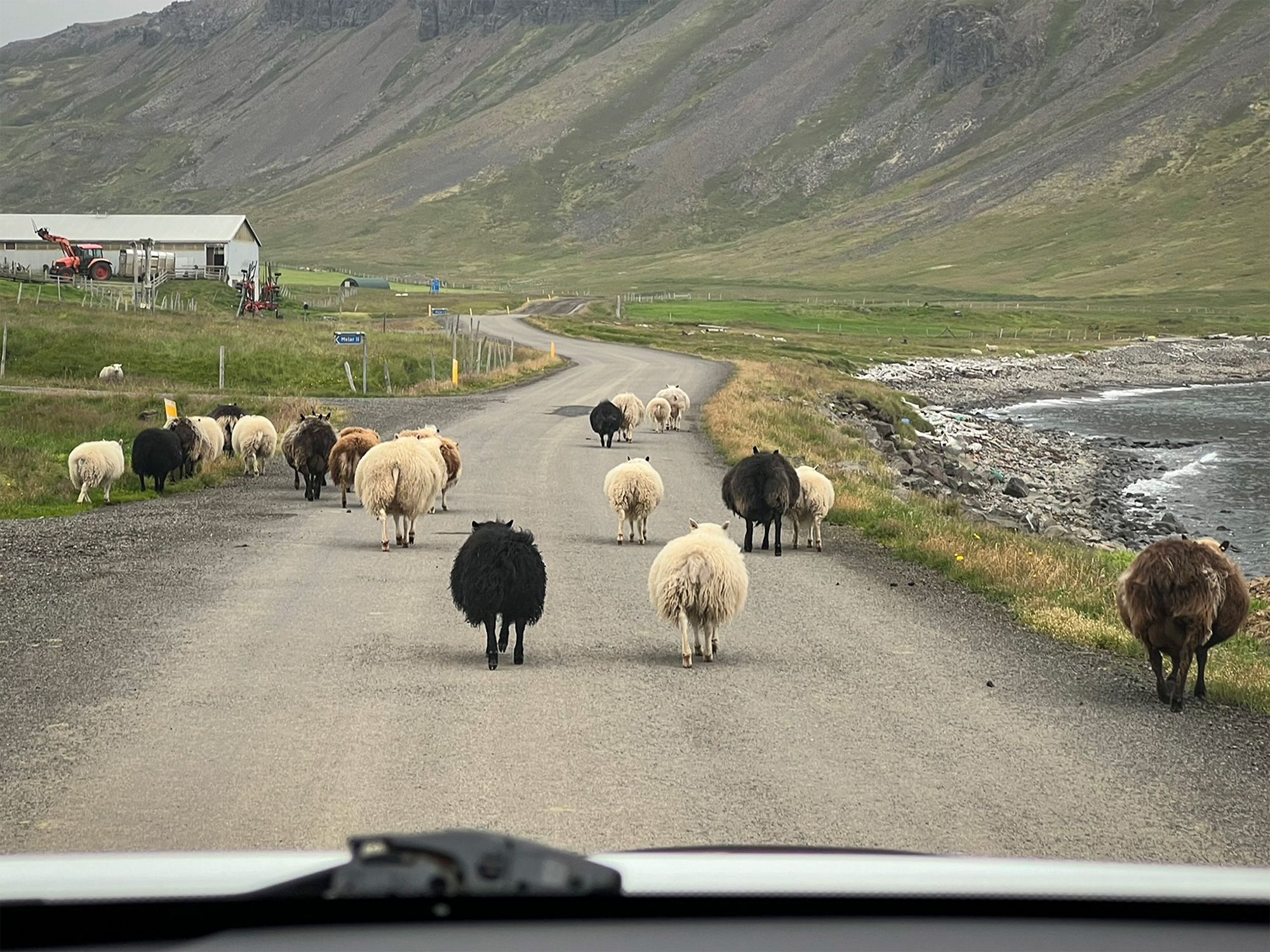
When we finished the walk, it started to rain a bit, but we stuck to the plan. The next goal was an abandoned factory by the next fjord. To get there, we had to drive through the mountains. But first we had to get out of a local sheep jam ;) Suddenly, they all decided they wanted to go for a walk. This is one of the most common sights on Icelandic roads.
I will tell you about the trip over to the abandoned fjord in the next post. See you!

A year of transition - small trips and moving to Iceland
Where my home is - "Iceland in miniature"
Winter at my place - not as scary as they said
Chasing spring in Grundarfjörður
Wolf Beans: purple beauty or invasive species? A trip to Ingjaldshóll
Welcome to Mars: Kerlingarfjöll Mountains
Katla's tongue – Sólheimajökull Glacier
In the shadow of the glacier: the stunning Þakgil campsite
Moss and ice: the road east
Basalt and turquoise: Stuðlagil Canyon, East Iceland
Cracked earth - driving to Stykkishólmur
Off the beaten path: Hafrahvammagljúfur Canyon and the hot spring shower
The road to Mývatn: through rain and wilderness
Around Lake Mývatn (1) - Víti Crater and the Hverir geothermal field
Around Lake Mývatn (2) - the monochrome world of Hverfjall
Around Lake Mývatn (3) - Leirhnjúkur: a walk on warm ground
On the way home - Goðafoss, the waterfall of the gods
North Iceland - a small harbor and a basalt coast: Hauganes and Kálfshamarsvík
West Iceland - two unusual waterfalls framed in autumn gold
Beyond the postcard - a summer evening at Búðir and Arnarstapi
Around the Westfjords (1) - first impressions
Around the Westfjords (2) - Dynjandi Waterfall
Around the Westfjords (3) - on the way to Norðurfjörður

Comments