 Scotland, United Kingdom
My First Volunteer Journey That Changed Everything – Workaway in Scotland
I had already spent several years traveling as a tourist, visiting cities with my siblings or friends. Paris, Istanbul, Prague, Italian cities – all great experiences, but something was always missing. What I truly longed for wasn't just a few days in a city, but the chance to spend an extended period in a foreign country. As a kid, when I spent hours poring over my atlas, I wasn't dreaming of short trips to Paris or London. I dreamed of spending months in one place as a traveler. Getting to know the culture, the people, and stepping out of the tourist role to immerse myself in the everyday lives of locals.
Most travelers I heard about could only get away for a few weeks – as much vacation time as they had. But in such a short time, it was impossible to achieve the kind of travel I longed for.
Then somehow, I stumbled upon Workaway. I don't remember exactly how, but as soon as I registered and paid the membership fee, I was blown away by the size of this network. You could practically visit every country in the world through volunteering. I kept clicking through opportunities: "Volunteer at a circus community in Colombia," "Buddhist monastery in Nepal," "Help with sea kayak tours in the Norwegian fjords." There were so many interesting options that I instantly fell in love with the platform and subconsciously decided: this would be my path. This is how I would explore the world.
My goal was to improve my English, so I chose the United Kingdom – the Irish accent wasn't as appealing to me. I wrote a template message and sent it to about 10-15 hosts. I barely got any replies, but I did receive one concrete offer: an elderly Scottish man in the Outer Hebrides was looking for a volunteer for renovation work, maximum 5 hours a day, in exchange for accommodation and food. I didn't hesitate long – the mysteriousness of the location captivated me, and I booked my flight to Glasgow.
But that was just the first chapter of the journey. From there, I still had an eight-hour bus ride ahead of me to Uig, a small port town on the Isle of Skye, where I would catch a ferry to the Isle of Lewis and Harris, to Tarbert, where John, my future host, lived. It wasn't the luckiest timing to travel to Northern Scotland in November, but I couldn't wait until spring – I was planning to start working in England the following January.
John had told me beforehand that a German guy named Max was also volunteering with him, so I wouldn't be alone. That was reassuring, because my English – especially my speaking skills – was pretty basic, and I was literally throwing myself into the deep end in the company of an elderly Scottish man.
Journey North
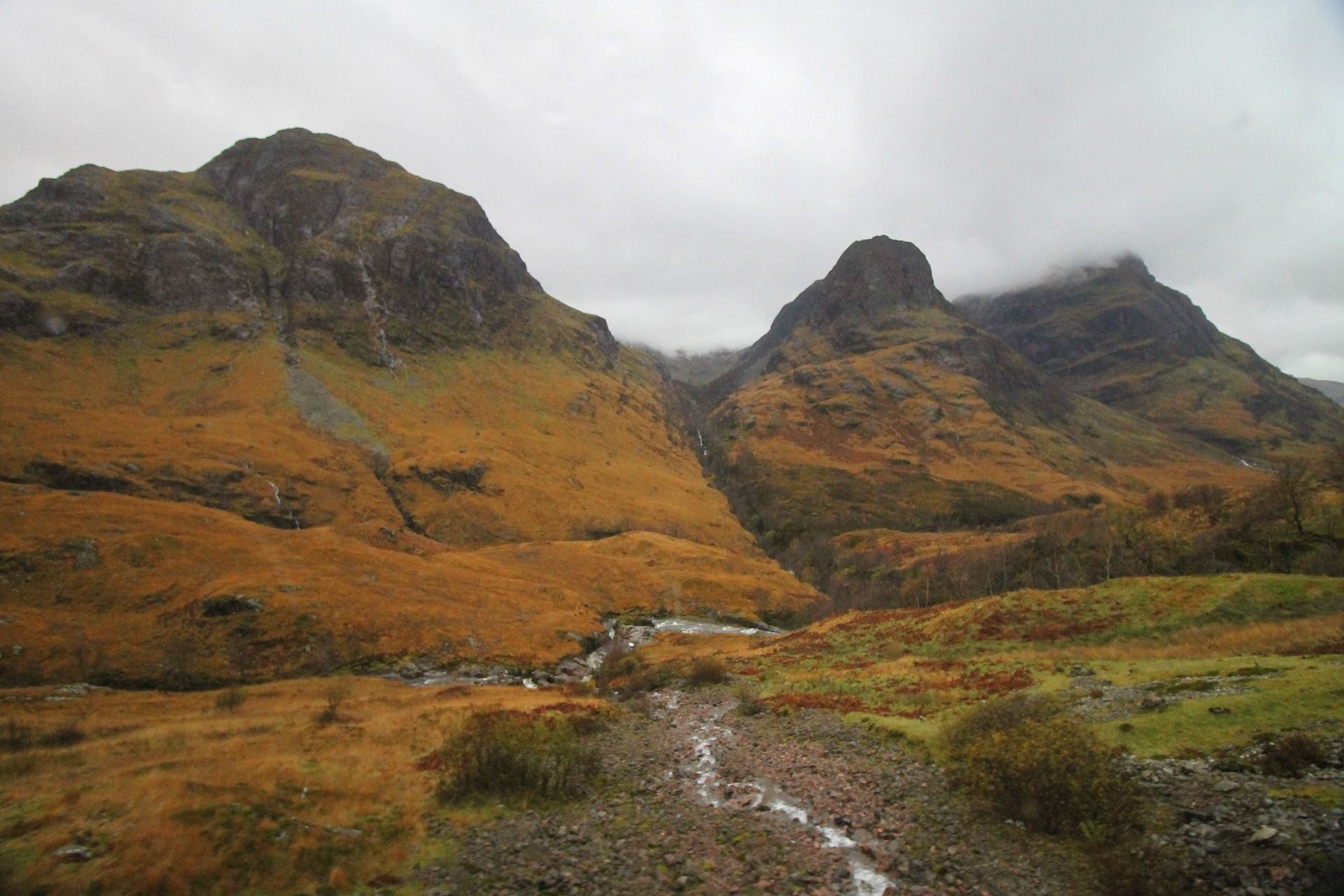
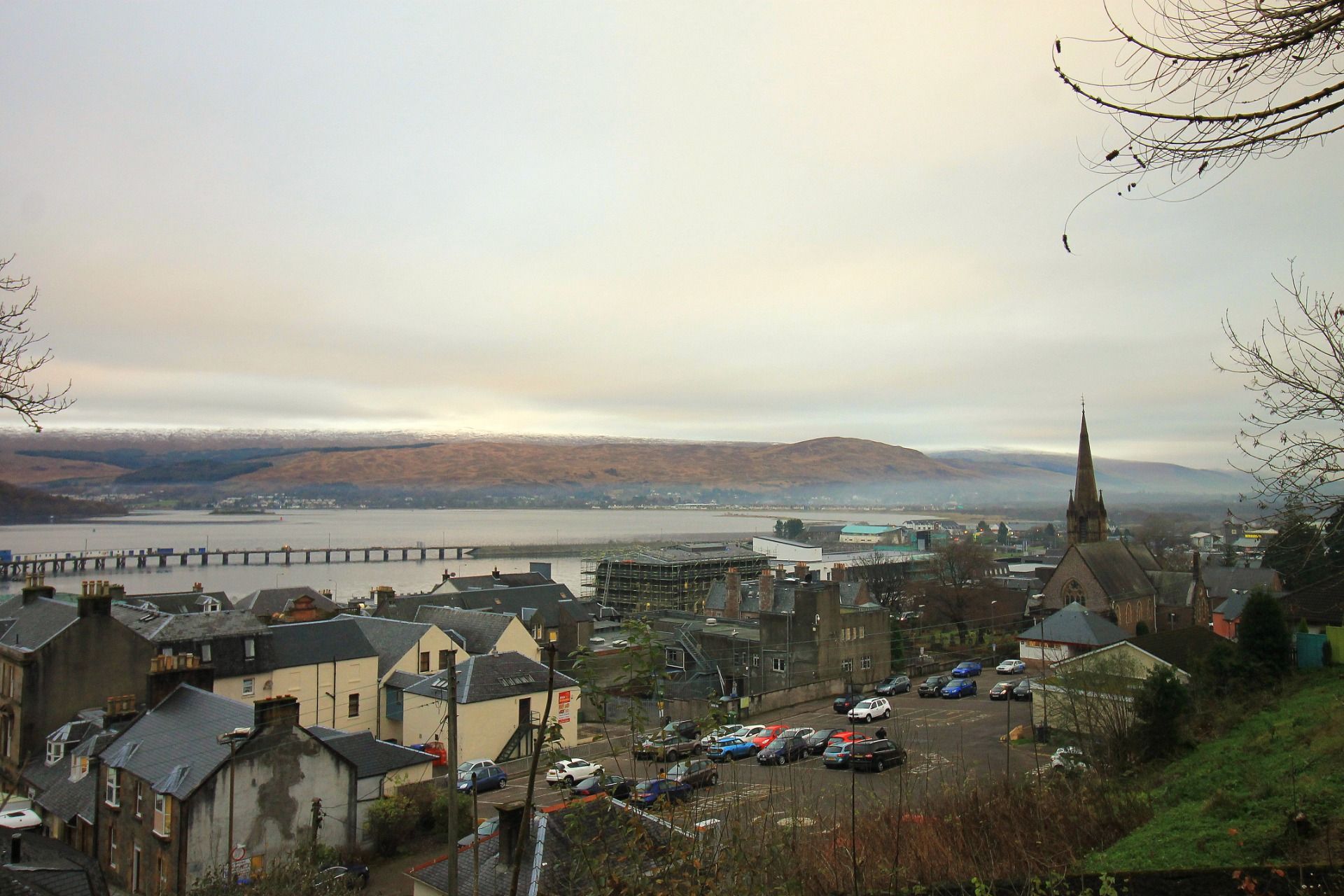
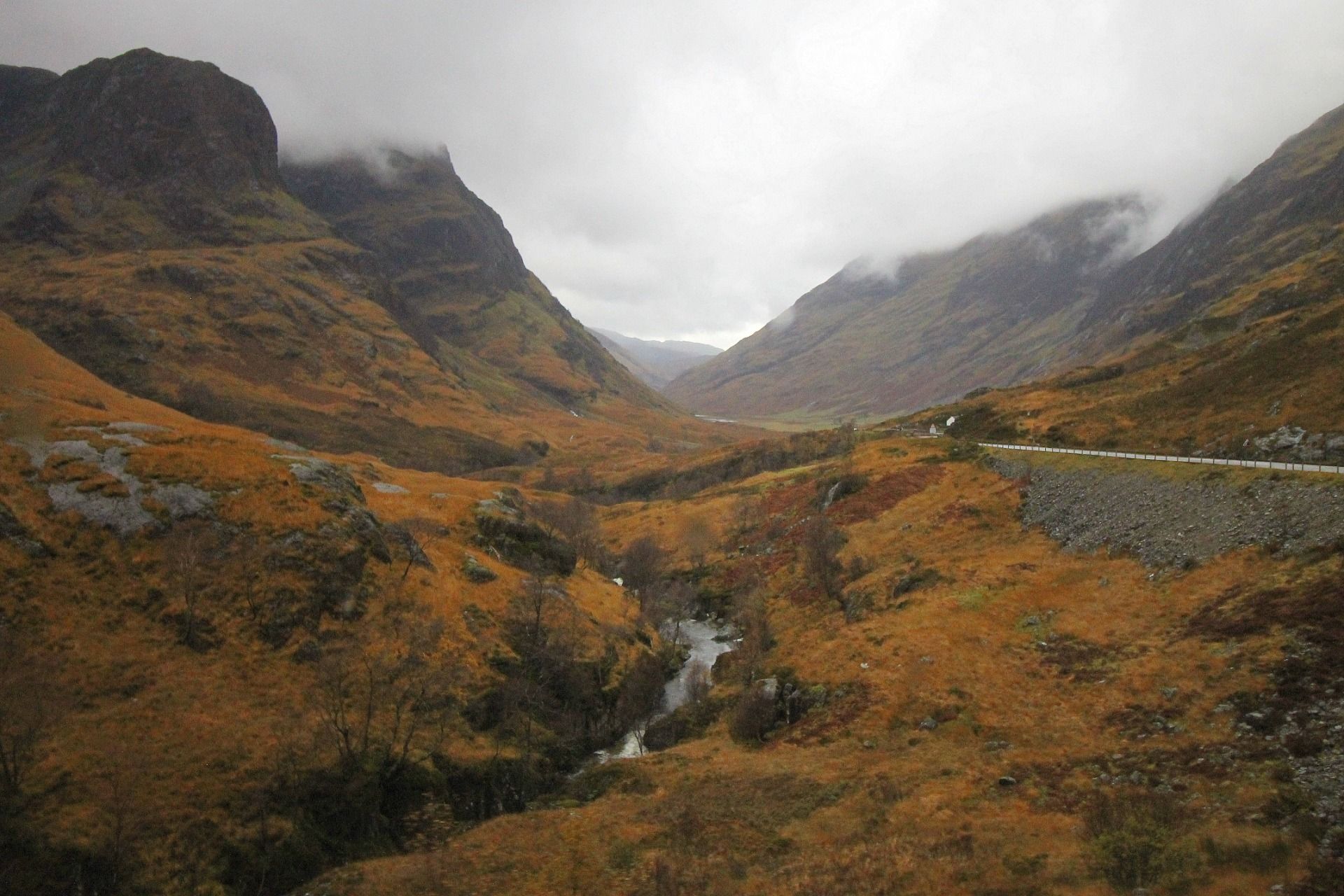
I flew from Budapest to Glasgow with Wizz Air, just over 3 hours. From the airport, I immediately continued by bus to Northern Scotland, to the whisky-famous Isle of Skye. The eight-hour journey took me through stunning landscapes. Honestly, I'd never considered Scotland an attractive destination, especially not in this season, but since I'd embarked on this adventure, I savored every moment from the bus window.
I was anxious with excitement the whole way. What awaited me at the end of the world? This was my first solo trip, completely alone. But this was exactly what I wanted – the next step after agency-organized trips and self-planned city breaks with friends. It was here that I first felt myself transforming from a tourist into a traveler. Someone who isn't chasing sights, but seeking experiences – the kind that weeks of volunteering can offer.
After the eight-hour bus ride, exhausted, I boarded the ferry. By then, I could really feel how far north I was: fewer and fewer trees, the landscape becoming barer. It was six in the evening and completely dark when the ferry departed. During the more than two-hour crossing, I experienced my first ferry ride – I was amazed by its size and comfort, it felt like a small ocean liner. Restaurant, café, play area – you could easily get lost.
I messaged John that I was nearly there, and he drove to the harbor. As I disembarked, a balding, elderly man waved – I knew it was John. We shook hands, introduced ourselves, and jumped into his car. He immediately started asking about my journey, and I tried to answer, but even then I could feel communication wouldn't be easy. Despite my intermediate language exam and 12 years of studying English behind me – I could barely speak.
Arrival at the Edge of the World
Along the way, John told me about the island and Tarbert. A settlement of barely 500 people, so barren that I didn't see a single tree anywhere. John confirmed it: the Hebrides are so far north that no plant cultivation is possible; they're completely dependent on imports. The locals live off fishing, livestock farming (cattle, sheep), and whisky and gin production. His nearest neighbor lived a kilometer away.
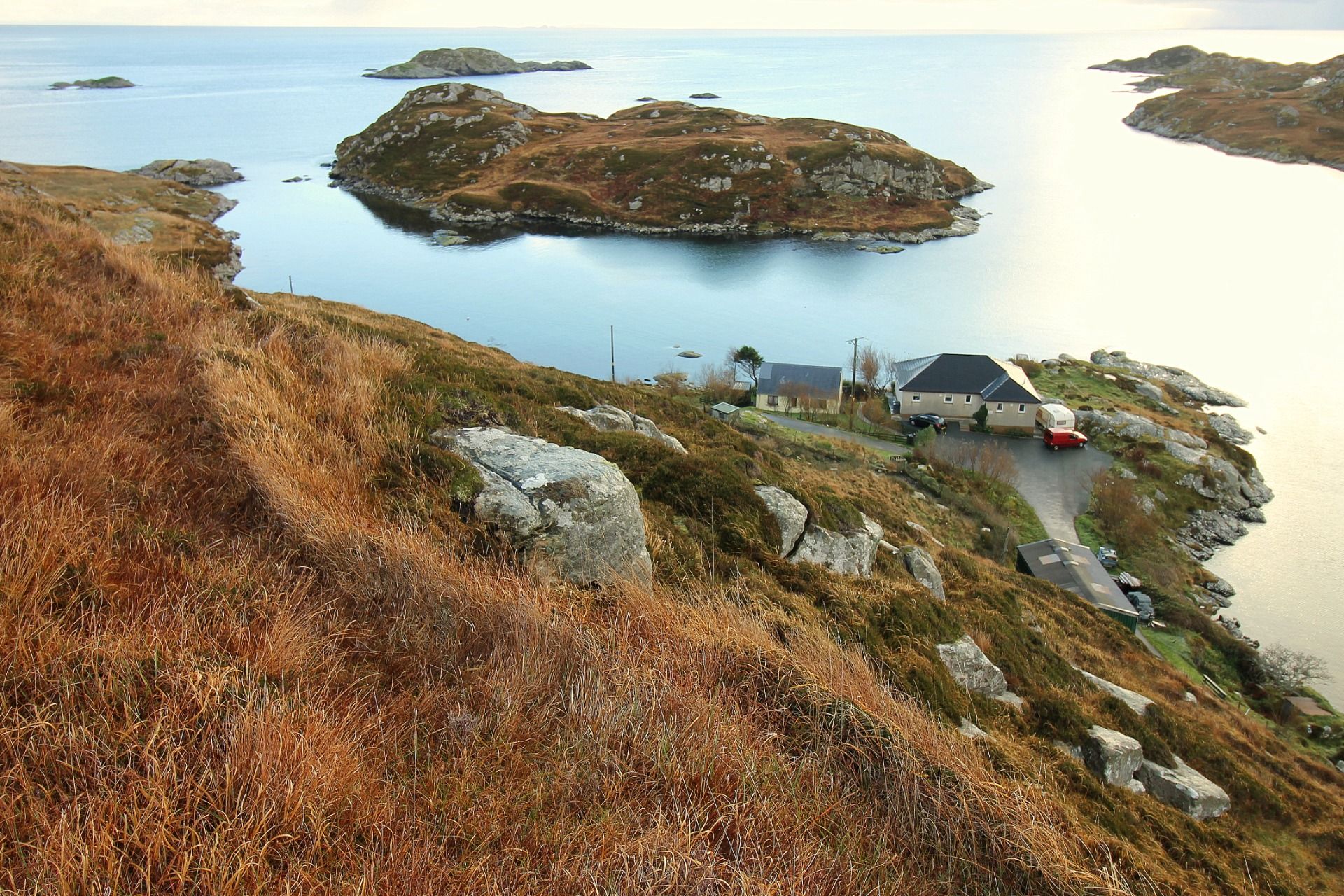
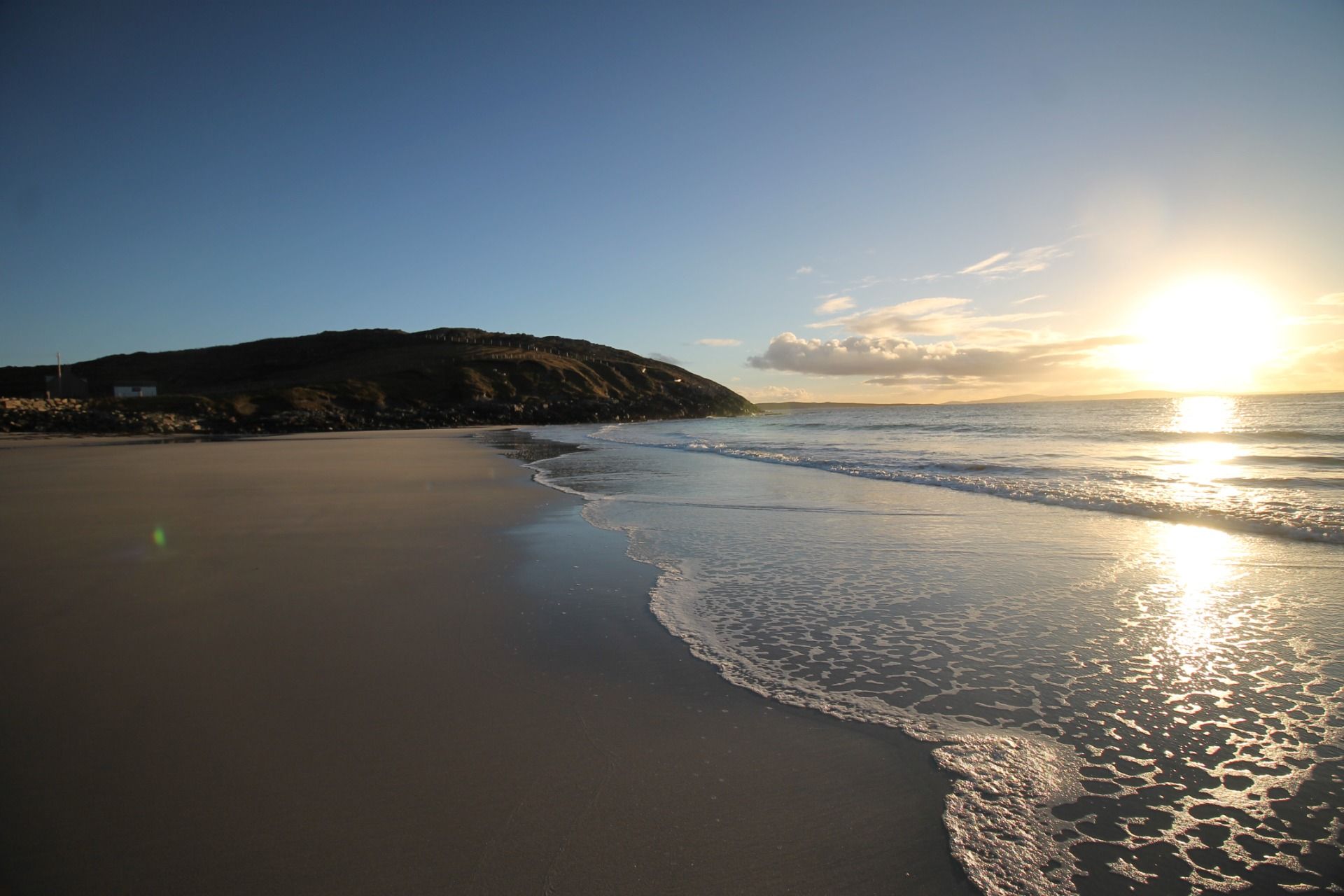
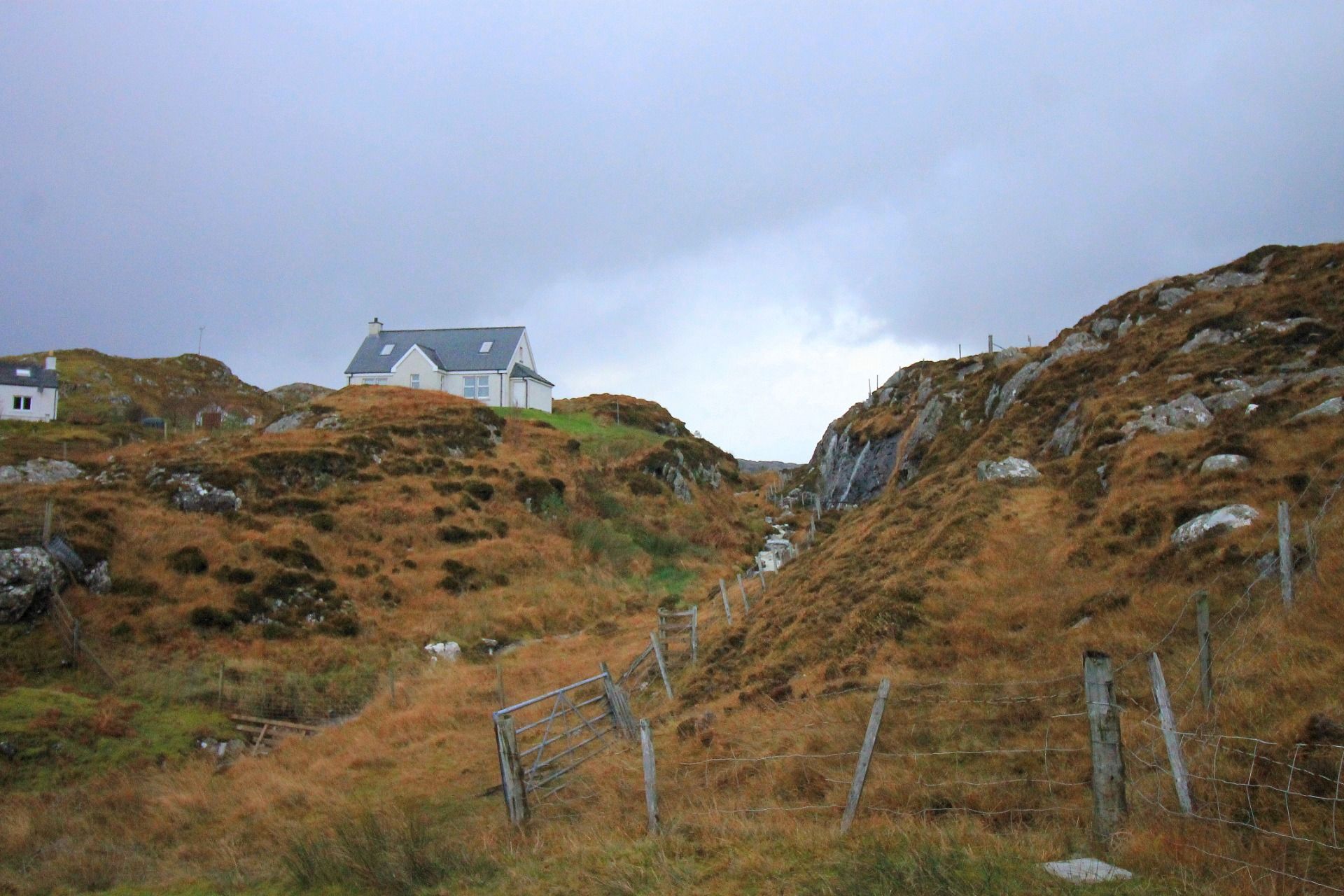
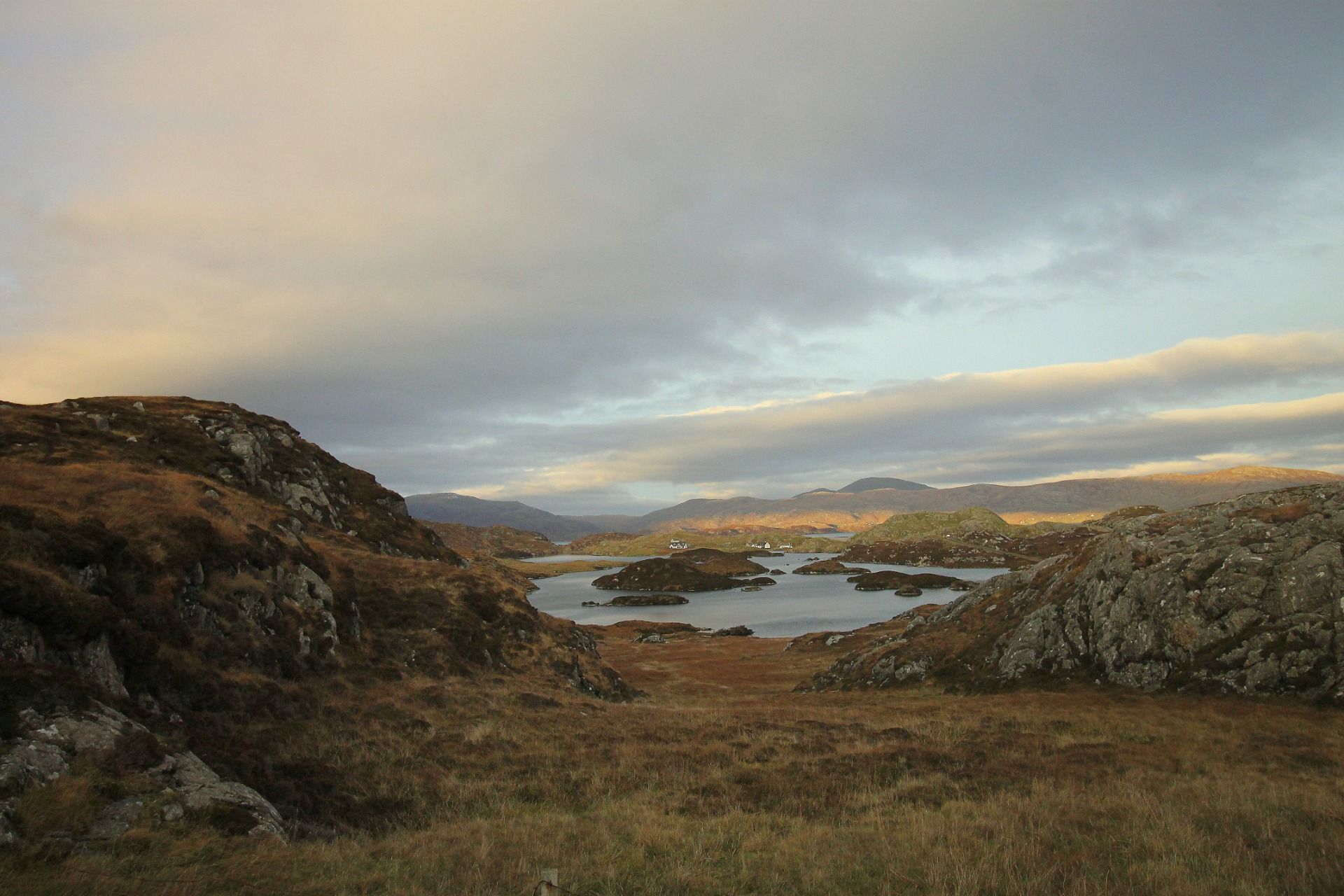
When we arrived, the view was breathtaking. John's house stood on the shore of a sea bay, a small island rising from the water a hundred meters away, flanked by two rocky hills on the other side. At the entrance, Max, an 18-year-old German guy, was waiting – he'd arrived a few weeks before me, spending part of his post-graduation gap year here.
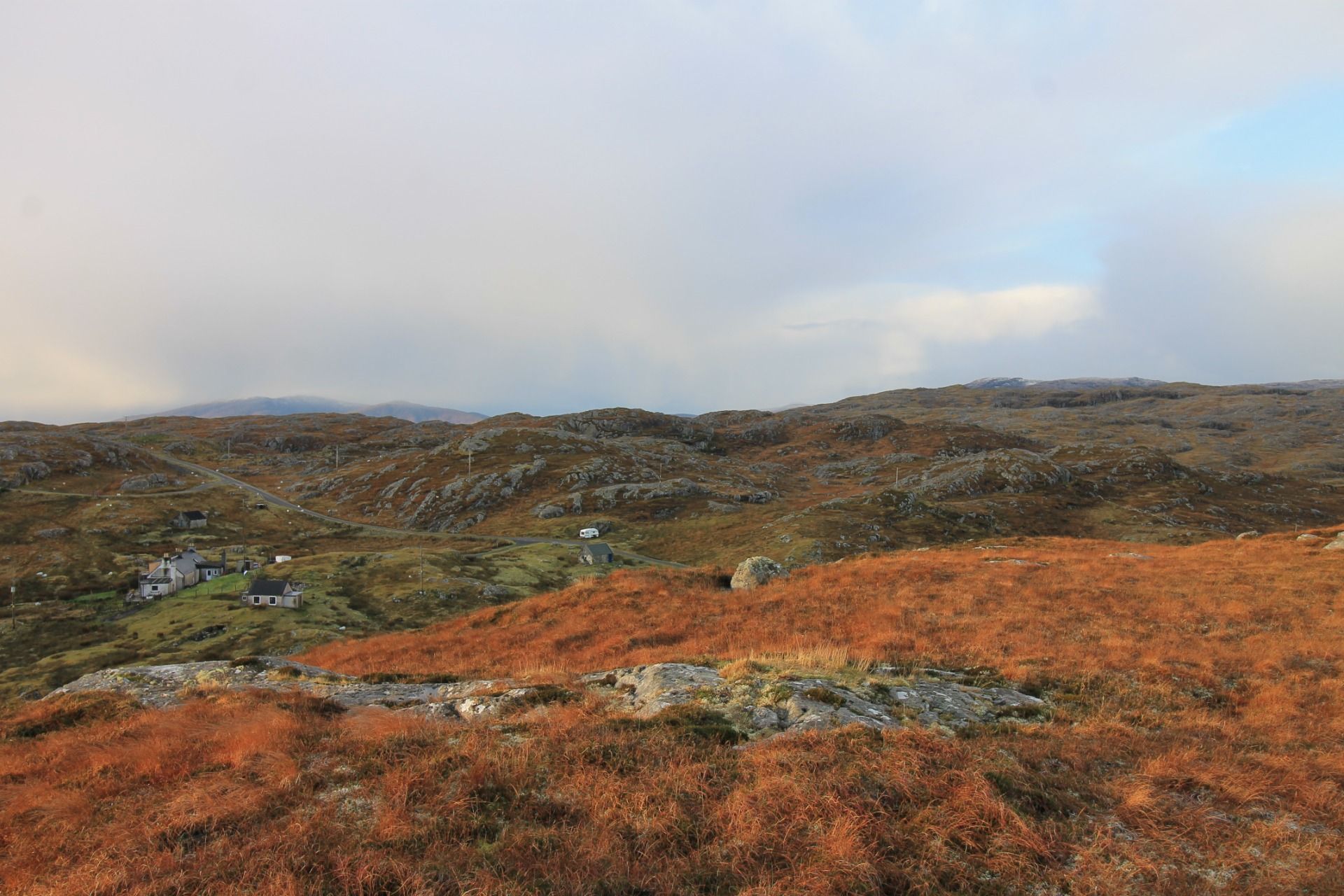
John showed me my room – I was in a separate house with Max, each with our own rooms and a bathroom. In the evening, we sat down for dinner together, and that's when my first real language challenge came. I'd never before been forced to communicate in English for an extended period. This inexperience quickly showed: after a few simple sentences, I froze and just became a passive participant in the conversation. Even understanding what they were talking about was difficult, let alone responding. It was very uncomfortable.
Daily Life on the Island
The next morning, we discussed the project: painting walls. Thanks to my dad, I had experience with house renovation, had painted walls several times, so this wasn't new. We had to paint John's living room and kitchen – covering, taping, then painting. Simple work, and I had time to talk (or try to talk) with Max. John assigned tasks, cooked for us, did the shopping. At meals, we always sat together – they would chat, and I would try to understand and occasionally interject. I constantly struggled with the pressure to perform, but I had to realize: the saying "you'll just pick up the language" isn't true. Language learning is conscious work, not an automatic process.
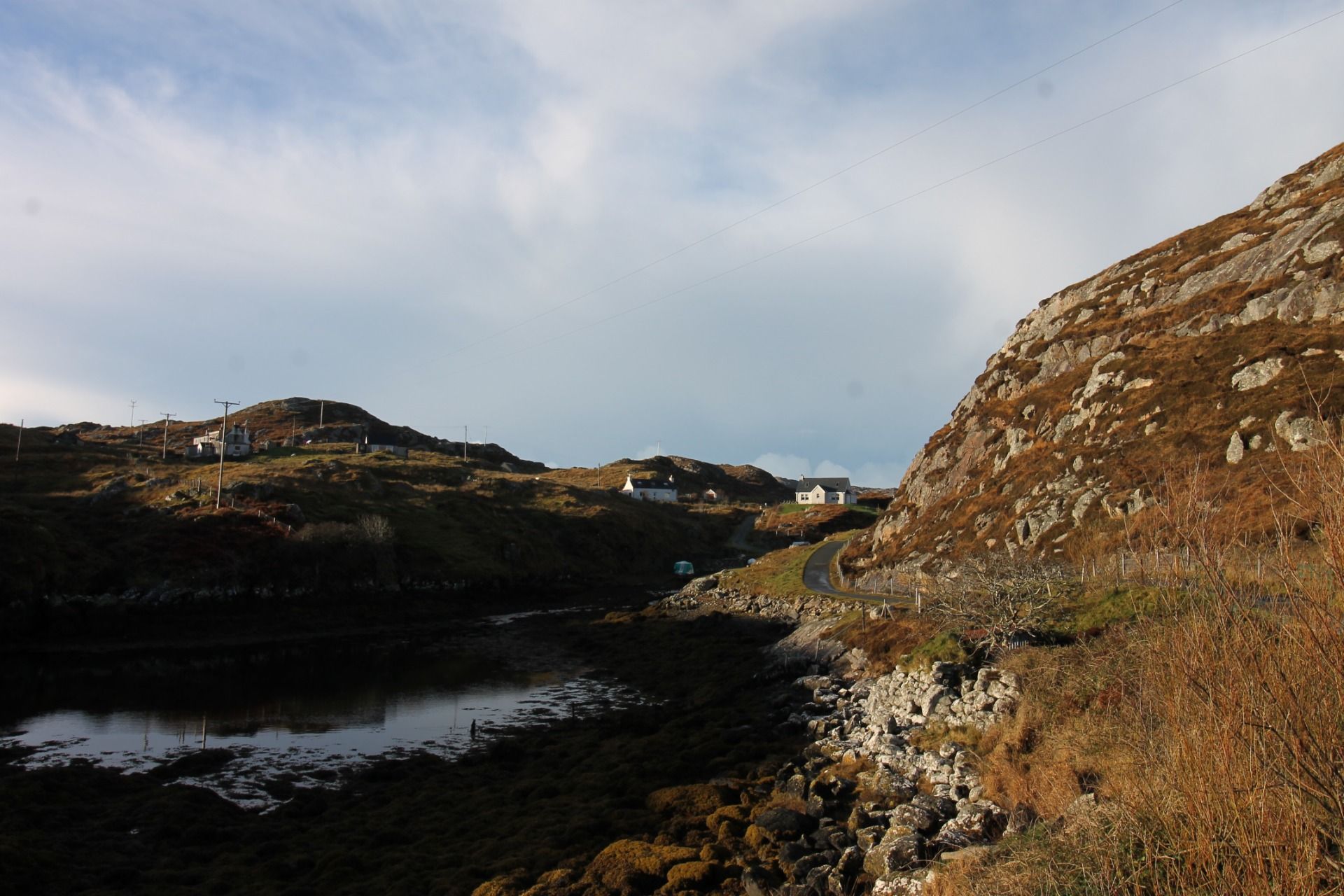
During those two weeks, I had countless unforgettable experiences. The weather was harsh and unpredictable – especially in November in the Outer Hebrides. The rain here was mostly just a drizzle, something I'd never experienced before, like being sprayed. But ten minutes later it would be pouring, then an hour later the sun would shine. There wasn't a single day without some rain. But when it did shine briefly, we experienced it as a blessing – us and the environment alike.
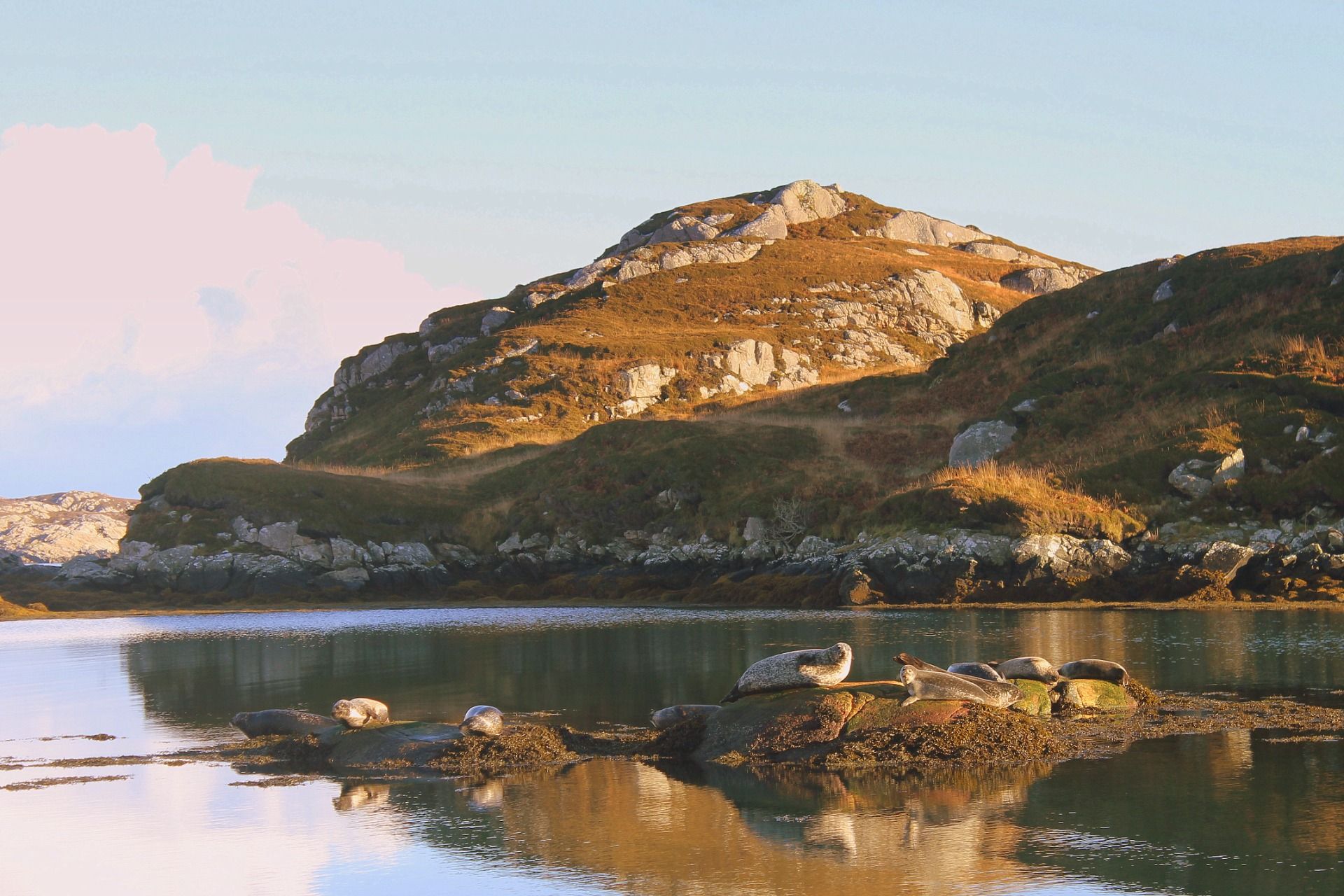
On such occasions, we'd spot the seals on the island a hundred meters away. John explained they were grey seals, native to this area. Later I looked it up: nearly 40% of the world's grey seal population lives off the coast of the United Kingdom.
One of the most memorable experiences was mussel picking. One afternoon, John suggested we go out because it was the season. I'd never tasted mussels before, but I eagerly pulled on my rubber boots. Max and I went down to the beach, and in less than an hour, we'd filled two buckets. Back at the house, John inspected them, we thoroughly cleaned them, then boiled them. He placed a large bowl in the middle of the table, and we sat around eating them. They were delicious, though the mussel meat was so tiny that even after 30-40, it still felt like just an appetizer. But the whole experience – picking, preparing, then eating them – was unforgettable.

The Highland Cattle and the Failed Vaccination
The other big adventure involved John's cows. The barren, rocky hill next to the house belonged to him, where he kept Highland cattle. Five cows and one calf. One day, John announced we needed to vaccinate the calf – teamwork. One of us would lure the cows with feed to make them easier to corral. Simple in theory, much harder in practice.
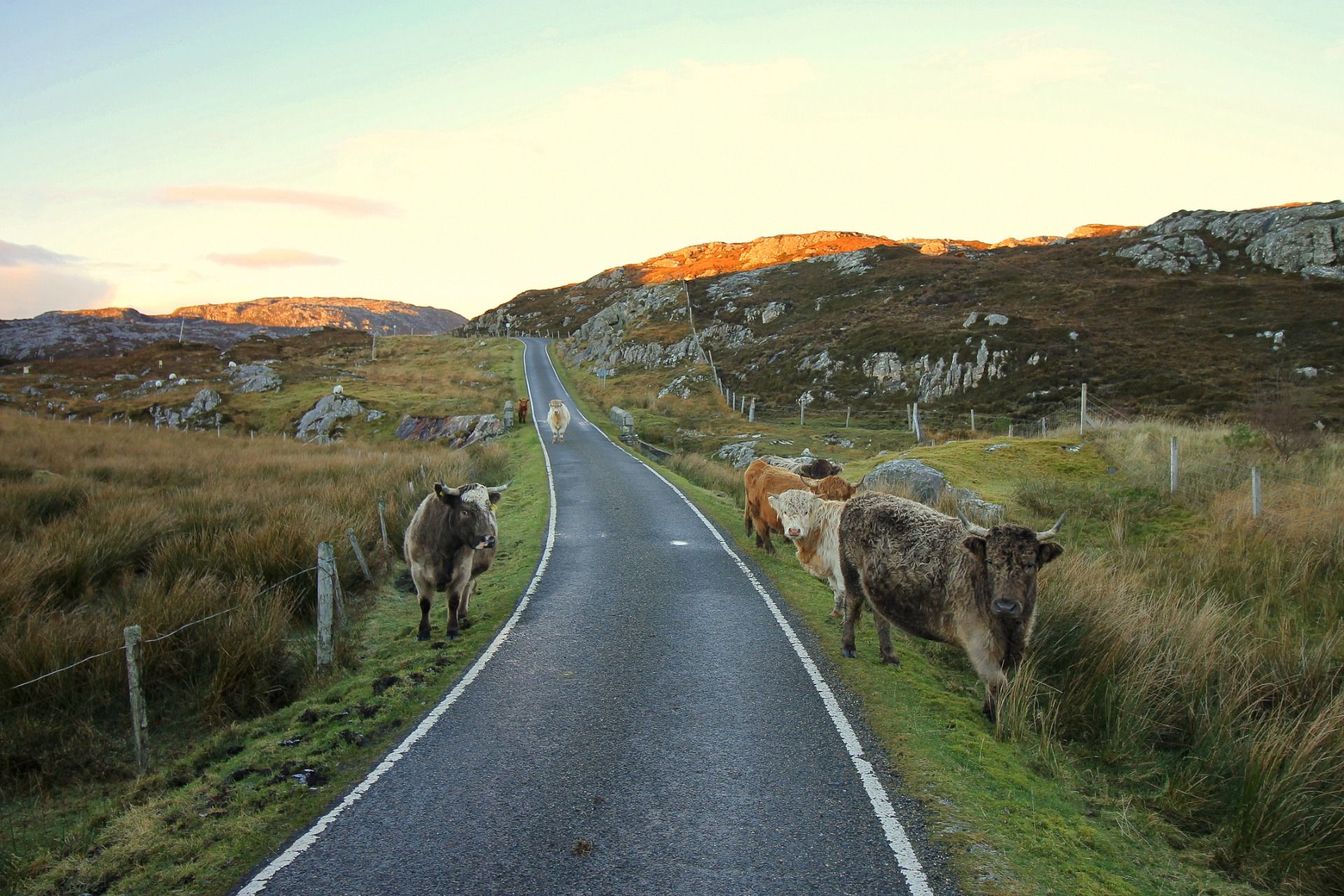
We went up the hill, John with the vaccine, Max and I trying to catch the calf. We ran back and forth, trying to herd them in one direction. At one point, Max herded the calf toward me, it approached, I tried to grab it, but in knee-high rubber boots, I couldn't move properly, and I wasn't aggressive enough – the calf slipped through my hands. John and Max were shouting from behind, but it was too late. The calf ran off, I gave up, and we all retreated, exhausted. The vaccination was off the agenda for that day.
Exploring the Island
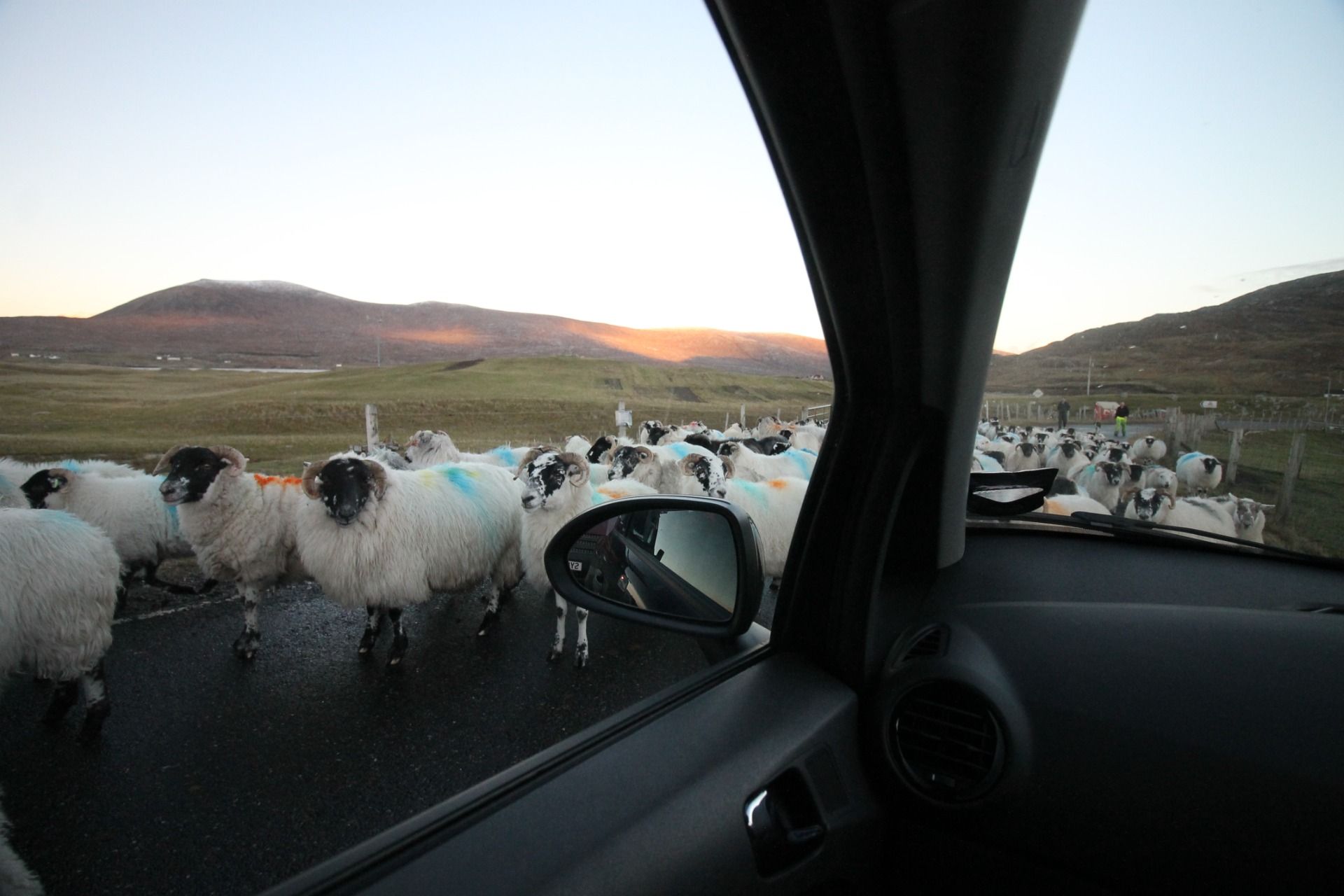
The two weekends were free, which we used to explore the island. John was happy to drive us around in his car. The island is about 2000 km², 100 km long, with winding roads mostly single-track – with passing places every 200 meters for oncoming traffic. Once, we encountered a flock of several hundred sheep – a Scottish "traffic jam." It took ten minutes for them to pass us in an orderly fashion.
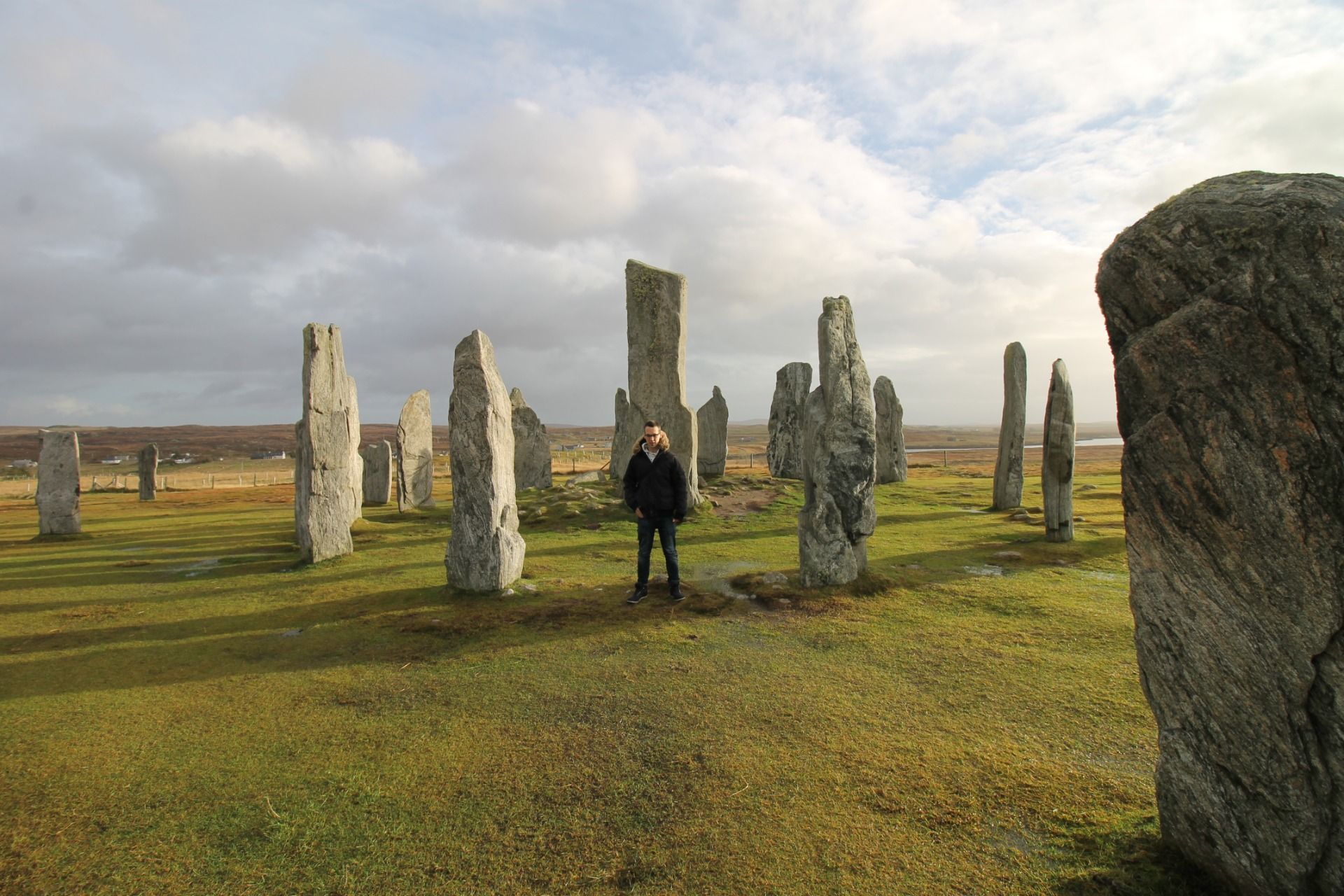
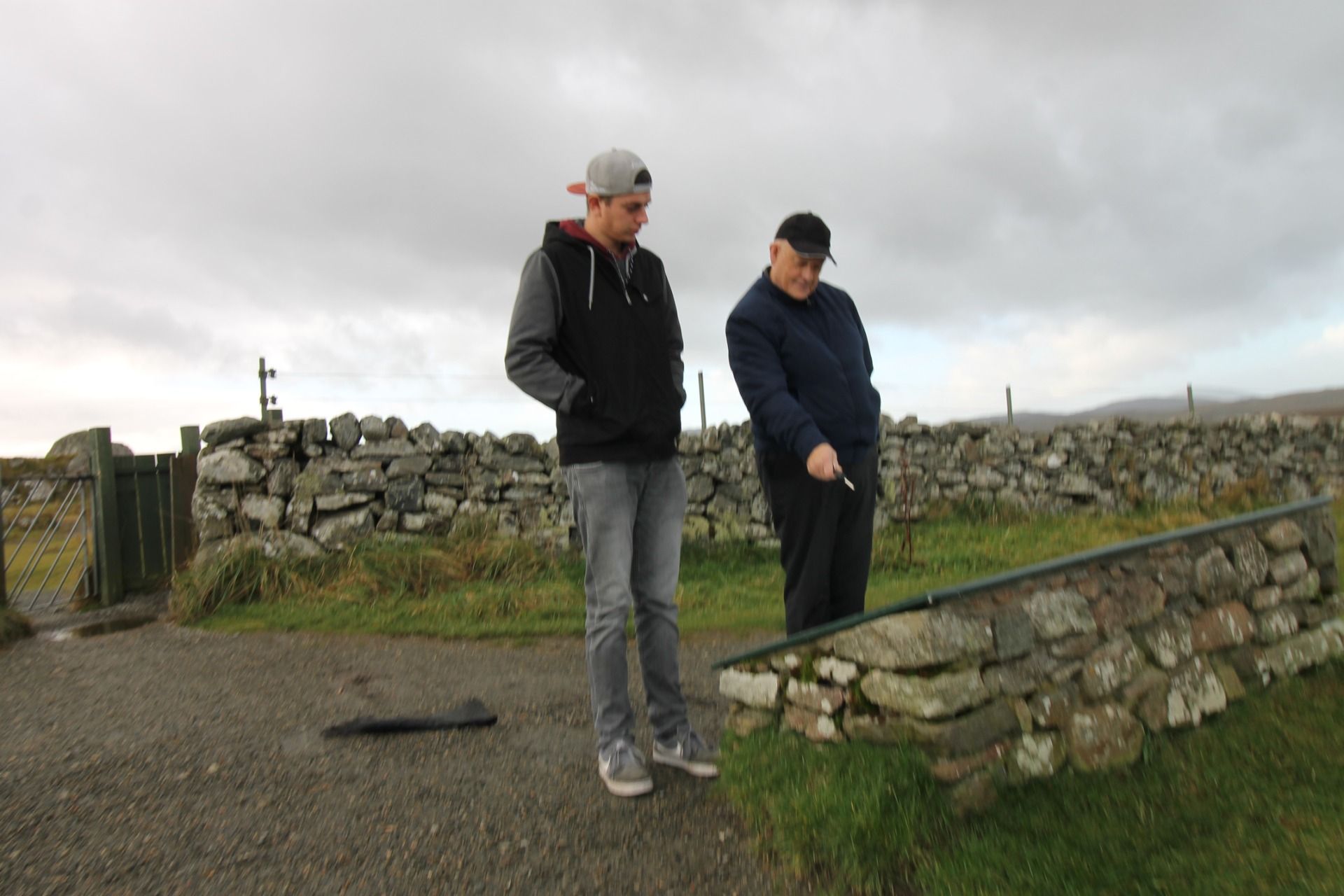
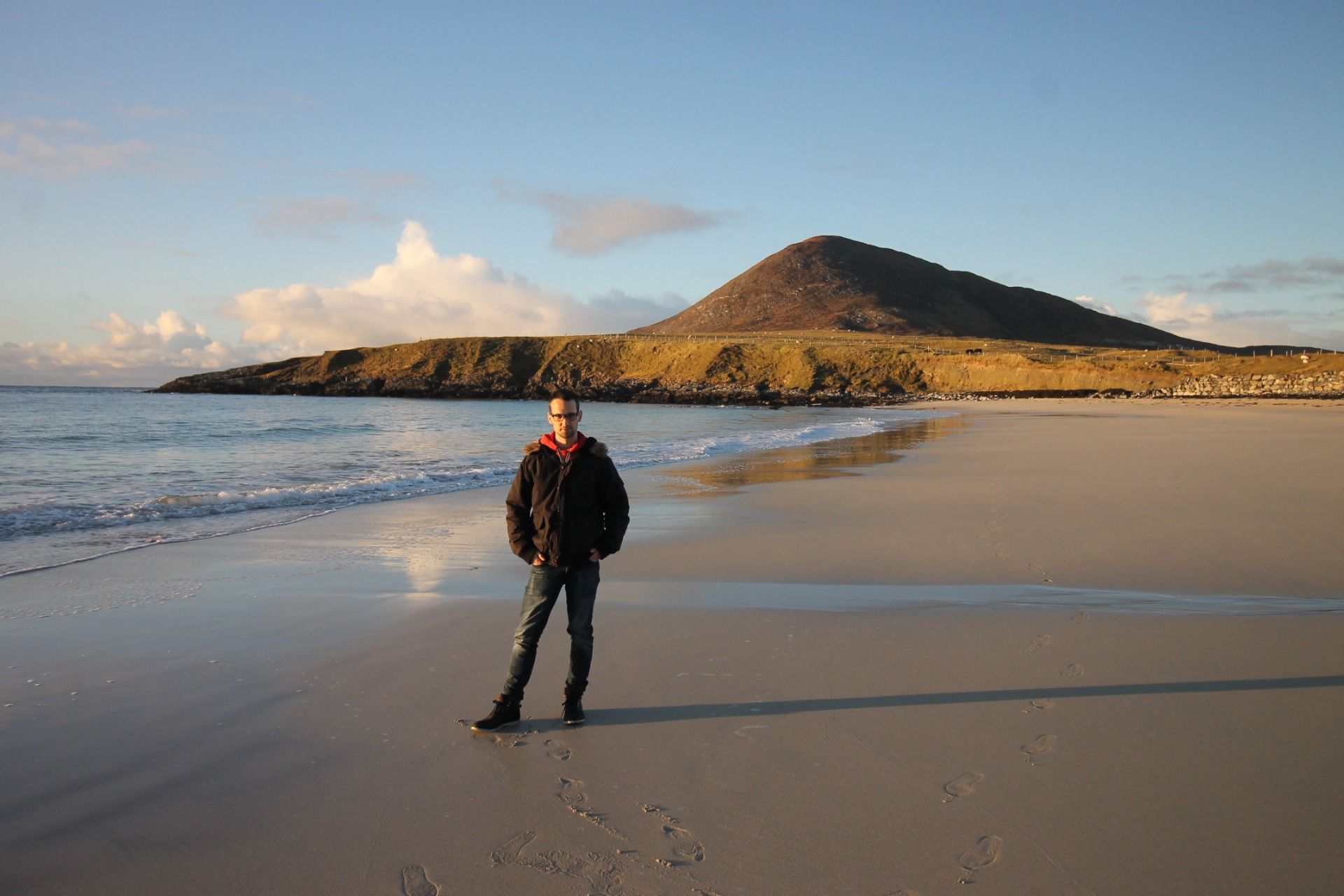
We drove to Stornoway, the island's main town, a port town of 5-6000 people. John took us to a sandy beach that could easily have passed for somewhere not in the Outer Hebrides. But the most memorable sight was the Callanish Standing Stones – the Scottish "Stonehenge." Located on the western side of Lewis, this ancient stone circle is over 5000 years old, older than Stonehenge itself. Probably used for religious and astronomical purposes. Though smaller in size (maximum 2.5 meters), it's an impressive sight, especially if you catch it at a clear sunset.
Looking Back 11 Years Later
Recalling my first two-week volunteering experience 11 years later isn't easy. But this was the beginning of an activity I've been doing ever since, that I love, and that is still the most important part of my travels. Since then, I've been to more than ten volunteer placements in eight countries, and I have no plans to stop. Quite the opposite: I want to volunteer more, get to more places, meet more people and cultures, and eventually create my own volunteer hosting place.
I eventually got bored of city trips, sightseeing – I moved on. But volunteering, even after ten years, I can't get bored of. It can be so varied: the environment, the work, the people, the culture. The best part is that for a short time, you become an active participant in the daily life of a country, a culture – experiencing their customs, learning and drawing inspiration from them. I feel that after all this time, this activity is what makes life worth living – volunteering has become part of my identity.
Summary: The Language Challenge and the Lesson
Although Northern Scotland in autumn isn't the ideal timing for travel and volunteering, I approached it as a mission, a challenge, and I successfully completed it. I got to the middle of nowhere alone and tried out Workaway. Although I struggled with English, I definitely gained some international language experience.
The language barriers left their mark on my stay: I was tense, withdrawn, felt limited in communication. As if I couldn't be myself due to the lack of language skills. I was a bit disappointed too, because school language education had given me a false picture of my actual speaking ability. The language exams only reinforced this: they made me believe I could communicate at a B2 level, while my actual level didn't even reach A2.
In summary: with this trip, I proved to myself that I can achieve what I set out to do. Although I had imagined these two weeks differently, confronting reality was far more instructive. This trip gave me a realistic picture of my English speaking skills, and since this was one of the main purposes of the journey, it made me even more motivated. I knew where I stood, and I could envision where I wanted to get to.
